Home Blog Page 851

Three Colour Coded Cities of Rajasthan: Jaipur, Jodhpur and Jaisalmer

0

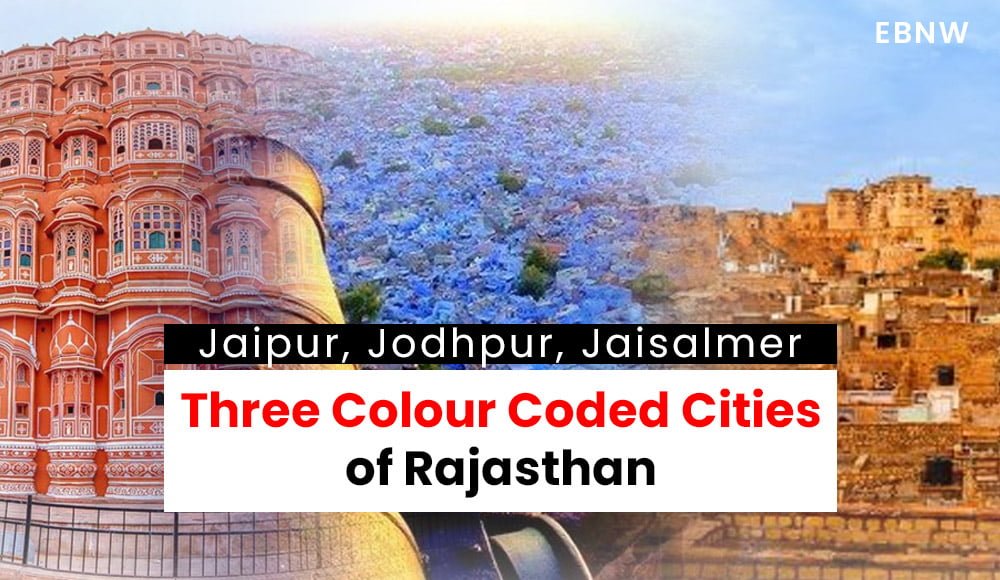
Jaipur is called as Pink City, Jodhpur is called as Blue City and Jaisalmer is called as Golden City. Rajasthan, often associated with its royal palaces, mighty forts and flashes of color, has been luring tourists from across the world in three cities which are known for their three striking shades in particular.

Jaipur – Pink City

Spread through the desert territory, the “Pink City” of Jaipur, the “Blue City” of Jodhpur and the “Gold City” of Jaisalmer has been winnning millions of hearts with their immaculate beauty and glory as they narrate their own historical tales.

The Pink City-Jaipur  is famous for its salmon-hued buildings and meticulous city planning. 

The city was given a rosy hue during a highly anticipated visit from Prince Albert in 1876. The city was painted with pink shade, which symbolizes hospitality in Indian culture.

The building department mixed up a natural dye made of lime and red soil to paint the city pink. Even today, the government repaints the buildings every two years in keeping with tradition.

The pink Old Town area, accommodates the pretty terracotta pink Hawa Mahal palace, City Palace, the Palace of the Winds and Jantar Mantar astronomy observatory.

Another highlight is the Amber Fort, located about six miles outside of the city. Once the residence of the Rajput Maharajas, this red sandstone fort complex features grand courtyards, ornate wall mosaics and opulent halls.

Jodhpur – Blue City

Jodhpur stands synonymous with another color: sky blue.

Now, if you have a question that why it is called as the Blue City, there are many reasons for it.  

Firstly, the city has a very high temperature because it’s surrounded by desert, so people have painted their houses with blue colour to keep things cool inside.

Secondly, Jodhpur is home to Brahmins who worship Lord Shiva. As Shiva is often associated with the color blue, worshipers paint their homes and temples this sacred and soothing shade.

The best place to see the ‘Blue City’ is from atop Mehrangarh Fort. From here, you can see the bright blue clusters and a beautiful sky blue.

Jaisalmer – Golden City

Established in 1156, Jaisalmer got its nickname from the magnificent Jaisalmer Fort which shines with a honey-gold hue during dusk.

Although the fort is made with local sandstone, however, it is cut in a way that it comes out identical to gold and the city gets its name as golden city.

Also, the sand spread around gives a golden hue and hence comes the name!

Take the trip to beautiful havelis (mansions) — such as Salim Singh ki Haveli and Patwon Ki Haveli — with exquisite ornate carvings and open-air courtyards. Located in the heart of the Thar Desert, Jaisalmer is a place to experience camel safaris and desert camps.

Elon Musk is world’s richest man! Know what he said after notching the title…

1

South African-born US entrepreneur Elon Musk is now the world’s richest person, with a net worth of $195 billion.

He overtakes Amazon’s Bezos to become the world’s richest person a net worth of more than $188.5 billion, $1.5 billion more than Bezos.

Musk, the chief executive officer (CEO) of SpaceX and Tesla, in his underwhelming response to his crowning glory moment, tweeted, “How strange” and added, “Well , back to work.”

A 4.8% rally in the electric carmaker’s share price Thursday boosted Musk past Amazon.com Inc. founder Jeff Bezos on the Bloomberg Billionaires Index, a ranking of the world’s 500 wealthiest people.

Chittorgarh (UNESCO World Heritage Site) is the Largest Fort in India & Asia

0

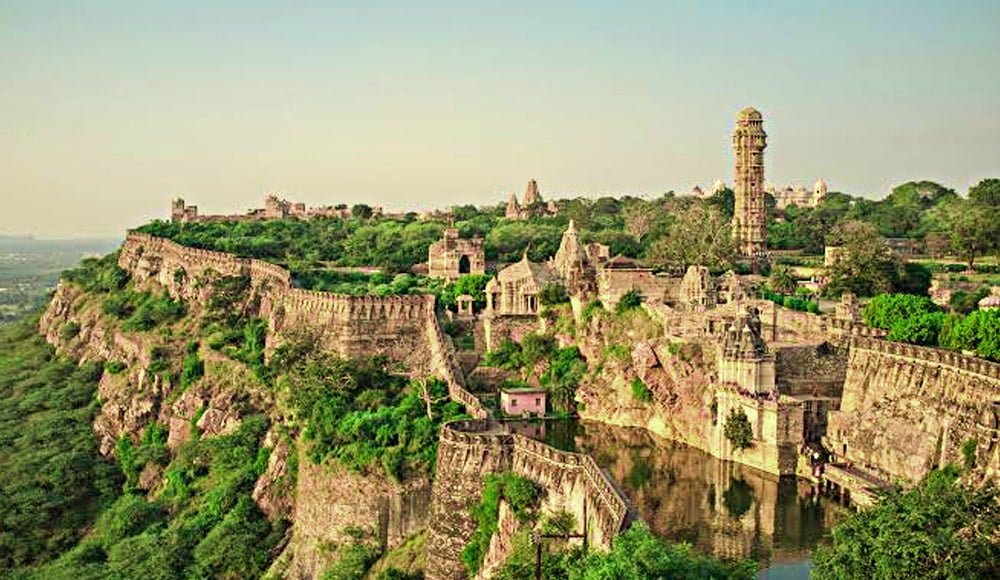
Chittorgarh (UNESCO World Heritage Site) is the Largest Fort in India and Asia. The fort sprawling across 700 acre and has a circumference of 13 km.

It has a long road stretching to one kilometre that takes up to the rampart after passing through seven gates namely: Ganesh gate, Hanuman gate, Padan gate, Jodla gate, Bhairon gate, Lakshman gate and the last and the main gate, Ram gate. These gates were built to protect the fort from the enemy attacks and the arches even protect against the elephants from entering.

Its walls are made of lime mortar and rise up to 500 metre above the ground level. There are four palaces, 19 temples including Jain and Hindu temples, 20 water bodies, and four memorial which make the fort complex.

History

Chittorgarh Fort has withstood three major Muslim invasions starting from Alauddin Khilji, Bahadur Shah and Akbar. However, it has been the hallmark of the Rajput’s bravery.

Pravasi Bharatiya Divas Convention 2021: Contributing to Aatmanirbhar Bharat

0

Pravasi Bharatiya Divas Convention 2021 to be held in virtual format this year in view of COVID-19 pandemic

Pravasi Bharatiya Divas Convention, celebrated each year on January 9, is the flagship event of the Government of India and provides an important platform to engage and connect with the overseas Diaspora. 

In view of the ongoing Covid-19 pandemic, the 16th PBD Convention, 2021 will be held in virtual format on January 9, 2021

The theme of PBD 2021 is “Contributing to Aatmanirbhar Bharat”.

On the forenoon of 09 January, 2021, Hon’ble Prime Minister Shri Narendra Modi will inaugurate the Pravasi Bharatiya Divas Convention. The winners of Bharat ko Janiye Quiz will also be announced in the Inaugural Session. 

The PBD Convention will include two Plenary Sessions – (i) ” Role of Diaspora in Aatmanirbhar Bharat”, and (ii) “Facing Post Covid Challenges – Scenario in Health, Economy, Social and International Relations”. 

This will be followed by the Valedictory Session where the Pravasi Bhartiya Samman Awards will be announced to honour eminent overseas Indians for their contributions to various fields both in India and abroad. The President of India will deliver the Valedictory address to the diaspora.

The PBD convention as well as the preceding PBD Conferences will be streamed live across Ministry’s virtual platforms to enable every Indian and Diaspora member to engage and participate in the PBD Celebrations.

Piplantri Village(Rajasthan) Plants 111 Trees for Every Girl Child Born

0

This is a story of a small village Piplantri situated in the Rajsamand district of Rajasthan which has been celebrating the birth of a girl differently!

On the birth of every girl child, a total of 111 trees are planted in this village since last 13 years which has turned this barren land into green area with 3.5 lakh trees spread around. With this dense greenery, the water level in this town, which once stood at 500 feet deep, has now improved significantly.

Piplantri Village(Rajasthan) Plants 111 Trees for Every Girl Child Born
Remembering his daughter, Shyam Sundar Paliwal transformed the village Piplantri in Rajsamand district

In fact, the village also speaks a story of socio-economic transformation where there is zero per cent unemployment and no crime data available as each resident here is engaged in a creative task- a task for developing the village where each girl stands empowered and self dependent. 

The credit for changing the fortunes of this village goes to Shyam Sundar Paliwal, who after losing his 16-year-old daughter Kiran, pledged that each parent of the daughter will now feel proud to be a father of girl child.

He loved his daughter and hence wanted her to stay with him forever.

In fond remembrance of Kiran, his daughter, he launched Kiran Nidhi Yojana on her name. 

Under this scheme, he persuaded parents to get a fix deposit done on the name of their daughters so that they can pursue higher studies.

“My ultimate aim was to prevent the female foeticide, and to protect our daughters from child marriage while making quality education available to them, said Paliwal, who himself was class X pass out.

He also made the parents take pledge that they will never give or take dowry and to implement the pledge, he made them sign an affidavit to this effect. 

Piplantri Village(Rajasthan) Plants 111 Trees for Every Girl Child Born
Girls performing rituals at the saplings planted in Piplantri

“At this point came the idea to plant 111 saplings,” he said.

Over the years, this initiative became a regular ritual and parents are now sincerely depositing a chunk of their savings in their daughters’ accounts .

According to Paliwal, “August 21, 2006 came up as the saddest day of his life, when he lost my dear daughter Kiran who was 16 at that time.”

“She had returned from school with a stomach pain and was rushed to hospital, however could not be saved. With this terrible loss creating severe pain, I decided my daughter will always be with me,” he says.

With many schemes being for daughters, the parents of a girl child are providing complete formal education and are not marrying them before their legal age. As a result, village’s socio-economic and demographic condition has changed significantly.

They now enjoy all modern facilities, such as eco-friendly gas stoves, toilets, solar light, anganwadi centres, health centres, air-conditioned panchayat bhavan and modern schools to the village.

The village now has two million of Aloe Vera plants through which the villagers are earning their livelihood by selling gel, pickle and its juice. Every one is hale, hearty, happy and healthy here dedicated for a cause of making their daughters empowered–isn’t it an inspiration for the nation to follow?

Traditional Rainwater Harvesting Systems in India: Talai, Talab, Johat

0

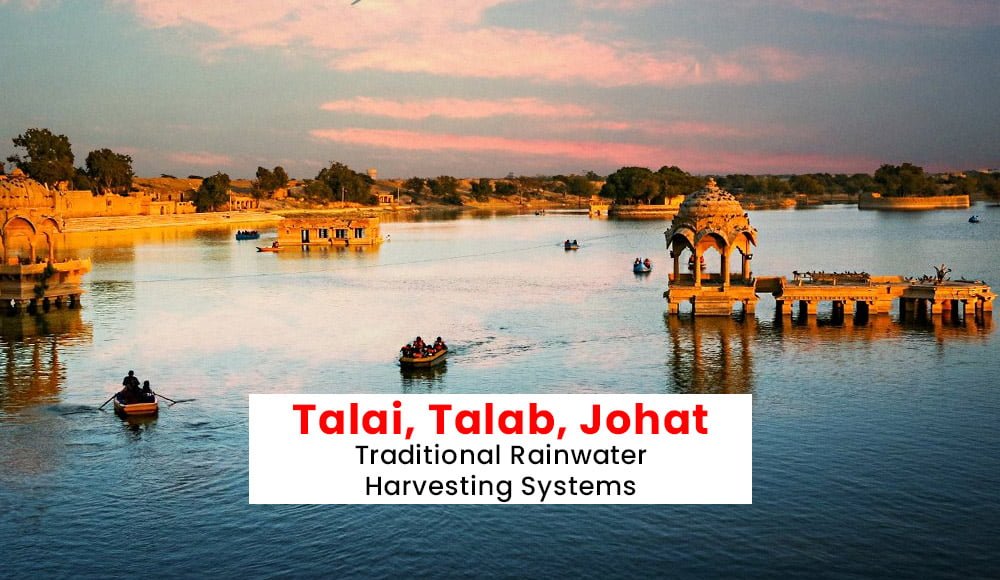
Talai, Talab and Johat! We have all heard these names since our childhood as they comprise the traditional water harvesting systems of India.

Since ancient times, our ancestors have invented various thoughtful and genius methods, to harvest water, for present and future use right since Indus Valley Civilization.

 Even today, town planners keep a special place for water reservoirs with proper catchment channels while chalking out the grid plan of the town. There are many benefits of water harvesting like reduction in soil erosion, increase in ground water levels and tree cover, control over frequent floods and droughts, and having a year round supply of water.  Different methods of water harvesting are used in different parts of India according to geographical terrains.

 Let’s have a look at 6 traditional methods of water harvesting that are still in use.

Traditional Rainwater Harvesting Systems in India: Talai, Talab, Johat
Lake Pichola in Udaipur
  1. Talab/Bandhis/Pond: Almost every town and village has a pond or lake for water supply. Either it is natural like or man-made. The examples of natural lakes and man-made lakes are:
  1. Pichola Lake in Udaipur (natural)
  2. Pushkar Lake in Ajmer (natural)
  3. Siliserh Lake in Alwar (natural)
  4. Foy Sagar Lake in Ajmer (man-made)
  5. Gadisar Lake in Jaisalmer (man-made)
  6. Balsamand Lake in Jodhpur (man-made)

They store huge quantities of water for drinking, household, religious and tourism purposes. Rain water is collected via narrow streams coming from various directions. Names are given according to size:

                                    a)    Talai – water body within 5 bighas.

                                     b)   Talab/Bandhi – a lake of medium size.

                                     c)   Sagar/Samand – A bigger sized lake.

  1. Johads: Mainly found in the arid state of Rajasthan, these are small earthen(mud) check dams built to harvest and store rainwater for various purposes including recharging ground water. You will find them in areas having natural elevation on three sides where a reservoir pit has been dug out and an earthen embankment is constructed on the 4th side by the excavated mud. Sometimes a number of Johads are inter linked to balance out the water pressure on its walls.
  2. Baoris/Stepwells: This traditional Water Harvesting method is unique to North-western and Western India. The scarce rainfall received by this semi-arid region is collected in man-made tanks by connecting them with canals built in hilly catchment areas. And to minimize water evaporation, a flight of steps are built around it to narrow down and deepen the well/tank. Such enormous structures were mainly built in cities for drinking purposes. Delhi and Bundi district have beautifully designed baoris. Examples are:-
  1. Chand Baori in Abhaneri village near Jaipur having 3500 deep steps and 13 storeys.
  2. Rani ki Baori in Bundi district.
  1. Ahar Pynes: This ancient flood water harvesting system is indigenous to southern Bihar. Ahar is a water reservoir having embankments on 3 sides and pynes are narrow water streams dug out to divert excess water from rivers to Ahar. This traditional Water harvesting system controls floods and can irrigate up to 400 acres.
  1. Kul/Kuhls: Kuls are diversion channels that carry water from streams of melted glaciers to the villages. It is a traditional Water harvesting and irrigation system prevalent in Himachal Pradesh especially in rain shadow region of Spiti Valley. Kuls/canals drain their water in a circular pond in the village from where water is diverted towards fields for irrigation purposes. One Kul system can irrigate around 20 hectare of land. There are more than 300 Kuhls in Himachal Pradesh for community welfare. 
  1. Eri:  An old water storage system using tanks is widespread in Tamil Nadu. These tanks are fed naturally by rain water or by diversion channels carved out from rivers. Several eris are interconnected to provide water to the remotest of villages for their daily needs. Even today 1/3 of the irrigation in Tamil Nadu is still done through these huge water bodies. Majority of the rich paddy cultivation is credited to this traditional and highly useful water harvesting and irrigation system. This ancient system is very reliable in controlling floods, prevention of soil erosion, groundwater replenishment and storing of flowing rain water. 

Palace on Wheels: The luxury train now woos domestic travellers with 30% discount

0

You must have dreamed of travelling in Palace on Wheels, a luxury train, however, its occupancy by foreign travellers never gave a chance to domestic travellers to take a tour on this lavish train. However, COVID-19 seems to be changing the equations.

Palace On Wheels is now wooing the domestic tourists by bringing in new itineraries and offering 30% discount to travellers.

Plans and ways to fight to COVID battle

As the world seems going stagnant fighting the COVID battle, the tourism industry in Rajasthan plans going the domestic way to battle the odds. Eventually, a domestic traveller will now have more chances to take a tour in their ‘dream train’. Let’s bring out a few plans being chalked out by the Travel Industry in Rajasthan to fight Corona crisis:

Palace on Wheels: The luxury train now woos domestic travellers with 30% discount
  1. An aggressive marketing campaign: Tourism stakeholders are chalking out strategy to undertake an aggressive marketing campaign to project Rajasthan as the preferred tourist destination for domestic tourists. 
  2. New circuits to be developed: State tourism minister Vishvendra Singh says that new circuits will have to be worked on focusing on spiritual, wildlife and adventure tourism
  3. Palace on Wheel to focus on domestic tours: The luxury train, Palace on Wheel, enjoying around 98pc occupancy of foreign clients, shall now focus on domestic tours. The train’s itinerary will also be changed accordingly, said tourism minister Vishwendra Singh in a Rajasthan Revival Summit meet held here recently. This meeting was called by Rajasthan tourism stakeholders to plan out a strategy to revive the tourism industry which has been hit hard by COVID-19 crisis which witnessed multifarious suggestions on reviving tourism in Rajasthan in these times of global pandemic and post-Corona. 

4. Reviving tourism department’s website: The tourism department website will be revamped and social media will be made more innovative and creative. Singh said that a committee on the health and hygiene issues has been formed within the Department. They will focus on the various health guidelines informed by the Health department to be followed. 

Palace on Wheels: The luxury train now woos domestic travellers with 30% discount
Kalbeliya dancers of Rajasthan

5. Package for craftsperson and folk performers: On a suggestion made by internationally acclaimed Kalbeliya dancer, Gulabo, the tourism minister announced that craftspersons and folk performers need to be looked after during these times and a package will be organised for them as well.

6. Aggressive advertising campaign: It was suggested that the Tourism Department should undertake a proactive advertising campaign in the leading newspapers and channels. 

7: Tying up of luxury train with private museums: MP Diya Kumari said the Palace on Wheels should tie up with private museums and monuments. This will give them a boost as well. She also emphasised on a proper health guideline to be given for the visiting tourist after the lockdown is lifted.

Palace on Wheels: The luxury train now woos domestic travellers with 30% discount
Maharani Restaurant in Palace of Wheels

Representative of Indian Heritage Hotels Association (IHHA) and  Federation of Hospitality and Tourism of Rajasthan (FHTR), Randhir Vikram Singh said that there should be a toll-free number for the tourists so that they can get immediate information about the State. He also emphasised that film shooting was another potential area in which the Government needed to support by waiving off the fee and making the required permissions for shooting easier.

5 Miracle Temples of Rajasthan

0


We, as humans, pray to the almighty for his blessings. We also pray to him to shower his divine powers upon us to bless, heal and help us and our dear ones, in fighting tough challenges diseases and ailments. Some holy places have so much divine energies that miracles have happened, there, time and again. Many people have found their diseases
and problems vanished in thin air after they paid their homage to these holy shrines. Below are 5 miracle temples of Rajasthan:

5 Miracle Temples of Rajasthan
Tanot mata in Jaisalmer


1) Bombs from Pak failed to destroy the Tanot Mata Temple (Jaisalmer): This old temple is situated near the Indo-Pak border in the Jaisalmer district of Rajasthan in western India. Tanot Mata (goddess) according to Charan
literature is an incarnation of Hinglaj Mata. The temple is situated near the battle site of Longiwala of the India –Pakistan war of 1971. During this war, Pakistan army dropped many bombs to destroy the temple but not a single bomb exploded on the temple. Such is the miraculous sacred powers of this temple and the locals have immense faith in the goddess.
Do visit its museum where the unexploded bombs are still kept.

5 Miracle Temples of Rajasthan


2) Rats and the Deity stay together in Karni Mata Temple (Deshnokh): This is the world famous Rat Temple where thousands of
rats live along with the deity. Tourists are amazed to see rats crawling on the deity’s statue,
floor, temple bells and just everywhere. It is believed that the family members and devotees
of the Goddess were turned into rats so that they could live with her forever. In spite of
thousands of rats plague has not touched this holy miraculous temple, but people suffering
from plague are brought here and they get miraculously healed. Such is the power of divinity.

5 Miracle Temples of Rajasthan
Butati Dham in Nagaur


3) A Blessing for Paralytic Patients: Butati Dham Temple (Nagore): Butati is a small village on the Ajmer highway and here a
400 year old yogi name ‘Chatur Das Maharaj’ used to cure paralysis in people with his
penance. Many paralytic patients visit and take a ‘Parikrama’ of his mausoleum and get
miraculously cured of this life defining disease. This land is called ‘Dev Land’ i.e. ‘Land of
God’.

5 Miracle Temples of Rajasthan
Mehandipur Balaji


4) Mehandipur Balaji Temple (Dausa), Fights Negative Energies: It’s a popular temple of India where Lord Hanuman is addressed as Balaji, his childhood name. It is famous for exorcism and ritualistic healing to
fight evil spirits and black magic. The people suffering from such paranormal things are
called Sankatwalas here, and by holy they are given relief by holy practices of Darkhst, Arji
and Sawamani. For successfully performing those, the priests of this temple follow a strict
vegetarian diet. You will find many Sankatewalas in less than alert states so don’t be scared.

5 Miracle Temples of Rajasthan


5) Maa Bhuwal Kali Mata Temple (Nagore) where Devotees Offer Liquor: Located in Merta Tehsil here Kali Mata and Brahmani Mata are worshipped in twin form. Most interesting thing about this ancient temple
is that the Goddess is offered 2.5 cups of Alcohol/Liquor. The Goddess is not found of fruits
and sweets but is bold in her choice of alcohol! According to the stone inscription in the
temple premises it was built in 1380 Vikarm Samvat. There is a secret chamber on top of the
temple called the ‘Cave’.

Top 10 Colourful Festivals of Rajasthan

0

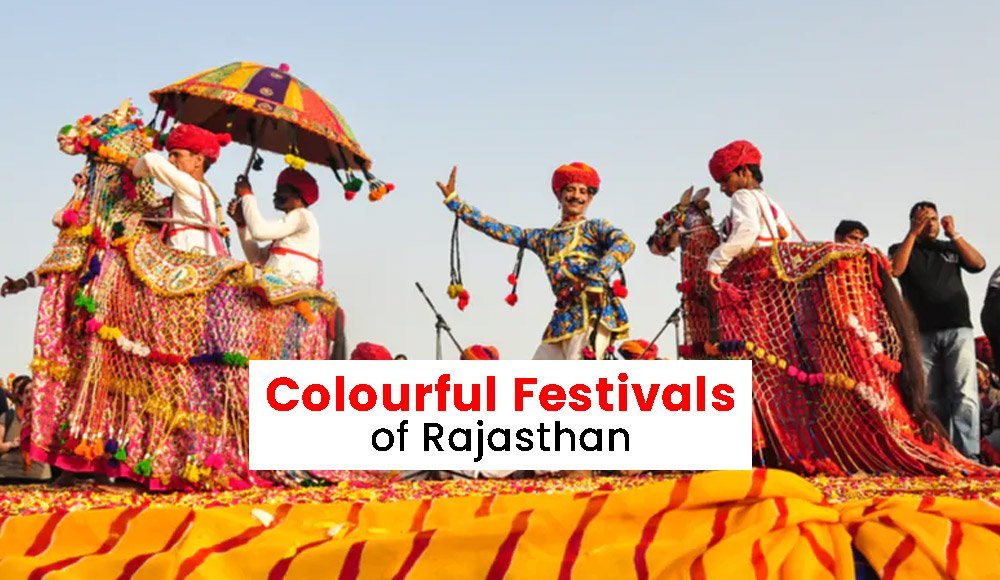
Rich royal culture, fabulous architecture, mesmerising palaces and temples, beautiful desert terrain, bright coloured clothes, aromatic cuisines and playful local festivals? Got the clue what I am speaking of? Yes, it’s colourful Rajasthan which never fail to mesmerise a visitor with its traditional thumping music, folk dancers dancing clad in vibrant embroidered attires, mouth-watering food and colorful festivities. They are sure  to engulf your senses and take you on a fascinating ride in to the world of kings and queens where their palatial forts still stand live to present the picture perfect of the erstwhile royal era.

Rajasthan boasts of many colorful festivals but these 10 are just not to be missed if you want to feel the air of this incredible culture…

1) Teej: This big colourful monsoon festival is celebrated in grandeur style by the native women for marital bliss. Women dress in their traditional attires and finest jewellery, apply henna on their hands and fast for the long life of their husbands. A musical procession of Goddess Parvati’s statue with women dancing around it floods the streets and is a must watch.

Top 10 Colourful Festivals of Rajasthan
Teej celebration at City Palace in Jaipur

2) Desert Festival (Jaisalmer): This festival makes the sand dunes come live with exciting camel races, moustache and turban tying competitions. Also there are stunts shows, and energetic performances of Kalbelia and Ghomar dancers, bright clothes clad locals, handicraft shops and lip smacking food.

Organized by Rajasthan Government in February, this festival is a colourful depiction of traditions and achievements of Rajasthan.

Top 10 Colourful Festivals of Rajasthan
Guests enjoying at RIFF

3) Rajasthan International Folk Festival (RIFF Jodhpur): Presented as ‘People’s Platform for

creativity and Sustainable Development’, this musical festival is patronised by Sir Mick Jagger

and Maharaja of Jodhpur. It’s held at Meharangarh Fort where 200 artists from world over fill

the air with their soulful music.

Top 10 Colourful Festivals of Rajasthan
Camel decorated at Pushkar Fair

4) Pushkar Fair: The cattle fair of Pushkar is a sight to behold! On the banks of the serene Pushkar

Lake, thousands of farmers trade their decorated camels, bulls and other livestock. For four days, the cultural carnival includes folk dance and music performances, puppet shows, hot-air balloon rides, camel races, tasty food stalls and handicraft shops.

Top 10 Colourful Festivals of Rajasthan
Decked up Diggi Palace during JLF in Jaipur

5) Jaipur Literature Festival: A heaven for book lovers! Organized in the charming Diggi Palace this festival is world’s largest free literature festival. A great platform where many writers and

Top 10 Colourful Festivals of Rajasthan
Deputy chief minister of Rajasthan Sachin Pilot (R) and TV Anchor Rajdeep Sardesai (L) at JLF

famous personalities launch their book and held live sessions. Enjoy books, Rajasthani decoration, local and international food, bazaars of handicrafts, clothes, etc.

6) Magnetic Fields Alsisar: The magnificent 17 th century Alsisar Palace holds this fantastic music festival for 3 days. Acclaimed international DJs, underground music artists, local folk and electronic artists keep you spell bound 24×7. There are food and handicraft shops and even tents to stay.

Top 10 Colourful Festivals of Rajasthan
Braj Holi in Bharatpur

7) Braj Holi: Holi, the most fun-filled and loved festival of India, is celebrated in Bharatpur in pomp and style. People dress in colorful clothes and indulge in full-on color play and the spirit of the city comes alive. The love story of Lord Krishna and Radha is showcased in the form of dance.

Top 10 Colourful Festivals of Rajasthan
Attractive kites been adorned at Jal Mahal in Jaipur

8) International Kite Festival: The desert sky of Jodhpur and Jaipur turn vibrant by colorful and charming kites of all colors, shapes and patterns. ‘Makar-Sakaranti’ is celebrated by this extravagant kite flying completion. Jal Mahal in Jaipur presents a picture perfect by playing a host to thousands of guests, both foreign and domestic, who visit here to give a try to their kite flying skills.

Top 10 Colourful Festivals of Rajasthan
Winter festival celebrations in Mt Abu

9) Summer and Winter Festivals at Mount Abu: Held in May and December, these festivals celebrate the cultural richness of the only hill station of Rajasthan. Folk dances, music, extravagant fireworks, boat racing, horse racing and camping will entertain you for 3 days.

Top 10 Colourful Festivals of Rajasthan
Women decked up to ccelebrate Mewar Festival in Udaipur

10) Mewar Festival (Udaipur): The coming of spring is celebrated in colorful fashion. The city dazzles with decoration and you can see processions of locals dancing in their traditional dress.

Exhibitions and food stalls make it more interesting.

Ruma Devi (Popular Traditional Handicraft Artisan) out creates jobs for 22,000 women in Rajasthan

0

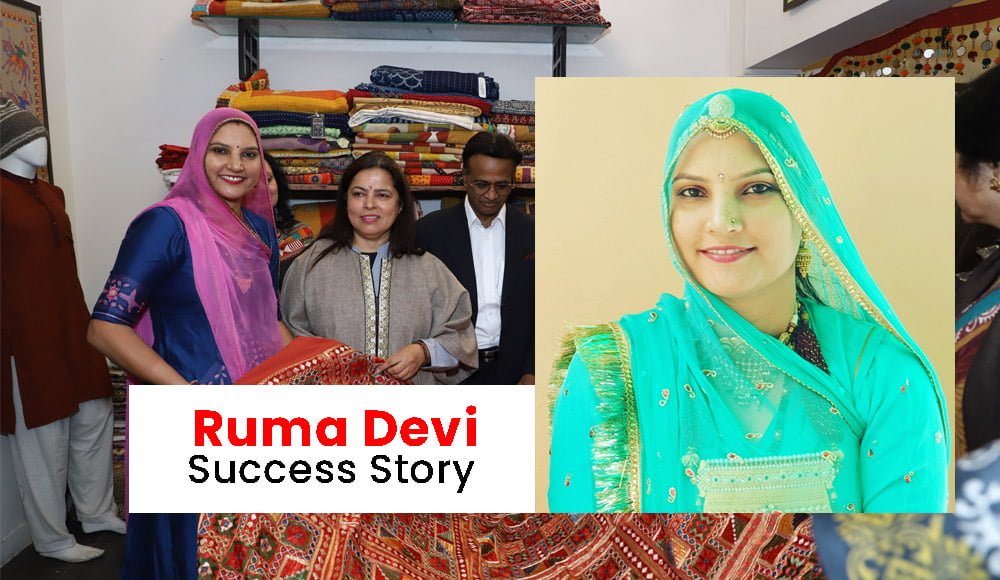
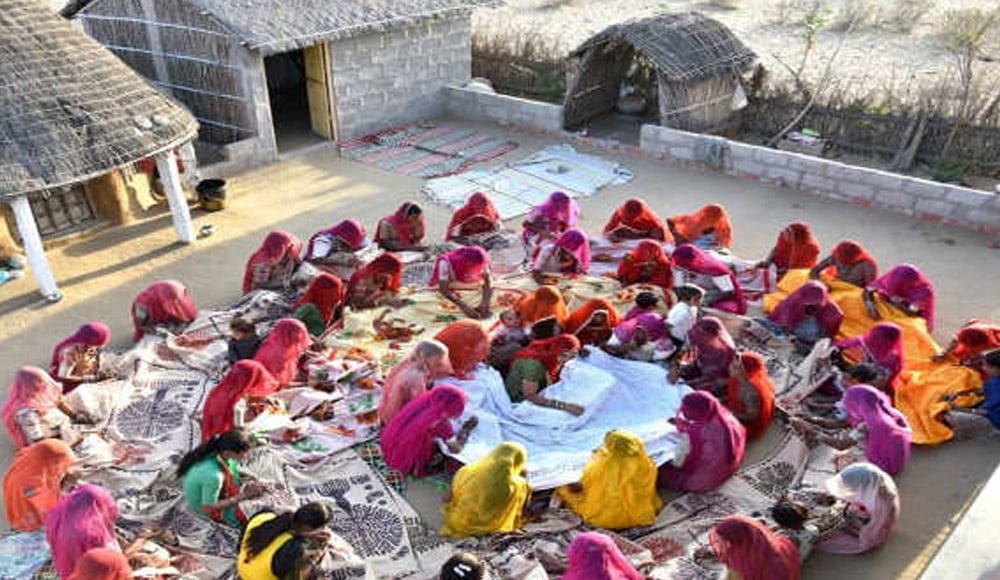
Can you believe a school dropout who is class VIII pass out has created jobs for 22,000 rural women in Rajasthan that too right in their house to ensure they don’t have to go out leaving their house and family?

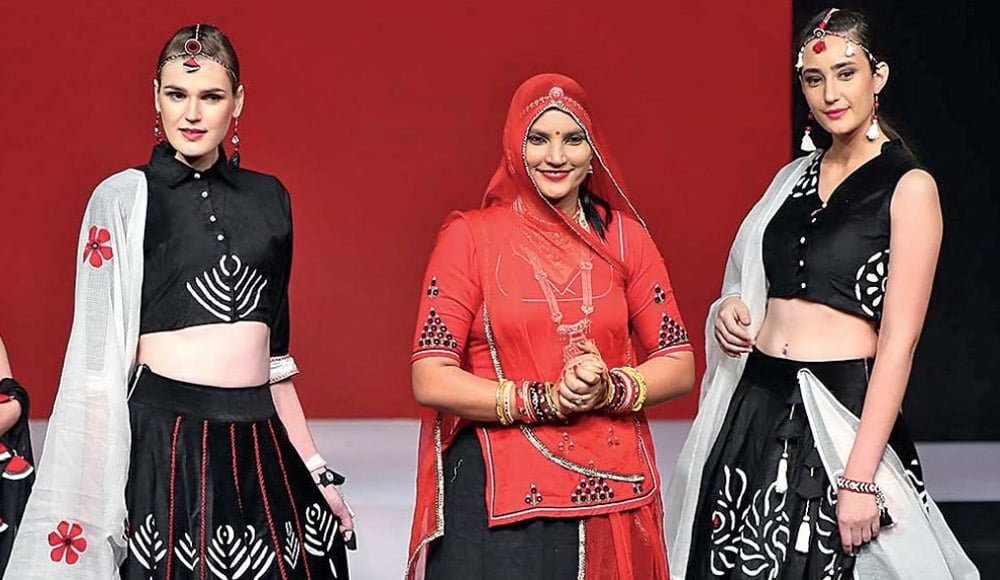
This might sound unbelievable but is true and the woman scripting this success story is Ruma Devi, a resident of Barmer who has earned laurels for being a fashionista with world renowned designers being her clients.

Ruma takes all efforts of visiting her employees’ houses to drop raw materials at their place. These women then produce the best of the designs in terms of artistry which are being sold to International designers.

Doesn’t this make an inspiring story?

It definitely does with the story accommodating many other interesting angles.

Ruma has seen the harshest challenges in her life and despite that she managed to smash all set traditions; she has set live examples of women empowerment and has created jobs for thousands of women.

Her strong client list includes renowned names such as Anita Dongre, Abrahim Thakore, Bibi Russell and many from US too.

Ruma Devi (Popular Traditional Handicraft Artisan) out creates jobs for 22,000 women in Rajasthan


Ruma suffered all odds, she was born in a financially weak family, her mother passed away when she was just five, her father re-married and then started Ruma’s real struggle—her name was dropped from school when she reached class VIII.

Each day, she was asked to travel around 10 km to fetch water and engage in household chores. At 17, her family got her married to other family where poverty was her companion.

Fed up of financial crisis, she stood out for herself and created a group of 10 women and collected Rs 100 each from them to buy raw material to design hand embroidered bags.

“The bags were really beautiful and hence were sold like hot cakes when we went to market to sell them. Then we formed further groups and started selling our bags in nearby villages too. Much to our surprise, the result was fabulous,” she says adding that with this initiative, “I was trying to set new traditions by using the art (embroidery) my grandmother taught me years back when I was a kid.”

Her fame spread soon in and around and then Grameen Vikaas and Chetna Sansthan in Barmer made her its member in 2008. In 2010, she was appointed as the president of this organisation.

Ruma Devi (Popular Traditional Handicraft Artisan) out creates jobs for 22,000 women in Rajasthan

“Again we started to break the traditions. Hence we started participating in exhibitions where we started showcasing our work which created more demand for our products.

“Presently, around 22,000 women are working with us who belong to different age groups from 17 to 70. The young girls working with us have dreams sparkling in their eyes to do something different, although in a veiled world as earlier they had no scope here except to marry and depend on husband and in-laws for all their needs.”

In fact, I had also started working with a ghoonghat. We used to travel miles in veil, face hidden under our chunri. However, complaints started coming in as mistakes happened when we used to put a delicate stitch. At this point of time, my family permitted me to come out of ghoonghat and put a little veil on head. When I was permitted, my girls followed me and now ghoonghat is a bygone era from our lives.

Ruma Devi and her team members work hard—even under scorching sun with 50 degree of temperature. The earnest designs with delicate and beautiful stitch bespeaks how we have put our heart and soul in it. Also we trudge several kilometres to fetch water and do our household chores. Besides, we walk many kilometres to supply raw materials to the house of our women teams. The houses are quite far in Barmer separated with many sand dunes. So life is not easy for us, she says smilingly as if to show it’s just a minute challenge for us as we have bigger goals.

At times, we lack sufficient place for dyeing process as well, she adds.

Now, Ruma, the woman of substance, has yet bigger plans to launch her own brand.

Ruma was recently awarded in TFI and was awarded with a Paris trip so that she can learn the best from the world”s most fashion-friendly city. However, this designer presently wants to get the best from rural rustic lanes of her home town which has brought her to this level.

“They are interested in sending me to Paris, however, there is much in my list to do; so shall go a little later,” she says.

Due to her grit persistence and dedication for women empowerment, Ruma was also awarded with the biggest award for women, ‘Nari Shakti Award’ by President Ram Govind in 2018. This award has been bestowed on only 41 women of the nation till date.