International Museum Day 2022: Date, theme and significance
International Museum Day is celebrated each year on May 18 by museums across the globe aiming to generate awareness on the significant role of museums in community building, national and international cooperation as well as cultural exchange.
International Museum Day 2022 theme
The theme of International Museum Day 2022 is ‘The Power of Museums’.
Mame Khan scripts history, becomes first folk artist to open Red Carpet for India at Cannes
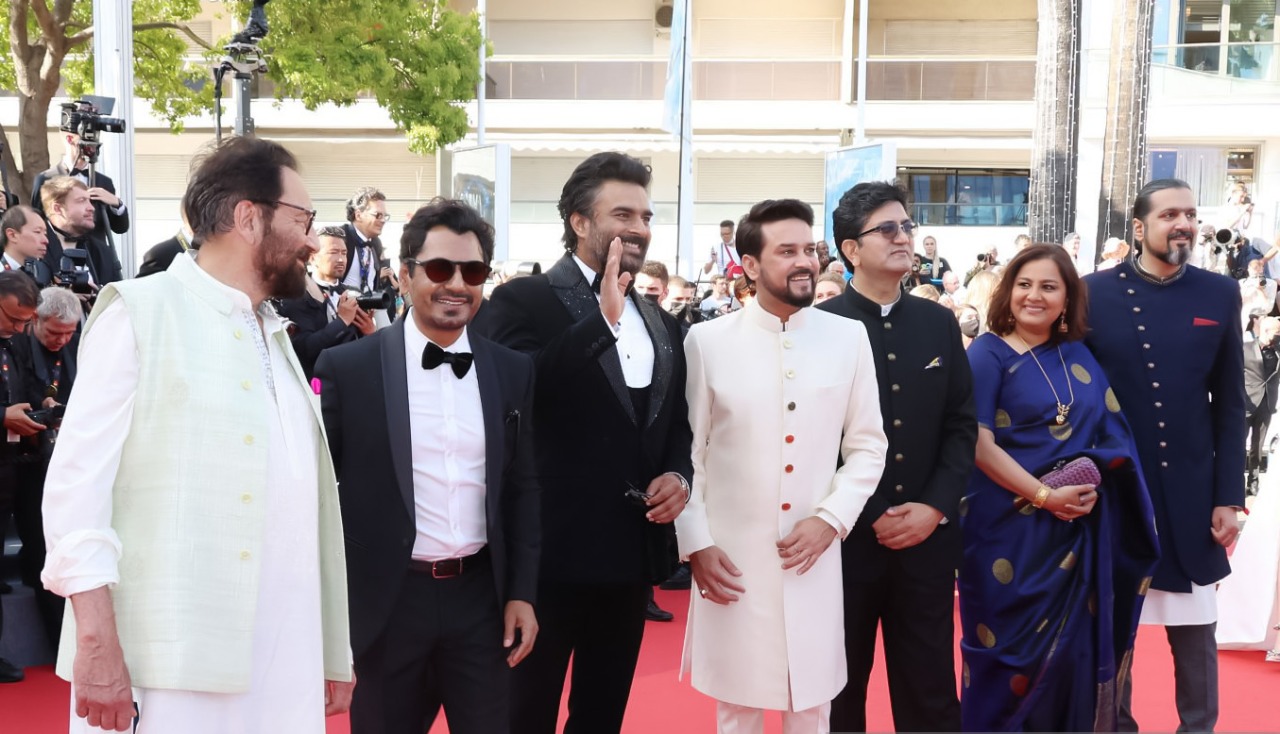
In a star studded presence on the Red Carpet, Union Minister of Information & Broadcasting Anurag Thakur led the largest ever Indian official delegation of eleven celebrities walking together on the inaugural event at Cannes Film Festival on May 17, 2022.
In a historic moment for Indian folk arts, Mame Khan became the first ever folk artist to open a Red Carpet for Indian contingent at Cannes ever.
Putting on display the diversity and uniqueness of Indian cinema, the glamorous red carpet contingent comprised film celebrities from across India. Consisting of eleven members walking towards the legendary stairs of the Palais des Festivals, the delegation carried all the symbolism of India’s ambition to become as a global cinema hub.
10 celebrities accompany the minister
The ten celebrities that accompany the Minister feature three musical maestros, who have been raising India’s flag on the international scale, and renowned film makers and actors from Indian Cinema who represent a kaleidoscope of diversity from various regions, languages, mainstream and OTT led cinema. India the land of story tellers is setting a beautiful narrative for the world through its strongest ever Red Carpet presence at Cannes.
Starts include actor Nawazuddin Siddique
Among the stars was actor Nawazuddin Siddique, a regular at Cannes. His raw, powerful acting and the realism of his movies, such as The Lunchbox or Gangs of Wasseypur, have a particular resonance among European audiences, and signal that India is capable of producing movies catering to a wide range of sensitivities.
Music composer AR Rahman, Mame Khan folk singer present
Presence of superstar music composer AR Rahman in the group displayed the intent of the Indian delegation to pay tribute to cinematographic music – for, maybe more than anywhere in the world, soundtracks play a massive role in the DNA of Indian cinema. Showcasing the musical eclecticism of the country, different genres were represented on the red carpet. Ricky Kej, an internationally acclaimed new age music composer and multi-Grammy Award winner, represented a more contemporary side of India, while Mame Khan, a film composer and folk singer from Rajasthan, personified the influence of folk culture on Indian cinema. Prasoon Joshi, a lyricist who penned innumerable evergreen film songs, and now Chairman of the Central Board for Film Certification (CBFC), was also present.
India sends strong signal to world
Ambassadors from different regional cinemas were included in delegation, sending the signal to the world that India – which boasts of 25 regional film industries – has many different flavours and styles to offer in terms of film production. This year, cinema from the south was in spotlight. R. Madhavan, actor and producer who has been involved in movies shot in six different languages (Tamil, Telugu, Malayalam, Kannada, Hindi and English) was a good example of the staggering diversity of Indian cinema. Two Telugu cinema superstars, Tamannah Bhatia and Pooja Hegde, also made their dazzling appearance as part of the delegation.
Shekhar Kapur, director of legendary films such as Mr. India, and now chairman of the Film and Television Institute of India (FTII), as well as Vani Tripathi Tikoo, actress and member of CBFC, also took part in the Indian delegation.
Delegation members in order of appearance on Red Carpet
1. Mame Khan, famous folk singer from Rajasthan
2. Shekhar Kapur, Globally acclaimed Director
3. Pooja Hegde, Actress
4. Nawazuddin Siddiqui, Actor
5. Tamannah Bhatia, Actress
6. Anurag Thakur, Head of the delegation and the Union Minister of Information & Broadcasting, India
10. Vani Tripathi, Producer, Member CBFC, Indian film personality
11. Ricky Kej, the two times Grammy award winner and musician
Background:
Cannes Film Festival, which gathers every year the who’s who of the global movie industry, will take place from May 17th to 28th, 2022, and will be the occasion for Indian delegates to take part in various events and high-level meetings.
The festival is special this year for its celebration of Indian cinema’s prowess as India is the first ever official Country of Honour at Marche du Film. India is also a “Country of Honour” at the Cannes Next, under which 5 new Startups would be given an opportunity to pitch to the Audio-Visual Industry. Ten professionals will participate on the Animation Day networking. As a major highlight of India’s participation at this edition of Cannes Film Festival, World Premier of the Movie “Rocketry” produced by Shri. R. Madhavan is scheduled to be showcased at the Palais des Festivals on the 19th May 2022.
On May 18, 1974, India conducted its first atomic bomb test successfully at the army base at Pokhran in Rajasthan. The operation ‘Pokhran-I’ was undertaken with the code name ‘Smiling Buddha’ under the supervision of several key Indian Army generals.
The then Prime Minister of India Indira Gandhi felt the need to make India a nuclear power after winning the war against Pakistan in 1971.
On 7 September, 1972, she gave verbal authorization to Indian scientists to manufacture nuclear device and make preparations for a test. Till that time, the permanent members of the United Nations possessed nuclear weapons which included United States, France, China (the Republic of China), Russia (Soviet Union) and United Kingdom.
Soon after these orders, started the preparations for making India a nuclear power. The practical work of engineering the paper design for the operation ‘Smiling Buddha’ started. Works started for locating, surveying, and preparing a suitable test site.
The operation was kept a secret due to international pressure by permanent members of United Nations which was against any country practicing nuclear test.
The government employed 75 civilian scientists for the project which included Raja Ramanna, Basanti Dulal Nagchaudhuri and Dr. Nagapattinam Sambasiva Venkatesan among others who played a key part for completing the operation. The DRDO Terminal Ballistics Research Laboratory (TBRL) in Chandigarh developed and manufactured high explosive implosion system, which after being tested on May 18, 1974, madeIndia the sixth nation in the world to become a Nuclear power.
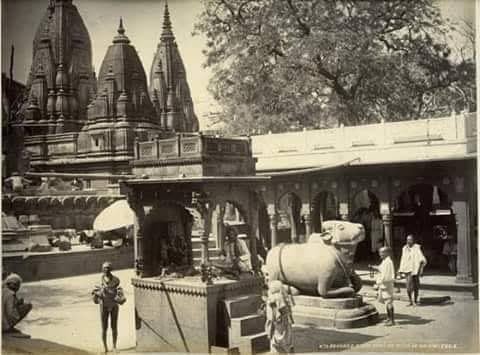
Gyanvapi Mosque Case: The Gyanvapi mosque is situated adjacent to the renwoned Kashi Vishwanath temple caught into a controversy since centuries with Hindu groups alleging that the mosque was built by Mughal emperor Aurangzeb after demolishing structures of the Kashi Vishwanath temple in the 16th century while a few historians suggesting that the Gyanvapi mosque and the Kashi Vishwanath temple were built by Mughal emperor Akbar to spread awareness about his Din-e-Ilahi religious system.
Recently, the court-mandated videography survey of the Gyanvapi mosque complex completed, however, details of the survey were not disclosed.
Gyanvapi complex: The controversy
The controversy started in 1991 after a few local priests claimed that Aurangzeb demolished some parts of the Kashi Vishwanath temple – which was originally constructed by Maharani Ahilyabai Holkar of Malwa kingdom – to built the mosque. They sought permission to worship in the Gyanvapi complex and claimed idols of Hindu Gods are present there.
However, as the matter remained dormant, the hearing was suspended by the Allahabad High Court.
Gyanvapi complex: What do historians suggest?
Meanwhile, there are a few historians claiming that the Gyanvapi mosque and the Kashi Vishwanath temple were built by Mughal emperor Akbar to spread awareness about his Din-e-Ilahi religious system. However, others support claims that Aurangzeb demolished parts of the Kashi Vishwanath temple.
Historian Audrey Truschke in her book Aurangzeb: The Man and the Myth wrote, “My understanding is that the Gyanvapi masjid was indeed built during Aurangzeb’s reign. The masjid incorporates the old Viswanath temple structure — destroyed on Aurangzeb’s orders — as its qibla wall. While the mosque dates back to Aurangzeb’s period, we do not know who built it,” Truschke wrote.
“The Gyanvapi masjid still stands today in Benares with part of the ruined temple’s wall incorporated into the building. This reuse may have been a religiously clothed statement about the dire consequences of opposing the Mughal authority,” the writer added.
Gyanvapi controversy revival
Gyanvapi controversy was revived after the historic verdict of the Supreme Court in the year 2019 in connection with the Babri Masjid-Ram Janmabhoomi dispute. A petition was filed in the Allahabad High Court that sought a survey by the Archeological Survey of India (ASI) of the Gyanvapi masjid.
In 2021, another petition was filed by Delhi-based women, seeking permission to worship Hindu deities, whose idols are said to be located on the walls of mosque. They also sought instructions that idols of Hindu Gods should not be damaged.
Then in April 2022, Varanasi District Civil Court (Senior Division) judge Ravi Kumar Diwakar ordered a survey and videography at the mosque complex by the advocate commissioner. He also turned down a plea by the mosque committee to replace Ajay Kumar Mishra, who was appointed advocate commissioner by him to survey the Gyanvapi-Gauri Shringar complex.
Further, two more advocates were appointed to help the commissioner with the survey and said it should be completed by Tuesday.
The Muslim groups moved the Supreme Court against the survey however were left disappointed after the top court refused to grant an interim order of status quo on the survey.
After the three-day Gyanvapi Masjid survey concluded on Monday, a lawyer from the Hindu side in the case claimed that a Shivling had been found inside a wazukhana or reservoir on the mosque complex.
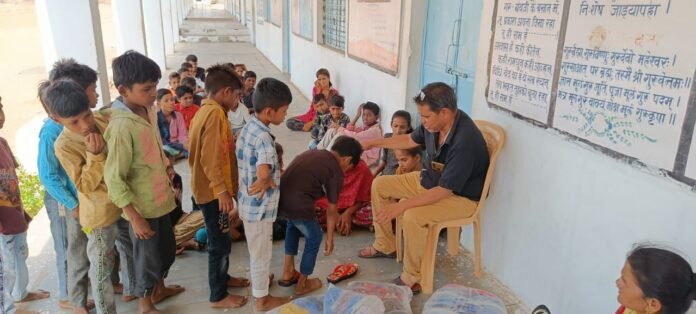
Banswara district has emerged as the hottest district in the state during the ongoing summer season, but the feet of a few schools students await the attention of philanthropists who can visit there and provide slippers to these young students who keep running with bare foot here and there.
Feeling their pains, Asmita Abhiyan run by the State Disaster Response Force, Commandant Pankaj Choudhary and social worker Mukul Pankaj Choudhary, distributed slippers to the children on the auspicious occasion of his elder son Joy’s birthday, under ehsas atma samman ka campaign.
The underprivileged children of Government Secondary School, Chaubiso Ka Padla, Tripura Sundari Mandir, Umrai, Talwara were shortlisted by teachers Shailendra Pandya and Bhavik Shrimali. The programme was presided over by the school principal Suresh Kumar Mehta, Panchayat Extension Officer Manish Upadhyay, social worker and author of the famous book Yaadon ka Tarkash. Swapnil Kulshrestha inaugurated the campaign. Bapulal Kharadi, Dali Yadav, Dinesh Bamania were present in the program. Bhavik Shrimali conducted the program.
Devotees pulled the chariot of God Krishna-Balram in Rath Yatra for the first time in Jaipur
On the 10th Patotsav of Shri Krishna Balram Temple, a grand Rath Yatra of Lord Shri Krishna Balram was taken out.
On this occasion, state minister Ramesh Meena, Kailash Sharma (Mahant Moti Dungri Ganesh Temple), Malay Goswami Mahant Radha Damodar Temple and Hare Krishna Movement Rajasthan Chairman Shri Amitasan Das amongst others cleaned the road with the broom at the start of the yatra.
A grand welcome was accorded at many places while through the way. People were very excited about the journey. The city appeared devotional with the hymns of Hare Krishna. Devotees thronged the streets to have darshan of the Lord. Devotees showered flowers at many places. After reaching the temple in the night, the aarti of the Lord was performed.
Beautiful Rangoli was made in front of the Rath Yatra. The chariot was decorated with exotic flowers. The Prasad distribution was being done behind the chariot. Special bhog was offered to the deity at the beginning of the Rath Yatra. In the Rath Yatra, camels dressed in Rajasthani style and horses were running ahead. In this four kilometer long journey, many kirtan groups proceeded with kartal and mridanga praising the Lord.
Narsingh Chaturdashi Festival was celebrated at Shri Krishna Balram Temple, Jagatpura here under the aegis of Hare Krishna Movement Jaipur.
Temple chairperson Amitasana Das said that a special Narasimha Yagya was organized on this occasion and Harinama Sankirtana was performed by the devotees.
Also Narasimha Aarti was performed here.
Thousands of devotees observed fast and offered special prayers.
The statue of Lord Krishna and Balram was decorated with attractive flowers and new clothes. In the evening, after the Maha Aarti, the palanquin journey of God was taken out, on this occasion, a Maha Sankirtan was organized. All these programs were shown live on the social media channels of the temple, At the end, Prasadi was distributed to all devotees who came to the temple.
Sharing the story associated behind the celebration of Narsingh Chaturdashi festival, Amitasana Das said that Lord Narasimha Dev appeared from the pillar to protect his devotee Prahlad from the terror of Hiranyakashipu on this day; the same Lord Shri Krishna emerged to protect all of us in this Kaliyuga. Therefore, all of you are requested to chant the holy name of God Hare Krishna Hare Krishna Krishna Krishna Hare Hare, Hare Rama Hare Rama Rama Rama Hare Hare at least 108 times daily.
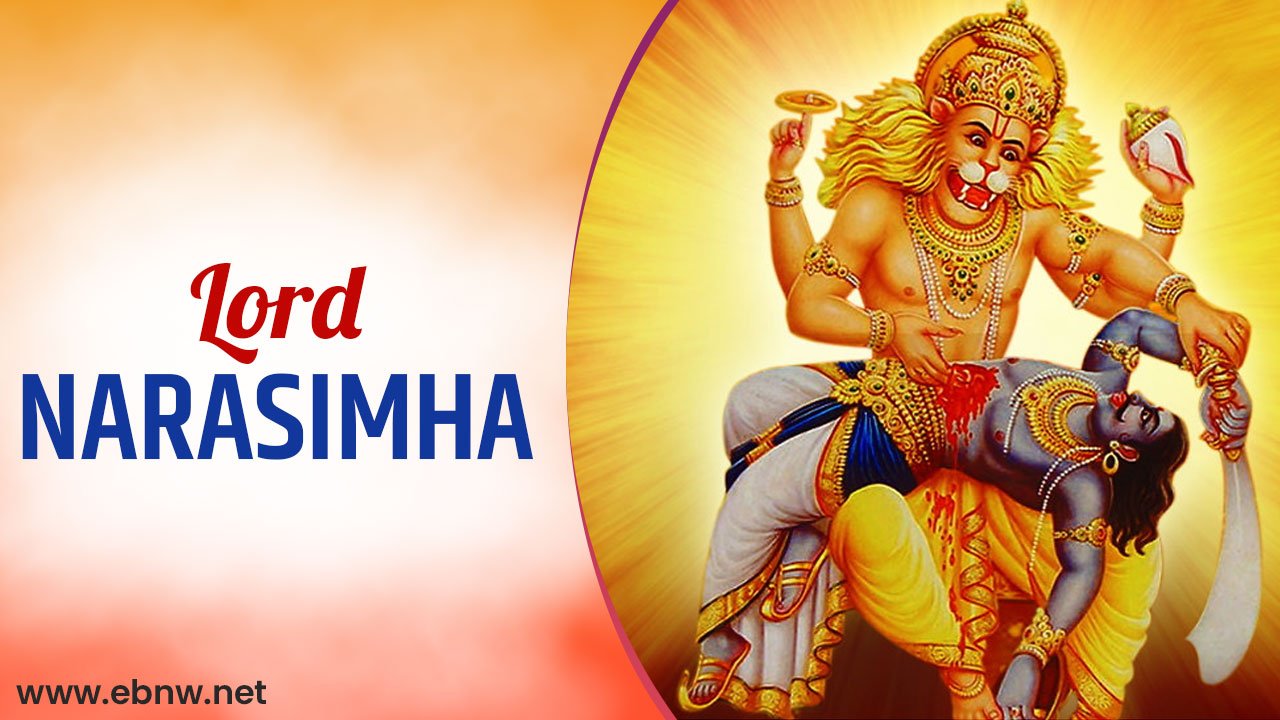
Narasimha Jayanti is one of the prominent Hindu festivals celebrated to mark the fourth incarnation of Lord Vishnu, Narasimha which is made of two Sanskrit words ‘Nara’ meaning man and ‘Simha’ meaning lion.
Narasimha describes the half human half lion avatar of Lord Vishnu.
Every year, Narasimha Jayanti is celebrated on Chaturdashi Tithi of Shukla Paksha in Vaishakha month. The day is also called Narasimha Chaturdashi. This year, Narsimha Jayanti is coming on May 14.
Narasimha Jayanti 2022 history
According to the purans, Prahlad, an ardent devotee of Lord Vishnu, used to pray to the Lord day and night which was not liked by his father, King Hiranyakashipu who made many attempts to kill Prahlad but never succeeded in his intentions.
To protect Prahlad and to end the evil, Lord Vishnu appeared in half lion and half human body and killed Hiranyakashipu to mark the win of good over evil. Scriptures say that Lord Vishnu turned Lord Narsimha during the sunset on Vaishakha Chaturdashi which is why Puja is done during the same time. The day also signifies the following Dharma.
Narasimha Jayanti 2022 date and time
According to the Panchang, Chaturdashi Tithi will begin at 03:23 pm on May 14 and will be in effect till 12:46 pm on May 15. Narasimha Jayanti will be observed on May 14.
Narasimha Jayanti 2022 worship
Lord Narasimha is mostly worshipped in evening as it is believed that Lord Vishnu took the avatar in the evening time. The auspicious timings, this year, to worship Lord Narasimha is from 04:22 pm to 07:04 pm on May 14.
Narasimha Jayanti 2022 fasting rules
Hindu devotees observe a day-long fast on Narasimha Jayanti. They wake up early during the Brahma muhurta and wear new clothes after taking a bath. Then, they keep a fast on this day starting from sunrise until the next day’s sunrise. During the fasting period, devotees have one meal in the day that exclude any kind of cereals or grains.
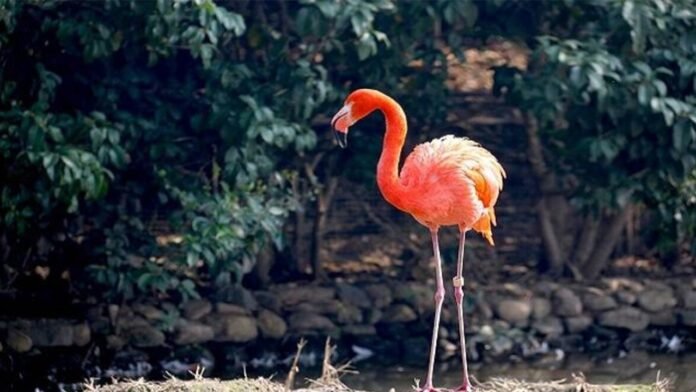
First bird park of Rajasthan opened up in Udaipur, pather rescue centre in pipeline…
Rajasthan Chief Minister Ashok Gehlot inaugurated the state’s first bird park at Gulabbagh in Udaipur on May 12,2022.
Forest official Dr. DN Pandey and other forest department officials informed the Chief Minister about birds accommodated here and their characteristics. During the inauguration of the Bird Park, the Chief Minister, Forest Minister and other public representatives planted saplings of five species to develop Panchavati garden in the park premises.
The Chief Minister inaugurated the Bird Park by cutting the ribbon and unveiled the inaugural stone plaque. During this, he took a tour and looked at the colorful birds of the twenty species kept here.
This bird park has been constructed on wide spread land of 3.85 hectares of Gulab Bagh, spread over an area of about 5.11 hectares. Tourism Department has given Rs 8 crores, Municipal Corporation Rs 1.75 crores, UIT Rs 1.74 crores for this park.
Addressing the media persons after the inauguration of the bird park, the Chief Minister announced to set up a Panther Rescue Center for panther conservation in view of the number of panthers in the district. During this, he said that 31 per cent area of the district is forest area and during summer season, forest workers will be given training by providing modern equipment on the incidents of fire.