Home Blog Page 754

Gudi Padwa 2022: Know date, celebrations, history and significance…

0

Gudi Padwa 2022: In Hinduism, the new year starts with Pratipada (first day of a fortnight ) of Shukla Paksha of Chaitra month. This is also known as Gudi Padwa. This year, the festival of Gudi Padwa will be celebrated on 2nd April.

The day also marks the start of the Chaitra Navratri. Both days have a great significance in Hinduism. Gudi literally means flag and Pratipada date is called Padwa. The festival of Gudi Padwa is celebrated with pomp all over South India including Goa and Maharashtra. It is believed about this festival that on this day, Brahmaji had created the universe and Satya Yuga had begun.

Gudi Padwa celebrations and reasons

There are different beliefs across the country regarding Gudi Padwa which are as follows:

The day of creation of the Hindu calendar

It is believed that the Pratipada of the Shukla Paksha of Chaitra month was the beginning of the Indian calendar, counting the days, months and years from sunrise to sunset.

New harvest festival

Gudi Padwa is also known as the harvest festival. In many parts of the country, people celebrate the festival of Gudi Padwa with great pomp to welcome the arrival of a new crop.

Lord Rama’s victory over Bali

South India was ruled by Bali in Treta Yuga. Bali was a tyrannical king. Lord Rama had freed people from the misrule by killing Bali. It is believed that this day was of Chaitra Pratipada. That is why this day is considered as a symbol of victory and Gudi means flag is hoisted.

Method of worshiping Gudi Padwa

. On this day, people wake up before sunrise and take bath. Torans and Gudi made of mango leaves are placed on the doors of the houses. On this day, beautiful Rangoli is also made at home.

Special dishes are made

On the occasion of Gudi Padwa, dishes like Puran Poli, Shrikhand, sweet rice are prepared.

King of Nav Samvatsara (Varshesh)

Lord (astrological planet) of the first day of the New Year is considered as the Lord of the year. In 2022, the Hindu Nav Varsh day is Saturday. Hence, lord of the Hindu New Year 2022 is saturn.

Gudhipadwa Celebrations

1. In the morning, after doing the daily routine works like cleaning, bathing, etc., Gudi is hoisted.

  – People clean their houses; and in villages, houses are plastered with fresh cow-dung.

  – It is mentioned in the Shastras that Taila Abhyang must be done during the Arunodaya Kaal on this day.

  – Gudi must be worshiped just after the sunrise. It must not be delayed.

2. Beautiful Rangoli designs are also made with bright colors and houses are decorated with fresh flowers.

3. People dress up in new, beautiful clothes. Usually, Marathi women adorn themselves in Kastha or Nauvari (9-yard Saree tucked at the back) and men wear Kurta Pajama along with a turban, which is mostly saffron or red.

4. Families gather and greet the New Year to everyone.

5. New Year’s horoscope must also be heard on this day.

6. Traditionally, the celebration begins after having the sweetened Neem leaves as Prasad. Usually, a paste is made with Neem leaves, jaggery, tamarind, etc. It is believed that this paste purifies the blood and increases immunity. Taste of this paste signifies the course of life as sweet, sour, and bitter.

7. Delicacies are cooked like Shrikhand, Puran Poli, Kheer (sweet porridge kind of dessert usually made with sweet potato, coconut milk, jaggery, rice flour, etc. by Marathis), and Sanna.

How To Raise Gudi

1. The area must be cleaned properly where the Gudi will be placed.
2. A Swastika should be made on the ground below the Gudi.
3. A Swastika should be made on the ground below the Gudi.

About Gudhi Padwa

Gudipadva has several names as per the different regions in India.

1. Samvatsar Padvo is celebrated among Konkanis of Goa and Kerala.
2. Rest of the Konkani diaspora in Karnataka know it as Yugadi.
3. People from Andhra Pradesh and Telangana celebrate Ugadi.
4. Kashmiris celebrate it as Navreh.
5. Sajibu Nongma Pānba or Meetei Cheiraoba is celebrated in Manipur.
6. Chaitra Navratri begins from this day for North Indians.

On this day, Marathis hoist the Gudi. That is why this festival is known as Gudi Padava. Gudi is made on a bamboo stick by placing an inverted Kalash of silver, copper, or bronze over it and adorning the bamboo with a beautiful cloth (usually, it is of saffron color and made of silk with brocaded borders). The Gudi is then adorned with Gaathi (sugar crystals garland), Neem leaves, a mango twig, and red-flower garland.

The Gudi is hoisted at a higher place like terrace in home so that it is quite visible to everyone. Many people also stick it on their windows or the right side of their doors.

Significance Of The Gudi

Many beliefs are associated with Gudhi Padva. Some of them are mentioned below:

1. People hoisted Gudi in history when their King Shalivahana defeated Sakas and came back to Paithan, as it is considered as the symbol of victory.
2. Some people also hoist Gudi to commemorate the victories of Chhatrapati Shivaji.
3. As it is believed by some that Lord Brahma created the universe on this day, Gudi is also believed to be the Brahma Dhwaj (Lord Brahma’s flag). Some people also consider it as Indra Dhwaj (flag of Lord Indra). Hence, for some, it is also the beginning of the spring season.
4. Some people hoist Gudi as the symbol of the Lord Rama’s return to the Ayodhya after 14 years of exile.
5. Usually, it is believed that hoisting Gudi brings prosperity in life.

Sattriya dance belongs to which state of India?

0

Sattriya is a dance form that is more than 500 years old and comes from the Vaishnava monasteries of Assam state of India.

Satrriya, also known as Sattriya Nritya, was formed in the Satra monasteries as a contribution extended to the Bhakti movement of neo-Vaishnavite led by Srimanta Sankardev during the 15th century in Assam.

Therefore Sattriya has its origin from Krishna focused Vaishnavism in the state of Assam as introduced by the famous scholar, reformer and Vaishnaya saint Srimanta Sankardev. Sattriya classical dance is more than five hundred years old.

The dance form Sattriya is a powerful medium of interpretation of faith associated with Vaishnavism which has underwent various changes with time. In fact, it always came out in a more expanded form with distinctive styles.

It has been preserved for many centuries as committed by the Vaishnava monasteries. As the dance style is related to Sattras possessing religious values, therefore, it was given the name of Sattriya. Sankaradeva gave the dance form his own unique ideas but by including the characteristics of numerous treatises and local folk dances.

Chaitra Navratri 2022 Date, Time, Muhurat, Wishes Quotes, Poster, Banner

0

Chaitra Navratri 2022 Date, Time, Muhurat, Wishes Quotes, Poster, Banner

Sher Singh Rana biopic: He avenged murder of 22 Thakurs by killing Phoolan & brought Prithviraj’s ashes from Afghanistan to India

0

Sher Singh Rana: This is the name of another biopic being made in Bollywood in which Vidyut Jamwal is playing the role of Sher Singh. 

Sher Singh Rana is the one who shot and killed Phoolan Devi, a dacoit-turned-MP on July 25, 2001, outside her house. This was the revenge of the Behmai massacre in 1981, in which Phoolan Devi killed 22 Thakurs of the village. The name of the avenger was Sher Singh Rana, who surrendered 2 days after the murder of Phoolan Devi. The story is not limited here but has a long track.

The case was going on and Sher Singh was kept in Tihar Jail, but, after staying in jail for 3 years, he escaped. He first reached Afghanistan via Bangladesh and then Dubai. From there, he returned to India with the ashes of Prithviraj Chauhan, then went to jail, released on bail, contested elections, and refused dowry of Rs 10 crores.

Sher Singh’s story is a film in itself with a lot of thrill and action.

Sher Singh was born on 17 May 1976 in Roorkee, Uttarakhand, to Pankaj Singh Rana’s family.

His story is connected to Phoolan Devi who was raped by several people of Thakur society in Behmai village of MP for 3 weeks. To avenge this, Phoolan attended a wedding ceremony in a police uniform and shot 22 people standing in a line together on 14 February 1981. This massacre is known as the Behmai massacre. Phoolan Devi later surrendered.

Later, on her release from jail, Phoolan became an MP. From here, the story of Sher Singh begins. Sher Singh shot and killed Phoolan Devi on 25 July 2001 in front of her government residence in Delhi. Sher Singh surrendered before Dehradun Police about 2 days after this incident. Sher Singh made a shocking disclosure of this murder. According to the police, Rana had killed Phoolan Devi to avenge the killing of 22 Rajputs killed in the Behmai massacre.

A murder case was going on against Rana and he remained in Tihar Jail for 3 years. 

Rana escaped from jail on 17 February 2004. After this, he stayed in a hotel in Moradabad and asked for one lakh rupees from his relatives. Then after wandering in India for 2 months visa, he reached Bangladesh. There he bought a satellite phone for Rs 16,500, so that he could easily talk to his relatives without being tracked. During this, Sher Singh Rana kept getting Rs 15000-20000 every month from relatives. From Bangladesh via Dubai, he reached Afghanistan.

After reaching Afghanistan, Sher Singh Rana reached Ghazni and brought the ashes of 11th century emperor Prithviraj Chauhan to India. During this, Sher Singh also made a 40-minute video, which he uploaded on YouTube. In this video, he shared how he brought the ashes from there. 

During this Sher Singh escaped from jail for almost 2 years.

After coming to India from Afghanistan, in 2006, Rana was again arrested from a guest house in Kolkata. After this, the Delhi court sentenced Rana to life imprisonment and imposed a fine of Rs 1 lakh on 14 August 2014 for the murder of Phoolan Devi.

However, his image became different after bringing the ashes of Emperor Prithviraj Chauhan to India risking his life. He was then not seen as an accused but was considered a good man, while his bravery was praised by the Hindu Kshatriya army. After this, the Delhi High Court granted interim bail to Sher Singh Rana.

Later, Sher Singh Rana with the help of his mother built a temple of Prithviraj Chauhan in Pilkhua, Ghaziabad, where his ashes are still kept.

During this time, Sher Singh Rana formed a party of the upper castes, which was named Rashtriya Jan Lok Party. Sher Singh also contested the 2012 election from Jewar in Uttar Pradesh against Suresh Rana, but had to face defeat.

Sher Singh married Pratima Rana, daughter of former Madhya Pradesh MLA Rana Pratap Singh, on 20 February 2018 at a Delhi hotel. According to the information, in this marriage, Rana was being offered  Rs 10 crore 31 lakh rupees as dowry, but he refused to take it and completed the marriage rituals by taking a silver coin. 

A song has also been made on Sher Singh in 2015, which is in Punjabi. This rap song has been uploaded on YouTube, which has been viewed more than 42000 times on the channel Sher Singh.

Sher Singh has also written a book titled Jail Diary, which tells the story of his jail days and his escape from Tihar. The book also talks about the murder of Phoolan Devi.

Hingonia Gaushala in Rajasthan: 200 KW solar plant inaugurated 

0

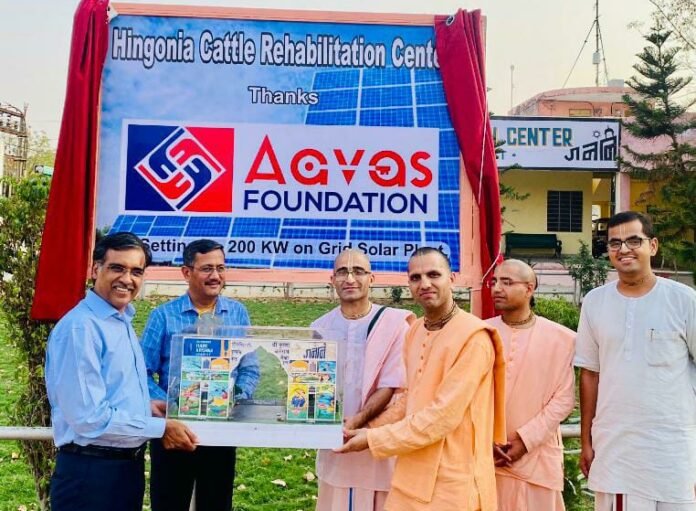
The world’s largest cow-rehabilitation center Hingonia Gaushala will now be illuminated with solar energy as a 200 KW Solar Plant has been installed here.

In fact, the solar plant at the Hingonia Gaushala has been put up by Aawas Financiers Ltd with the CSR Fund.

 The Solar Plant was inaugurated jointly by the CFO of Awas Financiers Ltd. Ghanshyam Rawat and Cow-Rehabilitation Center Hingonia’s representative Anant Shesh Das, said Sidhha Swaroop Das, programme coordinator.

Speaking on the occasion, Rawat said that solar energy will be used in Hingonia cow-rehabilitation center as well as at the employees’ residences, offices, and veterinary hospitals.

Raghupati Das, representative of Hingonia Gaushala said that a total of 449 panels of 450 watts have been installed at the Hingonia Gaushala by Aawas Financiers Limited. 

All these panels have been installed above the tin sheds located in the enclosures. This solar plant will help Hingonia Gaushala to become self-supporting. Similarly, if voluntary organizations keep coming forward, then cowsheds will soon become self-sufficient, he opined.

No-confidence motion against Pak PM Imran Khan tabled

0

No-confidence motion against Prime Minister Imran Khan tabled in Pakistan National Assembly.

The opposition parties in Pakistan tabled a motion of no-confidence against Prime Minister Imran Khan in the National Assembly on Monday.

The assembly adjourned after tabling of the motion and the next session of the Parliament is scheduled for March 31, according to Deputy Speaker Qasim Khan Suri. Follow the page for all the updates on this news.

Meanwhile, Khan, unperturbed by the developments, continued patting his back with his work. He shared one of the tweets where he expressed proud in his team’s working.

TEJAS: Training for Emirates Jobs And Skills launched to train overseas Indians

0

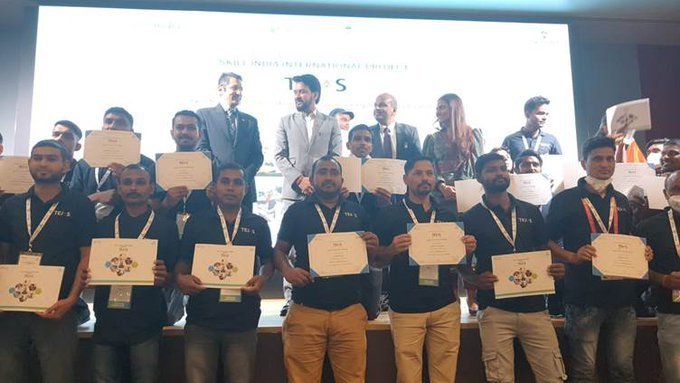
The Training for Emirates Jobs And Skills (TEJAS), an initiative under the Skill India International Project was lauched in Dubai by union minister Anurag Thakur. The initiative under the Skill India International Project aims at training Indians so that they can get employed overseas.

This programme has the objective of skilling, providing certification, and employment of Indians overseas. TEJAS is also aiming to create pathways so that the Indian workforce can get equipped for the various skills and market requirements in the UAE. Under this project, 10,000 strong Indian workforces will be created in the UAE during the initial phase of implementation.

This project will be looking to skill the Indian population overseas thus providing the world with a large workforce from India who is skilled.

TEJAS project will create a pathway between UAE and India. Through this project’s implementation pathways will be created between India and the UAE enabling the Indian workforce according to the needs of the UAE market.

Tina Dabi: The UPSC topper to remarry IAS Pradeeep Gawande. Watch pics here…

0

Tina Dabi, the UPSC-2016 topper, posted a picture on instagram with IAS Pradeep Gawande from Rajasthan. The caption going with post says, “I’m wearing the smile you gave me” and the post also carries a smiley along. In fact, the hash tagged word #fiance makes it clear that she is soon tying the knot with Gawande.

Dabi is a joint secretary in the finance department of Rajasthan while Gawande is currently the Director in the Department of Archeology and Museum, Rajasthan. Tina Dabi, who is active on social media, has shared her picture with her new life partner.

Sources said that Dabi and Gawande will get married in April after which a reception will be given on April 22 at a hotel in Jaipur.

Tina Dabi had earlier married Athar Amir, an IAS officer of her own batch, in 2018. However, Tina and Athar were divorced in Jaipur’s Family Court in August 2021.

Dabi had come into the limelight ever since she topped the IAS in the year 2015

Rajasthan Day 2022: Know its history, significance and celebration 

0

Rajasthan Day or Rajasthan Foundation Day is celebrated each year on 30 March. 

On 30 March 1949, the princely states of Jodhpur, Jaipur, Jaisalmer and Bikaner merged to form the ‘Greater Rajasthan Union’. This is considered to be the day of establishment of Rajasthan.

The word Rajasthan means- ‘place of kings’ because the Gurjars, Rajputs, Mauryas, Jats among others ruled here. After the declaration of independence of India by the British rulers, the process of transfer of power was started. At that time, it was felt that the formation of Rajasthan province of independent India and the merger of the then part of Rajputana with India could prove to be a difficult task. 

With the declaration of independence, there was a competition among the chiefs of the princely states of Rajputana to retain their power even in the independent state. At that time, with a point of view of the geographical situation of the present Rajasthan, there were a total of twenty-two princely states in this part of Rajputana. .

In these states except one princely state of Ajmer Merwada province, the rest of the princely states were ruled by native kings. The Ajmer-Merwada province was occupied by the British rulers. Because of this, it would have come directly into independent India, but the remaining twenty-one princely states were to be merged, that is, a province called ‘Rajasthan’ was to be formed. 

Due to the competition for power, it seemed very difficult because the rulers of these princely states were looking at the merger of their princely states with independent India as a second priority. Their demand was that they have been governing their own states for years, they have long experience, due to which their princely state should be given the status of ‘independent state’. 

The process of unification of Rajasthan, which started on 18 March 1948, was completed on 1 November 1956 in seven phases amidst a decade of tumult. 

The role of Sardar Vallabhbhai Patel and his secretary V.P. Menon, the then Indian princely state and Home Minister of the Government of India, was quite significant in this context.

 Due to their understanding, the present form of Rajasthan could be created.

Rajasthan made in seven phases

* On March 18, 1948, the princely states of Alwar, Bharatpur, Dholpur, Karauli merged to form ‘Matsya Sangh’. The then Maharaja of Dholpur Udai Singh became the Rajpramukh and Alwar became the capital.

* On 25 March 1948, Kota, Bundi, Jhalawar, Tonk, Dungarpur, Banswara, Pratapgarh, Kishangarh and Shahpura merged to form the Union of Rajasthan.

*The merger of the princely state of Udaipur on 18 April 1948. The new name was named ‘United Rajasthan Union’. The then Maharana Bhupal Singh of Udaipur became the Rajpramukh.

*On 30 March 1949, the princely states of Jodhpur, Jaipur, Jaisalmer and Bikaner merged to form the ‘Greater Rajasthan Union’. This is considered to be the day of establishment of Rajasthan.

*On 15 April 1949, the ‘Matsya Sangh’ merged with the Greater Rajasthan Union.

* On 26 January 1950, the princely state of Sirohi was also merged with the Greater Rajasthan Union.

*On November 1, 1956, Abu, Delwara tehsil was also merged with Rajasthan, Sunel Tappa which once was with Mandsaur district in Madhya Pradesh also merged.

Yadadri Temple made of gold and granite worth Rs 1200 crore opens for devotees

0

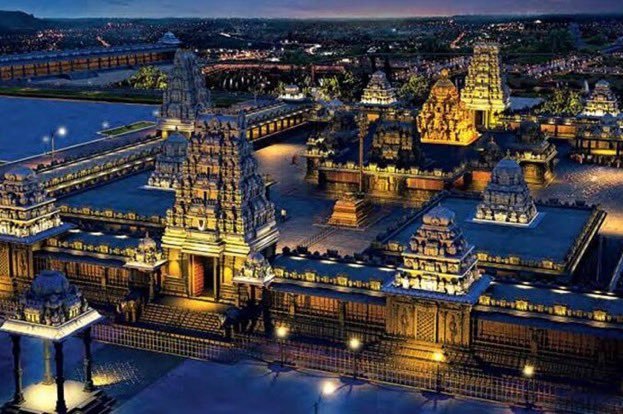
Sri Lakshmi Narasimha Swamy Temple in Yadadri Bhuvanagiri district made of gold, granite and aesthetic carving was inaugurated by Telangana Chief Minister K Chandrashekar Rao (KCR) on Monday.

KCR with his family reached Yadadri Bhuvanagiri to inaugurate the revamped Sri Lakshmi Narasimha Swamy Temple, the reconstruction of which has been made at around Rs 1,280 crore over the past five years. The EBNW Story brings the unique features of this temple:

  • The temple has been constructed with 2,50,000 tonne black granite, specially brought in from Prakasam, Andhra Pradesh.
  • It exhibits a fusion of both Dravidian and Kakatiyan styles of architecture
  • More than 2,000 sculptors and thousands of workers have been involved in the reconstruction work of the temple which is still under progress
  • Sri Lakshmi Narasimha Swamy Temple in Yadadri is approximately 80 km away from Hyderabad
  • The sprawling 14.5-acre temple complex project was started in April 2016 and a budget of approximately Rs 1,600 crore was allocated.
  • The entire temple township project is spread over 2,500 acres of land.
  • While the pillar is carved out of a single stone, no cement is used for the temple construction.
  • Indian architecture mythology was kept in mind while planning the temple by the famous film set designer Anand Sai
  • The special doors of the main entrances were created by the pembarthy (famous for its metal and brass works) artisans, the queue lines adorned with sanku chakra symbols, specially made from Indore and the main entrance of sanctum sanctorum is gold-covered.
  • A Tanjore style of painting is also put in the temple.
  • Temple vimana gopuram (structure at the top of the temple) is covered with 125 kg of gold which was donated to the temple by CM KCR, his cabinet, colleagues and several industrialists.
  • While  KCR donated 1,116 grams of gold on behalf of his family, other TRS Ministers, MLA’s, MPs, several business houses also have announced gold donations for the temple, said the CMO.
  • Hyderabad-based MNC Megha Engineering announced a 6 kg gold donation while Hetero Pharma owner announced a 5 kg gold donation.