Home Blog Page 744

PM Modi flags off fourth Vande Bharat Express

0

Prime Minister Narendra Modi flagged off the new Vande Bharat Express between Amb Andaura – New Delhi from Una Himachal Railway Station in Himachal Pradesh, today.

This is the fourth Vande Bharat Express launched in India. The first three are New Delhi – Varanasi Vande Bharat Express launched on October 3, 2019,  New Delhi – Shri Mata Vaishno Devi Katra Vande Bharat Express launched on 15 February 2019 and Mumbai Central – Gandhinagar Capital Vande Bharat Express on October 1.

Ram Gita came from Dungarpur!

0

As India recently celebrated the holy Navaratri Festival which was followed by Dussehra, when Lord Rama is coronated annually, a new development has surfaced up in name of “Ram Gita.” How Ram could be associated with Gita, the treatise spoken by Lord Krishna to his relative-friend, Arjun?

It has its origin in a somewhat nondescript region called as Dungarpur in state of Rajasthan. Its ruler Maharawal Vijay Singh holds the unique credit of having got the holy book published. Ram Gita forms part of a larger Sanskrit work titled Tattva-Sarayan, which is attributed to Maharshi Vasishta. 

The Dungarpur ruler liked Ram Gita so much that he got down to translating its Sanskrit text into Hindi and then preparing a commentary also. After completing the laborious task,  he sent the finished product to Swami Gyanand -ji with a request to get the work published through the Bharat Dharma Mahamandal. 

Eventually in 1921, the Ram Gita was published with an acknowledgement of the authorship of Maharawal Vijay Singh. Disclosing  so far unknown facts about such rare publications, Samar Singh told… “in substance, style and form, there are striking similarities between Ram Gita and the well known Bhagwad Gita. The philosophical content and message are substantially the same in both works — the Ram Gita also has eighteen discourses or chapters, but it is much longer with a total of 1,001 verses in Sanskrit and its narration arises from a preyerful request by Hanuman to Sri Ram to enlighten him regarding brahmavidya (spiritual knowledge).”

He elaborated that at the end of various discourses in the Ram Gita, Sri Ram describes them as mahashastra, that is, containing the essence of all the Vedas and Upanishads and hanuman thankfully acknowledges that of all the Gitas he had heard, Ram Gita was clearly supreme and like amrit (nectar).   

The Maharawal had acquired good knowledge of Hindi and English with an elementary knowledge of Persian and Arabic. He commissioned a study of poems of well known Hindi poets from which a selection of a thousand poems was made and were eventually published in a volume titled Vijay Hazara. He  arranged publication of Udai Prakash, another poetic composition of his grandfather’s time. He also published a volume of 1,200 proverbs in Hindi. 

Samar Singh, a retired IAS and a doyen  in wildlife conservation, has elaborated many interesting aspects in his book, “Dungarpur: A Glorious Century”, done by Roli Books and available over Amazon. The 145-page book is an entirely different edition among all books done so far on Indian princedom. As the title qualifies, it is all about a century long saga of three rulers of Dungarpur to unfold how each one had ruled to win over some of the most precarious conditions in the land-locked state during the time when transport and communication were nondescript and resources were meager.  

The cover presents all three Maharawals together: Udai Singh, Vijay Singh and Lakshman Singh.  They ruled from 1846 till 1948. All three are featured in colour portraits over the cover to eulogize their influence. The description is straight forward and emphatic. The target is successfully achieved – lineage for eight centuries, an unbroken blood-line having thrived against bizarre odds.  

The Dedication is made to all the three Rulers including the name of Maharaj Virbhadra Singh who served as Dewan to the state while his elder brother Lakshman Singh ruled (1918 to 1948). It is a record performance by these three rulers as each one happened to be a minor when seated over the throne. 

What is special about Dungarpur, a land locked state in southern most pocket of Rajasthan? The rulers belonged to Guhilot-Ahada dynasty which ruled the erstwhile state for nearly eight centuries without a break. In terms of antiquity, very few princely states in pre-independent India or elsewhere in the world can match this record.   

Samar Singh, the author, has outlined: “It is noteworthy that the Guhilot-Ahada dynasty of Dungarpur has been the elder branch of the well-known dynasty of Mewar’s Sisodia rulers. The three rulers ruled in succession and achieved eminence, each in his own special way. The century-long fascinating story, hitherto untold, is captured in this book.” 

Each Ruler started his innings as a minor but, by sheer dint of merit coupled with utmost dedication and diligence, went on to acquit himself exceptionally in the larger interest of his state and its people and thereby earned well-deserved appreciation, including from the British authorities in the country. The fact that three minors turned out, in succession, to be highly successful rulers is yet another matchless record.  

It is creditable that such achievement took place despite adverse circumstances and very daunting challenges. The highly turbulent and unstable situations prior to 1846 were itself major challenges. A calamitous famine of 1899-1900, epidemics, natural calamities followed by two world wars, the rulers were made to face severe odds. Yet smilingly each one emerged as the ultimate champion. 

Reason for Dungarpur’s success? Samar Singh states:  “…the characteristic feature of Dungarpur state was prompt justice (Nyayam chi Rajyam), the administrative scruple which was depicted over the Dungarpur State’s coat-of-arms and the State Flag.” Such facts need to be put in public domain now to let people realize how rulers of Dungarpur proved people-friendly to set new examples in India’s princely order. Each page of the book unfolds several new facts about rule of justice and letting people lead comfortable life  at a time economic and geographic perplexities were enormous. Details have been sourced through administrative reports, notes recorded by the concerned Maharawals, he states.   

The writer’s father, Maharaj Virbhadra Singh was deeply interested in documenting the history and archaeology of the Vagad region comprising the present districts of Dungarpur and Banswara and the adjoining Chappan tract of Udaipur district. He served as the Dewan of Dungarpur. After independence, he served the Indian Administrative Service in Madhya Pradesh. After retirement he took up the task of writing the subject. It was published under the title, “Guhilvanshi  Dynasties of Vagad” up to sixteen century. Next came “Dungarpur Rajya ka Itihas” by Dr. Gaurishankar Hirachand Ojha. It did not cover entire period of Maharawal Lakshman Singh. The present book has done what erstwhile writers could not do.  

Happy Karwa Chauth 2022 wishes, quotes, status, messages…

0

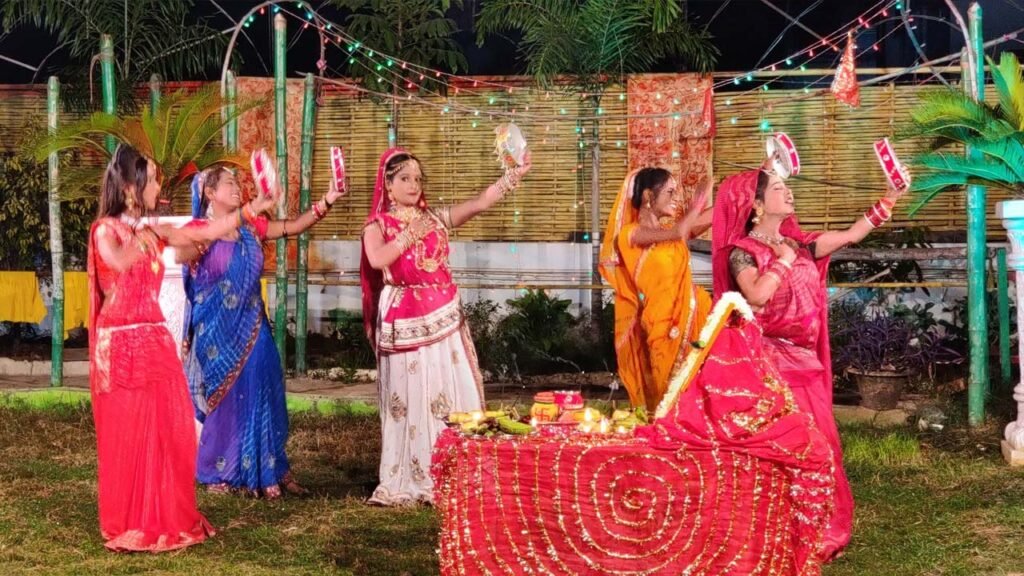
Karwa Chauth is celebrated by married Hindu women every year on fourth day from full moon day (Sharat Poornima). It is celebrated on Krishna Paksha of the Kartik month. This year, it is being celebrated today on Thursday, October 13.

Karwa Chauth celebrations

For the celebrations, women break their fast only after seeing Moon. The strict fast, usually without a drop of water or food, starts before sunrise and is broken in the evening. 

Karwa Chauth quotes for husband

1. Wishing a very Happy Karwa Chauth to my husband who gives me all the reasons to smile, all the reasons to be happy. May we two be always together, bonded with love for each other.

2. Our love will always fly to the highest heights, regardless of how many years pass between us. Wishing you a Happy Karwa Chauth, Husband!

Karva Chauth quotes for wife

1. My life has become more lovely and meaningful because of you. Happy Karwa Chauth, wife!

2. Dear wif, I can’t express how grateful I am that you make my life such a happy adventure. You have shown me unending affection, and I will always be grateful. We wish you a very Happy Karwa Chauth.

Happy Karwa Chauth 2022: Best Wishes, messages, quotes, greetings, SMS, WhatsApp and Facebook status to share with your family and friends. (Image: Shutterstock)

Karva Chauth 2022: Wishes and Status

Happy Karwa Chauth 2022 wishes, quotes, status, messages...

1. May the blessing of God Shiva and Goddess Parvati bring love and happiness into your marriage. Happy Karwa Chauth!

2. I started living the day you came into my life. So, if you’re fasting for me, then I just want to let you know that I want to live as long as you are there with me. Happy Karwa Chauth to my dearest wife!

3. Celebrate the auspicious bond of marriage and love. Happy Karwa Chauth!

4. Wishing you the happiest of marriages with a perfect husband. Happy Karwa Chauth!

Mahakal Lok Project expected to double the existing footfall. See new features of project

0

Prime Minister, Narendra Modi dedicated Phase I of the Mahakal Lok Project to the nation at Shri Mahakal Lok in Ujjain, Madhya Pradesh. Let’s see how the phase I of the Mahakal Lok project will help in enriching the experience of pilgrims visiting the temple by providing them with world-class modern amenities.

  • Existing footfall of around 1.5 crores per annum is expected to be doubled
  • The project aims to decongest the entire area and also put special emphasis on the conservation and restoration of heritage structures. 
  • Under the project, the temple precinct will be expanded nearly seven times. The total cost of the entire project is around Rs 850 crores. 
  • The development of the project has been planned under two phases
  • The Mahakal Path contains 108 stambhs (pillars) which depict Anand Tandav Swaroop (Dance form) of Lord Shiva. Many religious sculptures depicting the life of Lord Shiva are installed along the Mahakal Path. 
  • The mural wall along the path is based on stories about the act of creation, the birth of Ganesha, story of Sati and Daksha among others from Shiva Purana. 
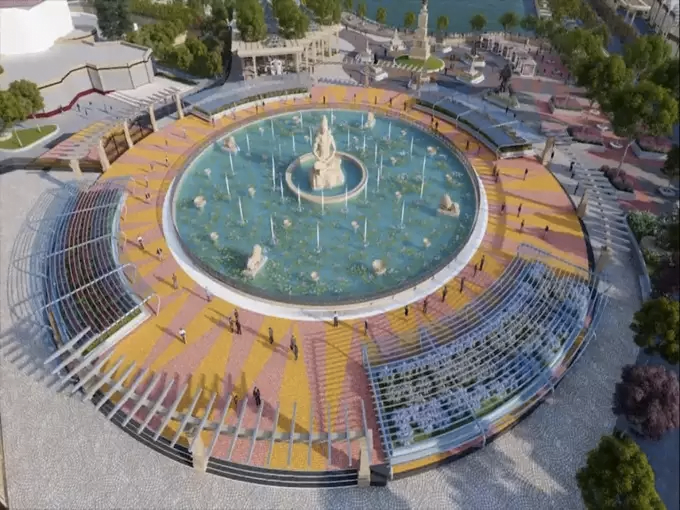
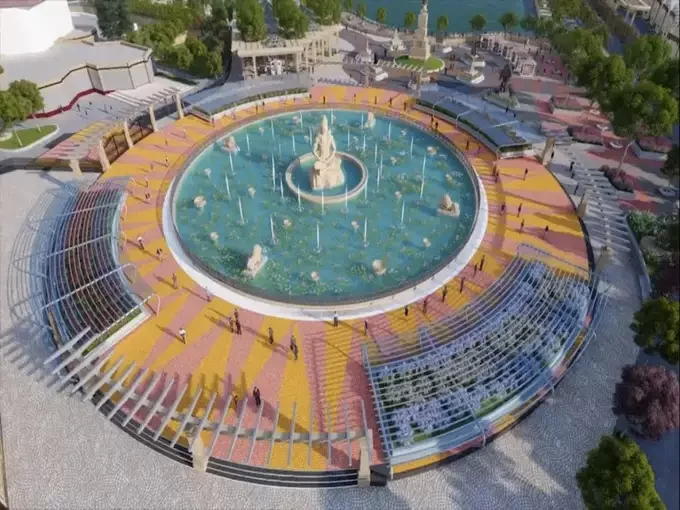
  • The area of plaza is spread over 2.5 hectares and is surrounded by a lotus pond which contains the statue of Shiva along with water fountains. 
  • The entire premise will be monitored 24×7 by Integrated Command and Control Centre with the help of artificial intelligence and surveillance cameras.

PM Modi dedicates Phase I of Mahakal Lok Project to nation in Ujjain

0

Prime Minister  Narendra Modi dedicated Phase I of the Mahakal Lok Project to the nation at Shri Mahakal Lok in Ujjain, Madhya Pradesh on October 11.

He was dressed in traditional dhoti when he arrived at Shri Mahakal Lok from the Nandi Dwar. 

PM Modi dedicates Phase I of Mahakal Lok Project to nation in Ujjain
PM Modi offering prayers at the Mahakal Temple in Ujjain

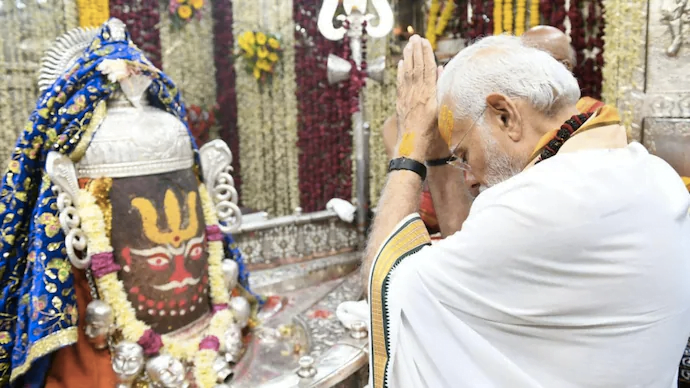
After arriving at the inner sanctum, Modi performed pooja and darshan and prayed with folded hands before Lord Shri Mahakal in presence of the temple priests. After performing aarti and offering pushpanjali, he sat in the south corner of the inner sanctum and meditated while mantras were chanted. The Prime Minister also sat next to the Nandi statue and prayed with folded hands.

Modi then visited the Mahakal Lok temple complex and took a walk and viewed the Saptrishi Mandal, the Mandapam, Tripurasura Vadh and Navgarh. He witnessed the murals along the path based on stories about the act of creation, the birth of Ganesha, story of Sati and Daksha among others from Shiva Purana. He later watched a cultural programme that was showcased on occasion and witnessed the Malkhamb performance at Mansarovar. This was followed by darshan at the Bharat Mata Mandir.

The Prime Minister was accompanied by the Governor of Madhya Pradesh, Mangubhai Patel, the Chief Minister of Madhya Pradesh, Shivraj Singh Chauhan and Union Minister Jyotiraditya Scindia.

Dungarpur: A Glorious Century

0

Samar Singh, a retired IAS and a doyen  in wildlife conservation, has elaborated many interesting aspects in his book, “Dungarpur: A Glorious Century”, published by Roli Books and available on Amazon. The 145-page book is an entirely different edition among all books done so far on Indian princedom. As the title qualifies, it is all about a century long saga of three rulers of Dungarpur to unfold how each one had ruled to win over some of the most precarious conditions in the land-locked state during the time when transport and communication were nondescript and resources were meagre.  

Three Maharawals, Udai Singh, Vijay Singh and Lakshman Singh, featured

The cover presents all three Maharawals together: Udai Singh, Vijay Singh and Lakshman Singh.  They ruled from 1846 till 1948. All three are featured in colour portraits over the cover to eulogize their influence. The description is straight forward and emphatic. The target is successfully achieved – lineage for eight centuries, an unbroken blood-line having thrived against bizarre odds.  

The Dedication is made to all the three Rulers including the name of Maharaj Virbhadra Singh who served as Dewan to the state while his elder brother Lakshman Singh ruled (1918 to 1948). It is a record performance by these three rulers as each one happened to be a minor when seated over the throne. 

Guhilot-Ahada dynasty ruled the erstwhile state for nearly eight centuries

What is special about Dungarpur, a land locked state in southern most pocket of Rajasthan? The rulers belonged to Guhilot-Ahada dynasty which ruled the erstwhile state for nearly eight centuries without a break. In terms of antiquity, very few princely states in pre-independent India or elsewhere in the world can match this record.   

Samar Singh, the author, has outlined: “It is noteworthy that the Guhilot-Ahada dynasty of Dungarpur has been the elder branch of the well-known dynasty of Mewar’s Sisodia rulers. The three rulers ruled in succession and achieved eminence, each in his own special way. The century-long fascinating story, hitherto untold, is captured in this book.” 

Each Ruler started his innings as a minor but, by sheer dint of merit coupled with utmost dedication and diligence, went on to acquit himself exceptionally in the larger interest of his state and its people and thereby earned well-deserved appreciation, including from the British authorities in the country. The fact that three minors turned out, in succession, to be highly successful rulers is yet another matchless record.  

It is creditable that such achievement took place despite adverse circumstances and very daunting challenges. The highly turbulent and unstable situations prior to 1846 were itself major challenges. A calamitous famine of 1899-1900, epidemics, natural calamities followed by two world wars, the rulers were made to face severe odds. Yet smilingly each one emerged as the ultimate champion. 

Nyayam chi Rajyam, that is, promp justice

Reason for Dungarpur’s success? Samar Singh states:  “The characteristic feature of Dungarpur state was prompt justice (Nyayam chi Rajyam), the administrative scruple which was depicted over the Dungarpur State’s coat-of-arms and the State Flag.” Such facts need to be put in public domain now to let people realize how rulers of Dungarpur proved people-friendly to set new examples in India’s princely order. Each page of the book unfolds several new facts about rule of justice and letting people lead comfortable life  at a time economic and geographic perplexities were enormous. Details have been sourced through administrative reports, notes recorded by the concerned Maharawals, he states.   

A sojourn from being Maharaj Virbhadra Singh to IAS of MP to author

The writer’s father, Maharaj Virbhadra Singh was deeply interested in documenting the history and archaeology of the Vagad region comprising the present districts of Dungarpur and Banswara and the adjoining Chappan tract of Udaipur district. He served as the Dewan of Dungarpur. After independence, he served the Indian Administrative Service in Madhya Pradesh. After retirement he took up the task of writing the subject. It was published under the title, “Guhilvanshi  Dynasties of Vagad” up to sixteen century. Next came “Dungarpur Rajya ka Itihas” by Dr. Gaurishankar Hirachand Ojha. It did not cover entire period of Maharawal Lakshman Singh. The present book has done what erstwhile writers could not do.  

First-ever GI Mahotsav coming in Varanasi from Oct 16-21

0

The first-ever ‘GI Mahotsav’, which includes an exhibition of invaluable treasures of ‘Incredible India’, will be held in Varanasi, Uttar Pradesh from October 16 to 21.

The Mahotsav will showcase the region specific ‘Geographical Indication’ (GI) tagged products from around 11 states of north India.

According to Divisional commissioner Kaushal Raj Sharma,, “The event is being organised by the department for promotion of industry and internal trade (DPIIT) of the ministry of commerce in collaboration with the Varanasi district administration at the Trade Facilitation Centre.”

The GI products to be put on display include sweet delicacies like ‘Silao ka khaja’, ‘khurma’ of Ara Udwant Nagar, ‘balushahi of Sitamarhi, ‘Gaya tilkut’, all from Bihar, and ‘Banaras lal peda’ and ‘Banaras tirangi burfi’ to the world-famous Banarasi brocades, Kullu shawls, Jaipur blue pottery, and many more.

GI expert Rajni Kant, who is instrumental in facilitating GI promotion and certification, said that over 100 stalls will be set up to exhibit GI-tagged products from Uttar Pradesh, Madhya Pradesh, Rajasthan, Bihar, Jharkhand, Himachal Pradesh, Jammu & Kashmir, Ladakh, Uttarakhand, Punjab and Haryana.

‘Mahakal Lok’ in MP’s Ujjain to be inaugurated by PM Modi. Read these 9 facts on this corridor

0

As preparations remain in full swing for the grand opening of the ‘Mahakal Lok’, the 900-metre-long corridor in Madhya Pradesh’s Ujjain, touted as one of the longest of its kind in India, will be thrown open by PM Narendra Modi on October 11.

Modi is set to visit Madhya Pradesh on Tuesday to unveil the first phase of the Rs 856-crore Mahakaleshwar Temple corridor development project in Ujjain.

The Mahakal Lok will surround the old Rudrasagar Lake, which has been revived as part of the redevelopment project around the ancient Mahakaleshwar Temple.

The Mahakaleshwar Temple is one of the 12 ‘jyotirlings’ in the country which gets devotees throughout the year. 

‘Mahakal Lok’ in MP’s Ujjain to be inaugurated by PM Modi. Read these 9 facts on this corridor

Here comes nine features that make up the Mahakal Lok corridor look grand, mesmerising and magnificent:

  • The temple has two majestic gateways — Nandi Dwar and Pinaki Dwar which have been separated by a short distance. They have been erected near the starting point of the corridor, which winds its way to the entrance of the ancient Mahakaleshwar Temple.
  • Sandstones sourced from Bansi Paharpur area in Rajasthan are used for building structures of the corridor. Artists and craftsmen from Rajasthan, Gujarat and Orissa worked on chiselling and embellishing raw stones into aesthetic pillars and panel.
  • Fountains and a running panel depict stories from Shiv Puran adorning the corridor.
  • The corridor has 108 pillars with ornamental elements on top bearing trishul-style design dot at regular intervals.
  • The use of ancient temple architecture evokes the ancient glory of the historic city of Ujjain.
  • Rudrasagar Lake, the ancient reservoir in the city, has been given fresh life as part of the redevelopment project. 
  • Open sewer lines have been covered and connected to a sewage treatment plant. A solid waste garbage screening mechanism has also been installed near the lake.
  • The Mahakal Lok development comes with a mid-way zone, a park, a multi-storied parking lot for cars and buses, florists and other shops, solar lighting, a facility centre for pilgrims, a water pipeline and sewer line, among other works. A light and sound system has been developed, and there is a plan to have a musical fountain show using the Rudrasagar Lake as a backdrop.

Also read: https://ebnw.net/travel/ujjain-mahakaleshwar-temple-get-the-first-glimpse-of-newly-built-majestic-corridors/

Deepotsav lights up Krishna Balaram temple in Jaipur during holy Kartik month

0

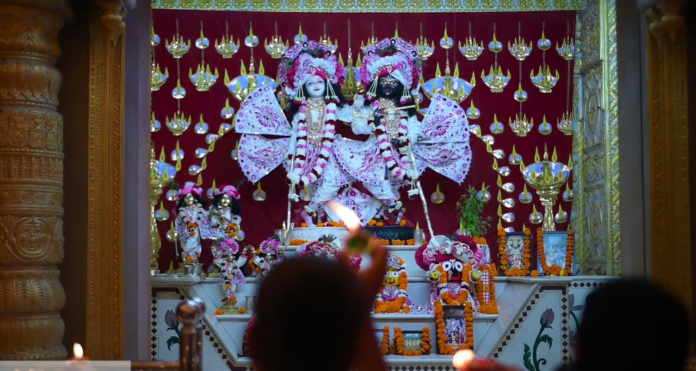
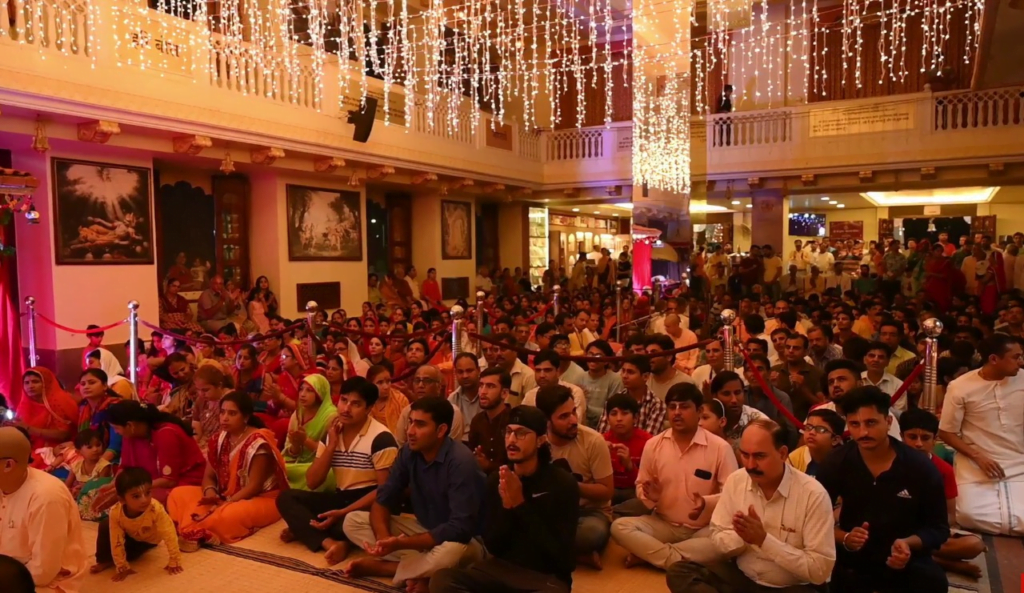
The Krishna Balaram temple in Jaipur was lit up with diyas as the holy Kartik month started on Sunday. On this occasion, Krishna’ tableau has also been decorated with diyas.

Deepotsav will be is a month-long festival. The holy Kartik month recalls the beautiful childhood days of Lord Krishna when he used to steal butter and consequently his beloved mother Yashoda used to tie him with the oak with a rope. In Sanskrit, “Dama” means rope and “Udar” means stomach. Damodar refers to Lord Krishna who was tied with a rope by his mother Yashoda. After the evening aarti, lamps of ghee are being offered to the deity along with the grand hymn of Shri Damodarastakam each day.

Every day in this month, the temple will be decorated with thousands of lamps. The lighting of hundreds of lamps placed in front of the altar will radiate divine radiance in the main temple hall, enhancing the spirit of devotion.

Deepotsav lights up Krishna Balaram temple in Jaipur during holy Kartik month
Devotees spraying in the lit up temple premises in Shri Krishna Balram Temple.

The President of the temple Amitasana Das said that it is not possible to describe the glory of Kartik month. 

“In this month, devotees observe a fast (Damodar Vrat) and worship Lord Damodar with a lamp of ghee every day. It is said that offering a lamp to Lord Hari in the month of Kartik brings unlimited prosperity, beauty and wealth. All sins committed in thousands and millions of births are destroyed, and one attains the eternal spiritual world where there is no suffering,” he added.

World Mental Health Awareness Day: This institute in Kolkata plays music for its patients

0

Every year, 10th October is celebrated as “World Mental Health Awareness Day” across the globe. This year theme is “Making Mental Health and Wellbeing for all a global priority”. 

The Department of Neuropsychiatry at Institute of Neurosciences, Kolkata organised various awareness activities on this day. 

This included interactions with patients and family members, Music program to admitted mental health Patients, Poster competition for nursing staff on mental health and engaging activities for doctors on mental health theme, said Dr Praveen Kumar, Consultant Child and Adolescent Psychiatrist HOD, Department of Psychiatry, Institute of Neurosciences, Kolkata.

Around 10 per cent of people in India suffer from some kind of Mental illness but stigma related to mental illness and treatment reduces their help seeking behaviour, he told the EBNW Story

In post pandemic era, times have changed and so is the way we look at mental health. Pandemic has made our children and adolescents getting increasingly addicted to screens and brought significant attention and emotional problems in them, he said, adding, “Research says that some factors help us to prevent mental illness like being optimistic, having good social support, active coping style, flexible thinking approach and last but most important one is self compassion that is being kind to our self and others, said Dr Kumar.