Home Blog Page 726

Kalibangan, India’s earliest ploughed field site, takes you centuries back..

0

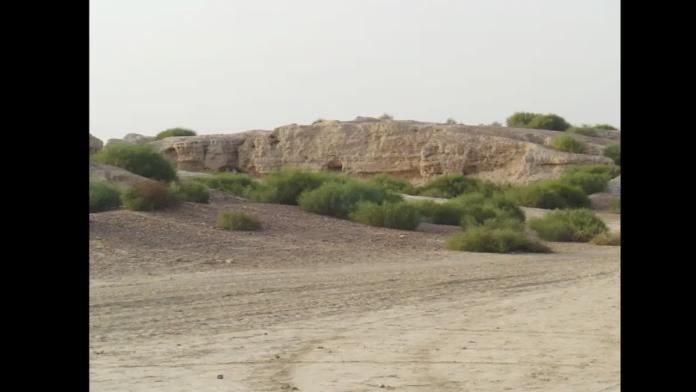
Kalibangan, India’s earliest agricultural ploughed field site (3500B.C-1750 B.C), is located between Hanumangarh district of Rajasthan and Suratgarh. 

It was discovered by Luigi Pio Tessutori, an Italian Indologist which was later excavated by BB Lal and K Ghosh in the year 1952  and became widely known for its Pottery and terracotta Bangles founds.

Kalibangan Civilization is a part of early Harappan Civilization. During this civilization, the use of copper was frequent which shows evidences of Harappan as well as proto Harappan Culture.

The area had a large Pile of earth’s stones around which Punjabi speaking localities inhabit. On these mound surface, large amount of weather stained terracotta bangles were found thus naming it‘’ Kalibangan “.

Believed to be located around the banks of Saraswati river, it is considered to be one of the most important sites of Indus Valley Civilization or Harappan Civilization .

As witnessed in other Harappan sites, the architectural settlements were divided into Citadels and lower town.

Seals, coins, pottery, wooden drainage, camel’s bone, charging bulls, fire altars were some prominently uncovered stuff during the excavation period.

Ploughing features of Kalibangan –

Evidences of mud bricks work were primary witnessed in this site. The agricultural furrows were then in the cross-grid patterns, thus allowing farming two crops simultaneously, similar to the modern day ploughing. 

This pattern consists of furrows placed about 30 cm apart running east-west and other spaced about 190 cm apart running north-south. From the many such discoveries it can be understood that people at that time would be relied majorly on the agriculture. The ploughing was done by woods instruments and   mud bricks were used for the fortification.

It is to also note that this is also considered to be the first ever site to document a ‘earthquake”

Iranian women watched football match in stadium after 42 years

0

It was successful due to the enforcement of the Islamic revolution. The Islamic revolution was the only source that made efforts to visualize this matter, which led to the abolition of the ban. 

Iranian women were seen sitting in the stadium, cheering for their football team as the long-term ban over women watching football matches finally ended. However, they were seen sitting completely afar from the male audience. 

The domestic league football match was held in Tehran, and women enjoyed the match for the first time in 43 years. Due to the pressure and work of the Islamic revolution since 1979, Iranian women were allowed to watch football matches. It is one of the revolutions for the women of Iran. 

Several videos and images surfaced on social media, showing their happiness, which was gleeful after so many years. 

Aljazeera also reported on this occasion, as they reported that women were seen happy and cheerful, holding flags of their favourite football team and making sure to hold other women, as this was none other than a festival for women in Iran. 

Iranian women watched football match in stadium after 42 years

Nonetheless, the media reported that even though women were allowed to watch the match, they were seen completely afar from the men’s section, creating a barrier. Many women supervisors wore a gown covering them from head to toe, supervising women to cover their heads with headscarves. Also, they were seen taking entry from a special entrance, as they were allowed to watch the match, but there were many restrictions, seen very clearly. Not only that, many women held placards of the football fan Sahar Khoyadari, who sadly ended her life in 2019. Many women cheered her nickname in the stadium, “blue girl”. 

The abolition of the ban was enforced, as the country qualifies for the FIFA Qatar world cup; the match is said to be held possibly in November this year. 

This has become one of the most cheerful news for the women in Iran, as it outshines how women are given the space and place for the things and sports they love with their whole hearts. Not to miss that it’s one of the most powerful news. However, as time empowers women, many things will change to empower them and their hearts.

Shri Krishna Balram Mandir Jaipur: Radhashtami celebrated with traditional zeal & fervour 

0

Radhashtami was celebrated at Shri Krishna Balram Mandir, Jagatpura under the aegis of Hare Krishna Movement, Jaipur, fifteen days after Shri Krishna Janmashtami with traditional zeal and fervour.

On this occasion, a grand event was organised and Shri Radha Raman ji idol was decorated with a new mesmerising dress. The sanctum sanctorum was bedecked with beautiful colorful flowers which were seen spreading their fragrance everywhere around.

Radhashtami is celebrated on the Ashtami (Ashtami of Shukla Paksha) of Shukla Paksha of Bhadra month (August-September). It is a very important festival for the devotees. Radharani is the mother of the entire universe and on this auspicious day, devotees pray to her to bless her with Krishna-devotion.

When Radha opened her eyes for the first time to see the world

When Vrishabhanu Maharaj heard the discussions of Nanda Baba’s son Shri Krishna, he himself came to Gokul with his daughter Radha in his lap. It is said that till then Radha’s eyes remained closed. She reached Balakrishna walking on her knees. Then Radha’s eyes were opened and after her birth, she had the first vision of Shri Krishna with her eyes.

As per Amitasana Das, the president of the temple, “Shri Radha Raman was dressed in new clothes and specially decorated with flowers. 108 special bhog was offered to Thakur ji at 12 noon. A special hymn Radhika Ashtakam was sung, Shri Radha Raman was anointed with various types of flowers and fruit juices and Panchamrit, as well as special story and Maha Aarti was done and lastly palanquin festival was celebrated with flower showers. The program was broadcast live on the temple’s YouTube channel Hare Krishna Jaipur, Facebook page.”

Former Tata Group Chairman Cyrus Mistry dies in accident

0

Former Tata Group Chairman Cyrus Mistry has died in an accident.

Mistry was the sixth chairman of Tata Sons, who was ousted from the position in October 2016.

He later took over as the chairman in December 2012 after Ratan Tata announced his retirement. N Chandrasekaran later took over as Executive Chairman of Tata Sons.

The accident reportedly took place at the Surya River Charoti bridge on the Mumbai Ahmedabad National Highway. He was returning to Mumbai from Gujarat in his Mercedes car. As per locals, the deadly accident took place after the car hit a divider.

Meanwhile veteran leader Supriya Sule expressed her sorrow on his demise. In her tweeit, she said, “Devastating news, my brother cyrus mistry passed away. Cant believe it. Rest in peace Cyrus,” she added.

.

Teachers Day 2022: Significance, quotes and wishes….

0

Happy Teachers’ Day 2022: Each year, on September 5, India celebrates the National Teachers Day, marking the birth anniversary of Dr Sarvepalli Radhakrishnan, who was the second President of India and a well-renowned educationist. This day celebrates the presence of teachers in our lives who transformed us into better people, while impacting our lives, and positively motivated us to do better.

Here Mitali Mishra bring some quotes and wishes to be exchanged on Teachers Day

“It is the supreme art of the teacher to awaken joy in creative expression & knowledge.”                      – Albert Einstein

“Technology is just a tool. In terms of getting the kids working together and motivating them, the teacher is the most important.”                                                                                                                            – Bill Gates

“Those who educate children well are more to be honoured than they who produce them; for these only gave them life, those arts of living well.”                                                                                                   – Aristotle

The dream begins with a teacher who believes in you, who tugs and pushes and leads you to the next plateau, sometimes poking you with a sharp stick called ‘truth’.                                                           – Dan Rather

“I have always felt that the true text-book for the pupil is his teacher.”                                                            – Mahatma Gandhi

Teachers, I believe, are the most responsible and important members of society because their professional efforts affect the fate of the Earth.                                                                                               – Helen Caldicott

 “If you were successful somebody along the line gave you some help. There was a great teacher somewhere in your life.”                                                                                                                                        -Barack Obama

“The true teachers are those who help us think for ourselves.”                                                                      -Dr. Sarvepalli Radhakrishnan

Happy Teachers’ Day Wishes

If parents give us life, teachers teach us how to harness life to the fullest. To all the hard-working teachers in the world, Happy Teachers’ Day.

Today I celebrate you for being selfless, devoted, hardworking, and the wisest person in the classroom. I am grateful to be your student. Happy Teacher’s Day.

Without you, we would have been lost. Thank you, teacher, for guiding us, inspiring us, and making us what we are today. Happy Teachers’ Day.

Faith leaders, sufi divines and dharmacharyas get together in Nagpur to discuss peace 

0

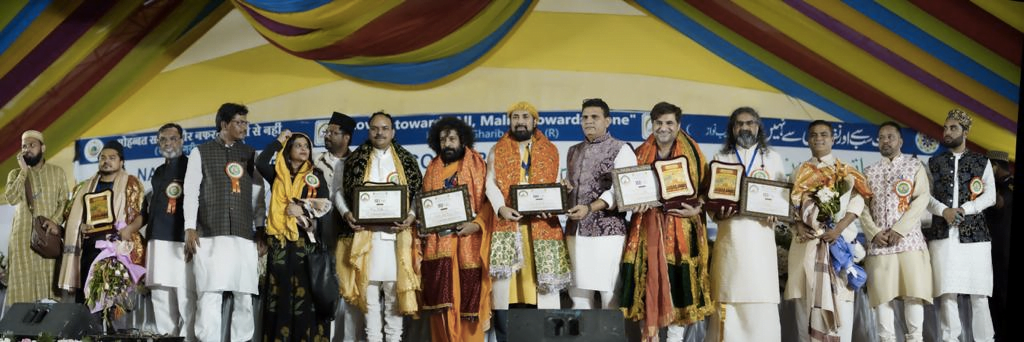
Harnessing the resources of peace from all Faith Traditions of India, the World Sufi Forum and All India Ulama & Mashaikh Board (AIUMB) in collaboration with Baba Tajuddin Trust, Nagpur conducted the ‘National Interfaith Peace Conference on September 3 this year on the 100th Urs (death anniversary) of Baba Tajuddin, the renowned Sufi Mystic of South and West India.

The conference was held aiming at strengthening national integration through interfaith harmony and peaceful co-existence.

Speakers from all religions and faiths

 The Speakers in the conference were spiritual leaders from all religions  & faiths namely Sanatan Dharm, Jainism, Sikhism, Hinduism, Sufi Scholars & Sajjadansheen of Khanqahs,  Academicians from leading universities & social activists

The National Interfaith Conference started with Recitation of Holy Quran, Naat in praise of Holy Prophet, importance of Sufism, need of interfaith dialogue in todays troubling times & hate speech creating divide among religions & disturbing peace.

Purpose of the event

The real purpose of this event is to end the growing atmosphere of hatred and communal disharmony which is harming India’s ancient syncretic culture. India has been the land of Mystics of all religions including the Rishis, Sufis and Saints of Buddhism, Jainism and Sikhism. As a matter of fact, the basic element of Indian culture and spiritual ecosystem is unity in diversity, which is called “Kasrat Mein Wahdat” in the Sufi terminology. Inspired by this pious intention, the national conference is being organized by All India Ulama and Mashaikh Board and Baba Tajuddin Trust to urge people to imbibe mutual understanding and exercise patience and restraint and espouse mutual brotherhood and love.

Faith leaders, sufi divines and dharmacharyas get together in Nagpur to discuss peace 

Who said what

Speaker Mohammed Ashraf Saheb said, if the current religious disharmony is not stopped, then India’s culture will be deeply impacted.  Syed Salman Chishty emphasised that hate speech is a serious issue and needs to fixed urgently through inter-faith seminars.   

Swami Sarang Ji Maharaj said that our country India is known worldwide for Unity & Diversity and we will work to maintain the same. Dr. Khawaja Mohd Ekramuddin said that Sufism teaches respect to all religions. 

This national conference organized at the Dargah of Baba Tajuddin was held in two parts, one is the Sarva Dharma Sammelan or Interfaith Peace Conference and the other is part of International Sufi Conference, which was jointly organized by All India Ulama and Mashaikh Board and Baba Tajuddin Trust.

Message of Peace

Faith leaders, Sufi Divines and Dharmacharyas of all religions were together in one place to give the message of peace and communal harmony to the entire country. They put forth their helpful ideas and guidance to curb the incidents of hate speech spreading in the country. The prime purpose of this conference was to make the Sufi message of “Love for all and Malice towards None” common.

Speakers of the conference are: 

  1. Haji Syed Salman Chishty (Chishty Foundation, Ajmer Sharif)  
  2. 2) Haz. Syed Shamimuddin Ahmad Munemi Saheb, Sufi Scholar & Speaker , Author & Sajjadanasheen Khanq-e-Munemi
  3. Goswami Sushil Maharaj  (Spiritual Guru)  
  4. Shri Suvir Saran Ji (Author, Educator, Motivational Speaker)  
  5. Dr. Khawaja Mohd. Ekramuddin Sahab (Academician, Professor at Center of Indian Languages, Literature & Culture Studies at Jawaharlal Nehru University, New Delhi)  
  6. Sadguru Brahmeshanand Acharya Swami Ji (A Padma shree Awardee by President of India)
  7. Sadguru Brahmeshanand Acharya Swami Ji is internationally acclaimed Spiritual master, Ambassador of Peace) 
  8. Swami Sarang Ji Maharaj (renowned Spiritual guru and founder of Shree Swami Sarang Global Peace Foundation at Lucknow)  
  9. Paramjit Singh Chandok Ji (Paramjit Singh Chandok ji is advisor & Executive  Member  to Delhi Sikh Gurudwara Management Committee  & Chairman Gurudwara Bangla Saheb)  
  10. Acharya Ram Gopal Dixit Ji (Acharya Ram Gopal Dixit is a Renowned Yoga Guru & Meditation Expert) 
  11. Shri Mohanji  (Ammucare Charitable Trust & ACT Foundation)
  12. Janab Najeeb Jung (Ex IAS & Lt. Governer of Delhi)  
  13. Syed Mohd Ashraf Sahab (Sajjadanasheen Kichowcha Sharif)
  14. Syed Tanveer Ashraf Saheb  
  15. Alamgeer Asharf Saheb  
  16. Mohatarma Shazia ilmi sahib.

Bullet Baba Temple: Where bikes are worshipped & alcohol is offered!

0

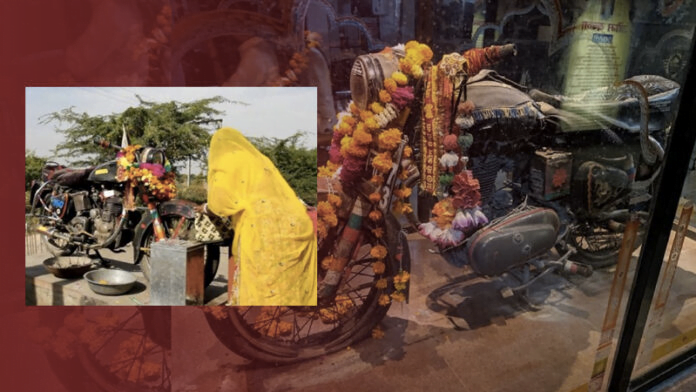
Bullet Baba Temple is situated in Pali district of Rajasthan. The temple is associated with many mysteries. People from far off areas visit here and offer their prayers.  The special thing about the temple here is that there is no idol but Bike is worshipped here, which is also called Bullet Baba. This temple is known as Om Banna Temple.

Bullet No.

Bullet 350 is located in the temple of Bullet Baba, whose number is RNJ 7773.

Wine offered –

Devotees who come here offer flowers, mala, prasad besides liquor.

Bullet Baba Temple: Where bikes are worshipped & alcohol is offered!

Recognition –

Here it is believed that if those passing through here stop and pray in this temple, then their journey is pleasant and auspicious. And it is also believed that if you go straight without stopping in this temple, then an accident can happen to you.

Where is the temple

20 KM from Pali on Jodhpur-Ahmedabad National Highway. 

Who is Om Banna? History of Om Banna

Om Bana (Om Singh Rathod) was the son of Thakur Jog Singh ji Rathod of Chotila Chotila village located near Pali town. In 1988, when he was returning to his in-laws’ house, he collided with a tree. Om Banna was killed in that accident. After the accident, when the police took Om Banna’s bullet to the police station, the bullet disappeared from the police station. Even after being brought to the police station several times, the motorcycle would disappear from the police station in the night and reach the accident spot on its own. After this miracle, Om Bana’ bike was kept at the place of accident. After which its recognition increased among the people and its workship started.

Local people believe that earlier there used to be a lot of accidents here, but after the construction of the Om Bana temple, the accidents came down.

New Delhi Railway Station gets a new proposed design. Watch out pics…

0

The New Delhi Railway Station will soon be seen in a new design format. You might compete this design with the best airport designs of the world. Wanna watch pictures of the design.. Here they are as posted by Ministry of Railways…

New Delhi Railway Station gets a new proposed design. Watch out pics...
Proposed design of railway station

National Interfaith Peace Conference in Nagpur aims to help build a United India!

0

Harnessing the Resources of peace from all Faith Traditions of India, the World Sufi Forum and All India Ulama & Mashaikh Board (AIUMB) in collaboration with Baba Tajuddin Trust seek to strengthen national integration through interfaith harmony and peaceful co-existence!

The latent objective of all faith traditions in India has been to establish a peaceful society through moral and spiritual upliftment and national development to provide a powerful impetus to the advancement of our shared heritage of Unity in Multiciplity. 

Keeping in view this key essence of Indian religions, the World Sufi Forum and All India Ulama & Mashaikh Board (AIUMB) in collaboration with Baba Tajuddin Trust have organised “National Interfaith Peace Conference” on the 100th Urs (death anniversary) of Baba Tajuddin, the renowned Sufi Mystic of South and West India.

The Urs of Baba Tajuddin is being celebrated at his famous Dargah in Nagpur for two weeks. On this occasion, under the joint aegis of Baba Tajuddin Trust and All India Ulama & Mashaikh Board, an interfaith Sufi conference is going to be organized in the compound of Baba Tajuddin Astana on September 3. 

The real purpose of this event is to end the growing atmosphere of hatred and communal disharmony which is harming India’s ancient syncretic culture. India has been the land of Mystics of all religions including the Rishis, Sufis and Saints of Buddhism, Jainism and Sikhism. As a matter of fact, the basic element of Indian culture and spiritual ecosystem is unity in diversity, which is called “Kasrat Mein Wahdat” in the Sufi terminology. 

Inspired by this pious intention, the national conference is being organized by All India Ulama and Mashaikh Board and Baba Tajuddin Trust to urge people to imbibe mutual understanding and exercise patience and restraint and espouse mutual brotherhood and love.

if the current religious disharmony is not stopped, then India’s culture will be deeply impacted.

Just as if only one type of flower is in a garden, then there is no beauty, in the same way, India is a multilingual, multicultural and multireligious melting pot in which different religions, faith traditions, languages, all go together and India makes the land such a bouquet that accepts and integrates all.

This national conference organized at the Dargah of Baba Tajuddin is to be held in two parts, one is the Sarva Dharma Sammelan or Interfaith Peace Conference and the other is part of the World Sufi Forum or International Sufi Conference, which is jointly being organized by All India Ulama and Mashaikh Board and Baba Tajuddin Trust.

Faith leaders, Sufi Divines and Dharmacharyas of all religions will be together in one place to give the message of peace and communal harmony to the entire country. They will put forth their helpful ideas and guidance to curb the incidents of hate speech spreading in the country. The prime purpose of this conference is to make the Sufi message of “Love for all and Malice towards None” common.

Luni River: The only river in India that never meets the sea

0

Luni River originates from the Naga Hills of the Aravalli Range in Rajasthan’s Ajmer district from a height of 772 metres.

It irrigates a large part of the south-western part of Rajasthan and then reaches Gujarat where it disappears in the desert of Kutch. Its total length is 320 km.

The water of Luni river from Ajmer to Balotra remains quite sweet but due to the predominance of salt in it, the water becomes saline.

The river, called as Sagarmati here, then turns south-west towards Gujarat via hills and plains in the region. 

This flows through the Rajasthan districts namely Nagaur, Pali, Jodhpur, Barmer and Jalore covering a distance of around 495 kms.

Luni does have freshwater during the first hundred kilometres but as it reaches Balotra in Barmer, the water starts to turn saline from the rich salt content of the surface on which it flows on.

As it flows through Rajasthan, it also encounters low rainfall and high temperatures which causes erratic water supply.

Luni then flows into the Thar Desert and meets its end in Barine, located at the north-eastern part of the marsh called the Rann of Kutch in Gujarat, without flowing into any larger water body.