Home Blog Page 685

What is Collective Responsibility? Know all about Collective Responsibility

0

Collective responsibility is the idea that everyone in a group is responsible for the actions of that group. It’s often used as a way to hold people accountable for their actions, even if they weren’t directly involved in them or didn’t know about them.
This concept has its roots in ancient times, when it was common practice for groups like tribes and villages to punish any member who broke rules or laws. If one person stole something from another person’s house, then all members of that tribe would be punished by having their houses burned down or destroyed altogether–even though some may not have been involved in stealing anything at all!

The Benefits of Collective Responsibility

Collective responsibility is a powerful tool for strengthening communities, improving quality of life and increasing accountability.
Collective responsibility provides a framework for people to work together towards common goals. It encourages collaboration, sharing and mutual support between individuals in order to achieve something greater than what they could have done alone. This can be seen in many different ways:

  • A group of neighbors may decide to organize a block party together as an opportunity for everyone on the street to get together and have fun while also making new friends or getting involved with their community in other ways (such as volunteering at local organizations).
  • A business might organize an employee volunteer day where employees are encouraged to spend time doing service work somewhere else instead of coming into work–this helps improve morale at both ends!

The Role of Leadership in Collective Responsibility

The role of leadership in collective responsibility is to set the example, encourage participation and foster collaboration.
Leaders must set the example by being willing to take responsibility for their actions, even when they make mistakes or fail at something. They must demonstrate this willingness by acknowledging their own mistakes and using them as learning opportunities for others in the organization. This can be challenging because leaders often don’t want to admit that they have made a mistake out of fear that it will damage their reputation or credibility with employees or customers; however, if you do not accept responsibility for your actions then how can anyone else trust what you say?
Leaders should also encourage participation from others so that everyone feels empowered to speak up when necessary (even if it means disagreeing with their boss). By encouraging participation among staff members who may otherwise feel intimidated by senior management positions within an organization’s hierarchy structure

Examples of Collective Responsibility

  • Local governments:
  • Businesses:
  • Schools:

Collective Responsibility and Social Change

Collective Responsibility is the idea that we are all responsible for the state of our world, and that each of us has a role to play in creating sustainable change.

  • Creating Sustainable Change
    Collective Responsibility means taking action to create sustainable change by working together with others who share similar values. This can include anything from volunteering at a local food bank or environmental organization, to organizing community events around issues that matter most to you.
  • Taking Action
    The first step towards collective responsibility is recognizing your own power as an individual–and then using it! You don’t need permission from anyone else; just start doing what feels right for you (and maybe ask friends along).

Challenges of Collective Responsibility

  • Building Trust
  • Overcoming Fear
  • Ensuring Equity

Tools for Supporting Collective Responsibility

There are a number of tools that can help you support collective responsibility.

  • Dialogue is the act of communicating with others in order to understand their perspectives, which can lead to greater understanding and empathy for each other’s differences.
  • Communication is the ability to express yourself clearly, both verbally and nonverbally, so that others can understand what you’re trying to say or do. This includes listening actively when someone else is speaking and making sure they feel heard by asking questions if needed (or just nodding your head).
  • Collaboration involves working together towards a common goal or purpose–it’s not just about working on projects together; it also means sharing ideas with one another so everyone has a chance at contributing something valuable!

Collective Responsibility in the Digital Age

In today’s digital age, the concept of collective responsibility is more relevant than ever. Social media platforms like Facebook and Twitter have allowed us to connect with one another in new ways, but they’ve also created a platform for hate speech and misinformation. Platforms like these can be used for good or bad–and it’s up to us as individuals and communities to decide how we want them used.
If you’re part of an online community (whether it be Reddit or Tumblr), make sure that your posts reflect the values of that community. If someone posts something offensive or hateful on your page–even if they’re not associated with you directly–you have every right as an active participant in that space to flag their post as inappropriate so it will be removed from view by other users who visit later down the line!

The Future of Collective Responsibility

The future of Collective responsibility will be shaped by shifting power dynamics, increased transparency and greater inclusivity.

As the world becomes more interconnected, we are seeing a shift in the way business is done. Companies are increasingly accountable for their actions as consumers become more connected and aware of what’s happening around them. This has led to increased demand for companies to take responsibility for their supply chains and environmental impact; something that many have been slow to do until recently due to lack of regulation or public pressure from activists groups such as Greenpeace or Amnesty International who have been working hard over decades now so that we can all enjoy a cleaner planet together!

Conclusion

In conclusion, collective responsibility is a powerful tool that can help you to achieve your goals. However, it’s important to recognize the benefits and challenges of this approach before deciding whether or not it’s right for your organization.
You may want to think about how collective responsibility will affect:

  • Your culture and values
  • The way people work together within teams and departments
  • How individuals are rewarded or recognized

Asiatic Lions are about to translocate

0

The Asiatic lion, one of the strangest and most endangered big cat species in the world, is found in Gujarat, a state renowned for its rich biodiversity and wildlife. The Gir Forest National Park in Gujarat is home to the majority of the Asiatic lions.

Thus, the state government intends to relocate 40 Asiatic lions to the Barda Wildlife Sanctuary. 

This effort aims to protect the lion population from possible extinction brought on by illnesses or environmental risks like natural catastrophes or habitat degradation.

Nonetheless, the lions’ relocation also set up the sanctuary for potential natural dispersal. Thus, it is necessary for the species’ long-term survival. Also, the initiative will produce herbivores in the refuge, increasing the amount of prey available to the lions and helping to raise their numbers.

The project has received preliminary permission from the state of Gujarat. As a result, it is anticipated that it will be finished in stages. The Barda Wildlife Sanctuary will need to be prepared in the first phase, which will require building new enclosures, fencing, and water supplies. The lions will be progressively brought to the region over time once the sanctuary is finished.

The relocation project is an attempt to save the lion population. According to a 2014 analysis by the Wildlife Institute of India, the Barda sanctuary can only sustain 26 lions, which is insufficient for the 40 lions that would be relocated there. Ineffective steps to reduce the risk might result in this conflict being worse once the lions are moved to the Barda refuge.

Rajasthan will be divided into three new divisions, while Jaipur will be divided into four districts

0

After the state administration announced the construction of 19 new districts and three new divisions.

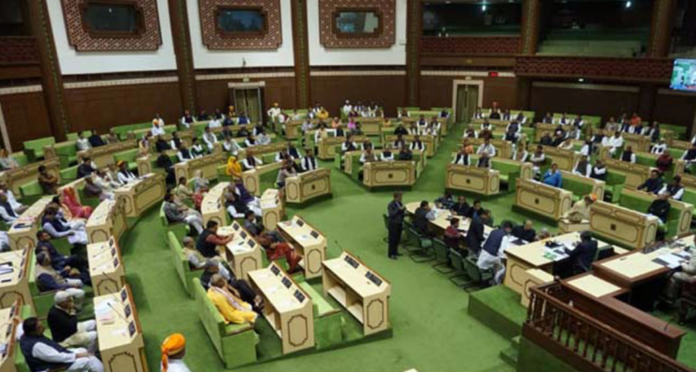
Rajasthan is about to see a significant administrative reform. At Friday’s assembly session, Chief Minister Ashok Gehlot made this declaration. Rajasthan will now have 10 divisions and a total of 50 districts with this expansion.

Jaipur district has been divided into Jaipur North, Jaipur South, Dudu, and Kotputli districts, making a total of four new districts. 

Banswara, Pali, and Sikar are the newest divisions. However, it is yet unclear which districts would be under the control of these headquarters, the government has given the area considerable consideration. The tribal belts of Mewar, Marwar, and Shekhawati were used to carve off Banswara, Pali from Marwar, and Sikar from Shekhawati.

For easier administration, the government has also separated a few of the current districts. Three districts—Jodhpur East, Jodhpur West, and Phalodi—have been created from the city of Jodhpur, the seat of Chief Minister Ashok Gehlot.

In order to construct new districts, some other districts have been separated. Anupgarh was created from Sriganganagar, Balotra from Barmer, Beawar, and Kekri from Ajmer, Deeg from Bharatpur, Didwana-Kuchamancity from Nagaur, Gangapur City from Sawaimadhopur, Khairthal from Alwar, Neem ka Thana from Sikar, Salumbar from Udaipur, and Shahpura from Jalore.

Thus, the declaration came after a six-month extension was granted to the High Power Committee, led by retired IAS Ramlubhaya. To propose the creation of additional districts, the committee received separate memoranda from 60 different leaders requesting the establishment of additional districts.

Know more about TCS’s new CEO, K. Krithivasan.

0

The Board of Directors of Tata Consultancy Services (TCS) has designated K Krithivasan as the new CEO-designate, effective March 16, 2023. Following the resignation on Thursday of Rajesh Gopinathan, who served as the managing director and CEO for the last six years, Krithivasan will work with Gopinathan to transition into the roles of managing director and CEO in the coming fiscal year.

After Gopinathan’s departure, Tata Sons and TCS Chairman N Chandrasekaran exclaimed, “For the past 25 years, I’ve had the pleasure of working with Rajesh.” At this time, Rajesh has consistently demonstrated exceptional performance in a variety of jobs, including his previous role as Chief Financial Officer.

In 1985, Krithivasan received his BTech in Mechanical Engineering from the Coimbatore Institute of Technology, which is part of the University of Madras. However, following that, he obtained a Master’s Degree in Industrial and Management Engineering from IIT Kanpur. Later, in 1987, he graduated from IIT. He has also completed a Harvard Business School industrial training course.

He is currently in charge of developing and implementing corporate strategy. Enhancing financial performance and increasing customer thought leadership and market positioning as the global head of banking, financial services, and insurance (BFSI). He has assisted important clients with digital transformation, accelerating the change management cycle, creating benefits above cost optimization, and establishing IT program governance.

Swara Bhaskar and Fahadh Ali Khan to tie knot together in traditional way

0

As the new pre-wedding photos of Swara Bhaskar’s wedding are surfacing on the net, public figures and fans are showering their love on the couple. 

Swara Bhaskar and Fahadh Ali Khan are about to get married in the traditional Indian way. The couple shared some photos and videos on the internet, which surfaced all over social media. In the pictures and videos, one can see the lovable adoration on their faces as they look happily indulged in the wedding ceremonies. 

One of the photos shared was from their ‘Haldi ceremony’ where the relatives were applying turmeric to the couple’s hands and face as a ritual. Swara and Fahadh got married in court on January 6. While the reports suggest the couple will marry in a traditional Indian ceremony today, March 16.

Swara shared the photos and videos on her social media handles, where she revealed the secret of her wedding. 

In her “henna ceremony,” veteran actress Veena Nagda performed. A long time ago, Swara promised Veena that she would invite her to her wedding ceremonies. Veena Nagda shared the pictures and her adoration for Swara’s promise.

Swara-Fahadh’s wedding is taking place in Swara’s maternal grandfather’s farmhouse in Delhi. 

Musical maestro, A R Rehman, shares how he won the Academy Awards in 2009

0

The worldwide popular song, “Natu Natu,” has added another glory to its name by winning an Oscar in the best song category. The makers of the well-received song are getting appreciation from many A-listers. While talking about the Oscars, a conversation between the musical maestro A.R. Rehman and violinist L. Subramanian is becoming the talk of the town. 

In the conversation, the Oscar-winning music composer A.R. Rehman not only congratulates the makers of “Natu Natu” but also appreciates the efforts that go into making such songs. He says that to achieve an accomplishment worth worldwide recognition, one has to keep their shoulder on the wheel. The video shows A.R. Rehman exclaiming “Jai ho to you” after the great accomplishment of bringing the Oscars home.

While having the conversation, the video extends to the point where L. Subramaniam asks Rehman about his Oscar-winning song, ‘Jai Ho, and how he changed his musical to reach the Oscars. Rehman explained that he had changed a lot of techniques in his music that made him great. He shared his experience while making ‘Jai Ho, where he chose performers and an orchestra with the help of technology to benefit his music style. In addition, he stated, composing songs for a movie takes 8 songs; however, Rehman’s jingle background pushed him to compose 18 songs. In the making of songs, Home Studio helped a lot in the enhancement of Rehman’s music, giving it more finesse.

A.R. Rehman suggests that artists should always evolve in their art, which will bring them to greater heights.

International Conference ‘United Nations Reforms for the Changing World’ in The Netherland on May 3

0

The Foundation for Critical Choices for India, The Netherlands, is organizing the INTERNATIONAL CONFERENCE United Nations Reforms for the Changing World  with Special Focus on United Nations Security Council.

Event Date: 3rd May 2023

Venue: Kasteel de Wittenburg, Landgoed de Wittenburg 1,2244 BV, Wassenaar, The Netherlands.
Foundation for Critical Choices for India (FCCI) is a think tank and focal point for initiating and implementing studies and programs on issues of strategic importance to India in  social, political, economic fields by mobilizing the resources of non resident Indians (NRIs) / persons of Indian origin (PIOs).

Background & Themes

The United Nations (UN) is a 77 year-old world organisation representing 193 Member States. In today’s world, the UN intends to act on the issues confronting humanity in the 21st century. Such issues are a) maintaining international peace & security, b) protecting human rights, c) delivering humanitarian aid, d) promoting sustainable development, and e) upholding international law. In today’s highly multipolar, nationalistic, globalised world, the UN is facing critical issues such as a) power imbalance, b) non-equitable representation of member states, c) lack of democratic principles in decision-making and d) dependency of the UN for funds on its member states. Several new global challenges are emerging (especially in relation to peace & security) that require co-ordinated actions. Thus, the incremental structural reforms at both UN and UNSC levels are vital for building reconciliation amongst the member states to make these institutions more relevant and effective.   
FICCI have conducted a systematic study through several brainstorming sessions, and through a legitimate literature survey came up with some new suggestions in terms of framework guidelines dealing with mechanisms to empowering the UN through its ‘One World’ approach of collective governance. A special focus is given to UNSC reforms. Here, The Foundation (FCCI) has come up with several innovative inclusive guidelines to make UNSC more equitable representation and impart democratic principles in decision-making. Additionally, a mechanism has been proposed for making the UN financially independent for its effective global governance.
 

The main aim of this international conference is to present FICCI’s findings, exchange views, and openly discuss much-needed UN reforms with the representatives of several UN member states, representatives from veto-holding nations, G-4, G-20, C-10 nations, EU, and other stakeholders. This international conference is the first major step to push further UN reforms without any biased approach and start the challenging journey to build consensus amongst the UN member states.
 The programme will be highly interactive and includes speakers and panellists from different backgrounds such as experts on UN affairs, diplomats, representatives from the corporate world & experts on international law.

Abu Dhabi Investment Authority (ADIA) investing $500 million in Lenskart

0

Lenskart, the largest eyewear retailer in Asia, has signed definitive documents for a USD 500 million investment from a wholly owned subsidiary of the Abu Dhabi Investment Authority (ADIA).

The investment will be made via a purchase of both primary and secondary shares and will result in ADIA becoming one of the largest shareholders in Lenskart. Completion is subject to receipt of statutory and regulatory approvals. Upon completion of the transaction, Lenskart will have attracted close to USD 750 million capital over the last 12 months including recent fund-raising activities, making it one of the largest such growth stage financings globally.

Lenskart continues to deepen its penetration in India while rapidly scaling its international presence in Asia and the Middle East. The company now has 2,000+ stores of which 1,500 are in India with the balance in Southeast Asia and the Middle East. Its new factory, which will play a significant role in manufacturing the 20 million pairs of eyewear that the company plans to ship next year, will also be ready to launch soon. Lenskart grew revenue by 60% for the second year in a row and is now profitable.

Speaking on the transaction, Peyush Bansal, Founder & CEO of Lenskartsaid, “It is still Day 1 at Lenskart. Vision Correction remains a big problem, and Myopia rates continue to grow rapidly, touching levels of as high as 80-90% in some parts of Asia. Hence, we are still very early in our journey and have a lot of work to do to continue to make our desired impact in this area of critical need. And ADIA, with its patient and long-term approach to investing, is a perfect partner for us as we embark on the next phase of our journey. 

The next phase at Lenskart is a journey of 10 to 100 where we are focusing on building a diverse culture that enables innovation and execution at scale while solving a large bottleneck hindering high quality vision for all.  I hope we can continue to work hard with the same level of humility and dedication and transform the lives of a billion people eventually.”

Hamad Shahwan Al Dhaheri, Executive Director, Private Equities Department, ADIA said, “Lenskart has rapidly established itself as one of the largest and most innovative eyewear companies globally.  Given its unique technology-enabled and vertically integrated business model, we believe the company remains well positioned to build on its leadership position.  This investment is a continuation of our strategy of investing in highly differentiated, market leading businesses in Asia linked to the region’s consumption-driven growth and rapid technological advancement.”

Avendus Capital was the exclusive financial advisor to Lenskart and its shareholders on the transaction.

EY acted as ADIA’s advisors on accounting and tax matters, while AZB & Partners and Allen & Overy acted as legal advisors to ADIA.

KPMG and PwC acted as advisors on accounting and tax matters, while Rajaram Legal & Khaitan & Co. acted as legal advisors to the Company and its shareholders.

Rapunzel bacteriophage: Know how it thrives…

0

Microorganisms live in their own world. Thus, anywhere that bacteria live, viruses called bacteriophages can be discovered. These bacteria are among the most numerous and varied species of organisms on earth, and they have a major impact on bacterial population control in a variety of habitats. 

However, the P74-26 bacteriophage distinguishes itself among them owing to its distinct structure and characteristics. 

According to a recent study, this bacteriophage Rapunzel has a very long tail.

The tail structure is almost one micrometer long and resembles some spider silk in terms of breadth. Its tail structure is necessary for host attachment and identification, which are important for productive infections.

Thus, the P74-26 bacteriophage is the most stable phage and has a very long tail, which enables it to dwell in and infect bacteria that are found in hot springs. However, given that the majority of phages are unable to survive in these surroundings’ hard circumstances and high temperatures, this makes it distinct from other phages.

Nonetheless, the P74-26 bacteriophage’s structure was investigated by scientists using high-power imaging methods and computer simulations. 

The P74-26 bacteriophage tail may be compared to Lego bricks in terms of its component parts. These building blocks have the ability to change shape or conformation when they are put together, and this behavior is essential for the building blocks to fit together properly. The reason P74-26 needs half as many building blocks to construct the stacking rings that make up the tail is that the researchers believe that an ancient virus merged its building pieces into one protein. The P74-26 bacteriophage is even more intriguing to researchers because of its distinctive properties.

In a first, trans tea stall comes at Guwahati railway station

0

For the first time ever in IR, has a trans tea stall been opened in a Railway Station

In a bid to empower Transgenders, a trans tea stall has been opened at Guwahati Railway station today which will be fully managed by the Transgender community. This initiative by N. F. Railway is a first of its kind over the Indian Railways. It has been done with active collaboration of All Assam Transgender Association.

The Government of India has approved a comprehensive empowerment scheme for Transgenders named “Support for Marginalised Individuals for Livelihood and Enterprise” which includes a sub-scheme for Comprehensive Rehabilitation for Welfare of Transgender Persons.

This is a first ever such initiative in Indian Railways. Northeast Frontier Railway plans to operate more such Trans Tea Stalls at more Railway stations in the region.