One of the greatest cricketers in history, Mahendra Singh Dhoni, is presently competing for the Chennai Super Kings (CSK) in the Indian Premier League (IPL). He might not play in next IPL season at Sawai Mansingh Stadium (SMS).
Since making his CSK debut in 2008, Dhoni has played a significant role in the team’s success. One of the most successful captains in IPL history, he has guided the club to three championships.
The IPL this year is important for CSK and Dhoni because they want to win another championship and establish themselves as one of the best IPL teams ever. However, this is Dhoni’s final IPL at SMS, his team will benefit greatly from his leadership and expertise, and his presence on the field will be missed.
Furthermore, Dhoni’s debut innings was played at the SMS, which has since become his second home, is appropriate given that his career in cricket began with him playing on Ranchi’s streets. Fans have enjoyed seeing him play because of his powerful hits, quick stumpings, and calm leadership.
Off the field, Dhoni is renowned for his modest demeanor and charitable endeavors. He has donated money and popularity to a variety of organizations, such as healthcare and education.
Fans are anxiously watching and hoping for another amazing performance from Captain Cool as Dhoni continues to play in this year’s IPL. If this is indeed his final IPL at SMS, it will be a historic event for cricket fans all across the world.
Dimple Arora reports on the donation facilities available at Kedarnath.
In the aftermath of the devastating 2013 floods and landslides in the Kedarnath region of India, there was an outpouring of support from people across the country who wanted to contribute to the relief and rehabilitation efforts. One of the ways that people could help was through digital donations.
Digital donations are a form of charitable giving that involves using technology and online platforms to donate money to a cause or organization. In the case of Kedarnath, several organizations set up digital donation portals to enable people to contribute to the relief efforts from the comfort of their homes.
One of the organizations that played a significant role in facilitating digital donations was the Prime Minister’s National Relief Fund (PMNRF). The PMNRF is a public charitable trust that was set up in 1948 to provide immediate relief to people affected by natural calamities and other emergencies. After the floods in Kedarnath, the PMNRF set up a digital donation portal that enabled people to make contributions using their credit or debit cards, net banking, or mobile wallets.
Another organization that used digital donations to raise funds for Kedarnath was the Indian Red Cross Society. The Red Cross set up a dedicated webpage on its website where people could donate online using their credit or debit cards. The organization also accepted donations through mobile wallets and bank transfers.
Apart from these organizations, several crowdfunding platforms also played a significant role in facilitating digital donations for Kedarnath. Platforms like Milaap, Ketto, and Crowdera allowed people to create fundraising campaigns and share them with their friends and family on social media platforms like Facebook, Twitter, and Instagram. These campaigns enabled people to make contributions to Kedarnath relief efforts using their credit or debit cards or mobile wallets.
The use of digital donations for Kedarnath relief efforts was a significant development in the world of charitable giving in India. It allowed people from across the country to contribute to the relief efforts conveniently and securely, without having to worry about logistical challenges or physical distance. Moreover, it demonstrated the potential of technology to enable people to make a difference in the world, even when they are not physically present.
Not long ago when people used to go with their families on weekends to enjoy circuses. The circuses used to hold plenty of shows and performances which still have a place in the heart of the audiences.
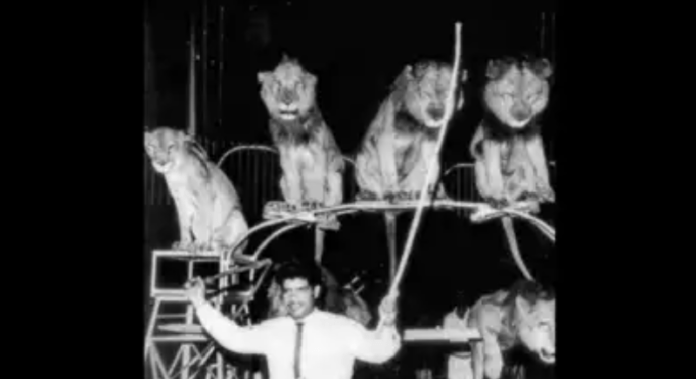
At the age of 99, Gemini Sankaran, the nation’s first circus creator, passed away. He allegedly passed away around 11:40 p.m. on Sunday at a hospital in Kannur. He had just been brought to the hospital and apparently passed away from age-related problems.
Sankaran began training for the circus while still in school. Later, He found his way back to the circus as a trapeze performer after a number of failed attempts, including working at a grocery store and subsequently the British Army.
However, In 1951, he purchased his own circus, which he named Gemini Circus. He found success in this world as an artist and businessman. He performed in the circus on the horizontal bar and the flying trapeze. Later he acquired Jumbo Circus.
Sankaran joined the circus when it included lions, elephants, and other animals. He significantly influenced its modernization. The circus saw a slump with the prohibition on animals. When he was at his best, he represented the nation in the circus industry. His circus arena served as the location for several movies, including Mera Naam Joker. The 99-year-old Gemini Sankaran, the Lord of the Ring and the Father of Indian Circus, has died, author NS Madhavan twitter.
The Haldighati War, also known as the Battle of Haldighati, was fought on June 18, 1576, between the armies of the Mughal Empire, led by Raja Man Singh, and the Rajput army of Maharana Pratap. This historic battle took place in the Haldighati Pass near Gogunda in Rajasthan, India, and has since become a symbol of the bravery and valor of the Rajput warriors.
Background
The Mughal Empire, under the leadership of Akbar, had been expanding its territory in India, and in 1576, they set their sights on Mewar, a kingdom in present-day Rajasthan. The ruler of Mewar, Maharana Pratap, refused to submit to Mughal rule and instead chose to fight for his independence.
The Battle
The Mughal army, led by Raja Man Singh, was well-equipped with firearms, artillery, and cavalry. On the other hand, the Rajputs relied heavily on their traditional weapons, such as swords, shields, and spears. Maharana Pratap had a smaller army, but they were highly skilled and motivated fighters.
The battle began with a fierce exchange of arrows, followed by hand-to-hand combat. The Rajputs charged at the Mughal army with their traditional weapons, and the Mughal cavalry tried to outflank them. However, the Rajputs were able to hold their ground, and the battle turned into a stalemate.
As the battle raged on, Maharana Pratap, who was leading his army from the front, found himself isolated from his troops and surrounded by Mughal soldiers. Despite being heavily outnumbered, he fought bravely and managed to break through the Mughal lines and rejoin his army.
The battle lasted for several hours, and in the end, both sides suffered heavy casualties. The Mughal army claimed victory, but Maharana Pratap and his army managed to escape, and he continued his resistance against the Mughals for many years.
Legacy
The Haldighati War has become a symbol of the bravery and valor of the Rajput warriors. Maharana Pratap, who refused to bow down to the mighty Mughal Empire, is revered as a hero in Rajasthan and is remembered for his unwavering commitment to his people and his country.
Today, a memorial to Maharana Pratap stands at the site of the battle, and the Haldighati Pass has become a popular tourist destination, attracting visitors from all over the world who come to pay their respects to the brave warriors who fought and died there. The legacy of the Haldighati War continues to inspire and motivate people to stand up for their rights and fight for their freedom.
Recently, the Order of Australia was bestowed upon Ratan Tata, one of the most revered chairman emeritus of Tata Sons. One of the highest civilian decorations in the nation is the Order of Australia. Ratan Tata was given this honor as a result of his efforts to strengthen bilateral connections between Australia and India.
His thinking has changed the Indian corporate environment with his ingenuity and intelligence as one of the geniuses, a visionary leader, and an entrepreneur. His impact on Indian society and the economy is therefore immense and beyond comparison. Many different industries have been impacted by Ratan Tata.
His commitment to CSR has also received widespread recognition, and his charitable activities have improved the lives of many people. Many young businesspeople have been motivated by Ratan Tata’s leadership, and he has left a lasting impact.
The Order of Australia is evidence of Australia and India’s close friendship and cooperation. As a result, it acknowledges how crucial it is to forge closer relations between the two countries and the important role that corporate tycoons like Ratan Tata can play in stimulating both social and economic progress.
Ratan Tata has long been a proponent of teamwork and partnership, and his ideas have contributed to the development of better linkages between corporations, governments, and communities. He has demonstrated that successful corporate leaders must utilize their influence to bring about constructive change, and this honor is a just homage to his lifetime dedication to this principle.
We may anticipate a better future for India and the rest of the globe as Ratan Tata continues to inspire and lead by example.
Dimple Arora reports on the sacred sanctuaries of Hindus, Kedarnath Temple.
Kedarnath Temple, located in Uttarakhand’s Rudraprayag district, is one of Lord Shiva’s most beloved sanctuaries. It is supposed to be one of Lord Shiva’s twelve Jyotirlingas and is part of the Char Dham Yatra. It is located at an elevation of 3,583 meters.
The temple is surrounded by snow-capped Himalayan peaks and is situated near the Mandakini River. The trek to Kedarnath is a challenging one, and it is advised that people who have respiratory or cardiac problems should avoid visiting the temple. The journey to Kedarnath Temple is considered a spiritual journey, and the views on the way are mesmerizing.
The history of Kedarnath Temple dates back to the ancient Hindu epic, Mahabharata. According to legend, the Pandavas sought the blessings of Lord Shiva to atone for the sins they committed during the Kurukshetra War. However, Lord Shiva was not ready to meet them, and he disguised himself as a bull to evade them. The Pandavas, with the help of Draupadi, managed to recognize Lord Shiva, and he granted them his blessings. It is believed that the temple was built at the same spot where Lord Shiva appeared in front of the Pandavas.
The temple was initially built by Adi Shankaracharya in the 8th century, but it was destroyed several times by natural calamities such as floods and earthquakes. The present structure of the temple was built in the 18th century by the Gorkha king, Amar Singh Thapa. The temple is built of large stone slabs, and the walls are adorned with intricate carvings and sculptures.
The main deity of the temple is Lord Kedarnath, who is represented in the form of a lingam. The temple also houses the idols of other deities such as Lord Ganesha, Goddess Parvati, and Lord Kartikeya. The temple is open only for six months a year, from April to November, as it remains snow-bound during the winter months.
The temple attracts a large number of devotees every year, and it is believed that a visit to Kedarnath Temple can wash away one’s sins and grant them salvation. The temple is also an important pilgrimage site for Hindus, and it is believed that a visit to the temple is incomplete without a dip in the nearby Tapt Kund, which is a natural hot water spring.
In recent years, Kedarnath Temple has faced several challenges due to natural calamities. In 2013, a flash flood caused extensive damage to the temple and the surrounding areas. However, the temple was soon restored, and the government has taken several measures to ensure the safety and security of the pilgrims.
Also, Kedarnath Temple is a spiritual journey that is not only a test of physical endurance but also a test of one’s faith. The temple’s history, architecture, and location make it a unique pilgrimage site that attracts millions of devotees every year. A visit to Kedarnath Temple is an experience that will stay with you for a lifetime.
Dimple Arora reports on the blooming diversity of wildlife.
India has only 2.4% of the world’s land area but is home to 8% of known global biodiversity. The country has made significant progress in wildlife conservation over the past 9 years, since 2014. Some of the key developments and initiatives in this area are:
1. Tiger Conservation: India is home to the largest population of tigers in the world, and the country has taken several measures to protect this endangered species. One of the major initiatives is the “Project Tiger” launched in 1973, which has been successful in increasing the tiger population. In recent years, the government has also launched programs like “Sankalp Se Siddhi” to further strengthen tiger conservation efforts.
2. Elephant Conservation: India has the largest population of Asian elephants in the world, and the government has taken steps to protect them. The “Project Elephant” launched in 1992 aims to protect elephants and their habitats. Recently, the government has also launched a “Gaj Yatra” campaign to raise awareness about the conservation of elephants.
3. Forest Conservation: India has a diverse range of forests and wildlife, and the government has implemented several policies to protect them. The “National Afforestation Programme” launched in 2016 aims to increase forest cover and improve the quality of existing forests. The government has also implemented the “Compensatory Afforestation Fund Act” to compensate for the loss of forests due to development activities.
4. Endangered Species Conservation: India has several endangered species like the Indian rhinoceros, snow leopard, and lion-tailed macaque, among others. The government has taken measures to protect these species, including the “Project Snow Leopard” and “Project Rhino” initiatives.
5. Wildlife Crime Control: India has also been taking steps to combat wildlife crime, including poaching and illegal wildlife trade. The government has implemented the “Wildlife Crime Control Bureau” to monitor and investigate wildlife crimes and has also set up special task forces to deal with specific cases.
Therefore, India’s efforts towards wildlife conservation have been commendable, and the country has made progress in protecting its rich biodiversity. However, there are still challenges and areas for improvement, and continued efforts are needed to ensure the long-term survival of India’s wildlife.
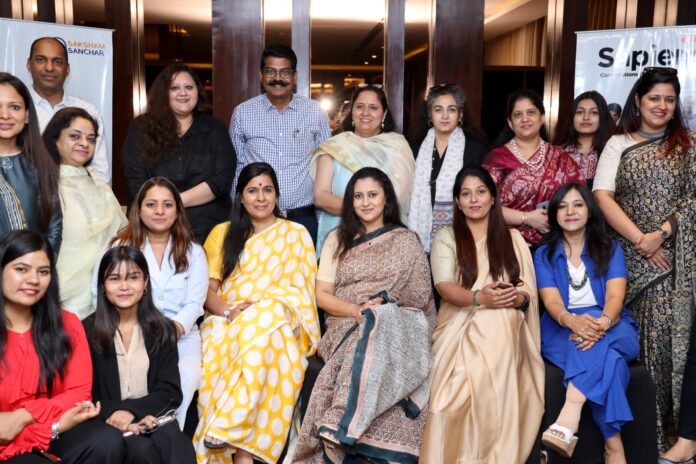
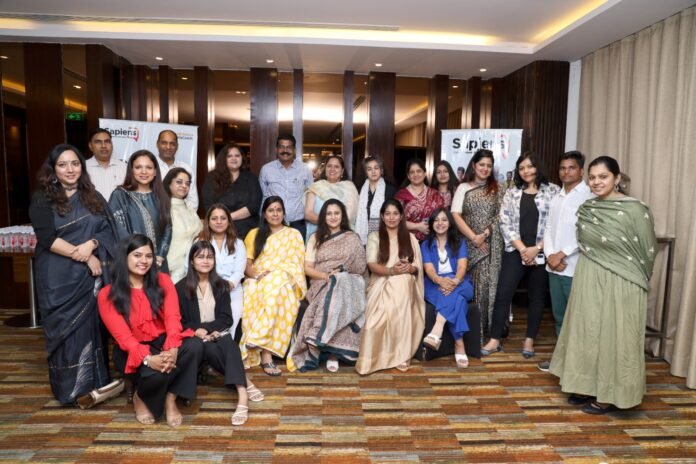
The pursuit of perfection is something that has long been ingrained in our society, with standards and expectations often placed on women to achieve an ideal state. However, the concept of perfection can differ greatly depending on one’s perspective and experiences. Recognizing this, Team Saksham Sanchar and Team Sapiens, two prominent organizations, brought a power brunch at the Hilton Hotel Jaipur, bringing successful women together from various backgrounds and professions to engage in a round table discussion on their take and diverse definitions of perfection.
The round table discussion on women’s take on perfection at the power brunch was indeed a thought-provoking and empowering event. It highlighted the diverse definitions of perfection. This brunch provided an opportunity for the women to support and uplift each other and to celebrate their achievements and successes. The event was graced by the presence of esteemed guests, Mayor Saumya Gurjar and Mrs. Himanshi Gehlot, who shared their insights on the topic, “Why there are exceptions to be a perfect women.”
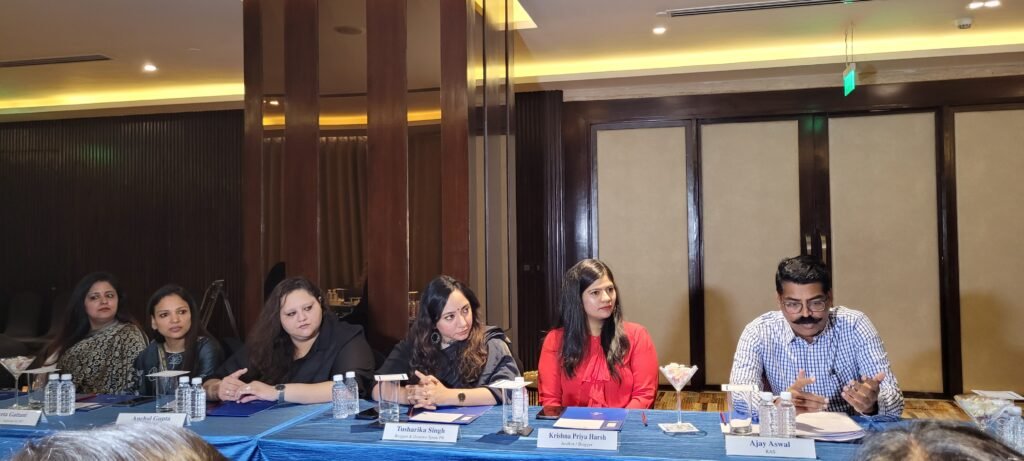
Ajay Aswal (RAS) and Archana Sharma( IANS Journalist) started the conversation by welcoming the guests. Aswal from Team Sapiens then started asking questions to the women present in the programme.
Firstly Mayor Saumya Gurjar shared her journey and challenges as a female leader in the field. She highlighted how societal norms and expectations often put immense pressure on women to be perfect in multiple roles they play, whether it’s as a professional, wife, mother, or daughter. She emphasized that perfection should not be measured by external standards, but rather by one’s personal growth and progress. Mayor Gurjar’s inspiring words resonated with the ladies and set the tone for the rest of the discussion.
Her poetic ode for women was-
जीवन के इस रण में तुमको
विश्वास अटल रखना होगा
100 बार गिरो फिर भी उठाना
नक्षभेद तभी होगा
है अग्निपथ सा ये जीवन
तू निर्भीक निडर होकर इसपर चल
चरण पखरेगी मंज़िल
निश्चित होगी तेरी जीत
परचम तू ही लहरेगी
हो एकाग्र बस चलती चल
Mrs. Himanshi Gehlot, a successful social activist, also shared her thoughts on perfection. She emphasized that perfection is a subjective and ever-changing concept, and it’s important for women to define their own version of perfection rather than conforming to societal expectations. She encouraged women to embrace their flaws and imperfections, as they are what make each woman unique.
The discussion then opened up to the other businesswomen who were part of the conversation. They shared their diverse perspectives on perfection based on their personal and professional experiences. According to Shalini rajvansi ( CA) “Perfection is the flawless state of mind.”She said when every everything feels exactly right then that is perfection for me. Neha Gupta,(director, Mangalam Plus Medicity),Sunita Sharma(founder, auma foundation), Hema (director Canvas Internatiinal) highlighted the pressure to meet societal beauty standards, while Vineeta Somani (founder), Attila discussed the challenges of balancing work and personal life.
Other Inspiring ladies shared stories of overcoming obstacles to pursue their passion and define their own version of perfection.The round table discussion delved into various aspects where Anubha Gupta (autopal) Anchal Gupta( brand balance) , Yogacharya Divyadhara Hemlata Sharma, Krishna Priya Harsh( Anchor/Blogger) shared the importance of self-care and self-acceptance. These women spoke passionately about breaking free from the shackles of perfection and embracing their uniqueness, flaws, and imperfections. They emphasized the need to redefine perfection on their own terms, without succumbing to societal pressures or stereotypes.
The event fostered a sense of solidarity, with the women expressing their admiration and respect for each other’s journeys.The organizers, Team Saksham Sanchar and Team Sapiens, were thrilled with the success of the power brunch. They expressed their gratitude to the esteemed guests, Mayor Saumya Gurjar and Mrs. Himanshi Gehlot, for their valuable insights and inspiring words by presenting green pot to them. They also thanked all the businesswomen who participated in the discussion and shared their perspectives on perfection.
Dimple Arora reports about the 96th Oscar award ceremony date
The 96th Academy Awards have been announced by the Academy of Motion Picture Arts and Sciences. The event will be held on March 10, 2024. The deadline for general category nominations is November 18th, 2023.
The ceremony was announced on social media by the Academy. Following the submission procedure, the awards will be voted on. The results will be revealed on December 21, 2023.
Furthermore, voting will take place from January 11th through January 16th, 2024, with formal nominations beginning on January 23rd, 2023.
India won in both categories at the previous year’s 95th Academy Awards. One of which is RRR, Rajamouli’s hit film ” Nato-Nato,” which won the award for Best Original Song. Kartiki Gonsalves’ documentary “The Elephant Whispers” also won an Oscar.
In a Power Brunch session organised by Team Saksham Sanchar and Team Sapiens, wonderful thoughts were exchanged between entreprenuers with a topic ‘Why there are expectations on women to be perfect women.’
Team Saksham Sanchar and Team Sapiens hosted a Power Brunch at the Hilton Hotel in Jaipur, bringing together a group of inspiring women for a thought-provoking discussion on the topic “The Expectations of Perfection on Women”. The event was graced by esteemed guests, Mayor Saumya Gurjar and Dr. Himanshi Gehlot, who added their insights to the conversation. Mayor Saumya Gurjar’s words echoed through the room, leaving an indelible impression on everyone present. Her words to women outline the challenges they face in life and the determination required to overcome them.
Her poetic ode for women:
जीवन के इस रण में तुमको विश्वास अटल रखना होगा 100 बार गिरो फिर भी उठाना नक्षभेद तभी होगा है अग्निपथ सा ये जीवन तू निर्भीक निडर होकर इस पर चल चरण पखरेगी मंज़िल निश्चित होगी तेरी जीत परचम तू ही लहरेगी हो एकाग्र बस चलती चल
These poetic words of Mayor left everyone captivated. Her poem was a powerful reminder for the women to never stop, despite the numerous obstacles that may come their way.