Home Blog Page 641

MLAs take Europe tour to get insight into gender equality, women empowerment, dairy among other issues

0

A delegation of 22 Members of Legislative Assembly (MLAs) hailing from diverse political backgrounds embarked on a transformative 10-day educational journey across Europe as part of their MLA Europe Tour.

The tour, spanning Germany, Netherlands, and London, is designed to provide deep insights into critical areas such as gender equality, women’s empowerment, fisheries, and dairy farming. This initiative seeks to broaden the MLAs’ horizons and enrich their understanding of international best practices in these domains.

On the 27th of August, the delegation arrived in the Netherlands and received a warm welcome from Adv Pranita Deshpande, the Managing Director of Ansh Overseas BV Netherlands. The delegation was particularly honored by the presence of distinguished women MLAs, including Ms. Neelam Gorhe, Ms. Manisha Kayande, Smt. Suman R Patil, and Jehalam Joshi, among others, emphasizing the tour’s focus on women’s empowerment.

As a gesture of goodwill and appreciation, Ansh Overseas BV presented each MLA with a thoughtful gift symbolizing the spirit of global cooperation. Ms. Deshpande also graciously shared copies of her book during the event.

The MLA Europe Tour is a remarkable initiative that fosters international collaboration, strengthens cross-cultural ties, and facilitates the exchange of knowledge in crucial areas of governance and empowerment. This endeavor reflects a collective commitment towards creating a more inclusive and empowered society, said Pranita.

How to Check Battery Health on Android Devices

0

In the age of digital technology, understanding the health of your device’s battery is crucial. For Android users, there are several methods to check battery health. Here’s a comprehensive guide on how to do it.

Method 1: Checking Battery Health via Android Settings

On a Samsung Galaxy phone, go to Settings > Battery and Device Care > Diagnostics > Battery Status to check your battery health. On other Android phones, dial ##4636## in the phone app or download a third-party app to check your battery health.

Method 2: Check Battery Health Using AccuBattery

AccuBattery is a third-party app that provides detailed information about your phone’s battery health. After installing the app, it starts recording data. After a few charge/discharge cycles, you’ll be able to see a reading for battery health.

How to Know if Your Android Battery Is Bad?

If your Android phone battery isn’t lasting as long as it used to, it could be an indication there’s a problem. Here are some signs that your battery might be bad:

  • Your battery keeps running out.
  • Charging doesn’t seem to fully recharge.
  • The battery runs hot.
  • The battery is bulging.

How to Check Jio Balance, Data Usage, and Validity

0

In the era of digital connectivity, staying updated with your mobile data usage and plan validity has become crucial. For Jio users, there are several easy methods to check their balance, data usage, and validity. Here’s a comprehensive guide on how to do it.

Method 1: Checking Jio Balance via SMS

One of the simplest ways to check your Jio balance is by sending a text message. You can do so by sending a text message “BAL” to 199. The balance will be sent back as an SMS message shortly after you send the request. The reply will contain your balance as well as information about how much data, validity, voice minutes, or SMS messages are left in your plan.

Method 2: Check Balance via Missed Call

A missed call is another easy way to check your Jio balance. For checking balance, dial 1299. The call will be disconnected automatically after a few seconds, then you receive a text message containing how much data, validity, voice minutes, or SMS messages are left in your plan.

Method 3: Check Jio Balance on a Call

The plan validity can be checked through *333# USSD code.

Method 4: Jio Balance Check Using the My Jio App

Your Internet plan, data quota and balance can be viewed by accessing MyJio App. Open MyJio App to view your Active plan, validity and Data balance on the landing page. Click on ‘View details’ in My Account to view Current & upcoming plans along with Benefits, balance and validity.

Unraveling the Truth Behind Viral Claims About Facebook’s New Photo Use Rule

0

Social media platforms often serve as breeding grounds for viral messages, some of which may contain information that sparks concern among users. Recently, a post circulating on various platforms has caught the attention of many, claiming that Facebook has implemented a new rule allowing them to use users’ pictures. This post also warns users about potential violations of privacy rights and urges them to copy and paste the message to safeguard their data. We delve into the details to separate fact from fiction and shed light on the reality behind this viral claim.

The Viral Claim

The message, accompanied by urgency, emphasizes that Facebook’s new rule will take effect “tomorrow” and urges users to share the message immediately to prevent their data from being used without consent.

Investigating the Claim

Delving into the veracity of this claim, we ventured into Facebook’s official policies. According to Facebook’s Terms of Service, users retain intellectual property rights over their content. The platform can only share or distribute user content in accordance with individual privacy settings, ensuring that users’ control over their data remains intact.

The Reality

Scrutinizing Facebook’s official Data Policy, we encountered a blog linked to the announcement of the transition to Meta, which shed light on the company’s continuity in data handling. The blog affirmed that the company’s structure would remain unaltered under the new entity, and data usage and sharing policies would persist as before.

Moreover, the blog stressed that the transition to Meta would not affect data usage or sharing practices. This confirms that existing data usage rules will continue without change.

In the News

Our quest for credible information led us to scour various news sources for any updates on such a rule change by Facebook. However, our search yielded no reports supporting the claims made in the viral message.

The viral message warning about a new photo use rule by Facebook appears to be unfounded. Facebook’s official policies, statements, and news sources do not corroborate the claim. Users can find solace in the fact that their data rights are governed by Facebook’s established Terms of Service and Data Policy. As the digital landscape evolves, it is crucial to discern accurate information from sensationalized messages, ensuring that our online actions are based on facts rather than hearsay.

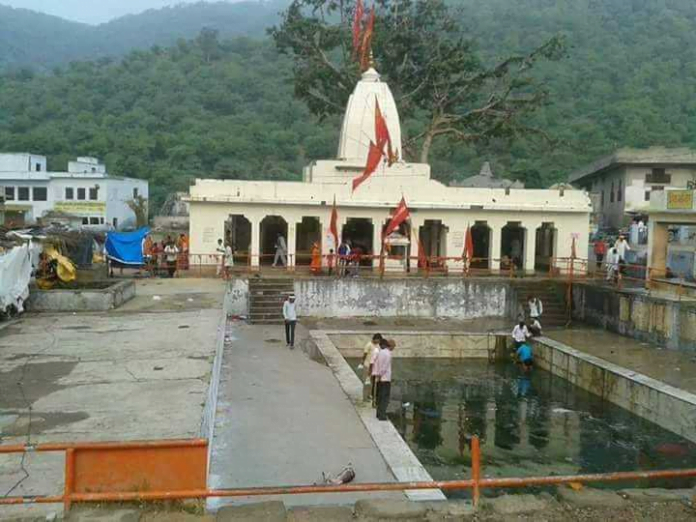
Narayani Mata Mandir: Where Devotion and Culture Converge in Rajasthan’s Heart

0

Simran Saini reports on the Narayani Mata Mandir..

Nestled within the captivating canvas of Rajasthan’s Alwar district, the Narayani Mata Mandir stands as a revered testament to faith and cultural distinction. It emerges not only as a site of spiritual significance but also as a unique gem within the tapestry of the Sain Samaj—a treasure that enriches India’s spiritual panorama. Within the semi-arid expanse, this temple shines as a guiding light, attracting both devotees and curious travelers, inviting them to explore the vibrant heritage of Rajasthan. 

A Sanctuary of Devotion The Narayani Mata Mandir stands apart, woven into the fabric of the Sain Samaj—a singular sanctuary of its kind across the nation. It goes beyond being a mere temple; it is a living testament to the cultural diversity cherished by Rajasthan. Beneath its sanctified roof, a small spring glistens—a symbol of life amidst the arid surroundings, a testament to the enduring devotion of its worshippers. A Tranquil Oasis Near Wilderness Adjacent to the breathtaking Sariska National Park, the Narayani Mata Mandir extends an open invitation to devotees and wanderers alike. Its gates swing wide, welcoming a diverse spectrum of seekers from every corner of the country. Here, spirituality and nature entwine, weaving a unique haven that echoes the call of the divine. Harmony of Traditions within the temple’s sacred precincts, echoes of caste traditions resonate. The priest, a custodian of ancient rituals and blessings, belongs to the Meena caste. These sacred traditions carry forward the legacy of the past, juxtaposing an intriguing harmony—a space where the Baniya caste respectfully remains outside the temple’s embrace. A Legend Embraced The hallowed grounds of the temple hold a local legend, a tale etched with devotion and celestial response. It is believed to be the very site where Narayani, grieving her husband’s tragic demise from a snake bite, implored Lord Shiva. Her fervent plea, either to reunite her with her beloved or to join him in the act of sati, was answered by the divine. Lord Shiva sent a holy fire that united them eternally—a poignant tale woven into the very stones of the temple. 

A Pilgrimage of Discovery Approximately 80 kilometers from the bustling heart of Alwar and 14 kilometers from Amanbagh, the Narayani Mata Mandir offers a tranquil pilgrimage for the seeking soul. Travelers can embark on this spiritual odyssey by bus, car, or private conveyance. Beyond being a sacred edifice, this temple encapsulates Rajasthan’s historical narrative and intricate cultural threads. A Sanctuary of Spirituality In culmination, the Narayani Mata Mandir transcends being a mere structure; it becomes a realm of spiritual solace and cultural distinction. Rooted in the Sain Samaj, intrinsically connected to the land, and acting as a portal to Sariska National Park, it emerges as a treasure trove for the devoted and the inquisitive alike. Amidst its sacred precincts, history dances with devotion, offering a glimpse into the vibrant tapestry that adorns Rajasthan’s spiritual and cultural heritage.

Ramgarh Vishdhari Tiger Reserve: Weaving the Threads of Conservation and Wilderness in Rajasthan 

0

Simran Saini reports on the Rajasthan’s Ramgarh Vishdhari Tiger Reserve..

In the heart of Rajasthan’s enchanting Bundi district, the Ramgarh Vishdhari Tiger Reserve emerges as a living tribute to the region’s unwavering dedication to preserving its wild treasures. As the 52nd tiger reserve in India, this sprawling sanctuary blankets over 1071 square kilometers, proudly claiming its place as the fourth tiger haven in Rajasthan. It finds its tranquil haven along the serpentine course of the Maze river, a gentle flow that graces the landscapes of the Hadoti region. This sanctuary not only shelters the majestic tigers but also cradles a myriad of other flora and fauna in its embrace. 

A Kaleidoscope of Biodiversity within the sanctuary’s sanctuary, a vibrant tapestry of nature unfurls. Majestic tigers and enigmatic leopards share their realm with an eclectic ensemble—wild boars, hyenas, chinkaras, antelopes, and the elusive sloth bears. The sky above is painted with the hues of migratory birds and the iridescent feathers of kingfishers, making it a haven for avid bird watchers and nature enthusiasts alike. An Artistry of Landscape the canvas upon which this wild theater plays is a rugged tapestry of hills and valleys. The intricacies of Vindhyan and Aravalli elements weave together, sculpted by the Maze river—a tributary of the illustrious Chambal river. Among this topographical mosaic, the Dhok (Anogeissus pendula) trees reign, creating a habitat that finds its classification within India’s ‘Semi-arid’ Zone. 

A Nexus of Vitality Ramgarh Vishdhari Tiger Reserve goes beyond its boundaries, embracing a critical role in linking other vital tiger territories. It acts as the binding thread between Rajasthan’s renowned Ranthambore and Mukundra Tiger Reserves. This connection serves as a lifeblood, allowing the majestic tigers to traverse the landscape freely. In doing so, it safeguards the genetic diversity and vitality of these awe-inspiring creatures, ensuring a harmonious coexistence. Nature’s Equilibrium Keeper but the reserve’s purpose transcends its boundaries. Within its rugged embrace, it becomes a guardian of equilibrium. The challenge of overpopulation within the neighboring Ranthambore Tiger Reserve finds a natural solution here. As tigers find additional room to roam, Ramgarh Vishdhari plays its part in restoring balance to the intricate tapestry of ecological harmony. 

A Melody of Harmony In its entirety, Ramgarh Vishdhari Tiger Reserve is far more than a conservation enclave. It stands as a testament to the coexistence of life, the resilience of conservation, and the harmony of nature. Serving as the vital passage that connects the tales of Ranthambore and Mukundra Tiger Reserves, it safeguards the legacy of these magnificent creatures. It invites both nature enthusiasts and curious minds to witness Rajasthan’s rich biodiversity in its unspoiled splendor. Amidst rolling hills, meandering rivers, and the whispering Dhok trees, an everlasting symphony of life plays on—a composition that beckons all to behold the wild beauty of the untamed.

Shri Guru Jambheshwar: The Visionary Founder of Bishnoi Panth

0

Shri Guru Jambheshwar, affectionately known as Guru Jambhoji, is a revered figure in history who established the Bishnoi Panth, a spiritual movement with profound teachings that resonate through time. Born in the year 1451 in the rustic village of Pipasar, Nagaur, he emerged from a Rajput lineage of the Parmar clan. During his early years, Guru Jambheshwar exhibited a tranquil and introspective demeanor, spending his formative years as a humble cow herder, a vocation that immersed him in the rhythms of nature.

At the age of 34, a transformative moment occurred as Guru Jambheshwar founded the Bishnoi sub-sect within Vaishnavism, an event that marked the inception of a spiritual journey. His teachings flowed in the eloquent and lyrical form of Shabadwani, resonating with the hearts of those who listened. Over the course of 51 years, he traversed the expanse of the country, sharing his wisdom and insights. His poetic verses, totaling 120 Shabads, held a mirror to life’s truths and complexities.

The Bishnoi Panth’s emergence followed a period of extreme drought in Rajasthan in 1485. At its core were the 29 principles Guru Jambheshwar laid down for his followers. His teachings advocated for the reverence of life in all its forms – animals, plants, and humanity. The sacredness of the Khejri tree, symbolizing the harmony of nature, became a cornerstone of the Bishnoi ethos. Among these principles, eight emphasized biodiversity preservation and responsible animal care, seven addressed ethical social conduct, and ten focused on personal hygiene and well-being. Additionally, four principles guided the daily worship of Vishnu, infusing spirituality into daily life.

Guru Jambheshwar’s legacy is etched in time, and the Bishnoi community pays homage through various temples. The “Mukti Dham MUKAM” temple in the village of Mukam, Nokha tehsil, stands as a sacred testament to his teachings. Additionally, the Guru Jambeshwar University of Science and Technology in Hisar, Haryana, proudly carries his name, reflecting his commitment to knowledge and spirituality.

The chronicles of Guru Jambheshwar’s life paint a vivid picture. Born during the auspicious moment of Shri Krishna Janmashtami, his early years as a cowherd allowed him to intimately connect with the arid landscapes of the Thar Desert. The loss of his parents marked a turning point, as he renounced his worldly possessions and established the Bishnoi faith at Samarathal Dhora, on Kartik Vadi 8, Vikram Samwat 1542.

In his teachings and actions, Guru Jambheshwar defied societal norms, advocating for unity beyond divisions and stressing the profound interdependence between humanity and nature. His influence transcended his time, guiding generations toward a path of coexistence, compassion, and spiritual enlightenment. Guru Jambhoji’s legacy, intertwined with nature’s wisdom, continues to inspire souls on their quest for inner harmony and communion with the universe.

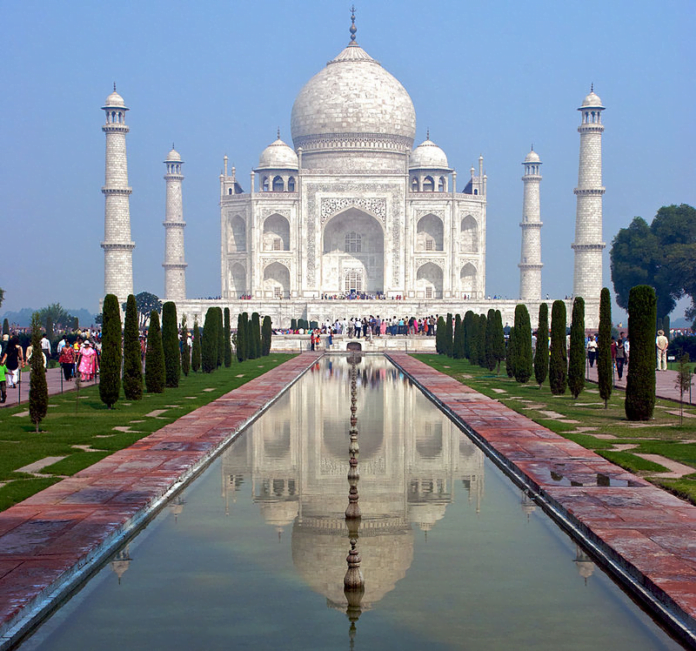
Makrana Sangmarmar: Unveiling the Timeless Elegance of Rajasthan’s Pristine Marble 

0

Simran Saini reports on the Makrana Sangmarmar of Rajasthan..

In the heartland of Rajasthan, India, a treasure lies enshrined, gracing the world’s most breathtaking architectural marvels. Makrana Sangmarmar, an exquisite strain of pure white marble, harvested from the legendary quarries of Makrana, Rajasthan, has etched its legacy deep into the annals of history as a beacon of elegance and grandeur. Referred to affectionately as “Sangemarmar” or “Makrana marble,” this natural marvel has traversed centuries, leaving an indelible mark upon the realms of art and architecture. 

A Legacy Carved in Stone: Origins and Significance Makrana Sangmarmar emerges from the very heart of Makrana, a region steeped in a proud marble heritage. Its illustrious presence is forever woven into the fabric of the iconic Taj Mahal, a UNESCO World Heritage site, which stands as a testament to the enduring allure and artistry of Makrana marble. This pristine marble’s milky white canvas has long been the favored medium for artisans, offering them the opportunity to sculpt masterpieces that harmoniously blend precision with emotion. 

A Glimpse into Perfection: Characteristics and Properties Beyond its visual magnificence, Makrana Sangmarmar possesses an allure that transcends the ordinary. Comprising predominantly of calcite, this marble exudes a purity that bathes it in a radiant luminance. Its ivory white hue, reminiscent of moonlit silk, effortlessly captures and plays with ambient light, creating an ever-shifting spectacle of radiance. Yet, its splendor is more than skin deep; the marble’s intrinsic durability ensures its steadfast endurance against time and the elements, preserving its immaculate elegance for generations. 

Versatility Envisioned: Applications in Art and Architecture The versatility of Makrana Sangmarmar stands as a testament to its revered status. From intricate temple carvings to the stately columns of regal palaces, this marble variety has lent its grace to an array of architectural marvels. Its legacy spans the ornate lattice windows of Mughal palaces, the serene sculptures of Jain temples, and the opulent interiors of modern homes. With every artisan’s touch, it captures the very essence of human creativity and aspiration, transforming each creation into a living testament to the intricate relationship between nature’s bounty and human ingenuity. 

Preserving Heritage: The Future of Makrana Sangmarmar as we stand at the crossroads of time, safeguarding the legacy of Makrana Sangmarmar takes on renewed significance. Amid technological advancements and evolving design paradigms, this marble continues to find its place in contemporary aesthetics, seamlessly blending age-old tradition with innovative expression. However, a responsible approach to mining and crafting is paramount, ensuring the sustainable use of natural resources and the preservation of the environment. In the rich tapestry of Earth’s treasures, Makrana Sangmarmar stands as a beacon of artistic inspiration and cultural heritage. Its journey from the depths of the earth to the summits of human creativity narrates a story of resilience, beauty, and the enduring connection between nature’s abundance and human expression. As we admire the intricate patterns and delicate designs that adorn its surface, we’re reminded that Makrana Sangmarmar’s essence transcends its physical form, residing in the stories it shares and the dreams it continues to kindle.

She believed she could, so she did

0

Simran Saini reports on India’s seventh shooting quota secured by Rajeshwari Kumari’s in 2024 Paris Olympics..

India’s sports landscape shines brighter with each triumph, and Rajeshwari Kumari’s recent feat is nothing short of historic. Hailing from the realm of trap shooting, she has etched her name in the annals of Indian sporting history by securing India’s seventh shooting quota for the much-anticipated 2024 Paris Olympics. Her remarkable journey unfolded at the ISSF World Championships, where she showcased her prowess and determination on a global stage.

A Paradigm Shift in Indian Shooting In a significant stride, Rajeshwari Kumari became the second Indian shooter ever to secure an Olympic quota in the Women’s Trap event. Her extraordinary achievement unfolded in Baku, Azerbaijan, during the International Shooting Sport Federation (ISSF) World Championship . Setting an exceptional national record score of 120 in the qualification round, she propelled herself to the forefront. The final, a nerve-wracking six-woman, 50-shot encounter, saw her claim 19 hits from the first 30 targets. With this masterful performance, she solidified India’s seventh quota place for the Paris 2024 Olympics.

Triumph Amidst Stiff Competition The journey to the podium is never an easy one, especially in an arena as fiercely competitive as international shooting. Rajeshwari Kumari’s achievement stood tall amidst formidable opponents. Lin Yi Chun of Chinese Taipei clinched gold with 40 hits, narrowly edging out Italy’s Jessica Rossi, a three-time world champion and the 2012 London Olympic Games winner. The National Rifle Association of India (NRAI) conveyed this exhilarating news in a release, emphasizing Rajeshwari’s exceptional accomplishment.

A Dream Realized, a Legacy Continued Rajeshwari Kumari’s elation at her achievement was palpable. Her words encapsulated the magnitude of her accomplishment: “I am feeling great. It’s unbelievable. It’s finally done. It’s done for the country. I mean I wish I could win a medal but this is great. Paris,” she exclaimed with an infectious smile. As the second Indian shooter to earn an Olympic quota in Women’s Trap, she not only honored her own journey but also carried forward her family’s legacy.

Pride in Every Shot Renowned sports administrator and former Olympian Randhir Singh, currently serving as the interim President of the Olympic Council of Asia, expressed his pride and joy for Rajeshwari Kumari’s achievement. He noted, “It is certainly a proud day for me and the family.” He reflected on her journey, from qualifying for the Asian Games to securing an Olympic quota, underscoring the significance of her accomplishment.

Adding to India’s Medal Tally Rajeshwari Kumari’s success is part of a larger narrative of India’s excellence in shooting. The Men’s 25m Center-Fire Pistol team competition saw India clinching bronze. Rajendra Bagul, Akshay Jain, and Gaurav Chaudhary collectively tallied 1718, securing a spot on the podium. With five gold and five bronze medals, India occupies a commendable third place in the medal tally, trailing only behind China and the United States.

A Testament to Dedication and Triumph Rajeshwari Kumari’s journey from the shooting range to the global Olympic stage is a testament to her tireless dedication and unwavering commitment to her sport. Her resounding success at the ISSF World Championships has not only earned her a coveted spot in the Paris Olympics but has also stirred a sense of pride among her fellow countrymen. With her triumphant spirit and unyielding drive, Rajeshwari Kumari embodies the indomitable spirit of Indian sports. We extend our heartfelt congratulations to her for this incredible and historic accomplishment!

NGT Bans Night Market at Jal Mahal Citing Eco-Sensitive Zone

0

The National Green Tribunal (NGT) has enforced a ban on the night market situated at Jal Mahal. This decision comes after a comprehensive report was presented, highlighting the eco-sensitive nature of Jal Mahal and its potential impact on the surrounding environment.

Initiated in November last year by the Jaipur Heritage Municipal Corporation to boost night tourism, the night market aimed to offer a unique shopping experience twice a week from 7 p.m. to 1 a.m. The market featured over 100 temporary stalls within tented domes on the sail of Jalmahal, offering a fusion of traditional and modern Rajasthan, along with diverse culinary delights.

However, the NGT’s ban stems from concerns about the market’s proximity to the Nahargarh Wildlife Sanctuary and its location within an eco-sensitive zone. The market’s operations were found to be polluting the Jalmahal Lake, while generating noise pollution that negatively impacted local wildlife.

The court formed a committee, including the Jaipur Collector, the Principal Conservator of Forests, and a Rajasthan Pollution Control Board representative, to assess the situation. Their report confirmed the market’s presence within the eco-sensitive zone and its detrimental effects on the environment and lake.

As a result, the NGT has imposed a ban on the night market, and further ordered a comprehensive assessment of pollution levels in Jalmahal Lake and groundwater conditions in the area. The decision underscores the importance of environmental preservation while considering developmental initiatives.