Home Blog Page 629

Full story of Himani Shivpuri : Sharing Her Inspiring Journey

0

As we journey through the annals of Indian entertainment history, one name that shines brightly like a guiding star is Himani Bhatt Shivpuri. Her story is not just one of talent and success, but it’s also a testament to the unyielding spirit of determination and passion for the art of acting. In this flashback mode, we’ll traverse through the life and career of Himani Shivpuri, as she shares her inspiring journey at the launch of Literary Circle by FORTI Women Wing.

Early Days:

Himani’s story begins in the enchanting city of Dehradun, nestled in the serene hills of Uttarakhand. Born into a Garhwali family with a deep-rooted artistic heritage, her destiny was intricately woven with the world of performing arts. Her father, Haridutt Bhatt Shailesh, was not just a Hindi teacher but also a celebrated Hindi poet known by his pen name “Shailesh.” It’s from this rich cultural milieu that Himani inherited her innate talent and love for the stage.

The Spark Ignites:

Even during her early education at The Doon School, an exclusive all-boys boarding institution, Himani’s passion for drama burned brightly. Far from being deterred by the gender gap, she took the stage by storm, honing her acting skills and actively participating in dramatics. Her journey into the world of acting took a more concrete shape when she decided to pursue a postgraduate degree in Organic Chemistry at DAV College, Dehradun, while simultaneously enrolling at the prestigious National School of Drama in 1982. Here, her commitment to a career in the performing arts solidified, laying the foundation for her remarkable journey ahead.

The Beginning:

After completing her rigorous training at the National School of Drama, Himani Shivpuri embarked on her professional journey. She briefly lent her talents to the NSD Repertory Company before setting her sights on Mumbai, the epicentre of the Indian entertainment industry. Her destiny was about to take flight, and it was destined to be extraordinary.

In 1984, Himani made her film debut with “Ab Ayega Mazaa.” Her initial roles were in art films like Shyam Benegal’s “Suraj Ka Satvan Ghoda” (1993) and “Mammo” (1994), showcasing her prowess as an actor with depth and versatility. However, her iconic portrayal in Sooraj R. Barjatya’s magnum opus, “Hum Aapke Hain Koun..!” (1994), truly catapulted her into the mainstream spotlight. The film became a massive success, and Himani’s portrayal of the affable Auntie, affectionately known as ‘Auntie 1,’ was etched in the hearts of audiences across the nation.

A Television Trailblazer:

Simultaneously, Himani made her indelible mark on Indian television with the serial “Humrahi” on DD National. Her role as Devki Bhojai garnered considerable acclaim and a loyal fan following. This marked just the beginning of her television journey, as she went on to star in numerous serials, including “Hasratein,” “Kasautii Zindagi Kay,” “Kyunki Saas Bhi Kabhi Bahu Thi,” “Dollar Bahu,” “Josh,” “Ek Ladki Anjaani Si,” and many more.

Versatility Unleashed:

Himani’s prowess as a character actor became evident as she seamlessly adapted to diverse roles in various films, including “Koyla” (1997), “Pardes” (1997), “Dilwale Dulhania Le Jayenge” (1995), “Anjaam” (1994), “Kuch Kuch Hota Hai” (1998), and “Kabhi Khushi Kabhie Gham…” (2001). Her ability to embody a wide array of characters showcased her acting prowess and earned her a special place in the hearts of cinema enthusiasts.

A Journey Beyond Acting:

Throughout her illustrious career, Himani Shivpuri ventured beyond acting and collaborated with renowned film production houses such as Yash Raj Films, Rajshri Productions, and Dharma Productions. Her contributions extended beyond the screen, making her a part of various noteworthy projects that left a lasting impact.

In the realm of television, she portrayed the character of Kul in Zee’s “Hamari Betiyoon Ka Vivaah” until 2009. Additionally, she made a memorable appearance in a short documentary film titled “The Facebook Generation,” produced by Blue Strike Productions and Dev Samaj Modern School. This documentary achieved recognition as one of the top 10 finalists at the Reel to Real filmmaking competition at Harmony 2012, organized by The Global Education and Leadership Foundation.

The Present and Beyond:

Presently, Himani Bhatt Shivpuri continues to captivate audiences with her talent and charm as Katori “Katto” Amma in &TV’s show “Happu Ki Ultan Paltan.” Her journey from the serene hills of Dehradun to the bustling streets of Mumbai is a testament to her unwavering dedication, versatility, and unbridled passion for the world of acting. Himani Shivpuri remains an inspiration to aspiring actors and a beloved figure in Indian cinema and television.

As we look back at her journey, she stands as a shining example of how talent, determination, and unyielding love for the arts can carve a path from humble beginnings to the pinnacle of success. Her story is not just about her achievements; it’s about the countless lives she has touched and inspired along the way. In the world of entertainment, Himani Bhatt Shivpuri is a true luminary, a beacon of hope, and a source of inspiration for the Forti Women Wing and aspiring artists everywhere.

Sawai Man Singh II: The most handsome King of Jaipur

0

In the annals of history, certain figures stand out not only for their remarkable leadership but also for their captivating charm and style. HH Maharaja Sawai Man Singh II of Jaipur, known affectionately as ‘Jai,’ was one such figure. Beyond his role as a distinguished ruler, Jai was celebrated for his unparalleled charisma, dashing appearance, and legendary accomplishments both on and off the polo field. This article pays homage to the extraordinary life of the man often dubbed ‘The Handsome King of Jaipur.’

The Early Days

Born in 1912, Jai was destined for greatness from a young age. His path to the throne of Jaipur, however, took a rather unconventional turn. A childhood incident where he pocketed a gold coin led to his appointment as the heir to Maharaja Sawau Nadho Singh II, despite the absence of a legitimate heir. Thus, Jai’s journey into the world of royalty began.

Polo and International Stardom

Jai’s introduction to Mayo College, India’s oldest boarding school, would forever change his life. There, he honed his skills in polo, emerging as a nine-goal hero on the polo field. His prowess on horseback, combined with his striking appearance, earned him comparisons to international film stars. His sporty persona was complemented by his impeccable wardrobe, sculpted double-breasted suits, and a dazzling smile that could rival any Hollywood icon.

The Love Story

Jai’s life took another exciting turn when he encountered the captivating Gayatri Devi, the youngest daughter of the Maharaja of Cooch Behar. Their romance was the stuff of legends, beginning with a flirtatious encounter that blossomed into love. In 1940, they sealed their love in a grand wedding ceremony, uniting two of India’s most prominent royal families.

A Royal Life

Despite his fun-loving demeanor and Western-influenced lifestyle, Jai carried the responsibilities of his royal title with grace. He maintained a balance between the opulence of the City Palace, where he was often carried in a palanquin, and his international escapades as a Western-style socialite.

A Life of Risks and Adventures

Jai’s life was marked by daring exploits, from his high-risk polo matches to his adventurous flights. In a fateful incident, a vulture collided with the propeller of his plane over Bombay, leading to a crash that claimed the pilot’s life but miraculously spared Jai’s.

Changing Times

In the wake of World War II and India’s path to independence, Jai’s role extended beyond the polo field. He served as a liaison officer for the Indian State Forces and was one of the few Maharajas granted permission to travel abroad during the war. However, the winds of change eventually led to the absorption of Jaipur State into the Greater Rajasthan Union.

Legacy and Endearing Popularity

Despite the loss of his royal title, Jai remained beloved by the people of Jaipur. He and Gayatri Devi continued to host distinguished guests, including Queen Elizabeth II and Nikita Khrushchev, and maintained their popularity in the region.

Conclusion

The life of HH Maharaja Sawai Man Singh II of Jaipur is a testament to the blend of tradition and modernity, grace and adventure, that characterized his era. His charisma, style, and sportsmanship continue to inspire awe and admiration, earning him a place in history as ‘The Handsome King of Jaipur.’ Jai’s legacy endures as a symbol of enduring affection and trust between a ruler and his people, making him a timeless icon.

Excavation Work Unearths Ancient Temple Remnants in Ayodhya

0

Ayodhya, a city steeped in history and sacred significance, continues to be a focal point of archaeological exploration as the excavation work at the Ram Mandir site uncovers remarkable remnants of an ancient temple. These findings, which include an array of intricately carved idols and stately pillars, have piqued the curiosity of scholars and devotees alike.

Champat Rai, the dedicated general secretary of the Ram temple trust and international vice president of Vishwa Hindu Parishad (VHP), has been at the forefront of providing information about this remarkable discovery. Rai revealed that the excavation efforts have yielded a trove of historical treasures, with pillars and idols taking center stage.

A striking picture shared by Champat Rai showcased parts of idols that bore witness to the unparalleled craftsmanship of yesteryears. Carved from substantial stones, these relics are a testament to the architectural prowess of ancient India. However, despite the excitement surrounding these discoveries, there remains limited available information regarding the specific time period and dynasty to which the ancient temple belonged.

In a separate but related incident, security measures were significantly heightened at Bhojshala and Kamal Maula’s mosque in Madhya Pradesh’s Dhar district. This heightened vigilance came in response to the discovery of an idol of Vagdevi, also known as Goddess Saraswati, within the confines of the 11th-century monument.

Prominent Hindu leaders, including Ashok Jain and Gopal Sharma, have fervently asserted that the idol of Goddess Saraswati emerged from the contested Bhoshala premises. Subsequently, local administration and law enforcement authorities moved swiftly to remove the idol, considering the sensitive nature of the location and its history as a point of dispute between the Hindu and Muslim communities.

In a more recent development, unidentified individuals attempted to place an idol of Goddess Saraswati within the contested 12th-century site situated in the town of Dhar, Madhya Pradesh. It’s crucial to note that local law enforcement authorities have confirmed that the structure falls under the protection of the Archaeological Survey of India.

Upon receiving alerts about this precarious situation, the police acted promptly to intervene. The idol, left behind by the unidentified individuals, was safely removed from Bhojshala, averting a potential escalation of tensions in this sensitive region.

The ongoing excavations in Ayodhya continue to offer fascinating glimpses into the rich tapestry of India’s historical and religious heritage. As archaeologists delve deeper into the earth, they hope to unearth more clues about the ancient temple’s origins and the significance it held for generations past. These discoveries not only shed light on the past but also underline the need for delicate handling and preservation of historical artifacts in an atmosphere charged with cultural and religious significance.

Excavation Work Unearths Ancient Temple Remnants in AyodhyaReplyForward

Jaipur’s Royalty & Polo: An eternal love Affair

0

Yashaswini Kaushal reports on Polo and its link with the Maharajas of Jaipur..

When one thinks of Jaipur, the mind conjures images of opulent palaces, vibrant markets, and a rich tapestry of history and culture. But hidden amidst the grandeur lies a sporting heritage that’s as regal as the city itself – the game of polo. Jaipur’s royalty, particularly the Maharajas of Jaipur, have not only introduced this noble sport to the region but also played a pivotal role in preserving and popularizing it.

A Royal Introduction to Polo

Polo, often referred to as the “Sport of Kings,” was introduced to Jaipur by the enlightened ruler Maharaja Sawai Man Singh II. His fascination with the sport led to the formation of the Jaipur Polo Team in the 1920s. This marked the beginning of a legacy that would intertwine the city’s identity with polo.

The Maharajas of Jaipur were not content with being mere enthusiasts. They actively participated in the sport, showcasing their equestrian skills and sportsmanship on the polo field. Their passion for polo was not just a pastime; it became a symbol of Jaipur’s royal identity.

Preserving the Legacy

As patrons of the sport, Jaipur’s Maharajas took significant steps to preserve and promote polo culture in the region. The establishment of the Rajasthan Polo Club in 1949 was a milestone that brought together polo aficionados, not only from Jaipur but from across the state. This club became the nucleus for polo activities and competitions, ensuring the continuity of the sport.

One cannot discuss the preservation of polo culture in Jaipur without mentioning the historic Rambagh Polo Ground. Originally a part of the princely estate, it has witnessed countless matches, with international and national players gracing its hallowed turf. Today, the Rambagh Polo Ground stands as a living testament to Jaipur’s love affair with polo.

More Than Just a Sport

For the Maharajas of Jaipur, polo was more than just a sport; it was a means of fostering camaraderie and diplomacy. Polo matches became a platform for building connections with other princely states and even foreign dignitaries. The sport not only displayed their prowess but also their regal hospitality.

In the modern era, Jaipur continues to be a prominent hub for polo enthusiasts. The city hosts prestigious polo tournaments, drawing players and spectators from around the world. The Jaipur Polo Season is a calendar highlight, where the city comes alive with the thundering hooves and the clashing mallets.

A Cultural Heritage

Today, polo in Jaipur is not just a sport; it’s a cultural heritage that’s passed down through generations. The scions of the royal family, such as Maharaja Sawai Padmanabh Singh, have continued the legacy, becoming the torchbearers of Jaipur’s polo tradition. Their involvement has not only kept the sport alive but has also infused it with a contemporary charm.

Jaipur’s royalty’s introduction and preservation of polo culture have elevated the sport to more than just a game. It’s a reflection of the city’s majestic past and a vibrant part of its present. As you explore the Pink City, take a moment to immerse yourself in the grandeur of polo, a legacy that’s as timeless as the city itself.

Maharaja of Jaipur Shares Thoughts on Tradition, Culture, and Empowerment at the Royal Encounter

0

Yashaswini Kaushal reports on the interview with the Prince Padhmanabh in a recent visit to City Palace with Saksham Sanchar Foundation..

Students of Culture and Media Studies from Central University of Rajasthan and students of JECRC University Jaipur had the honour of interacting with Sawai Padhmanabh Singh, the charismatic and modest Maharaja of Jaipur, during a university tour. This meeting, which was held in the magnificent Chandra Palace Museum, revealed both the young Maharaja’s captivating personality and the imperial splendour of the palace. The student’s eager and inquisitive inquiries provided a fascinating window into the Maharaja’s life, principles, and goals.

Fashioning a Cultural Connection:

The first question posed to the Maharaja revolved around his renowned sense of style. He is often hailed as one of India’s most stylish royals. He revealed, with a soft smile, that he doesn’t have to go far to take the inspiration as his family and Jaipur’s rich cultural heritage served as his sources of fashion inspiration. He mentioned name of Maharani Gayatri Devi, who was also a leading fashion icon herself. He emphasised the value of international promotion of regional fashion and craftsmanship. He proudly displayed his traditional Jaipuri jutti and mulmul shirt, emphasizing that such attire not only connected him to his roots but also showcased India’s rich fashion heritage.

A significant point he made was about the Nehru collar, clarifying that it should be recognized as an “Indian collar,” highlighting the need for the world to acknowledge India’s contributions to global fashion.

Pride in Scientific Advancements:

When asked about India’s recent achievement with Chandrayaan 3, Maharaja Padhmanabh Singh’s pride in the country’s scientific and technological advancement was evident. He discussed India’s past accomplishments in science and technology while recalling the efforts of his ancestor Maharaja Sawai Ram Singh II, who promoted the use of technologies such as cameras and eyeglasses, and Maharaja Sawai Jai Singh, who made the Jantar Mantar Observatory. He expressed his pride in India’s success and claimed that the country has consistently shown itself to be an innovator in the field of technology and will do so in future as well.

Carrying the Legacy of Sports:

The Maharaja expressed his delight in being part of a victorious polo team, a sport that holds a special place in the history of the Jaipur royals. He acknowledged the influence of his great-grandfather, Maharaja Sawai Man Singh, a legendary polo player. He believes that his family has made significant contributions to the world of sports and continues to carry forward this legacy with pride.

Living Tradition:

Responding to a question about the age-old tradition of seeking the darshan (sight) of Lord Krishna at the Govind Dev Temple, The Maharaja said that his family continues the long-standing custom of visiting the Govind Dev Temple in order to see Lord Krishna. He added a personal touch by mentioning how fortunate he is to be able to see Lord Krishna from his chamber both before going to bed at night and when he wakes up in the morning. He also brought up the grandiose Janmashtami celebration hosted in the palace, highlighting Govind Dev’s crucial contribution the city and emphasised that his blessings have caused the city to prosper.

Balancing Tradition and International Presence:

Maharaja Padhmanabh Singh talked about how he stays closely connected to his traditional roots despite his involvement in international affairs. He was extremely proud of Indian culture, praising its uniqueness and depth of heritage. He actively promotes Indian culture and values wherever he goes, hoping to show the world how rich the culture is.

Princess Diya Kumari Foundation’s Empowerment Mission:.

The Maharaja concluded by shedding light on the Princess Diya Kumari Foundation, dedicated to empowering disadvantaged women and girls in rural Rajasthan. He emphasised Gaurvi Kumari’s energetic leadership of the foundation. He expressed his satisfaction at helping a cause that improves the lives of rural Rajasthani women and supporting their livelihood through Rajasthani crafts.

He thinks that the goal of the foundation is to preserve and promote Rajasthan’s rich cultural heritage while also improving the lives of the state’s skilled female artisans.

In this remarkable encounter, the students had the privilege of glimpsing not only the grandeur of Jaipur’s royalty but also the depth of its commitment to tradition, culture, and empowerment. Maharaja Padhmanabh Singh’s words resonated as a testament to the enduring legacy of the royal family and its dedication to serving the people of Rajasthan.

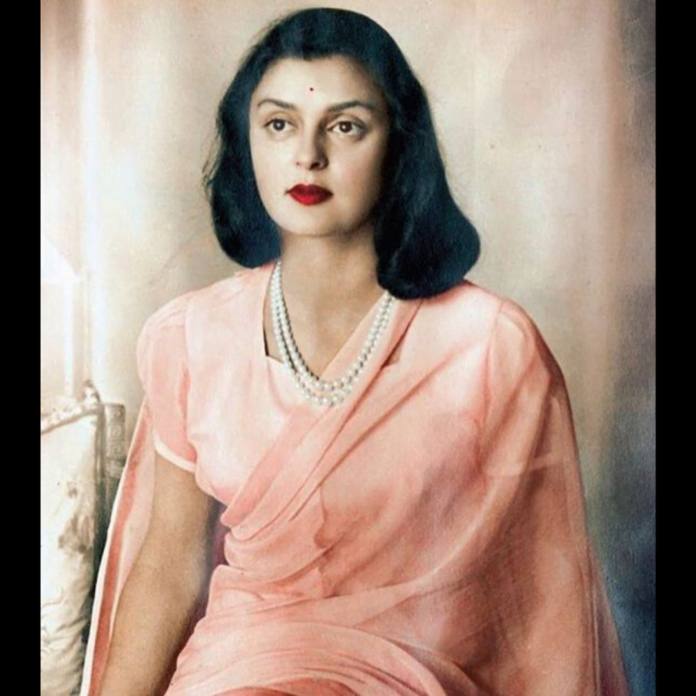
The Beautiful Queen of Jaipur: Gayatri Devi

0

In the realm of timeless beauty and grace, one name stands out: Maharani Gayatri Devi. Born as Princess Gayatri Devi of Cooch Behar on May 23, 1919, she was destined to become much more than just royalty. Her life journey transcended the confines of palaces and regal traditions, making her an iconic figure celebrated not only for her unparalleled beauty but also for her indomitable spirit and contributions to Indian politics.

Early Life: A Royal Beginning

Gayatri Devi’s early life was steeped in privilege and heritage. Her father, Prince Jitendra Narayan of Cooch Behar, belonged to the noble family of West Bengal. Her mother, Princess Indira Raje of Baroda, was the daughter of the renowned Maratha King, Maharaja Sayajirao Gaekwad III. This rich lineage provided her with a unique blend of tradition and modernity.

Education and exposure

Princess Gayatri Devi’s education journey took her from London to Switzerland, where she acquired a worldly education. She honed her secretarial skills at the London School of Secretaries and embraced a cosmopolitan lifestyle. Her exposure to different cultures and ideas would later shape her into a charismatic and influential figure.

CompTIA A+ Practice Test Questions

A Fateful Meeting

At the age of 12, destiny orchestrated a fateful meeting that would change the course of Gayatri Devi’s life. H.H. Saramad-i-Raja-i-Hindustan Raj Rajendra Sri Maharajadhiraja Sir Sawai Man Singh II of Jaipur, known as Jai, visited Calcutta for a polo match and stayed with Gayatri Devi’s family. Little did she know that this encounter would lead to a significant chapter in her life.

A Royal Marriage

On May 9, 1940, Princess Gayatri Devi became Maharani Gayatri Devi when she married Sawai Man Singh II Bahadur. Their union was not just one of royalty but also of shared passions, including a love for equestrian sports and polo. Her prowess in these areas showcased her as a woman of substance beyond her captivating beauty.

A Timeless Beauty Icon

Gayatri Devi’s classical beauty was celebrated worldwide. She earned a coveted spot on Vogue magazine’s ‘Ten Most Beautiful Women of the World’ list, alongside luminaries like Princess Grace of Monaco and Princess Diana of Wales. Her enduring allure and regal style made her a fashion icon of her time.

Political Trailblazer

Post-independence India witnessed a remarkable transformation in Gayatri Devi’s life. She entered the political arena and ran for Parliament in 1962, securing a landslide victory with 192,909 votes out of 246,516 cast. This victory, recorded in the Guinness Book of Records, reflected her popularity and charisma.

Champion of Education and Culture

Gayatri Devi’s commitment to education and culture was evident in her efforts to establish schools for girls’ education in Jaipur, including the prestigious Maharani Gayatri Devi Girls’ Public School in 1943. She also played a pivotal role in reviving the art of blue pottery, preserving India’s cultural heritage.

A Remarkable Life Journey

Despite facing adversity, including a five-month imprisonment following the abolition of royal privileges and titles, Gayatri Devi remained resilient. Her autobiography, “A Princess Remembers,” co-authored with Santha Rama Rau, sheds light on her extraordinary life.

Maharani Gayatri Devi’s life journey encompasses far more than her breathtaking beauty. She epitomized grace, intellect, and resilience. Her contributions to politics, education, and culture left an indelible mark on India. As a true icon, she continues to inspire generations, reminding us that true beauty emanates from within and a woman’s strength knows no bounds. Gayatri Devi will forever be the beautiful queen of them all.

IT talent grooms beyond the elite institutions of India too…!

0

In a country renowned for its prestigious institutions like the Indian Institutes of Technology (IIT), Indian Institutes of Management (IIM), and National Institutes of Technology (NIT), where graduates regularly secure coveted job packages, there is a rising tide of exceptional talent emerging from lesser-known institutions. Jyotika Bhatti, an alumna of the Indian Institute of Information Technology (IIIT) Allahabad, stands as a testament to the fact that talent knows no boundaries.

India’s ascent as a global IT hub has been a remarkable journey, with its educated workforce increasingly leading major tech giants like Google, Microsoft, IBM, and Adobe. This ascent has often been attributed to the top-tier education imparted by renowned institutions, but the narrative is changing as individuals like Jyotika Bhatti prove that brilliance can emerge from unexpected places.

Jyotika’s journey to success began at IIIT Allahabad, a lesser-known institution compared to its IIT counterparts but one that has been making waves in the IT education landscape. Armed with a strong foundation in information technology, Jyotika embarked on a remarkable career path that recently led her to achieve what many might consider a dream package – a staggering Rs 85 lakh from none other than Google.

Her exhilaration knew no bounds as she announced her accomplishment on LinkedIn: “Ok Google, my dreams just became reality! I’m absolutely excited to share that I’ve officially become a part of the remarkable Google team as a Software Engineer!” Her heartfelt thanks to friends and family for their unwavering support echoed her journey of dedication and determination.

Jyotika’s journey at Google commenced in July 2023, where she now excels as a Software Engineer at the tech giant’s office in Bengaluru, Karnataka. Her success story underscores that talent, dedication, and hard work can take you to the pinnacle of the IT world, regardless of your educational pedigree.

But Jyotika Bhatti is not alone in her exceptional achievements. Rashi Bagga, a BTech student from the International Institute of Information Technology Naya Raipur (IIIT-NR), also secured a remarkable job package of Rs 85 lakh per annum, setting a new record for the institution in 2023. These remarkable accomplishments by individuals like Rashi and Jyotika emphasize the transformative power of education and the nurturing environment in Indian institutes.

The Indian IT landscape is not just limited to the IITs and NITs. It’s dynamic and diverse, offering a plethora of opportunities for young and talented individuals. With a burgeoning number of IT companies, both multinational and indigenous, contributing to a thriving tech ecosystem, India is poised to maintain its status as a global leader in the information technology domain.

The stories of Jyotika Bhatti and Rashi Bagga are not just inspiring anecdotes; they represent a larger paradigm shift in the perception of talent and potential in India’s IT industry. These individuals have shattered the glass ceiling, proving that extraordinary achievements can come from anywhere, and that education combined with determination can pave the way to limitless success. As India continues to nurture its IT talents, it is only a matter of time before more such stories emerge, solidifying its place as a global IT powerhouse.

India’s Ambitious ‘Samudrayaan’ Mission: Exploring the Depths of the Ocean

0

India is on an unprecedented scientific journey, transcending the boundaries of both space and the depths of the ocean. Following the triumphant landing of Chandrayaan-3 on the Moon’s South Pole, the nation has shifted its focus to the ‘Samudrayaan’ mission, aiming to explore ocean depths of up to 6 kilometers.

Kiren Rijiju, the Ministry of Earth Sciences, recently unveiled ‘MATSYA 6000,’ an advanced submersible designed for this groundbreaking endeavor. Developed at the National Institute of Ocean Technology in Chennai, MATSYA 6000 can accommodate a crew of three. The primary goal of this expedition is to conduct a comprehensive study of deep-sea resources and assess marine biodiversity.

While Chandrayaan-3’s lunar landing primarily centered on geographical exploration, ‘Samudrayaan’ extends its focus to encompass economic aspects. According to Minister Rijiju, the mission aligns with Prime Minister Narendra Modi’s ‘Blue Economy’ initiative, aiming to sustainably extract ocean resources to boost India’s economic growth, create jobs, and protect marine ecosystems.

“India’s first manned Deep Ocean Mission ‘Samudrayaan’ plans to send 3 humans in 6-km ocean depth in a submersible, to study the deep sea resources and biodiversity assessment. The project will not disturb the ocean ecosystem,” Rijiju highlighted.

Recent weeks have witnessed India’s rapid progress in space and oceanic research. The successful Chandrayaan-3 landing helped the nation overcome the disappointment of Chandrayaan-2’s crash landing four years ago. Now, with ‘Samudrayaan,’ India is poised to make history once again, this time by delving into the Earth’s ocean depths.

Samudrayaan Mission 2023 Objectives:

– Mine Polymetallic Nodules from a 75,000 SqKM Area in the Central Indian Ocean Basin.

– Conduct research on Climate Change formations.

– Establish a Tidal Energy Plant for long-term operation.

– Deploy MATSYA 6000 (Submarine) with three Oceanauts for seabed research, capable of 12 hours of continuous operation.

MATSYA 6000 Features:

– Multiple payloads, carrying capacity for three Oceanauts.

– 12-hour continuous operations; emergency capacity of over 96 hours.

– Successful trial near Chennai, reaching depths of 600 meters in the Indian Ocean Region.

Samudrayaan Mission 2023 Details:

– India’s first crewed mission for deep-sea exploration with three Oceanauts.

– Aims to collect Polymetallic Nodules from the seabed, covering a 6,000 SqM area.

– Estimated that 10% of the Polymetallic Nodules can fulfill India’s energy needs for the next century.

Samudrayaan Mission 2023 Budget:

– Budget of Rs 8,000 Crores allocated over a 5-year period.

– Launched in 2018 by the Ministry of Earth Sciences.

– MATSYA 6000 Submarine developed by the Indian Institute of Ocean Technology.

– Submarine testing and trials conducted near Chennai in the Indian Ocean Region.

Deep Ocean Mission 2023 Launch Date:

– Initiated in 2018 by the Ministry of Earth Sciences.

– MATSYA 6000 Submarine capable of reaching depths of 6 km.

– Budget of Rs 8,000 Crores for the Deep Sea Exploration Mission 2023.

India’s unwavering commitment to scientific exploration continues to push boundaries, as the nation seeks to expand its horizons both beyond the skies and beneath the ocean’s surface. The ‘Samudrayaan’ mission represents a pioneering effort to unravel the mysteries of the deep seas and further our understanding of our planet’s rich resources. Keep an eye on this mission as it unfolds new chapters in India’s scientific journey.

FORTI Women Wing Launches Literary Circle: Bridging Gap between Culture and Social Media

0

In celebration of Hindi Diwas, the FORTI Women Wing launched the poster of the Literary Circle at the Jawahar Kala Kendra. This initiative by the Literary Circle aims to reconnect youth and women with the rich culture and art forms of music, dance, drama, and the joy of reading books.

Dr. Sunita Sharma, President of FORTI Women Wing, kickstarted the discussion, shedding light on the fading allure of traditional art forms and reading in the age of social media. She voiced her concern about the decline of plays, theater, and the culture of reading books.

Tusharika addressed the increasing use of social media by the youth and applauded the Literary Circle’s efforts to bridge the gap between the younger generation and literature. She emphasized that not everyone grows up in an environment that fosters reading and cultural appreciation, making it vital to inspire children to develop an interest in these areas.

Lalita ji, a member of FORTI Women Wing, contributed her insights as well. Swastika Gehlot, social media influencer Priyanka, and psychologist Reena also shared their perspectives on the topic.

The event, organized under the leadership of Payal Choudhary, another senior member of FORTI Women Wing, featured Himani Shivpuri as a special guest. Himani Shivpuri, a seasoned actor in the industry, shared her experiences and wisdom. She emphasized that being a good human being is the first step for an artist, followed by patience and hard work.

Shivpuri debunked the glamour associated with Bollywood, revealing that the real work takes place behind the scenes, requiring immense patience. She shared anecdotes from her career, including how she transitioned from one role to another, like playing ‘bhua’ in “Dilwale Dulhania Le Jayenge” and similar roles in other films like Pardes. She highlighted the importance of observation skills in recognizing the unique charm of each character.

When asked about the difference between acting in Bollywood and OTT platforms, Shivpuri simplistically divided acting into good or bad, emphasizing that the medium doesn’t matter. She elaborated on theater, highlighting its unique challenge of connecting with a diverse live audience.

Shivpuri also revealed her current work in the play “Jeena Issi Ka Naam Hai” with Rajendra Gupta and stressed the importance of sensitivity for an actor to understand emotions and portray different roles convincingly.

In her closing remarks, she emphasized that a good actor never stops learning, encouraging everyone to remain in a constant state of growth and learning, an ethos that defines both the profession and life’s journey. The life of an actor, she acknowledged, is filled with ups and downs, but it’s the passion for the craft that keeps them going.

National Engineer’s Day of India 2023 Theme, History, Significance and more about…

0

National Engineers’ Day is celebrated in India every year on September 15th to commemorate the birth anniversary of Sir Mokshagundam Visvesvaraya, one of the greatest engineers and visionaries of the country . This day is dedicated to celebrating the extraordinary contributions of engineers to society, recognizing their spirit of innovation and highlighting the crucial role they play in influencing the world . The theme for National Engineers’ Day 2023 is “Engineering for a sustainable future” .

Sir Visvesvaraya was a pioneer in the field of engineering who significantly influenced the growth of India’s infrastructure. He was instrumental in the development of dams, irrigation networks, and other projects . The day encourages the younger generation to consider engineering as a career choice and serves as a reminder of the value of engineering in our daily lives .

On this National Engineers’ Day, let us take a moment to appreciate and celebrate the dedication, creativity, and achievements of engineers in society. It serves as a reminder of the crucial role engineers play in solving complicated problems, advancing technology, and raising the standard of living for people around the world.