Home Blog Page 628

Moti Doongri Temple: A Spiritual Oasis in the Heart of Jaipur

0

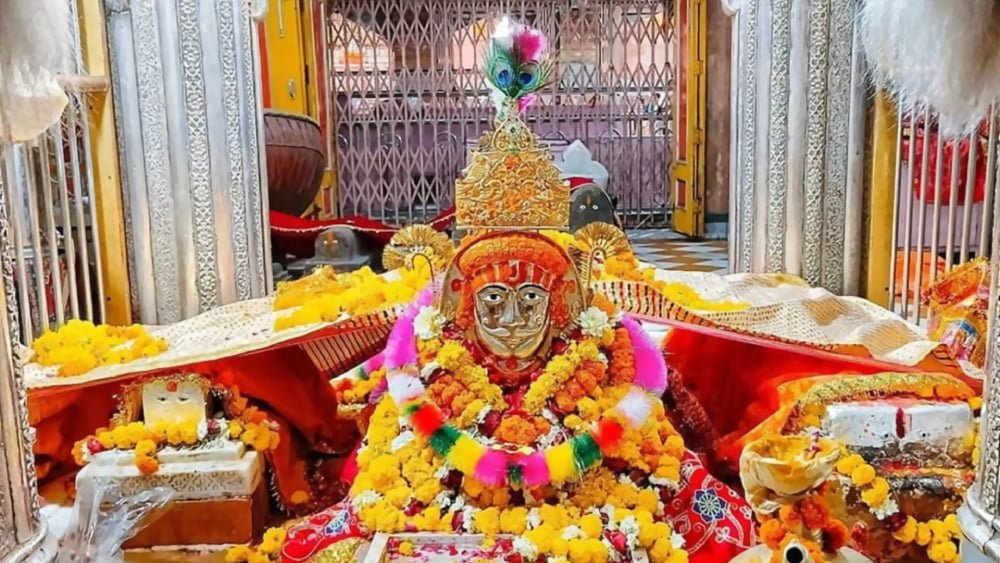
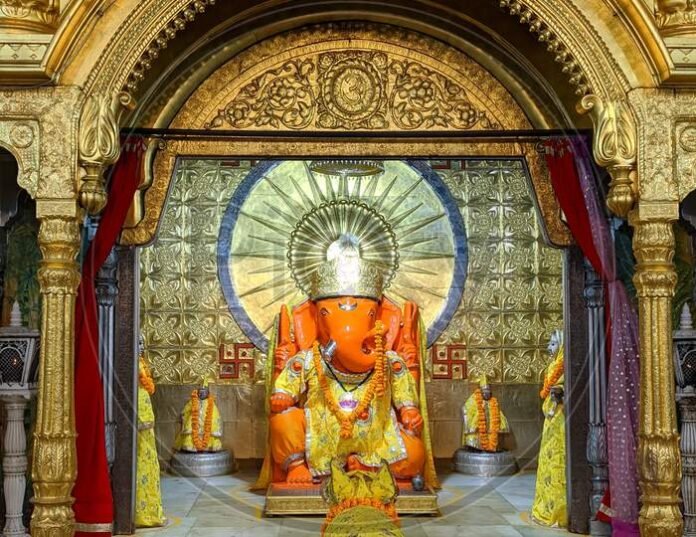
Jaipur, often referred to as the “Pink City” of India, is a place where history and modernity seamlessly blend, and at the heart of this bustling city lies a small hill, an oasis of spirituality and culture, known as Moti Doongri. The name Moti Doongri translates to the “Hill of Pearls,” and it is a place that holds deep significance for the people of Jaipur and beyond. Atop this hill, you’ll find a magnificent palace and a temple that pays homage to Lord Ganesh, the revered elephant-headed deity.

A Spiritual Start to the Day

For the residents of Jaipur, Moti Doongri Temple is more than just a place of worship; it’s a part of their daily routine. It’s a common sight to see locals beginning their day with a visit to Lord Ganesh Ji at this temple. What’s remarkable about this temple is its inclusivity. People from all religious backgrounds come here to seek blessings and offer their prayers to Lord Ganesh Ji. In Jaipur, it is customary to extend the first invitation for any occasion to Lord Ganesh Ji of Moti Doongri before inviting anyone else.

A Symbol of Tradition and Belief

Every newlywed couple in Jaipur embarks on their journey of married life with a visit to Moti Doongri Temple. This tradition reflects the deep-rooted belief in seeking the blessings of Lord Ganesh for a prosperous and harmonious life together. Moreover, the temple plays another important role in the lives of the locals. Whenever a new vehicle, whether big or small, is acquired, it is brought to this temple to seek good wishes and ensure safe travels.

Unveiling the Historical Layers

Delving into the historical layers of Moti Doongri Temple reveals a fascinating story. Legend has it that the King of Mewar embarked on a journey with a colossal idol of Lord Ganesh in a bullock cart. The cart was supposed to stop at the site where the temple would be built. As fate would have it, the cart came to a halt near Moti Doongri, and thus, the temple was constructed in this picturesque location.

Seth Jai Ram Paliwal, a prominent businessman, took on the responsibility of overseeing the temple’s construction under the guidance of the chief priest, Shiv Narain Ji. This marked the beginning of the temple’s rich history, which continues to draw devotees and visitors alike to this day.

Architectural Marvel: A Blend of Styles

Moti Doongri Temple stands as a testament to modern Indian architecture at its finest. This stunning temple is a reflection of India’s secular essence, featuring three domes that symbolize the country’s major religions. The architecture is a harmonious blend of Western, Indian, and Islamic influences, creating a visual spectacle that captivates all who visit.

The temple takes on a celestial aura in the evenings when it is bathed in a soft, glowing white light, enchanting all who gaze upon it.

Attractions Abound

Moti Doongri is not just about the temple; it’s a place of multifaceted allure. The swanky palace, known as Monti Doongri Palace, perched atop the hill, is a sight to behold. Built in the style of a Scottish castle, this palace was once the residence of Rajmata (Queen Mother) Gayatri Devi. While the palace itself is not open to the public, its unique architecture and historical significance add to the allure of the hill.

For those who prefer to stay closer to ground level, the Ganesh Temple at the foot of the hill is a must-visit. This temple not only beckons devotees but also enthralls sightseers with its picturesque surroundings. Nearby, you’ll also find the Birla Mandir, another architectural gem that leaves tourists awestruck with its sheer beauty.

Moti Doongri Temple in Jaipur is more than just a religious site; it’s a living testament to the city’s rich traditions, history, and architectural splendor. It’s a place where spirituality and culture converge, where history is etched into the stones, and where the present carries forward the legacy of the past. Whether you’re seeking divine blessings, admiring architectural marvels, or simply soaking in the tranquil atmosphere, Moti Doongri Temple has something to offer everyone who crosses its threshold.

Jet Airways Founder Naresh Goyal Arrested in Connection with Rs 538 Crore Bank Fraud Case

0

In a recent development that has sent shockwaves through the aviation industry and financial circles, Naresh Goyal, the founder of Jet Airways, was arrested by the Enforcement Directorate (ED) under the Prevention of Money Laundering Act (PMLA). The arrest is linked to an alleged fraud of Rs 538 crore at Canara Bank, with Goyal’s judicial custody extended for 14 days by a special PMLA court in Mumbai. This case has its origins in an FIR filed by the Central Bureau of Investigation (CBI) against Jet Airways, Naresh Goyal, his wife Anita, and several former company executives from the now-defunct private airline.

Legal Proceedings and Health Concerns

After the conclusion of his ED custody on September 14, 2023, Naresh Goyal was presented before the Special PMLA Court in Mumbai. In response to his health concerns, the court granted his request to be transferred to the Arthur Road jail in South Mumbai. Goyal, in his plea, cited suffering from ischemic heart disease and a recent operation for blockages in his left main artery, which he described as life-threatening. Additionally, he mentioned hypertension, diabetes, restricted mobility, severe shoulder impingement, and neck pain resulting from a fall in June 2022.

The Importance of Due Process

While the allegations against Naresh Goyal are serious and have garnered extensive media coverage in India, it is crucial to remember that he remains innocent until proven guilty in a court of law. Legal proceedings will ultimately determine his culpability or innocence regarding the alleged financial irregularities.

The case has attracted significant attention, given Goyal’s prominent role in the Indian aviation industry and the rise and fall of Jet Airways, once a major player in the country’s airline sector. As the legal process unfolds, it will be watched closely by both the business community and the public. The outcome of the trial will have implications not only for Goyal but also for the broader debate on corporate governance and financial transparency in India.

Sanwariya Seth – The Dark Lord Krishna

0

Priyanshi Pareek reports on the Sanwariya Seth Temple..

It is believed that everyone’s desires are fulfilled at Sanwariya Seth Mandir 

Sanwariya Seth who is also know as Dark Lord Krishna, the Sanwariya Seth Mandir is situated between the road of Chittorgarh and Udaipur. It is said that the temple is important for businessmen. They visit here to make their business successful.

History Of Sanwariya Seth Mandir

The story behind this temple is really interesting and is about 200 years old. People say that in 1840, a milkman named Bholaram Gurjar dreamed that three statues were hidden under the ground in Chapar Village of Bhadsoda-Bagund.

When the villagers started digging the place, they found exactly what Bholaram saw in dream. All three statues were of Lord Krishna.

One of the statues was taken to Mandaphiya, another to Bhadsoda and the third was kept at the same place where it was found. 

When it was bought to Mandaphiya, Shri Rodulalji Jain (head of Madaphiya) with other villagers, built a small temple of four walls and a shade and placed the statue after performing all the rituals. Later on, all the three temples became renowned and large number of devotees visit them everyday.

The Architect Of Sanwariya Seth Temple

It is one of the biggest temples of India. Pink stone was used to build the grand temple building. The floor is completed with beautiful pink, yellow and white tiles.

In the temple, there is a Sanwariya Seth ji statue of black stone, dedicated to Lord Krishna.

Time to visit Sanwariya Seth Temple

Sanwariya Seth Temple is open daily from 5:00 am to 12:00 pm and from 2:30 pm to 11:00 pm. The best time to visit Sanwariya Seth Temple is between October to March. The number of devotees increases at the time of festivals like Krishna Janmastami, Holi, etc.

Everyone’s desire is fulfilled at Sanwariya Seth Darbar (The court of Sanwariya Seth)

Ramdevra Mela 2023: A Festival of Faith and Devotion

0

Ramdevra, a small town in Jaisalmer district of Rajasthan, is gearing up for the annual Ramdevra Mela, a grand fair and festival dedicated to the folk deity Baba Ramdev. The mela, which attracts millions of devotees from across the country and abroad, started on September 17 and end on September 25 .

Baba Ramdev, also known as Ramdevji or Ramsha Pir, is revered by Hindus and Muslims alike as a saint who performed miracles and healed people. He was born in the 14th century as a son of King Ajmal of Pokhran and is believed to be an incarnation of Lord Krishna . He had a guru named Balinath, who lived on a hill in Musariya near Jodhpur. Baba Ramdev used to visit his guru regularly and learn spiritual teachings from him.

The mela is held at the samadhi (tomb) of Baba Ramdev in Ramdevra, where he entered into a state of eternal meditation. The devotees believe that by visiting the samadhi of Baba Ramdev and his guru Balinath, their wishes will be fulfilled. The mela is marked by various religious and cultural activities, such as bhajans (devotional songs), kirtans (musical recitals), langars (community kitchens), bhandaras (charitable feasts), and rath yatras (processions). The mela also features stalls selling prasad (sacred food), choodi (bangles), kanti mala (necklaces), and other items related to Baba Ramdev.

The mela attracts people from different walks of life, who come to pay their respects to Baba Ramdev and seek his blessings. Some of them walk barefoot for hundreds of kilometers to reach the mela site, while others come by buses, trains, or cars. The mela witnesses a huge influx of pilgrims from Rajasthan, Gujarat, Madhya Pradesh, Maharashtra, Punjab, Haryana, and other states. The mela also draws foreign tourists who are curious about the folk culture and traditions of Rajasthan .

The administration, the gram panchayat, and the Baba Ramdev Samadhi Samiti are making all the necessary arrangements for the smooth conduct of the mela. They are ensuring proper sanitation, road maintenance, health facilities, and security measures for the safety and comfort of the visitors. The Chief Minister of Rajasthan, Ashok Gehlot, has also been invited to attend the mela.

The Ramdevra Mela is a symbol of the faith and devotion that people have for Baba Ramdev, who is considered as a unifying force among different communities and religions. The mela showcases the rich heritage and diversity of Rajasthan and its people. It is a festival that celebrates the spirit of harmony and brotherhood among all.

Baba Ramdev Ji: The Saint of Runicha Dham, Jaisalmer

0

Baba Ramdev Ji, also known as Ramdevji, Ramdeo Pir, or Ramsha Pir, is a revered figure in India, particularly in the states of Gujarat and Rajasthan. Born into a Rajput family in the village of Ramdevra in the Jaisalmer district, Baba Ramdev Ji is celebrated for his devotion to uplifting the downtrodden and poor.

Baba Ramdev Ji Samadhi Darshan
Photo: Baba Ramdev Ji Samadhi Darshan

Early Life and Miracles

Baba Ramdev Ji was born on Chaitra Sudi Panchami in V.S. 1409. His parents were King Ajmal (Ajmal Tanwar) and Queen Minaldevi. The king, who was childless at the time, had pleaded with Lord Krishna for a child like him. The royal couple was blessed with two sons, the elder Viramdev and the younger Ramdev.
Baba Ramdev Ji was known for his belief in the equality of all human beings, regardless of their social or economic status. He is often depicted on horseback, symbolizing his readiness to help those in need. It is said that he performed many miracles and had a significant impact on the lives of many people.

Legacy and Worship

Baba Ramdev Ji’s followers are spread across Rajasthan, Haryana, Punjab, Gujarat, Madhya Pradesh, Mumbai, Delhi, and even Sindh in Pakistan. Several fairs are held in Rajasthan to commemorate him, and temples dedicated to him can be found in many states of India.
The village of Ramdevra was established by Baba Ramdev Pir himself. It is named after him and houses a temple that marks his eternal resting place. The temple is a significant pilgrimage site and attracts devotees from all over India during the annual fair held between August and September.

Runicha Dham

Runicha Dham is located about 12 kilometers from Pokhran on the Jodhpur – Jaisalmer road. The site is sacred to Baba Ramdevji and marks his eternal resting place. The temple complex includes several attractions such as the Ramsarovar lake (believed to be carved by Baba Ramdev Pir himself), Parcha Bawdi stepwell, Jhoola-Paalna etc.

Mubarak Mahal: Where History Welcomes You in Jaipur

0

Ritika Choudhary reports on the history of Mubarak Mahal of Jaipur’s City Palace..

Mubarak Mahal, a jewel within Jaipur’s City Palace, holds a special place in history. It was one of the final princely additions, finished in the year 1900. This grand two-story structure served as a warm welcome to esteemed guests of the royal palace.

The beauty of Mubarak Mahal lies not only in its design but also in its fusion of architectural styles. It gracefully incorporates elements from Islamic, Rajput, and European traditions. This blending of cultures and aesthetics makes the Mahal a truly remarkable piece of art.

Today, this magnificent structure serves a dual purpose. It houses a splendid textile gallery, showcasing the intricate craftsmanship of the region. Additionally, some offices of the Museum find their home within its walls, adding a touch of modern functionality to its historic charm.

Mubarak Mahal is more than just bricks and mortar; it’s a living testament to a bygone era, where history welcomes you with open arms. Its corridors echo with the stories of guests who were once received with grandeur. And now, as a part of Jaipur’s cultural heritage, it stands proudly, inviting visitors to step back in time and experience the grandeur of Rajasthan’s rich history.

Exploring the Rich Heritage of Jaipur’s City Palace: Mubarak Mahal and Mai Gate

0

Rohit Singh reports on the Mubarak Mahal and Mai gate of Jaipur’s City Palace..

The City Palace in Jaipur is a magnificent complex that showcases the rich history and cultural heritage of Rajasthan. Within this grand palace complex, the Mubarak Mahal and the Chandra Mahal are two prominent structures that hold historical significance. Let’s delve into the backstory of Mubarak Mahal and the significance of the Mai Gate in relation to the different religious communities.

Mubarak Mahal:

The Mubarak Mahal, which translates to the “Auspicious Palace,” is an exquisite building located within the City Palace complex in Jaipur. Its history is closely tied to the reign of Maharaja Sawai Madho Singh II, who ruled from 1880 to 1922.

Mubarak Mahal was constructed during the late 19th century as a symbol of the fusion of Mughal and Rajput architectural styles. It served a unique purpose within the palace complex – it was built to function as a reception area for dignitaries and foreign guests visiting the Maharaja. This beautiful palace showcases a blend of Islamic and Rajasthani architectural elements, featuring intricate designs, ornate arches, and delicate jali work. The striking contrast of white marble against the vibrant hues of the City Palace is a testament to the artistic brilliance of the time.

The Mubarak Mahal was not just a visual masterpiece; it also served as a residence for the royal family, with its upper floors providing private quarters. The architecture and design of the palace, with its delicate windows and elegant facades, reflected the opulence and refinement of the Jaipur court during that era.

Mai Gate:

Now, let’s explore the significance of the Mai Gate within the City Palace complex, particularly its connection to religious diversity.

The Mai Gate, also known as the “Tripolia Gate,” is one of the main entrances to the City Palace. Its architecture and symbolism are deeply rooted in the ethos of inclusivity and respect for different faiths.

The gate is a unique representation of India’s religious diversity. Its design incorporates three arches, each leading to a different level of the palace. The ground floor arch signifies Hinduism, the second floor arch represents Islam, and the third floor arch is a symbol of Christianity.

This architectural symbolism is a testament to the philosophy of the Maharaja and the broader idea of religious tolerance and coexistence in the region. It emphasizes the harmonious blending of various faiths within the walls of the City Palace.

 The Mubarak Mahal and the Mai Gate are both integral parts of the City Palace in Jaipur, showcasing the grandeur of Rajput architecture and the inclusive values of the Maharaja. While the Mubarak Mahal stands as a testament to the fusion of artistic styles, the Mai Gate is a symbol of unity and respect for India’s diverse religious communities. Together, they narrate a compelling story of history, culture, and religious harmony within the walls of this magnificent palace complex.

City Palace Jaipur’s Adaptive Gates: A Masterpiece Designed for Every Season

0

Diksha Ajmera reports on the seasonal gates of City Palace..

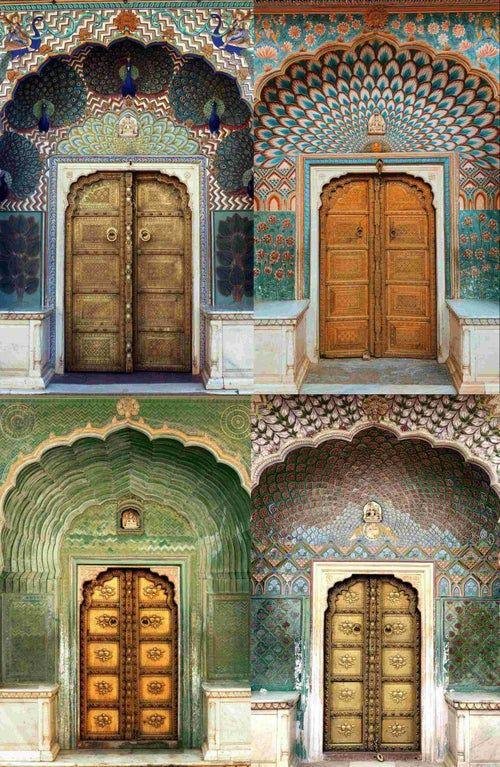
Jaipur’s City Palace is a timeless testament to India’s architectural and cultural heritage. Beyond its grandeur, the palace boasts four remarkable gates, each a living tribute to the seasons and revered deities.

Peacock Gate: Autumn’s Serenity

In the northeast corner, the Peacock Gate welcomes autumn with vibrant peacock motifs. It hosts a small idol of Lord Vishnu, guiding visitors through the gentle transition from summer to winter.

Lotus Gate: Sizzling Summer

In the southwest, the Lotus Gate embodies summer’s intensity with its lotus petal and flower patterns. A homage to Lord Shiva, it envelopes guests in the vibrancy and warmth of the season.

Rose Gate: Winter’s Elegance

Winter’s chill finds its grace in the Rose Gate, dedicated to Goddess Devi. Its facade, adorned with rose patterns, creates an ambiance of reflection and renewal.

Leheriya Gate: Bursting into Spring

The Leheriya Gate, in the northwest, celebrates spring’s vibrancy with its green hue. Named after “Leheriya,” meaning waves, it exudes the liveliness of spring and pays tribute to Lord Ganesha.

These gates are not mere architecture; they are a journey through India’s seasons and spirituality.  At present only peacock gate is open for visiters.

Chandra Mahal: The Regal Heart of Jaipur’s City Palace! 

0

Agrima Jadon  reports on the Chandra Mahal of Jaipur City Palace..

Chandra Mahal, within Jaipur’s City Palace, is a historic seven-story royal residence built by Maharaja Sawai Jai Singh II in the 18th century. Each floor has a unique purpose, blending Mughal and Rajasthani architecture, and offers a glimpse into Rajasthan’s rich royal heritage. 

Chandra Mahal is a magnificent part of the City Palace in Jaipur, India. It’s a place steeped in history and beauty. This royal residence was built in the 18th century by Maharaja Sawai Jai Singh II, the founder of Jaipur. It’s a five-story building that stands tall and majestic.

Each floor of Chandra Mahal has a distinct name and purpose. The first floor, known as Sukh Niwas, is where the Maharaja would hold private audiences. The second floor, Ranga Mandir, is a place of celebration and festivity, adorned with exquisite paintings and decorations.

The third floor, known as Shri Niwas, is the most impressive. It’s a mesmerizing blend of Mughal and Rajasthani architecture, with ornate decorations and stunning mirrors. This is where the Maharaja conducts official meetings and events.

The fourth floor, Sukh Niwas, is a private space for the royal family. It’s a serene retreat with beautiful floral decorations and a calm atmosphere.

Lastly, the topmost floor is called Mukut Mandir, which houses a temple dedicated to Lord Krishna. The view from here is breathtaking, allowing you to see the entire Jaipur city.

Chandra Mahal is not only a testament to architectural brilliance but also a living museum of royal heritage. While some parts of it are open to the public, it still serves as the residence of the Jaipur royal family. Visiting Chandra Mahal is like stepping into a bygone era, where you can witness the grandeur and splendor of Rajasthan’s royal history. It’s a must-visit for anyone exploring Jaipur’s rich cultural heritage.

Unveiling the Royal Wardrobe of City Palace where clothes speak history

0

Agrima Jadon reports on the Dress Room of Jaipur City Palace..

The “Dress Room” within Jaipur’s City Palace, a hidden treasure, showcases opulent garments worn by royalty. Richly embroidered and bejeweled, these outfits tell a vivid tale of Rajasthani culture and history, offering a rare glimpse into the regal past of the region.

Inside the City Palace in Jaipur, there exists a hidden treasure known as the “Dress Room”. This room, not typically open to the public, holds a collection of magnificent garments that once adorned the royal family.

Walking into the Dress Room feels like stepping back in time. The walls are lined with rows of intricately embroidered and bejeweled garments, each telling a story of Rajasthani culture and fashion. The vibrant colors and exquisite craftsmanship are a testament to the artistry of the region.

Among the dazzling array of outfits, there’s a particular sari worn by a former queen on her wedding day. Its silk threads still shimmer with the same brilliance as they did decades ago. Nearby, a princely sherwani, adorned with precious gemstones, stands as a symbol of regal elegance.

The Dress Room offers a glimpse into the lives of the royals, their celebrations, and their traditions. It’s a place where history and fashion intertwine, and where the past comes alive through textiles and embroidery.

Visiting this private room feels like sharing a secret with the palace, a rare opportunity to connect with the splendor of Rajasthan’s royal past. While not widely known, the Dress Room is a hidden gem within the City Palace, preserving the legacy of a bygone era in every stitch and thread.