Home Blog Page 627

Prime Minister Narendra Modi Unveils India’s Grand Convention and Expo Marvel ‘Yashobhoomi’

0

Amidst nationwide celebrations on his birthday, Prime Minister Narendra Modi bestowed a remarkable gift upon the nation by inaugurating the first phase of the India International Convention and Expo Centre, christened ‘Yashobhoomi,’ on a sunny Sunday, September 17. This colossal project, with a jaw-dropping price tag of approximately Rs 5,400 crore, spans an expansive area of over 8.9 lakh square meters, promising to redefine New Delhi’s urban landscape.

A Hub of Extravagance and Excellence

Yashobhoomi Convention Centre stands as a testament to India’s commitment to grandeur and excellence. With a rich tapestry of features that includes 15 convention rooms, a majestic grand ballroom, and 13 state-of-the-art meeting rooms, this convention and expo center is poised to be the nucleus of grand-scale events and gatherings.

The crown jewel of Yashobhoomi is its colossal exhibition halls, covering an awe-inspiring 1.07 lakh square meters. These expansive halls are destined to play host to exhibitions, trade fairs, and a spectrum of business events, further cementing Yashobhoomi’s reputation as a global stage.

Inside the main auditorium, seating for 6,000 guests has been meticulously designed, boasting an automated seating system that seamlessly transitions between a flat floor and an auditorium-style tiered seating arrangement. The interiors exude opulence, with premium wooden floors and acoustic wall panels, ensuring an unparalleled experience for every guest.

The Grand Ballroom, another gem of Yashobhoomi, features an enchanting petal ceiling and can comfortably accommodate around 2,500 delegates. An extended open area offers additional space for approximately 500 more guests. Spread across eight floors, the 13 meeting rooms are strategically located to become the preferred choice for a diverse range of meetings and gatherings, enhancing the center’s adaptability.

Connecting the Dots: Delhi Airport Metro Express Line

To ensure seamless access to this mammoth convention center, the government is undertaking an ambitious plan to connect it to the Delhi Airport Metro Express Line. In a groundbreaking announcement, the Delhi Metro Rail Corporation (DMRC) revealed that the Airport Express Line will operate at a remarkable speed of 120 kilometers per hour (KMPH), a significant leap from its previous speed of 90 KMPH. This achievement is hailed as a historic milestone and a testament to the precision planning and timely execution by DMRC engineers in collaboration with various government bodies and domain experts.

According to DMRC, this achievement is the outcome of meticulous planning and execution. It marks a substantial advancement in the development of India’s fastest metro corridor.

A Glimpse into the Future

This milestone sets the stage for the anticipated extension of high-speed operations across all Delhi Metro lines, positioning Delhi as the home to the fastest metro system in the nation. It solidifies the city’s stature as a trailblazer in modern transportation infrastructure.

Prime Minister Narendra Modi’s inauguration of Yashobhoomi and the transformative improvements in the Delhi Metro underscore the Indian government’s unwavering commitment to modernize and expand the nation’s infrastructure. This move enhances connectivity and positions India as a global hub for conventions, exhibitions, and trade events. The future of India’s convention and transportation landscape shines brighter than ever before.

Mandana Paintings: A Tale of Traditional Artistry and Cultural Significance

0

Mandana paintings emerging from tribal belt of Rajasthan has made a mark across the world for its distinguished style.

This is an art which can be seen decorating the tribal wall and floor paintings in Rajasthan and Madhya Pradesh. The word mandana is derived from the word ‘Mandan’ referring to decoration and beautification and comprises simple geometric forms like triangles, squares and circles to decorate houses

You will be surprised to know that clay and the mixture of water and cow dung are first used to  plaster the traditional pattern of the floor. The brush is made of twigs, cotton and a small portion of squirrel hair are the paintings tools. The colors used are red and white, as these are the only ones easily available in abundance in the area. Brick and chalk are the sources of red and white colors.

The making of Mandana paintings is an art in itself as it inculcates the traditions and cultures of its people into a simple, yet attractive painting. The

The females of the house make most of the Mandana paintings. There are special occasions and auspicious days are when Mandana is painted. It is a symbol of the presence of good and to ward off evil. Festival of Navratri and Diwali are especially important occasions to draw new Mandana paintings. This adds value to the house after the place is thoroughly cleaned.

The designs of the Mandana paintings are quite simple, which include cultural deities, altars of Vedic yajna, plants, animals, and birds that are considered auspicious, mostly peacocks are the most sought-after designs that are found in these paintings.

Rajasthan: Meena Lugdi and Mandana bespeaks the story of tribal art and fashion

0
Meena Lugdi

Meena Lugri! Have you heard of this word ever before? Have you ever wondered how this word emerging from a tribal belt has made wonders across fashionistas?

It might surprise you but it is fact that Meena Lugdi is a traditional tribal dress worn by tribal in Udaipur, Dungarpur and Banswara tribal belt of Rajasthan.

The dress comes in beautiful appealing colours and has golden embroidery on it which makes it look attractive. The dress is known for its elaborate embroidery and mirror work. This craftsmanship is an essential part of Meena culture and adds to the beauty of the dress. Meena Lugdi dresses in fact are characterized by their vibrant and bright colors. Red, green, blue, and yellow are commonly used in the embroidery and fabric, reflecting the rich cultural traditions of Rajasthan.


The Meena Lugdi dress is worn on special occasions, festivals, and cultural events to celebrate the heritage and identity of the tribal community in Rajasthan. It is not only a traditional outfit but also a symbol of pride and cultural significance for the Meena people.

The Meena Lugdi typically consists of Lugdi or Angrakha which is a long, flowing skirt or dress with intricate embroidery and mirror work. It also includes Odhni or Chunri which these women often drape over their heads. These scarves are also adorned with embroidery, mirror work, and other traditional designs.


Tribals in Rajasthan have a very appealing fashion sense. They have got tattooed done centuries back when tattoo did not even forayed into urban lanes.

In fact, these tribals also love art. The kind of mandana they do on their floors and walls with rice floor is just beautiful 

The tribal jewellery is also beautiful which includes necklaces, earrings, bangles, and nose rings. These ornaments are often made of silver and feature intricate designs.

Meet Neera Arya, An Unsung Warrior Of INA Whose Bravery Inspired A Biopic

0

India’s struggle for independence was a long and arduous one in which thousands died without their names ever being mentioned. Apart from the known few, the majority of freedom fighters did nameless service to the nation, and one such lesser-known name was Neera Arya, an unsung warrior of the INA (Indian National Army).

The Life of Neera Arya

Neera Arya, popularly known as the first woman spy in the Indian National Army, was a soldier in the Rani of Jhansi Regiment under the leadership of Netaji Subhas Chandra Bose. Born on March 5, 1902, in Khekra, a city in the Baghpat district of Uttar Pradesh, Neera Arya was the daughter of the distinguished and eminent businessman Seth Chhajumal. Her upbringing was in the backdrop of British colonial rule in India, and from a young age, her actions displayed her deep love for the nation as she actively participated in various freedom movements.

However, her journey took a turn when she got married to Shrikant Jairanjan Das, an investigation officer working for the British government. This marriage soon became a point of conflict as her husband’s loyalty lay with the British, while Neera ardently desired India’s independence.

Joining the Freedom Movement

Driven by her unwavering patriotism, Neera Arya decided to join the Jhansi Regiment, a part of the Azad Hind Fauj led by Netaji Subhas Chandra Bose. Despite her marital ties, she committed herself to the cause of India’s freedom from British rule. The Jhansi Regiment played a crucial role in the struggle for independence, working relentlessly for the freedom movement.

A Difficult Choice

Her commitment to the nation put her at odds with her husband, who was ordered to spy on Netaji and assassinate him. In a poignant twist of fate, Neera Arya found herself torn between her loyalty to her husband and her unwavering commitment to the nation.

One day, when her husband attempted to assassinate Subhas Chandra Bose, she made the ultimate sacrifice by killing him to save Netaji. Her courageous act led to her imprisonment and a life sentence.

Torture and Loyalty

In prison, Neera Arya faced relentless torture and attempts to extract information about the leaders of the Indian National Congress (INC), especially Subhas Chandra Bose. She was offered bribes and threatened with release if she revealed crucial information. However, her steadfast patriotism prevailed, and she refused to betray her cause.

According to historical accounts, Neera Arya’s loyalty to the nation led to extreme torture, including the horrifying act of having her breasts chopped off because she steadfastly refused to divulge information about Subhas Chandra Bose’s whereabouts.

First Woman Spy of INA

Despite the immense physical and psychological torment she endured, Neera Arya remained loyal to the nation and Netaji Subhas Chandra Bose. Her unwavering commitment to the cause earned her the distinction of becoming the first woman spy of the Azad Hind Fauj.

Legacy

Following India’s independence, Neera Arya was released from prison. She spent the rest of her life in Hyderabad and passed away in 1998. Her incredible courage and dedication to the nation’s cause were largely unknown to the world until recently when Kannada film director Roopa Iyer decided to make a biopic on her life.

Through this biopic, Neera Arya’s name and heroic deeds will finally receive the recognition they deserve, ensuring that her legacy as an unsung warrior of the INA lives on to inspire generations to come. Neera Arya’s story serves as a reminder of the countless unsung heroes whose sacrifices played an integral role in India’s journey to freedom.

Maru Pradesh: A demand for a separate state in the Thar Desert

0

Jaipur: A movement for the creation of a new state called Maru Pradesh, comprising parts of the Thar Desert in Rajasthan, has been gaining momentum in recent years. The proponents of the demand claim that the desert region has been neglected and discriminated by the successive governments of Rajasthan and that a separate state would ensure its development and security.
Maru Pradesh or Marusthali is a geographical region within the Marusthal, or Thar Desert, in the Indian state of Rajasthan . It is also a proposed state in India with its proposed capital being Bikaner, the fourth largest city of Rajasthan. It would be carved out from the state of Rajasthan.
The proposed state would consist of the districts of Barmer, Churu, Hanumangarh, Jaisalmer, Jalore, Jhunjhunu, Jodhpur, Nagaur, Pali, Sikar, Sirohi and Sri Ganganagar . These districts cover an area of 213,887 square kilometres and have a population of 28.1 million as per the 2011 census.
The demand for Maru Pradesh has a long history dating back to the formation of Rajasthan in 1956. When Rajasthan was being formed by merging several princely states and provinces, Jodhpur and Bikaner states strongly opposed the merger and favoured creating a desert state. The then ruler of Jodhpur, Hanwant Singh, even wore a black turban in protest against the merger in the first Lok Sabha.
However, the demand was ignored by the central government citing security reasons as the desert region shares an international border with Pakistan. Since then, several leaders and organisations have raised their voice for Maru Pradesh from time to time. Some of them include former MP Swami Keshavanand, former Maharaja Gajsingh of Jodhpur, former foreign minister Jaswant Singh and former chief minister Bhairon Singh Shekhawat.
The supporters of Maru Pradesh argue that the desert region has a distinct culture, language and identity that is different from the rest of Rajasthan. They also claim that the region has been lagging behind in terms of development indicators such as education, health, infrastructure and employment. They allege that the desert region does not get its fair share of resources and representation from the state government.
They also point out that the region faces several challenges such as water scarcity, droughts, desertification and migration. They believe that a separate state would be able to address these issues more effectively and efficiently. They also hope that a separate state would boost tourism, trade and industry in the region.
The demand for Maru Pradesh has also received support from some political parties such as the Bharatiya Janata Party (BJP), the Bahujan Samaj Party (BSP) and the Rashtriya Lok Dal (RLD). However, the ruling Congress party in Rajasthan has opposed the demand and said that it would not allow any division of the state.
The central government has not taken any official stance on the issue so far. However, some experts have suggested that the government should consider forming a second states reorganisation commission to look into the demands for new states across the country. They have also urged that any decision on new states should be based on objective criteria such as population, area, economic viability and administrative feasibility.

India vs China, Asian Games 2023: How to watch the thrilling football clash live on TV and online

0

New Delhi: The Indian men’s football team will face a tough challenge when they take on hosts China in their opening match of the Asian Games 2023 on Tuesday. The match will be a crucial one for both teams as they aim to start their campaign on a positive note and secure a spot in the knockout stage.
India, who are participating in the football event of the Asian Games for the first time since 2014, have been placed in a tricky Group A along with China, Bangladesh and Myanmar. India will need to finish among the top two teams in their group to qualify for the quarter-finals.
India have a young and inexperienced squad, with only four players having more than 10 international caps. The team also had a chaotic preparation for the tournament, as they were able to finalise their squad only on Friday and left for China on Sunday, leaving no time for training or acclimatisation.
India will also miss the services of their star players Sunil Chhetri and Sandesh Jhingan, who have been rested for the opening match by head coach Igor Stimac. Stimac said he wanted to save them for the later matches and give a chance to the younger players to prove themselves.
China, on the other hand, have a strong and experienced squad, with most of their players featuring in the Chinese Super League. China are also playing at home and will have the advantage of crowd support and familiar conditions.
China are one of the favourites to win the gold medal in football, as they have won it twice before in 1986 and 1994. China are also ranked 77th in the FIFA rankings, while India are ranked 105th.
The match between India and China will be a high-octane affair, as both teams have a history of rivalry and animosity. The last time they met was in 2018, when they played out a goalless draw in a friendly match in Suzhou.
The match will also be a test of nerves and skills for both teams, as they will look to overcome the pressure and expectations of their fans and nations.
The match will kick off at 5 pm IST (7.30 pm local time) at the Huanglong Sports Centre Stadium in Hangzhou, China. The match will be broadcast live on Sony Sports Network and live streaming will be available on SonyLIV . You can also follow the live updates and commentary on India.com, Hindustan Times, Firstpost and other websites.

Morari Bapu: A Spiritual Luminary and Philanthropist

0

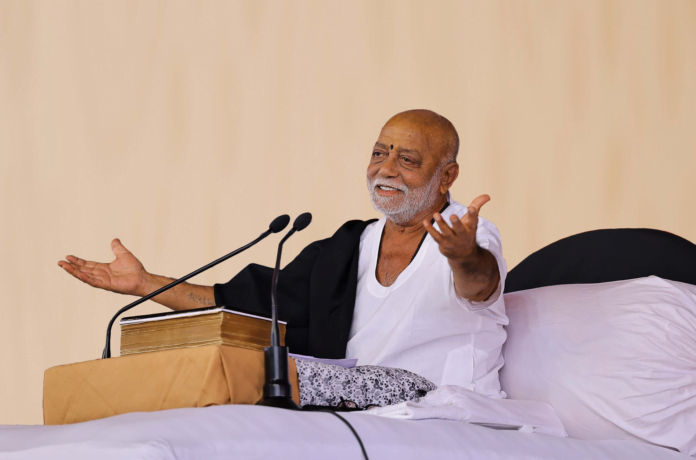
Morari Bapu, originally named Moraridas Prabhudas Hariyani, is a revered Indian spiritual leader and a masterful narrator of the Ram Katha hailing from Gujarat. His profound influence extends beyond spiritual boundaries, and his life journey is as inspiring as his teachings.

Early Life and Spiritual Roots
Born on March 2, 1946, in the tranquil village of Talgajarda, Gujarat, Morari Bapu’s spiritual journey began at a young age. His family, following the Nimbarka Sampradaya tradition, introduced him to the Ramcharitmanas and the Bhagavad Gita from his early years. His grandfather, Tribhuvandas Bapu, initiated him into the world of katha recitation, igniting his passion for narrating the sacred text.

The Path of Katha Recitation
At the tender age of 14, Morari Bapu started reciting the Ram Katha, guided and encouraged by his spiritual mentor, Tribhuvandas Bapu. Initially, he shared verses from the Ramcharitmanas with a small group of villagers. Over time, his divine storytelling talents led him to the Ram Temple in Talgajarda and Mahuva, where he continued to captivate audiences.

Each Ram Katha unfolds a unique subject, announced on the first day, with a chosen stanza (Chaupai) elaborated upon during the nine days of recitation. Bapu’s discourses, typically lasting four hours and starting on a Saturday, often reach a global audience, with Kathas being conducted in Gujarati in Gujarat and Hindi elsewhere.

Bapu’s Ram Kathas are broadcast live on the Aastha TV network and the Chitrakutdham Talgajarda YouTube channel, reaching over 170 countries. Notably, the largest gathering at one of Bapu’s Ram Kathas attracted 1.2 million devotees over nine days in Nathdwara, Rajasthan.

A Philanthropic Soul
Morari Bapu’s spiritual teachings are inseparable from his commitment to philanthropy. He firmly believes in the principles of humanitarian aid and tirelessly contributes to various social causes. Some of his notable contributions include:

  • Medical Aid: Bapu conducts Kathas to support medical facilities, such as the Institute of Kidney Diseases and Research Centre and Dr. H.L. Trivedi Institute of Transplantation Sciences in Ahmedabad, raising millions for kidney patients and cancer treatment.
  • Support for Soldiers: Bapu actively supports Indian soldiers and has visited various border locations to uplift their spirits. He made significant donations for soldiers who lost their lives during the Galwan Valley encounter in 2020.
  • Empowering Marginalized Communities: Bapu extends his compassion to marginalized groups, including sex workers and transgenders. He organized Kathas and pledged substantial funds to improve their lives and provide dignity to the neglected.
  • Caring for Cows: Bapu advocates for the protection of cows and the establishment of gaushalas. His efforts have led to the preservation of these sacred animals.
  • Relief in Natural Disasters: Bapu contributes generously during times of natural disasters, offering aid and support. His support has been instrumental in providing relief during events like floods, cyclones, droughts, and earthquakes.
  • COVID-19 Pandemic: During the COVID-19 pandemic, Bapu conducted a 61-day Hari Katha without a live audience to uplift spirits. He also raised and donated funds to support pandemic relief efforts.
  • Promotion of Art and Culture: Bapu hosts literary and cultural events, bringing together writers, poets, scholars, and artists to promote the rich heritage of India.
  • Multiple Weddings (Samuh Lagna): Bapu facilitates mass weddings for those in need, helping couples start their journeys together.
  • Providing Meals (Prasad): As part of his Kathas, free vegetarian meals are served to all attendees. Bapu’s devotees have raised significant funds to support organizations like the Akshaya Patra Foundation.

Morari Bapu’s philanthropic endeavors are guided by his belief in universal peace and the core values of truth, love, and compassion. His teachings transcend religious boundaries, aiming to embed spirituality in everyday life.

Awards and Recognition
Despite his incredible contributions to society, Morari Bapu has chosen not to accept any awards or recognitions, including the prestigious Padma Shri. His selfless dedication to humanity remains his primary motivation, and he avoids associating himself with any specific group or organization.

In a world often characterized by material pursuits, Morari Bapu stands as a shining example of spiritual enlightenment and altruism, tirelessly working to make the world a better place for all. His message of truth, love, and compassion continues to inspire and uplift countless lives.

Nakki Lake – A Tranquil Gem in Mount Abu

0

Nakki Lake in Mount Abu, Rajasthan, is a picturesque and historic destination for tourists. Situated amidst the lush Aravali hills, this man-made lake offers stunning views, especially during the monsoon season. It’s a perfect place to enjoy a leisurely stroll, take a boat ride, or go horseback riding.

According to local legends, the lake was created by gods who dug it using their nails, hence the name “Nakki.” One legend tells of its creation to protect against a demon named Bashkali. Another story involves a romantic challenge where a sculptor named Rasia Balam dug the lake overnight with his nails to win the hand of a king’s daughter, Kunwari Kanya. However, the wedding never took place, and their love story became legendary.

Nakki Lake is not only a place of natural beauty but also has historical significance. It is near attractions like the Raghunathji Temple, Toad Rock, and the Maharaja Jaipur Palace. Mahatma Gandhi’s ashes were immersed in the lake in 1948, and a memorial, Gandhi Ghat, was constructed.

Boating is a popular activity at Nakki Lake, and visitors can also enjoy horse rides around the area. The lake is surrounded by food stalls and shops, making it a delightful destination for tourists.

If you plan to visit Mount Abu, Nakki Lake is a must-see attraction that offers serenity, natural beauty, and a glimpse into fascinating local legends. The best time to visit is during the monsoon season to experience its enchanting charm.

Entreprenuers learn business tips in ‘The Smart Money Women’ session organised by FORTI Women Wing

0

The FORTI Women Wing, in association with i-Start and Department of Information Technology and Communication organised a session titled ‘The Smart Money Women’ which discussed entrepreneurial tips for women to ensure they make a mark in the business world.

The session was addressed by Rishabh Jain, Co-founder, Labour Law Advisor, who shared diverse aspects of finances and social media to run a successful business. 

Rishabh brings with him 43 years of experience in labour laws. After passing out as a Civil Engineer from IITB, he launched the most viewed finance channel of India for 2021.

Addressing the gathering, Rishabh in his advice to entreprenuers, said that they should focus on developing skills, stay confident which will develop their appetite to take risk and should not be afraid of failures.

Entreprenuers learn business tips in 'The Smart Money Women' session organised by FORTI Women Wing
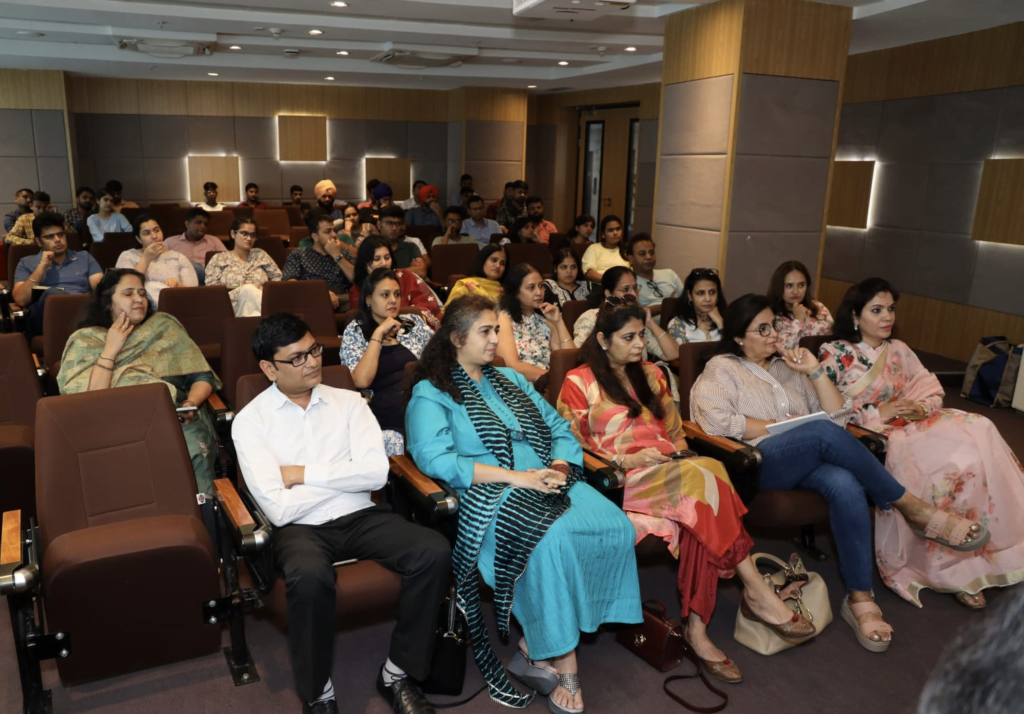
Audiences engaged in the session

Sharing his first start-up Qriyo’s story, Rishabh shared how he delayed closing down his venture even at a time when the going was getting tougher for him. 

“It took me six years to decide to wind up the business despite the fact that it was very difficult for me to run the same. I was lacking motivation and excitement and I started coming late to office, however, despite facing all odds, I was still running it which was not a clever decision,’ he said sharing his own failure story.

With my experience, I have learnt, “Experiment fast, fail fast, that’s the formula to grow in the highly competitive world,” he said with a smile.

“If you think it’s not working, then you need to plan afresh and make new beginning,” he advised entrepreneurs attending the programme.

“You should never be scared of parting ways with your business if its not working, thinking of results on what others will think, he said. 

As Rishabh continued sharing his interesting stories of success and failure, the audience stayed hooked to their chairs listening to all these tips with due attention as the story was being narrated by a highly successful entrepreneur who was telling the business tale in simple yet interesting and engaging manner.

“I passed out from IIT-Mumbai as a civil engineer, however, I have never been a good civil engineer. Meanwhile, what I learnt from my college was to stay confident. I always have had the belief that I will do something good;, that was my confidence. 

When you too have this kind of confident, your risk appetite will grow. If you can take risks and are ready to experiment, you will try new things and grow, he said adding, “Stay confident with what skill you have and try honing up the same skill. Nothing can stop you if you start developing skills which eventually will make you less dependent on others, added Rishabh.

He also shared formulas of financial investment in the programme which gave new insights to women who were quite eager to step into the new world of investment while being in old school of thoughts.

Entreprenuers learn business tips in 'The Smart Money Women' session organised by FORTI Women Wing
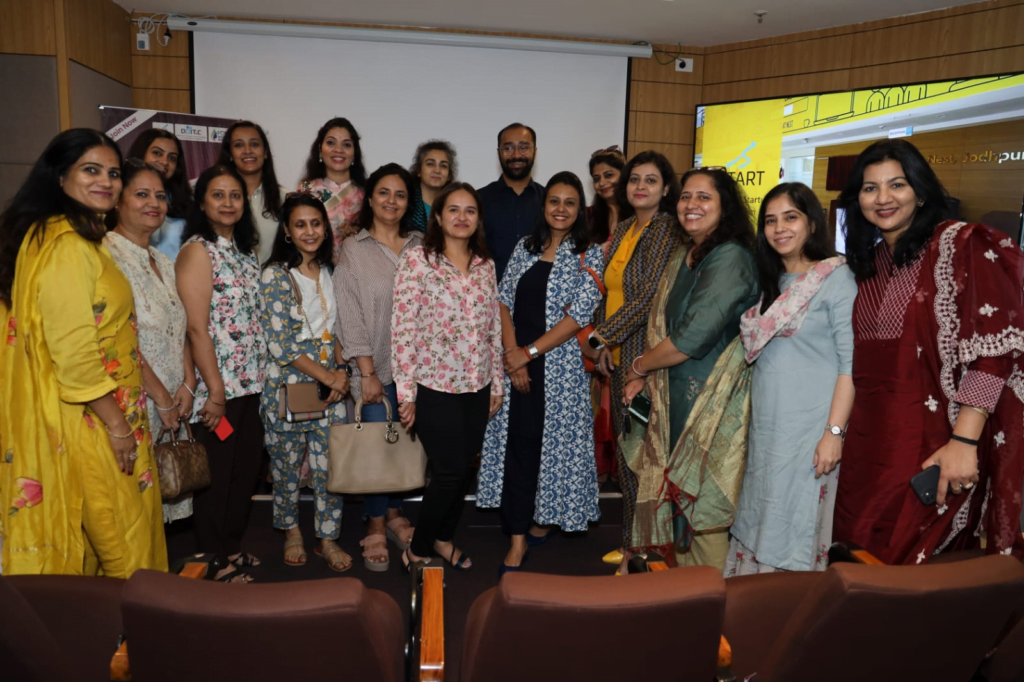
Rishabh with women entreprenuers

Sunita Sharma, president, Forti Women Wing, thanked Rishabh for sharing quick tips to make a successful business.  

She said that the session came up loaded with real time learnings from a super successful young entrepreneur which discussed entrepreneurship , social media promotions and finances for all.

The session was moderated by Sakshi Ahuja and Priyanshi.

The vote of thanks was proposed by Sunita who presented mementos to guests.

Churchill’s Old War Office to reopen as Hinduja Group’s new luxury hotel in London

0

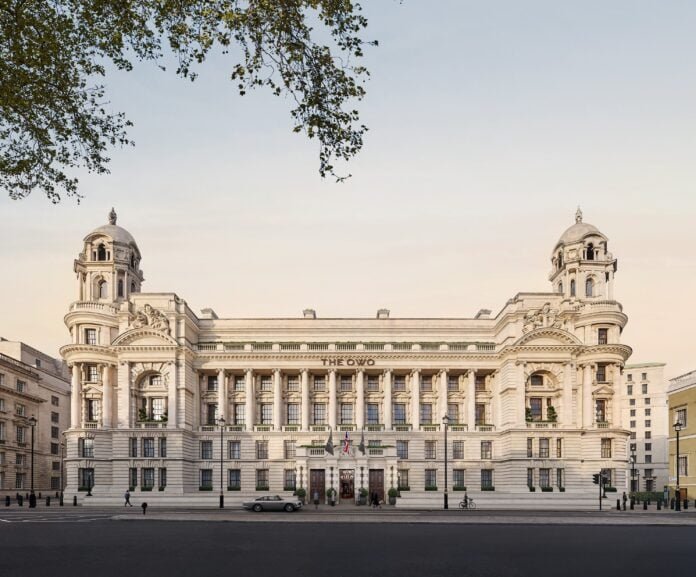
The Hinduja Group, a 109-year-old multinational conglomerate with a multi-billion dollar turnover that collaborated with world-renowned Raffles Hotels and Resorts to restore The Old War Office (OWO) of Britain’s World War II era prime minister Winston Churchill, will be inaugurated on September 26th as a brand-new luxury hotel in the heart of London.

“When we came to Whitehall, the team were blown away by the size and beauty of this majestic building,” said Sanjay Hinduja, who has overseen the project.”

“No expense has been spared in bringing it back to its former glory and paying homage to its heritage, whilst breathing new life into it. Along with Raffles London at The OWO, we hope to create a legacy that is both timeless and unsurpassed,” he said.

The Hinduja Family had acquired the landmark building on Whitehall, opposite Downing Street, over eight years ago and tied up with Raffles Hotels to transform the building into an extravagant hub complete with luxury residences, restaurants and spas.

The Old War Office, originally completed in 1906 and designed by British architect William Young, was formerly the site of the original Palace of Whitehall. The building has since witnessed world-shaping events while influential political and military leaders like Winston Churchill and David Lloyd George held office in the UK. Its grand architecture has also made the building a backdrop for James Bond films and, more recently, ‘The Crown Netflix series.

“Everyone at Accor feels honoured and privileged to be part of this historic project that has surpassed all expectations – truly a legend in the making and possibly the most awe-inspiring hotel on the planet,” said Sébastien Bazin, Accor Chairman & CEO.

“Together with the Hinduja family, we proudly invite locals and travellers alike to experience this extraordinary hotel as well as the authenticity and graciousness of Raffles, one of our most prestigious brands in one of the world's greatest cities,” he said.

As part of the renovation with the help of hundreds of artisans, the historic interior elements have been restored, including delicate hand-laid mosaic floors, oak panelling, glittering chandeliers, and a magnificent marble staircase. The OWO features 120 guest rooms and suites, signature dining experiences by chef Mauro Colagreco, entertainment spaces including a grand ballroom.

The most historically significant areas of the building include the Heritage Suites, former offices of the influential political and military leaders associated with its history.

A number of these will be available for exclusive reservations as “The Whitehall Wing”, a six-bedroom suite occupying the west wing of the building which can accommodate up to 12 guests –one of the largest luxury hotel wings available in London.

“At Raffles London, the history of the former Old War Office lives on, through its splendid architecture, carefully chosen interior design and expansive Heritage Suites. We are excited to provide guests with the highly personalised and intuitive service for which Raffles is known the world over. Visitors will be spoiled for choice with the eclectic array of world-class restaurants and bars in an unrivalled location,” said Philippe Leboeuf, Managing Director of Raffles London at The OWO.

The transformed OWO also houses 85 Residences by Raffles as part of the building’s reimagining as a new culinary district for London, complete with nine new restaurants and three bars, including a rooftop with panoramic views onto Buckingham Palace.

About Raffles

Raffles Hotels and Resorts boasts an illustrious history and some of the most prestigious hotel addresses worldwide. In 1887, Raffles Singapore set the standard for luxury hospitality, introducing the world to private butlers, the Singapore Sling and its enduring, legendary service.  Today, Raffles continues this tradition in leading cities and lavish resort locales, enchanting travellers with meaningful experiences and service that is both gracious and intuitive. Connoisseurs of life choose

Raffles is part of Accor, a world leading hospitality group consisting of more than 5,000 properties and 10,000 food and beverage venues throughout 110 countries.

About Hinduja Group

The Hinduja Group is one of India’s premier diversified and transnational conglomerates, employing about 200,000 employees across 38 countries and owns businesses in automotive, information technology, media, entertainment, and communications, banking and financial services, infrastructure project development, cybersecurity, oil and specialty chemicals, power, real estate and many more.