Home Blog Page 621

Navratri 2023 Day 7: Embracing the Divine Goddess Kaalratri

0

The seventh day of Navratri in 2023 brings with it a deep connection to the divine through the enchanting hue of navy blue. This color is dedicated to the fierce Goddess Kaalratri, and on this sacred day, devotees are encouraged to offer orchid flowers to honor her.

Significance of Navratri Day 7:

The seventh day of Navratri is celebrated with immense grandeur in Hindu culture. It holds a special place in the hearts of devotees as they pay homage to Goddess Kaalratri, one of the powerful incarnations of Goddess Durga. She is renowned for her role in vanquishing demons, evil forces, and dispelling negative energies. Goddess Kaalratri guides her devotees in dispelling the darkness from their lives and illuminating their paths with light.

Who Is Goddess Kaalratri?

Goddess Kaalratri appears with the eerie hue of a moonless night, her hair flowing freely, adorned with a garland of human skulls, and gracefully riding a donkey. She possesses an imposing form with four arms, each bearing a unique significance. In her left hands, she holds a cleaver and a torch, while her other two hands bestow blessings and protection. Her forehead is marked by three piercing eyes.

Her enigmatic visage symbolizes the shroud of ignorance, which she dispels with the radiance of wisdom and truth. As a guardian, she shields her followers from harm and offers blessings and spiritual enlightenment to help them overcome adversities. She serves as a poignant reminder of time’s dual nature, both a destroyer and a creator, encouraging us to accept life’s impermanence. With unwavering determination and resilience, she inspires her devotees to confront their fears and challenges, helping them break free from negative influences and addictions.

Goddess Kaalratri is revered by Yogis and Tantriks who seek her blessings to attain Siddhis (spiritual powers) and activate their crown chakras. She is also worshipped to alleviate the malefic effects of the planet Shani, making her an essential deity for those suffering from Shani dosha in their horoscopes.

Navratri 2023 Day 7: Puja Vidhi

To perform the puja on Navratri Day 7, devotees can follow these steps:

  1. Begin your day by waking up early and taking a holy bath.
  2. Light a diya (lamp) in front of the Goddess and offer a garland to honor her.
  3. Please the Goddess with offerings of cloves (laung) and camphor.
  4. Prepare homemade bhog prasad and sweets to offer as a token of devotion.
  5. Chant various mantras 108 times and perform a hawan (fire ritual) for spiritual purification.
  6. In the evening, conclude your puja by chanting the Goddess Durga Aarti.

Dhyan Mantra of Kaalratri Maa:

  1. “Ya Devi Sarvabhooteshu Kaal Ratri Roopen Sansthita
    Namastasya Namastasya Namastasya Namo Namah..!!”
  2. “Om Jayanti Mangla Kaali Bhadrakaali Kapalini
    Durga Kshama Shivadhatri Swaha Swadha Namostute..!!”

Maa Kaali Mantra:

  • “Om Aim Hreem Kleem Chamundaye Vicchaaye..!!”
  • “Om Kaali Mahakaali Kalike Parmeshwari
    Sarvanand Karein Devi Narayani Namostute..!!”

On Navratri Day 7, as we immerse ourselves in the deep navy blue color and honor Goddess Kaalratri, we seek her blessings to dispel darkness from our lives and lead us towards the path of enlightenment and spiritual growth.

Maharashtra: India’s Economic Jewel – A Deep Dive into the Wealth of the West

0

India is a tapestry of diversity, known for its striking economic disparities. Amidst this diversity, Maharashtra emerges as a beacon of affluence, with Mumbai, its bustling metropolis, often celebrated as the economic epicentre of the nation. In this exploration, we unravel the layers that underpin Maharashtra’s status as India’s wealthiest state.

The Economic Juggernaut

Maharashtra is undeniably India’s economic juggernaut. With a Gross State Domestic Product (GSDP) exceeding $400 billion, it significantly bolsters the country’s overall GDP. Mumbai, India’s financial nerve centre, is home to the Reserve Bank of India, the Bombay Stock Exchange (BSE), and a multitude of multinational corporations, cementing its reputation as the nation’s financial hub.

A Diverse Economic Landscape

The state’s economy thrives on diversity, boasting a robust presence across various sectors. Maharashtra is renowned for its flourishing manufacturing sector, particularly in automotive, aerospace, and textiles. It also leads the services industry with a strong IT and ITES presence. Furthermore, Pune and Mumbai serve as dynamic hubs for innovation and entrepreneurship, fostering a burgeoning startup ecosystem.

 Maritime Magnificence

Mumbai, as a major port city, serves as India’s vital gateway for international trade. Its strategic location along the Arabian Sea, combined with modern ports, facilitates seamless imports and exports. This maritime advantage plays a pivotal role in Maharashtra’s economic ascendancy.

 Agricultural Abundance

Maharashtra doesn’t just excel in industry and finance; it’s also an agricultural dynamo. The state is a leading producer of diverse crops, including sugarcane, cotton, and soybeans. The agricultural sector, alongside agribusiness and food processing, significantly contributes to the state’s economic fabric.

 Investment in Education and Healthcare

A hallmark of Maharashtra’s success lies in its substantial investments in education and healthcare. The state boasts some of India’s premier educational institutions, such as the Indian Institute of Technology (IIT) Bombay and the University of Mumbai. World-class medical facilities have established Maharashtra as a favoured destination for medical tourism.

 Building for the Future

The state’s commitment to infrastructure development is evident. A prime example is the Mumbai-Pune Expressway, which has transformed connectivity and attracted industries and businesses. Maharashtra’s focus on infrastructure enhances its appeal as a destination for investment and growth.

 Cultural and Entertainment Hub

Maharashtra’s rich cultural heritage, vibrant arts scene, and burgeoning entertainment industry are not just feathers in its cap but also economic engines. Bollywood, anchored in Mumbai, propels India’s entertainment industry, producing a substantial share of the country’s films and television shows.

Challenges and Disparities

Despite its prosperity, Maharashtra grapples with pronounced economic disparities, particularly in rural areas. Addressing these challenges and ensuring that the benefits of economic growth are distributed more equitably is a crucial imperative for the state’s policymakers.

Maharashtra, with Mumbai as its financial heart, stands tall as India’s richest state. Its diverse economic landscape, thriving industries, and relentless commitment to education and healthcare have catapulted it to economic eminence. While Maharashtra shines brightly, it is imperative for the state to address the disparities and ensure that the fruits of its economic success are shared across society, forging a more inclusive and prosperous Maharashtra.

World Iodine Deficiency Day: Why You Need This Essential Mineral

0

Dr Pramiti Rastogi shares her knowledge on Iodine deficiency and solutions to it..

Iodine is a trace element that is vital for the production of thyroid hormones, which regulate the metabolism, growth, and development of the body, especially the brain. Iodine is not made by the body, so it must be obtained from the food we eat or from supplements. The recommended daily intake of iodine for adults is 150 micrograms, and for pregnant and lactating women, it is 250 and 290 micrograms respectively.

Iodine deficiency is a serious public health problem that affects millions of people worldwide, especially in regions where the soil and water are low in iodine. In India, the entire population is at risk of iodine deficiency disorders (IDD) due to the deficiency of iodine in the soil and the food derived from it. According to the National Family Health Survey – 5 (2019-21), the prevalence of goitre and any other thyroid disorders, based on self-reports in women (15-49 years) was found to be 3%.

Iodine deficiency can cause a range of health problems, such as:

– Goitre: an enlargement of the thyroid gland that can cause swelling in the neck, breathing difficulties, and voice changes.

– Hypothyroidism: a condition where the thyroid gland does not produce enough thyroid hormones, leading to symptoms such as fatigue, weight gain, cold intolerance, dry skin, hair loss, and depression.

– Cretinism: a severe form of mental and physical retardation that occurs in children born to mothers who are severely iodine deficient during pregnancy. It can cause stunted growth, deafness, speech impairment, and intellectual disability.

– Miscarriage, stillbirth, and congenital anomalies: iodine deficiency can also affect the reproductive health of women and the development of the fetus.

The best way to prevent iodine deficiency is to consume iodized salt, which is salt fortified with iodine. The government of India has made it mandatory for all edible salt to be iodized since 1992 under the National Iodine Deficiency Disorders Control Programme (NIDDCP). However, there are still some challenges in ensuring the availability and quality of iodized salt, as well as the awareness and compliance of consumers. Therefore, it is important to check the label of salt packets for the presence and level of iodine before buying them. Other sources of iodine include seafood, dairy products, eggs, and some fruits and vegetables.

World Iodine Deficiency Day is observed every year on October 21 to raise awareness about the importance of iodine for human health and well-being. It also aims to promote universal salt iodization as a safe, effective, and sustainable strategy to eliminate IDD. Let us join hands in this global effort to ensure that everyone has access to adequate iodine intake and prevent the devastating consequences of iodine deficiency.

A Spiritual Journey to Dhanop Mata Temple with Saksham Sanchar Foundation

0

Nestled in the heart of the arid landscape of Rajasthan, near the village of Phuulia Kalan is home to the awe-inspiring Dhanop Mata Temple. As members of the Saksham Sanchar Foundation, we embarked on a recent pilgrimage to this remarkable temple, famed for its miraculous healing powers and profound spiritual significance. The journey allowed us to witness the annual fair that draws pilgrims from near and far to this sacred site, leaving us in awe of the spiritual aura that envelops the village, and understanding why it’s often referred to as Dhanop, after the temple’s name.

Dhanop Mata Ji Temple – A Spiritual Oasis

Dhanop Mata Ji Temple, situated in the rustic charm of Dhanop village, is a place of great reverence for the Hindu community. Dedicated to Goddess Sheetala Mata, who is an incarnation of the formidable Goddess Durga, this temple holds a significant place among the religious sanctuaries of Rajasthan. The spiritual energy that emanates from this place is palpable, drawing a multitude of Hindu devotees who flock here each year to seek the blessings of Sheetala Mata.

Architectural Marvel

Beyond its spiritual significance, Dhanop Mata Temple boasts an exquisite architectural design that enhances its appeal. The temple’s alluring structure, with intricate carvings and striking symmetry, is a testament to the rich architectural heritage of Rajasthan. The temple’s attractive design is yet another reason for its popularity, making it an irresistible destination for both devotees and tourists alike.

Exploring the Rich History

Temple has a history as ancient and illustrious as the land it stands on. The temple is perched atop a high mound, showcasing an impressive structure that has stood the test of time. An inscription dating back to Vikram Samvat 912 Bhadva Sadi 2, approximately 11 centuries ago, is preserved within the temple premises, shedding light on the temple’s age and historical significance. Dhanop village itself derives its name from the temple, emphasizing the profound influence of this sacred site on the community.

In ancient times, Dhanop was a flourishing city adorned with magnificent temples, grand buildings, stepwells, and picturesque ponds. The city was embraced by the Mansi and Khari rivers, which still flow on its outskirts. History tells us that Raja Dhundh, also known as the “Tambavati” city, ruled this prosperous city. Dhanop Mata was the family goddess of the king, and the construction of the temple Sabhamandap is attributed to the reign of Prithvi Chauhan III.

Within the temple’s sacred precincts, devotees can find beautiful idols of Annapurna, Chamunda, and Kalikamata, all facing the east. Additionally, there is a designated area for Bhairu Ji and a collection of idols featuring Shiva-Parvati, Kartikeya, Ganesha, and the Chausath Yoginis. While pilgrims visit Dhanop Mata daily to pay their respects, the grandeur of the temple truly comes alive during the festival of Navratri when a grand fair is organized, attracting a multitude of devotees.

Visiting Dhanop Mataji Temple

For those eager to embark on a spiritual journey to Dhanop Mata Temple, the temple welcomes visitors for darshan between 6 am and 9 pm daily. This extended visiting time allows devotees and travelers to immerse themselves in the serene ambiance of the temple at their convenience.

Our recent visit to Dhanop Mata Temple in Phuulia Kalan village left an indelible impression on our hearts. The spiritual resonance of this ancient temple, combined with its remarkable history and stunning architecture, makes it a must-visit destination in Rajasthan. As members of the Saksham Sanchar Foundation, we were honoured to partake in this spiritual journey, and we encourage others to experience the magic of Dhanop Mata Temple for themselves. It’s a place where faith, history, and architectural beauty converge to create a truly unique and enriching pilgrimage.

The Diggi Kalyanpura Temple’s impressive story: A Tale of Love, War, and Devotion

0

During a recent visit to the Diggi Kalyan Ji temple in Malpura, as part of the team Saksham Sanchar Foundation, we were captivated by the rich history and profound significance of this sacred place. The Diggi Kalyan Ji temple, also known as Shri Kalyan temple, is nestled in the Malpura tehsil of Rajasthan’s Tonk district, and our journey unveiled a treasure trove of legends and spiritual insights.

A Temple Steeped in History

This ancient temple is a dedication to Lord Vishnu and, according to local beliefs, its origins can be traced back an astounding 5600 years. Located 82 kilometers from Jaipur, the capital city of Rajasthan, Diggi Kalyan Temple stands as one of the most revered places of worship in the state.

The present-day temple is said to have been constructed by Rana Sangram Singh Ji of the Mewar Dynasty in the year 1527 AD. Its establishment is traditionally associated with the Shukla Paksha Trayodashi of the Jayeshtha Month in the Hindu calendar, with Tiwari Brahmins playing a significant role in the temple’s establishment.

The Journey from Jaipur to Diggi Kalyanpura

The distance between Jaipur and Diggi Kalyanpura is approximately 90 kilometers by road. Traveling to this sacred site is a journey that unveils not only the physical distance but also the spiritual essence of this remarkable temple.

Timings and Tradition

The temple opens its doors at 4:30 in the morning, inviting devotees to embrace the serenity of dawn. It graciously closes at 9 in the evening, allowing worshippers to offer their prayers and seek divine blessings throughout the day.

The Mythical Tale of Urvashi and King Digwa

What sets Diggi Kalyan Ji Temple apart is the enchanting tale that weaves through its existence. It harks back to the celestial dancer, Urvashi, an Apsara, who once graced the heavenly court of Lord Indra in Swarga Lok with her mesmerizing dance. Her performance was intended to appease the gods, but an inadvertent laugh during her dance displeased Lord Indra.

In response, he banished Urvashi from Swarga Lok for 12 years, casting her into the mortal realm, Mrityu Lok. In her newfound life on Earth, Urvashi devoted herself to the company of sages.

One fateful day, King Digwa, the ruler of the land, encountered her in a forest. He was immediately entranced by her ethereal beauty and sought her hand in marriage. Urvashi, however, recounted her history as an Apsara and her unfortunate exile from Lord Indra’s court, graciously declining the king’s proposal.

When Urvashi’s exile was drawing to a close, Lord Indra came to bring her back to Swarga Lok. King Digwa, a valiant warrior, boldly challenged the deity. A fierce battle ensued, neither side yielding to the other’s might. However, Lord Indra, employing crafty tactics, managed to defeat King Digwa. In the wake of his defeat, Urvashi, deeply aggrieved, cursed King Digwa with leprosy.

Undeterred, King Digwa embarked on a path of penance and devotion to Lord Vishnu in the Shree Kalyan Region. His unwavering commitment and spiritual journey ultimately pleased Vishnu Bhagwan.

In response, Lord Vishnu conveyed to the king that he would discover a statue of Lord Vishnu near the river. The king set forth on this divine quest, and his chariot eventually came to a halt at the very site where he had faced Lord Indra.

The Temple’s Establishment

King Digwa, in reverence to his sacred encounter and divine journey, established the temple at this hallowed spot after performing the necessary ceremonies. Today, this place is renowned as the Diggi Kalyan Temple, a testament to King Digwa’s unshakable faith and the profound spiritual connection between heaven and earth.

A Divine Guide: The Glittering Diamond

The temple holds a unique attraction – a bright diamond adorns the chin of the sculpture of Kalyan Ji. It is believed that this divine gem can predict the direction from which devotees will arrive each day. Furthermore, the temple is regarded as a place where the heartfelt wishes of devotees find fulfillment.

Traveling to Diggi Kalyan Ji

The best way to reach Diggi Kalyanpura from Jaipur is by road. A journey to this sacred destination by car takes approximately 1 hour and 15 minutes, offering not only convenience but also a scenic drive. Alternatively, you can opt for a bus or taxi from Jaipur to Diggi Kalyanpura, ensuring a seamless and memorable pilgrimage to this temple where history and devotion intertwine.

Embodiment of Opulence and Spirituality: The Padmanabhaswamy Temple

0

India, a tapestry of spiritual diversity and ancient traditions, is adorned with countless temples, each bearing its unique cultural and religious significance. Amid this rich mosaic of sacred places, one temple stands as a shining example of both opulence and spiritual devotion – the Padmanabhaswamy Temple in Thiruvananthapuram, Kerala.

A Storied Repository of Wealth

The Padmanabhaswamy Temple is not just India’s wealthiest temple; it ranks among the most opulent places of worship globally. Its fame extends beyond its religious importance, for within its sacred walls lie treasures that have sparked legends, myths, and boundless fascination. The temple’s riches are hidden within chambers that have remained sealed for centuries, preserving a staggering wealth that transcends imagination.

The opulence of the temple can be attributed primarily to the treasures concealed in six underground vaults known as ‘Kallara.’ These vaults house a breathtaking collection of riches, including gold, silver, precious gems, intricate jewelry, ancient coins, and priceless artifacts. While estimates of the total value of these treasures vary widely, some experts suggest they may be worth trillions of rupees, solidifying the temple’s position as an unrivaled repository of wealth.

A Tapestry of History and Architecture

The Padmanabhaswamy Temple is not just known for its wealth; it carries a rich history and boasts intricate architectural marvels. Its origins date back to the 8th century and exemplify the grandeur of Dravidian architecture. The temple is adorned with towering gopurams, ornate entrance towers, and detailed stone carvings that narrate stories of devotion and divine heritage.

Dedicated to Lord Padmanabha, a form of Lord Vishnu, the temple’s name itself, “Padmanabha,” signifies “One with a lotus navel,” referencing Lord Vishnu. The deity is a fusion of over 12,000 salagramas, imbuing it with profound spiritual significance.

Unraveling the Enigma

The temple’s secret vaults have long been a subject of intrigue and wonder. While five of the six vaults have been opened and inventoried, one remains sealed, fueling the curiosity of both the devout and the inquisitive. The treasures within these vaults are believed to have amassed over centuries through generous donations from royal families and devoted pilgrims.

One of the most prized possessions is the Golden Idol of Mahavishnu, valued at approximately INR 500 Crore. This sacred idol is a masterpiece of divinity and craftsmanship, further enhancing the temple’s spiritual and financial worth.

Guardians of Prosperity

The responsibility of managing and safeguarding the temple’s immense wealth has rested with the Travancore Royal Family, serving as hereditary trustees for generations. This unique arrangement has ensured the temple’s longevity and financial stability throughout the ages.

A Symbol of Faith and Abundance

The Padmanabhaswamy Temple transcends being a repository of riches; it symbolizes the enduring faith of millions of devotees who converge on its hallowed grounds in pursuit of solace, blessings, and spiritual enlightenment. The temple serves as a living testament to India’s rich cultural heritage, spiritual devotion, and economic prosperity.

As the temple continues to captivate and inspire people from all walks of life, it stands as a reminder of the profound and timeless connection between faith and prosperity within India’s remarkable tapestry of religious and cultural traditions. The Padmanabhaswamy Temple is not just a testimony to the treasures concealed in its vaults; it is a living testament to the wealth of devotion and the indomitable spirit of humanity.

City of lakes – Country’s first wetland City

0

Priyanshi Pareek reports on the Country’s first wetland city..

The Rajasthan government, in collaboration with the Environment and Forest Department, is making concerted efforts to elevate Udaipur, the ‘City of Lakes,’ to international prominence by aiming to become India’s first wetland city.

This enchanting city, with its iconic lakes such as Lake Pichola, Lake Fateh Sagar, Lake Doodh Talai, Lake Rang Sagar, and Lake Swaroop Sagar, has long been a magnet for tourists.

According to the reports, Udaipur has fulfilled all the requirements that are required for a place to become a wetland city. The title is very rare, and only a few selected cities in the world have been honoured with the title. Apart from Udaipur, Bhopal is also vying for the prestigious status. 

Talking about the update, Monali Sen, Joint Secretary of Environment and Climate Change Ministry, stated, “The department organised a one-day workshop on October 13 for district officials and representatives of local bodies to finalise the draft. The inter-departmental meeting will consider suggestions from all stakeholders,” the report states.

According to state authorities, Udaipur, with an area of 37 sq km, fulfils all the necessary requirements to earn the designation of a wetland city.

This title is a rare distinction, with only a few cities worldwide having received this recognition. Aside from Udaipur, Bhopal is also vying for this prestigious status.

The Ramsar Convention, officially known as the Ramsar Convention on Wetlands of International Importance Especially as Waterfowl Habitat, is a global treaty designed to protect and sustainably utilize wetlands of international importance.

It got its name from the Iranian town of Ramsar, where the Ramsar Convention Agreement was signed in the year 1971.

In 2022, during the Convention’s proceedings, 25 cities were acknowledged as wetland cities, presently, there are 42 wetland cities situated across 17 nations around the world, with China boasting the highest number at 13 such cities.

Global Hunger Index 2023: India ranks 111 out of a total of 125 countries

0

Priyanshi Pareek reports on Global Hunger Index Of 2023..

The global hunger index is a means of monitoring whether countries are achieving hunger-related SDGs. It can be used for international ranking.

The global hunger index captures three dimensions of hunger: insufficient availability of food, shortfalls in the nutritional status of children and child mortality (which is, to a large extent, attributable to undernutrition). Accordingly, the index includes three equally weighted indicators: the proportion of people who are food energy-deficient, as estimated by FAO.

GHI 2023:

According to the report, the compounding impacts of climate change, conflicts, economic shocks, the global pandemic, and the Russia-Ukraine war have exacerbated social and economic inequalities and slowed or reversed previous progress in reducing hunger in many countries.

According to the GHI 2023 report, Belarus, Bosnia & Herzegovina, Chile, China are among the top ranked countries (i.e., low level of hunger) and Yemen, Madagascar, Central African Republic are the bottom.

The GHI 2023 score for the world is 18.3, considered moderate, showing minimal improvement since 2015.

The main objective of GHI 2023 is to comprehensively measure and track global, regional, and national hunger.

India at GHI 2023:

In the Global Hunger Index 2023, India ranked 111th out of 125 countries, indicating a serious level of hunger.

Neighbouring countries, such as Pakistan (102nd), Bangladesh (81st), Nepal (69th), and Sri Lanka (60th), scored better than India.

India’s GHI score 2023 stands at 28.7, categorized as “serious” on the GHI Severity of Hunger Scale.

This shows a slight improvement from its GHI 2015 score of 29.2, which was also deemed serious.

Also, compared to its alarming GHI scores of 38.4 in 2000 and 35.5 in 2008, India has made significant progress.

Significance:

The report attempts to ‘raise awareness of United Nations’ Sustainable Development Goal 2 that endeavors to achieve ‘Zero Hunger’ by 2030.

Embracing the Warrior Goddess: Navaratri Day 6 Honours Goddess Katyayani Maa

0

Navaratri, the nine-night Hindu festival, is an ode to the divine feminine, celebrating the eternal triumph of good over evil. Each day of Navaratri is dedicated to a distinct manifestation of Goddess Durga, marked by unique rituals, colors, and profound significance. On the sixth day of Navaratri, devotees pay their respects to Goddess Katyayani, the fierce warrior form of Durga. They seek her blessings for courage, strength, and protection in their lives.

The Legend of Goddess Katyayani

The legend of Goddess Katyayani originates from the ancient scriptures, particularly the Devi Bhagavata Purana. According to this myth, she was born from the collective energy (shakti) of the gods in response to the earnest prayers of the sage Katyayana. Her divine birth had a singular purpose: to vanquish the formidable demon, Mahishasura, who remained invincible to any individual god’s efforts. Katyayani is often portrayed as a warrior goddess, mounted on a lion, and armed with a variety of weapons, symbolizing her indomitable resolve and bravery.

The sixth day of Navaratri is dedicated to the veneration of Goddess Katyayani. This day serves as a powerful reminder of the strength and valor embodied by the divine feminine. Devotees invoke her blessings to overcome obstacles, confront challenges, and conquer their fears. It is a profound belief that worshipping Katyayani can instill in individuals the inner strength and courage required to confront life’s adversities.

Navaratri Day 6, which reveres Goddess Katyayani, is a celebration of feminine strength and valor. Devotees seek her blessings to overcome obstacles and challenges, drawing inspiration from her unyielding and resolute nature. This day serves as a poignant reminder that the divine feminine encompasses a wide spectrum of qualities, including courage, determination, and the ability to surmount adversity. As Navaratri unfolds, it continues to inspire millions to forge a profound connection with the divine and embrace these very qualities in their own lives.

Navratri 2023 Day 5: Embracing the Divine Grace of Goddess Skanda Mata

0

As the fourth day of Navratri draws to a close, devotees eagerly prepare to usher in the fifth day of this profoundly auspicious festival. Day 5 of Navratri is dedicated to the veneration of Goddess Skanda Mata, a time when devotees observe fasting and offer heartfelt prayers in her honor. According to the Drik Panchang, Navratri Day 5 is set to grace us on the Panchami Tithi of Shukla Paksha in the month of Ashwina, with October 18, 2023, marking a day of profound significance for worshippers.

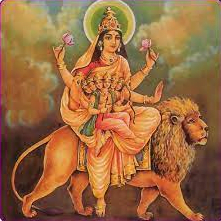
The fifth day of Navratri holds a special place in the hearts of Hindus, as it is a day dedicated to the worship of Goddess Skanda Mata. This divine form is beautifully depicted with four hands, tenderly cradling a lotus flower in her upper hands, while gracefully riding atop a lion, with infant Kartikeya nestled on her lap. Radiant with a pure white complexion, she reigns supreme over the Vishuddha Chakra. In her motherly form, she embodies qualities of kindness, compassion, humility, and showers her devotees with boundless happiness, ensuring they never return empty-handed. Those who wholeheartedly worship this aspect of Maa Durga find solace from negative thoughts, stress, and the worldly tensions that often plague their minds, gradually guiding them toward purer, undiluted spiritual thoughts.

Intriguingly, Hindu scriptures unravel an enthralling tale associated with Goddess Skanda Mata. The narrative unfolds with the existence of a demon named Tarkasur, who, in his relentless pursuit of immortality, engaged in deep penance to seek a boon from Lord Brahma. However, the creator of the universe, Lord Brahma, declined Tarkasur’s request, emphasizing the inevitability of death for all living beings. Undaunted, Tarkasur resorted to Lord Shiva, the detached deity, and cunningly sought a boon from Lord Shiva and Goddess Parvati’s son, Kartikeya, believing that Lord Shiva’s detachment would preclude him from marriage and producing an heir. He craftily asked for his death to be at the hands of Lord Kartikeya.

To Tarkasur’s astonishment, Lord Brahma’s blessing of invincibility did not extend to Lord Shiva’s family, and this revelation was a glimmer of hope for the demon, who saw an opportunity for immortality. Believing himself to be invincible, Tarkasur unleashed havoc upon the universe. Distressed and unable to vanquish him, the deities turned to Lord Vishnu for guidance. In his infinite wisdom, Lord Vishnu revealed a profound truth: Parvati, the incarnation of Goddess Sati, was destined to wed Lord Shiva. He foretold that Lord Shiva would indeed marry Parvati, and from their divine union, Lord Kartikeya was born.

Acknowledging Lord Kartikeya’s extraordinary prowess and valor in combating demons, Lord Brahma appointed him as the Commander-in-Chief of the gods. In this esteemed role, Lord Kartikeya confronted and ultimately defeated the formidable demon Tarkasur, thereby restoring peace and harmony to the universe. In honor of this momentous victory and the motherly aspect of Goddess Parvati, she came to be revered as Skanda Mata, bestowing her blessings and maternal grace upon her devotees during Navratri.

The worship of Goddess Skanda Mata on the fifth day of Navratri is a celebration of her maternal benevolence, her unwavering protection, and her profound ability to guide her followers toward spiritual enlightenment and inner peace. This day is an occasion for deep devotion and reflection, where devotees express their heartfelt gratitude for the divine grace they receive.