Home Blog Page 62

How to Find the Best Tile Shop Near Me for Home Renovation

0

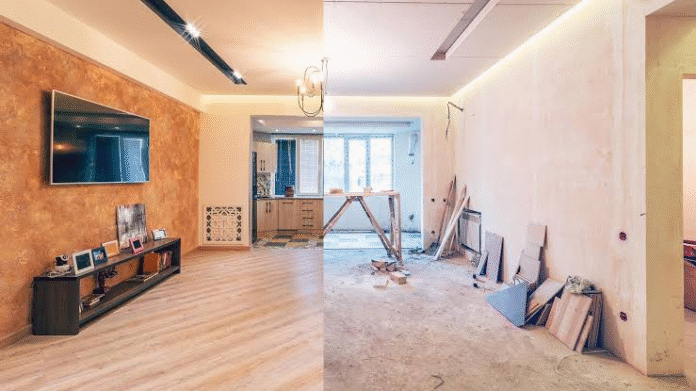
Home renovation is an exciting journey that allows you to redefine your living space with style and functionality. One of the most important aspects of this process is choosing the right tiles, as they influence both aesthetics and durability. However, finding the right tile shop near me can often feel overwhelming due to the number of options available. With a thoughtful approach, you can identify a store that not only meets your design preferences but also ensures quality and long-term value.

Why Choosing the Right Tile Shop Matters

Tiles are a long-term investment. Whether you are upgrading your kitchen, bathroom, or living area, the quality and variety offered by a tile store can significantly impact your renovation results. A reliable tile shop provides access to premium materials, expert guidance, and the latest designs.

When searching for a tile shop near me, it is essential to prioritise stores that offer both aesthetic variety and technical reliability. This ensures your tiles not only look beautiful but also withstand daily wear and tear.

Evaluate the Range of Tile Collections

Choosing the right collection ensures that your surfaces meet the specific needs of every room in your home.

Look for Variety in Design and Finish

A high-quality showroom should offer a wide selection of surfaces in various finishes, textures, and colours. From surfaces inspired by natural stone to modern speckled designs, having a variety of options allows you to perfectly match your floors and walls with your home’s overall theme. Exploring these diverse collections from brands such as  Simpolo Tiles & Bathware helps you visualise how different materials can transform a plain room into a stylish space. By choosing from a range of artistic inspirations and raw textures, you can find the exact look that fits your personal taste.

Check for Application-Specific Options

Different areas of your home require different types of tiles. Bathroom tiles need to be moisture-resistant, while living room tiles should focus on elegance and durability. When browsing a tile shop near me, make sure they offer specialised options like bathroom wall tiles that combine style with water resistance. This ensures your renovation is both practical and visually appealing.

Assess Product Quality and Technology

Here are the key technological features to consider when evaluating modern surface materials for your home:

Durability and Strength

High-quality tiles should be resistant to stains, scratches, and impact. Vitrified tiles are especially popular due to their low water absorption and long-lasting performance. Modern tile shops often provide tiles manufactured with advanced technologies that enhance durability and hygiene. This is particularly important for areas like bathrooms and kitchens where cleanliness is essential.

Certifications and Standards

A trustworthy tile shop will offer products that meet recognised safety and quality standards. Certifications indicate that the tiles have been tested for durability, hygiene, and performance.

When selecting a tile shop near me, always enquire about product certifications and manufacturing standards to ensure you are making a safe and reliable choice.

Explore Digital Tools and Visualisation

Utilising advanced design technology helps you make confident decisions by allowing you to preview your space before installation begins. Here are the modern digital features that help you see how your room will look before you start:

Use Virtual Design Solutions

Many modern tile stores now provide digital tools that allow you to visualise tiles in your space before making a purchase. These tools can help you experiment with layouts, colours, and textures in a realistic setting.

This feature is particularly useful when selecting bathroom wall tiles, as it helps you see how patterns and shades will look in a confined space. Visualisation tools reduce guesswork and make decision-making easier.

Compare Styles Easily

Digital showrooms enable you to browse multiple collections from the comfort of your home. This saves time and allows you to shortlist designs before visiting the store physically.

Look for Innovation and Design Inspiration

A great showroom does more than just sell products; it inspires creativity by showcasing modern trends and innovative designs. From marble-inspired finishes to textured surfaces, these high-end materials elevate your interiors with a distinctive look. Selecting collections that prioritise both artistry and durability allows you to create a home that feels uniquely yours. By exploring a wide range of styles, you can find the perfect balance where elegant aesthetics and rugged functionality come together seamlessly for your space.

Conclusion

Your choice of tile shop plays a crucial role in the success of your home renovation. By considering factors such as product variety, quality, technology, and expert guidance, you can confidently select a store that meets your expectations.

Whether you are redesigning your living room or selecting bathroom wall tiles for a luxurious upgrade, the right tile shop brings your vision to life with precision and elegance.
The Rise of Electric Bikes in Bangalore: What It Signals for India’s EV Ecosystem

0

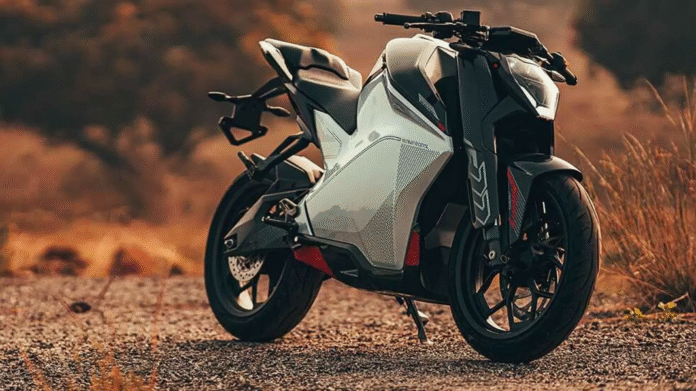
Bangalore moves fast. Not just in terms of traffic, though that is a whole other conversation, but in terms of picking up new things. And electric bikes are one of those things the city grabbed onto early. Go to any main road in the city today and you will spot them everywhere. Outside offices, parked at metro stations, weaving through signal queues. It was not like this even two years back.

So what changed? And why does it matter for the rest of India? Let us get into it.

Bangalore’s Electric Bike Numbers on Vahan Have Been Climbing Every Single Month

Karnataka has been sitting in the top three states for electric two wheeler registrations back-to-back for two years. Most of that volume is coming from Bangalore.

Check any recent month on Vahan, and Bangalore shows up in the top five cities in the country. Not once in a while, regularly. Why does Bangalore keep appearing in these numbers?

A few straightforward reasons:

  • Most people in Bangalore travel 15 to 25 km one way to work. That distance works fine on a single charge for most electric bikes being sold right now
  • A large part of the city’s workforce gets a fixed monthly salary, so EMI-based purchases are easier to plan
  • Petrol crossed ₹100 a litre here and has not come back down. That stings every time you fill up

Put these together, and the city just happens to be a good fit for electric bikes. The commute works, the income structure works, and the fuel pain is real enough that people are actually looking for alternatives.

Bangalore Traffic and Fuel Costs Have Made the Math Very Simple

Anyone who has driven in Bangalore knows what the traffic is like. Long stretches of barely moving, braking, moving two feet, braking again. That kind of riding burns petrol fast, much faster than riding on an open road.

Running cost on an electric bike is roughly ₹0.15 to ₹0.20 per km. On a petrol bike in the same city traffic it is around ₹2 to ₹2.50 per km. Ride 20 km each way daily and you are looking at savings somewhere between ₹14,000 to ₹16,000 over a year.

For someone earning a fixed salary every month that is real money.

There is a riding comfort angle too. Electric bikes do not need gear changes. They move off cleanly every time a signal turns green. In a city where you are stopping and starting at every junction, that actually matters. People who have made the switch mostly say they do not think about going back.

Tech Park Employees Were Early Adopters and They Brought Others In

Whitefield, Electronic City, Outer Ring Road, these areas have become some of the strongest electric bike markets in the city. The workforce in these pockets earns well, reads up before buying anything, and tends to live in apartment buildings where charging is becoming more available.

Several large tech parks now have EV charging in their parking areas. What that has quietly done:

  • People charging at their office campus pay almost nothing for the daily commute, close to zero fuel cost
  • That experience gets talked about at lunch. Word of mouth in office circles has moved more units than most ads have
  • Buyers who started with entry-level models two years back are now upgrading to better-range ones: they are not returning to petrol

That upgrade behaviour is worth noting. It means first-time electric bike buyers in Bangalore are satisfied enough to stay with electric and spend more on their next bike. Markets that retain buyers grow differently from markets that just attract them once.

Charging in Bangalore is No Longer a Real Blocker for Most Buyers

A year or two ago, the most common thing people said when asked why they had not bought an electric bike in Bangalore was, what if I need to charge and there is nowhere to go? That concern has not completely gone away, but it has reduced significantly in Bangalore.

BESCOM has added public charging points across the city. Private charging networks have set up stations at malls, metro station parking areas, fuel pumps, and inside apartment complexes.

  • Orion Mall, Phoenix Marketcity, Forum – most major malls in the city now have EV charging
  • Metro stations on both lines have charging points in their parking
  • Neighbourhoods like Koramangala, HSR, Indiranagar, and Whitefield have seen the most apartment-level charging installations

For someone who lives and works within Bangalore, charging has become a routine thing rather than a logistical problem. That shift in how buyers perceive it has directly helped sales.

What Bangalore Is Doing, Other Cities Are Starting to Copy

Pune, Hyderabad, Chennai: city planners and EV policy teams in these places have been looking at Bangalore’s rollout as a reference. The charging network model, the corporate campus partnerships, the dealership spread into areas beyond the city centre, all these have been cited in multiple state-level EV roadmap discussions.

That kind of cross-city influence is a strong signal. It means Bangalore’s electric bike growth did not happen randomly. There was enough structure to it that others see it as repeatable.

What All of This Points To

Bangalore is not going back. Electric bikes here have moved well past the phase where only tech enthusiasts were buying them. Regular commuters, delivery workers, homemakers doing short errands, the buyer base has widened a lot.

For India’s broader EV ecosystem, this matters because Bangalore gives other cities a working example to point to. Not a government projection or an industry forecast, an actual city where the shift has happened and where people are living with it every day and not complaining.

The rest of India is at various stages of the same journey. Bangalore just got there first.

Gangaur Festival: Significance, Rituals, and the Stories That Shape It

0

There are some festivals that dazzle with grandeur, and then there are those that quietly settle into the soul, Gangaur belongs to the latter. It is not just seen; it is felt. It arrives softly in Rajasthan just after Holi, when the colours begin to fade and the air carries a gentle warmth of spring. In that subtle transition of seasons, Gangaur unfolds, not as a single celebration, but as a lived experience of devotion, memory, and timeless grace.

The Significance of Gangaur

At its heart, Gangaur is dedicated to Goddess Gauri and Lord Shiv, whose union is seen as the most complete expression of companionship. But Gangaur is not merely about divine worship—it is about the deeper idea of balance in life.

Gauri represents nurturing strength, fertility, and devotion, while Shiva embodies stillness, detachment, and cosmic energy. Together, they form a harmony that reflects how life itself must be lived—with patience, understanding, and mutual respect. This is why Gangaur is celebrated not just for marital happiness, but for emotional strength, inner resilience, and the ability to sustain relationships with grace.

For married women, it is a prayer for the well-being and longevity of their husbands. For unmarried girls, it becomes a quiet hope for a partner who mirrors the depth and integrity of Shiva. Yet beyond these meanings, Gangaur speaks to something universal—it is about connection, continuity, and the beauty of faith carried through generations.

The Story of Gauri’s Return: A Daughter Comes Home

One of the most touching legends associated with Gangaur is the belief that during this time, Goddess Parvati returns to her maternal home.
She is welcomed not as a distant deity, but as a beloved daughter. This idea carries deep emotional resonance in Indian culture, especially in Rajasthan, where a woman’s bond with her maika is filled with tenderness and nostalgia. For a few days, Gauri lives among her people, surrounded by affection, care, and celebration.
And then comes the moment of departure.
Lord Shiva arrives to take her back, symbolising the return to her marital home. This farewell is not just ritualistic—it is deeply emotional. It reflects the delicate reality of a woman’s life, where love exists in both homes, yet she must constantly move between them. The final immersion of Gauri’s idol carries this emotion of ‘vidai—a goodbye that is both beautiful and bittersweet.

The Tapasya of Parvati: Devotion as Strength

Another powerful legend speaks of Parvati’s unwavering determination.
It is believed that she performed intense penance to attain Shiva as her husband. Her devotion was not passive; it was a conscious act of strength and faith. Through her tapasya, she proved that love and commitment require patience, courage, and inner clarity.
This story gives Gangaur a deeper philosophical meaning. It reminds us that devotion is not weakness—it is resilience. It is the ability to remain steadfast even in uncertainty, and to shape one’s destiny through belief and effort.

Faith That Sustains Life: Stories of Hope and Abundance

Folk traditions across Rajasthan also speak of times when women, facing drought or hardship, prayed to Gauri with unwavering faith. It is believed that their devotion brought rain, prosperity, and renewal to the land.
In these stories, Gauri becomes more than a symbol of marital bliss—she becomes a देवी of life itself, one who listens, nurtures, and restores balance. Gangaur, therefore, also becomes a celebration of nature’s cycles—of fertility, growth, and the promise that after every hardship, life finds a way to bloom again.

The Rituals of Worship: Where Devotion Becomes Daily Life

Gangaur is not confined to a single day; it is experienced over nearly sixteen days.
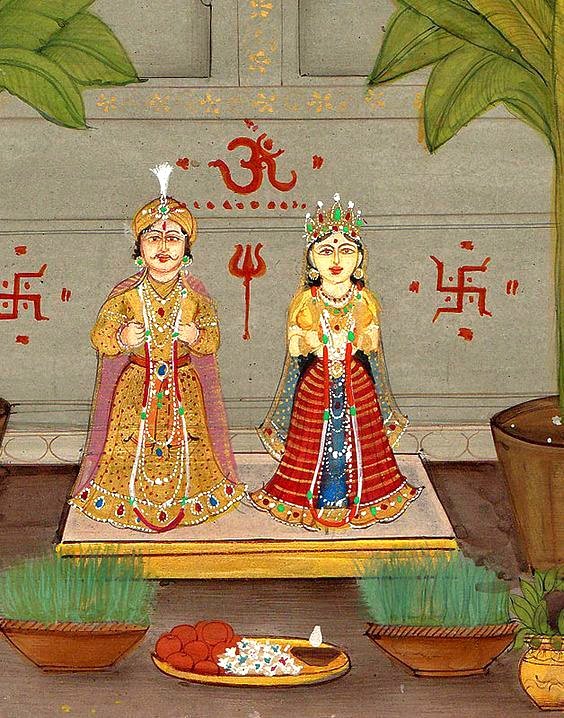
The rituals begin just after Holi, as women sow wheat or barley seeds in earthen pots. These seeds, nurtured daily, grow into green Jawara—symbolising life, prosperity, and renewal. It is a quiet yet powerful act, reflecting how care and patience lead to growth.

Each morning, women perform the pooja of Isar and Gauri with flowers, water, turmeric, vermilion, kumkum, mehendi and kajal. Fasting becomes a part of the discipline, but it is observed with calm devotion rather than rigidity. The listening of the Gangaur vrat katha adds meaning to the rituals, connecting each act to the stories of the divine.

Gauri is adorned like a bride, reflecting beauty, dignity, and completeness. In this adornment, women often see their own reflections—not just as individuals, but as carriers of tradition and faith.

Songs That Carry Generations

No description of Gangaur is complete without its geet. These traditional songs are not written in books; they live in memory, passed from one generation to another.
Sung in groups, they speak of love, longing, and devotion—of Gauri waiting, of Shiva arriving, and of the emotional rhythms of life. There is a quiet intimacy in these gatherings, where women come together not just to sing, but to share stories, laughter, and belonging.
In these moments, Gangaur becomes more than a ritual—it becomes a shared cultural experience. Lines like “Gor Gor Gomti, Isar puje Parvati…” may sound simple, but they carry generations of emotion within them.

A Celebration in Colour and Grace

As the festival progresses, it begins to reflect in the outer world as well. In cities like Jaipur, Udaipur, and Jodhpur, the streets come alive with processions, music, and colour.
Women dressed in traditional poshaks, vibrant lehengas and odhnis, adorned with jewellery and mehendi and beautiful Shringar, create a visual celebration that is both elegant and rooted. The final processions, where idols of Gauri are carried with devotion and joy, bring the community together in a shared moment of celebration.

And yet, as the idols and the jawara that is grown is immersed in water, there is a quiet stillness—a reminder that even the most beautiful moments must gently come to an end.

The Taste of Tradition

Gangaur is also felt through its flavours. The sweetness of Ghewar becomes symbolic of the festival itself. Often sent from a woman’s maternal home, it carries with it love, memory, and a sense of belonging that transcends distance. Sweets like Malpua, kheer and Gune are also made.

Gangaur~ more than a festival

For Rajasthan, Gangaur is not just a festival—it is a reflection of its soul. It carries within it stories of love, strength, devotion and faith, woven together with the rhythms of everyday life.
And for anyone encountering it for the first time, Gangaur offers something rare—a glimpse into a world where celebration is not just about festivity, but about feeling. Where every ritual has meaning, every song has memory, and every prayer carries the quiet beauty of belief.

Reviving Prambanan: India–Indonesia Collaboration to Bring 9th-century Heritage Back to Life

0

In a significant step towards cultural diplomacy, India and Indonesia have come together to restore one of Southeast Asia’s most iconic heritage sites—the Prambanan Temple, a 9th-century temple complex that stands as a testament to shared civilizational roots.

Located in the Special Region of Yogyakarta in Java, Prambanan is not just a single monument but part of a vast cultural landscape that includes other historic temples like Sewu and Plaosan. This interconnected heritage underscores centuries-old cultural and religious exchanges between India and Indonesia, particularly through the spread of Hinduism and Buddhism across Southeast Asia.

A Shared Heritage Beyond Borders

Built in the 9th century, Prambanan is the largest Hindu temple complex in Indonesia and reflects strong architectural and cultural influences from the Indian subcontinent. Over time, natural disasters such as earthquakes and volcanic activity, along with historical decline, led to the partial collapse and fragmentation of the site.

Its restoration, therefore, is not just about rebuilding structures—it is about reviving a shared historical narrative that connects two nations across geography and time.

How the Restoration Will Be Done

The project brings in expertise from the Archaeological Survey of India, which is collaborating closely with Indonesian authorities. One of the key techniques being used is anastylosis—a meticulous process where original stones from the site are carefully identified, catalogued, and reassembled in their original positions.

This method ensures that the authenticity of the monument is preserved while maintaining structural stability. However, the process is far from simple. The temple complex contains thousands of scattered stone blocks, making the task of matching and reconstructing them both time-consuming and highly precise.

In a modern twist, Indonesia has also expressed openness to using digital tools and artificial intelligence to assist in identifying and reconstructing temple components—blending ancient techniques with contemporary technology.

More Than Restoration: A Diplomatic Statement

This collaboration goes beyond archaeology. It reflects a broader effort to strengthen India–Indonesia cultural and diplomatic ties. By jointly preserving heritage, both nations are reinforcing a shared identity rooted in history, religion, and art.

Importantly, the focus is not limited to restoring individual structures. As Indonesian officials have emphasized, conservation efforts aim to protect the entire cultural ecosystem surrounding Prambanan, ensuring that its historical context remains intact.

Conclusion

The restoration of Prambanan is more than a conservation project—it is a symbol of how history can unite nations in the present. As India and Indonesia work together to preserve this 9th-century marvel, they are not just rebuilding a temple, but reaffirming a shared civilizational legacy that continues to inspire across centuries.

Can Iran Shut Down the Global Internet? Understanding the Real Risk

0

Amid escalating tensions in the Middle East, a striking question has surfaced across media and social platforms: Can Iran shut down the global internet?

While the concern reflects genuine anxiety, the reality is more nuanced—and far less absolute.

Iran has already demonstrated its ability to severely restrict internet access within its own borders. By controlling key gateways, authorities can reduce connectivity to near zero, effectively isolating millions of users from the global web. This has been observed during periods of unrest and conflict, where communication with the outside world becomes extremely limited.

However, the idea that the Iran could shut down the global internet is factually incorrect. The internet is a decentralized system—a vast network of networks spread across continents. No single nation has the authority or capability to switch it off entirely.

That said, the concern is not entirely unfounded. The region around the Strait of Hormuz plays a strategically important role, not just for oil trade but also for global connectivity. While most major undersea internet cables do not pass directly through the strait, several critical routes run through nearby waters in the Persian Gulf and Arabian Sea. These cables carry a significant portion of global data traffic.

In the event of military escalation, there is a risk of regional disruption—whether through accidental damage, targeted attacks, or broader instability. Such incidents would not shut down the internet worldwide, but they could slow down connectivity, disrupt services, and affect communication across multiple countries.

The real issue, therefore, is not a global blackout, but growing vulnerability. Modern conflicts increasingly extend into cyberspace and infrastructure, where even limited disruptions can have widespread consequences.

In conclusion, Iran cannot shut down the global internet. But the situation highlights a deeper reality: in an interconnected world, even regional tensions can ripple across global systems, making digital stability an increasingly critical concern.

0

The United States has crossed a historic financial threshold, with its national debt surpassing $39 trillion. While the figure itself is staggering, what truly matters is what lies behind it—and what it means for both the American economy and the rest of the world.

The national debt is essentially the total amount the U.S. government owes to lenders, including domestic investors, institutions, and foreign governments. Over time, this debt has grown due to continuous government spending that exceeds revenue collection. In recent years, the pace of this growth has accelerated, driven by economic stimulus measures, rising welfare commitments, and increased global responsibilities.

What Is Driving the Surge?

The rise in U.S. debt is not due to a single factor but a combination of long-term structural issues and recent economic pressures. The government consistently runs fiscal deficits, meaning it spends more than it earns. At the same time, large-scale expenditures on healthcare, pensions, and defense continue to expand.

A few key contributors include:
•Persistent budget deficits year after year
•High spending on Social Security and Medicare
•Increasing defense and geopolitical expenditures
•Growing interest payments on existing debt

As interest rates rise globally, the cost of borrowing has also increased, making it more expensive for the government to manage its existing obligations.

Why the World Is Watching

The U.S. debt situation is not confined within its borders. Because the U.S. dollar functions as the world’s primary reserve currency, any instability in its financial system can have global consequences.

Countries around the world invest heavily in U.S. Treasury bonds, considering them safe assets. This means that fluctuations in U.S. debt levels, interest rates, or economic confidence can directly impact global markets, trade, and investment flows. For emerging economies, including India, such shifts can influence inflation, currency value, and capital movement.

Crisis or Manageable Challenge?

At present, the situation is not classified as an immediate crisis. The United States still enjoys strong investor confidence and has a large, resilient economy. Its ability to borrow remains intact, largely due to the trust placed in its financial institutions and the dominance of the dollar.

However, concerns lie in the long-term trajectory. If debt continues to grow faster than the economy, it may gradually reduce fiscal flexibility. Rising interest payments could consume a larger share of government spending, leaving less room for development, welfare, or emergency responses.

The Bigger Picture

The growing U.S. national debt reflects a broader challenge faced by modern economies—balancing growth, welfare, and fiscal discipline. While the current system continues to function, the long-term sustainability of such high borrowing remains uncertain.

Ultimately, the issue is not just about how large the debt has become, but whether it can be managed without triggering economic instability. As the world watches closely, one question remains central: how long can this trajectory continue before tough financial decisions become unavoidable?

A Possible Nuclear Emergency: How Prepared Is the World?

0

WHO Prepares for a Possible Nuclear Emergency Amid Escalating Middle East Crisis

As tensions in the Middle East continue to rise, global concern is no longer limited to conventional warfare. In a significant development, the World Health Organization has begun preparing for a possible nuclear or radiological emergency, reflecting the gravity of the ongoing conflict and its potential consequences.

A Region Under Intensifying Strain

The current crisis, involving Iran, Israel, and their allies, has led to widespread destruction, civilian casualties, and growing instability across the region. Reports of strikes near sensitive nuclear sites—particularly around facilities such as Bushehr—have heightened fears of a radiological accident or escalation.

While no nuclear incident has occurred so far, even the risk of damage to nuclear infrastructure is enough to trigger global alarm. Experts warn that any such event—intentional or accidental—could have consequences far beyond national borders.

WHO’s Role: Preparing for Health Emergencies, Not War

It is important to clarify that the WHO is not preparing for war itself, but for the public health consequences that could arise if the situation worsens.

According to WHO officials, including regional leadership overseeing the Eastern Mediterranean, the organization is planning for a “worst-case scenario”—one that may involve:
●Radiation exposure due to damage to nuclear facilities
●Large-scale medical emergencies
●Long-term environmental and health impacts

This form of preparedness falls under WHO’s mandate to respond to radiation emergencies, which include any event involving the release of radioactive material, whether from conflict or accidents.

Strengthening Global Preparedness

To ensure readiness, the WHO is actively:

●Reviewing and updating emergency response protocols
●Coordinating with countries to strengthen health system preparedness
●Training medical professionals to manage radiation-related illnesses
●Working through global networks like REMPAN (Radiation Emergency Medical Preparedness and Assistance Network)

These efforts are precautionary in nature, aimed at minimizing harm if such a scenario were to unfold.

Why This Matters

A nuclear or radiological emergency—unlike conventional warfare—can have long-lasting and widespread consequences, including:
•Acute radiation sickness and long-term cancers
•Contamination of food, water, and soil
•Collapse of already strained healthcare systems
•Cross-border and even global environmental impact

Past incidents such as the Chernobyl disaster and the atomic bombings of Hiroshima and Nagasaki demonstrate how the effects of radiation can persist for decades.

A Precaution, Not a Prediction

WHO has emphasized that no radioactive leak or nuclear event has been reported in the current conflict. Its actions should be seen as preventive preparedness, not an indication that a nuclear confrontation is imminent.
However, the very need for such planning highlights how fragile the situation has become.

Conclusion

The evolving Middle East crisis is a stark reminder that modern conflicts carry risks far beyond the battlefield. By preparing for a potential nuclear or radiological emergency, the World Health Organization is fulfilling its critical role: safeguarding global health in even the most extreme scenarios.

While diplomacy remains the only path to preventing catastrophe, WHO’s readiness underscores an urgent reality—in today’s interconnected world, the consequences of conflict are shared by all of humanity.

From Borla to Bichhiya: The Head-to-Toe Jewellery of Rajasthan

0

Traditional Ornaments that Define Rajasthani Elegance

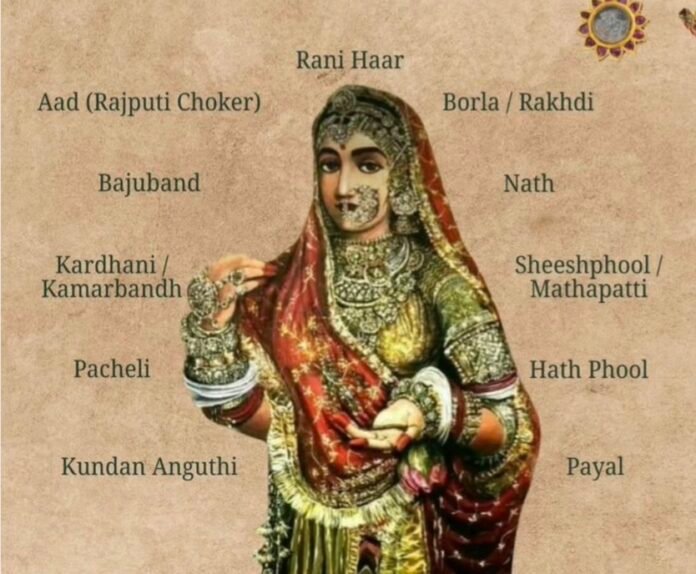
One of the most distinctive aspects of Rajasthani jewellery is its remarkable variety. Traditional attire in Mewar often includes ornaments for nearly every part of the body, creating a complete and harmonious style of adornment.

Grace on the Forehead

Adornment traditionally begins with head jewellery. The Borla, a spherical ornament worn along the hairline, is one of the most recognisable symbols of Rajasthani bridal beauty. Alongside it are ornaments such as Rakhdi, Maang Tikka, Memad, Sheeshphool and Mathapatti, which decorate the centre parting and forehead.

The Beauty of Ear and Nose Ornaments

Ear jewellery is equally diverse. Traditional pieces such as Karnphool, Jhumka, Bali, Chandbali, and Kundal have long been worn across Rajasthan.The Nath and Nathani, a decorative nose ring, holds special significance in bridal attire and is often worn during weddings and important ceremonies.

Necklaces that Highlight Royal Style

Neck ornaments form the centrepiece of traditional jewellery. The Aad, a choker-style necklace associated with Rajput heritage, is among the most distinctive pieces of jewellery in Rajasthan.Other popular necklaces include Hansli, Timaniya, Panchlada and Rani Haar, many of which feature intricate gemstone work.

Completing the Look

The arms and wrists are adorned with ornaments such as Bajuband, Kangan, Chudi, Paunchi, and Gokhru, while the hands are decorated with Hathphool and rings. At the feet, Payal (anklets) and Bichhiya (toe rings) complete the traditional adornment.

Jewellery designer Akshara Singh notes that these ornaments continue to influence bridal fashion even today.

“Traditional Rajasthani jewellery has a timeless charm. Even today, brides love wearing pieces like borla, aad and rani haar because they beautifully combine heritage with elegance and continue to define the identity of Rajasthani bridal attire.”

Together, these ornaments create a distinctive visual identity for women in Rajasthan, especially during weddings and festive celebrations, where tradition and elegance come together in every detail of adornment.

Labubu Takes Hollywood: Viral Monster Dolls Get Live-Action/CGI Movie Directed by Paddington & Wonka Helmer Paul King

0

PC( Instagram, Movie web)

Paris/New Delhi, March 20, 2026 The wildly popular Labubu monster dolls, which have turned Chinese toy giant Pop Mart into a near-$40 billion powerhouse, are leaping from blind boxes to the big screen. Pop Mart and Sony Pictures jointly announced on Wednesday that a live-action/CGI feature film starring the mischievous forest elf characters is now in early development.

Directed by acclaimed filmmaker Paul King-the creative force behind the beloved family hits Paddington (2014 & 2017) and Wonka (2023)-the project aims to transform Labubu and the wider The Monsters universe into a major global entertainment franchise. King will also co-produce and co-write the screenplay alongside Steven Levenson (Dear Evan Hansen, Tick, Tick… Boom!). Original creator Kasing Lung will serve as executive producer, ensuring the film stays true to the Nordic mythology-inspired fantasy world he first introduced in his 2010 book series. The announcement came during a high-profile global exhibition tour celebrating the 10th anniversary of Labubu’s creation, held in Paris. No release date or plot details have been revealed yet.

From Blind-Box Phenomenon to Cultural Juggernaut Labubu, a cheeky, pointy-eared forest elf with sharp teeth and an endearing yet slightly devilish charm, is the flagship character of Kassing Lung’s The Monsters collection. What began as an artistic passion project exploded into a global craze after Pop Mart adopted the designs for its signature blind-box format-where buyers purchase sealed packages and discover which rare or secret variant, they’ve received only after opening. The unpredictability, combined with Labubu’s quirky design, sparked massive collector frenzy. High-profile fueling the hype. The dolls have become a must-have accessory and status symbol among Gen Z and Millennial audiences worldwide.

Labubu Takes Hollywood: Viral Monster Dolls Get Live-Action/CGI Movie Directed by Paddington & Wonka Helmer Paul King

Fueled by Labubu mania, Pop Mart’s valuation has soared past long-established rivals like Mattel (Barbie) and Hasbro, reaching nearly $40 billion (£29.9bn). The company has already expanded into experiential retail and opened its first theme park in Beijing. A feature film marks the logical-and ambitious-next step in building a full-fledged media and entertainment IP.

A “Seamless Journey” for Fans Experts see the movie as a strategic masterstroke. Marketing lecturer Kim Dayoung from the National University of Singapore told the BBC: “For Gen Z and Millennial consumers, content and commerce are closely intertwined-watching a story, connecting with a character, and then buying into that world is a seamless journey. The potential is very high.”

Singapore Management University’s Kapil Tuli added that a successful film could significantly boost Pop that a successful film could significantly boost Pop Mart’s growth and reassure investors, given Labubu’s “loyal and fanatic customer base.” With Paul King’s proven track record of delivering heartwarming, visually inventive family films, and Sony Pictures’ global distribution muscle behind it, the Labubu movie has the ingredients to become the next big character-driven franchise-much like Paddington, Sonic the Hedgehog, or The Super Mario Bros. Movie. For now, fans can only speculate about what kind of adventures await the toothy little elf on the big screen. One thing is clear: Labubu is no longer just a toy-it’s on its way to becoming a household name.

From Cricket Pitch to Cockpit: Glenn Phillips’ Viral Plane Landing Stuns Fans

0

PC(Facebook)

New Zealand’s explosive all-rounder Glenn Phillips has once again proven why he’s called a true “all-rounder”-this time, not on the cricket field, but in the skies. Fresh off the high of the T20 World Cup, the 29-year-old star shared a thrilling video on Instagram of himself successfully landing a light aircraft (Cessna 172) at Auckland’s Ardmore Aerodrome, leaving fans in awe and the clip going viral across social media.

In the footage posted on March 17, Phillips can be seen handling the controls with professional precision, executing a smooth and confident landing that showcases his skills as a certified pilot. He holds a Private Pilot License (PPL), which he earned in 2025 during a period sidelined by injury. Rather than resting, Phillips channeled his energy into intensive flight training alongside gym sessions, turning a challenging phase into an opportunity for personal growth.

Phillips has long been open about his deep passion for aviation. In interviews, he revealed that if money hadn’t been a factor in his youth, he might have pursued piloting full-time instead of cricket. “It is my passion,” he said. “If I had all the money in the world from childhood, honestly, I would probably have become a pilot. I love being up in the air.” He added that, ideally, he’d live in the mountains with no need to work-but if he had to choose a career outside cricket, flying would be his top pick.

The multi-talented Kiwi is now progressing toward a commercial pilot’s license, recently sharing glimpses of interactions with students and instructors at the Ardmore flying school. Fans have flooded social media with praise, dubbing him a “superstar” and joking about “Philips Airlines” taking off.

Beyond the skies, Phillips remains a key figure in cricket. He will represent Gujarat Titans in the IPL 2026 season after being retained by the franchise for *2 crore. Having previously played for Sunrisers Hyderabad in 2023, his explosive batting, acrobatic fielding, handy bowling, and even occasional wicketkeeping make him a valuable asset-qualities that clearly extend to his life off the field.

From diving catches to perfect landings, Glenn Phillips continues to defy expectations, proving that his talents know no bounds-whether chasing sixes or soaring through the clouds.