Home Blog Page 588

Money Laundering Act

0

The Prevention of Money Laundering Act, 2002 is a law made by the Indian government under the NDA to stop money laundering and seize properties gained from it. It became active on July 1, 2005. This law makes banks, financial firms, and middlemen responsible for confirming who their clients are, keeping records, and giving information to the Financial Intelligence Unit – India (FIU-IND).

The Prevention of Money Laundering Act was changed in 2005, 2009, and 2012. But in a decision on November 24, 2017, the Supreme Court removed a part of the law that made it really hard for someone sentenced to more than three years in jail to get bail if the government’s lawyer disagreed. This part of the law said that no one could get bail for a crime under the Act unless the government’s lawyer had a chance to oppose it. And if the lawyer did oppose bail, the court had to be convinced that the person was innocent and wouldn’t commit any more crimes while out on bail. The Supreme Court said this part of the law goes against certain rights in the Indian Constitution.

Objectives

The main goals of the Prevention of Money Laundering Act (PMLA) in India are:

1. Stop and manage money laundering.

2. Take away and hold onto the assets acquired from money laundering.

3. Handle any other related problems regarding money laundering in India.

Salient features

Punishment for money-laundering

According to the law, anyone caught doing money laundering can be put in jail for a tough time, ranging from three to seven years. If the money involved comes from certain serious crimes like those listed in the Narcotic Drugs and Psychotropic Substance Act, 1985, the punishment can be even longer, up to 10 years instead of 7.

Powers of attachment of tainted property

The Director or a higher-ranking officer with the Director’s approval can temporarily seize property suspected to be gained from criminal activities for 180 days. This decision needs to be confirmed by a separate Adjudicating Authority.

Adjudicating Authority

The Adjudicating Authority, appointed by the central government, decides if any seized property is linked to money laundering under the PMLA. It isn’t bound by the usual legal procedures but follows principles of fairness. It can set its own rules for how it operates.

Presumption in inter-connected transactions

If there are multiple transactions connected to each other, and at least one of them is proven to be involved in money laundering, then the other transactions in the group are also considered part of the money laundering process for legal decisions like adjudication or confiscation.

Burden of proof

If someone is accused of money laundering, they have to show that the money they’re accused of laundering is actually legal and earned through legitimate means.

Appellate Tribunal

The Appellate Tribunal, appointed by the Government of India, can hear appeals against decisions made by the Adjudicating Authority and other bodies under the Act. If someone disagrees with the tribunal’s decision, they can appeal to the High Court for that area and ultimately to the Supreme Court.

Special Court

Section 43 of the Prevention of Money Laundering Act, 2002 states that the Central Government, after consulting with the Chief Justice of the High Court, can designate one or more Courts of Session as Special Courts to try offences punishable under Section 4 of the Act through a notification.

FIU-IND

The Financial Intelligence Unit – India (FIU-IND) was established by the Government of India on November 18, 2004, as the primary agency tasked with receiving, analyzing, and sharing information about suspicious financial transactions. FIU-IND also collaborates with national and international intelligence, investigation, and enforcement agencies to combat money laundering and related crimes. It operates independently and reports directly to the Economic Intelligence Council, chaired by the Finance Minister.

Criticism

As of July 2022, out of 5,422 cases filed under the Prevention of Money Laundering Act (PMLA) since its enactment 17 years ago, only 23 individuals have been convicted, resulting in a conviction rate of less than 0.5%. Lawyers argue that the low conviction rate and the targeting of certain individuals in recent years suggest that the PMLA is often used against political opponents or dissenters. They claim that the legal process itself becomes a form of punishment, as accused individuals may not even be aware of the specific allegations against them.

When Is Easter 2024? Find Out When Easter Sunday Is This Year

0
Easter 2024

As we bid farewell to winter and eagerly welcome the blossoms of spring, one question that often arises is, “When is Easter this year?” Unlike many other holidays with fixed dates, Easter’s arrival varies annually, keeping us on our toes. In 2024, Easter falls on Sunday, March 31st.

But why does Easter dance around the calendar each year? The date of Easter is determined by a unique set of astronomical and religious factors. Essentially, Easter Sunday is set as the first Sunday after the first full moon following the vernal equinox, marking the onset of spring in the northern hemisphere. This intricate calculation involves the lunar calendar, the vernal equinox, and the Gregorian calendar.

To unravel the mystery of Easter’s date in 2024, we start with Ash Wednesday, which initiates the 40 days of Lent. Easter Sunday always lands six and a half weeks after Ash Wednesday. Hence, by tracking Ash Wednesday, we can pinpoint Easter Sunday.

In 2024, the vernal equinox graces us on March 19th. Following this, the first full moon, known as the Paschal Full Moon, occurs on March 25th, making Easter Sunday on March 31st.

While Easter Sunday steals the spotlight, the journey leading up to it is equally significant. The Easter season commences with Ash Wednesday, which fell on February 14th in 2024—coinciding with Valentine’s Day. On Ash Wednesday, church attendees receive ashes on their foreheads as a symbol of repentance and mortality, kicking off the solemn period of Lent, characterized by fasting, prayer, and reflection.

Holy Week, the pinnacle of the Easter season, begins with Palm Sunday on March 24th, commemorating Jesus’ triumphant entry into Jerusalem. Subsequent days include Holy Wednesday, Holy Thursday, and Good Friday, each marking pivotal events leading to the crucifixion and resurrection of Jesus Christ.

Despite common misconceptions, Easter doesn’t consistently occur on the third Sunday in April. It can fall as early as March or as late as April, dictated by the lunar and solar calendars rather than fixed calendrical patterns.

As we anticipate the arrival of Easter in 2024, let’s cherish the significance of each preceding event, from Ash Wednesday to the triumphant Easter Sunday, embracing the spiritual journey it entails.

Nepal Declares this city as it’s Tourism Capital

0

Nepal!! When we hear this word, what comes to mind, Mount Everest? Well, let me tell you Nepal is not just about Mt. Everest it’s much more than that.

Nepal is known for its stunning landscapes, including the Himalayas, and cultural heritage, including Hindu and Buddhist temples and traditions. Trekking in the Himalayas, exploring ancient cities like Bhaktapur, and visiting UNESCO World Heritage Sites like Lumbini (birthplace of Buddha) are popular attractions.

You all might be wondering about Nepal’s tourism capital, let’s not make you wait for more time. It’s none other than ‘Pokhara’. The announcement was made at a ceremony held at the Barahi Ghat on the shores of Phewa Lake. Pokhara has always been the heart of Nepal’s tourism scene, thanks to its stunning landscapes and thrilling adventures. Sitting at 827 meters (2,713 feet) above sea level, its high elevation only adds to its charm. Drawing visitors from all over the world with its jaw-dropping beauty, Pokhara remains a top choice for travelers seeking unforgettable experiences.

Besides its stunning scenery, Pokhara is famous for adventure seekers. Here, you can try hiking, white-water rafting, bungee jumping, and paragliding, among other thrilling activities. Plus, it’s the kick-off point for the renowned Annapurna Circuit, a top choice for hikers worldwide, attracting thousands every year.

Here are some of the best places to visit in Pokhara:

1. Phewa Lake: Enjoy boating with the stunning backdrop of the Annapurna Range reflected on the lake’s surface.

2. Sarangkot: Watch mesmerizing sunrise or sunset views over the Himalayas, including Machhapuchhre (Fishtail) and Annapurna peaks.

3. World Peace Pagoda (Shanti Stupa): Experience tranquility and panoramic views of Pokhara Valley and the surrounding mountains.

4. Gupteshwor Cave: Explore this mystical cave with a sacred waterfall, offering a unique underground experience.

5. Devi’s Fall (Patale Chhango): Witness the powerful cascade of water and explore the intriguing natural formations.

6. Bindhyabasini Temple: Visit this historic Hindu temple dedicated to Goddess Bhagwati, offering cultural insights and scenic views.

7. International Mountain Museum: Discover the rich history and culture of the Himalayas, along with mountaineering exhibits and artifacts.

8. Pokhara Old Bazaar: Immerse yourself in the vibrant local atmosphere and shop for souvenirs and handicrafts.

9. Mahendra Cave: Delve into the depths of this limestone cave and marvel at its fascinating rock formations.

10. Tal Barahi Temple: Take a boat ride to this island temple dedicated to Goddess.

Activities Offered in Pokhara:

1. Trekking: Embark on the famous Annapurna Circuit or opt for shorter treks like the Poon Hill trek.

2. Paragliding: Soar above the city and Phewa Lake for breathtaking aerial views.

3. Boating: Rent a boat and paddle across the serene waters of Phewa Lake, with views of the surrounding mountains.

4. Cycling: Explore Pokhara and its outskirts on two wheels, with options for leisurely rides or more challenging trails.

5. Zip-lining: Experience an adrenaline rush as you zip across lush valleys and gorges.

6. Visit Temples and Caves: Explore cultural sites like the Bindhyabasini Temple and the mystical Gupteshwor Cave.

7. Waterfall Visits: Marvel at the beauty of cascading waterfalls like Devi’s Fall and the nearby Seti River gorge.

8. Shopping and Dining: Stroll through Lakeside Pokhara for souvenirs and delicious meals at lakeside restaurants.

9. Spa and Wellness: Relax and rejuvenate with a spa treatment or yoga session, taking advantage of Pokhara’s tranquil ambiance.

10. Explore Lakeside: Wander along Lakeside’s bustling streets, lined with shops, cafes, and bars, and soak in the laid-back atmosphere.

Good Friday 2024: Date, History, and Significance of the Holy Day

0
Good Friday 2024

Good Friday, observed on the Friday before Easter Sunday, holds profound significance in the Christian calendar. It is a day of solemn remembrance, marking the crucifixion and death of Jesus Christ. In 2024, Good Friday falls on March 29th, aligning with Easter Sunday on March 31st. This article delves into the date, history, and significance of this sacred day.

When is Good Friday 2024?

Good Friday, also known as Holy Friday or Easter Friday, varies each year due to its dependence on the lunar cycle. In 2024, it is observed on March 29th. This date symbolizes the end of Holy Week, a period of intense reflection and spiritual preparation leading up to Easter Sunday, which celebrates Jesus Christ’s resurrection.

History of Good Friday

According to the biblical narrative, Jesus Christ was arrested, tried, and sentenced to death by crucifixion under the Roman authorities led by Pontius Pilate. His crucifixion was a brutal form of execution, symbolizing the sacrifice Christians believe he made for humanity’s redemption. The events leading to his crucifixion, including the Last Supper and his betrayal by Judas Iscariot, are documented in the New Testament Gospels.

Observance and Traditions

Good Friday is a day of mourning and prayer for Christians worldwide. Many churches hold special services, including the Stations of the Cross, which reenact Jesus’ journey to Golgotha. Others engage in fasting, prayer, and meditation on the profound sacrifice of Jesus.

Throughout history and across cultures, various traditions have emerged to honor Good Friday. In some communities, hot cross buns are consumed, symbolizing the cross on which Jesus was crucified. Additionally, some Christians abstain from meat as a sign of penance and reflection.

Significance of Good Friday

The significance of Good Friday lies in its acknowledgment of Jesus Christ’s ultimate sacrifice. Christians believe that through his death, humanity’s sins were atoned for, opening the path to salvation and eternal life. It serves as a reminder of the depth of God’s love and the transformative power of redemption.

Cultural and Global Impact

Good Friday’s impact extends beyond religious observance. In many countries, it is recognized as a public holiday, allowing individuals to participate in religious services and spend time with loved ones. The day also influences cultural practices, with various nations incorporating unique customs and rituals into their observance of the holy day.

Summing Up

Good Friday stands as a cornerstone of the Christian faith, commemorating the crucifixion and death of Jesus Christ. It serves as a solemn reminder of the profound sacrifice made for humanity’s salvation and invites believers to reflect on the enduring significance of Jesus’ life and teachings. As Good Friday 2024 approaches, Christians worldwide will gather to honor this sacred day and reaffirm their faith in the redemptive power of Christ’s sacrifice.

How to Make Natural Holi Colours at Home

0
How to Make Natural Holi Colours at Home

Holi, the festival of colors, brings joy, laughter, and a vibrant splash of hues into our lives. As we gear up to celebrate this colorful extravaganza, it’s essential to ensure that the colors we use are safe for our skin and the environment. With concerns rising over the harmful effects of chemical-based colors, why not opt for natural alternatives this Holi? Here are some easy and quick methods to prepare chemical-free Holi colors with zero side effects, right in the comfort of your home.

Essence of Holi

Holi, the most colorful and zestful festival celebrated primarily by the Hindu community, is deeply rooted in tradition and symbolism. Originating from ancient practices of using bright flowers that bloomed during the spring season, the essence of Holi lies in its connection to nature and renewal. In regions like Mathura, Vrindavan, and Barsana, where the festival is celebrated with fervor, the air is filled with the aroma of floral colors and the spirit of joyous revelry.

Natural Palette

While synthetic colors may have become the norm in recent times, they come at a cost – both to our health and the environment. This Holi, let’s take a step back towards tradition and embrace the beauty of natural colors. Making your own Holi colors at home not only ensures safety but also adds a personal touch to your celebrations. Though it may seem daunting at first, the process is simple and requires minimal effort.

DIY Natural Holi Colours

  1. Yellow:
    • Dry Gulal: Mix turmeric powder with gram flour in a 1:2 ratio to create a vibrant yellow hue. This combination symbolizes energy, happiness, and the zest for life.
    • Wet Color: Crush yellow flowers like marigold or yellow chrysanthemums and mix them with water to obtain a bright yellow shade.
  2. Red:
    • Dry Gulal: Grate dried red hibiscus flowers or red sandalwood into a fine powder. Adding rice flour in equal quantity can enhance the color intensity.
    • Wet Color: Boil pomegranate peels in water to extract a rich red hue, perfect for adding a pop of color to your festivities.
  3. Green:
    • Dry Gulal: Use henna or Mehendi powder to create a lush green shade. Alternatively, mix spinach or neem leaves with water to achieve a vibrant green color.
    • Wet Color: Simply soak green leafy vegetables in water to infuse the liquid with a natural green pigment.
  4. Magenta:
    • Boil sliced beetroot in water and leave the mixture to soak overnight. For a deeper pink shade, dilute the mixture slightly to achieve the desired intensity.

Alternative Option

If preparing natural colors from scratch feels overwhelming, you can opt for food coloring available in the market. Mix the desired food colors with water to create vibrant wet colors for your Holi celebrations. Additionally, adding cornstarch to the mixture and allowing it to dry can yield fine powders suitable for dry Gulal.

Summing Up

This Holi, let’s embark on a journey back to our roots and celebrate the festival in harmony with nature. By opting for natural colors, we not only safeguard our health but also contribute to the preservation of our environment. So, gather your ingredients, unleash your creativity, and immerse yourself in the kaleidoscope of natural hues this Holi season. After all, the true spirit of Holi lies in spreading joy, love, and vibrant colors, naturally!

India’s First Automobile In-Plant Railway Siding

0

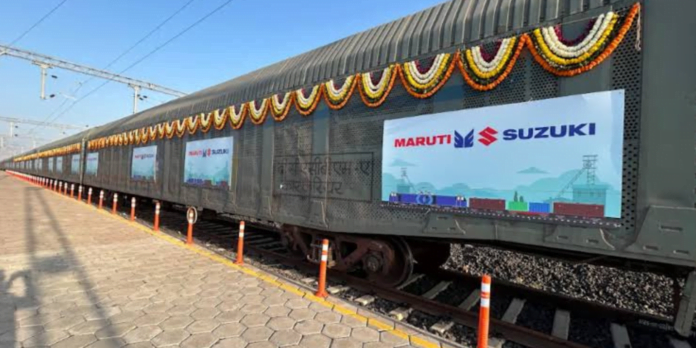
Prime Minister Narendra Modi has recently inaugurated India’s first automobile in-plant railway siding at the Suzuki Motor Gujarat (SMG) plant. This initiative seeks to enhance eco-friendliness in vehicle transportation by curbing carbon emissions.

Maruti Suzuki has stated that the in-plant railway siding will have the capacity to transport more than 300,000 cars annually to 15 destinations across India once it is fully operational. This marks the inaugural collaboration between Maruti Suzuki India and Gujarat Rail Infrastructure Development (G-RIDE).

During the inauguration of the railway siding, Hisashi Takeuchi, MD and CEO of Maruti Suzuki, expressed, “We are privileged to participate in the Prime Minister’s ambitious Gati Shakti program, aimed at enhancing logistical efficiencies. Today signifies a momentous achievement as we establish India’s inaugural automobile company with an in-plant railway siding facility.”

“As we prepare to double our production capacity from 2,000,000 units per annum to 4,000,000 units per annum by FY31, the dispatches of vehicles via railways will also witness a significant increase. This in-plant railway facility underscores our dedication to promoting sustainable mobility,” he further emphasized.

The Suzuki Motor Gujarat plant holds immense significance for the automaker. Recently acquired by Maruti Suzuki India from Suzuki Motor Corporation, Japan for Rs 12,841.1 crore, the facility boasts a substantial production capacity of 750,000 units. Additionally, a fourth assembly line, currently under construction and set to be operational by FY2026-27, represents a further investment of Rs 3,200 crore. Upon completion, this new assembly line will elevate the installed production capacity to one million units per annum.

Maruti has expanded its transportation methods by utilizing waterways to transport vehicles, alleviating strain on roadways and reducing logistics expenses. Furthermore, the automaker has leveraged railways to reach remote areas across the country. The introduction of the in-plant railway siding significantly enhances the convenience of the logistics infrastructure.

Meduru Holi 2024 in Andhra Pradesh

0
Meduru Holi

Mark your calendars for Monday, March 25th, 2024, as Andhra Pradesh gears up to paint the town in vibrant hues with the arrival of Meduru Holi.

Holi in Andhra Pradesh

In Andhra Pradesh, Holi is not just a festival; it’s an extravaganza of colors and traditions known as “Meduru Holi.” This celebration blends joyous revelry with unique customs that are deeply rooted in the region’s culture.

Holika Dahanam or Kama Dahanam

Before the colorful festivities of Holi commence, Andhra Pradesh observes Holika Dahanam or Kama Dahanam. Similar to Chhoti Holi in North India, this Hindu festival symbolizes the victory of good over evil. It’s a time for bonfires and theatrical performances that commemorate the burning of Kamadeva by Shiva.

Throwing Colors and Dancing to Songs

At the heart of Meduru Holi lies the playful exchange of colors. People of all ages come together, armed with vibrant powders and buckets of colored water. Laughter fills the air as they playfully drench each other, transforming streets into a kaleidoscope of colors.

A Unique Tradition in Santhekudluru

In the village of Santhekudluru in Kurnool district, a unique Holi tradition unfolds. Here, young men dress as women and visit the Rathi Manmadha temple to offer prayers and silk clothes. This ritual is believed to bring blessings and fulfill wishes.

Holi Events in Andhra Pradesh

Public celebrations kick off a day earlier on Holika Dahan (March 24th), where bonfires symbolize the burning of evil. On Dhulandi, people gather in open areas to throw colored powder and water at each other. Whether it’s in temples, public parks, or beaches, Holi is truly a community event in Andhra Pradesh.

A Celebration of Community

Beyond the colors and festivities, Meduru Holi is a time for communities to come together. Families gather for special meals, sharing sweets and delicacies associated with the occasion. The spirit of forgiveness and camaraderie takes center stage as people mend rifts and strengthen bonds.

Witnessing the Magic

If you find yourself in Andhra Pradesh during Holi, don’t miss the chance to experience Meduru Holi. Immerse yourself in the colorful chaos, the devotional music, and the joyous spirit that defines this unique celebration.

As the colors settle and the festivities wind down, Meduru Holi leaves behind vibrant memories and a renewed sense of community spirit in Andhra Pradesh.

Bharti – Shared Audio Visuals for Broadcast and Dissemination (PB-SHABD)

0

Union Minister of Information and Broadcasting, Shri Anurag Singh Thakur, introduced PB-SHABD, on 13th March, a news sharing service by Prasar Bharati, along with updated websites of DD News and Akashvani News, and an improved News on Air mobile app at an event in the National Media Centre, New Delhi.

During his speech, Shri Thakur hailed today as a significant milestone for India’s information and broadcasting sector. He emphasized Prasar Bharati’s extensive network for news collection and delivery across the nation in regional languages. Now, they aim to share this valuable content with other media outlets nationwide. The Minister announced that news organizations will receive a clean feed without the Doordarshan logo, featuring curated content from various regions and languages. This initiative will transform the news industry, particularly benefiting smaller organizations lacking widespread content networks. PB-SHABD will serve as a centralized news source for all such entities.

The SHABD service will be free for the first year and will offer news stories in all major Indian languages across fifty categories. Shri Thakur highlighted the significance of All India Radio (AIR) in the era of mobile connectivity, noting its continued relevance in providing accurate information on government schemes and policies. The revamped NewsOnAIR app will feature personalized news feeds, push notifications for breaking news, multimedia content integration, offline reading, live streaming, social media sharing, location-based news delivery, article bookmarking, and advanced search functionality.

Earlier, Secretary of the Ministry of Information and Broadcasting, Shri Sanjay Jaju, extended congratulations to the entire Prasar Bharti team for the launch of the SHABD pilot and the new website and app. He emphasized the portal’s potential to generate synergy and facilitate the dissemination of meaningful news content nationwide.

CEO of Prasar Bharti, Shri Gaurav Dwivedi, announced plans for Prasar Bharti to engage with media organizations and share audio, video, photo, and text-based information collected through its network.

The PB SHABD platform is crafted to deliver daily news feeds in video, audio, text, photo, and other formats to subscribers across the media landscape. Leveraging Prasar Bharati’s extensive network of reporters, correspondents, and stringers, the service promises to bring the latest news from various regions of the country.

These shared feeds can be utilized for tailored storytelling across diverse platforms. As an introductory offer, the services will be provided free of charge, offering significant support to smaller newspapers, TV channels, and digital portals.

The redesigned websites of DD News and Akashvani News, along with the updated News on Air app, promise users a seamless experience and enhanced engagement. Featuring user-friendly interfaces and contemporary design elements, these platforms ensure a smooth browsing experience. Users can delve into captivating news audios, participate in special programs, and tune in to daily and weekly broadcasts. With their structured layout and varied content, the revamped websites elevate the news consumption journey for users. Dedicated sections cover National, International, Education, Health, Business & Economy, Science & Tech, Sports, Environment, and Opinion.

All about Sangeet Natak Akademi Awards

0

The Sangeet Natak Akademi Award, also called the Akademi Puraskar, is a prestigious honour presented by India’s National Academy of Music, Dance & Drama. It’s the top recognition in India for those in the performing arts.

The Sangeet Natak Akademi Award was established in 1952 and is supported by the Sangeet Akademi. It recognizes excellence in the performing arts in India.In 2003, the award included Rs. 50,000, a certificate, a shawl, and a brass plaque. From 2009 onwards, the cash prize was raised to ₹1,00,000. These awards are given in music, dance, theatre, traditional arts, puppetry, and for outstanding contributions or scholarship in performing arts.

The award was created to protect and celebrate India’s rich cultural heritage, including its various music, dance, and theatre traditions. The General Council oversees the management of the Akademi. Ariyakudi Ramanuja Iyengar Karaikudi was the first recipient of the Sahitya Natak Akademi award.

The Sangeet Natak Akademi Awards and Fellowships are given to talented artists who have worked hard to protect and spread India’s diverse cultural traditions. By giving these awards, the Akademi not only praises their success but also makes sure that India’s artistic legacy stays strong and motivates upcoming artists.

Key Facts

1. Ministry: The Sangeet Natak Akademi operates independently under the Ministry of Culture.

2. Chairman: The President of India appoints the Chairman of the Akademi for a five-year term.

3. Management: The General Council oversees the management of the Akademi.

4. Mandate: The Akademi’s main goal is to safeguard, promote, and advance India’s varied performing arts traditions, encompassing classical, folk, and tribal forms.

5. Activities: The Akademi arranges festivals, seminars, workshops, and exhibitions to exhibit and honour India’s diverse cultural legacy. It also supports artists and scholars through scholarships, fellowships, and financial aid.