Anisha Choudhary, student of Saksham Sanchar Foundation shared her experience of travelling to Shimla via travel blog.
Last December I visited Shimla, Himachal Pradesh. A transformative journey that turned my heart from the shores to the peaks.
And discovering this blog is a sign for you to escape to the dreamy and divine peaks, breathe in the crisp mountain air, and explore the charming heritage sites of Shimla.
Travel plan
Best time to visit
For a pleasant temperature(15°C to 30°C) the best time is – March to June
For experiencing snowfall the best time is – November to January
How to reach Shimla
By air: The Jubbarhatti Airport is the nearest airport to Shimla (22 km from the city) from there you can avail taxis to reach the city.
By train: The nearest station is the Kalka railway station, located at a distance of 85 km from Shimla. You can then enjoy toy train ride from there to the city.
By road: Shimla is very well connected by roadways to many other cities and you can take cabs to Shimla from your city for a comfortable journey.
Muskan, student of Saksham Sanchar Foundation shared her experience of travelling to Amritsar.
Organised around a sarovar known as Amrita Saras or pool of nectar
Most scared pilgrim spot for Sikhs
Famous for its Golden dome
Also known as Harmandir Sahib and Darbar Sahib
A unique blend of Hindu as well as Islamic architecture
Water of sarovar is believed to hold magical and healing powers
Some Rules and regulations :
Dress modestly
Cover your head
Phones and photography not allowed
Best places to stay in budget :
Seven niwas asthans provide loading facilities to pilgrims
So many hotels like – Hong Kong inn , PR residency etc .
Darshan timing: 4am to 10pm , but we can visit there any time.
A langar which provides food to almost 50,000 to 60,000 people per day
There are 4 entrances which symbolizes equality between religions
Some more places to visit in Amritsar or near it :
Jallianwala bagh : about 1.2 km from Golden temple
A historic garden
A massacre took place in 1919
Wagah border or Attari : about 29 km from Jallianwala bagh
Well known for splendid beading retreat border ceremony
Symbolizes the competition and brotherhood between the countries and their cooperation
Amritsar is also famous for :
Hospitality
Tourism
Handicraft and Handloom fabrics
And carpets
My experience :
I felt very glad there , I visited Amritsar with my family when my father’s posting was in Punjab . There was a different kind of Peace and Serenity in Golden Temple and also equality between every person , at Jallianwala bagh and wagah border there was kind of respect and patriotism for our country and nation .The ceremony which took place everyday was fantastic , the music , the attitude and discipline of BSF was awesome.
Mahima Rathor, student of Saksham Sanchar Foundation shared her experience of travelling to Mussoorie.
“Step into my world of Mussoorie, where each corner holds a secret waiting to be discovered. Through my eyes, you’ll embark on an intimate journey through misty landscapes and quaint streets, revealing the magic that only a few have the privilege to witness.”
Last Year I ventured the Alluring hills of mussoorie that I shall forever cherish.
My family took off for mussoorie as the end of the road for our road trip through mountains and valleys.
We started our trip from Jaipur, Rajasthan ending to mountains.
Our stoppages included Meruth, Haridwar , Rishikesh and Dehradun.
We enjoyed all these places starting from the dive in Ganga to creating fantasies and from taking swing in Lakshman Jhula to flying in the skies by paragliding.
The hills had narrow, one – way roads which was a terror along with a feeling of adventure . Driving here carefully is the most important thing for one to keep in mind.
We took stay in Mussoorie at a beautiful hotel with a beautiful and snowy view from balcony.
From the next day we started exploring the hill station.
From silent Cloud’s End to hustle – bustle of mall road , from Company Garden to Kempty Falls and from Dalai hills to bhatta falls we ventured everything.
At last as I made my way back home from Mussoorie, the winding roads seemed to echo the rhythm of my heart, each turn a reminder of the beauty I had left behind. Yet, with every mile closer to home, I couldn’t shake the feeling that a piece of my spirit remained entwined with the mountains, a silent pact between me and the hills to return, for they held secrets only my soul could decipher.
Aditi Shinde, student of Saksham Sanchar Foundation shared her experience at Chokhi Dhani,Jaipur.
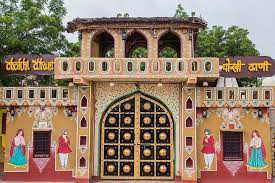
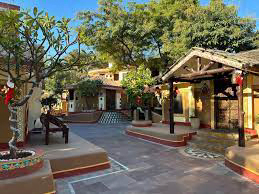
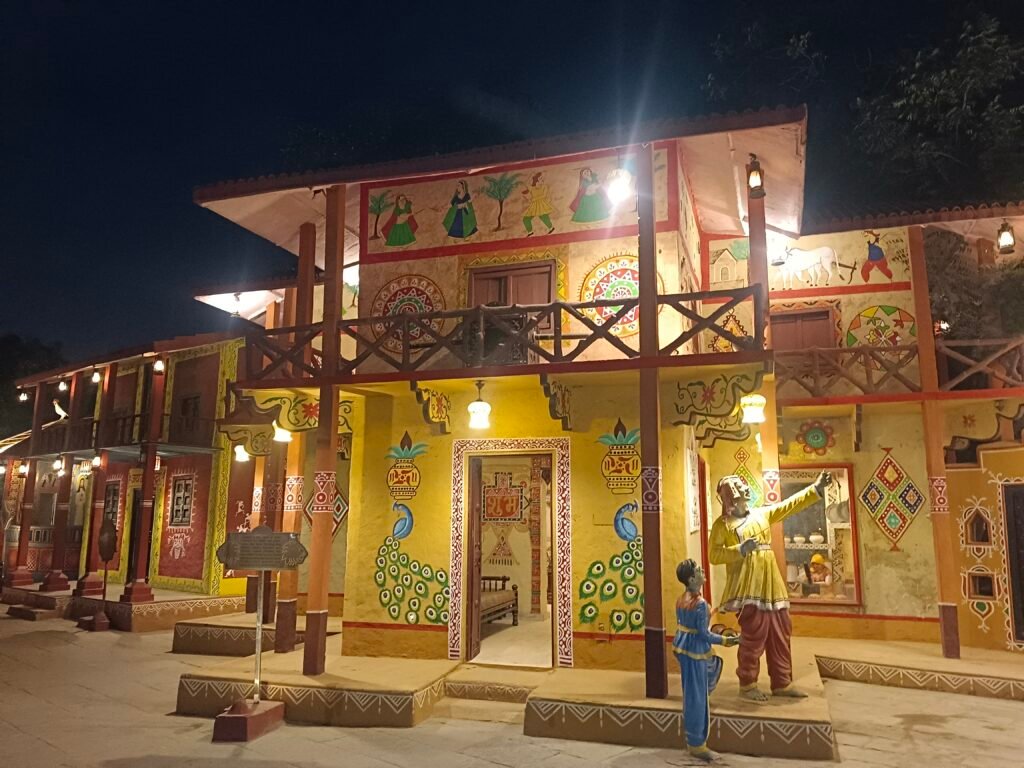
Around 20 kilometres from the main city of Jaipur, there is a mock village called ‘Chokhi Dhani’. It represent Rajasthani culture, food, traditions and heritage. The name Choki Dhani literally translates to Rajasthani culture.
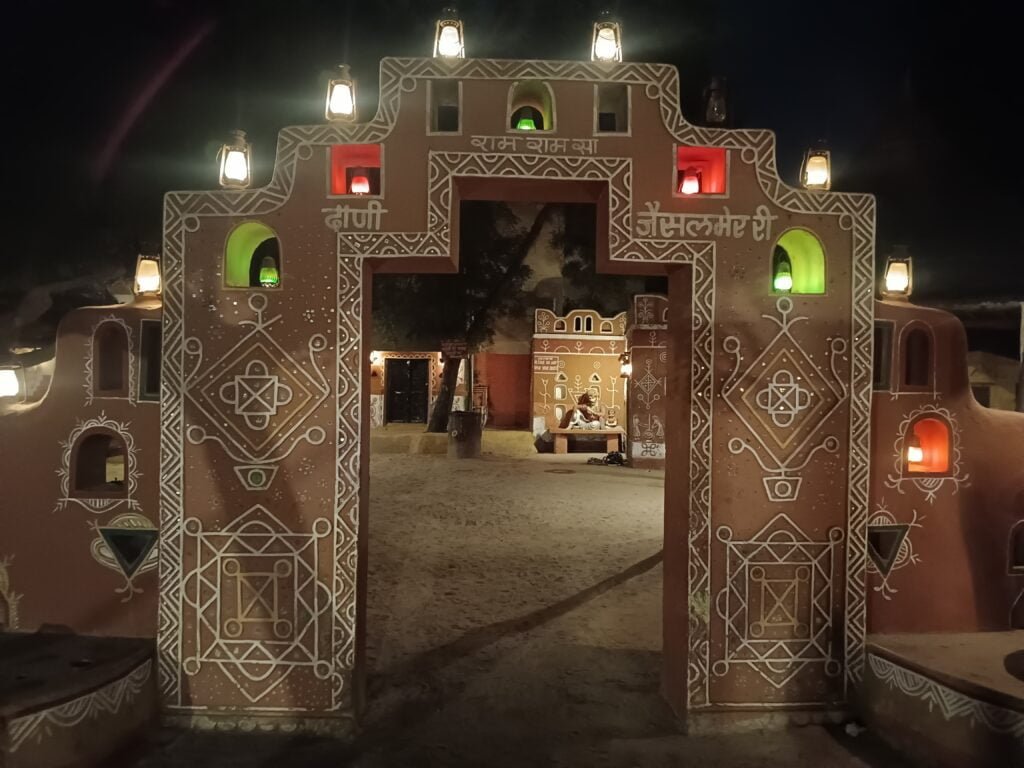
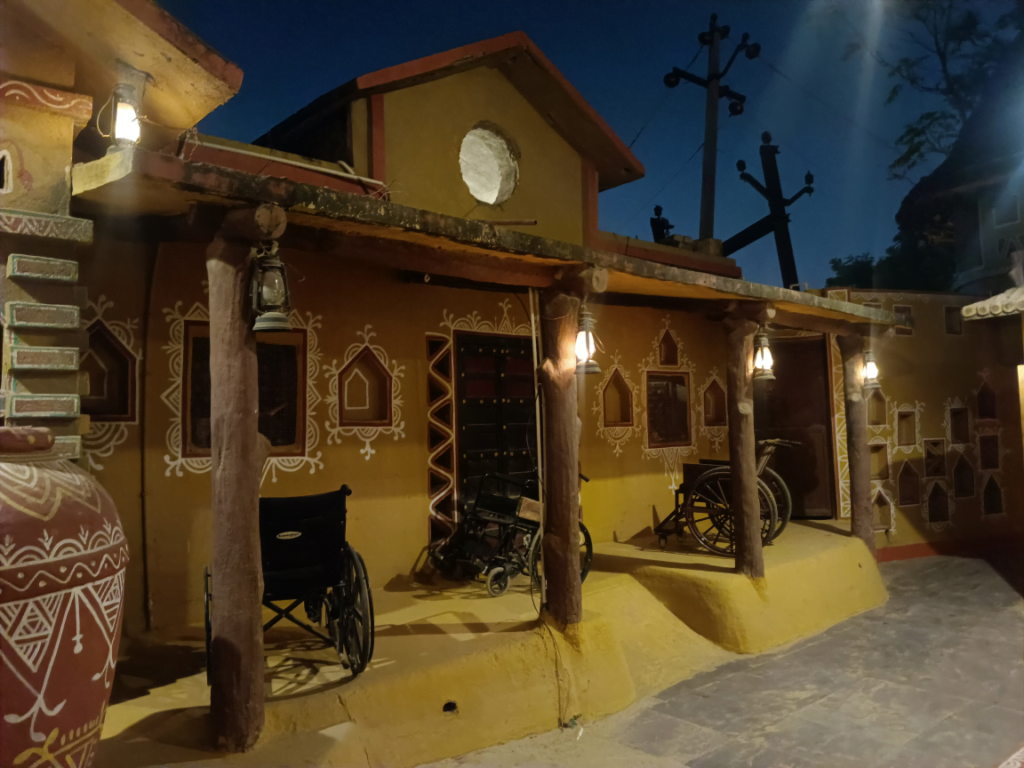
I visited this place in the month of October. It was a good experience to get feel of Rajasthani culture. The welcome begins with the ram ram sa! It has a unique charm of its own, with mud-plastered walls, mud huts, and decorated walls that transport you to the Rajasthan. Lit up with lanterns, beautiful Rajasthani dances, puppet shows, fire shows.
If you wish to visit for lunch that’s not possible. They are open only for dinner which means you need to plan an evening here .From 5-11 p.m. There are different options available. We chose the basic Rajasthani meal for 900/-.
They welcomed us with a welcome drink that was piping hot made of buttermilk and Bajra. We then entered the dinning hall where we have to sit on floor and ate the food served on a thali with many ‘donas’ made of leaves.
The are many stalls and shops to visit. You can ride on camel, elephant, horse. There is also boat ride but very thing is paid inside. You can also have a look at Haldighati war in there.
Parul Chauhan, student of Saksham Sanchar Foundation shared her experience of places to visit in Ahmednagar.
MAHARASHTRA
1. Tank Museum
MILITARY ENTHUSIASTS AND HISTORY BUFFS!
ARMOURED CORPS CENTRE AND SCHOOL
Tank Museum in Ahmednagar, Maharashtra! Established in 1994, this remarkable museum showcases over 50 tanks from World War I to modern times. Dive into the history of armored warfare with iconic models like the British Centurion and American Sherman.
2. Salabat Khan’s Tomb (SKT) HERITAGE SITE
This 16th-century architectural marvel, perched atop a hill, offers panoramic views of the city. Known for its stunning Mughal architecture and historical significance, it’s a serene spot for history buffs and travelers seeking a glimpse into India’s rich heritage.
3. Shani Mandir
This revered temple dedicated to Shani, the deity of Saturn, attracts devotees seeking blessings and relief from astrological challenges. Known for its spiritual ambiance and unique rituals, it’s a must-visit for those interested in Hindu mythology and culture.
Every year, Hindi Journalism Day is celebrated to honor the inception of Hindi journalism, a pivotal development that has ensured the dissemination of information to every corner of India. As we prepare to commemorate this significant day, here’s everything you need to know about Hindi Journalism Day 2024.
Date:
Hindi Journalism Day is observed annually on May 30. This year, it falls on a Thursday, marking another year of celebrating the profound impact of Hindi journalism on Indian society.
History:
The roots of Hindi journalism can be traced back to May 30, 1826, with the publication of India’s first Hindi newspaper, Udant Martand, in Calcutta during British rule. This pioneering effort laid the foundation for nearly two centuries of Hindi journalism. As we observe Hindi Journalism Day on May 30, 2024, we reflect on 198 years of dedicated journalism that has kept the nation informed.
Significance:
Hindi journalism holds a special place in India’s democratic framework. It has brought news to the doorsteps of those who do not speak or understand English, thereby democratizing access to information. This day is a tribute to the journalists who work tirelessly to deliver accurate news, enabling citizens to form informed opinions and engage meaningfully with current affairs.
Journalism, often regarded as the fourth pillar of democracy, plays a crucial role in keeping the public informed about state and national happenings. Journalists work around the clock to ensure that news reaches us swiftly, whether through newspapers, TV channels, or, more recently, social media. The power of journalism to shape and change opinions is immense, and Hindi journalism, in particular, has made this power accessible to a broader audience.
Hindi Journalism Day celebrates the relentless efforts of those in Hindi journalism who strive to ensure that accurate information is available to all, fostering a well-informed and enlightened populace. As we honor these journalists, we acknowledge their contribution to the democratic process and the critical role they play in our society.
In summary, Hindi Journalism Day is not just a commemoration of a historical milestone but a celebration of the ongoing commitment of Hindi journalists to uphold the principles of truth and transparency. It is a day to recognize the vital role of Hindi journalism in empowering citizens and strengthening democracy.
In the arid expanse of the desert, where the relentless sun forces residents to seek shelter indoors, an extraordinary sight emerges from Ratanpur village in Raniwada. Here, amidst the sweltering heat, Kevdaram Meghwal, a devout follower of Baba Ramdevji, performs a unique and awe-inspiring act of devotion.
Kevdaram’s practice is as astonishing as it is profound. Every scorching afternoon, he buries half of his body in the ground, leaving the other half exposed to the blistering sun. This remarkable ritual, which he has maintained for many years, is not merely a display of endurance but a testament to his unwavering faith and dedication.
A resident of Ratanpur, Kevdaram’s dedication stands as a beacon of true devotion. Despite the oppressive heat, his commitment to his spiritual practice remains unshaken. This incredible act underscores a powerful message: no matter how intense the external conditions, the strength of devotion and penance can transcend all challenges.
Kevdaram Meghwal’s story is a compelling example of how devotion can inspire extraordinary resilience and fortitude. His actions remind us that true faith can illuminate the darkest and hottest of days, providing solace and inspiration even in the most challenging environments.
Priyanshi Choudhary, student of Saksham Sanchar Foundation shared her experience with the travel blog to Amritsar.
Amritsar a city located in Punjab, India, approximately 575 km from my hometown, Jaipur. During my visit, I chose to explore three significant sites:
– The Golden Temple,
– Jallianwala Bagh,
– and the Attari Border (also known as the Wagha Border in Pakistan).
My personal interest in geo-political relations between India and Pakistan drew me to Attari. Upon arrival at 1 pm, I was struck by the high temperature, but the enthusiasm of the BSF soldiers and the patriotic songs played over the speakers was infectious, energizing the crowd. The Indian side was bustling with people, while the Pakistani side had barely 50 visitors, a stark contrast.
The Golden Temple, a spiritual hub, has a rich military history, including the infamous Operation Blue Star in 1984, when the Indian army attacked the temple to remove Sikh separatists. The operation, ordered by Prime Minister Indira Gandhi, resulted in the deaths of over 80 soldiers and hundreds of pilgrims. The temple was rebuilt by Indian armed forces personnel.
Lastly, Jallianwala Bagh, a beautiful garden, serves as a poignant reminder of the bravery of Indian citizens, with bullet marks on the walls still visible.
In conclusion, everyone has a unique interest, and mine lies in military history. The architectural landmarks and historical sites of each region speak to the bravery and resilience of its people, shaping our identity and reminding us of our heritage.”
In the annals of ancient Indian mythology, few tales are as captivating as that of Emperor Yayati, a legendary king whose story is woven into the fabric of the Mahabharata. His life, marked by passion, curses, and an insatiable quest for youth, offers a rich tapestry for understanding the complexities of human desires and the consequences they bear.
A King’s Lineage and His Quest for Power Yayati, a Chandravamsha king, is often hailed as the progenitor of the races of the Yadavas and the Pandavas. Born to King Nahusha and his wife, Ashokasundari, Yayati was the youngest of five brothers in a lineage blessed by the gods but marred by a sage’s curse that doomed the sons to unhappiness.
The Curse That Altered Destiny The turning point in Yayati’s life came from his marriage to Devayani, the daughter of Shukra, the preceptor of the demons, and his union with Sharmishtha, daughter of king Vrishaparvan and Devayani’s maid. A tangled web of love and betrayal led to Yayati’s curse of premature old age by a wrathful Shukra. However, in a twist of fate, Yayati’s son Puru bore the burden of his father’s curse, granting the king a second chance at youth1.
The Reign That Spanned the Three Worlds Yayati’s rule is chronicled as a time of great conquests and sacrifices. He performed numerous yajnas and gave away mountains of gold and billions of cows to the Brahmanas, establishing himself as a Chakravarti Samrat, a World Emperor. His reign was not just limited to the earth; he held sway over all three worlds, a testament to his power and influence.
The Legacy That Lives On The tale of Yayati is not merely a story from the past; it is a narrative that resonates with the timeless themes of ambition, love, and redemption. His descendants, the Yadavas and the Pandavas, played pivotal roles in the epic saga of the Mahabharata, shaping the course of Indian mythology and history.
Kamal Dabral, student of Saksham Sanchar Foundation shared his travel experience with a travel blog. Read more to know in detail about the experience.
Travel to adventurous mountains natural beauty and wildlife for relaxation and enjoy the peace and calmness of nature is a preferred plan for me.
Last year I travelled to Lansdowne, a hill station in Pauri Garhwal District of Uttrakhand.
TRAVEL PLAN :
Reach Delhi by Air, Rail of Road . Alternatively one may reach Dehradun first.
Delhi to Kotdwara (Only one Train Garhwal Express is available, but buses are frequently available form Anand Vihar Bus Terminal). From Dehraduu one may hire taxi to Kotdwara or Lansdowne .
Kotdwara to Lansdowne (Private Taxi is the most preferred means in the Summers as most of the Private Busses are already booked for Char Dham Yatra and Governement Buses are one a few).
Travel Time :
There are two seasons : Summer (March to June) and Winter (September to February) . Travelling during Rainy season (July and August) is not advisable because of increased landslides.
Precautions :
You should be prepared to face sub zero temperatures if planning to visit during December to Mid of February.
Hilly Roads may cause uneasiness in some of the persons. Take precautions and carry medicines if you have one of such problems.
The roads may be blocked because of landslides and you may face traffic jam. Remember shops are far and few in such terrain.
Always carry water and fruits. Try to avoid fast food or junk food. Eat healthy and stay safe as at certain places even medical facilities are difficult to find.
Stay :
Home Stay, Resorts and Hotels all are available. You may choose one according to your budget.
Make sure you have advance booking specially during the Summers when there is long queues of traveler buses, taxies and cars on the roads.
If you are staying in a village, get beforehand knowledge of surroundings. Take help of Locals to have knowledge of paths taken by elephants.
Avoid roaming after dusk on isolated places, forests etc. as wild animals specially tigers may be looking for prey.
Don’t drive on hilly roads during night unless you are an expert drivers of the terrain.
Places to Visit :
Lansdowne is a small peaceful place. It is safe as it is a Contonment as well. It is a small place, therefore, you may visit all the tourist spots during your weekends.
Santoshi Mata Temple
This is a place of worship and you must be fit enough to climb a small steep distance as vehicles can’t get you to the temple but will drop you at around 100 feet down. There are no so called priests and the upkeep is done by the locals and the Army.
The best time to visit the Temple is evening as a beautiful Sunset can be watched.
Darwan Singh Museum (Army Museum)
Named after the First Victoria Cross recipient of the Garhwal Rifles Darwan Singh Negi, the Museum preserves the rarest memories of the Garhwal Rifles.
Bhulla Tal
‘Bhulla’ in local language means ‘Brother’. This is an artificially made lake. It is surrounded by some small restaurants and is equipped with boating facility.
St. Mary’s Church
More than 125 years old this Church faced degradation and was closed in 1047. Now it has now been converted from a preaching centre into a museum with pre-independence photographs on display.
Tip-n-Top
Also known as Tiffin Top, Tip-n-Top is located at an altitude of 1800 meters and gives a spectacular view of the of the vast forests and Garhwal Hills with the Himalayas in the background.
Tarkeshwar Siddhapeeth
About one hour drive from Lansdowne will take you to Tarkeshwar Siddhapeeth. It is located at an Altitude of 1800 meters nested among deodar trees, this temple of Lord Shiva is believed to be 1,500 years old. Unlike other well known Hindu Temples it is a peaceful, noiseless place of worship. One needs to trek only 500 meters from road to reach here.
Kaleshwar Mahadev Temple
Situated at 1.5 kms from Lansdowne Market, this temple of Lord Shiva is named after Saint Kalun who meditated here.
Lansdowne Market Road
Lansdowne is a small town. Its market offers everything of daily needs. Some of which may be an entirely new thing for the visitors and they may like to keep those things as souvenir.
Things to Do :
In addition to Visiting Tourist Spots, you may do hiking, trekking and camping.