Home Blog Page 402

Sustainable Devotion: Bengaluru Temple Turns Abhishek Milk into Prasad

0

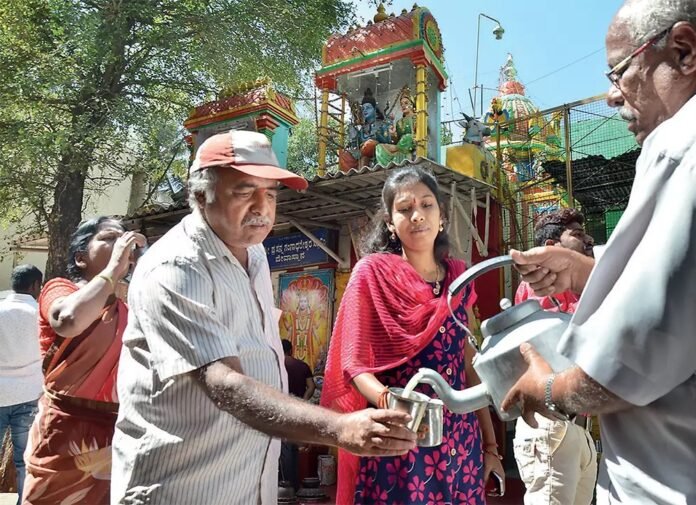
Bengaluru’s Gangadhareshwara Temple in T. Dasarahalli has set a remarkable example of sustainability by ensuring that the milk offered to Lord Shiva during Abhishek does not go to waste. Instead of discarding the milk, the temple follows a unique practice of converting it into buttermilk, which is then distributed as prasad to devotees the following day. This initiative not only upholds religious sanctity but also prevents the wastage of hundreds of liters of milk every week. Strict hygiene measures are maintained throughout the process, ensuring purity and devotion go hand in hand.

Human Library: Sharing Stories of Pain and Healing

In another inspiring initiative, a hospital in Bengaluru has launched a campaign called ‘The Living Threads’, a Human Library project aimed at fostering emotional support and human connection. This platform allows individuals to share their struggles, pain, and hardships, creating a space where people can listen, learn, and find solace in each other’s experiences. The primary goal is to combat loneliness and reduce stress by encouraging open dialogue and emotional expression.

Both initiatives highlight Bengaluru’s progressive approach to sustainability and emotional well-being, setting an example for other communities to follow.

India’s Growing Obesity Crisis: A Call for Urgent Action

0

Introduction: A Nation Confronts a Rising Health Challenge
Obesity in India has emerged as a pressing public health concern, gaining nationwide attention following Prime Minister Narendra Modi’s recent remarks in his ‘Mann Ki Baat’ programme. Addressing the alarming rise in obesity rates, particularly among children, Modi urged citizens to adopt healthier lifestyles, including reducing oil consumption. With one in eight Indians now classified as obese, experts warn of severe health implications and emphasize the need for immediate action.

Understanding Obesity: The Growing Epidemic
Obesity, as defined by the World Health Organization (WHO), is an abnormal or excessive accumulation of fat that presents serious health risks. Data from the National Family Health Surveys (NFHS) highlights a troubling trend:

  • The percentage of overweight or obese women increased from 20.6% to 24% between 2015-2021.
  • Among men, the figures rose from 18.9% to 22.9% over the same period.
  • Urban areas exhibit significantly higher obesity rates compared to rural regions.
  • Childhood obesity is a growing concern, with estimates predicting that by 2030, 10.81% of children aged 5-9 years will be obese.

Health Risks Associated with Obesity
Often referred to as the ‘mother of all diseases,’ obesity is linked to numerous life-threatening conditions. According to the WHO, obesity significantly increases the risk of:

  • Cardiovascular diseases, including heart attacks and strokes.
  • Type 2 diabetes, a major health crisis in India, affecting an estimated 101 million people.
  • Various forms of cancer, with projections indicating 15.7 lakh new cases by 2025. These alarming statistics highlight the urgent need for preventive measures and public awareness campaigns to curb obesity-related illnesses.

Understanding the Root Causes
The rapid increase in obesity rates across urban India is driven by multiple factors:

  • Unhealthy Diets: A shift towards ultra-processed foods, high in refined sugars and unhealthy fats, has fueled weight gain.
  • Sedentary Lifestyles: Modern work environments and increased screen time contribute to reduced physical activity.
  • Air Pollution: Studies suggest a link between pollution and metabolic disorders, exacerbating obesity-related risks.
  • Economic Disparities: Low-income households often rely on inexpensive carbohydrate-heavy diets, leading to poor nutrition.

Furthermore, the trend of obesity is no longer confined to cities—rural populations are also experiencing rising obesity rates, pointing to a nationwide crisis.

The Challenge of Physical Inactivity
Research reveals that nearly half of all Indians do not engage in sufficient physical activity. Several barriers contribute to this inactivity:

  • Office jobs and digital lifestyles encourage prolonged sitting and reduced movement.
  • Unsafe outdoor conditions, including traffic congestion and crime, discourage people from exercising.
  • Limited availability of open spaces and parks hinders access to recreational physical activities. Addressing these issues requires urban planning that prioritizes walkable environments, safe public spaces, and accessible fitness facilities.

Rethinking How We Measure Obesity
Traditional methods of assessing obesity, such as Body Mass Index (BMI), have limitations:

  • BMI does not distinguish between fat and muscle mass, potentially misclassifying individuals.
  • Abdominal fat, which is genetically more prevalent in Indians, poses a higher risk for metabolic diseases.
  • Experts now recommend incorporating waist circumference and body fat percentage alongside BMI for a more accurate assessment of obesity risk.

Conclusion: A Call for Collective Action
As India grapples with the growing obesity epidemic, urgent action is needed at both individual and systemic levels. Public health policies must promote better nutrition, encourage active lifestyles, and provide access to safer environments for exercise. With increased awareness, education, and policy interventions, India can work towards a healthier future for its citizens. The fight against obesity is not just about weight—it’s about ensuring a better quality of life for generations to come.

Seminar on International Women’s Day – “NEW INDIA, NEW MEDIA AND THE NEXT BIG LEAP”

0

Jaipur, March 4, 2025 – On the occasion of International Women’s Day, a seminar titled “New India, New Media, and the Next Big Leap” was organized jointly by Saksham Sanchar Foundation and the English Department of Kanoria PG Mahavidyalaya, Jaipur. The event fostered deep discussions on digital media, theatre, health, and new opportunities for women.

Keynote Address

The event’s chief guest, Mrs. Deepti Maheshwari (MLA), emphasized the importance of skill development, stating, “Skills are essential in every field. No matter which profession one chooses, possessing the right skills is crucial.” She highlighted that women are breaking barriers and excelling in every domain today.

Seminar on International Women's Day – "NEW INDIA, NEW MEDIA AND THE NEXT BIG LEAP"

Guest Speaker Insights

  • Seema Sharma (RAS) shared her perspective, stating, “This era is truly a golden period for women. Unlike any previous era, today’s women have more platforms and mediums to voice their opinions.”
  • Ms. Neha Gupta (Director, Mangalam Medicity Hospital) focused on women’s health and financial independence, stressing, “Women must prioritize their health, invest wisely, and take charge of their financial growth.”

Key Speaker Presentations

Sunita Nagpal (Theatre Coach & Film Director)“Theatre is essential as it builds confidence and teaches fundamental skills, which are crucial for today’s generation.” Trishna Singh (Actress, Theatre Artist, Model) – Spoke about her experience on the sets of Mismatched and highlighted that “Rohit Saraf is extremely humble and considerate on set.” She also advocated for Jaipur’s potential to become a thriving theatre hub like Mumbai. Kavita Sharma (Content Creator) – Emphasized the importance of selecting the right topics for content creation, stating, “Your content must be aligned with the type of videos you aim to produce.”

Key Discussion Points

📌 OTT & Content Creation: How the industry is evolving and opening new doors for women
📌 Opportunities for Women in the Entertainment Industry: Increasing participation of women in media and theatre
📌 Health & Awareness: Dr. Neha Gupta discussed preventive measures for cervical cancer

Objective of the Seminar

The seminar aimed to spread awareness about women’s empowerment, digital media, health, theatre, and modern technologies. The discussions encouraged women to explore new opportunities in media, administration, arts, and healthcare.

Acknowledgments

College Principal Dr. Seema Agarwal welcomed the guests, emphasizing the importance of skill development in today’s era. N.K. Sharma (Social Activist) encouraged women to carve new avenues in media. Dimple Arora (Saksham Sanchar Foundation) delivered the vote of thanks.

March 8: The Story Behind International Women’s Day

0

Every year on March 8, the world unites to celebrate International Women’s Day (IWD), a day dedicated to honoring the social, economic, cultural, and political achievements of women. It is also a call to action for accelerating gender equality. But how did this global movement begin?

The Fight for Rights and Recognition

The origins of International Women’s Day trace back to the early 20th century, a time of significant labor movements and social change. The first observance dates back to 1909 in New York, when the Socialist Party of America organized a Women’s Day in support of garment workers striking for better wages and working conditions.

The Birth of a Global Movement

In 1910, at the International Socialist Women’s Conference in Copenhagen, German feminist Clara Zetkin proposed the idea of an annual Women’s Day. Her vision was clear: women across the world should unite and campaign for their rights every year. In 1911, more than a million people across Austria, Denmark, Germany, and Switzerland marked the day, advocating for women’s rights to vote, work, and hold public office.

March 8: A Day of Struggle and Solidarity

The date of March 8 was cemented in history by a powerful event in 1917. Amid World War I, women in Russia took to the streets demanding “Bread and Peace.” Their protest, coinciding with February 23 on the Julian calendar (March 8 in the Gregorian calendar), sparked a revolution that led to the abdication of the czar and granted women the right to vote in Russia. This moment forever linked March 8 with the women’s movement.

From Protest to Global Recognition

The global significance of International Women’s Day continued to grow, and in 1977, the United Nations officially recognized March 8 as a day to promote gender equality. Since then, IWD has evolved into a worldwide celebration, each year bringing themes that highlight key issues such as gender pay gaps, violence against women, and access to education.

Why March 8 Still Matters

International Women’s Day is more than a date—it’s a reminder of the progress achieved and the challenges that remain. Despite advancements, women worldwide continue to face discrimination, violence, and inequality. This day serves as a platform to amplify women’s voices and drive meaningful change.

A Call to Action for All

Recent IWD themes have emphasized inclusion, equity, and breaking biases. The movement encourages everyone—regardless of gender—to contribute towards building a more just and equal world.

As we commemorate March 8, let’s honor the trailblazing women who fought for change and commit to a future where gender equality is not just an aspiration—it’s a reality.

IIFA Awards 2025: A Grand Celebration in Jaipur with a Rajasthani Touch

0

The stage is set for the 2025 IIFA Awards, marking the silver jubilee celebration of this prestigious event. Jaipur, known for its rich heritage and grandeur, is all geared up to host this spectacular affair at the JECC Grounds. The preparations are in their final phase, with an artistically designed stage almost ready to welcome the biggest stars of Indian cinema.

A Stage Drenched in Rajasthani Art and Innovation

The massive stage, measuring 180×100 feet, will feature a 120×65 feet performance area for the artists. Designed to showcase Rajasthan’s cultural essence, the backdrop will be adorned with visuals of Jaipur’s majestic forts and intricate jharokhas. Themed ‘Silver is the New Gold,’ the stage will integrate hydraulic technology to enhance the visual experience with special five-effect features, promising a breathtaking spectacle.

Star-Studded Pre-Event Celebrations

Before the grand awards ceremony on March 8-9, Jaipur will host a series of pre-event celebrations across the city. On March 7, at 8:30 PM, a special talk show titled ‘The Journey of Women in Cinema’ will be held at Hyatt Regency, Mansarovar. Bollywood’s iconic actress Madhuri Dixit and acclaimed film producer Guneet Monga will engage in an insightful discussion on the evolution of women in the film industry. The session will be moderated by IIFA Vice President Noreen Khan.

IIFA’s Presence Across Jaipur’s Iconic Landmarks

To amplify the excitement, the Rajasthan Tourism Department has placed replicas of the IIFA trophy at prominent tourist spots such as Amer Fort, Albert Hall, Toran Dwar, and Jal Mahal. The installations, accompanied by a green carpet setup, have become a major attraction, drawing both domestic and international tourists eager to capture the moment with selfies.

Special Screening of ‘Sholay’ at Rajmandir Cinema

Adding a nostalgic touch to the celebrations, IIFA organizers have scheduled a special screening of the classic Bollywood film ‘Sholay’ on March 9 at 11 AM at the iconic Rajmandir Cinema. This tribute marks 50 glorious years of both the legendary film and the historic cinema hall, creating a perfect blend of cinematic history and celebration.

With Jaipur transforming into a cinematic hub, the 2025 IIFA Awards promise to be an unforgettable extravaganza, blending Bollywood’s glamour with Rajasthan’s cultural richness.

Narwhals: The Mysterious Unicorns of the Arctic

0

Introduction
Recent scientific studies have unveiled fascinating insights into the behaviours of narwhals, the elusive marine mammals of the Arctic. Known for their long, spiral tusks, narwhals have long been a subject of curiosity and folklore. Researchers have now observed how these tusks play a crucial role in hunting Arctic char and interacting with their environment. The study also highlights the impact of climate change on narwhal behaviour and their adaptability in a rapidly warming Arctic.

About the Narwhal
Scientific Classification:

  • Scientific Name: Monodon monoceros
  • Family: Monodontidae (same as the beluga whale)

The Iconic Tusk:

  • The tusk is a long, helical tooth that grows from the upper left canine of males.
  • Only about 15% of females develop a tusk.
  • It continues to grow throughout the narwhal’s lifetime.
  • In rare cases, some narwhals have been found with two tusks.

Habitat and Distribution:

  • Found in the icy Arctic waters of Canada, Greenland, and Russia.
  • Prefer to stay in pods (groups) and thrive in cold waters.

Diet and Behaviour:

  • Carnivorous, feeding on squid, cod, halibut, and other small fish.
  • Live in colonies, exhibiting social and cooperative behaviours.

Historical and Cultural Significance:

  • Narwhals have been featured in old sailors’ tales as the mythical “unicorns of the sea.”
  • First classified by Carl Linnaeus in Systema Naturae (1758).
  • The name “narwhal” originates from the Old Norse word nár, meaning “corpse,” a reference to their mottled, grayish skin.

Evolutionary History:

  • Fossil records suggest narwhals once lived in tropical waters around 11 million years ago.
  • They migrated to Arctic waters during the Pliocene era due to shifts in the food chain and environmental conditions.

The Tusk: More Than Just a Symbol
New research has revealed that narwhals use their tusks for more than just display. They have been observed employing their tusks to hunt Arctic char with remarkable dexterity and precision. By stunning or guiding fish using the tip of the tusk, narwhals demonstrate unique hunting techniques that highlight their adaptability.

Documented Behaviours
Scientists identified 17 distinct behaviours exhibited by narwhals, including:

  • Advanced hunting strategies.
  • Social learning within pods.
  • Playful interactions, including a behaviour known as ‘tusking,’ where narwhals raise and cross their tusks, possibly as a form of social bonding or competition assessment.

Interactions with Other Species
The study also documented instances of narwhals competing with glaucous gulls in a phenomenon known as kleptoparasitism, where they vie for the same food sources. These interactions highlight the intricate relationships within the Arctic ecosystem and underscore the delicate balance of marine life in the region.

Impact of Climate Change
As climate change alters ice patterns and affects prey availability, narwhals are being forced to adapt. Understanding their behavioural shifts is crucial for assessing the long-term effects of global warming on Arctic marine life. The study emphasizes the need for continued research to monitor how species like the narwhal navigate these environmental changes.

Significance of the Study
This research provides valuable insights into narwhal ecology, shedding light on their complex behaviours and interactions. Additionally, it demonstrates the effectiveness of modern research methods, such as drone technology, in studying marine mammals without disrupting their natural habitats.

By continuing to explore the mysteries of narwhals, scientists hope to gain a deeper understanding of how these enigmatic creatures survive in one of the planet’s most extreme environments—and how they might cope with the ever-changing Arctic landscape in the future.

Neonatal Sepsis in India: A Growing Healthcare Challenge

0

Introduction: A Silent Crisis in Newborn Health
A recent study published in The Lancet Global Health journal has shed light on a critical issue affecting newborns in India—neonatal sepsis. The research, which examined over 6,600 cases across five district hospitals, highlights the alarming mortality rates among newborns diagnosed with sepsis. This condition, particularly prevalent in low- and middle-income countries, remains a major challenge due to limited healthcare resources and increasing antibiotic resistance.

Understanding Neonatal Sepsis
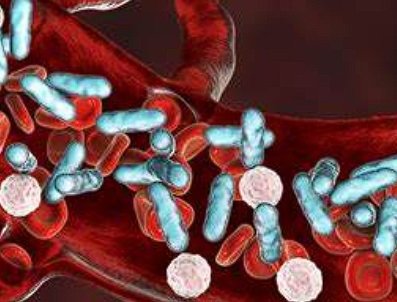
Neonatal sepsis is a life-threatening condition caused by an overwhelming immune response to infection. It primarily affects newborns within the first 28 days of life and can be triggered by a range of bacterial pathogens. Early detection and prompt medical intervention are crucial for survival. According to the study, the incidence of neonatal sepsis in the examined hospitals ranged from 0.6% to 10%, indicating a widespread and urgent concern.

Key Findings of the Study
The study revealed that outborn neonates—those referred from other healthcare facilities—were 2.5 times more likely to develop sepsis compared to inborn neonates. The statistics further expose the gravity of the situation:

  • The case-fatality rate for inborn neonates was reported at a concerning 25.9%.
  • For neonates diagnosed with culture-positive sepsis, the mortality rate was even higher, at 36.6%. These findings emphasize the urgent need for improved neonatal healthcare strategies to combat sepsis-related fatalities.

The Challenge of Antibiotic Resistance
One of the most significant hurdles in treating neonatal sepsis is antibiotic resistance. The study notes that infection-causing bacteria are increasingly developing resistance to commonly used antibiotics, making treatment more complex and less effective. This growing resistance highlights the need for stringent infection control measures and responsible antibiotic usage to prevent the emergence of drug-resistant pathogens.

Global and National Impact
Neonatal sepsis is a global health concern, responsible for over 550,000 deaths annually. India alone accounts for nearly one-fourth of these fatalities, underscoring the country’s struggle with neonatal infections. The high burden of sepsis in India reflects deeper systemic issues, including inadequate healthcare infrastructure, delays in diagnosis, and limited access to advanced medical care.

Steps Toward Healthcare Improvement
To combat neonatal sepsis effectively, the study calls for comprehensive measures, including:

  • Strengthening infection prevention and control practices in hospitals.
  • Implementing programs that promote the judicious use of antibiotics.
  • Enhancing healthcare facilities, particularly at district hospitals, to improve neonatal care services.

Addressing Gaps in District Hospitals
District hospitals play a crucial role in neonatal care, but they often lack the advanced resources and expertise available in tertiary care centers. Despite this, they witness a high incidence of neonatal sepsis. Addressing these gaps requires targeted efforts to improve medical facilities, equip healthcare professionals with necessary training, and ensure better management of critically ill newborns.

Conclusion: A Call for Urgent Action
Neonatal sepsis remains a significant public health challenge in India, demanding immediate and sustained action. By improving healthcare infrastructure, investing in preventive measures, and fostering research into antibiotic resistance, India can reduce neonatal sepsis-related mortality and ensure a healthier future for its newborn population. The fight against neonatal sepsis is not just a medical necessity but a moral imperative to protect the most vulnerable members of society.

India’s Special Assistance Scheme: Powering Progress, One State at a Time

0

Introduction: A Lifeline for State Growth
Imagine running a state, trying to build roads, schools, and hospitals while juggling economic challenges. That’s where the Government of India’s Special Assistance scheme steps in—a financial cushion offering interest-free loans for 50 years. This initiative is not just about money; it’s about unlocking the true potential of states, fueling infrastructure growth, and ensuring that reforms translate into real progress.

The Story Behind the Special Assistance Scheme
Launched in 2021 with a modest ₹12,000 crore, the scheme has grown into a financial powerhouse. By FY24, it had ballooned to a whopping ₹1.3 trillion, proving the government’s commitment to empowering states. A significant chunk—₹30,000 crore—is directly tied to outcome-based reforms, ensuring that funds aren’t just handed out but put to good use.

How the Money Flows: Allocation and Distribution
This year, ₹1.25 trillion has been earmarked under the scheme, with nearly 97% already approved for distribution. But it’s not a free-for-all. Here’s how the funds are split:

  • Around ₹55,000 crore is based on each state’s share of central taxes—ensuring fairness in distribution.
  • The remaining ₹95,000 crore? That’s tied to reforms, pushing states to modernize, innovate, and improve governance.

The Catch: Reforms That Unlock the Funds
Nothing comes without responsibility. To access these funds, states must:

  • Adhere to Centrally Sponsored Schemes, ensuring effective governance.
  • Maintain transparency in financial management.
  • Develop iconic tourist centres, attracting visitors and boosting local economies.
  • Encourage vehicle scrappage to promote cleaner transportation.
  • Drive industrial growth to generate jobs and wealth. By linking financial aid to reforms, the government ensures that money is spent where it matters, leading to lasting change.

Who’s Getting the Biggest Slice?
Certain states have emerged as frontrunners in securing these funds:

  • Uttar Pradesh received a massive ₹13,042 crore in the first ten months of FY25.
  • Bihar and Madhya Pradesh followed with ₹12,907 crore and ₹10,635 crore, respectively. This targeted funding allows these states to accelerate development projects, uplift communities, and fuel economic growth from the grassroots level.

The Economic Ripple Effect
The scheme arrives at a crucial time when India’s GDP growth has been unpredictable. In the September quarter of FY24, growth dipped to 5.4%, the slowest in two years. But then came a rebound—6.2% in the December quarter. What’s helping? Timely approval of these interest-free loans, which spur state-level spending and, in turn, boost the national economy.

Looking Ahead: A Future Built on Smart Investments
As India strides forward, the Special Assistance scheme will remain a key player in its economic story. By focusing on reforms, infrastructure, and responsible spending, it paves the way for a stronger, more self-reliant India. The message is clear: when states grow, the nation thrives.

This initiative is more than a policy—it’s a vision for progress, a commitment to better governance, and a bridge between financial support and real, measurable development.

Amir Khusrau: The Parrot of India and His Enduring Legacy

0

A Timeless Icon of Indian Culture
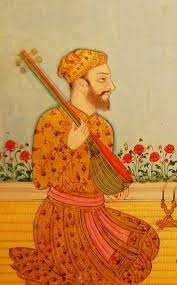
Amir Khusrau remains one of the most celebrated figures in Indian history, a polymath whose contributions to music, poetry, and culture have left an indelible mark on the subcontinent. His legacy is honored annually at the Jahan-e-Khusrau festival, a tribute to his ability to harmonize Hindu and Muslim traditions. Often referred to as the “Parrot of India” for his vibrant expression and unparalleled creativity, Khusrau’s works continue to resonate across generations, serving as a bridge between diverse cultural influences.

Early Life and Heritage
Born in 1253, Amir Khusrau was a product of a richly diverse upbringing. His father migrated to India from Central Asia during a period of political turmoil, and young Khusrau grew up immersed in a fusion of Persian, Turkic, and Indian cultures. Proud of his dual heritage, he infused his literary and musical works with elements from both traditions. This unique synthesis would later define his contributions to the cultural fabric of the Indian subcontinent.

A Distinguished Career as a Court Poet
Khusrau’s poetic journey began at the young age of 20, and his talent quickly earned him a place among Delhi’s elite. Over five decades, he served multiple Sultans, using his poetry as a means to establish the legitimacy of rulers. Writing in both Persian and Hindavi, he demonstrated linguistic mastery that appealed to a broad audience. The title ‘Amir’ was conferred upon him by Sultan Jalaluddin Khalji, cementing his esteemed position in the royal court and further elevating his status as a literary luminary.

A Spiritual Bond with Nizamuddin Auliya
Beyond his presence in the corridors of power, Khusrau was deeply devoted to the Sufi saint Nizamuddin Auliya. Their bond was one of profound spiritual kinship, with Khusrau often described as the keeper of Nizamuddin’s secrets. This relationship exemplified a unique harmony between worldly power and spiritual enlightenment, reinforcing the idea that poetry and mysticism could coexist seamlessly. Even today, his compositions are an integral part of Sufi devotional music, immortalizing his connection with the revered saint.

A Literary Genius Ahead of His Time
Khusrau’s poetry is celebrated for its lyrical beauty, intricate wordplay, and depth of meaning. He experimented with various poetic forms, including ghazals, riddles, and songs, infusing them with Persian, Turkic, and indigenous influences. His works played a pivotal role in promoting the syncretic cultural ethos known as Ganga-Jamuni Tehzeeb—a fusion of Hindu and Muslim traditions. His admiration for Hindu philosophical thought is evident in his writings, showcasing his respect for diverse beliefs and practices.

Revolutionizing Indian Music
Khusrau’s impact on Indian classical music is profound. He is credited with developing several new ragas and is often associated with the khayal style, which remains a cornerstone of Hindustani classical music. While historical evidence regarding his invention of the sitar and tabla is debated, his influence in shaping musical traditions is undeniable. Iconic compositions such as “Chhaap Tilak” and “Zehal-e-Maskeen” continue to thrive in both sacred and secular spaces, reinforcing his timeless musical legacy.

A Legacy That Transcends Centuries
Amir Khusrau’s genius lies in his ability to transcend the boundaries of time, culture, and language. His poetic brilliance, musical innovations, and deep spiritual insights continue to shape the cultural landscape of South Asia. Whether through the mesmerizing strains of a qawwali or the poetic verses that celebrate love and devotion, Khusrau’s influence endures, reminding us of the power of art to unify, inspire, and transform societies.


India’s Legal Reforms: Repealing Colonial-Era Laws for a Modern Nation

0

In recent years, the Government of India has taken significant strides in repealing outdated colonial laws that no longer serve a purpose in a democratic society. Prime Minister Narendra Modi has emphasized the need to eliminate laws that restrict individual freedoms, with one notable example being the repeal of the Dramatic Performances Act of 1876. Originally enacted by the British to suppress dissent, this law allowed the government to censor public performances deemed scandalous or seditious. Its repeal is part of a broader initiative aimed at modernizing India’s legal framework and ensuring greater personal freedom.

The Dramatic Performances Act: A Colonial Holdover
The Dramatic Performances Act of 1876 was introduced during British rule as a tool to suppress nationalist movements and control artistic expression. It granted authorities sweeping powers to prohibit plays that could incite disaffection towards the colonial government. The Act was emblematic of the broader oppressive legal mechanisms used by the British to stifle dissent and restrict free speech in India.

Provisions and Implications
The Act allowed magistrates to ban performances perceived as scandalous, defamatory, or corrupting public morality. Violators faced penalties of up to three months in jail and fines, effectively discouraging artists from engaging in politically or socially provocative performances. The law’s vague and broad provisions made it a potent instrument for controlling cultural narratives and suppressing any perceived threats to the colonial regime.

Judicial Scrutiny and Constitutional Challenges
Following India’s independence, the Dramatic Performances Act faced legal challenges. In 1956, the Allahabad High Court ruled the Act unconstitutional, arguing that it violated the right to freedom of speech and expression under the newly adopted Indian Constitution. The court deemed the law’s restrictions excessive and unjustifiable, marking a crucial step toward dismantling colonial-era legal constraints.

Formal Repeal and Declining Relevance
Despite the court ruling, the Dramatic Performances Act remained in India’s legal books for decades. Many states had already repealed their own versions of similar laws. In 2013, the Madras High Court struck down the Tamil Nadu Dramatic Performances Act, further reinforcing the law’s obsolescence. It was not until 2018 that the central government formally repealed the Act through the Repealing and Amending (Second) Act, 2017.

Government’s Drive to Modernize Legal Framework
The Modi government has actively pursued the repeal of obsolete laws to facilitate governance and improve India’s ease of doing business. Since 2014, over 2,000 outdated laws have been repealed, removing unnecessary bureaucratic hurdles and enhancing individual freedoms. The removal of the Dramatic Performances Act is a significant step in this broader legal modernization effort.

Colonial Laws in Today’s India: The Road Ahead
Despite these efforts, many colonial-era laws continue to persist in India’s legal framework. Article 372 of the Constitution allows pre-independence laws to remain in effect unless actively repealed or challenged in court. While some laws, like the Dramatic Performances Act, have been struck down, others—such as sedition laws—continue to be enforced under different legal provisions. This ongoing reliance on colonial statutes raises important questions about the necessity for comprehensive legal reform and the need to align India’s legal system with contemporary democratic values.

As India continues to evolve, legal reforms will play a pivotal role in shaping a more progressive and free society. The repeal of outdated colonial laws is not just a legal necessity but also a symbolic step toward redefining India’s governance in the 21st century.