Las Vegas is a pure spectacle. Flashing lights, high stakes, and gaudy luxury — it’s a town constructed to impress. However, it does have (some) shows that cost the equivalent of daring their high rollers to take a seat at that blackjack table.
And if you’re a seasoned Play in Exchange user who knows his way around a bit of risk, spending a hefty sum on a few show tickets might be just the kind of adrenaline rush that gets you going. Is it worth those insane ticket prices? Let’s break it down.
When a Show Costs More Than Your Rent
If you’re scrolling through the ticket prices and suddenly start to question what is going on with your life, you are not the only one. Other Las Vegas shows have price tags that make a five-star dinner look like a drive-through.
Let us take U2 at Sphere as an example. Prices for seats for the residency began around $140 but have reached $1,250 following high demand. Many fans are saying it is a trippy experience with graphic experiences of you feeling as though you’re soaring through outer space.
And then, of course, there was Adele at Caesars Palace. Her last shows, which took place in late 2024, had tickets starting at $1,474 — before fees. It seemed like a steep price for a night of sad, sad songs, but fans said it was an experience they never forgot.
The Price of a Front-Row Seat to History
With big names comes big price tags and WrestleMania 41 at Allegiant Stadium is a prime example. And with dynamic pricing, that means tickets have reached a cost of $15,000.
You can even pay more than $1,600 for your tickets in the nosebleed seats. To wrestling fans, it isn’t just an event; it is something that happens once in a lifetime. But for that money, you could fly to another nation and view a season of live games.
Garth Brooks is at The Colosseum for something with a little more intimate scale. The range is smaller, offering fans an up close and personal experience with the country legend.
You can find some variation in ticket prices, but suffice it to say they are on the high end of the spectrum. The upside? Because the artist is now more personal to them, and they want the nostalgia of singing the classics in front of the fans live.
Not to mention O by Cirque du Soleil at Bellagio. A classic Vegas performance, combining circus acts with an impressive water platform. It doesn’t come cheap at about $150 a ticket, but when you compare it to concert tickets for some rock-star headliners that cost as much as a private jet ride, it almost seems like a bargain.
Splurge or Save? The Pros and Cons of High-Priced Shows
Spending big on a Vegas show is a decision that goes beyond entertainment. It’s about the experience, the memories, and whether the cost feels justified. Let’s weigh the pros and cons.
Why You Might Say “Take My Money!”:
Unforgettable experiences — Some shows offer visuals, effects, and performances that are once-in-a-lifetime.
Top-tier talent — You’re not just paying for a concert; you’re paying for legends at their peak.
Incredible venues — The Sphere, The Colosseum, and Allegiant Stadium bring the production value to another level.
пMany attendees walk away feeling they’ve witnessed something truly special. These are the kinds of performances that stay with you long after the lights go down.
Why You Might Hold Onto Your Cash:
Budget impact — Spending a thousand dollars on a ticket means sacrificing something else.
Expectation vs. reality — Hype can make a show feel bigger than it actually is. Will it be that much better than a livestream?
Vegas has endless options — There are incredible performances at lower prices, from comedy to magic to small-venue music acts.
While some shows justify the cost, others may not live up to expectations. It’s all about finding the balance between indulgence and financial responsibility.
So, Are These Shows Worth It?
It depends. However, if the artist is your favorite of all time and you always dreamed of seeing them in concert, your price may be priceless. However, if you’re undecided, Las Vegas has so many other amazing attractions and things to do that are free or very inexpensive.
Before shelling out a small fortune, ask yourself:
Is this a once-in-a-lifetime opportunity for me?
Will I instantly regret this or somehow still live with myself?
Could I find other entertainment options that would bring me just as much happiness for less?
Vegas is synonymous with excess, and the largest excesses are often those that end up being worth remembering for all the right reasons. Whatever the case may be, choose wisely (or actually, choose whatever, go with it), and enjoy the show!
The Lake Tanganyika Basin, one of the world’s most significant freshwater ecosystems, is facing severe biodiversity threats. In response, the governments of Burundi, the Democratic Republic of Congo, Tanzania, and Zambia have launched a five-year initiative to combat these challenges. Supported by the UN Environment Programme (UNEP) and the Global Environment Facility (GEF), this ambitious project focuses on sustainable natural resource management and biodiversity conservation in the region.
A Collaborative Initiative for Conservation
With a budget of USD 14.5 million, the project is executed by UNOPS and aims to foster cooperation among the four nations. Key objectives include:
Protecting core conservation zones in three designated areas.
Restoring degraded landscapes to prevent further ecosystem deterioration.
Promoting sustainable fisheries by enforcing fishing regulations.
This initiative underscores the urgent need for transboundary collaboration in tackling environmental threats that extend beyond national borders.
Addressing Key Environmental Challenges
The project identifies several high-priority areas for intervention:
Sustainable Fisheries Management – Standardizing fishing practices, including mesh sizes, gear restrictions, and quotas to prevent overfishing.
Habitat Protection – Safeguarding critical ecological zones that support diverse aquatic life.
Community Engagement – Empowering local communities to play an active role in fisheries management.
Alternative Livelihoods – Promoting eco-friendly economic activities to reduce dependency on fishing.
The Biodiversity Crisis: A Global Concern
Freshwater biodiversity is declining at an alarming rate, with an 84% reduction in freshwater species over the past century. This crisis is driven by:
Pollution – Nutrient runoff and plastic waste disrupt aquatic ecosystems.
Overexploitation – Unregulated fishing depletes fish stocks.
Climate Change – Rising temperatures and erratic weather patterns threaten aquatic life.
If left unchecked, these factors could destabilize the entire Lake Tanganyika ecosystem, putting both wildlife and human communities at risk.
Why Lake Tanganyika Matters
As one of the world’s largest and oldest freshwater lakes, Lake Tanganyika is a global biodiversity hotspot. It sustains over 10 million people who rely on its waters for food, livelihoods, and daily needs. However, rapid population growth and increasing resource demand are pushing the lake’s ecosystem to a breaking point.
Building on International Agreements
This initiative builds upon the 2003 Convention on the Sustainable Management of Lake Tanganyika, a landmark agreement that laid the foundation for regional conservation efforts. The current project marks another significant step in the collective responsibility to protect one of the world’s most valuable freshwater resources.
The Road Ahead: What the Future Holds
If current environmental pressures persist, the value of Lake Tanganyika’s ecosystem services could decline by 20% by 2050. Reversing this trend requires:
Increased funding for conservation efforts
Stronger policy enforcement across national borders
Sustained community involvement in eco-friendly practices
The success of this project will serve as a model for cross-border environmental cooperation, ensuring that Lake Tanganyika thrives for future generations.
India’s commitment to wildlife conservation has taken a significant leap forward with the launch of Project Lion, a dedicated initiative aimed at protecting and expanding the population of Asiatic lions. With a substantial budget of Rs 2,927.71 crore, this project underscores the government’s determination to ensure the long-term survival of this majestic species.
The Context: Why Project Lion?
The Asiatic lion, once widespread across Asia, is now confined to Gujarat’s Gir Forest and surrounding areas. According to the 2020 census, the lion population stood at 674 individuals, marking a 29% increase from 2015. Despite this positive trend, the species remains critically endangered due to habitat loss, poaching, disease outbreaks, and human-wildlife conflict. Project Lion seeks to mitigate these threats through strategic conservation measures.
Objectives of Project Lion
The primary goal of Project Lion is to ensure the long-term survival of Asiatic lions by focusing on:
Habitat Management
Wildlife Health Monitoring
Human-Wildlife Conflict Mitigation
Community Involvement
Eco-Tourism Development
Advanced Technology for Monitoring and Protection
Key Components of Project Lion
1. Habitat Management
To reduce the risks of overpopulation in Gir Forest, the project is working on developing alternative habitats:
Barda Dungar Wildlife Sanctuary, located 100 km from Gir, is being prepared as a new lion habitat. The first lion was spotted here in 2023, confirming its potential.
Additional habitat sites have been proposed in Saurashtra, including Girnar, Mitiyala, Jesor-Hipawadi, Hingolgadh, and Rajula to Jafrabad.
2. Wildlife Health Monitoring
Disease outbreaks have posed significant threats to Asiatic lions, with Canine Distemper Virus (CDV) and Babesia leading to deaths in 2018 and 2020. To tackle this, the government is:
Establishing a Veterinary Hospital in Sasan, Gir, which will function as a National Wildlife Disease Diagnostic Centre.
Implementing strict health protocols to prevent disease transmission.
3. Human-Wildlife Conflict Mitigation
With the increasing lion population, encounters with humans have also risen. To foster coexistence, Project Lion has introduced:
1,000 sq. km of exclusive lion habitat, achieved by relocating human settlements.
11,000 machans (raised platforms) to help farmers guard crops from lions.
More lion-friendly zones in Saurashtra, ensuring sustainable expansion.
4. Community Involvement and Technological Advancements
Local communities are being actively involved in conservation efforts, ensuring coexistence and awareness.
Drone monitoring, CCTV surveillance, and 33 rapid response units have been introduced for lion protection.
100 new tracker positions have been created to monitor and rescue lions.
5. Strengthening Conservation Efforts through Recruitment & Training
To support Project Lion, 237 beat guards were recruited in 2024. Their responsibilities include patrolling, preventing conflicts, and community engagement. Their specialized training ensures they are well-equipped to handle challenges related to wildlife safety.
A Future of Hope for Asiatic Lions
Project Lion is a visionary step towards ensuring the survival of Asiatic lions while maintaining ecological balance. By combining scientific research, habitat expansion, technological interventions, and community participation, this initiative promises a brighter future for one of India’s most iconic species. With continued efforts, the roar of the Asiatic lion will echo far beyond Gir Forest for generations to come.
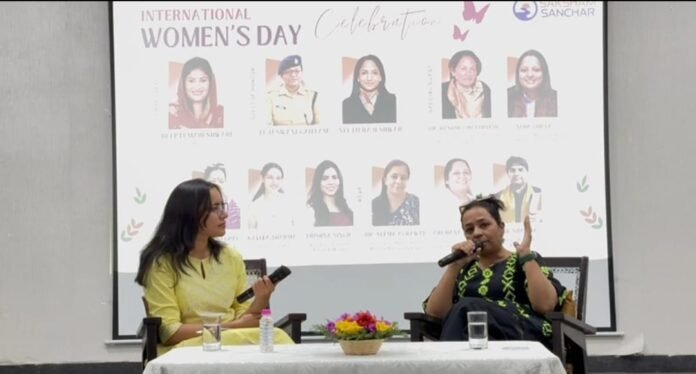
On March 4, 2025, Kanoria PG Mahavidyalaya witnessed an engaging celebration of International Women’s Day, hosted by the Saksham Sanchar Foundation in collaboration with the college’s English Department. The event served as a tribute to women who have carved their own paths and inspired many through their work. Among the esteemed guests was Kavita Sharma, a company secretary-turned-content creator from Jaipur, whose journey in the digital world has been nothing short of remarkable.
From Corporate to Content Creation
Kavita Sharma, popularly known by her social media alias Aakhri Pasta, has captivated audiences with her relatable and entertaining mimicry videos. Her impeccable comic timing and ability to infuse cultural nuances into her content have garnered widespread appreciation. From mimicking celebrities like Shalini Passi and Ankita Lokhande to showcasing Rajasthan’s vibrant culture through her videos, Kavita has built a brand that resonates with people across India.
Her unique content has caught the attention of leading platforms like Pinkvilla and India Today, further solidifying her place in the digital content space. With a rapidly growing audience on Instagram, she has proved that passion, creativity, and perseverance can turn dreams into reality. Her story is an inspiration to aspiring digital creators who wish to carve a niche in the influencer space.
In Conversation with Kavita Sharma
During the event, Kavita engaged in a candid conversation, offering insights into her journey and the evolving digital landscape. Here are some key takeaways from her discussion:
1. The Story Behind ‘Aakhri Pasta’
Q:Your social media handle, ‘Aakhri Pasta,’ is quite an interesting name! What’s the story behind it?
Kavita: It’s a common question, but honestly, there’s no deep story behind it. Back in 2018-19, when I was working in corporate, I started food vlogging and needed a catchy name for my page. After a lot of brainstorming, I found Aakhri Pasta quirky and easy to remember. Though I eventually stopped food blogging, I felt connected to the name and decided to carry it forward into my content creation journey.
2. From Company Secretary to Content Creator
Q:Despite having a career as a CS, what inspired you to pursue content creation?
Kavita: I worked as a company secretary for 6-7 years in Jaipur, but I found the 9-to-5 routine quite exhausting. I was doing it for financial stability, but I knew it wasn’t something I wanted for a lifetime. I have always loved being in front of the camera—whether acting or creating videos—so I wanted to shift to a creative field. The lockdown in 2020 gave me that opportunity, and when some of my videos started gaining traction, I decided to take content creation seriously.
3. Tips for Aspiring Influencers
Q:Many people struggle to find their footing in the influencer space. What advice would you give them?
Kavita: The first step is simple—just start. Grab a camera and begin creating. But one crucial piece of advice is to choose your niche. Don’t try to mix everything in one account—if you’re into food blogging, stick to it; if comedy is your thing, focus on that. A clear niche helps in building a loyal audience.
4. Growing Opportunities in the Influencer Space
Q:How has the landscape of content creation changed over the years?
Kavita: A few years ago, platforms like TikTok had very few recognizable creators, mostly making dance or comedy videos. Now, Instagram has transformed the game—it’s not just about entertainment, but also about monetization. Brands now invest in influencer marketing, offering significant earning opportunities. Personally, I earn 4-5 times more as a content creator than I did in my CS job, and I get the freedom to work on my own terms without approvals from a boss!
Many influencers are also stepping into web series and entertainment industries, which shows how content creation can open doors to multiple career paths.
5. Challenges of Being a Content Creator
Q:What are some of the challenges you face in the influencer space?
Kavita: The biggest challenge is the lack of understanding about our work. Some people still don’t recognize content creation as a legitimate career and dismiss it as ‘just making videos.’ Secondly, as influencers, we have a responsibility towards our audience—we need to ensure we’re putting out quality and meaningful content. Lastly, there’s constant pressure to stay relevant amidst increasing competition.
6. Managing Personal & Professional Identity
Q:Being married to Kunal Verma, who is also a public figure, do you feel an identity overlap or pressure?
Kavita: Definitely! When I married Kunal, I wasn’t an influencer yet, so people introduced me as Kunal Verma’s wife. While I respect that, I also wanted to build my own identity. That’s why I stepped into content creation—I wanted to be recognized for my own work and creativity.
A Role Model for Aspiring Creators
Kavita Sharma’s journey is a testament to the power of following one’s passion and breaking stereotypes. She has shown that with determination and creativity, one can transition from a conventional career to a fulfilling and successful digital profession.
Her words at the event left an impact on the audience, especially young students and aspiring influencers, who walked away inspired by her candid insights and experiences. As the influencer space continues to grow, creators like Kavita Sharma are paving the way for a more inclusive and creative digital world.
Many people pass through our lives, but only a few leave an unforgettable impact, imparting life lessons that stay with us forever. Today, I had the privilege of meeting such a remarkable personality—Sunita Nagpal. The occasion was the International Women’s Day event held at Kanoria PG Mahavidyalaya on March 4, 2025. Organized by the Saksham Sanchar Foundation in association with the English Department of Kanoria PG Mahavidyalaya, the event was a tribute to inspiring women. I am deeply grateful for the opportunity to witness the wisdom of such an extraordinary individual.
Sunita Nagpal is a distinguished theatre and film director based in Jaipur, India. An alumna of the prestigious National School of Drama (NSD), she has made significant contributions to the performing arts. As the founder of Epilogue Theatre-Jaipur, she has created a vibrant platform dedicated to promoting theatrical arts in the region. Beyond directing, she has also showcased her acting prowess in various films. Her notable performances include her role as Dr. Shalini, a gynecologist, in the critically acclaimed film Mimi (2021). Her other acting credits include Dahaad (2023) and Rahiman by Project Yugm (2016).
Through her multifaceted roles as a director, actress, and educator, Sunita Nagpal continues to enrich Jaipur’s cultural landscape and inspire the next generation of theatre enthusiasts. However, what stood out the most today was not just her impressive resume, but the invaluable life lessons she shared with us.
Her session began with a lighthearted yet profound engagement with students. She humorously broke the ice, teaching them the importance of speaking up, of expressing their thoughts freely. “Don’t keep things bottled up within you. Don’t take today’s feelings into tomorrow. Every day is a new start,” she said. Her words struck a chord, reminding us that self-expression is not just a key to happiness but also essential for achieving inner peace.
One of the most striking lessons I learned today was about humor and its place in life. How humor has its own audience, and those who fail to understand it often get frustrated by those who wield it effortlessly. “Harsh but true that people in positions of power often have egos so large they cannot handle humor or criticism.” This was an eye-opening realization. I noted down one of the most valuable takeaways of the day: “A person who can’t handle criticism can never be a great leader.” As someone who aspires to lead, this lesson resonated deeply with me.
Her way of interacting with students and children was so unique that even hours after the session, I found myself reflecting on her words. Some people come and go without leaving a trace, while others make such an impact that words fail to capture their essence. Sunita Nagpal belongs to the latter. Today, as a listener, I am beyond grateful for the shift in my perspective. She reinforced my belief in the language of honesty—something rare in a materialistic world where many wear multiple masks to fit in.
Meeting Sunita Nagpal was more than just an event; it was an experience—an invaluable lesson in courage, authenticity, and embracing life with all its imperfections. Her words will stay with me, guiding me through my journey, reminding me that true leadership and success come from honesty, resilience, and the ability to express oneself fearlessly.
Discover everything about the Krikya app in Bangladesh, including its diverse casino games, exciting sports betting options, sleek user interface, and easy download and installation process for Android and iOS. Explore the generous bonuses and promotions offered, making it a must-try platform for gaming enthusiasts.
Krikya App in Bangladesh: A Leading Platform for Betting and Entertainment
Krikya has established itself as a trusted and dynamic platform for online casino gaming and sports betting in Bangladesh. It stands out for its user-friendly design, offering a seamless and secure experience tailored to meet the preferences of Bangladeshi users. With its extensive range of games and betting options, Krikya caters to both newcomers and seasoned players, ensuring a diverse and exciting selection.
One of the standout features of Krikya is its dedicated mobile application, designed for both Android and iOS devices. The app provides intuitive navigation, quick access to games, and uninterrupted betting opportunities, allowing users to engage with their favourite activities anytime and anywhere. Its streamlined interface and fast performance make it an indispensable tool for gaming enthusiasts.
Krikya takes pride in offering innovative features, such as live betting and real-time updates, ensuring players remain engaged and informed. The platform also places a strong emphasis on security and fair play, employing advanced encryption technology to safeguard user data. Additionally, multiple local payment options are available, making transactions smooth and hassle-free for Bangladeshi users.
Navigating Key Sections in the Krikya App
The interface of the Krikya app is sleek and user-friendly, designed for seamless navigation. At the top of the screen, users will find a central navigation bar providing quick access to Sports, Casino, and Promotions. These categories are clearly labelled, ensuring easy exploration of the app’s features.
The home screen displays trending games and events prominently, allowing users to engage quickly with popular options. At the bottom of the interface lies the toolbar containing key buttons for the Home, Live Chat Support, Profile, and Deposit sections, ensuring essential features are always within reach.
Each section is intuitively arranged, minimizing confusion and maximizing accessibility. Key buttons, such as “Play Now” and “Bet Slip”, are strategically placed, making interaction smooth and efficient. The Krikya app’s layout ensures users can effortlessly find their favourite games or manage their accounts with ease.
How to Download and Install the Krikya Mobile App on Android
Downloading and installing the Krikya mobile app on Android is simple and straightforward. Since the app is not available on the Google Play Store, users need to download the APK file directly from the Krikya website and install it manually. Follow these steps to get started:
Visit the Krikya website: Open the browser on your Android device and go to the official Krikya website.
Locate the APK file download link: Navigate to the section for downloading the mobile app and tap on the provided APK download link.
Download the APK file: Confirm the download when prompted, and allow the file to save on your device.
Enable installation from unknown sources: Before installing, go to your device’s settings, select “Security” or “Privacy”, and enable the option to install apps from unknown sources.
Locate the downloaded APK: Open your device’s file manager and find the APK file in your “Downloads” folder.
Install the app: Tap on the APK file and confirm the installation by following the prompts.
Launch the app: Once installed, open the Krikya app. Start the Krikya sign up process or log into your account to start playing.
Enjoy seamless gaming and betting on Krikya right from your Android device.
How to Download and Install the Krikya App on iOS via the App Store
Easily access Krikya’s exciting features on your iPhone by following these simple steps to download and install the app from the App Store. The process is quick, secure, and ensures you have the latest version of the app for an enhanced experience:
Open the App Store: Launch the App Store on your iOS device from your home screen.
Search for Krikya: Tap the search bar at the bottom and type “Krikya” to locate the app quickly.
Select the Krikya App: From the search results, tap on the Krikya app to open its download page.
Start the Download: Tap the “Get” button and confirm your Apple ID or Face/Touch ID to begin downloading.
Wait for the Installation: Allow the app to be downloaded and installed automatically on your device.
Locate the App: Once installed, find the Krikya app icon on your home screen.
Launch the App: Tap the app to open it and log in or sign up to start enjoying the features.
With these steps, you’ll have Krikya ready to use in no time and can immediately begin placing bets and enjoying your favourite games seamlessly.
Krikya’s Advanced Mobile Betting Experience in Bangladesh
Krikya’s mobile app has revolutionized sports betting in Bangladesh by offering a user-friendly platform with extensive capabilities. The app caters to diverse sports enthusiasts, featuring popular options like cricket, football, basketball, and tennis. Bangladeshi bettors can explore local favourites alongside international leagues and tournaments, ensuring a well-rounded and engaging experience for every sports fan.
Krikya provides a variety of betting types to suit different preferences. From standard bets like match winners and point spreads to advanced options like accumulators and over/under totals, the app empowers users with numerous opportunities to tailor their wagers. This diversity allows both beginners and seasoned bettors to enjoy a customized betting strategy.
Live betting is a standout feature of Krikya’s mobile platform. Users can place bets in real-time as the action unfolds, with odds that dynamically adjust based on in-game events. This feature heightens the excitement and engagement, enabling bettors to make more informed decisions during matches or events.
Diverse Casino Games at Your Fingertips
Krikya mobile app boasts an extensive collection of casino games, offering endless entertainment for gaming enthusiasts. Its game library includes a wide variety of options to suit every preference, ranging from classic slot games to modern video slots packed with immersive graphics and innovative features. For players who enjoy fast-paced action, the app features numerous arcade-style games and quick gambling experiences that deliver high-energy excitement in every round.
Card game lovers will find a selection of traditional favourites, such as poker and blackjack, designed to captivate with their strategic depth and rewarding payouts. Additionally, the app supports games with progressive jackpots, giving players the opportunity to win life-changing rewards with just one spin or play.
Krikya collaborates with leading software providers to deliver high-quality visuals, sound effects, and gameplay mechanics, fostering an engaging and immersive gaming environment. With this level of diversity and innovation, the casino game options in Krikya guarantee excitement and thrills for every kind of gamer, anytime and anywhere.
Immersive Live Casino Experience in Krikya
The live casino in the Krikya mobile app offers an unparalleled gaming experience, combining the excitement of real-time interaction with the convenience of playing from anywhere. Players can enjoy a wide variety of classic games such as Blackjack, Roulette, Baccarat, and Poker, hosted by professional live dealers who create a casino-like atmosphere.
One of the standout features of the live casino is its seamless streaming quality, ensuring smooth gameplay without interruptions. Additionally, the app provides multiple table options to cater to different skill levels and betting preferences.
Advanced technology ensures secure transactions and fair gameplay, giving players peace of mind. The live casino in Krikya not only delivers entertainment but also creates opportunities for strategic gameplay and social interaction.
Exciting Bonuses and Promotional Offers on Krikya
Krikya mobile app offers a variety of attractive bonuses and promotional deals designed to enhance the user experience. New users can enjoy a generous welcome bonus of up to ৳20,000 upon signing up and making their first deposit. This ensures a thrilling start to their gaming or betting adventure.
For regular users, Krikya provides cashback offers that can refund up to 15% of losses weekly, allowing players to extend their gameplay and recover a portion of their stakes. Additionally, there are weekly deposit bonuses of up to ৳5,000 that reward consistent engagement on the platform.
Seasonal promotions and special event-based bonuses are also featured, offering unique rewards during festivals or major sports tournaments. These promotions frequently include free spins, betting credits, or boosted winnings, making the app’s experience more rewarding. With these offers, Krikya ensures excitement and value for all users.
Krikya’s Licence and Regulation for a Secure Gaming Experience
Krikya operates under the reliable licensing and regulation of Curaçao eGaming, one of the most respected authorities in the online gambling industry. Holding a Curaçao licence ensures that Krikya adheres to strict legal standards, offering fair play and secure transactions to all users. This licence also guarantees that the platform’s operations are transparent and regularly audited for compliance.
By partnering with a trusted regulatory body like Curaçao eGaming, Krikya assures its players of a safe environment for both casino games and sports betting. The app implements advanced encryption technologies to protect user data and follows international standards to promote responsible gambling practices.
For users, the Curaçao eGaming licence adds a layer of trust and credibility, making Krikya a dependable choice in the crowded online gambling market. This regulation underscores Krikya’s commitment to providing a legitimate, enjoyable, and worry-free gaming experience.
Every summer, mango lovers across India eagerly await the arrival of Alphonsos. Their rich, buttery sweetness is more than just a seasonal delight—it carries a fascinating history that spans centuries, continents, and even royal dining tables. What makes Alphonso so special? The answer lies in an unexpected twist from 400 years ago.
A Taste That Signals Summer
The first sign of summer isn’t just the rising heat—it’s the scent of mangoes ripening in kitchens, their sweet fragrance filling the air. As children, we would hover around straw-filled baskets, gently pressing each golden fruit, hoping to find one perfectly soft and ready to eat. The wait felt endless, but the first bite made it all worthwhile—juicy, buttery, and bursting with sunshine.
Every family had its favorites—Langda, Dussehri, Kesar—but one mango stood above the rest: the Alphonso. Silky smooth and impossibly fragrant, it was a fruit meant for special moments. But here’s something surprising: this beloved mango, now the crown jewel of Indian summers, was first introduced by the Portuguese over 400 years ago, leaving behind a legacy as rich as its taste.
A Mango Fit for a King
Not all mangoes were suited for careful slicing. Many were fibrous, their pulp best enjoyed the messy way—juice trickling down chins, hands sticky with sweetness. While this was part of the charm for many Indians, the Portuguese, who ruled Goa in the 16th century, were accustomed to neatly cut fruit at their dining tables. They wanted a mango that was smooth, easy to slice, and elegant to serve.
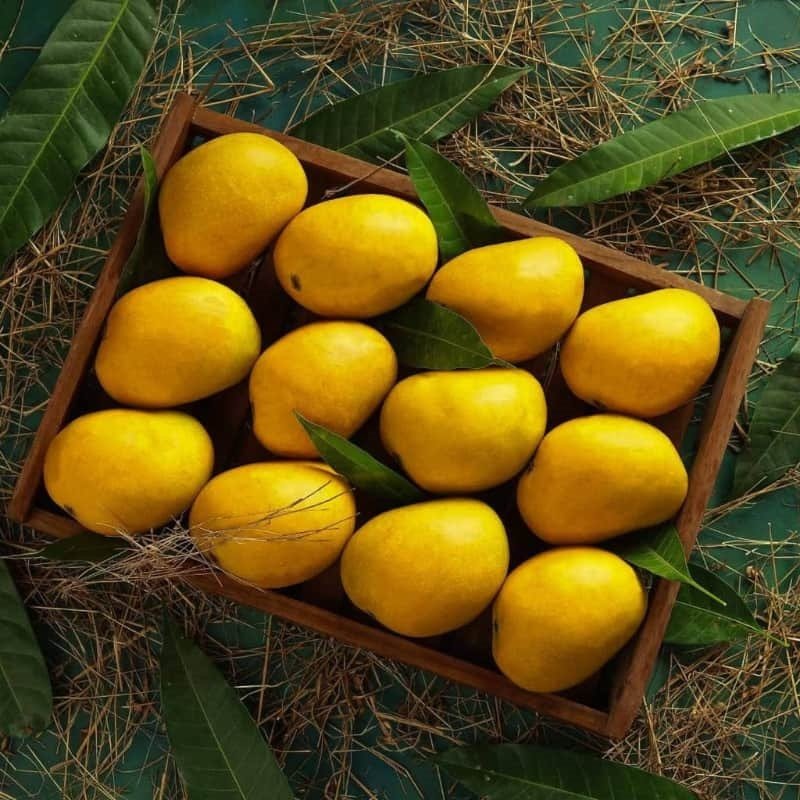
Enter Afonso de Albuquerque, a Portuguese general and viceroy. His men introduced the technique of grafting—a method of combining the best traits of different mango trees. Over time, they cultivated a mango that was not only sweeter and silkier but also easier to cut. In honor of Afonso, they named this prized fruit ‘Alphonso’—and the rest, as they say, is history.
Call It What You Will, It’s Still the King
No matter where you go in India, the love for Alphonso mangoes stays the same, even if the name changes. In Maharashtra, it’s fondly called Hapus, a name that instantly brings back childhood memories of sticky fingers and summer afternoons. In Gujarat, it’s known as Hafus, while in Karnataka and parts of Goa, people call it Aphoos.
But whatever the name, one thing never changes—its rich, buttery texture, irresistible aroma, and melt-in-your-mouth sweetness. The Alphonso isn’t just a mango; it’s a taste of summer itself.
Why Ratnagiri and Devgad Alphonsos Taste So Good
The best Alphonsos don’t grow just anywhere. They come from Ratnagiri, Devgad, Sindhudurg, and a few other places in Maharashtra’s Konkan region. If you’ve ever tasted an authentic Ratnagiri Alphonso, you’ll know what makes it special—the unique red soil, the salty sea breeze, and just the right amount of sunshine. This combination gives Alphonso mangoes their signature saffron-yellow color and rich, creamy sweetness.
For generations, Konkan farmers have carefully nurtured these mango trees. Even today, Alphonsos from Ratnagiri and Devgad sell out within hours, with people paying premium prices for an original GI-tagged Alphonso (yes, there are fakes out there!).
A Mango That Crossed Oceans
The Alphonso didn’t just win hearts in India—it became a global star. For years, Indians living in the US and Europe longed for its taste. In fact, the US banned Indian mango imports in 1989 over pest concerns. But in 2007, after much negotiation, the ban was lifted, and soon, Alphonsos were flying across the world again!
Today, Alphonso mangoes are exported to Dubai, the UK, Singapore, and even Japan. But for many of us, nothing beats the joy of eating one straight from a market in Mumbai or Goa, with juice dripping down our fingers.
More Than Just a Mango—A Tradition
In many Indian families, Alphonso season is a festival of its own. Grandparents tell stories of how they’d wait all year for that first box of mangoes. Families argue over the best way to eat them—some swear by aamras and puris, while others love thin slices with chilled milk.
And let’s not forget the fierce debates over which city has the best Alphonsos! Ratnagiri lovers and Devgad loyalists have their own opinions, much like cricket fans arguing over Virat Kohli vs. Rohit Sharma.
In 2018, Alphonso mangoes from Ratnagiri and surrounding regions were given a Geographical Indication (GI) tag, meaning that only mangoes grown here can officially be called ‘Alphonso.’ This helps protect farmers from counterfeit sellers and ensures that the real Alphonso continues to shine.
The Legacy Lives On
Today, Alphonso mangoes remain one of India’s most prized exports, but for many, their true value isn’t in international markets—it’s in the simple joys of summer. The first whiff of mangoes in the air, the laughter of family around a table, and the burst of sweetness with every bite remind us why Alphonso will always be the king of fruits.
So, the next time you savor a slice of this golden delight, remember—it’s not just a mango; it’s a piece of history, a tradition, and a taste of home.
In the quiet town of Jharsuguda, Odisha, Sujata Agarwal has transformed her passion for gardening into a groundbreaking agricultural success. From growing flowers as a hobby to pioneering hydroponics and ultimately achieving an extraordinary feat in saffron farming, Sujata’s journey is a testament to perseverance and innovation.
From Terrace Garden to Hydroponic Farming
Sujata’s love for flowers traces back to her childhood, inspired by her mother’s passion for gardening. After marrying Pawan Kumar Agarwal, she continued her hobby by cultivating a vibrant terrace garden filled with over 250 varieties of roses, marigolds, gerberas, and hibiscus. However, the COVID-19 lockdown in 2020 presented her with an unexpected opportunity to explore new agricultural techniques.
While scrolling through her phone during the lockdown, Sujata discovered hydroponics—a soilless farming method that intrigued her. Determined to experiment, she conducted extensive research and set up a 320-planter hydroponic system in a 100 sq ft space at her home. Despite initial setbacks, she persevered, refining her techniques and successfully growing high-quality vegetables like lettuce, red cabbage, broccoli, and parsley.
Building a Thriving Business with Hydroponics
Recognizing the market demand, Sujata reached out to local cafes and restaurants, offering fresh, locally grown vegetables that were previously imported from cities like Pune and Bengaluru. Her pricing strategy—offering produce at competitive rates—helped her establish a loyal customer base. As demand increased, she expanded her setup to a 720-planter hydroponic system, using advanced techniques like the Dutch bucket system and deep water culture to maximize productivity.
Sujata’s meticulous approach to hydroponics allowed her to achieve seven harvests per year, significantly more than traditional farming. With a growing customer base, her yearly income from hydroponics alone reached approximately Rs 1 lakh. Encouraged by this success, she ventured into microgreens farming in 2022, further diversifying her business.
Empowering Others Through Training
To promote healthy eating and self-sufficiency, Sujata began training aspiring farmers in hydroponic and microgreens farming. She has since trained over 35 individuals, helping them set up their own farming ventures. Her business, Bloom in Hydro, has gained widespread recognition, with Sujata earning between Rs 15,000 to Rs 20,000 per week from microgreens sales alone.
Defying the Odds: Saffron Farming in Odisha
Despite her success in hydroponics, Sujata wanted to push the boundaries further. In 2022, while praying, she was inspired by a box of saffron and wondered if she could grow the precious spice in Odisha—an idea that many deemed impossible due to the region’s climate.
Undeterred by skepticism, Sujata invested Rs 11 lakh to create a climate-controlled aeroponics system. She procured saffron bulbs from a farmer in Kashmir, overcoming challenges in sourcing and transportation. By October 2022, her efforts bore fruit—she successfully harvested 450 grams of saffron from 25 kg of bulbs, followed by another 50 grams in January 2023.
Her pioneering saffron farming venture has not only defied traditional agricultural norms but has also become a lucrative business, earning her an annual income of Rs 32 lakh. Sujata now sells saffron and its by-products, including saffron serum, further expanding her entrepreneurial success.
A Future Rooted in Innovation
Sujata Agarwal’s inspiring journey from a homemaker to a successful agripreneur highlights the power of resilience, learning, and innovation. Her ability to adapt and experiment with new techniques has not only transformed her life but has also encouraged others to explore modern farming methods. As she continues to expand her ventures, Sujata stands as a beacon of inspiration for those looking to revolutionize agriculture in India.
Copper, an essential industrial metal, is witnessing an unprecedented surge in global demand. This growth is primarily driven by the expansion of electric vehicles (EVs) and clean energy technologies. As countries like India, China, and the United States strive to establish secure supply chains, copper’s role in the modern economy has become more crucial than ever.
India’s Copper Exploration Initiatives
Despite its increasing demand, domestic copper production in India has been on a decline. In 2023-24, production fell to 3.78 million tonnes, marking an 8% decrease from 2018-19. As a result, India has become more dependent on copper imports, raising concerns about supply security.
In response, India has secured a 9,000-sq-km block in Zambia for copper and cobalt exploration. This region is renowned for its high-grade mineral deposits, making it a strategic investment. The Geological Survey of India (GSI) will spearhead the exploration, with the goal of strengthening India’s position in the global copper market.
The Strategic Importance of Copper
Copper is indispensable across various industries, particularly in defense and energy. In the United States, it is the second-most used material in the defense sector, highlighting its critical role in national security.
As global demand continues to rise, experts predict that supply will struggle to keep pace by 2035. This anticipated supply-demand gap underscores the necessity of securing mining operations, investing in overseas assets, and enhancing domestic production capabilities.
Global Copper Supply Dynamics
China dominates the copper industry, controlling nearly half of the world’s smelting and refining capacity. However, the country is tightening its copper ore supply to manage overcapacity in its smelting sector. This decision has far-reaching consequences for global supply chains, as countries dependent on Chinese refining capabilities face new challenges in securing raw materials.
Geopolitical Risks in Mining Investments
The Democratic Republic of Congo (DRC), Chile, and Peru are among the world’s largest copper-producing nations. These countries hold substantial reserves and are expected to play a key role in meeting rising demand. However, investing in overseas copper assets is fraught with geopolitical risks, including political instability, regulatory changes, and trade restrictions.
Future Outlook for Copper Production
The International Energy Agency (IEA) predicts that Africa’s share in global critical mineral production will expand significantly in the coming years. By 2030, the DRC is projected to become the world’s second-largest copper supplier. Recognizing this trend, the Indian Ministry of Mines is actively working to acquire more mineral assets across Africa to bolster supply security. However, competition for copper resources is expected to intensify, with major economies vying for access to these valuable deposits.
Challenges in the Copper Supply Chain
The global copper supply chain faces several pressing challenges:
U.S. National Security Concerns: The United States has launched investigations into the impact of copper imports on national security, aiming to identify potential supply chain vulnerabilities.
China’s Oversupply Issues: The decline in treatment and refining charges in China suggests an oversupply problem, forcing many smelters to consider suspending operations due to reduced profit margins.
Rising Costs and Environmental Regulations: As countries impose stricter environmental regulations, mining operations face increased costs, further complicating supply chain dynamics.
Conclusion
The global copper industry stands at a pivotal moment. While demand for the metal is soaring due to advancements in EVs, renewable energy, and defense applications, supply-side challenges pose significant hurdles. Countries are actively working to secure their copper resources through domestic production, overseas investments, and strategic partnerships.
As competition for copper intensifies, nations must navigate geopolitical risks, supply chain disruptions, and economic fluctuations to ensure a stable and sustainable supply of this essential metal. The future of copper hinges on a delicate balance between resource management, technological innovation, and international cooperation.
As the number of swine flu (H1N1) cases in India continues to rise, health authorities are on high alert. By December 2024, India had recorded over 20,414 infections and 347 fatalities. States such as Delhi, Kerala, and Maharashtra have been particularly affected, prompting an urgent response from public health officials.
What is Swine Flu (H1N1)?
Swine flu, scientifically known as influenza A (H1N1), is a respiratory infection caused by the H1N1 virus. Initially identified in pigs, the virus mutated to infect humans, resulting in widespread outbreaks.
The symptoms of swine flu closely resemble those of seasonal flu and include:
Fever
Cough
Sore throat
Body aches
Chills
Fatigue
In severe cases, swine flu can lead to pneumonia and other respiratory complications, posing a significant risk to vulnerable populations such as children, the elderly, and individuals with pre-existing health conditions.
Swine Flu Outbreak in India (2024)
The swine flu outbreak in India has followed a concerning pattern, with Delhi reporting the highest number of cases. Other severely affected states include Kerala, Maharashtra, Tamil Nadu, Gujarat, and Rajasthan.
Maharashtra recorded the highest number of fatalities, followed by Kerala, Gujarat, Punjab, Chhattisgarh, and Haryana. Experts attribute the surge in infections to a combination of environmental factors, seasonal patterns, and increased human interaction. Viruses such as H1N1, H3N2, and adenoviruses have thrived in these conditions, leading to a significant spike in cases.
To combat the outbreak, the Indian government is closely monitoring the situation through the Integrated Disease Surveillance Programme (IDSP), ensuring swift responses to contain the spread.
Global Impact: WHO Data on Seasonal Flu
The World Health Organization (WHO) provides insight into the broader impact of influenza viruses, including H1N1. Annually, seasonal flu affects:
1 billion people worldwide
3–5 million individuals experiencing severe cases
290,000 to 650,000 fatalities due to respiratory complications
These numbers highlight the critical need for effective prevention and treatment strategies to mitigate the impact of influenza viruses.
Factors Contributing to the Surge in Cases
Several factors have contributed to the recent spike in swine flu cases across India:
Seasonal Patterns: Swine flu cases typically peak between January and March, and again from August to October, aligning with the current outbreak.
Environmental Conditions: The monsoon and winter seasons create favorable conditions for influenza viruses to thrive.
Increased Travel and Social Interactions: With post-pandemic restrictions easing, travel and social gatherings have increased, facilitating virus transmission.
Weakened Immunity: Many individuals have weakened immune systems due to changing weather conditions, COVID-19 complications, and stress.
Vaccination Delays: A lack of awareness and limited accessibility to flu vaccines have resulted in lower immunization rates, increasing susceptibility to infections.
How Does Swine Flu Spread?
Like other influenza viruses, swine flu spreads primarily through:
Person-to-Person Contact: Respiratory droplets from coughs, sneezes, or even talking can transmit the virus.
Contaminated Surfaces: The virus can survive on frequently touched surfaces like handrails, doorknobs, and electronic devices for hours.
Close Proximity to Infected Individuals: Being in close contact with someone carrying the virus significantly increases the risk of infection.
Treatment and Prevention Strategies
Antiviral medications such as oseltamivir (Tamiflu) and zanamivir (Relenza) are effective in treating swine flu. These medications work best when administered within 48 hours of symptom onset and should be taken under medical supervision.
Preventive Measures:
Vaccination: The annual flu vaccine is the most effective way to prevent infection.
Good Hygiene Practices: Regular handwashing, wearing masks in crowded places, and covering the mouth while coughing or sneezing can help reduce transmission.
Avoiding Close Contact: Limiting contact with infected individuals and maintaining social distancing can lower the risk of exposure.
Boosting Immunity: Maintaining a healthy lifestyle, including a balanced diet, regular exercise, and adequate sleep, strengthens the immune system against infections.
Conclusion
The rise in swine flu cases in India is a serious public health concern that demands immediate attention. While the government is actively monitoring the situation, individuals must also take proactive steps to protect themselves and their communities. By staying informed, getting vaccinated, and practicing good hygiene, we can collectively curb the spread of swine flu and reduce its impact on public health.