Home Blog Page 368

YUVIKA 2025: ISRO’s Young Scientist Programme for Space Enthusiasts

0

Is your child fascinated by space, rockets, and satellites? Do they dream of becoming an astronaut or a space scientist? If so, here’s an incredible opportunity! The Indian Space Research Organisation (ISRO) has opened registrations for YUVIKA 2025, its prestigious Young Scientist Programme, designed to give students hands-on exposure to space science and technology.

What is YUVIKA?

YUVIKA (YUva VIgyani KAryakram) is an exclusive educational initiative by ISRO, aimed at nurturing young minds and igniting their passion for space research. Targeted at students currently in Class 9, this programme introduces them to cutting-edge space technology, applications, and scientific advancements in an engaging and interactive way.

As part of ISRO’s ‘Catch Them Young’ mission, YUVIKA seeks to inspire the next generation of scientists and engineers to pursue careers in STEM (Science, Technology, Engineering, and Mathematics). The best part? ISRO fully sponsors the programme, covering accommodation, food, and study materials for all selected students.


Who Can Apply?

The programme is open to Class 9 students (as of 1 January 2025) studying in any school across India. Selection is based on a student’s academic performance and extracurricular achievements, with preference given to students from rural areas.


Important Dates to Remember

  • Announcement of the programme: 24 February 2025
  • Registration begins: 24 February 2025
  • Registration closes: 23 March 2025
  • First selection list announcement: 7 April 2025
  • Reporting to ISRO centres: 18 May 2025 (or as notified by ISRO)
  • Programme duration: 19 to 30 May 2025
  • Send-off date: 31 May 2025

Selection Process: How Are Students Chosen?

ISRO will evaluate applicants based on multiple criteria to ensure a fair and merit-based selection process. The selection is weighted as follows:

  • Class 8 academic performance: 50%
  • Performance in ISRO’s Online Quiz: 10%
  • Participation in Science Fairs (School/District/State/National level, past three years): 2-10%
  • Rank in Olympiads (School/District/State/National level, past three years): 2-5%
  • Winners in Sports Competitions (1st-3rd place at School/District/State/National level, past three years): 2-5%
  • Participation in Scouts/Guides/NCC/NSS (past three years): 5%
  • Students from Rural or Panchayat Area Schools: 15%

Where Will the Programme Take Place?

Selected students will visit one of ISRO’s prestigious research centres for an immersive learning experience. The seven ISRO centres hosting YUVIKA 2025 are:

  1. Indian Institute of Remote Sensing (IIRS), Dehradun
  2. Vikram Sarabhai Space Centre (VSSC), Thiruvananthapuram
  3. Satish Dhawan Space Centre (SDSC), Sriharikota
  4. UR Rao Satellite Centre (URSC), Bengaluru
  5. Space Applications Centre (SAC), Ahmedabad
  6. National Remote Sensing Centre (NRSC), Hyderabad
  7. North-Eastern Space Applications Centre (NE-SAC), Shillong

Travel & Expenses: Fully Sponsored by ISRO

ISRO will cover all expenses, including lodging, food, and study materials. Additionally, travel costs will be fully reimbursed, with students eligible for:

  • Second AC train fare or AC Volvo bus fare (from their nearest railway station/bus terminal to the assigned ISRO centre and back).
  • Reimbursement upon submission of original travel tickets.

How to Apply?

Parents, this is a golden opportunity to help your child take a giant leap toward a future in space science! Interested students must register online via ISRO’s official website before 23 March 2025.

For more details and registration, visit ISRO’s official website today. Don’t miss this once-in-a-lifetime opportunity!


Conclusion

The YUVIKA 2025 programme is an incredible initiative by ISRO to inspire and educate young minds about space science and technology. With hands-on training, expert guidance, and real-world exposure, students will gain invaluable insights into the fascinating world of space exploration. If your child has a passion for the cosmos, YUVIKA is the perfect platform to turn their dreams into reality!

Happy Holi 2025: Wishes, Messages & Greetings to Share with Loved Ones

0

Holi, the festival of colours, is a time of joy, togetherness, and vibrant celebrations. Falling on Friday, March 14, 2025, this festival marks the triumph of good over evil, inspired by the legendary tale of Prahlad. Across the country, people celebrate Holi by smearing colours, exchanging sweets like Gujiya, and spreading happiness.

To make your Holi even more special, we have compiled a collection of heartfelt wishes, images, messages, and greetings that you can share with your friends and family on WhatsApp, Facebook, and other social media platforms.

Holi 2025 Wishes & Greetings

  1. May this Holi bring you vibrant colours of joy, love, and prosperity! Wishing you a happy and safe Holi! 🌸🎨✨
  2. Let’s fill this Holi with sweet memories, endless laughter, and the brightest colours! Have a joyous and colourful Holi! 🌈🥳
  3. May your Holi be filled with bright hues of happiness, love, and good health. Wishing you and your family a wonderful festival of colours! 🌸💖
  4. This Holi, let’s forget all grudges and embrace each other with warmth and love! Happy Holi to you and your family! 🤗🌸
  5. Holi is the time to celebrate friendship, love, and new beginnings. Wishing you a Holi as vibrant as your spirit! 🌈💫
  6. As you splash colours on your friends and family, may your life be filled with shades of happiness and success! Happy Holi! 🎉🎨
  7. May this festival of colours brighten your life with joy, peace, and good fortune. Happy Holi to you and your loved ones! 🥰✨
  8. Holi is not just about colours but about togetherness, love, and happiness. Have a colourful and safe Holi! 🌸🌿
  9. May the colours of Holi paint your life with happiness, laughter, and prosperity! Wishing you a joyful Holi! 🌈🎊
  10. Just like the colours of Holi, may your life be filled with endless joy and positivity! Have a fantastic Holi celebration! 🥳🎨

Holi 2025 Messages for Friends & Family

  1. Let’s celebrate Holi with enthusiasm, positivity, and lots of colours! Wishing you a vibrant and joyful Holi, my dear friend! 🎉🌿
  2. May the splashes of colour brighten your life with laughter, love, and unforgettable memories. Happy Holi to you and your family! 🎨💖
  3. Let’s drench each other in colours of happiness and joy. May this Holi bring love, peace, and prosperity into your life! 🌈💞
  4. Wishing you and your family a Holi filled with love, laughter, and colours as bright as your smile! 🌸🥳
  5. The beauty of Holi is in forgetting past troubles and embracing the joy of the present. Have a wonderful and colourful Holi! 🎊🌿
  6. Holi is a time to celebrate love, unity, and togetherness. May this festival bring endless happiness into your life! Happy Holi! 🌈💫
  7. May your heart be filled with happiness and your life with the vibrant colours of Holi! Have a wonderful celebration! 🎉💖
  8. As you throw colours in the air, let them bring endless joy and success into your life! Wishing you a fantastic Holi celebration! 🌈✨
  9. Let’s play Holi with natural colours and make unforgettable memories with our loved ones. Wishing you a safe and happy Holi! 🎊🌿
  10. Wishing you a Holi filled with love, laughter, and colours that brighten your day and bring positivity into your life! 💖🌸

Happy Holi 2025 Status for WhatsApp & Facebook

  1. “Holi is the day to express love with colours. It is time to show affection and happiness.” Wishing you a joyful and colourful Holi! 🎨✨
  2. Let the colours of Holi bring peace, happiness, and prosperity to your life. Enjoy the festival to the fullest! 🌸💖
  3. “Holi is not just about colours; it’s about spreading love, laughter, and positivity.” Wishing you a fun-filled and safe Holi! 🌈🥳
  4. Celebrate this festival with enthusiasm and warmth. May the colours of Holi brighten your days ahead. Happy Holi! 🎊🌿
  5. Life is more fun when you add colour to it. This Holi, let’s spread joy and happiness all around! Have a wonderful Holi! 🌈💞
  6. Holi is a reminder that good always triumphs over evil. May your life be filled with positivity and success! 🌸✨
  7. Let’s fill our hearts with love and our hands with colours. Wishing you a Holi as bright as your dreams! 🎨💖
  8. This Holi, take a moment to appreciate the beauty of life, the joy of friendship, and the magic of colours! 🌈🥳
  9. Splash into the colours of joy and happiness. May this Holi bring you good fortune and great memories. Happy Holi! 🎊🌿
  10. Holi is the time to break free from worries and celebrate life with colour, music, and happiness. Enjoy the festival!

This Holi, spread love, happiness, and positivity by sharing these wonderful wishes, messages, and greetings with your loved ones. Wishing you a Holi filled with colours, laughter, and endless joy! 🌸🎨🥳

World Pi Day: Celebrating the Magic of Mathematics

0

Every year on March 14th, mathematicians, scientists, and enthusiasts worldwide celebrate World Pi Day. This special day is dedicated to honoring the mathematical constant π (pi), a number that has fascinated scholars for centuries. The date—3/14—corresponds with the first three digits of pi (3.14), making it the perfect occasion to acknowledge its significance in mathematics, science, and everyday life.

What is Pi?

Pi (π) is an irrational number, meaning it has an infinite number of non-repeating decimal places. It represents the ratio of a circle’s circumference to its diameter and is approximately equal to 3.14159. Pi is used extensively in geometry, trigonometry, physics, and engineering, playing a crucial role in calculations involving circles and curves.

The Origins of Pi Day

Pi Day was first celebrated in 1988, thanks to physicist Larry Shaw, who worked at the Exploratorium in San Francisco. Since then, it has grown into an international event, with schools, universities, and research institutions organizing activities such as pi recitation contests, math challenges, and even pie-eating competitions—because who can resist the pun between pi and pie?

Why is Pi Important?

Pi is more than just a number; it is a fundamental part of our universe. It appears in equations related to waves, planetary motion, electrical currents, and quantum mechanics. Scientists use pi to calculate planetary orbits, engineers rely on it for structural designs, and even artists find inspiration in its infinite nature.

Fun Ways to Celebrate Pi Day

Whether you’re a math enthusiast or just someone who enjoys a good excuse to eat pie, there are plenty of ways to celebrate Pi Day:

  • Memorizing Pi: Test your memory by trying to recall as many digits of pi as possible. The world record is over 70,000 digits!
  • Baking and Eating Pie: Since “pi” sounds like “pie,” many people bake and enjoy delicious pies in honor of the day.
  • Math Challenges: Schools and universities host math puzzles and trivia contests to engage students in mathematical exploration.
  • Learning About Pi’s History: Explore the contributions of great mathematicians like Archimedes, Euler, and Ramanujan, who made significant discoveries about pi.
  • Watching Educational Videos: Documentaries and online videos about pi help deepen understanding of its applications in real-world science and technology.

Beyond Pi Day: The Beauty of Mathematics

While Pi Day is a great way to celebrate mathematics, it also serves as a reminder of the beauty and importance of numbers in our daily lives. Mathematics is the foundation of modern technology, from computing and cryptography to space exploration and artificial intelligence.

Conclusion

World Pi Day is more than just a celebration of a mathematical constant—it is a tribute to human curiosity, discovery, and innovation. Whether you’re solving equations, enjoying a slice of pie, or simply appreciating the wonders of math, Pi Day offers something for everyone. So, on March 14th, take a moment to marvel at the infinite nature of pi and its remarkable presence in the universe!

75/25 Initiative for Hypertension and Diabetes

0

In 2023, the Government of India launched the “75/25” initiative on World Hypertension Day. This initiative aims to provide standardised care to 75 million individuals living with hypertension and diabetes by December 2025. As of March 2025, 42.01 million individuals have received treatment for hypertension, and 25.27 million for diabetes. This achievement reflects a commitment to address the rising prevalence of non-communicable diseases (NCDs).

Non-Communicable Diseases

Non-communicable diseases include hypertension, diabetes, and various cancers. They pose health burden globally. The National Programme for Prevention and Control of Non-Communicable Diseases (NP-NCD) was initiated in India in 2010. This programme aims to reduce the incidence of NCDs through early detection and treatment.

Key Features of the NP-NCD Programme

The NP-NCD employs a multifaceted strategy. This includes population-based screening for individuals aged 30 and above. Opportunistic screening is also conducted at all healthcare levels. The programme provides support for accurate diagnosis and cost-effective treatment options. Teleconsultation services enhance access to healthcare. A dedicated National NCD Portal monitors NCD statistics and trends.

Recent Screening Campaign

Recently, the Ministry of Health launched a nationwide NCD Screening Campaign. This campaign aims for 100% screening of individuals aged 30 and above by March 31, 2025. It is conducted across various healthcare facilities under the NP-NCD framework. Data collection and performance management are key components of this initiative.

Government Commitment and Resources

The Union Health Ministry has committed resources to combat NCDs. This includes the operationalisation of over 150,000 Health and Wellness Centres (HWCs). The government emphasises the importance of lifestyle changes and community participation in health promotion. This reflects a broader effort to integrate healthcare with societal well-being.

Future Directions

The focus on prevention is paramount. The government aims to ensure that at least 80% of diagnosed individuals receive treatment. Engaging the private sector and academic institutions is essential for achieving these goals. A comprehensive approach that includes lifestyle changes is critical for reducing the burden of NCDs.

E.W.S and D.G Quota in Indian Education System

0

The Economically Weaker Section (E.W.S) and Disadvantaged Group (D.G) quota is a significant initiative in India’s education landscape. Recently announced by the Delhi Directorate of Education, the admissions for the 2025 academic session selected approximately 44,000 children from over two lakh applications. This scheme aims to provide underprivileged children with access to quality education in private schools, fostering inclusivity and equal opportunities.

The Need for the E.W.S/D.G Quota

Educational inequality remains a pressing issue in India. To address this, the Right to Education (RTE) Act of 2009 mandates that private schools reserve 25% of their seats for children from E.W.S and D.G backgrounds. This includes Scheduled Castes, Scheduled Tribes, orphans, and children with disabilities. By integrating students from different socio-economic backgrounds, the policy seeks to create a more equitable education system.

Eligibility Criteria

Eligibility for the E.W.S/D.G quota varies by state, but generally, families must have an annual income within a specified limit, typically between ₹1 lakh to ₹5 lakh. To qualify, applicants must submit income certificates and proof of residence. Additionally, children are required to live within a designated distance from the school, which differs for urban and rural settings.

Admission Process

The admission process involves an online application through a government portal. Applicants must provide essential documents such as income and birth certificates. Once verified, a lottery system is employed to ensure fairness and transparency in the selection process, reducing the scope for irregularities.

Recent Developments

The Delhi education department has introduced measures to streamline admissions, including an online lottery system. However, challenges persist in other states. For instance, Maharashtra recently witnessed controversy regarding exemptions for private schools from the E.W.S quota. Legal interventions have been necessary to uphold children’s right to education, highlighting ongoing administrative and judicial challenges in implementation.

Challenges in Implementation

Despite its noble intent, the E.W.S/D.G quota faces several obstacles. One major issue is the delayed reimbursement process for private schools, leading to financial uncertainty for institutions and parents. Moreover, while the quota covers tuition fees, additional costs such as uniforms, books, and extracurricular activities remain the responsibility of parents, often posing a financial burden.

Social and Emotional Barriers

Students admitted through the E.W.S quota frequently struggle with social integration. Differences in socio-economic backgrounds can make adjustment difficult, particularly in private schools where English is the primary medium of instruction. Additionally, many families lack the educational background to support their children’s academic progress at home. Emotional challenges, including feelings of inferiority and exclusion, further complicate the experience of E.W.S students.

Need for Comprehensive Support

Experts emphasize the importance of continuous support for E.W.S students beyond primary education. One proposed solution is transforming government schools into centers of excellence, equipped with trained professionals to assist students in their academic and emotional development. Addressing social integration challenges through mentorship programs and peer support initiatives is equally crucial for ensuring long-term success.

Conclusion

The E.W.S and D.G quota is a crucial step toward bridging educational inequality in India. However, addressing financial, social, and emotional barriers is necessary for the initiative to achieve its full potential. Strengthening government schools, improving financial support mechanisms, and fostering inclusive school environments will be key to ensuring that underprivileged children receive not just access to education, but also the resources to thrive within it.

Large Phased Array Radar (LPAR)

0

China has recently deployed a highly advanced Large Phased Array Radar (LPAR) system in Yunnan province, near the Myanmar border. This move significantly enhances China’s surveillance capabilities, enabling it to monitor vast areas, including the Indian Ocean and parts of Indian territory. With a range exceeding 5,000 kilometers, the radar can track missile tests in real-time, raising serious concerns for India’s national security and missile program.

Large Phased Array Radar (LPAR): An Overview

The LPAR is a state-of-the-art radar system designed for early warning and advanced surveillance. Unlike conventional radars, which rely on mechanically rotating antennas, LPAR employs electronically controlled antennas that allow for rapid scanning of large areas with precision. This technology enables the tracking of multiple targets simultaneously, making it an essential tool for monitoring ballistic missile launches and collecting critical data on their trajectories and speeds.

Strategic Location and Extensive Range

The placement of the LPAR in Yunnan province is a strategic decision by China. Its location provides a vantage point for monitoring key maritime routes and military activities across the Bay of Bengal and the Indian Ocean. More critically, its range encompasses India’s missile testing facilities, including Dr. APJ Abdul Kalam Island, which serves as the primary site for testing advanced missiles like Agni-5 and K-4. This allows China to gather real-time intelligence on India’s missile development efforts.

Enhancing Intelligence and Surveillance Capabilities

The deployment of the LPAR significantly boosts China’s intelligence-gathering capacity. With the ability to track India’s missile tests, Beijing can analyze critical information regarding missile speeds, launch patterns, and trajectories. This intelligence provides China with a strategic edge in countering India’s growing missile arsenal. The LPAR is part of a broader initiative to strengthen China’s early-warning systems and military operations, reinforcing its position in the region.

Military Implications for India

The presence of an advanced surveillance radar so close to Indian territory presents significant challenges for India’s defence and security. Experts warn that China’s ability to monitor India’s missile tests could undermine strategic deterrence by allowing China to develop countermeasures against India’s missile program. This could affect India’s military planning and preparedness, necessitating the development of counter-surveillance measures.

In response, India is exploring various strategies to mitigate the impact of China’s intelligence advantage. Possible countermeasures include deploying electronic warfare techniques, developing stealth missile capabilities, and enhancing cyber-defence mechanisms to safeguard sensitive military operations.

Conclusion

China’s deployment of the Large Phased Array Radar in Yunnan province is a significant development that alters the strategic balance in the region. The radar’s extensive range and advanced capabilities pose challenges to India’s missile program and overall national security. In light of these developments, India must adapt its defence strategies and explore technological innovations to maintain strategic equilibrium in the evolving geopolitical landscape.

What is Geet Gawai?

0

The recent visit of Prime Minister Narendra Modi to Mauritius highlighted the deep-rooted cultural ties between India and the island nation. Among the many grand gestures of welcome, one stood out—the traditional Bhojpuri performance known as Geet Gawai. This vibrant art form not only set the stage for the visit but also reaffirmed the rich heritage and identity that the Indian diaspora has nurtured in Mauritius over generations.

What is Geet Gawai?

Geet Gawai is a traditional Bhojpuri musical ensemble performed predominantly by women. Integral to life’s significant milestones, especially weddings, this practice is more than just entertainment—it is a communal and spiritual experience. A typical performance begins with invocations to deities, followed by uplifting songs that celebrate love, unity, and devotion. Recognizing its cultural significance, UNESCO inscribed Geet Gawai as an Intangible Cultural Heritage of Humanity in December 2016.

Historical Roots of Geet Gawai in Mauritius

The origins of Geet Gawai in Mauritius date back to the arrival of Indian indentured laborers in the 19th century. Between 1834 and the early 1900s, nearly five lakh Indians were brought to Mauritius, many of whom hailed from Bhojpuri-speaking regions. Despite the challenges of displacement and adaptation, they preserved their customs, language, and traditions, including Geet Gawai. Over time, this musical expression became a symbol of resilience and cultural continuity.

Cultural Practices and Rituals

Geet Gawai plays a central role in pre-wedding ceremonies in Mauritius. Female family members gather to engage in household tasks like sorting turmeric and rice, while singing devotional and celebratory songs. The practice fosters strong community bonds and reinforces cultural identity among the Bhojpuri-speaking population. Passed down through generations, Geet Gawai remains an essential element of social and spiritual life in Mauritius.

The Bhojpuri Language in Mauritius

Bhojpuri is one of the prominent languages spoken in Mauritius. As per the 2011 Census, around 5.3% of the population speaks Bhojpuri, and it plays an important role in political discourse and cultural expressions. Recognizing its significance, the Mauritian government has introduced educational policies to promote Bhojpuri, incorporating it into primary school curricula.

Mauritius: A Mini India

Often referred to as “Mini India,” Mauritius boasts a significant population of Indian origin. The cultural imprint of Indian traditions is evident in the everyday lives of Mauritians, from attire to religious observances and festivals. Indian heritage is celebrated widely, making Mauritius a living testament to India’s far-reaching cultural influence.

Government Initiatives to Promote Bhojpuri

The Government of Mauritius has actively worked to preserve and promote the Bhojpuri language and culture. The Bhojpuri-Speaking Union Act was established to support cultural activities and initiatives. Additionally, events such as the Bhojpuri Mahotsav were launched to celebrate and promote Bhojpuri heritage. While the festival faced delays due to the pandemic, efforts to revive and sustain such cultural expressions remain strong.

Conclusion

The enduring tradition of Geet Gawai underscores the rich and vibrant cultural ties between India and Mauritius. More than just a performance, it is a cherished expression of identity, community, and history. As Mauritius continues to honor its ancestral heritage, Geet Gawai stands as a testament to the strength of cultural preservation and the unbreakable bonds between the two nations.

Jodhpur MBA’s Millet Creations Turn Into a Multi-Crore Bakery, Winning PM’s Praise

0

In an inspiring tale of innovation and perseverance, Jodhpur’s Amit Soni, a former MBA professional, transformed his passion for baking into a multi-crore venture. His journey took an unexpected and remarkable turn when Prime Minister Narendra Modi himself cut a millet-based chocolate truffle cake he had crafted, catapulting his bakery into the national spotlight.

A Millet Experiment That Took Center Stage

A few years ago, Amit was entrusted by the Indian Agricultural Research Institute (IARI-PUSA) with a challenge—creating confectioneries using millets, a grain often overlooked due to its distinct taste and lack of gluten. Determined to rise to the occasion, he experimented for over a month before perfecting his recipe—a rich, chocolate truffle cake made with pearl millet (bajra).

Little did Amit know that his creation would be chosen for a high-profile event. Officials from the Central Arid Zone Research Institute (CAZRI) collected his 80-kilogram cake, divided into eight massive 10-kilogram pieces, and transported it to Delhi. A few days later, Amit received a video link that left him in awe—PM Modi, accompanied by dignitaries like Narendra Singh Tomar, Kailash Choudhary, and Rajnath Singh, was slicing into his millet cake.

Jodhpur MBA’s Millet Creations Turn Into a Multi-Crore Bakery, Winning PM’s Praise

“It was a surreal moment, a goosebumps experience,” Amit recalls. This singular event catapulted his bakery into the limelight, garnering attention from prestigious organizations and institutions.

Jodhpur MBA’s Millet Creations Turn Into a Multi-Crore Bakery, Winning PM’s Praise

From a Salesman to a Master Baker

Born into a family of jewelry artisans, Amit chose a different path. With an MBA in HR and Marketing, he worked in various industries, including electronics and event management. However, his true calling emerged when he became a factory manager at a local bakery company, where he learned the intricacies of the trade.

His turning point came in 2017 when he decided to leave his job and start his own business. Despite knowing little about baking, he took a leap of faith and enrolled in the Institute of Hotel Management (IHM) Mumbai for formal training. Further refining his skills in Thailand, he gained expertise in crafting premium bakery products.

“My father insisted I stay in Jodhpur instead of moving abroad for job opportunities. He supported me financially, while my mother helped me perfect my cookies and cakes,” he shares. As a tribute to his parents, Amit launched his bakery, RDz 1983, in 2019, blending his entrepreneurial spirit with heartfelt family values.

Perseverance: The Key Ingredient

RDz 1983 initially focused on traditional bakery items, but Amit’s interest in millet-based products deepened when ICAR Rajasthan placed an order for a bajra-based chocolate truffle cake. Encouraged by the response, he expanded into millet cookies, brownies, and breads—products with a longer shelf life and growing demand among health-conscious consumers.

The journey was anything but easy. “I failed 96 times before perfecting a gluten-free millet cookie recipe. It took me three months to develop just two varieties, using sesame seeds and dry fruits,” Amit recalls. Today, his pearl millet cookies are among his best-selling products, distributed to over 100 hotels in India and exported to Bahrain and Dubai.

National Recognition & Global Ambitions

PM Modi’s endorsement brought an influx of opportunities. Amit’s millet cookies have been served at UN meetings, government ministries, and prestigious events like the G20 Summit in Udaipur. His products are increasingly replacing traditional maida-based confectioneries, aligning with India’s push for healthier, sustainable food options.

“With these millet creations, I want to cater to the health-conscious audience while also reducing dependence on maida and palm oil,” he says.

Currently, RDz 1983 produces 150 kg of millet cookies daily, serving around 15,000 customers per month. His younger brother, Dr. Sumit Soni, a physiotherapist by profession, has also joined the business, adding innovative product ideas to their lineup. Their offerings now include a variety of millet-based cookies and cakes in flavors such as vanilla, blueberry, chocolate, cumin, and dry fruits.

“Our secret ingredient is love,” smiles Sumit, emphasizing their commitment to quality and authenticity.

Future Expansion & A Healthier India

With an annual revenue of Rs 1.5 crore, Amit’s bakery is expanding beyond Rajasthan into cities like Bengaluru and Mumbai. Plans are also in motion to enter international markets in Ethiopia, Germany, and Georgia.

“I believe success comes when passion and perseverance bake together,” Amit says with a smile, preparing his next batch of millet cookies—this time, for CRPF jawans who will relish his nutritious and flavorful treats.

Amit Soni’s journey stands as a testament to how innovation, hard work, and an unwavering commitment to health-conscious baking can turn an ambitious dream into a multi-crore success story.

Celebrate Holi Without Worries: Essential Tips to Protect Your Skin and Hair

0

The festival of colors has arrived! Holi is a joyous occasion filled with laughter, music, and vibrant hues. However, while the festival is a celebration of togetherness, many people hesitate to participate due to concerns about the effects of synthetic colors on their skin and hair. But why miss out on the fun when you can take simple precautions to safeguard yourself? Follow these essential tips to enjoy Holi to the fullest without worrying about hair and skin damage.

Pre-Holi Care: Preparing Your Skin and Hair

  1. Oil Your Hair
    Before stepping out to play Holi, apply a generous amount of coconut oil, olive oil, or any nourishing hair oil. This creates a protective layer, preventing colors from penetrating deep into the hair shafts and making it easier to wash them off later.
  2. Apply Sunscreen
    Exposure to the sun combined with Holi colors can lead to skin damage. Apply a broad-spectrum sunscreen with SPF 30 or higher on your face and all exposed areas to protect your skin from harmful UV rays.
  3. Wear Protective Clothing
    Opt for long-sleeved tops and full-length pants to minimize direct contact with colors. Covering your head with a scarf or hat can also shield your hair from excessive damage.
  4. Avoid Wearing Contact Lenses
    Holi colors, especially when mixed with water, can cause severe irritation if they enter the eyes. If you wear contact lenses, consider switching to glasses for the day or wearing protective eyewear.
  5. Use Natural Colors
    Choose herbal or organic colors made from flowers, turmeric, and other natural ingredients. These are gentle on the skin and hair and reduce the risk of allergies or irritation.

Post-Holi Care: Cleansing and Rejuvenation

  1. Wash Off the Colors Immediately
    After playing Holi, rinse off the colors with plenty of lukewarm water. Use a mild, sulfate-free shampoo for your hair and a gentle cleanser for your skin. Avoid scrubbing too hard, as it may lead to irritation.
  2. Moisturize Your Skin
    Holi colors, especially synthetic ones, can leave your skin dry and rough. Apply a rich moisturizer or aloe vera gel after cleansing to restore hydration and prevent itching or flakiness.
  3. Deep Condition Your Hair
    After shampooing, use a deep-conditioning treatment or a homemade hair mask (such as curd and honey) to nourish your hair and replenish lost moisture.

By following these simple yet effective tips, you can celebrate Holi without hesitation. Protect your skin and hair while embracing the spirit of the festival, and let the vibrant colors add joy to your celebrations, not worry! Happy Holi!

From a Mother’s Kitchen to a Thriving Business: How a Gurugram Mom Turned Rs 20,000 into a Rs 32 Lakh Brand

0

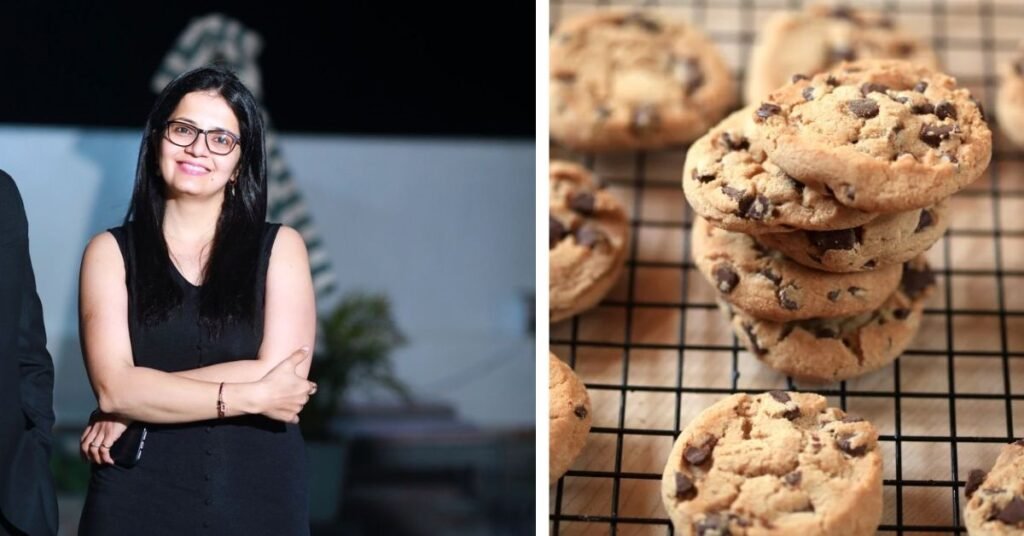
Every mother knows the struggle of finding the perfect snack for her child—something that is not just tasty but also healthy. For Gurugram-based Vandana Mehta, this challenge turned into an opportunity that changed her life. What started as an experiment in her home kitchen in 2017 has now flourished into Chocolat Corner, a successful venture with a turnover of Rs 32 lakh.

A Mother’s Quest for Healthy Snacks

Vandana’s journey began like that of many mothers—searching supermarket aisles for a nutritious yet delicious snack for her toddler daughter. But what she found left her disappointed. “Most of the packaged snacks were loaded with chemicals and preservatives,” she recalls. That’s when she decided to take matters into her own hands.

With a corporate background spanning nine years in real estate and telecom, Vandana was no stranger to challenges. But this one was different—her customer was a toddler, and they’re notoriously difficult to please. One evening, she whipped up a batch of oatmeal chocolate chip cookies, and the moment her daughter took a bite, she knew she had cracked the code.

Turning Passion into a Business

Encouraged by her daughter’s love for the cookies, Vandana began sharing them with friends and neighbors, who raved about their taste. What started as a small home-baking experiment soon turned into something bigger. In 2017, she officially launched Chocolat Corner, with an investment of just Rs 20,000.

From a Mother’s Kitchen to a Thriving Business: How a Gurugram Mom Turned Rs 20,000 into a Rs 32 Lakh Brand

Her focus was clear—guilt-free treats that didn’t compromise on taste. Vandana ensured that her cakes and cookies were made fresh, without harmful pre-mixes or excessive preservatives. “Most cakes in the market use pre-mixes, but we refrained from that,” she explains. Even today, Chocolat Corner’s cakes are made to order in small batches of two to four kilograms, eliminating the need for artificial additives.

Expanding Horizons with Millet-Based Snacks

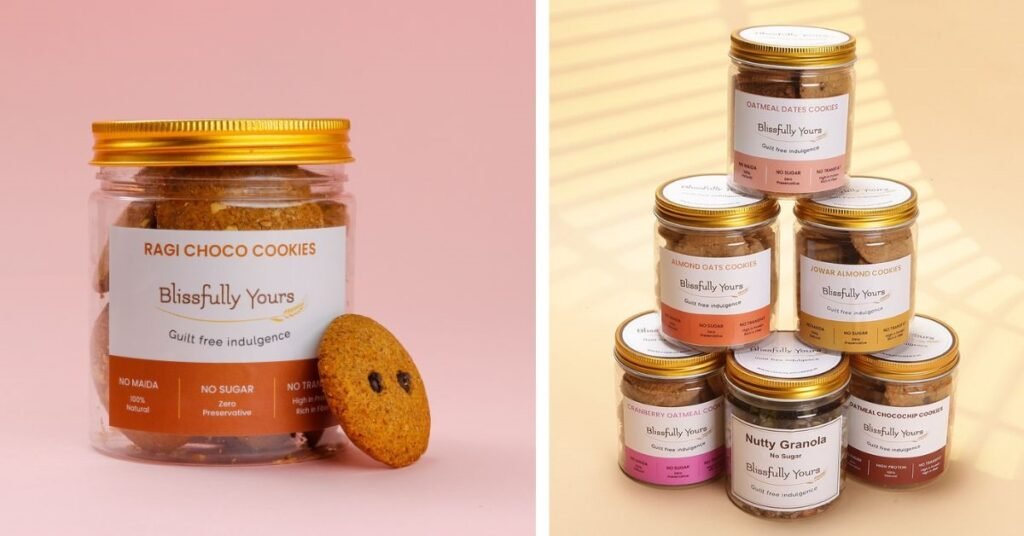
While her oatmeal cookies gained popularity, Vandana noticed a growing demand for healthier alternatives. This led to the launch of Blissfully Yours, a sub-brand under Chocolat Corner, in February 2023. Blissfully Yours introduced a range of millet-based snacks that cater to health-conscious consumers, especially mothers looking for nutritious options for their children.

The brand’s offerings now include:

  • Oat Cookies
  • Millet Cookies – including bajra (pearl millet), rajgira (amaranth), jowar (sorghum), and ragi (finger millet) walnut cookies
  • Granola Bars – made with peanut butter and almond butter
  • Cranberry Cookies – a bestseller known for its crunchy texture and tangy taste

The millet cookies, in particular, struck a chord with pragmatic young mothers. One such customer, Surbhi Arora, has been buying Vandana’s ragi cookies since 2019. “I wanted to give my son healthy snack options, and these cookies were perfect. The ease of availability and trust in Vandana’s products made all the difference,” she says.

The Recipe for Success

The key to Vandana’s success lies in her commitment to quality. Blissfully Yours products use whole wheat flour instead of refined flour and jaggery as a natural sweetener. After multiple trials, she found that powdered jaggery gave the best results, adding a distinct taste to her cookies.

Her dedication has paid off—what began as a small kitchen experiment now retails in 25 stores across Gurugram, along with a flagship store and select cafes. With a growing customer base of over 200, Vandana’s brand is proving that healthy eating doesn’t have to mean sacrificing flavor.

A Sweet Future Ahead

Vandana’s story is a testament to the power of passion and perseverance. In just a few years, she transformed a simple desire for healthy snacks into a thriving business. And as more people embrace conscious eating, Chocolat Corner and Blissfully Yours are set to grow even further.

Her journey is an inspiration to mothers and aspiring entrepreneurs alike—sometimes, the best business ideas are born out of everyday challenges. After all, who knew that an oatmeal cookie could be the start of something so sweet?