Home Blog Page 328

Aahana Srishti: The Journey of an IES Topper

0

In a remarkable achievement, Delhi-based economist Aahana Srishti secured All India Rank 3 in the highly competitive Indian Economic Service (IES) Exam 2024 conducted by the Union Public Service Commission (UPSC). Her inspiring journey has captivated many, especially after she shared her experiences in a now-viral LinkedIn post.

The Power of a Backup Plan

Aahana’s journey to success wasn’t one of rigid expectations but rather of smart planning and perseverance. She initially approached the exam as a way to gauge her understanding of the subject. “Clearing the Indian Economic Service Examination (2024) with an All India Rank 3 was truly and wholly beyond my dreams,” she wrote in her post. What set her apart was her ability to maintain a balanced mindset—thanks to her Plan B.

“Having a Plan B is what made this exam less burdensome, and is something I suggest to everybody (It is completely on you to take it or leave it),” she stated. Unlike many aspirants who feel an immense weight of expectation, Aahana had a practical approach: if she didn’t clear the exam, she would attempt it again, and if needed, pursue a PhD in Economics. This mindset helped her tackle the exam with reduced anxiety and greater clarity.

Support, Determination, and Faith

Aahana attributes her success to the unwavering support of her mother, close friends, and what she calls ‘divine intervention’. She strongly believes in the phrase, “God helps those who help themselves.”

Her journey was not just about hard work but also about smart strategies and emotional resilience. With a background as a consultant at ICRIER (Indian Council for Research on International Economic Relations), she had a deep understanding of economic policies and frameworks. Her educational journey includes a degree from Indraprastha College for Women and a Master’s in Economics from the Indian Institute of Foreign Trade (IIFT).

A Peek Into the Interview and Training

Aahana shared glimpses of her UPSC interview day and the beginning of her journey as a probationary officer at the Arun Jaitley National Institute of Financial Management (AJNIFM). These moments, she says, mark the start of a new and challenging phase in her professional life.

Her success resonated with aspirants and professionals across social media, with an outpouring of admiration and praise. A user commented, “Your journey and insights are truly inspiring, especially the emphasis on having a Plan B, which can significantly reduce the pressure and anxiety associated with such competitive exams.”

An Inspiration for Future Aspirants

Aahana Srishti’s story is a testament to the power of perseverance, strategic planning, and a well-thought-out backup plan. Her approach is a beacon of hope for aspirants preparing for competitive exams, reminding them that success is not just about working hard but also about working smart.

Her achievement not only adds another feather to India’s intellectual pool but also serves as a reminder that dreams, when pursued with dedication and a clear mindset, can become reality.

As she embarks on her journey as a civil servant, Aahana Srishti continues to inspire many, proving that with hard work, resilience, and faith, the sky is the limit.


Rakesh Sharma’s Historic Space Journey: India’s First Citizen in Orbit

0

On this day, April 3, 1984, India took a giant leap into space history as Wing Commander Rakesh Sharma soared beyond Earth’s atmosphere, becoming the first Indian citizen to travel to space. His remarkable journey aboard the Soviet Soyuz T-11 spacecraft not only marked a significant milestone in India’s space aspirations but also cemented his place among the stars as a national hero. His mission was a testament to India’s growing ambitions in space exploration and remains a source of immense pride for the nation.

Early Life and Career

Born on January 13, 1949, in Patiala, Punjab, Rakesh Sharma developed an early passion for aviation. He joined the National Defence Academy (NDA) and later became a fighter pilot in the Indian Air Force (IAF) in 1970. Sharma quickly distinguished himself as an exceptional pilot, flying various aircraft such as the MiG-21. His skill and dedication earned him a place in the Indo-Soviet space program, making him the perfect candidate to represent India in space.

A Historic Mission

Rakesh Sharma’s spaceflight was part of the Indo-Soviet Intercosmos program, a collaborative effort between India and the Soviet Union to promote space research. He was selected from among the Indian Air Force’s top pilots and trained extensively at the Yuri Gagarin Cosmonaut Training Center in Star City, Russia. On April 3, 1984, he lifted off from the Baikonur Cosmodrome in Kazakhstan alongside Soviet cosmonauts Commander Yury Malyshev and Flight Engineer Gennady Strekalov. This mission made India the 14th nation to send a human into space.

Seven Days Among the Stars

During his time aboard the Salyut 7 space station, Sharma spent 7 days, 21 hours, and 40 minutes in orbit, conducting a series of scientific experiments. His primary focus was on remote sensing applications, capturing images of the Indian subcontinent to aid in agricultural and geological studies. Additionally, he carried out biomedical research, studying the effects of microgravity on the human body. These experiments provided valuable insights that contributed to future space missions.

In an extraordinary display of discipline and adaptability, Sharma also practiced yoga in zero gravity, demonstrating the potential benefits of the ancient Indian practice for astronauts facing prolonged space travel. This groundbreaking experiment showcased India’s cultural contributions to space science.

The Iconic Conversation with Indira Gandhi

One of the most celebrated moments of Sharma’s mission was his video call with then Prime Minister Indira Gandhi. When asked how India appeared from space, his response resonated with the spirit of patriotism: “Saare Jahan Se Accha” (Better than the rest of the world). This phrase, taken from a famous poem by Muhammad Iqbal, captured the emotion and pride of an entire nation witnessing its first citizen in space. His words continue to inspire generations of Indians to dream big and reach for the stars.

A Hero’s Welcome and Recognition

Upon his return to Earth, Sharma was greeted with national and international accolades. He was awarded the Ashoka Chakra, India’s highest peacetime gallantry award, and was also honored as a Hero of the Soviet Union. His mission was widely celebrated, and he became a national icon, inspiring countless young Indians to pursue careers in science, technology, and space exploration.

Post-Spaceflight Career

Following his historic mission, Sharma continued his service with the Indian Air Force before retiring as a Wing Commander. He later worked with Hindustan Aeronautics Limited (HAL) in Bengaluru, contributing to India’s defense and aerospace sectors. He has also been a strong advocate for India’s human spaceflight programs and has continuously encouraged young minds to engage with science and space research.

A Legacy of Inspiration

Sharma’s journey paved the way for India’s future in human spaceflight. His mission inspired the Indian Space Research Organisation (ISRO) to pursue ambitious projects, including the upcoming Gaganyaan mission, which aims to send Indian astronauts to space independently. His achievements serve as a reminder of what India can accomplish with determination, scientific excellence, and international collaboration.

The Road Ahead

As India continues to make strides in space technology, Rakesh Sharma’s mission remains a testament to the nation’s early foray into human spaceflight. His historic journey reminds us that with courage, vision, and perseverance, even the sky is not the limit.

On this day, we celebrate not just an individual but an entire nation’s dream that touched the stars. Rakesh Sharma’s name will forever shine as a symbol of India’s cosmic aspirations.

Could This Aquatic Fern (Azolla) Be The Low-Cost Solution Indian Farmers Need?

0

Have you ever noticed a small, delicate aquatic plant forming a vibrant green carpet on the surface of freshwater ponds, ditches, or lakes? Meet Azolla, commonly known as the ‘water fern.’ Once overlooked, this humble plant is now gaining recognition as a game-changer in Indian agriculture. With its incredible ability to fix nitrogen, provide highly nutritious livestock feed, and contribute to sustainable farming practices, Azolla is proving to be a cost-effective and eco-friendly boon for farmers across the country.

Why is Azolla a Game-Changer for Indian Farmers?

Natural Nitrogen Fixation: A Sustainable Fertiliser Alternative

One of Azolla’s most remarkable attributes is its natural nitrogen-fixing capability. In a unique symbiotic relationship with a species of blue-green algae, Anabaena, Azolla absorbs nitrogen directly from the atmosphere. This eliminates the need for expensive chemical fertilizers, which not only burden farmers financially but also harm the environment in the long run. By enriching the soil with essential nutrients, Azolla fosters healthier crops and boosts overall agricultural productivity.

A Superfood for Livestock

Azolla is not just a miracle plant for the soil—it’s also an excellent feed supplement for livestock. Packed with protein, essential amino acids, vitamins, and minerals, it serves as an affordable and highly nutritious alternative to traditional animal feed like soy or maize. Studies have shown that incorporating Azolla into the diet of poultry, fish, and cattle enhances their health, increases growth rates, and improves milk production in dairy cows. As farmers face rising feed costs, Azolla offers a sustainable and low-cost solution that significantly reduces dependency on commercial feeds.

A Natural Mosquito Repellent

Beyond its agricultural benefits, Azolla plays a surprising role in pest control. As it spreads across the water surface, it prevents mosquito breeding by obstructing larvae development, earning it the nickname ‘mosquito fern.’ In regions prone to mosquito-borne diseases, cultivating Azolla can serve as a natural and effective method of reducing mosquito populations.

Water Conservation and Environmental Benefits

Unlike conventional crops that require large tracts of land and significant water resources, Azolla thrives in shallow water, making it ideal for regions with poor soil quality or limited arable land. With its rapid growth rate and high biomass production, farmers can harvest Azolla regularly without depleting natural resources. Additionally, its dense mat-like structure helps prevent excessive water evaporation, conserving precious water supplies in drought-prone areas.

How to Cultivate Azolla: A Simple Guide for Farmers

One of the biggest advantages of Azolla farming is its ease of cultivation. With minimal investment and maintenance, even small-scale farmers can successfully integrate it into their farming systems. Follow these simple steps to start growing Azolla:

1. Ensure Proper Water Quality

Azolla thrives in clean, still water with a neutral pH level between 6 and 7. Avoid using polluted water, as it may hinder growth.

2. Set Up a Suitable Growing Area

Shallow, stagnant water bodies such as ponds, ditches, or even tanks make ideal growing environments. If space is limited, Azolla can be grown in containers with a water depth of 30-40 cm.

3. Maintain Optimal Temperature Conditions

Azolla flourishes in warm temperatures ranging from 25-30°C. Avoid growing it in water temperatures below 20°C, as colder conditions can slow its growth.

4. Planting and Nutrient Boosting

Spread a small quantity of Azolla evenly over the water surface. It multiplies rapidly and will soon cover the entire area. To encourage healthy growth, supplement the water with Super Phosphate and cow dung slurry, providing the necessary phosphorus and nutrients.

5. Regular Maintenance for Maximum Yield

Although Azolla requires minimal care, regular harvesting ensures continuous growth. Prevent overcrowding by skimming excess growth off the surface.

6. Harvesting and Usage

Azolla can be harvested every 5 to 7 days. Simply scoop it from the water, then use it fresh or dry it for later use. After two weeks of initial growth, a 2m x 2m pond can yield approximately 1kg of Azolla daily.

The Future of Azolla in Indian Agriculture

As Indian farmers face challenges like rising input costs, soil degradation, and climate change, the need for sustainable, cost-effective agricultural solutions has never been greater. Azolla presents a viable alternative to conventional fertilizers and livestock feed, reducing expenses while promoting eco-friendly farming practices.

With increased awareness and adoption, Azolla has the potential to revolutionize Indian agriculture, offering economic and environmental benefits to farmers nationwide. From small-scale rural farms to large agricultural enterprises, this tiny aquatic fern is proving that big solutions can sometimes come in the smallest forms.

Embracing Azolla is not just a step toward sustainable farming—it’s a leap toward a greener and more prosperous future for Indian agriculture.

Bengaluru Airport’s New Sensory Room Is Making Travel Easier for Everyone

0

As global awareness of neurodivergence grows, public spaces are increasingly adapting to accommodate individuals with unique sensory needs. Airports, often overwhelming with their bright lights, constant noise, and bustling crowds, can pose significant challenges for neurodivergent individuals, including those with autism spectrum disorder (ASD), anxiety, or sensory processing disorders (SPD). Recognizing this, Kempegowda International Airport in Bengaluru has taken a groundbreaking step by introducing India’s first sensory room, designed specifically to create a calm and inclusive environment for neurodivergent passengers.

Addressing a Growing Need

According to the Indian Council of Medical Research (ICMR), approximately 1 in 68 children in India is diagnosed with ASD. Furthermore, a 2018 study by the National Institute of Mental Health and Neurosciences (NIMHANS) estimates that 1 in 10 individuals in India may experience some form of sensory processing disorder. Given the rising number of neurodivergent individuals navigating public spaces, inclusive initiatives like Bengaluru Airport’s sensory room are vital in making travel more accessible.

A Quiet Retreat in a Bustling Airport

Strategically located near the 080 International Lounge on Level 4 of Terminal 2, the sensory room offers a peaceful refuge for neurodivergent passengers before, during, and after their flights. The space is equipped with soft lighting, soothing sounds, and sensory-friendly furniture to help individuals manage sensory overload and reduce anxiety.

Thoughtfully Designed for Comfort

Bengaluru Airport collaborated with Incluzza, a leading organization specializing in disability inclusion, to ensure the sensory room meets the needs of neurodivergent travelers. The design process involved consultations with experts in behavioral science, occupational therapy, and autism support. By incorporating scientifically-backed elements such as ambient lighting, tactile sensory toys, and calming auditory features, the airport has created an environment that fosters relaxation and ease for those who might find traditional airport settings overwhelming.

How the Sensory Room Helps Neurodivergent Passengers

  1. Calming Environment:
    • Adjustable lighting and gentle sounds create a tranquil atmosphere, reducing sensory overload.
    • Sensory toys and soft seating provide comforting engagement.
  2. Safe Retreat:
    • The private space offers neurodivergent individuals a quiet retreat to compose themselves before continuing their journey.
    • This reduces the risk of stress-induced meltdowns and anxiety attacks in an otherwise overwhelming environment.
  3. Support for Families:
    • Families traveling with neurodivergent members can benefit from a stress-free environment where their loved ones can regulate their sensory input.
    • Caregivers and parents can provide support without the added worry of external sensory stimuli triggering distress.
  4. Inclusive Travel Experience:
    • By acknowledging the needs of neurodivergent passengers, Bengaluru Airport sets a precedent for inclusive air travel in India.
    • This initiative ensures that all travelers, regardless of their sensory requirements, feel welcome and supported.
  5. Setting a Global Standard:
    • Bengaluru Airport’s sensory room serves as a model for other airports worldwide, encouraging greater accessibility in air travel.
    • This effort aligns with global best practices in creating travel spaces that cater to diverse needs.

A Parent’s Perspective

Gopika Kapoor, a parent of a child with autism, shares her thoughts on this initiative:

“Any effort to support neurodivergent individuals is a step in the right direction. Airports can be overwhelming, with bright lights, constant noise, beeping machines, large crowds, and fluctuating temperatures. For my son, Vir, sensory overload can trigger intense anxiety. A quiet space where he can retreat, regulate himself, and gather his composure before facing the busy environment again is invaluable. This space is also a lifeline for parents traveling with neurodivergent children, who can often feel overwhelmed during flights. My son loves to travel, but when he was younger, the noise and sensory stimulation would sometimes be too much for him. A room like this will help neurodivergent travelers to destress and approach the journey with much greater ease.”

Leading the Way in Inclusive Air Travel

The introduction of this sensory room at Kempegowda International Airport marks a significant stride toward inclusive air travel in India. By providing a safe, calming space for neurodivergent travelers, especially those with autism or sensory sensitivities, the airport is helping passengers manage the stress of navigating a high-stimulus environment.

Beyond its immediate impact, this initiative serves as an inspiring example for airports across the globe, encouraging them to prioritize accessibility and inclusivity. When public spaces are designed with diverse needs in mind, they become welcoming for all—ensuring a world where every traveler, regardless of their neurodiversity, can navigate their journey with comfort and ease.

Unveiling the Past: Copper Plates from Devaraya I’s Reign Shed Light on Vijayanagara History

0

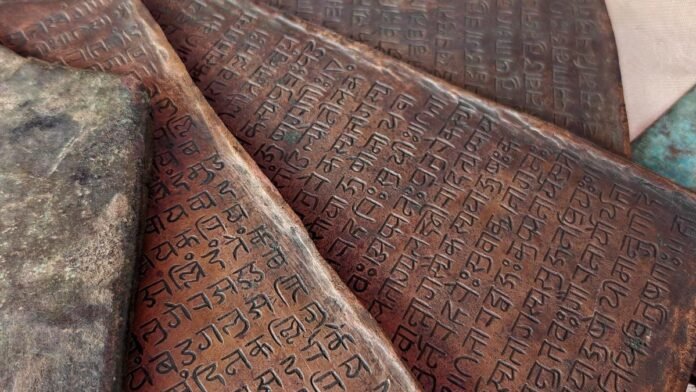
A recent archaeological discovery has provided a fascinating glimpse into the reign of Devaraya I, a significant ruler of the Vijayanagara Empire. A set of copper plates, issued during his coronation in 1406 CE, has come to light, offering valuable insights into the political, social, and cultural aspects of his time. Inscribed in Sanskrit, Kannada, and Nāgarī characters, these plates bear a unique royal seal featuring Vamana—marking a departure from the traditional Varaha emblem of the Vijayanagara kings.

A Glimpse into History

Devaraya I ascended the throne in 1406 CE following a power struggle after the death of his father, Harihara II. His rule, which lasted until 1422 CE, was marked by military conquests, administrative reforms, and infrastructural advancements. He modernized the army, encouraged agricultural expansion, and made significant contributions to literature and architecture. The discovery of these plates provides a clearer picture of his legacy and governance.

The Significance of the Copper Plates

The newly unearthed copper plates offer crucial details about the genealogy of the Sangama Dynasty. They trace the lineage of Devaraya I and his five sons, shedding light on the continuity of power within the Vijayanagara court. Additionally, they document the grant of Gudipalli village to Brahmins, reinforcing the socio-religious fabric of the time. The confirmation of Devaraya I’s coronation date enhances historical accuracy, validating previously debated timelines.

Details of the Land Grant

The inscriptions meticulously record the allocation of Gudipalli village and its adjoining hamlets to Brahmins of various gotras. This grant underscores the centrality of Vedic scholarship in the empire’s governance. The detailed demarcation of boundaries, inscribed in Kannada, highlights the precision and efficiency of Vijayanagara’s administrative system.

Cultural Patronage and Architectural Marvels

Devaraya I’s reign was not only a period of military expansion but also one of artistic and architectural growth. He was a distinguished patron of Kannada literature and played a key role in fostering intellectual pursuits. His court was home to eminent poets such as Madhura, who contributed to Jain literature. Architecturally, his era saw the construction of the Hazara Rama temple, a magnificent example of Deccan artistry that stands as a testament to his commitment to cultural enrichment.

Transforming Vijayanagara: Irrigation and Urban Development

Understanding the importance of sustainable urban growth, Devaraya I initiated key irrigation projects. He oversaw the construction of a barrage across the Tungabhadra River and an extensive aqueduct system to ensure a steady water supply to the capital. These initiatives helped transform Vijayanagara into one of the largest and most prosperous cities of the 15th century, setting a benchmark for urban planning.

Military Strategies and Diplomacy

Devaraya I navigated a complex political landscape, contending with regional rivals such as the Bahmani Sultanate and the Velamas. His strategic military policies, including the employment of skilled archers and tactical alliances, bolstered the empire’s strength. His victories, particularly against Firoz Shah, facilitated territorial expansion and solidified Vijayanagara’s dominance in southern India.

A Legacy of Inclusive Governance

One of the most remarkable aspects of Devaraya I’s rule was his commitment to inclusive administration. He built facilities for Muslim soldiers and actively worked to resolve religious disputes, fostering a governance style that emphasized unity and stability. His secular policies played a crucial role in maintaining harmony within the diverse population of the empire.

Conclusion

The discovery of these copper plates is a monumental breakthrough in understanding the Vijayanagara Empire’s history. They not only authenticate historical records but also offer a richer narrative of Devaraya I’s contributions. From military triumphs to cultural advancements, his reign stands as a defining chapter in South Indian history. As scholars continue to analyze these inscriptions, they may uncover even deeper insights into the empire’s governance, society, and legacy.

The Future Circular Collider: A Giant Leap in Particle Physics

0

In the realm of cutting-edge science, few projects match the scale and ambition of CERN’s Future Circular Collider (FCC). Unveiled in 2025 as the successor to the renowned Large Hadron Collider (LHC), the FCC promises to push the boundaries of physics, unlocking mysteries of the universe that remain unsolved. With an estimated budget of $17 billion, this colossal initiative stands as one of the most significant scientific undertakings in history.

A Vision for the Future

The FCC will be housed within a 91-kilometre underground circular tunnel beneath the French-Swiss border. This vast infrastructure will support two distinct operational phases. The first phase, expected to launch around 2046, will feature an electron-positron collider. The second phase, scheduled for 2070, will introduce a proton-proton collider capable of reaching unprecedented energy levels.

Pushing the Limits of Physics

At the heart of the FCC’s mission lies a quest to probe the fundamental nature of reality. Scientists hope to explore the enigmatic realms of dark matter and dark energy, phenomena that constitute the majority of the universe but remain largely unexplained. The collider will also investigate the properties of fundamental particles, potentially discovering entities even smaller than electrons. With projected energy levels of 100 trillion electronvolts—seven times the LHC’s maximum capacity—the FCC could pave the way for groundbreaking discoveries in particle physics.

Advancing Scientific Innovation

To achieve such ambitious goals, the FCC will leverage cutting-edge technology, including next-generation superconducting magnets, state-of-the-art cryogenic systems, and ultra-high vacuum environments. These advancements are not only vital for particle physics but could also lead to technological breakthroughs with applications in various industries, from medical imaging to quantum computing.

Environmental and Ethical Considerations

As with any large-scale scientific project, the FCC is subject to scrutiny regarding its environmental and economic impact. CERN has pledged to conduct comprehensive environmental assessments, with independent experts evaluating the project before a final decision is made by CERN’s member states in 2028. However, some critics argue that the immense funding could be better allocated to smaller-scale research projects, sparking debates on the sustainability of such a vast scientific endeavor.

Building on the Legacy of the LHC

Since its inception in 2008, the LHC has revolutionized our understanding of the universe. Perhaps its most famous achievement was the confirmation of the Higgs boson, a cornerstone of the Standard Model of particle physics. The FCC seeks to build on this legacy, potentially uncovering new forces of nature and redefining our grasp of the cosmos.

A Monumental Opportunity for Science

The Future Circular Collider represents more than just a technological marvel—it embodies humanity’s relentless pursuit of knowledge. While its success hinges on securing funding and overcoming engineering challenges, its potential to reshape our understanding of physics is unparalleled. If realized, the FCC could mark the dawn of a new era in scientific discovery, transforming not only the field of particle physics but the future of innovation itself.

Bagh Printing In Madhya Pradesh: This 1000-Year-Old Art Bespeaks Tale of Ancient Handcraft Traditions Which Used Natural Dyes…

0

Madhya Pradesh, often referred to as the “heart of India,” is renowned for its rich cultural heritage and handicrafts. Among these treasures is the Bagh Hand Block Print, a traditional art form originating from the village of Bagh in the Dhar district of Madhya Pradesh. This craft not only showcases the skill of local artisans but also keeps alive India’s ancient handcraft traditions through the use of natural dyes and intricate designs. In this article, we will explore the origins of Bagh printing, its evolution, and its current value in India and the world.

The Origins of Bagh Print
Pinpointing the exact origin of Bagh printing is challenging, but it is believed to be over 1,000 years old. The art form derives its name from Bagh village, situated on the banks of the Baghini River. Its roots are traced back to Sindh (now in Pakistan), from where artisans of the Khatri community migrated to Madhya Pradesh around 400-500 years ago. The Khatri community, known for their expertise in textile dyeing and printing, originally practiced Ajrakh printing in Sindh. It is said that these artisans first settled in the Marwar region of Rajasthan, then moved to Manawar in Madhya Pradesh, and finally established themselves permanently in Bagh village by 1962.
The choice of Bagh was influenced by the Baghini River, whose water is rich in copper content. This water enhances the vibrancy of natural dyes, a defining feature of Bagh prints. The technique involves using wooden blocks to imprint geometric and floral patterns onto fabric. Initially, this art was used to create traditional garments like lugda (a type of sari) and ghaghra (skirts) for local tribal communities such as the Bhil and Bhilala. Artisans like Ismail Suleman Khatri played a pivotal role in refining and modernising this craft, elevating it to new heights.

Process and Characteristics
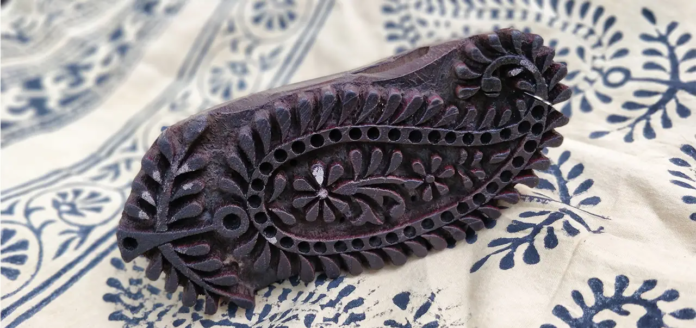
The process of Bagh printing is labor-intensive and eco-friendly. It relies on natural dyes, such as alizarin for red and a mixture of rusted iron and jaggery for black. The fabric is first soaked in a solution of salt, castor oil, and goat dung, then dried in the sun. Wooden blocks are then used to stamp designs onto the fabric, which is subsequently washed in the flowing waters of the river. This process ensures the colors are permanent and vibrant. Bagh prints are distinguished by their striking combination of red, black, and white hues, along with intricate patterns that set them apart from other printing techniques.

Current Value in India and the World

Today, Bagh printing has gained recognition not only in India but also globally. In 2008, it was awarded the Geographical Indication (GI) tag, certifying its regional uniqueness and quality. In India, Bagh prints are popular in sarees, dupattas, kurtas, bedsheets, and home décor items. Their price varies depending on the complexity and materials used. A typical Bagh print saree may cost between ₹1,500 and ₹5,000, while high-quality silk sarees can fetch ₹10,000 or more.
In the global market, the demand for Bagh prints is growing among environmentally conscious consumers and handicraft enthusiasts. Countries in Europe, the United States, and beyond have embraced it, with fashion designers and interior decorators incorporating it into their work. Internationally, a Bagh print product can range from $20 to $100 or more, depending on the design and fabric quality. Its appeal lies in its eco-friendliness and natural beauty, qualities that modern machine printing cannot replicate.

Bagh hand block printing is a vibrant symbol of Madhya Pradesh’s cultural heritage. From its origins with the migratory journey of the Khatri community to its current status on the global stage, this art form has come a long way. It serves as a source of livelihood for artisans while showcasing India’s rich handicraft tradition. Preserving and promoting this invaluable legacy is a collective responsibility, ensuring that future generations can continue to appreciate its beauty and significance.

Batto Bai Dolls: A Handcrafted Legacy from Madhya Pradesh Earns Global Eyeballs

0

Imagine a world where scraps of cloth, a sprinkle of clay, and a dash of creativity weave together to give birth to something magical—dolls that whisper stories of tradition, resilience, and rural charm. Welcome to the captivating realm of Batto Bai dolls, a vibrant handicraft hailing from the heart of India, Madhya Pradesh. These aren’t just dolls; they’re tiny ambassadors of culture, dressed in bright fabrics and brimming with history. Let’s embark on a journey through time to uncover how this art began, how it blossomed, and what it’s worth today—both in India and across the globe.

Batto Bai Dolls: A Handcrafted Legacy from Madhya Pradesh Earns Global Eyeballs

The Spark of Creation: A Craftswoman’s Dream
Our story begins in the bustling heritage city of Gwalior, where a spirited woman named Batto Bai dared to dream with her hands. Decades ago, in a humble home, she learned the art of doll-making from her mother-in-law, turning everyday materials—rags, paper, clay, cotton, wires, and bamboo—into something extraordinary.

What started as a personal craft soon became a legacy, named after the enterprising craftswoman herself. Batto Bai’s dolls, often called “Gudda-Gudiya” (boy and girl dolls), were more than toys; they were reflections of rural Madhya Pradesh life, adorned in traditional attire and bursting with character.

Her creations weren’t solitary figures—they came in pairs, a tradition tied to the auspicious festival of Akha Teej. Young girls would buy these pairs, stage miniature weddings for them, and pray for their own happy unions. With every stitch and splash of organic color, Batto Bai breathed life into her dolls, capturing the essence of Gwalior’s vibrant culture. Word of her talent spread, and soon, her family joined in, passing the craft down through generations. Today, her fourth generation carries the torch, keeping her vision alive in a modern world.

From Humble Homes to Global Horizons
What began in the dusty lanes of Gwalior didn’t stay confined there. The Batto Bai dolls, with their rustic charm and tribal flair, caught the eye of travelers and art lovers alike. Crafted with sustainable materials and painted with permanent organic hues, these dolls—ranging from a few inches to an impressive two feet tall—became symbols of Madhya Pradesh’s rich heritage. Markets like Laskar, Bada, and Nai Sadak in Gwalior buzzed with their presence, while annual fairs showcased their allure to wider audiences.
But the dolls didn’t stop at India’s borders. Their exotic appeal and handcrafted uniqueness found fans in far-off lands—Japan, France, Australia, and the USA among them. From home decor to collector’s treasures, Batto Bai dolls transcended their origins, proving that art born from simplicity can resonate universally. In Bhopal and Jhabua, too, artisans embraced the craft, adding their own regional twists, yet the soul of Batto Bai’s vision remained intact.

The Worth of a Legacy: India and Beyond

So, what are these dolls worth today ? In India, their value is twofold—monetary and cultural. A pair of Batto Bai dolls starts at a modest ₹100-200 in Gwalior’s local markets, making them accessible to all. Yet, their true price lies in their storytelling power. They’re not just purchases; they’re heirlooms, gifts, and tokens of tradition. During festivals, their demand spikes as families seek them for rituals and decorations, cementing their place in Madhya Pradesh’s cultural fabric.
Globally, the dolls have carved a niche in the handicraft market. Exported in large numbers, they fetch higher prices abroad, often ranging from $5 to $20 per pair, depending on size, craftsmanship, and destination. Art collectors and enthusiasts prize them for their authenticity and the human touch they embody—a stark contrast to mass-produced toys. In countries like Japan and the USA, they’re celebrated as exotic decor pieces, while in Europe, they’re admired for their sustainable craftsmanship. Their worth isn’t just in dollars or rupees; it’s in the bridges they build between cultures, carrying Madhya Pradesh’s spirit to the world.

A Living Art in a Modern Age

The Batto Bai dolls are more than a craft—they’re a testament to resilience. In an era dominated by technology and fast fashion, this art form endures, thanks to the dedication of artisans like Bharat Singh Parihar, Batto Bai’s grandson, and his family. Challenges like modernisation and competition loom large, but the dolls’ charm persists, fueled by their handmade allure and the stories they tell. Efforts to preserve this heritage—through fairs, exhibitions, and tourism—ensure that Batto Bai’s legacy doesn’t fade.
As we stand in 2025, these dolls are a reminder that beauty lies in the hands that create. In India, they’re a cultural heartbeat; worldwide, they’re a whisper of tradition in a globalized world. So, next time you spot a pair of Batto Bai dolls, don’t just see them—listen. They’re singing the song of Madhya Pradesh, one stitch at a time

Bamboo Art Speaks the Story of Timeless Artistry in Heartland of India, Madhya Pradesh

0

Did you ever think about a Bamboo can be a source of art too? No ?? Here comes an interesting story of bamboos.. There is a place in India where the rustle of bamboo thickets whispers tales of ancient forests, where skilled hands transform humble stalks into objects of utility and beauty, and where the heartbeat of rural life pulses through every woven strand.

This is Madhya Pradesh, the heart of India, a state cradled by lush greenery and vibrant tribal cultures. Here, bamboo craft is not merely an art—it’s a living connection to the past, a bridge between nature and humanity, and a testament to the ingenuity of its people. From the dense jungles of Shahdol to the rolling hills of Mandla, the craft has flourished for centuries, intertwining the lives of the Gond, Baiga, Korku, and Basor tribes with the resilient bamboo that surrounds them. What began as a necessity has evolved into a celebrated tradition, its worth resonating across India and the world.

The Origins: A Craft Born of Necessity and Nature

The story of bamboo craft in Madhya Pradesh stretches back to a time when tribal communities roamed the forests, their lives intricately tied to the land. Bamboo, abundant and versatile, was their companion—a “poor man’s timber” that offered endless possibilities. Historical records may not pinpoint an exact moment of origin, but the craft’s roots are as old as the tribal settlements themselves, likely dating back centuries. In regions like Balaghat, Seoni, Shahdol, and Mandla, where bamboo grows in profusion, the Gond and Baiga tribes began shaping it into tools for survival: fishing traps to snare the bounty of rivers, hunting implements to navigate the wild, and baskets to carry the fruits of their labor. The Korku and Basor communities joined in, each adding their unique flair to the craft.

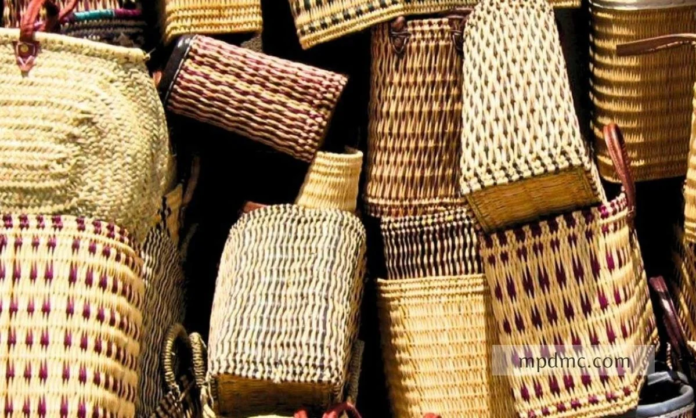
This was no mere trade; it was a way of life. Passed down from generation to generation, the knowledge of bamboo weaving was a sacred inheritance, taught by elders under the shade of ancient trees. The artisans learned to split bamboo with precision, to bend its flexible culms without breaking them, and to weave patterns that mirrored the rhythms of their environment. Over time, these utilitarian objects—agricultural implements, mats, and doors—became symbols of resilience, reflecting a deep harmony between the people and the forests they called home.

Evolution Through the Ages

As centuries unfolded, the bamboo craft of Madhya Pradesh adapted to changing tides. The arrival of new tools and techniques allowed artisans to refine their work, blending age-old methods with innovation. What was once solely functional began to take on decorative forms—intricate baskets, elegant furniture, and ornamental pieces that caught the eye of local markets. The craft’s evolution was spurred by necessity and opportunity alike; the abundance of bamboo in Madhya Pradesh, which boasts the largest forest area in India, ensured a steady supply, while the skill of its tribal artisans gave it a distinctive edge.
The state government recognized its potential, promoting it as a source of livelihood and cultural pride. Communities like the Basor, traditionally bamboo craftsmen, found their work elevated from weekly haats (markets) to broader platforms. The craft began to weave its way into urban homes, with chairs, tables, and lamps crafted in wicker style finding favor among modern decorators. Yet, its soul remained rooted in the villages, where the sound of splitting bamboo and the scent of drying culms still fill the air.

The Worth in India Today

In contemporary India, the bamboo craft of Madhya Pradesh holds a dual significance: economic and cultural. Economically, it sustains thousands of rural families, particularly in tribal belts. The state’s vast bamboo resources—covering over 20% of India’s bamboo area—generate employment, with harvesting alone creating millions of man-days annually. The National Bamboo Mission has further amplified its impact, encouraging sustainable cultivation and cottage industries that process bamboo into marketable goods. From humble mats to sophisticated home décor, these products fetch modest but vital income for artisans, empowering communities like the Baiga and Gond to preserve their heritage while adapting to modern demands.

(This article is written by Anjali Solanki)

Rajasthan Utsav 2025 in New Delhi: Women Artisans Generate Over ₹50 Lakh in Sales

0

The nine-day Rajasthan Utsav 2025 concluded on Wednesday at Bikaner House, New Delhi, leaving behind a vibrant celebration of Rajasthani art, culture, handicrafts, and cuisine. The festival, which attracted Delhiites and non-resident Rajasthanis, showcased traditional handicrafts crafted by women from self-help groups associated with the Rajasthan Rural Livelihood Development Council (Rajivika). Around 60 stalls displayed a diverse range of Rajasthani folk art and products, with live demonstrations by skilled artisans captivating visitors.

Rajasthan Utsav 2025 in New Delhi: Women Artisans Generate Over ₹50 Lakh in Sales

Handmade Creations Draw Buyers

Ramesh Kumar, who managed the fair operations on behalf of Rajivika, reported that artisans recorded over ₹50 lakh in sales. Stalls featured a variety of handmade products, including handicrafts, clothing, jewelry, organic goods, and traditional Rajasthani cuisine. Visitors not only admired these unique creations but also made significant purchases, providing a boost to the artisans.

Kumar emphasized that selling self-help group products at the fair empowered rural women financially while also granting their crafts national recognition. The festival received an overwhelming response, with attendees appreciating the artistry and authenticity of the handmade items.

Rajasthan Utsav 2025 in New Delhi: Women Artisans Generate Over ₹50 Lakh in Sales

A Blend of Culture and Fun

The festival, inaugurated by Chief Minister Bhajanlal Sharma, also featured engaging activities such as a painting competition, mehndi competition, golgappa eating contest, and traditional Rajasthani games. The top participants in these events were awarded consolation prizes, adding to the festive spirit.

Rajasthan Utsav 2025 once again proved to be a platform that not only celebrated the state’s rich heritage but also uplifted its artisans, ensuring their craftsmanship reaches a wider audience.