Home Blog Page 327

How This Labourer’s Son From Biran Cleared UPSC in the First Attempt

0

In a country where people are often judged by their economic background, dignity is a privilege many cannot afford. The struggle to earn a fair wage, the humiliation of being ignored, and the constant battle to be heard — these are everyday realities for millions. But sometimes, resilience carves a different path. Education, despite its many barriers, remains the strongest weapon against systemic inequality. And few stories embody this truth better than that of Hemant K Pareek.

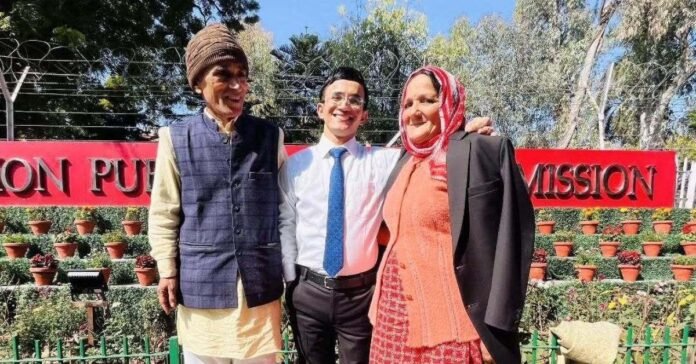
Born in the quiet village of Biran, Rajasthan, Hemant grew up witnessing his mother’s relentless battle for survival. A daily wage labourer, she toiled under the scorching sun, earning meagre amounts that often came delayed or unfairly deducted. The first time Hemant heard the word ‘Collector’ was when she pleaded with an MGNREGA (Mahatma Gandhi National Rural Employment Guarantee Act) official for her rightful wages. That moment ignited a fire within him. If the system refused to hear his mother, he would become a part of the system and ensure that no one else suffered the same indignity. He made himself a promise: One day, he would be the officer his mother had needed.

But dreams require sacrifices. With just Rs 1,400 in his pocket and an unshakable determination in his heart, Hemant set off for Delhi to chase what many considered an impossible dream. Unlike most IAS aspirants who could afford expensive coaching and extensive study materials, Hemant had no such luxuries. He had studied in a Hindi-medium school, lacked fluent English skills, and had even failed English in his diploma course. The odds were stacked against him. People told him that the IAS was only for the privileged, for those who spoke English effortlessly, for those who could afford the best mentors and resources. But Hemant refused to accept this.

Instead, he turned to what he had—his resilience, discipline, and an insatiable hunger to learn. Using free resources, YouTube tutorials, and guidance from his university mentors, he built his own roadmap to success. His days were spent devouring knowledge, and his nights were dedicated to revision and self-assessment. He did not allow self-doubt to creep in. Every time he felt overwhelmed, he reminded himself why he started—to bring dignity to the powerless.

In his very first attempt at the UPSC Civil Services Examination in 2023, Hemant defied all odds and secured an All India Rank of 884. The moment he received the news, he rushed to call his mother. On the other end of the phone, her tears flowed freely—not tears of sorrow, but of the deepest joy and pride. Her son had achieved what once seemed impossible.

Today, as Hemant trains at the Lal Bahadur Shastri National Academy of Administration (LBSNAA), those who once doubted him now celebrate his success. His journey from a struggling student to a future bureaucrat is a testament to the power of persistence, self-belief, and the transformative impact of education. But for Hemant, this is not the destination—it is just the beginning. His dream is not merely to serve as an officer; it is to become a Collector, to stand where his mother once stood pleading, but this time, to ensure that justice is served.

Hemant’s story is more than just an inspiring tale—it is a rallying cry for every child born into adversity. It is a reminder that no background is too humble, no struggle too great, and no dream too distant. Because sometimes, the most extraordinary journeys begin with just Rs 1,400, a mother’s struggle, and an unyielding promise.

Stay Among the Treetops: 10 Breathtaking Treehouse Retreats in India

0

Imagine waking up to a soft golden sunrise filtering through emerald leaves, the crisp scent of nature in the air, and birdsong as your morning melody. If 2025 is your year to unplug and reconnect with nature, these 10 stunning treehouse retreats across India offer the perfect escape. Elevated above the ordinary, each one blends luxury, tranquility, and sustainability—giving you the best seat in the house, right in the heart of nature.

1. The Machan, Lonavala – A Sanctuary in the Sky

Stay Among the Treetops: 10 Breathtaking Treehouse Retreats in India

Rising 30 to 45 feet above the forest floor, The Machan is a dreamy haven tucked away in a private forest. Whether you choose the Canopy, Cocoon, Starlight, or Jungle Machan, expect open-to-sky showers, private decks, and endless treetop views. Families can revel in the spacious Heritage and Forest Machans, designed for adventure-filled stays. Start your morning with tea amidst a sea of green and let the night lull you to sleep under a celestial canopy.

2. Vythiri Resort, Wayanad – Nature’s Hidden Embrace

Stay Among the Treetops: 10 Breathtaking Treehouse Retreats in India

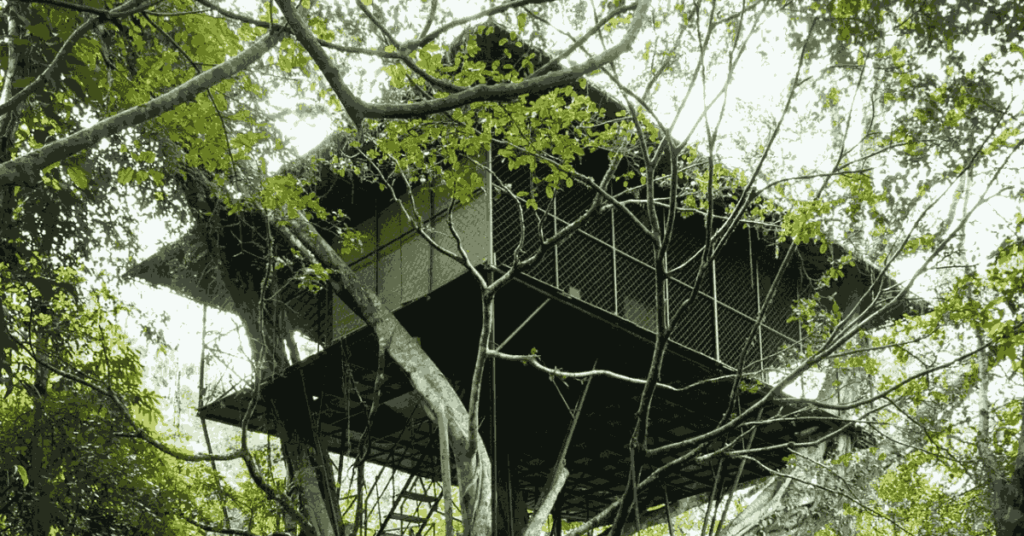
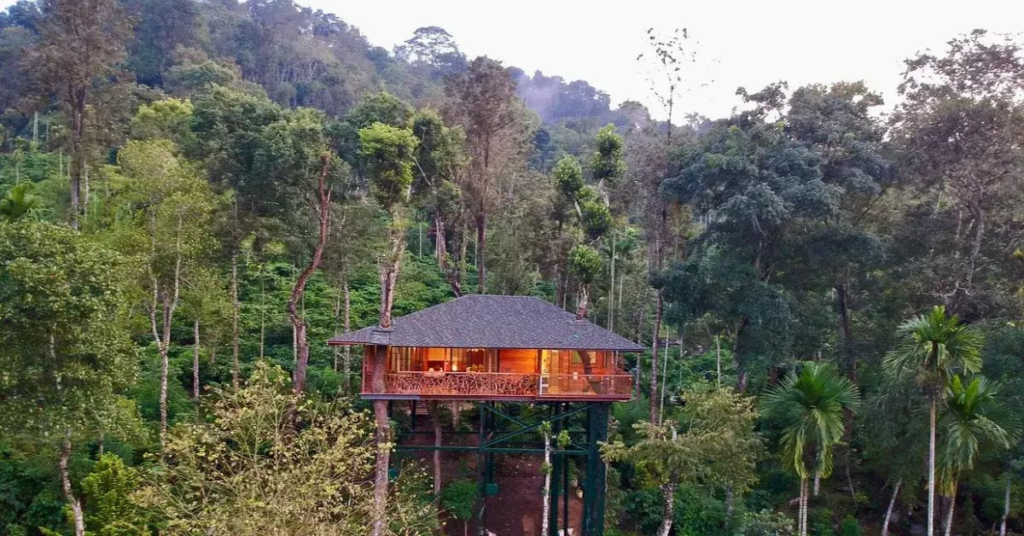
Deep in the rainforest of Wayanad, Vythiri Resort’s bamboo-crafted treehouses stand as a testament to eco-luxury. Perched 90 feet above the forest floor, the treehouses offer an intimate retreat for couples, while a family-friendly version sits closer to the ground. Step onto your private balcony, breathe in the untamed beauty, and let time slow to nature’s rhythm.

3. Rainforest Resort, Athirapally – A Symphony of Waterfalls and Wilderness

Stay Among the Treetops: 10 Breathtaking Treehouse Retreats in India

Nestled near the majestic Athirapally Falls, this resort places you in the embrace of Kerala’s raw beauty. Its signature treehouse is built around a living tree, allowing the forest to weave through its walls. A private deck offers unobstructed waterfall views, while a net-canopied bed ensures restful nights. Beyond your treetop haven, an infinity pool and winding forest trails complete the experience.

4. Pench Tree Lodge, Madhya Pradesh – Luxury in the Wild

Stay Among the Treetops: 10 Breathtaking Treehouse Retreats in India

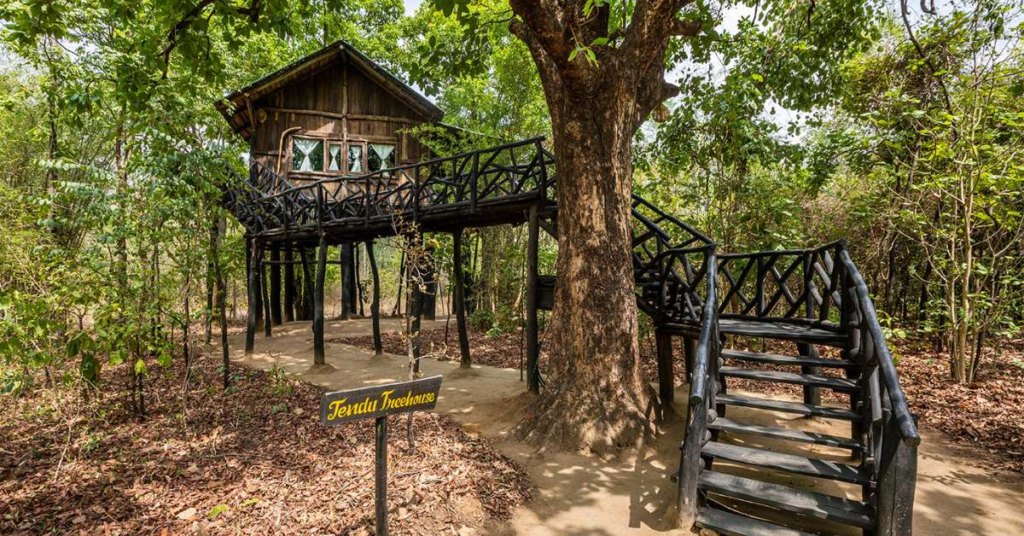
Set within 40 acres of wilderness, Pench Tree Lodge’s six treehouses stand on ancient Mahua trees, offering front-row seats to nature’s grand performance. Floor-to-ceiling French windows blur the line between indoors and outdoors, inviting golden sunlight and the whisper of rustling leaves. Curl up on your private deck, let the symphony of the jungle lull you into a midday nap, and watch the forest come alive at dusk.

5. The Mudhouse, Marayoor – A Rustic Haven Among the Hills

Stay Among the Treetops: 10 Breathtaking Treehouse Retreats in India

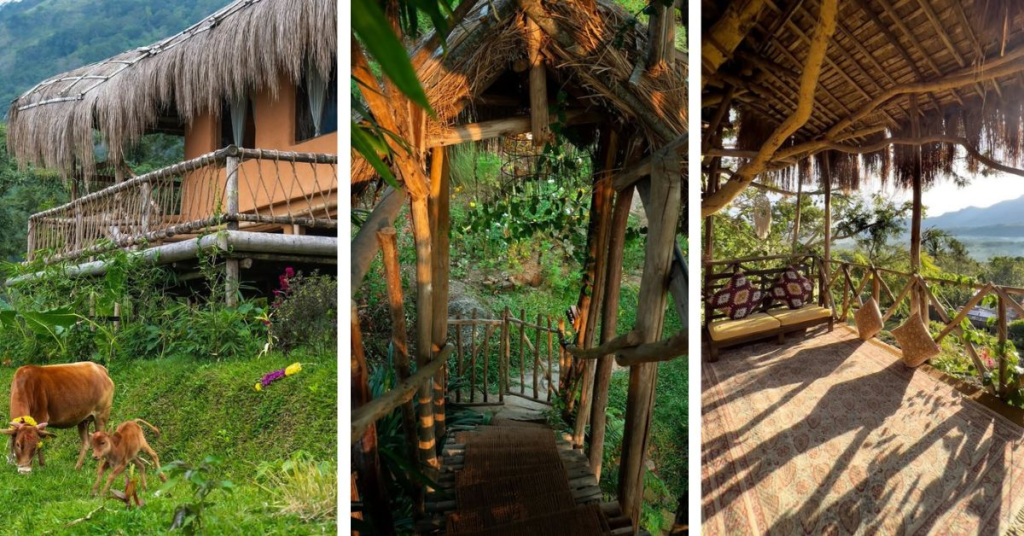
Just an hour from Munnar, The Mudhouse offers a treehouse handcrafted from mud, coconut thatch, and local timber, harmonizing perfectly with its surroundings. Minimalist and magical, it features an open-sky bathroom, a simple bedroom, and a balcony gazing over a misty valley. Here, the nights are for barbecues under the stars and the days for soaking in the slow, simple life.

6. Ahilya by the Sea, Goa – Coastal Tranquility Meets Treehouse Charm

Stay Among the Treetops: 10 Breathtaking Treehouse Retreats in India

Nestled within a banyan tree in Dolphin Bay, Arjun’s Treehouse at Ahilya by the Sea is a cozy 100-square-foot retreat, perfect for solo travelers or couples. A queen bed, snug ensuite, and cool ocean breeze make it a haven of serenity. With Wi-Fi available but distractions aplenty, you’ll likely forget the digital world even exists.

7. The Tree House Resort, Rajasthan – Where Luxury Meets the Wild

Stay Among the Treetops: 10 Breathtaking Treehouse Retreats in India

Spanning 300 acres in the Syari Valley, this resort’s 20 treehouses—each named after local birds—offer air conditioning, Wi-Fi, and bathtubs overlooking the Aravalli Hills. The rustic-meets-luxury vibe extends beyond your elevated nest, with a swimming pool, gym, and courts for golf, tennis, and badminton. It’s nature, elevated to indulgence.

8. Treehouse Hideaway, Bandhavgarh – A Jungle Retreat Like No Other

Stay Among the Treetops: 10 Breathtaking Treehouse Retreats in India

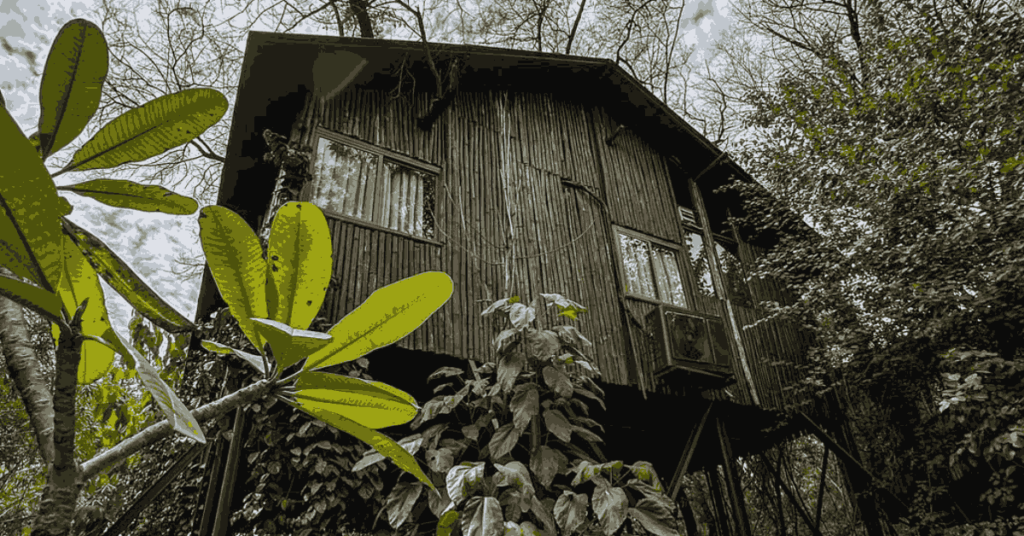
Perched in the heart of tiger country, Treehouse Hideaway’s six treehouses seamlessly blend into the dense Bandhavgarh forest. Expect cozy wooden interiors, air conditioning, and a balcony where a langur or two might stop by for a visit. Here, the jungle isn’t just your backyard—it’s your whole world.

9. The Tree Top Treehouse, Jibhi – A Himalayan Fairytale

Stay Among the Treetops: 10 Breathtaking Treehouse Retreats in India

Tucked away in the charming village of Jibhi, this treehouse feels like something out of a storybook. Misty mornings, the scent of apple orchards, and a commitment to sustainability define this hidden gem. Solar lights, rainwater harvesting, and a plastic-free ethos ensure your stay leaves only footprints and takes only memories.

10. Tranquil Resort, Wayanad – Coffee, Canopies, and Quietude

Stay Among the Treetops: 10 Breathtaking Treehouse Retreats in India

Wake up 35 feet above ground in one of Tranquil Resort’s dreamy treehouses, set within a 400-acre coffee estate. One treehouse wraps around a giant jackfruit tree, offering a front-row seat to playful squirrels. The other, nestled in a Gulmohar tree, features a wall library and a bathroom built into the trunk. With nature at your doorstep, tranquility is more than a name—it’s a way of life.

A Stay Among the Stars

India’s treehouse retreats aren’t just accommodations—they’re experiences that elevate travel to new heights. Whether you seek adventure, solitude, or a romantic escape, these treetop sanctuaries promise an unforgettable stay in 2025. Ready to swap cityscapes for treetop dreams?

She Asked Her Grandma A Simple Question About Periods & It Changed Lakhs of Lives

0

Lakshmi Murthy was just a teenager when she staged her first act of defiance. Her grandmother, deeply rooted in traditional beliefs, handed her a list of rules to follow during her period. In response, Lakshmi did something unexpected—she sat on her grandmother’s lap and teased, “Will you have to take a bath again now?”

That moment, seemingly lighthearted, became the spark that set Lakshmi on a lifelong journey of breaking taboos, shattering stigmas, and redesigning the way India approaches menstrual health. Today, at 64, she is known as the ‘Pad Grandma’—a title she wears with pride as a pioneer in sustainable menstruation and grassroots innovation. Her tireless efforts have touched the lives of countless women across rural India, and in recognition of her impact, she was recently honored with the prestigious ‘Pride of NID’ award by President Droupadi Murmu.

An Unlikely Path to Design

She Asked Her Grandma A Simple Question About Periods & It Changed Lakhs of Lives

Lakshmi’s path to design and activism was anything but conventional. Born into an orthodox Karnataka family, she grew up in Mumbai, where she spent her teenage years battling societal norms—insisting on wearing trousers, keeping short hair, and ultimately, pursuing a diploma at the National Institute of Design (NID), Ahmedabad. “My mother opposed it because it was only a diploma course back then,” she recalls.

At NID, she specialized in ceramic design, believing she would spend her life making pottery. But destiny had other plans. She met her late husband, a Rajasthani agricultural engineer, and after graduation in 1986, moved to Udaipur—a city where her modern attire and progressive ideas clashed with deep-rooted traditions.

“There were many challenges. Connectivity was poor. The patriarchy was stifling. People called me bhabhiji, didi, or Lakshmiji. They didn’t understand my work,” she shares.

Despite these barriers, her liberal in-laws, especially her mother-in-law, who worked in education, proved to be a pillar of support. However, with no opportunities in ceramic design, Lakshmi pivoted—organizing artist camps, supporting artisans, and eventually working with the NGO Seva Mandir to create visual communication tools for rural communities.

Sketching Menstruation into the Picture

She Asked Her Grandma A Simple Question About Periods & It Changed Lakhs of Lives

Lakshmi’s first brush with menstrual health came while designing training materials for non-literate communities. She realized the visuals she created didn’t resonate. “Those who haven’t been to school have a completely different way of drawing. So, I created a picture dictionary on menstruation, abortion, and delivery,” she explains. This work earned her a prestigious MacArthur Fellowship in 2000, and in 2001, she co-founded Jatan Sansthan with Dr. Kailash Brijwasi.

From Nada Wala Pads to Uger: A Revolution in Cloth Menstrual Products

Lakshmi’s first menstrual product design was a simple, washable cloth napkin called the ‘nada wala’ pad—a pad with cloth ties for girls who didn’t wear underwear. “It could be stitched from old petticoats or saris,” she recalls. But as more rural women started wearing underwear, her design faded.

Then came ‘Uger’—meaning ‘new beginning’ in Mewari—one of India’s first reusable menstrual pad initiatives. Designed in 2011 during her PhD at IIT Bombay, the Uger pad was entirely biodegradable, lasted three months, and cost just Rs 180 for a set of six. But Lakshmi made a radical decision: she refused to copyright it. “Many Self-Help Groups (SHGs) have copied the pad. We helped four SHGs in Northeast India set up units. The Aditya Birla Group runs a unit in Maharashtra. Mitu Foundation in Bengaluru makes it too,” she says with pride.

Fighting the Disposable Pad Wave

She Asked Her Grandma A Simple Question About Periods & It Changed Lakhs of Lives

Despite her success, Lakshmi faced a formidable opponent—free disposable pads distributed in schools across Rajasthan. “On one hand, it’s a rights and convenience issue. But on the other, it’s a huge environmental problem. In rural areas, there’s no proper disposal system,” she laments. Even supposedly compostable pads weren’t truly biodegradable.

She Asked Her Grandma A Simple Question About Periods & It Changed Lakhs of Lives

Transforming Conversations on Menstruation

She Asked Her Grandma A Simple Question About Periods & It Changed Lakhs of Lives

Jatan Sansthan’s impact has been massive. Over the past five years, it has reached 1,05,000 individuals, including 10,000 boys and young men, working with 75 organizations across India. During COVID, in collaboration with WaterAid, Jatan trained 78,753 frontline workers in Madhya Pradesh to stitch their own cloth pads remotely.

Lakshmi also pioneered the ‘Positive Masculinity’ program, where boys learned about menstruation and even cooked meals to break gender stereotypes. “We wanted boys to understand the changes in the female body. It was very powerful,” she says.

A Lifelong Learner: Pursuing a PhD at 50

She Asked Her Grandma A Simple Question About Periods & It Changed Lakhs of Lives

In her 50s, Lakshmi’s alma mater, NID, officially equated her diploma to a postgraduate degree, allowing her to enroll in a PhD at IIT Bombay. Over eight years, she studied sustainable menstrual management, creating the PASS model—Paryavaran (Environment), Arthik (Economics), Swasthya (Health), and Samaj (Society). “A menstrual product must be sustainable from all these angles,” she explains.

Recognition and Legacy

Lakshmi’s contributions have been widely recognized:

  • ‘Pride of NID’ Award (2024)
  • ‘Women of Substance Award’ by Aravali Foundation (2022)
  • Goonj Award for keeping Uger in the ‘Copy Left’ Space (2019)
  • Pune Innovation Centre Social Innovation Recognition (2018)
  • Australia CSC Meritorious Commendation Award (2009)

Today, she mentors young designers at her studio, Vikalpdesign, where urban artists collaborate with rural communities to create meaningful communication tools. Her NGO, Jatan Sansthan, continues to train women, SHGs, and organizations in menstrual health and sustainable product design.

A Future in Good Hands

Now living with her 91-year-old mother, daughter, and grandson, Lakshmi has rekindled her love for ceramics and joined a book club. As for the future of menstrual health, she remains hopeful. “Many young people are doing tremendous work. I’m happy the movement is in good hands.”

As for disposable pads? “They’ll sit in landfills for years,” she says. “Period panties are popular, but they’re not biodegradable. It’s like choosing between noodles and chapatis—Maggi is quick and easy, but there’s always a trade-off.”

Spoken like a true designer—balancing function, sustainability, and impact, one pad at a time.

Nilamben Parikh, Mahatma Gandhi’s great-granddaughter, passes away at 92: Know who she was

0

On the morning of April 1, 2025, in the quiet town of Navsari, Gujarat, a chapter in history came to a peaceful close. Nilamben Parikh, the great-granddaughter of Mahatma Gandhi, passed away in her home at the age of 92. A woman of quiet strength and unwavering principles, she was not only a descendant of the Mahatma but also a force in her own right—a social reformer, a writer, and a guardian of the Gandhian way of life.

Her son, Dr. Sameer Parikh, an ophthalmologist in Navsari, recalled his mother’s final moments with poignant simplicity.

“My mother was not sick, but in the last few days, she had stopped eating much because of her age. She had severe osteoporosis and was slowly becoming weaker. This morning, I decided to stay with her instead of going to my hospital. I sat beside her, held her hand, and slowly felt her pulse fade… she passed away without pain or suffering.”

It was a farewell as serene as the life she had led—one devoted to service, truth, and the quiet revolution of empowerment.


A Life Steeped in Service

To many, Nilamben Parikh was more than just a great-granddaughter of Mahatma Gandhi. She was a custodian of his ideals, a woman who chose to dedicate her life to those often overlooked by society.

For decades, she worked tirelessly to uplift tribal women through Dakshinapatha, an organization she founded. Education, financial independence, and self-reliance were the pillars of her mission. She believed that true empowerment came not through charity but through opportunity—a philosophy deeply rooted in her grandfather’s vision.

Though she retired nearly three decades ago, her impact remained indelible. Even in her later years, when frailty set in, she continued to embody the principles of simplicity and perseverance.

Her cousin, historian Tushar Gandhi, remembered her as a woman of profound moral strength.

“She spent her entire life teaching in tribal areas. Even though she was physically weak, her moral strength shined through her personality. She was gentle yet firm in her beliefs, always kind,” he told The Indian Express. The age gap between them was significant, he recalled, and as a result, he always saw her more as an elder than a cousin.

Nilamben’s commitment to wearing khadi was more than symbolic—it was a quiet but powerful statement. It was a pledge to sustainability, to self-sufficiency, and to the Gandhian philosophy that had shaped her very existence.


A Chronicler of Forgotten Stories

Beyond her work as a social reformer, Nilamben Parikh was also a writer, unafraid to explore the complexities of her own lineage.

She was the daughter of Ramiben, the eldest of Harilal and Gulab Gandhi’s five children. Her grandfather, Harilal Gandhi, remains one of the most enigmatic figures in the Mahatma’s story—a son who struggled in the shadow of his father’s greatness, a man torn between rebellion and reverence.

After watching the Marathi play Gandhi Virudh Gandhi, which delved into this turbulent father-son relationship, Nilamben felt a deep sense of responsibility. She knew the story had more to it—more heartache, more nuance, and more truth than what had been portrayed.

And so, she set out to tell it.

Her book, Gandhi’s Lost Jewel: Harilal Gandhi, was her way of bringing balance to history. It offered an insider’s perspective on a man who had long been reduced to footnotes in the grand narrative of India’s independence. The book later inspired the 2007 Hindi film Gandhi My Father, bringing Harilal’s story to a wider audience.

Her writings extended beyond familial struggles. She also compiled a book titled Jyan Raho Tyan Mehekta Raho (translated as Spread Your Fragrance Wherever You Live), which was based on Mahatma Gandhi’s letters to his daughters-in-law. The title was derived from a message the Mahatma had once given them—an instruction not just for them, but for all who sought to live meaningful lives.


A Legacy Beyond Bloodlines

Nilamben Parikh’s passing is more than the loss of a historical descendant; it is the closing of a living link to an era of resilience, sacrifice, and unwavering moral conviction.

Her legacy is not just in books or in the lives she touched but in the quiet revolution she carried forward—a belief that change begins in the smallest of places, in the simplest of actions, in the steadfast refusal to turn away from those in need.

History will remember Mahatma Gandhi as a leader.

But history should also remember Nilamben Parikh as a torchbearer of his ideals.

Her work was not as loud, her name not as well-known.

And yet, in the quiet hills of tribal Gujarat, in the hands of women she empowered, and in the pages she left behind—her legacy will continue to whisper through time.

Japan’s famous ‘Black Eggs’ are said to add seven years to your life

0

Owakudani: Japan’s Otherworldly Valley Where the Earth Breathes Fire

The first thing that grips the senses upon entering Owakudani isn’t the ghostly steam rising from the mountainside or the ominous warning signs cautioning visitors about volcanic activity—it’s the scent. A dense, mineral-laden fog envelops the air, a pungent reminder that this land is very much alive.

Owakudani, Japan’s geothermal wonderland, is a place where the earth exhales sulfur in thick plumes, painting the rugged landscape in shades of ochre and gray. At the heart of this volcanic valley lies its most famous treasure—kuro-tamago, or black eggs, said to extend one’s life by seven years with each bite. A legend, a marvel of science, and a culinary curiosity, these eggs have become as much a symbol of Hakone as its iconic hot springs.

A Journey to the Great Boiling Valley

Owakudani, meaning “Great Boiling Valley,” was formed by a cataclysmic eruption of Mount Hakone around 3,000 years ago. Today, it simmers with geothermal activity, drawing travelers eager to experience its surreal terrain and taste its fabled eggs.

The adventure begins long before reaching the valley. Travelers can take a scenic bus ride from Hakone-Yumoto or Gora, winding through serpentine mountain roads, but the most exhilarating route is through the skies. The Hakone Ropeway glides above the landscape, offering a bird’s-eye view of steaming fumaroles, rugged cliffs, and—on clear days—the majestic silhouette of Mount Fuji looming in the distance.

For chef and food writer Namiko Chen of Just One Cookbook, the experience was mesmerizing.

“As the gondola ascended from Sōunzan Station, the journey began with lush mountain scenery,” she recalls. “But as the first peak was crossed, the landscape transformed—suddenly, an apocalyptic volcanic wasteland stretched below. The transition was breathtaking.”

As the gondola nears the station, the lush greenery fades, replaced by steaming vents and sulfur-streaked rock, a stark reminder that beneath the surface, the earth is still at work.

The Culinary Alchemy of Kuro-Tamago

The creation of Owakudani’s legendary black eggs is a fusion of nature’s raw power and culinary science. Fresh eggs are submerged in the region’s sulfur- and iron-rich hot springs, triggering a chemical reaction—the hydrogen sulfide in the water interacts with iron, forming iron sulfide, which darkens the shell to a striking black.

After an hour in the bubbling springs, the eggs are transferred to steam pots for an additional 15 minutes. Despite their obsidian-like shells, the inside remains unchanged—smooth, white, and tender, with just a whisper of sulfur in the taste.

“Most people are surprised by how normal they taste,” says Mamoru Sato, director of the Hakone Tourism Association. “It’s the contrast—the striking black shell against the familiar white inside—that makes the experience unforgettable.”

For many, the ritual of peeling a black egg while standing atop an active volcanic vent is more exhilarating than the taste itself. It is an act deeply tied to Hakone’s identity, cherished by both locals and visitors alike.

Even reluctant eaters are often won over by the legend.

“Many children hesitate at first,” Chen shares. “Some even pinch their noses to block out the sulfuric smell. But after sprinkling a little salt, they take a bite—hoping to gain those extra seven years of life.”

The Seven-Year Legend

The belief that consuming a black egg grants seven additional years of life is as deeply rooted in mythology as it is in local tradition. While the commercial boiling of kuro-tamago began in 1955, the origins of the longevity legend trace back centuries.

Owakudani is home to Enmei Jizo, a revered statue believed to have been carved by Buddhist monk Kobo Daishi over 1,200 years ago. According to lore, this Jizo is thought to bestow longevity and protection upon those who seek its blessings. Over time, this belief intertwined with the region’s culinary offering, giving rise to the idea that eating black eggs extends one’s lifespan.

And why seven years? The number seven is considered auspicious in Japanese culture, symbolizing good fortune and longevity. While there is no scientific proof backing the claim, visitors embrace the ritual wholeheartedly.

Sato acknowledges the enduring myth. “Talking about gaining extra years while eating kuro-tamago is part of the Owakudani experience.”

However, the benefits are said to max out after two eggs, so no amount of overeating will lead to immortality.

A Word of Caution

As mesmerizing as Owakudani is, nature’s power demands respect. The valley remains volcanically active, and at times, high sulfur levels force temporary closures. Visitors should check safety updates before their trip and heed all warnings while exploring the area.

For those with respiratory issues, the strong sulfur fumes can be overwhelming. Some visitors may need to take breaks indoors or wear masks to minimize exposure.

Where to Experience Kuro-Tamago

The best place to try black eggs is at Owakudani Kurotamagokan, where freshly prepared eggs are sold daily. To get there:

  • Take the Hakone Tozan Cable Car from Gora Station to Sōunzan Station (a 10-minute ride).
  • Transfer to the Hakone Ropeway, riding up to Owakudani Station (another 10-minute journey).
  • The shop is on the second floor of the Owakudani Kurotamagokan building and is open daily from 9 a.m. to 4:30 p.m.

A Timeless Experience

Standing at the edge of this volcanic valley, peeling away an ink-black shell to reveal the familiar comfort of a hard-boiled egg, one cannot help but feel a sense of connection—to the land, to tradition, and to the many who have stood there before. The scent of sulfur, the rising steam, and the backdrop of Mount Fuji on a clear day create a moment that lingers long after the taste has faded.

Perhaps the legend is true. Maybe it is the experience itself, rather than the eggs, that adds to one’s life—a moment of wonder, a taste of tradition, and a memory that, like the valley itself, refuses to fade with time.

Three-Country Border Near Achen, Germany Will Take You to 3 Nation Sojourn Within Three Seconds…This Vlogger Did It…!

0

For those who live to travel, the world is an endless canvas of adventure, rich cultures, and unforgettable experiences. But let’s be honest—navigating the intricate maze of visa applications, paperwork, and long waiting times can sometimes feel like an expedition in itself. But what if we told you that there’s a place where you can visit not one, not two, but three different countries—without a passport— in just three seconds? Yes, you read that right! Welcome to the extraordinary Three-Country Border near Aachen, Germany, where international travel takes on a whole new meaning.

A Hidden Gem in Europe

Nestled in the westernmost part of Germany, the picturesque city of Aachen offers visitors a travel experience unlike any other. A short journey from the city brings you to Vaalserberg hill, the highest point in the Netherlands, where a geographical marvel awaits—the Three-Country Border (Drielandenpunt). This is the magical spot where Germany, the Netherlands, and Belgium seamlessly merge, allowing visitors to step between three nations with nothing but a simple jump.

The Viral Travel Sensation

Recently, a travel vlogger took to Instagram to showcase this mind-blowing experience. The viral reel captured her effortlessly hopping from one country to another in mere seconds, without any border controls or passport checks. As expected, the internet was left in awe. One curious viewer commented, “Where’s the passport control?” while another eagerly asked, “Can we get here by train?” A fellow traveler even chimed in, revealing another tri-border point in Schengen, where Luxembourg, Germany, and Belgium meet.

What to Do at the Three-Country Border

While the thrill of standing at the intersection of three countries is an experience in itself, this unique location has plenty more to offer. Here are some must-do activities to make your visit even more memorable:

1. Climb the Wilhelminatoren:
Located in the Netherlands, this historic observation tower offers an unparalleled panoramic view of the Dutch landscape. Originally built in 1905 and later reconstructed, the tower provides breathtaking vistas of rolling hills, vast fields, and the surrounding lush greenery. On a clear day, you can see far into Belgium and Germany, making it a perfect stop for photography enthusiasts.

2. Marvel at the Belgian Observation Tower:
If you crave even more spectacular views, the 34-meter-high tower in Belgium is an absolute must-visit. This modern architectural wonder provides an unobstructed 360-degree view of the Belgian countryside, including the charming village of Gemmenich. The tower’s glass viewing platforms create an exhilarating experience for those who love heights, offering a unique perspective on the landscape below.

3. Explore the Dutch Town of Vaals:
Step into the Netherlands and immerse yourself in the picturesque charm of Vaals. This quaint town is known for its traditional Dutch architecture, cobblestone streets, and inviting cafes. Take a leisurely stroll through its lively marketplace, where you can sample delicious Dutch treats like stroopwafels and poffertjes (mini pancakes). The town is also home to historical buildings and art galleries that showcase its rich cultural heritage.

4. Lose Yourself in the Labyrint Drielandenpunt:
A visit to the Three-Country Border wouldn’t be complete without navigating the famous Labyrint Drielandenpunt. This massive hedge maze is one of the largest in Europe, featuring tricky paths, hidden passages, and interactive elements that make it a fun challenge for all ages. The thrill of finding your way to the center is both exciting and rewarding, making it a great activity for families and adventure seekers.

5. Savor Local Delicacies:
After all that exploring, indulge in a gastronomic delight at one of the many restaurants dotting the area. Try the famous Belgian fries served with a variety of sauces, savor a hearty German bratwurst, or enjoy a slice of Limburgse vlaai, a traditional Dutch fruit pie. The culinary options reflect the cultural blend of the three countries, offering a taste of their diverse flavors.

6. Embark on a Hiking Expedition:
Nature lovers will be thrilled by the scenic hiking trails that wind through the surrounding forests and hills. Whether you choose a short, relaxing walk or a more challenging trek, you’ll be treated to stunning views, fresh air, and an abundance of wildlife. The trails traverse the borders of Germany, Belgium, and the Netherlands, making it a unique opportunity to hike through three countries in a single trip.

A Must-Visit for Every Travel Enthusiast

In a world where international travel often comes with restrictions and red tape, the Three-Country Border offers a refreshing escape. It’s a place where adventure seekers, history buffs, and culture enthusiasts alike can experience the joy of crossing borders with nothing but a few steps. Whether you’re there for the unique geography, the stunning views, or the charming towns that surround it, one thing is for sure—you’ll leave with an unforgettable story to tell.

So, next time you’re planning a European getaway, add this incredible destination to your itinerary. After all, how often do you get to visit three countries in just three seconds?

Over 300-Year-Old Sindhudurg Fort Standing On An Island with Underwater Escape Is a Testament to Shivaji Maharaj’s Vision…

0

A Fort in sea water! This might surprise you. But then you should visit Maharashtra’ Raigarh district and explore the Sindhudurg Fort situated on an island which was constructed by Chhatrapati Shivaji Maharaj, a brilliant defense strategist and visionary, who recognised the importance of naval power and began building the Maratha Navy between 1657 and 1659. After multiple unsuccessful attempts to conquer Murud Janjira Fort, which was under Siddi control, he decided to construct a new fort that would serve as the Maratha naval headquarters. He identified a strategically positioned uninhabited island, Kurte Bet, as the perfect site for this stronghold.

Thus, Sindhudurg Fort came into existence. Located on a small island in the Arabian Sea near Malvan, the fort sprawls across 48 acres. Designed by Hiroji Indulkar, the chief architect of several Maratha forts, its construction began in 1664 and was completed in 1667. The project required the expertise of 100 architects and a workforce of 3,000. Sindhudurg was envisioned as the headquarters of the Maratha Navy and a stronghold for protecting the coastal region.

A Marvel of Military Engineering

Shivaji Maharaj built forts with a keen understanding of defense strategies. As Sindhudurg was constructed on an isolated island, it was vulnerable to enemy attacks. To fortify its security, he established smaller coastal forts—Padmadurg, Rajkot, and Sarjekot.

Sindhudurg’s defenses are remarkable. It features a four-kilometer-long, zigzagging rampart that is nine meters high and three meters wide, reinforced by 42 bastions. The fort’s irregular shape, with numerous projections and deep indentations, ensures command over all approaches. More than 4,000 pounds of iron were used in its construction, with foundation stones firmly embedded in lead. To simplify logistics, Shivaji Maharaj set up a quarry on the island itself rather than transporting stones from the mainland.

The Ingenious Hidden Entrance

One of Sindhudurg Fort’s most fascinating aspects is its entrance. Designed to be nearly invisible from the outside, it is concealed between two bastions. The passage is so narrow that only four to five people can enter at a time. In the event of an attack, this design would slow down enemy troops, allowing Maratha soldiers positioned atop the bastions to strike them down before they could breach the fort.

The Iconic Nishan Buruj

A distinctive feature of Sindhudurg is the Nishan Buruj (Flag Bastion), also known as Nishan Kathicha Buruj or Jhenda Buruj. Unlike most forts, where the flag is hoisted at the entrance, Sindhudurg’s flag flies from a centrally located bastion, ensuring visibility from all directions. Visitors standing within the fort can witness the awe-inspiring sight of the vast sea, the towering fort walls, and the iconic Bhagwa Dhwaj (the saffron Maratha flag) soaring against the sky.

A 17th-Century Underwater Escape Route

Perhaps the most astonishing feature of Sindhudurg is its hidden underwater passage, an engineering feat of the 17th century. This passage begins from what appears to be a water reservoir inside the fort. It extends underground for three kilometers before surfacing in a village 12 kilometers away. This secret escape route was a safeguard for the Marathas in times of emergency.

The Three Eternal Wells

Sindhudurg Fort also boasts three freshwater wells: Dudh Baav (Milk Well), Sakhar Baav (Sugar Well), and Dahi Baav (Curd Well). Remarkably, these wells never dry up, even when nearby coastal reservoirs evaporate during summer, a testament to the advanced water management practices of the Marathas.

A Shrine to the Great Warrior King

Sindhudurg is home to the only temple dedicated to Chhatrapati Shivaji Maharaj. The temple houses his statue, his original sword, and even domes built over his palm and footprints, which were accidentally embedded in lime during construction. These relics have been preserved by generations of families who continue to reside within the fort premises.

A Living Legacy

Shivaji Maharaj was far more than just a warrior king—his strategic brilliance, foresight, and dedication to his people made him an unparalleled ruler. Even today, he is revered throughout Maharashtra. Sindhudurg stands as a testament to his legacy, drawing lakhs of visitors who come to admire its architectural genius and historical significance.

Visitors can reach the fort via ferries from the mainland, though it remains closed to tourists for three months during the monsoon season. Even today, 15-20 families reside within its walls, preserving its heritage. The Archaeological Survey of India and the Government of Maharashtra oversee its maintenance, ensuring that Sindhudurg remains an unparalleled symbol of Maratha naval supremacy and military ingenuity.

Trump Tariff Levied On Pretty Penguins Land too…

0

A group of barren, uninhabited volcanic islands near Antarctica—covered in glaciers and home to penguins—has unexpectedly become entangled in Donald Trump’s trade war. The former U.S. president has imposed a 10% tariff on goods from these remote lands.

A group of barren, uninhabited volcanic islands near Antarctica—covered in glaciers and home to penguins—has unexpectedly become entangled in Donald Trump’s trade war. The former U.S. president has imposed a 10% tariff on goods from these remote lands.

Heard Island and McDonald Islands, an external territory of Australia, are among the most isolated places on Earth. Accessible only by a two-week boat journey from Perth, they have no permanent inhabitants, with the last recorded human visit believed to have occurred nearly a decade ago.

Despite their remoteness, the islands appeared on a list released by the White House of “countries” subject to new trade tariffs.

Australian Prime Minister Anthony Albanese reacted on Thursday, stating, “Nowhere on Earth is safe.”

Heard Island and McDonald Islands were listed separately from mainland Australia on the tariff announcement, meaning that, like Australia itself, they will be subject to a 10% tariff on their goods.

A group of barren, uninhabited volcanic islands near Antarctica—covered in glaciers and home to penguins—has unexpectedly become entangled in Donald Trump’s trade war. The former U.S. president has imposed a 10% tariff on goods from these remote lands.

Heard Island and McDonald Islands, an external territory of Australia, are among the most isolated places on Earth. Accessible only by a two-week boat journey from Perth, they have no permanent inhabitants, with the last recorded human visit believed to have occurred nearly a decade ago.

Despite their remoteness, the islands appeared on a list released by the White House of “countries” subject to new trade tariffs.

Australian Prime Minister Anthony Albanese reacted on Thursday, stating, “Nowhere on Earth is safe.”

Heard Island and McDonald Islands were listed separately from mainland Australia on the tariff announcement, meaning that, like Australia itself, they will be subject to a 10% tariff on their goods.

Major Space Missions to Watch in 2025: A New Era of Space Exploration

0

The year 2025 is set to be a landmark in human space exploration. From India’s historic astronaut mission to cutting-edge lunar and Martian expeditions, humanity is taking great strides beyond Earth. Space agencies and private companies are making ambitious leaps, pushing the boundaries of technology and discovery. Whether it’s searching for extraterrestrial life, building futuristic space habitats, or unlocking the mysteries of distant worlds, these missions are set to redefine our understanding of the cosmos.

1. Gaganyaan – India’s First Crewed Space Mission

Major Space Missions to Watch in 2025: A New Era of Space Exploration

India is preparing to make history with Gaganyaan, its first-ever crewed space mission. The spacecraft will carry Indian astronauts into low Earth orbit, showcasing the nation’s growing expertise in human spaceflight. This milestone mission marks India’s entry into the elite club of nations capable of sending humans to space.

2. SpaceX Starship Test Flights

Major Space Missions to Watch in 2025: A New Era of Space Exploration

SpaceX’s Starship, the most powerful rocket ever built, is gearing up for critical test flights. Among its goals is in-orbit refueling—an essential step toward long-range missions to the Moon and Mars. Designed to be fully reusable, Starship is expected to revolutionize space travel by significantly reducing costs and enabling deep-space colonization.

3. Europa Clipper – NASA’s Search for Life

Major Space Missions to Watch in 2025: A New Era of Space Exploration

NASA’s Europa Clipper will resume exploration of Jupiter’s moon Europa, believed to harbor a vast ocean beneath its icy surface. The mission’s objective is to assess the potential habitability of this alien world, bringing us closer to answering one of science’s greatest questions: Are we alone in the universe?

4. Space Hotels – A Reality Soon?

Major Space Missions to Watch in 2025: A New Era of Space Exploration

The dream of space tourism is becoming a reality! The first-ever space hotel is set to break ground, offering guests the opportunity to experience zero gravity and witness breathtaking views of Earth. This pioneering step could pave the way for commercial space travel and orbital resorts.

5. ExoMars Rover – Searching for Ancient Life

Major Space Missions to Watch in 2025: A New Era of Space Exploration

The European Space Agency’s ExoMars rover will continue its journey on Mars, drilling into the planet’s surface in search of signs of past life. This robotic detective aims to uncover evidence of ancient microbial life that may have thrived millions of years ago.

6. Orbital Reef – The Future Space Station

Major Space Missions to Watch in 2025: A New Era of Space Exploration

Blue Origin’s ambitious Orbital Reef project is envisioned as a next-generation space station. Designed for research, tourism, and industrial applications, it could become a multi-use hub in low Earth orbit, supporting various commercial and scientific endeavors.

7. China’s Lunar South Pole Mission

Major Space Missions to Watch in 2025: A New Era of Space Exploration

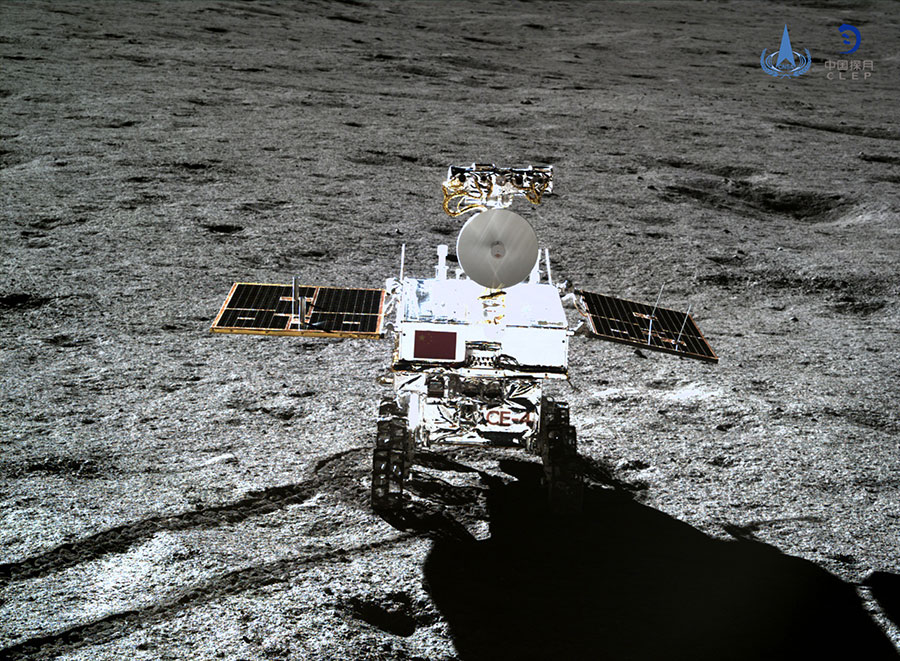
China is taking a significant step toward lunar exploration with a mission to the Moon’s south pole. This mission aims to search for water ice—an essential resource for future lunar bases and long-duration human presence on the Moon. If successful, it will mark a major milestone in China’s expanding space program.

8. NISAR – Observing Earth from Space

Major Space Missions to Watch in 2025: A New Era of Space Exploration

A collaboration between NASA and ISRO, NISAR is an advanced Earth observation satellite that will track environmental changes such as deforestation, agriculture, and seismic activity. With its radar technology, NISAR can penetrate clouds and operate day or night, making it one of the most sophisticated Earth-monitoring satellites ever developed.

9. JUICE – Exploring Jupiter’s Icy Moons

Major Space Missions to Watch in 2025: A New Era of Space Exploration

The European Space Agency’s JUICE spacecraft is making its way toward Jupiter, with a planned flyby of Venus in 2025. Once it reaches its destination, JUICE will study Jupiter’s icy moons—potential harbors for extraterrestrial life—providing valuable insights into the gas giant’s complex system.

10. Blue Ghost Lunar Lander

Major Space Missions to Watch in 2025: A New Era of Space Exploration

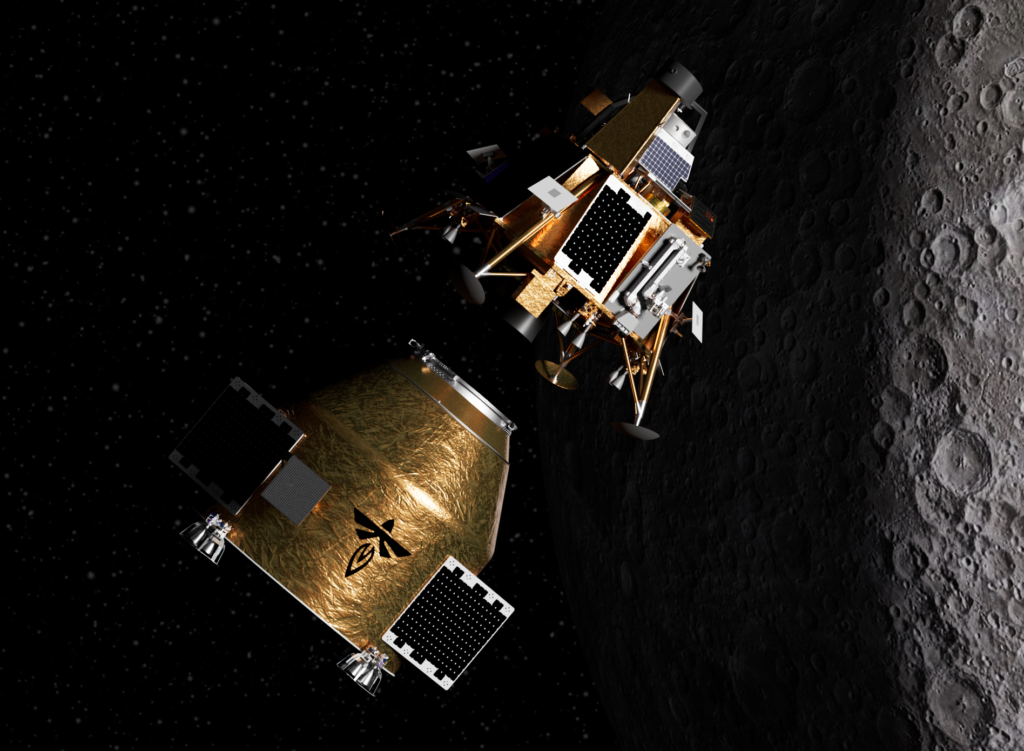
Firefly Aerospace’s Blue Ghost lunar lander is set to deliver scientific instruments to the Moon for NASA. This mission will provide crucial data on the Moon’s surface, furthering our understanding of lunar conditions and aiding future exploration.

Pioneers of Indian Space Exploration

India has a rich legacy of space pioneers who have paved the way for future astronauts. Notable figures include:

  • Rakesh Sharma: The first Indian citizen in space, who flew aboard a Soviet spacecraft in 1984.
  • Kalpana Chawla: The first Indian-born woman to venture into space, who contributed to space shuttle missions.
  • Sunita Williams: An astronaut of Indian origin who holds records for long-duration spaceflights.

A New Dawn in Space Exploration

With groundbreaking missions to the Moon, Mars, and beyond, 2025 is shaping up to be a transformative year for space exploration. These endeavors will not only expand our cosmic knowledge but also pave the way for human habitation beyond Earth.

As space agencies and private enterprises collaborate on ambitious projects, the future of space travel looks more promising than ever. Whether we discover extraterrestrial life, build space colonies, or step onto Mars in the coming decades, one thing is clear: the journey to the stars has only just begun!