Home Blog Page 326

When Nausar Mata Temple in Ajmer Stood Strong Defying Aurangzeb Attack…Read The Story on Chaitra Mahashtami

0

Today marks the eighth day (Ashtami) of Chaitra Navratri. Devotees across the country are offering prayers to Shakti Swaroopa Maa Durga, with grand celebrations underway at the historic Nausar Mata Mandir, located on Nag Pahadi in the Pushkar Valley of Ajmer. The temple, believed to be around 1200 years old, holds great spiritual significance and witnesses special worship and abhishek rituals during both Chaitra and Sharadiya Navratris each year.
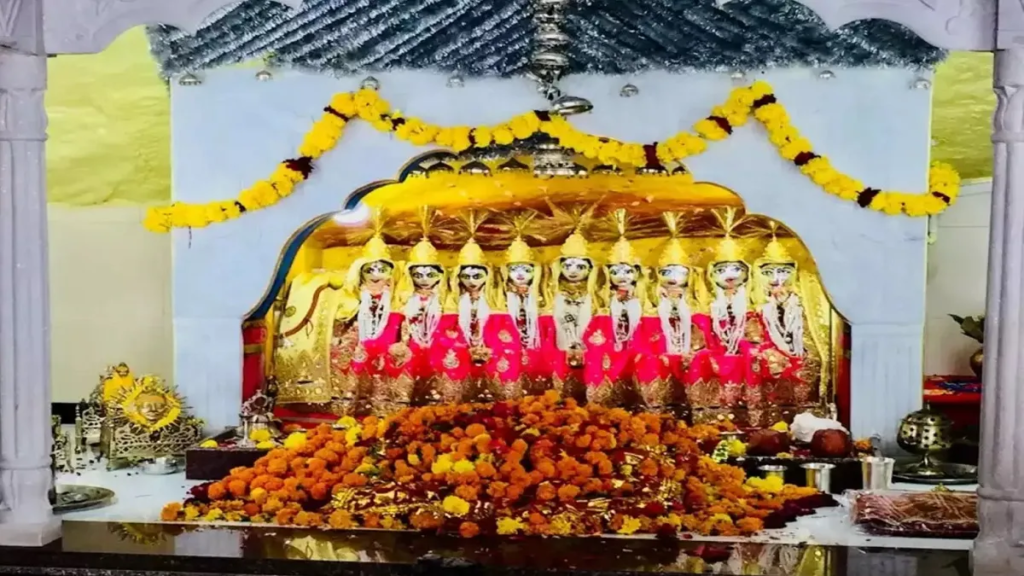
When Nausar Mata Temple in Ajmer Stood Strong Defying Aurangzeb Attack...Read The Story on Chaitra Mahashtami

Traditionally, bhog (food offering) is not made to the goddess until Saptami. On today’s Ashtami, devotees will offer food to Maa Durga following the puja. Evening rituals will include aarti, havan, and poornahuti, along with Kanya Pujan and cultural programs. The temple also hosts a grand Panchkundiya Yajna once every year.

The clay idol of Maa Durga enshrined in the temple is unique—it has nine heads and is revered as a powerful manifestation of Navdurga. According to the Padma Purana, this Navdurga Shaktipeeth has deep mythological roots. It is believed that Lord Brahma performed a yajna in the Pushkar region, and to protect it from demons, nine divine energies (Nav Shaktis) were established on the tongue of Nag mountain in the lap of the Aravallis.

The present temple was built approximately 1300 years ago by the descendants of Maratha Rajputs, under the patronage of the Gwalior Maharaj, on a land spread across 2000 bighas. Numerous legends highlight the divine power of Maa Durga. One such tale speaks of Prithviraj Chauhan defeating Mohammad Gauri through the blessings of Navdurga. In 1666 AD, Chhatrapati Shivaji Maharaj is said to have worshipped the goddess and established a trident (trishul) in her right hand—still present at the site today.

Despite attempts by Mughal ruler Aurangzeb to demolish Hindu temples between 1683 and 1686, he was unable to completely destroy the Nausar Mata temple. Though the final head of the nine-headed idol was damaged, the trident remained untouched. Later, Mahant Buddha Karan restored both the idol and the temple. A pond was also built atop the hill to address the water shortage—a source still used for temple rituals today.

Current Status of the Temple

The temple is currently spread across 62.5 bighas of land and is surrounded by a protective boundary wall. On 14 March 2015, Peethadheeshwar Oma Kumari passed away. Subsequently, on 29 March 2015, Ramakrishna Dev Ji was anointed as the new Peethadhishwar. On Shivratri, 1 March 2022, the Pran Pratishtha of a newly built Shiva temple named Gaurishwar Devalaya was also completed within the premises.

Kuldevi of Many Communities

Shri Nausar Mata is revered as the Kuldevi (family deity) by numerous communities and clans. In the Maheshwari community, clans such as Ajmera, Palod, Chitlangya, Jethaliy, Gelda, Maru, Dhamai, Baldi, and Lohia honor her as their Kuldevi.

Among Gurjars, clans include Hankla, Faguna, Mothsar, Halsar, Chechi, Sacheti, Nekadi, Bagdi, Barbara, Bagdawat, Dodia, Ratna, Meendka, Bug, Nikas, Baddi, Maroth, Farak, Motras, Dhabai, Khandela, Rajlana, Kathoda, Saradhna, Kangas, Juwana, Khalla, and Hadwa.

In Kumawat society, the revered clans are Ajmera, Aloudia, Morwal, Bhairunda, and Jhanjhawat. Other communities include Nausaria and Dhilliwal in the Dhobi society, Kadiwal and Prajapati Kumhar Sikhwal in the Teli society, Tripathi among Brahmins, Pahadia gotra among Meenas, Sevariya in the Gupta gotra, Kisanwat in the Rao society, and Kushmatya Bhardwaj Brahmins in Aadya Gaun.

Devotees from these lineages frequently visit the temple to offer their respects and seek blessings from Maa Nausar Mata.
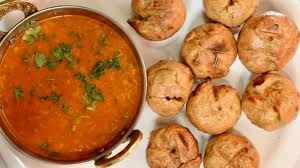
Daal Bafla Makes Flavorful Soul of Malwa, Bringing Together Sentiments, Traditions and Culinary Heritage…

0

By Nirjala Goud

The Malwa region of Madhya Pradesh, known for its fertile black soil, glorious history, and vibrant culture, is also renowned for its mouthwatering cuisine. At the heart of this culinary heritage lies a beloved traditional dish — Daal Bafla. It’s not just food; it’s a sentiment, a tradition, and a celebration on a plate. Whether it’s a festival, a leisurely Sunday, or a special occasion, if there’s a plate of Daal Bafla on the table, the day is made!

Originally crafted as a time-saving meal, Daal Bafla has now become a cherished staple in every household across Malwaanchal. It’s a dish that brings families together, evokes nostalgia, and adds flavor to every festive moment.

What Makes Daal Bafla So Special?

As the name suggests, “Bafla” refers to a dish cooked using steam. While modern ovens have made the process easier, the true essence of this dish lies in its traditional Malwi preparation. A dough made from wheat flour, semolina, and sometimes maize flour is shaped into round balls. These are first boiled in water — a step that sets Daal Bafla apart from its Rajasthani cousin, Dal Baati — and then roasted on a griddle before being generously dipped in ghee.

The Bafla is served with Tuar ki Dal (pigeon pea lentils), which is considered Malwa’s delicious counterpart to Rajasthan’s Panchmel Dal. This dal is not just flavorful but also highly nutritious — packed with protein, fiber, and essential nutrients. It’s beneficial for weight management, digestion, and even blood sugar control, making it a powerhouse of health wrapped in taste.

A Glimpse into History

To truly appreciate Daal Bafla, we must journey back to ancient Malwa — a time when agriculture, trade, and craftsmanship were thriving. People needed meals that were wholesome, quick to prepare, and long-lasting. Thus, Daal Bafla was born — a brilliant example of culinary wisdom and resourcefulness.

It was a dish that met the needs of hardworking farmers and traders, offering sustenance, simplicity, and satisfaction. Prepared in advance and easy to carry, it became the perfect companion for long days of labor.

A Taste of Tradition in Every Bite

Even today, Daal Bafla serves as a bridge between tradition and modernity. It’s more than just a meal — it’s Malwa’s pride, identity, and a delicious story passed down through generations. Every bite carries the warmth of home, the richness of culture, and the love of the Malwi people.

So, the next time you find yourself in Malwa, don’t miss the opportunity to savor a plate of Daal Bafla. This humble yet hearty dish will not only satisfy your taste buds but also connect you to the very soul of this incredible region.

Jawahar Kala Kendra in Jaipur: JKK’s 32nd Foundation Day Celebration to Start from April 8

0
  • A three-day event featuring various activities
  • Exhibition of over 100 folk musical instruments, showcasing JKK’s glorious journey

Jaipur: Jawahar Kala Kendra (JKK), Jaipur, is set to celebrate its 32nd Foundation Day on April 8. On this occasion, a three-day special celebration from April 8 to 10 will showcase Rajasthan’s rich folk culture along with JKK’s glorious journey. Art lovers are eagerly looking forward to the event. Additional Director General of JKK, Mrs. Alka Meena, has invited all art enthusiasts to attend in large numbers and make the event a grand success.

Doodle Wall, Exhibition, and Children’s Theatre Performance

The celebration will begin on April 8 at 11:30 AM with the Doodle Wall, where emotions and thoughts related to JKK will be expressed through art. An exhibition of Rajasthan’s traditional folk musical instruments will be set up in the Alankar Gallery, featuring over 100 folk artists in traditional attire, presenting a vibrant display of folk culture.

At 12:00 PM and 6:00 PM, a children’s theatre performance, Miraj Melodies, directed by Ipshita Chakravarty Singh, will be staged. Later in the evening, at 7:00 PM in Madhyavarti, a mesmerizing musical concert will take place. The event will feature performances by Padma Bhushan awardee Pt. Vishwamohan Bhatt, Pt. Salil Bhatt, Padma Shri awardee Anwar Khan Manganiyar, Kutle Khan Manganiyar, and their group of artists.

Grand Collective Performance of Folk Instruments

On the second day, April 9, at 7:00 PM in Madhyavarti, over 100 folk artists will come together for a grand collective performance of traditional musical instruments.

Additionally, from April 8 to 10, a special photo exhibition will be held, depicting JKK’s 32-year golden journey. The exhibition will be displayed in Surekh and Sukriti Galleries from 11:00 AM to 6:00 PM, featuring approximately 100 photographs.

Ghibli Art: Chandigarh Police Issues Cybercrime Advisory on its Related Scams

0

The Chandigarh Police Cyber Cell has issued an advisory warning the public about growing cyber threats and data theft linked to digital content and merchandise related to Studio Ghibli and similar popular art franchises.

With the increasing popularity of Ghibli-inspired digital artwork and fan merchandise, cybercriminals have found new ways to exploit unsuspecting fans and creators. The advisory highlights several tactics used in such scams and offers key safety tips to avoid falling victim.

Key Threats Highlighted in the Advisory

1. Copyright Infringement & Fake Online Shops

Cybercriminals are setting up fraudulent e-commerce platforms or auction sites claiming to sell official Ghibli merchandise or artwork. These fake sites may:

  • Steal personal and payment information
  • Deliver counterfeit goods
  • Disappear after purchases are made

Tip: Always verify the legitimacy of websites before making purchases.


2. Scams Targeting Fans

Phishing Scams:
Emails posing as official Ghibli communications may include malicious links to fake merchandise sites or social media pages. Clicking these links can result in malware installation or data theft.

Fake Giveaways and Contests:
Scammers often lure users with Ghibli-themed contests or free offers. These are used to gather personal information or distribute malicious files.

Tip: Be skeptical of unsolicited offers and verify any promotions through official channels.


3. Malware Disguised as Ghibli Art

Some downloads, such as wallpapers or art packs, may be embedded with malware or ransomware. Once downloaded, they can:

  • Compromise personal devices
  • Lock or steal data

Tip: Avoid downloading content from unknown sources, especially if shared through unverified links.


4. Identity Theft via Fake Artist Profiles

Cybercriminals may impersonate fan artists or create fake accounts to:

  • Collect personal data from fans
  • Sell counterfeit artwork
  • Mislead followers into scams

Tip: Engage only with verified artist profiles and avoid sharing sensitive information online.


How to Stay Safe

  • Verify authenticity of websites and social media accounts before purchasing or interacting.
  • 🚫 Avoid freebies that seem too good to be true, especially from unfamiliar sources.
  • 🔐 Use trusted platforms for purchasing official merchandise or downloading content.
  • 📢 Report suspicious activity to authorities or relevant platforms if you come across stolen Ghibli art or counterfeit goods.

Conclusion:
With awareness and caution, both fans and creators can protect themselves from cybercrimes associated with digital Ghibli art. The Chandigarh Police urges the public to stay vigilant, report suspicious activity, and only engage through secure, verified platforms.

‘Upkar’ Was Made on Lal Bahadur Shastri’s Advice — This Is How Manoj Kumar Became Famous as Bharat Kumar

0

Veteran actor Manoj Kumar passed away on Friday morning at Kokilaben Hospital in Mumbai. He was 87 years old. Renowned for his iconic patriotic films, he earned the affectionate title “Bharat Kumar” for his strong portrayal of nationalistic characters. Some of his most celebrated films include Upkar, Purab Aur Paschim, Kranti, and Roti Kapda Aur Makaan.

His son, Kunal Goswami, told ANI, “He had been battling health issues for a long time. By God’s grace, he passed away peacefully without much suffering.” He also informed that the last rites will be performed on Saturday at 11 AM at the Pawan Hans crematorium in Mumbai.

Manoj Kumar had been suffering from liver cirrhosis for an extended period. His health deteriorated in February 2025, and he was admitted to hospital on February 21.

Manoj Kumar received seven Filmfare Awards during his illustrious career. He won his first in 1968 for Upkar, which bagged four awards in total—Best Film, Best Director, Best Story, and Best Dialogue. He was honored with the Padma Shri in 1992, and later received the Dadasaheb Phalke Award in 2016, India’s highest award in cinema.

Deeply saddened by the passing of legendary actor and filmmaker Shri Manoj Kumar Ji. He was an icon of Indian cinema, who was particularly remembered for his patriotic zeal, which was also reflected in his films. Manoj Ji’s works ignited a spirit of national pride and will continue to inspire generations. My thoughts are with his family and admirers in this hour of grief. Om Shanti.

India’s first 6 seater flying taxi, 160km maximum range: Fare for one trip equal to premium taxi service, will be launched in 2028

0

Aerospace startup Sarla Aviation has introduced its prototype air taxi ‘Zero’ at the Startup Maha Kumbh today (3 April). This taxi can fly up to a distance of 160 km at a time, but it will be used for short trips of 20-30 km.

The company said that it will be able to fly at a speed of up to 250 km per hour and will be ready for a trip in just 20 minutes of charging. The Zero flying taxi is expected to significantly reduce travel time in congested areas. It will be able to seat 7 people including the pilot. The company revealed it for the first time at the India Mobility Global Expo held in January.

Shivam Chauhan said that he will start the flying taxi service from Bengaluru by 2028. After this, there is a plan to expand the air taxi service in cities like Mumbai, Delhi, Noida and Pune.

The price of a trip in Shunya is planned to be at par with Ola-Uber’s premium taxi service. Apart from passenger transport, they also announced the launch of a free air ambulance service to meet emergency medical needs in urban areas.
The Bengaluru-based platform is named after India’s first female pilot Sarla Thukral. It was founded in October 2023 by Adrian Schmidt, Rakesh Gaonkar and Shivam Chauhan. Sarla Aviation has designed Shunya for air taxi service. It can carry a maximum load of 680 kg.
Send feedback
Side panels
History
Saved

Wat Pho Temple in Thailand: King Rama I Restored This Temple after Founding Bangkok As The Capital. Know More On Its History and Other Relevant Facts…

0

PM Narendra Modi is expected to visit the Wat Pho inThailand, officially known as Wat Phra Chetuphon Wimon Mangkhalaram Rajwaramahawihan, has a rich history dating back to the 16th century. Originally called Wat Phodharam, it was established as a monastery during the late Ayutthaya period. In 1788, King Rama I restored the temple after founding Bangkok as the new capital and constructing the Grand Palace next door.

Wat Pho Temple in Thailand: King Rama I Restored This Temple after Founding Bangkok As The Capital. Know More On Its History and Other Relevant Facts...

Much of the temple’s current structure dates to 1832, during the reign of King Rama III, who significantly expanded Wat Pho, including the South Vihara and the West Vihara, where the Reclining Buddha resides. Completed in 1848, the Reclining Buddha remains the largest in Bangkok, crafted from a brick core covered in plaster and adorned with gold leaf.

King Rama III also transformed Wat Pho into Bangkok’s first public university, commissioning over 1,000 Buddha depictions and various sculptures and artworks to educate the public on history, literature, and Buddhism. Between 1831 and 1841, he and Thai scholars inscribed 1,431 stone tablets to preserve cultural knowledge, including traditional Thai medicine and massage. This legacy continues today, as Wat Pho remains Thailand’s national center for the teaching of traditional Thai massage.

The temple underwent its most recent restoration in 1982, in preparation for the Bangkok Bicentennial Celebration.

Meet World’s Youngest PM from Thailand, Piatongtarn Shinawatra…

0

Prime Minister Narendra Modi arrived in Thailand on Thursday for a two-day official visit. During his visit, he addressed a joint press conference with Thailand’s Prime Minister, Piatongtarn Shinawatra who at 38 is the world’s youngest serving Prime Minister. Let’s explore who this world’ youngest PM is who is making headlines after her meeting with Indian PM.

Paetongtarn Shinawatra is a Thai politician who has been serving as the 31st prime minister of Thailand since August 16, 2024, and as the leader of the Pheu Thai Party since October 2023. She is the youngest child of former Prime Minister Thaksin Shinawatra and the niece of former Prime Minister Yingluck Shinawatra. At 37, Paetongtarn became Thailand’s youngest prime minister and the second woman to hold the position, following her aunt Yingluck.

s a prominent Thai politician and businesswoman. She holds significant influence in the corporate sector as the largest shareholder of SC Asset Corporation and serves as a director of the Thaicom Foundation. As of 2022, she maintained holdings in 21 companies with an estimated total value of approximately 68 billion baht (around US$2 billion). ​Khaosod English

Paetongtarn’s formal political journey began on October 28, 2021, when she was appointed chair of Pheu Thai’s Advisory Committee on Participation and Innovation. Subsequently, on March 20, 2022, she was introduced as the leader of the “Pheu Thai Family” campaign, a strategic initiative aimed at fostering party unity and expanding its support base. ​Sin Chew Daily+1nationthailand+1Encyclopedia Britannica

In April 2023, Paetongtarn was officially nominated as one of the Pheu Thai Party’s three prime ministerial candidates for the general election, alongside Srettha Thavisin and Chaikasem Nitisiri. Following the election, she continued to ascend within the party ranks and was appointed as the party leader on October 27, 2023. Her leadership culminated in her election as Thailand’s 31st prime minister on August 16, 2024

PM Modi began by expressing condolences for the lives lost in the recent earthquake on March 28. He then highlighted the deep-rooted cultural and spiritual connections between India and Thailand, emphasizing that the spread of Buddhism has historically linked both nations. He noted that the Ramayana, known as Ramakien in Thailand, plays a significant role in Thai cultural life.

Upon his arrival in Bangkok, PM Modi was welcomed by the Indian community at the airport. Later, he attended a performance of the Thai Ramayana.

He also held a bilateral meeting with Thailand’s PM, Piatongtarn Shinawatra,

How These 6 Indian Villages Went Completely Zero-Waste

0

What if waste wasn’t something to discard, but something to transform? In a country generating over 62 million tonnes of waste each year, an extraordinary revolution is unfolding—not in bustling megacities, but in the heart of India’s villages. Here, the concept of waste is disappearing. Plastic bans are upheld not through fines, but through community pride. Children lead clean-up drives. Elders share ancestral wisdom on living sustainably. These are not stories of policies; they are stories of people, of grassroots action turning heads on a global scale.

These six Indian villages have defied the odds, proving that zero-waste isn’t a far-fetched dream—it’s a way of life.


1. Aandhi, Rajasthan: A Village Powered by Green Technology

How These 6 Indian Villages Went Completely Zero-Waste

Just a short drive from Jaipur, the village of Aandhi is setting a new benchmark for sustainability. Instead of discarding waste, the community transforms it into energy, clean water, and compost. Biogas plants process food and farm waste, solar-powered systems light up homes, and natural wetlands purify water. Through innovation and collective effort, Aandhi is proving that rural India can be a leader in building a zero-waste, sustainable future.

2. Naya Basti, Darjeeling: From Rubbish to Revival

How These 6 Indian Villages Went Completely Zero-Waste

Once struggling under heaps of waste, Naya Basti in Darjeeling is now a beacon of ecological restoration. Led by local environmentalist Utsow Pradhan and his team at Tieedi, the community revived traditional composting practices and embraced permaculture. Waste is now seen as a resource, nurturing the land rather than polluting it. The transformation isn’t just about cleaner streets—it’s about a thriving, self-sustaining ecosystem.

3. Chhota Narena, Rajasthan: A Self-Made Success Story

How These 6 Indian Villages Went Completely Zero-Waste

Chhota Narena, once plagued by plastic waste and burning garbage, has rewritten its narrative. In just eight months, the village became Rajasthan’s first waste-free community, thanks to efforts by the residents themselves. With support from Barefoot College and an international donor, villagers started composting organic waste and segregating recyclables. Now, nearly half the households generate compost while earning extra income from selling recyclable materials. What began as a challenge has become a triumph of self-reliance and environmental stewardship.

4. Patoda, Maharashtra: A Model for Smart Waste Management

How These 6 Indian Villages Went Completely Zero-Waste

In Patoda, waste isn’t discarded—it’s repurposed. Each household sorts its waste, kitchen scraps are converted into nutrient-rich compost, and plastic waste is collected and sold for recycling. Even wastewater finds a second life, being treated and reused on farms. Solar-powered streetlights and water meters further reinforce Patoda’s commitment to sustainability. This village is proof that when a community unites with a purpose, zero waste is not just a vision—it’s a reality.

5. Melathiruppanthuruthi, Tamil Nadu: South India’s Cleanest Town Panchayat

Melathiruppanthuruthi has earned its reputation as one of South India’s cleanest town panchayats. Waste segregation begins at the source, with electric vehicles collecting biodegradable and non-biodegradable waste separately. Residents are encouraged to replace plastic bags with biodegradable alternatives and are even rewarded with free plants for their eco-conscious efforts. Simple yet effective, this small town is leading by example, proving that big change often begins at home.

6. Ambikapur, Chhattisgarh: From Landfill to Landmark

How These 6 Indian Villages Went Completely Zero-Waste

Once buried under a massive 15-acre landfill, Ambikapur is now one of India’s cleanest cities. Every household segregates waste, ensuring that not a single scrap ends up in a dump. The landfill itself has been transformed into a lush public park. This community-led zero-waste model has not only cleaned up the city but also set a new benchmark for urban sustainability across India.


A Future Shaped by Villages

These villages may be scattered across different regions, but together, they are rewriting India’s waste management story. Compost pits have replaced landfills, solar lamps illuminate once-dark streets, and sustainable pride has replaced plastic dependency. Their message is clear: zero waste is not just an environmental goal—it’s a way of life.

Perhaps the world doesn’t need to look to the future for solutions. Instead, it needs to turn to these villages, where the future is already unfolding, one sorted bin and one clean street at a time.

How to Grow Karnataka’s Famous Raspuri Mango: A Step-by-Step Gardening Guide

0

There’s something magical about the arrival of mangoes in Indian markets—the sweet scent, the vibrant hues, and the promise of summer in every bite. Among the many varieties that flood the stalls, one stands out as a beloved treasure of Karnataka: the Raspuri mango. Known for its rich flavor, juicy pulp, and velvety texture, this mango is more than just a fruit—it’s a celebration of the season. In Bengaluru and beyond, its arrival signals that summer has officially begun.

But what makes the Raspuri mango so special? And why does it thrive so beautifully in Karnataka?

The Secret Behind Raspuri’s Unmatched Flavor

The answer lies in Karnataka’s warm climate, fertile soil, and abundant sunshine. The state’s diverse geography—from the Deccan Plateau to its coastal stretches—provides the ideal environment for mango cultivation. The Raspuri mango flourishes in well-drained soil, needing just the right balance of heat and moisture to grow into the luscious fruit people eagerly wait for each year.

Bringing the Orchard Home: Grow Your Own Raspuri Mango

How to Grow Karnataka’s Famous Raspuri Mango: A Step-by-Step Gardening Guide

The best part? With a bit of care and patience, you can grow this flavorful mango at home—whether in a garden, on a terrace, or even on a balcony. Here’s how you can bring the magic of Raspuri mangoes to your home.

Step 1: Choose the Perfect Spot

Mango trees, including the Raspuri, thrive in sunlight. Find a sunny spot in your garden, terrace, or balcony where the tree can soak in at least six to eight hours of direct sunlight daily. Good air circulation is also essential to prevent fungal infections.

Step 2: Pick a Healthy Sapling

Although you can grow a Raspuri mango from seed, starting with a healthy grafted sapling from a trusted nursery is your best bet. Grafted saplings are generally hardier and fruit earlier, giving you a better chance of success.

Step 3: Prepare the Soil

Raspuri mangoes prefer well-drained, slightly acidic soil. Mix compost or organic matter into the soil to improve fertility. If you’re planting in a container, ensure it’s large enough and has drainage holes. Avoid waterlogged or heavy clay soils, as these can hinder root growth.

Step 4: Plant the Sapling

Dig a hole twice the size of the sapling’s root ball. Place the sapling gently into the hole, making sure that the roots are spread out evenly. Cover with soil and water generously. Ensure the root collar is level with the surface of the soil—planting too deep can harm the tree.

Step 5: Water with Care

Water thoroughly after planting, but be cautious not to overwater. Mango trees dislike “wet feet.” In the initial months, keep the soil consistently moist to help the roots establish. Once the tree is well-rooted, it becomes more drought-tolerant but still requires regular watering during dry periods.

Step 6: Prune as Needed

As your mango tree grows, occasional pruning helps maintain its structure and health. Remove any dead or damaged branches, and trim suckers from the base. This allows the tree to focus its energy on fruit production. Applying a balanced fertilizer during the growing season encourages robust growth and fruiting.

Step 7: Encourage Pollination

Raspuri mangoes are mostly self-pollinating, but having other mango trees nearby can boost fruit production. Grafted saplings usually begin to bear fruit within three to five years, so patience is key. When fruits begin to form, consider using netting to protect them from birds and pests.

Step 8: Harvest the Reward

Come summer, your hard work will bear fruit—literally. Raspuri mangoes are typically ready to harvest when they turn a rich golden yellow. Pick them carefully to avoid bruising the skin, and savor the joy of tasting mangoes straight from your own homegrown tree.

How to Grow Karnataka’s Famous Raspuri Mango: A Step-by-Step Gardening Guide

The Joy of Growing Your Own Mangoes

How to Grow Karnataka’s Famous Raspuri Mango: A Step-by-Step Gardening Guide

There’s something truly rewarding about nurturing a tree from sapling to fruit-bearing beauty. Beyond the delicious yield, a mango tree offers shade, a touch of greenery, and a deep connection to nature. So why wait? Start growing your own Raspuri mango today, and let the taste of summer be just a few steps away from your home.