Home Blog Page 3

Machail Mata Yatra: When the Soul Meets Divine Energy

0

On August 14, 2023, I visited the holy village of Machail in the Kishtwar district of Jammu and Kashmir along with my family. It was a memorable journey filled with devotion, natural beauty, and spiritual peace.

The Story of Machail Mata

The Machail Mata Mandir is dedicated to Goddess Chandi, a powerful form of Goddess Durga, who is also worshipped as Kali. The temple holds great significance for devotees from different parts of the country.

According to local beliefs, many Indian soldiers prayed to Mata Machail during the Indo-Pak wars and were blessed with success in their missions. It is also believed that General Zorawar Singh was a devoted follower of the goddess and offered special prayers after achieving victory.

The Machail Mata Yatra gained popularity through the efforts of Guru Kulveer Singh Ji, whose deep devotion inspired many devotees to undertake the pilgrimage.

One of the unique beliefs associated with the temple is that Mata blesses her devotees by slightly moving her earrings or the ornaments on her hands. Another fascinating belief is that although the eyes of the goddess’s idol remain closed, some fortunate devotees have experienced the divine blessing of seeing them open.

My Journey

Our journey began at 4 a.m. from Udhampur. Along with our family friends, we set out on an exciting road trip towards Machail. Throughout the journey, we enjoyed the scenic beauty of the region and made a few stops to rest and admire the magnificent Chenab River flowing through the mountains.

Around noon, we reached Gulabgarh in Kishtwar. From there, pilgrims can either undertake a 21-kilometre trek on foot or take a helicopter ride to reach Mata’s Bhawan. We chose the helicopter ride, which took only about ten minutes and offered breathtaking aerial views of the surrounding mountains.

After reaching Machail, we booked a tent for our stay. The stunning views of the Kishtwar Himalayas left us amazed. Surrounded by towering peaks and fresh mountain air, the place felt truly magical.

As I entered the sacred temple premises, a deep sense of peace and positivity filled my heart. The ringing bells, devotional atmosphere, and divine presence of Mata created a feeling of spiritual connection that is difficult to describe in words. Every corner of the temple radiated faith and devotion, making the experience truly unforgettable.

After spending the night there, we began our journey back home. The memories of this pilgrimage remain close to my heart, and I will cherish this beautiful experience for the rest of my life.

The Machail Mata Yatra was not just a journey to a holy place; it was a journey of faith, devotion, and inner peace that brought me closer to the divine.

(The writer of this article is Akhilesh Saproo, a student of Grade X, APS Jaipur)
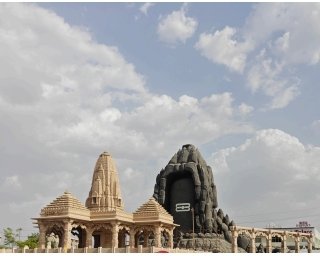
“A Journey of Faith and Positivity: Exploring Kubereshwar Dham in Sehore”

0

Some journeys are not just about visiting a place; they become cherished memories filled with peace, faith, and meaningful experiences. My trip to Kubereshwar Dham in Sehore, Madhya Pradesh, was one such journey. It was not only a family outing but also a spiritually enriching experience that brought positivity and calmness to my mind.

Our journey began early in the morning at around 5:00 a.m. Although waking up so early was challenging, the excitement of visiting such a renowned spiritual destination kept everyone energetic. My family and I left for Sehore between 5:30 and 6:00 a.m. and reached our destination at around 7:00 a.m.

Located about 37 kilometres from Bhopal, Sehore is a peaceful city in Madhya Pradesh known for its spiritual significance and cultural heritage. Over the years, it has become a popular destination for devotees due to Kubereshwar Dham and the spiritual teachings of Pandit Pradeep Mishra Ji. Thousands of people from across the country visit the temple to seek blessings and experience its divine atmosphere.

As soon as we arrived in Sehore, we headed directly to Kubereshwar Dham. The devotional energy of the place was evident from the moment we entered. Outside the temple, numerous local stalls and shops sold snacks, religious items, and souvenirs. The surroundings felt lively yet peaceful at the same time.

For visitors planning an overnight stay, accommodation options are readily available near the temple. Rooms generally range from ₹600 to ₹2,500, depending on the facilities offered. In my opinion, winter is the best season to visit, as summers in Sehore can be quite hot.

The temple itself was beautiful and serene. We offered prayers to the Parthiv Shivling, one of the main attractions of Kubereshwar Dham and an important symbol of devotees’ faith. One of the most memorable moments of our visit was getting the opportunity to see Pandit Pradeep Mishra Ji, which made the experience even more special.

Another aspect that deeply impressed me was the hospitality and arrangements made for devotees. A free Bhandara (community meal) is organised every morning and evening, serving food to countless visitors without any discrimination. Free drinking water, resting areas, and large tents are also available for pilgrims travelling from distant places or those unable to afford accommodation.

The next morning, we visited the temple once again to receive Rudraksha, which holds great spiritual significance in Hinduism and is believed to bring positivity and blessings. Watching thousands of devotees patiently waiting with faith and devotion was a truly inspiring sight.

Apart from Kubereshwar Dham, Sehore is also known for attractions such as Kolar Dam, ancient temples, and other nearby religious sites. These places make the city an appealing destination for both spiritual seekers and cultural travellers.

Overall, my visit to Sehore was peaceful, memorable, and spiritually uplifting. The positive energy, unwavering faith of the devotees, and the calm atmosphere made this journey truly unforgettable. For anyone seeking spiritual peace or wishing to experience a place filled with devotion and positivity, Kubereshwar Dham in Sehore is definitely worth visiting at least once in a lifetime.

(The writer of this article is Ishita, a student of APS, Jaipur)

World Milk Day 2026: Celebrating the White Revolution and the Power of Milk

0

Every year on June 1, countries across the globe observe World Milk Day to recognize the importance of milk as a nutritious food and to celebrate the contributions of the dairy sector to livelihoods, economies, and food security. Established by the Food and Agriculture Organization(FAO) in 2001, the day highlights milk’s role in promoting health and supporting millions of dairy farmers worldwide.

Milk is often regarded as one of nature’s most complete foods. Rich in protein, calcium, vitamins, and essential minerals, it plays a vital role in growth, bone health, and overall well-being. From children and athletes to senior citizens, milk remains an important part of balanced diets across cultures.

For India, World Milk Day holds special significance. The country is the world’s largest producer of milk, a remarkable achievement made possible by the White Revolution. Spearheaded by Verghese Kurian , the movement transformed India from a milk-deficient nation into a global dairy powerhouse. Through cooperative models and farmer-centric policies, millions of rural households gained sustainable livelihoods while ensuring greater access to milk for consumers.

No discussion about India’s dairy success story is complete without mentioning Amul. Founded in Gujarat, the cooperative became a symbol of empowerment for dairy farmers and a driving force behind the White Revolution. Today, Amul’s success stands as a testament to the strength of collective action and rural entrepreneurship.

World Milk Day 2026 also shines a spotlight on the often-unsung heroes of the dairy industry—women dairy farmers. Across villages and towns, countless women manage cattle, oversee milk production, and contribute significantly to household incomes. Their efforts form the backbone of India’s dairy ecosystem and play a crucial role in strengthening rural economies.

This year’s observance is also an opportunity to reflect on the future of dairy. Sustainable farming practices, animal welfare, technological innovation, and reducing environmental impact are becoming increasingly important as the sector evolves to meet growing global demand.

As the world celebrates World Milk Day, the occasion serves as a reminder that every glass of milk represents the hard work of millions of farmers, the success of agricultural innovation, and a commitment to better nutrition. Beyond being a daily staple, milk symbolizes nourishment, resilience, and the transformative power of collective effort.

On this World Milk Day, let us celebrate not only the nutritional value of milk but also the people whose dedication brings it from farms to our tables every day.

RCB vs GT IPL 2026 Final Live Streaming Details

0

The stage is set for a blockbuster showdown as defending champions Royal Challengers Bengaluru (RCB) take on Gujarat Titans (GT) in the IPL 2026 Final at the Narendra Modi Stadium in Ahmedabad on Sunday. With a second consecutive title at stake, RCB are aiming to achieve a feat accomplished by only two teams in Indian Premier League history.

Having ended their long wait for an IPL trophy in 2025, Royal Challengers Bengaluru now have the opportunity to become only the third franchise after Chennai Super Kings and Mumbai Indians to successfully defend an IPL title.

The Royal Challengers Bengaluru vs Gujarat Titans IPL 2026 Final will begin at 7:30 PM IST on Sunday at the Narendra Modi Stadium in Ahmedabad.

Live Streaming: JioHotstar

Live Telecast: Star Sports 1, Star Sports 1 Hindi, Star Sports 1 Tamil, Star Sports 1 Telugu, and Star Sports 1 Kannada, along with their HD channels.

Cricket fans across India and around the world will be eagerly watching as RCB attempt a historic title defence and Gujarat Titans chase their second IPL championship.

Goa Celebrates 39th Statehood Day; Vice President to Attend Grand Function in Panaji

0

The coastal state of Goa celebrated its 39th Statehood Day on May 30 with pride and enthusiasm, marking nearly four decades since it attained full statehood and became the 25th state of the Indian Union in 1987. The main celebrations were held at the Kala Academy in Panaji and were attended by Vice President C. P. Radhakrishnan as the chief guest.

Statehood Day is one of the most significant occasions in Goa’s history. While Goa was liberated from Portuguese rule on December 19, 1961, it initially became a Union Territory along with Daman and Diu. A crucial turning point came in 1967 through the historic Opinion Poll, when the people of Goa voted to preserve the region’s distinct identity rather than merge with Maharashtra. The recognition of Konkani as the official language in 1987 further strengthened Goa’s cultural identity and paved the way for statehood. On May 30, 1987, Goa officially became a state of India.

The celebrations highlighted Goa’s remarkable journey from a former Portuguese colony to one of India’s most developed states. Known for its high human development indicators, literacy rate, tourism sector, and quality of life, Goa has emerged as a major cultural and economic hub in the country.

As part of the Statehood Day programme, several important initiatives and commemorative events were organized. These included the release of a special commemorative stamp dedicated to renowned Goan cartoonist Mario Miranda, the launch of a coffee table book, presentation of awards, and announcements related to citizen welfare initiatives.

Vice President C. P. Radhakrishnan participated in the official function and later visited the CSIR–National Institute of Oceanography, where he interacted with scientists, viewed research and technology exhibits, and released a coffee table book showcasing the institute’s contributions to marine and oceanographic research.

Chief Minister Pramod Sawant and other state leaders also joined the celebrations, reflecting on Goa’s progress over the past 39 years and reaffirming their commitment to sustainable development, cultural preservation, and public welfare.

Goa Statehood Day not only commemorates a historic constitutional milestone but also celebrates the state’s unique heritage, linguistic identity, and democratic spirit. As Goa marks its 39th year of statehood, the occasion serves as a reminder of its rich history and its continuing journey toward growth, innovation, and inclusive development.

Hindi Journalism Day: Celebrating the Voice of India’s Largest Language

0

Every year on May 30, India observes Hindi Journalism Day to commemorate a landmark moment in the country’s media history—the publication of the first Hindi newspaper, Udant Martand, in 1826. The day serves as a tribute to the evolution of Hindi journalism and the contributions of journalists who have played a vital role in informing, educating, and empowering society.

The Birth of Hindi Journalism

Hindi Journalism Day marks the anniversary of the launch of Udant Martand on May 30, 1826, from Calcutta (now Kolkata). The weekly newspaper was founded and edited by Pandit Jugal Kishore Shukla , who envisioned a platform that would provide news and information to Hindi-speaking readers in their own language.

At a time when most newspapers were published in English or other regional languages, Udant Martand pioneered journalism in Hindi, laying the foundation for a powerful media tradition that continues to flourish today.

A Legacy of Public Awareness and Nation-Building

Hindi journalism has played a significant role in shaping public opinion and promoting social awareness. During India’s freedom struggle, Hindi newspapers became powerful tools for spreading nationalist ideas, mobilizing public support, and challenging colonial rule. Journalists and editors often worked under difficult circumstances, yet remained committed to informing the public and advocating for social change.

Over the decades, Hindi journalism has expanded beyond newspapers to include magazines, radio, television, digital news platforms, and social media, reaching millions of people across India and abroad.

Hindi Journalism in the Digital Age

The media landscape has undergone a dramatic transformation in recent years. Digital platforms have made news more accessible than ever, enabling real-time reporting and wider audience engagement. Hindi news portals, mobile applications, and social media channels have significantly increased the reach of Hindi journalism, particularly in smaller towns and rural areas.

However, the digital era has also brought new challenges. The rapid spread of misinformation, fake news, and unverified content has highlighted the need for responsible journalism and media literacy. In this environment, maintaining credibility, accuracy, and ethical standards remains crucial.

Honouring Journalists and Their Contributions

Hindi Journalism Day is observed through seminars, discussions, journalism awards, and cultural programmes organized by press clubs, educational institutions, media organizations, and government bodies across the country. These events recognize the contributions of journalists and encourage dialogue on the future of media and communication.

The day also serves as a reminder of the importance of a free and independent press in a democratic society. Journalists act as a bridge between citizens and institutions, ensuring transparency, accountability, and informed public discourse.

Continuing the Journey

Nearly two centuries after the publication of Udant Martand, Hindi journalism continues to evolve while remaining rooted in its core mission of serving society through truthful and responsible reporting. Hindi Journalism Day is not only a celebration of a historic milestone but also an occasion to acknowledge the enduring role of journalists in strengthening democracy, promoting awareness, and giving voice to the aspirations of millions.

As India advances in the digital age, the values of integrity, accuracy, and public service that shaped the beginnings of Hindi journalism remain as relevant as ever.

World Social Media Day: Connecting the World, One Click at a Time

0

Every year on June 30, the world observes World Social Media Day, a day dedicated to recognizing the transformative impact of social media on communication, business, education, governance, and everyday life. What began as a simple way to connect friends and families has evolved into a powerful global ecosystem that influences nearly every aspect of modern society.

World Social Media Day was launched in 2010 by the American media platform Mashable to celebrate the digital revolution brought about by social networking platforms. Since then, the day has become an opportunity to reflect on both the opportunities and challenges presented by social media in an increasingly connected world.

The Rise of a Digital Revolution

Over the past two decades, social media has changed how people communicate. Platforms such as Facebook, Instagram, X, LinkedIn, YouTube, and WhatsApp have enabled billions of users to share ideas, exchange information, and build communities across geographical boundaries. News that once took days to travel can now reach millions within seconds.

Social media has also transformed businesses and marketing strategies. Small entrepreneurs can now reach global audiences without large advertising budgets, while major brands use digital platforms to engage directly with consumers. Influencer marketing, online shopping, and digital advertising have emerged as significant drivers of the global economy.

A Tool for Education and Awareness

Beyond entertainment and networking, social media has become an important tool for learning and awareness. Educational institutions, experts, and content creators use digital platforms to share knowledge on topics ranging from science and technology to health and finance. During crises such as natural disasters and public health emergencies, social media often serves as a vital channel for real-time information and support.

Governments and public agencies also utilize social media to communicate policies, disseminate updates, and engage with citizens. Social campaigns on issues such as environmental conservation, gender equality, mental health, and public safety have gained momentum through online platforms.

Challenges of the Digital Age

While social media offers numerous benefits, it also presents significant challenges. The rapid spread of misinformation and fake news can create confusion and influence public opinion. Cyberbullying, online harassment, privacy concerns, and digital addiction have become growing issues, particularly among young users.

Experts emphasize the importance of digital literacy, responsible online behavior, and fact-checking information before sharing it. Striking a balance between online engagement and real-world interactions is increasingly important in maintaining mental and emotional well-being.

Social Media and India

India is among the world’s largest social media markets, with hundreds of millions of active users. The country’s growing internet penetration and affordable smartphones have accelerated digital participation across urban and rural regions alike. Social media has become a platform for entrepreneurship, citizen journalism, public discourse, and cultural expression, empowering individuals and communities in unprecedented ways.

Looking Ahead

As technologies such as artificial intelligence, virtual reality, and augmented reality continue to evolve, social media is expected to become even more immersive and influential. The future of digital communication will likely bring new opportunities for innovation, collaboration, and global connectivity.

World Social Media Day serves as a reminder that while technology can bridge distances and amplify voices, its true value lies in how responsibly and meaningfully it is used. In a world increasingly shaped by digital interactions, social media remains one of the most powerful tools for connecting people, sharing ideas, and fostering global understanding.

Beat The Heat: Summer Drinks You Need To Try In Udaipur

0

Summer in Rajasthan can feel relentless, especially during the long afternoon hours when the streets quiet down and the city slows beneath the sun. Yet even in the peak of the season, Udaipur continues to draw travellers from across the country with its lakeside charm, café culture, and relaxed atmosphere. And amid the rising temperatures, one thing everyone looks for is the perfect refreshing escape.

From fruit coolers and iced teas to thick shakes, cold brews, and nostalgic Indian summer favourites, cafés across the city are turning seasonal drinks into full experiences. Travellers today are no longer just searching for aesthetic cafés — they want beverages that feel cooling, energising, and memorable enough to become a part of the journey itself.

Whether it’s a post-sightseeing break, a golden hour café stop, or simply an excuse to escape Rajasthan’s summer heat for a while, these cafés in Udaipur are serving some of the city’s most-loved refreshing drinks this season.

Lira

One of Udaipur’s newest café additions, Lira is already creating buzz for its vibrant atmosphere and playful summer menu. The café combines refreshing flavours with creative presentation, making it a perfect stop for anyone looking to cool down while café hopping around the city.
Its drinks feel designed for the season — light, fruity, and packed with refreshing flavours that work perfectly against Rajasthan’s intense heat.

Must Try:

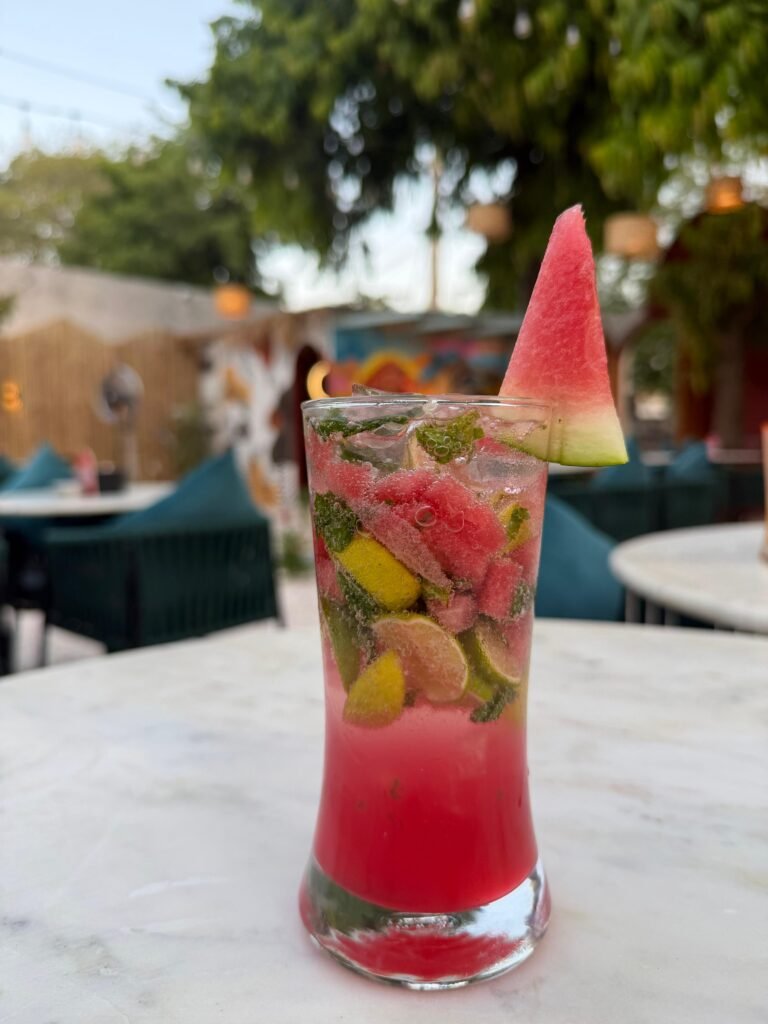
Watermelon Pop

Beat The Heat: Summer Drinks You Need To Try In Udaipur

Mango Jungli Chilli

Beat The Heat: Summer Drinks You Need To Try In Udaipur


Hola Coffee

For many locals and travellers alike, Hola Coffee has become a go-to spot for chilled beverages and relaxed café vibes. Whether it’s a quick catch-up with friends or an evening coffee run after exploring the city, the café’s refreshing drinks make it an easy summer favourite.
Known for balancing classic café comfort with refreshing seasonal flavours, Hola Coffee offers drinks that are both familiar and satisfying during hot Udaipur afternoons.

Must Try:

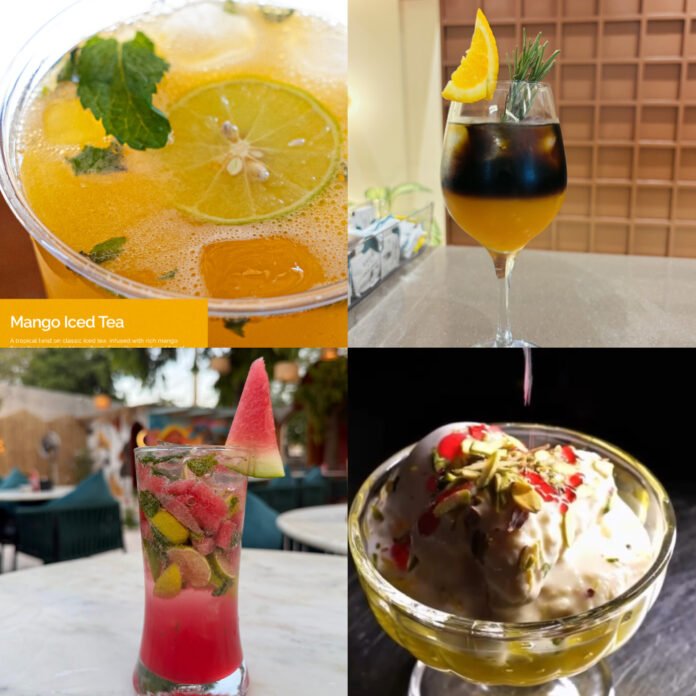
Mango Iced Tea

Beat The Heat: Summer Drinks You Need To Try In Udaipur

Peach Iced Tea

Beat The Heat: Summer Drinks You Need To Try In Udaipur

Signature Frappe

Beat The Heat: Summer Drinks You Need To Try In Udaipur


Love Over Coffee

Blending aesthetic interiors with bold coffee flavours, Love Over Coffee offers beverages that stand out during the summer season. The café’s menu feels crafted for slow evenings, work breaks, and laid-back café hopping — perfectly matching Udaipur’s growing slow-living culture.
Its refreshing coffee creations bring together strong flavours and cooling textures, making them ideal for travellers looking for something beyond regular iced drinks.

Must Try:

Orange Cold Brew

Beat The Heat: Summer Drinks You Need To Try In Udaipur

Drip Vietnamese

Beat The Heat: Summer Drinks You Need To Try In Udaipur


Kailash Parbat

A well-loved name known for comfort food and timeless flavours, Kailash Parbat also serves one of the most iconic summer indulgences associated with Indian summers. Rich, chilled, and nostalgic, their falooda remains a classic choice for anyone looking to escape the heat after a long day exploring the city.
Sometimes, the simplest summer favourites remain the most satisfying.

Must Try:

Falooda

Beat The Heat: Summer Drinks You Need To Try In Udaipur

As temperatures rise, café culture in Udaipur continues to evolve into more than just aesthetic spaces and coffee stops. These cafés are becoming part of the travel experience itself — places where people pause, slow down, recharge, and enjoy the city at a gentler pace.

And in a destination as beautiful as Udaipur, sometimes the best way to experience summer is simply with a cold drink in hand and nowhere to rush.

Kolkata to Host Grand International Day of Yoga 2026 Celebrations

0

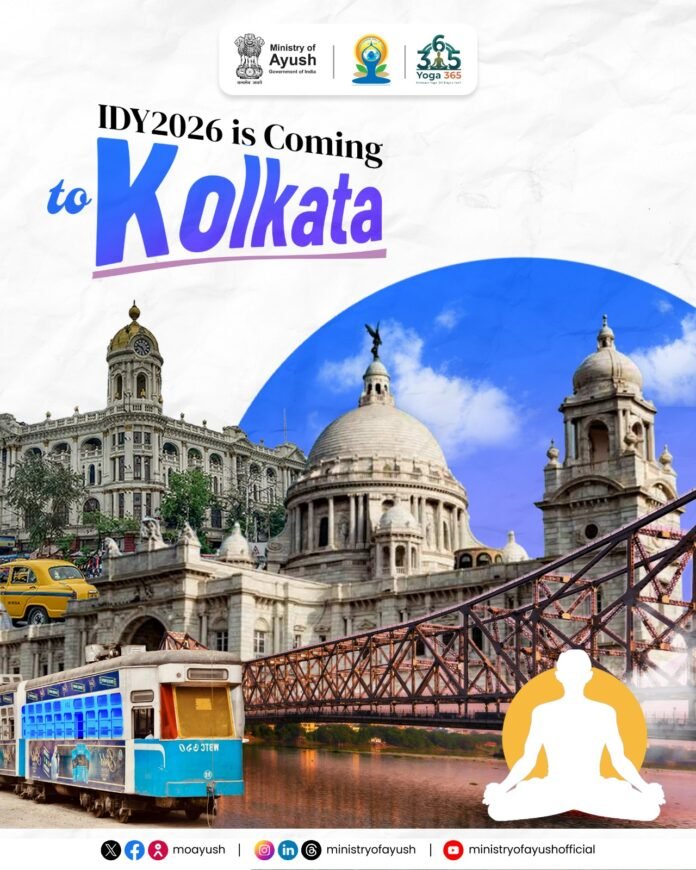
The city of Kolkata is set to host the main national celebrations of the International Day of Yoga (IDY) 2026 on June 21, marking another major moment in India’s global yoga diplomacy and wellness movement. The announcement was made by Union Minister of State (Independent Charge) for AYUSH, Prataprao Jadhav, during the “Yoga Mahotsav 2026” event held at the UNESCO World Heritage Site of Khajuraho in Madhya Pradesh.

This year’s theme, “Yoga for Healthy Ageing,” will focus on the role of yoga in promoting physical fitness, mental wellness and holistic health among people of all age groups, especially the elderly. The government aims to highlight yoga as a preventive healthcare practice and an essential part of balanced living.

According to reports, Prime Minister Narendra Modi is expected to participate in the main event in Kolkata, continuing his tradition of personally leading the flagship Yoga Day celebrations across India. Over the years, cities such as Chandigarh, Lucknow, Ranchi, Dehradun and Mysuru have hosted the national event.

The announcement came as the government launched the 25-day countdown to International Day of Yoga 2026. During the Khajuraho event, the Ministry of AYUSH also unveiled several initiatives to increase public participation, including the revamped Yoga Sangam Portal for registrations and the Yoga Park Portal aimed at creating dedicated yoga spaces across institutions and states. A new Yoga-themed T-shirt was also launched during the ceremony.

Addressing the gathering, Minister Prataprao Jadhav described Kolkata as a city deeply rooted in India’s spiritual and cultural traditions, making it a fitting venue for the global yoga celebration. He emphasised that yoga represents India’s ancient wisdom and has become an important tool for preventive healthcare and mental well-being in modern society.

The International Day of Yoga was first proposed by Prime Minister Narendra Modi during his address to the United Nations General Assembly in September 2014. Soon after, the United Nations declared June 21 as the International Day of Yoga with overwhelming support from member nations. The first global celebration was held in 2015 at Rajpath in New Delhi and created Guinness World Records for mass yoga participation.

With Kolkata preparing to host the marquee event this year, the celebrations are expected to draw thousands of yoga practitioners, wellness experts, dignitaries and citizens from across the country. The event will further strengthen India’s efforts to position yoga as a global movement for health, harmony and sustainable living.

Bashir Badr, Voice of Modern Urdu Ghazal, Passes Away at 91

0

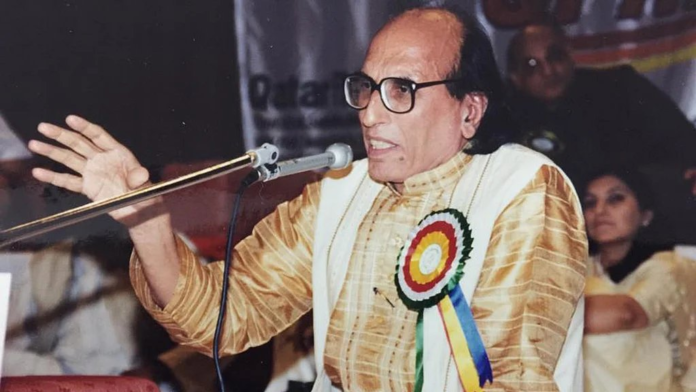
The world of Urdu poetry lost one of its most beloved voices on May 28, 2026, as celebrated poet Bashir Badr passed away in Bhopal at the age of 91 following a prolonged illness.

Born as Syed Muhammad Bashir on February 15, 1935, in Faizabad, Uttar Pradesh, Bashir Badr carved a unique place in Indian literature through his soulful ghazals that blended romance, longing, pain, and quiet wisdom. His poetry transcended generations, finding admirers not only among literary scholars but also among ordinary readers who found their own emotions reflected in his words.

For decades, Bashir Badr remained one of the most recognisable faces of the Urdu ghazal tradition. His verses, marked by simplicity and emotional depth, became staples of mushairas across the country. Unlike classical poetry that often remained confined to literary circles, Badr’s poetry travelled effortlessly into homes, hearts, and popular culture.

Beyond poetry, Bashir Badr was also an academic deeply committed to the Urdu language. He taught Urdu at Aligarh Muslim University before serving as the Head of the Urdu Department at Meerut College for nearly seventeen years. His contribution as a teacher shaped countless students and strengthened the academic study of Urdu literature.

Life, however, was not untouched by tragedy.

The communal riots that shook Meerut in 1987 proved to be a devastating turning point. Much of Bashir Badr’s unpublished literary work was reportedly lost during the violence, a personal and creative loss that deeply affected him. In the years that followed, he moved to Bhopal, where he continued to write and remain connected to literature.

Despite personal setbacks and declining health in later years, including a prolonged battle with dementia, Bashir Badr’s poetic legacy remained undiminished.

Many of his lines became timeless expressions of love, separation, and human vulnerability, quoted widely across generations and languages.

He is survived by his wife, Rahat Badr, and their two children.

With Bashir Badr’s passing, Urdu literature bids farewell not merely to a poet but to an era—a gentle craftsman of words whose ghazals carried both fragility and strength, and whose voice will continue to echo wherever poetry is cherished.