Home Blog Page 18

US Lawmakers Introduce Bill to Protect OPT Programme; Major Relief for International Students

0

A bipartisan group of United States lawmakers has introduced a new bill aimed at safeguarding the Optional Practical Training (OPT) programme—an important pathway that allows international students to gain work experience after completing their studies. The move comes amid growing uncertainty around post-study work policies and seeks to ensure long-term stability for both students and employers.

What is the OPT Programme?

The Optional Practical Training (OPT) allows international students on an F-1 visa to work in the United States for up to 12 months after graduation. Students in Science, Technology, Engineering, and Mathematics (STEM) fields are eligible for an additional two-year extension.

The programme is widely seen as a stepping stone to long-term employment opportunities, particularly through visas like the H-1B visa, which is commonly used by skilled professionals.

Key Features of the Proposed Bill

The proposed legislation, titled the Keep Innovators in America Act, seeks to formally codify the OPT programme into law. This would provide statutory backing for the first time, reducing the risk of sudden policy changes.

The bill aims to:

  • Ensure continuity and stability of the OPT programme
  • Strengthen the US talent pipeline
  • Support industries dependent on skilled international graduates

Why It Matters for Indian Students

Students from India represent the largest group of international students in the US. As per recent data, over 3.63 lakh Indian students were enrolled in US institutions in 2024–25, with around 1.43 lakh participating in OPT.

For Indian students, the bill is significant as it:

  • Secures post-study work opportunities
  • Enhances global career prospects
  • Provides clarity amid changing immigration policies

Key Points

  • OPT allows international students to work in the US after graduation
  • STEM graduates can extend OPT by up to two years
  • F-1 visa is issued to international students
  • H-1B visa is a common work visa for skilled professionals

Economic and Policy Implications

Supporters of the bill argue that international students contribute significantly to the US economy and innovation ecosystem. Retaining skilled graduates helps strengthen the country’s competitiveness in sectors like technology and research.

The move also reflects growing global competition, as countries increasingly adopt favourable immigration policies to attract and retain top international talent.

Terafab Project: Elon Musk Launches Semi-Conductor Facility to Scale Up Chip Production

0

Elon Musk has announced an ambitious semiconductor initiative named “Terafab” in Austin, aimed at scaling up artificial intelligence chip production. The project—linked to Tesla, SpaceX, and xAI—seeks to address the growing demand for advanced chips required for autonomous driving, robotics, and AI systems.

What is the Terafab Project?

Terafab is envisioned as a massive semiconductor fabrication facility, significantly larger than Tesla’s existing gigafactories. It will function as an advanced technology hub capable of designing, manufacturing, and testing next-generation chips. The project reflects concerns that current global chip production capacity may not keep pace with the rapidly increasing demand for AI-driven applications.

Focus on AI5 Chip Development

The facility will primarily produce Tesla’s fifth-generation AI chip, known as AI5. This chip is expected to power Full Self-Driving (FSD) systems and future robotics platforms. The AI5 chip represents Tesla’s push toward greater vertical integration, reducing reliance on external semiconductor suppliers.

Need for In-House Chip Manufacturing

Musk has emphasized that existing suppliers such as Samsung Electronics, TSMC, and Micron Technology may not be able to meet Tesla’s projected chip requirements. Terafab is thus aimed at ensuring a stable and scalable supply of semiconductors. The initiative aligns with a broader industry trend where major tech companies are investing in in-house chip capabilities.

Important Facts

  • Terafab is a proposed large-scale semiconductor fabrication facility in Texas.
  • It focuses on AI chip production, especially Tesla’s AI5 chip.
  • Semiconductor fabs require high investment and long gestation periods.
  • AI chips are critical for autonomous vehicles and robotics.

Challenges and Future Vision

Building semiconductor fabrication plants involves extremely high capital costs—often running into tens of billions of dollars—and requires several years to become operational. Elon Musk has also hinted at future technological ambitions, including space-based AI computing through satellite networks. Despite uncertainties in timelines, Terafab represents a strategic step toward meeting future AI and computing demands at scale.

Bagh Print: Nature’s Eternal Canvas – The Timeless GI-Tagged Legacy of Madhya Pradesh’s

0

PC(Eathnic Elements, Impart)

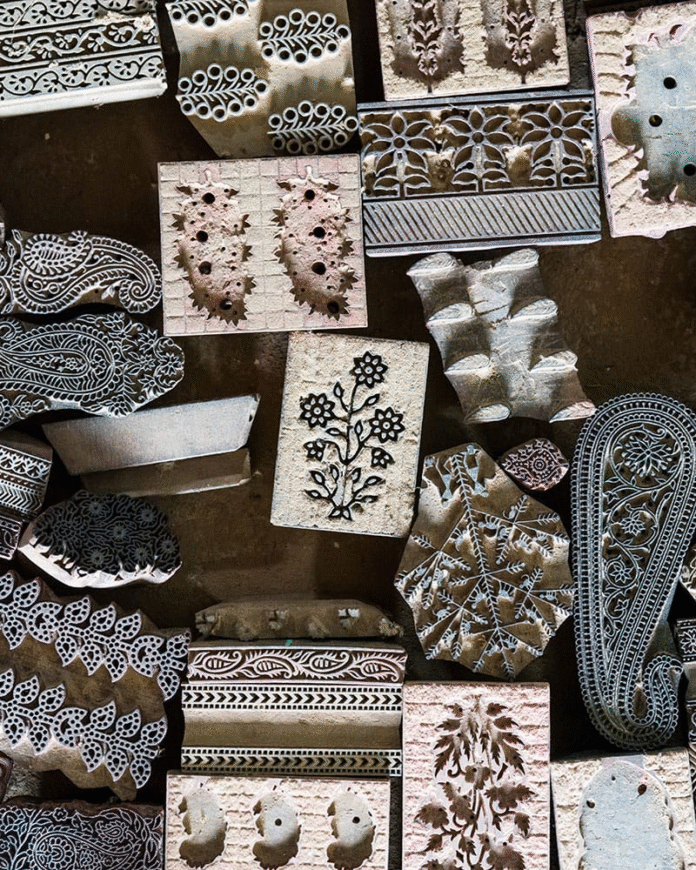
In the heart of Madhya Pradesh’s Dhar district lies Bagh, a small village where an ancient art form thrives, untouched by the rush of modern machinery. Bagh Print, a prestigious Geographical Indication (GI)-tagged handicraft since 2008, represents centuries of craftsmanship, migration, and a profound harmony with nature. This hand-block printing technique produces fabrics with deep, vibrant red and black motifs on a luminous white base-colors so enduring they seem woven into eternity.

A Journey Across Borders: The Migration of the Khatri Community

The story of Bagh Print begins far beyond Madhya Pradesh. Rooted in the Sindh region (now in Pakistan), the craft was carried by the Khatri community-specifically the Chhipa caste of traditional printers-over 400-500 years ago. Fleeing hardships like famine and seeking better prospects, they migrated eastward through Rajasthan (settling briefly in places like Pali), then to Gautampura and Manawar in Madhya Pradesh.

In the 1960s, they finally chose Bagh village in Dhar district. What drew them? The Baghini River. Its waters, rich in copper and iron, act as a natural mordant and catalyst, imparting unmatched depth, luminosity, and fade-resistance to the dyes-qualities impossible to replicate elsewhere. This “magic” river became the secret ingredient that transformed the craft into the distinctive Bagh Print we know today.

By the mid-20th century, the art faced near extinction as artisans shifted to cheaper synthetic fabrics. Enter Ismail Sulemanji Khatri (1937-2014), hailed as the “founding father” of modern Bagh Print. Settling in Bagh in 1962, he revitalized the tradition, innovating with teak-wood blocks inspired by the nearby 1,500-year-old Bagh Caves paintings. His groundbreaking works, including a bedspread using 1,200 unique blocks that earned a National Award in 1984, propelled the craft to global acclaim.

The Artisans and Their Sacred Process today, primarily the Khatri community-along with trained local tribal artisans preserves this heritage. Over 2,500 families in the region depend on it for livelihood. The process is labor-intensive, spanning 14-25 days for a single piece preparation: Fabric (cotton, silk, Tussar, or
Chanderi) is washed in the river, treated with oils, and soaked in Harada (myrobalan) powder for a yellowish base that aids dye absorption.

Creation black (Kala): Fermented iron filings (from rusted horseshoes), jaggery, and water. Red (Lal): Alum, tamarind seed powder, and alizarin from madder roots.Other shades: Indigo for blue, pomegranate rinds for mustard/khaki, and mixes for green. Printing: Intricate motifs-jasmine (chameli), lotus (kamal), geometric jaali patterns, and nature-inspired designs-are hand-stamped using carved teak blocks. Development: Printed fabric is boiled in vats with alizarin and dhavdi flowers (a natural bleaching agent), then washed in the Baghini River. This “alchemy” transforms dull greys into radiant, permanent hues.The river’s mineral content ensures colors remain vibrant for decades, embodying true eco-friendly and slow fashion principles-100% natural vegetable dyes, minimal waste, and no synthetics.

Bagh Print: Nature's Eternal Canvas - The Timeless GI-Tagged Legacy of Madhya Pradesh's

Designs, Uses, and Global Rise

Traditionally used for tribal attire like lugda (sarees) and angochha (towels), Bagh Print now graces high-fashion sarees, suits, stoles, kurtas, bedspreads, curtains, and fusion garments. Its earthy elegance appeals to sustainable luxury markets in Europe, the US, and cities like Milan and Delhi. Awards abound: Mohammed Yusuf Khatri (Shilp Guru), Mubarik Khatri (International Craft Award 2021), and others from the Khatri family continue innovating, even printing on bamboo mats and leather. The name “Bagh” means “tiger” in Hindi. Local lore ties it to tigers seeking refuge in ancient caves after Buddhism’s decline in the 10th century-echoing the craft’s fierce resilience. In an era of fast fashion, Bagh Print stands as a symbol of cultural identity, sustainability, and generational legacy. Protected by its Gl tag against imitations, this “nature’s alchemy” reminds us that true beauty is born from patience, tradition, and the quiet power of a river.

Time Story: Why There Are 60 Minutes in an Hour?

0

A mysterious decision made nearly 5,000 years ago still shapes how we measure time today.

In 1793, during the French Revolution, France attempted a radical overhaul of time itself. The day was divided into 10 hours, each with 100 decimal minutes and seconds. Decimal clocks appeared in public buildings, and official schedules followed the new system. But the experiment quickly collapsed. It proved impractical, unpopular, and isolated France from the rest of the world. Within just over a year, decimal time was abandoned.

So why do we still use 24 hours, with 60 minutes and 60 seconds?

The answer goes back to the Sumerians, one of the earliest urban civilisations. Alongside innovations like writing and irrigation, they developed a number system based on 60—known as the sexagesimal system. One theory suggests this came from counting finger joints: using one hand to count to 12 and the other to track multiples, reaching 60.

While the exact reason remains unclear, base-60 had a major advantage—it is highly divisible. Sixty can be split evenly into halves, thirds, quarters, fifths, and more, making it ideal for trade, land measurement, and calculations.

Later, the Babylonians adopted this system and used it extensively in astronomy. Their calculations divided celestial movements into smaller and smaller units—laying the groundwork for minutes and seconds, even if not yet used in daily life.

Meanwhile, the Ancient Egyptians introduced the concept of dividing the day into 12 hours of daylight and 12 of night, creating the 24-hour day. Early tools like sundials and water clocks emerged around 1500 BC, often tied to religious rituals rather than precise scheduling.

The real breakthrough came when these ideas merged in the Hellenistic period, a time of intense knowledge exchange. Greek scholars adopted Babylonian numerical systems and Egyptian time divisions, preserving and spreading them across generations.

For centuries, hours existed without minutes and seconds in everyday life. Only with the invention of mechanical clocks—and later, highly accurate devices like pendulum and atomic clocks—did smaller units become essential.

Today, atomic clocks define time with extraordinary precision, underpinning technologies like GPS and the internet. Yet, at its core, our system remains a relic of ancient choices.

Despite attempts like France’s decimal time, the 60-based system endured. It is deeply embedded in science, technology, and daily life—so much so that changing it now would be nearly impossible.

What began as a practical counting method in ancient Mesopotamia has become one of humanity’s most lasting legacies—quietly ticking away in every second we measure.

Rhinos Roar Back: Historic Return to Uganda’s Kidepo Valley After 43 Years

0

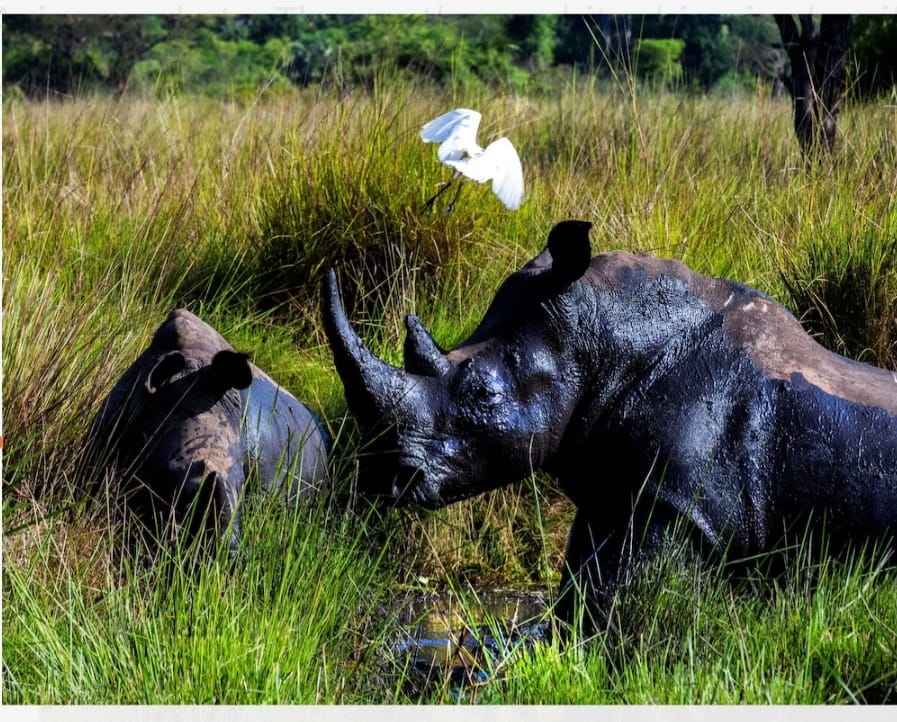
In a triumphant milestone for African wildlife conservation, southern white rhinos have made their long-awaited comeback to Kidepo Valley National Park in northeastern Uganda. After being completely wiped out by poaching in 1983, the species has returned to the wild in March 2026, thanks to a carefully planned reintroduction by the Uganda Wildlife Authority (UWA).

The historic effort began with the translocation of the first two rhinos from the Ziwa Rhino Sanctuary in central Uganda (near Nakasongola, about 100 km north of Kampala). These gentle giants, part of a planned group of eight, were carefully moved and released into a secure, specially prepared sanctuary within the park. Additional rhinos arrived shortly after, stepping out of transport crates into their ancestral savannah habitat.

Uganda’s rhinos vanished during periods of political instability in the 1980s, when widespread poaching for horns and meat decimated populations across the country’s parks-once home to around 700 of these massive animals. The Ziwa Sanctuary, established in 2005 with imports from Kenya, has successfully bred rhinos and served as the source for this reintroduction.

Rhinos Roar Back: Historic Return to Uganda's Kidepo Valley After 43 Years

“This moment marks the beginning of a new rhino story for Kidepo Valley National Park,” said UWA Executive Director James Musinguzi. “Translocation of these rhinos is the first step in restoring a species that once formed part of the park’s natural heritage.”

The project involved extensive preparations reinforced perimeter fencing, access roads, water systems, firebreaks, ranger facilities, and advanced monitoring technology like Earth Ranger to combat ongoing poaching threats. Kidepo’s vast savannah was deemed ideal after habitat and security assessments. Poaching remains a persistent challenge in Uganda and across Africa, driven by demand for rhino horns in traditional medicine and as status symbols in some Asian markets. The southern white rhino is classified as “near threatened” by the IUCN, with global populations decreasing despite recovery efforts.

This reintroduction not only revives biodiversity in Kidepo but also supports long-term goals of building a sustainable breeding population, enhancing eco-tourism, and boosting local communities. It signals hope for Uganda’s wildlife heritage and a renewed commitment to protecting endangered species. The rhinos’ return is more than a relocation—it’s the start of an inspiring new chapter for conservation in one of Africa’s most remote and beautiful wilderness areas.

The Untold Story of Neera Arya, India’s First Woman Spy of the INA

0

In the pages of India’s freedom struggle, many names shine brightly—but some remain hidden in the shadows despite extraordinary courage. One such name is Neera Arya—the fearless woman who became the first female spy of the Azad Hind Fauj, and whose life was defined by sacrifice, loyalty, and unwavering patriotism.

A Beginning Rooted in Patriotism

Born on March 5, 1902, in Khekra (present-day Uttar Pradesh), Neera Arya grew up in a well-off family but was deeply influenced by the spirit of nationalism from an early age. Educated in Kolkata, she developed a strong sense of duty towards the country, which eventually led her to join the freedom movement.

Her path took a decisive turn when she joined the Indian National Army under Subhas Chandra Bose, becoming part of the historic Rani Jhansi Regiment—a symbol of women’s active participation in the struggle for independence.

The Spy Who Defied Fear

Recognising her courage and sharp intellect, Netaji entrusted Neera Arya with one of the most dangerous roles—espionage. She became the first woman spy of the INA, gathering intelligence and supporting revolutionary operations.

Her life, however, was marked by an intense personal conflict. Married to a British loyalist police officer, she found herself on opposing sides of loyalty. Yet, when faced with the ultimate test, she chose the nation above all else—a decision that would define her legacy.

Imprisonment, Torture, and Silence

Neera Arya’s bravery came at a heavy cost. She was arrested by British authorities and subjected to brutal imprisonment, including incarceration in the Cellular Jail in the Andaman and Nicobar Islands.

Despite severe torture and repeated attempts to extract information—especially about Netaji—she refused to betray her comrades. Her silence under unimaginable suffering became a symbol of unyielding patriotism.

A Forgotten Life After Freedom

Ironically, after India gained independence, Neera Arya’s life faded into obscurity. She spent her later years in hardship, reportedly selling flowers on the streets of Hyderabad, far removed from the recognition she deserved.

She passed away on July 26, 1998, leaving behind a legacy that was largely forgotten by mainstream history.

Legacy of an Unsung Hero

Today, Neera Arya is remembered as a symbol of courage, sacrifice, and silent resistance. Her story is slowly finding its place again—through research, public discourse, and even an upcoming biopic that aims to bring her life to a wider audience.

Conclusion

Neera Arya’s life is not just a story of rebellion—it is a story of conviction. In choosing the nation over personal ties, enduring torture without breaking, and living a life of anonymity without regret, she embodied the true spirit of freedom.

In remembering her, we are reminded that India’s independence was not just won on battlefields—but also in the quiet, unbreakable resolve of heroes like her.

Jagannath Temple Audit: After Four Decades, Puri’s Sacred Treasury to Open

0

In a rare and deeply significant development, the sacred treasury of the Jagannath Temple—known as the Ratna Bhandar—is set to undergo a detailed audit beginning March 25, 2026. For the first time in over four decades, a comprehensive inventory of the temple’s priceless ornaments will be carried out, drawing national attention to one of India’s most revered and mysterious repositories of wealth.

An Auspicious Beginning to a Historic Exercise

The treasury will be opened during an auspicious time window between 12:09 pm and 1:25 pm, following strict religious protocols.

This court-mandated audit, ordered under the supervision of the Orissa High Court, is expected to be completed within three months and will involve multiple expert teams, including goldsmiths, temple servitors, administrators, and technical specialists.

What Lies Inside the Ratna Bhandar

The Ratna Bhandar is the temple’s treasure chamber, holding centuries’ worth of offerings made to Lord Jagannath, Lord Balabhadra, and Goddess Subhadra.

These include:
●Gold crowns, necklaces, and armlets
●Diamond and gemstone-studded ornaments
●Ritual jewellery used in daily adornment and festivals

The treasury is divided into two sections:

●Chalanti Ratna Bhandar (outer chamber): Holds ornaments used regularly
●Bhitara Ratna Bhandar (inner chamber): Contains the most ancient and valuable items, many of which have rarely been accessed

Why This Audit Is So Important

The last detailed inventory was conducted in 1978, over a 70-day period. At the time, records showed:

●454 gold items weighing about 128 kg
●292 silver items weighing over 221 kg
●Several items that could not even be weighed or fully documented

Notably, the inner chamber was not fully examined then, making the current exercise even more crucial.

This audit will:
•Cross-check every ornament with decades-old records
•Identify what remains, what is missing, and what has been added
•Bring long-awaited transparency to the management of temple wealth

Modern Technology Meets Ancient Tradition

Unlike the 1978 exercise, this audit will use advanced documentation methods:
•Each item will be assigned a unique serial number
•Details like material, weight, and design will be recorded
•3D digital mapping and imaging will create a permanent visual record

All work will be carried out under tight security, with the treasury being opened and sealed daily in the presence of officials and magistrates.

A Moment Beyond Administration

While the audit is administrative in nature, its significance is far deeper. The Ratna Bhandar represents centuries of faith, devotion, and cultural continuity. Every ornament is not just a valuable object, but a sacred offering tied to ritual and belief.

Conclusion

As the doors of the Ratna Bhandar open after decades, the exercise marks a rare intersection of faith, history, and modern governance. It is not merely about counting treasures, but about preserving a living legacy with transparency and care.

In documenting these sacred ornaments, India is safeguarding not just wealth—but a spiritual heritage that continues to inspire millions.

Bharat Mandapam: Know USP, Cost and Lavish Infra of The India’s Grand Stage for Global Dialogue and Culture

0

At the heart of New Delhi stands Bharat Mandapam, a landmark that symbolises India’s growing global presence. More than just a convention centre, it is a world-class hub for diplomacy, business, and cultural exchange, designed to host some of the most important international events.

What Exactly Is Bharat Mandapam?

Bharat Mandapam is an International Exhibition-cum-Convention Centre (IECC) developed within the historic Pragati Maidan complex. It serves as India’s premier venue for global summits, exhibitions, trade fairs, and conferences.

It gained international prominence as the main venue for the G20 Summit 2023, showcasing India’s capability to host world leaders on a grand scale.

Vision, Construction and Cost

The project was conceptualised to replace outdated infrastructure at Pragati Maidan and create a modern global-standard venue. Construction began in 2017 and the complex was inaugurated on July 26, 2023.

●Cost: Around ₹2,700 crore
●Developed by: India Trade Promotion Organisation
●Campus Area: Approximately 123 acres

It is now considered India’s largest MICE (Meetings, Incentives, Conferences, Exhibitions) destination, placing it among the top convention complexes globally.

Inside Bharat Mandapam: A City Within a Venue

Bharat Mandapam is designed as a complete ecosystem capable of hosting multiple large-scale events simultaneously.

●A grand Convention Centre with seating for around 7,000 people
●Multiple auditoriums, meeting rooms, and VIP lounges
●Large exhibition halls for trade fairs and expos
●An amphitheatre for cultural performances
●Business centres, dining spaces, and support facilities

Its scale and design allow it to function almost like a self-contained city for global events.

What Makes It Unique

What truly distinguishes Bharat Mandapam is its fusion of Indian heritage with modern technology.

●The design draws inspiration from the Shankha (conch shell), a symbol in Indian tradition
●Inspired by the ancient “Anubhava Mantapa”, often seen as an early democratic assembly space
●Features cutting-edge infrastructure like high-speed connectivity and multilingual interpretation systems
●Houses cultural installations, including a massive Nataraja statue, symbolising India’s artistic heritage

This blend of tradition and innovation makes it not just functional, but symbolically powerful.

More Than Infrastructure

Bharat Mandapam is not merely a venue—it is a statement. It reflects India’s ambition to become a global hub for dialogue, trade, and cultural exchange. From hosting world leaders to showcasing Indian art and innovation, it represents a modern India that is confident, connected, and culturally rooted.

In many ways, Bharat Mandapam is a bridge—between past and future, culture and commerce, India and the world. As global events increasingly turn to India, this grand structure stands ready—not just as a venue, but as a symbol of a nation stepping onto the world stage with confidence and vision.

Earth’s Rotation Is Slowing at an Unprecedented Rate Due to Human-Driven Climate Change

0

PC(Bhaskar English, Facebook)

New scientific research has revealed that human activity is now altering one of the most fundamental properties of our planet: the speed at which Earth rotates on its axis. According to a study published in March 2026 by researchers from the University of Vienna and ETH Zurich, the length of a day has been increasing at a pace that is unmatched over at least the past 3.6 million years. Between 2000 and 2020, the average length of a day grew by approximately 1.33 milliseconds per century – a direct consequence of massive polar ice melt and glacier retreat caused by global warming. This tiny but measurable change is already influencing precision timekeeping systems around the world.

The “Figure Skater Effect” in Action

The mechanism behind this slowdown is straightforward and elegant. As vast quantities of ice from Greenland, Antarctica, and mountain glaciers melt, the resulting water flows from the poles toward lower latitudes and spreads out more evenly around the equator. This redistribution of mass increases Earth’s moment of inertia – the rotational equivalent of mass being farther from the axis of rotation. Just as a figure skater spins more slowly when they extend their arms outward (moving mass farther from the center of their body), Earth spins more slowly when more of its mass is shifted toward the equator. Lead researcher Mostafa Kiani Shahvandi from the University of Vienna explained “In our earlier work, we showed that the accelerated melting of polar ice sheets and mountain glaciers in the 21st century is raising sea levels, which slows Earth’s rotation and therefore lengthens the day similar to a figure skater who spins more slowly once they stretch their arms.”

Earth's Rotation Is Slowing at an Unprecedented Rate Due to Human-Driven Climate Change

A Historic Shift: Humans Overtaking the Moon

For billions of years, the dominant force gradually slowing Earth’s rotation has been tidal friction caused by the gravitational interaction between Earth and the Moon. This process has been lengthening days by roughly 2.4 milliseconds per century over geological timescales. However, the modern climate-driven acceleration is so rapid that scientists now project climate change could become the primary driver of Earth’s rotational slowdown by the end of the 21st century. If current emission trends continue, projections indicate that climate impacts alone could contribute an additional 2.62 milliseconds of day-length increase by 2100 – surpassing the Moon’s long-term influence.

Reconstructing Millions of Years of Rotation History

To determine whether anything like this has happened before, the team analyzed chemical signatures preserved in the fossilized shells of tiny marine organisms called benthic foraminifera. These microscopic creatures record ancient sea-level changes in their shell chemistry, allowing scientists to reconstruct corresponding variations in Earth’s rotation rate.
The record shows that while day length has fluctuated over millions of years – particularly during ice-age cycles of the Quaternary period the sharp acceleration observed since the year 2000 stands out as exceptional in at least the past 3.6 million years, reaching back into the late Pliocene epoch.

Professor Benedikt Soja of ETH Zurich stated

“This rapid increase in day length implies that the rate of modern climate change has been unprecedented at least since the late Pliocene, 3.6 million years ago. The current rapid rise in day length can thus be attributed primarily to human influences.” Real-World Consequences: From Leap Seconds to GPS although an extra 1.33 milliseconds per century is imperceptible in daily life, it creates significant challenges for technologies that depend on ultra-precise synchronization with Earth’s rotation.

Systems affected include

GPS satellites and other space navigation platforms deep-space missions high-frequency financial trading networks telecommunications infrastructure.The cumulative effect has already forced adjustments to global time standards. The previously anticipated introduction of a negative leap second (subtracting one second from clocks to keep them aligned with Earth’s slowing rotation) has been delayed – from an expected date around 2026 to at least 2029 – largely because of this climate-induced additional slowdown. Looking Ahea While the changes remain far too small to influence human sleep cycles, circadian rhythms, or everyday experience, they serve as another stark indicator of how profoundly human greenhouse gas emissions are reshaping the physical Earth system. As melting continues and sea levels rise, the planet’s spin will slow further – quietly but relentlessly reminding us that even the length of our days is no longer entirely governed by celestial mechanics alone. The era in which natural astronomical forces were the sole architects of Earth’s rotation may be coming to an end.

Hidden Gem of the Himalayas: New Wild Kiwi Species

0

PC(EastMojo, Northeast Today)

In a thrilling boost to India’s botanical treasures, scientists have discovered a brand-new species of wild kiwi thriving in the misty forests of Arunachal Pradesh. Named Actinidia indica, this elusive climbing shrub adds fresh excitement to the Actinidia genus-the very family that gives us the beloved fuzzy kiwi fruit.

The breakthrough comes courtesy of researchers from the Botanical Survey of India (BSI): Dr. S.S. Dash, Dr. Umeshkumar L. Tiwari, and Mr. Rohan Maity from the Central National Herbarium in Howrah. Their discovery, born from meticulous field surveys and in-depth taxonomic analysis (with fieldwork dating back to 2022), spotlights the untapped biodiversity hidden in the Eastern Himalayas.

A Unique Climber in a Biodiversity Hotspot

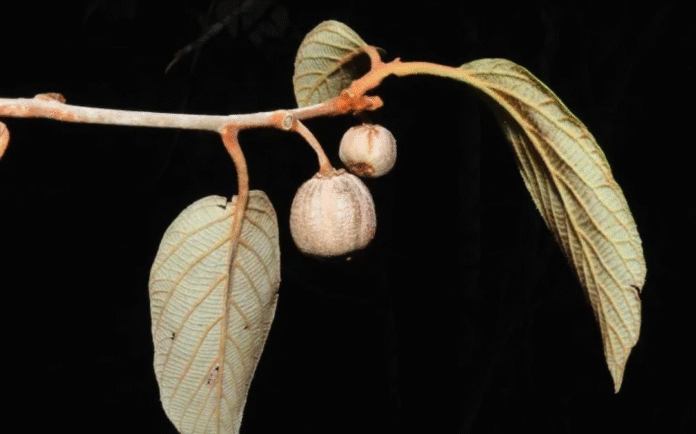
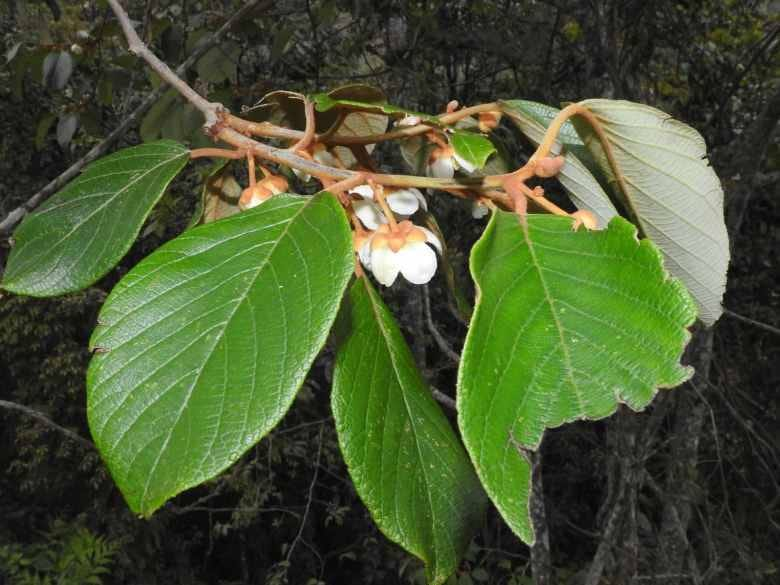
Actinidia indica is a perennial climbing shrub that stretches 2-4 meters tall, with densely hairy young branches that give it a distinctive fuzzy look. It boasts large, ovate leaves and eye-catching white to creamy flowers spanning 4-6 cm across-large and showy for a wild kiwi relative. But the real standout feature is its fruit: small, olive-green, globose orbs measuring 2.5-4 cm, covered in a unique reticulate (net-like) pattern of linear, spindle-shaped lenticels. This intricate surface design, along with the fruit’s rounded and slightly hairy texture, sets it clearly apart from close cousins like Actinidia fulvic Oma. The plant was found at around 1,725 meters elevation in the Lower Subansiri district, near the scenic Ziro Valley. It clings to forest edges in a rich transition zone blending subtropical and temperate forests, surrounded by companions like figs, magnolias, and chestnuts that provide the perfect shaded, structured canopy for this climber.

Hidden Gem of the Himalayas: New Wild Kiwi Species

Boosting Global and Indian Kiwi Diversity

With this find, the worldwide tally of Actinidia species climbs to 56, yet India hosts only a handful. Arunachal Pradesh already shines as the country’s top kiwi producer (contributing about 50% of national output from cultivated varieties), making this wild discovery even more meaningful. It opens doors to potential genetic resources that could enhance commercial kiwi breeding for better resilience, flavor, or disease resistance.

Conservation Concerns and the Call for Action despite the celebration, caution prevails. Actinidia indica is known only from a narrow stretch near Ziro Valley so far, raising red flags about its vulnerability. Currently listed as “Data Deficient” by researchers due to limited population information, it lacks a full extinction risk assessment. The team urges wider field explorations across Arunachal Pradesh to map its true range and inform conservation strategies. In a region facing habitat pressures, such calls underscore the urgent need to protect these biodiversity hotspots before more secrets vanish.

Why It Matters

This isn’t just another plant name on a list—it’s proof that the Eastern Himalayas still harbor surprises waiting to be revealed. As Maity, Tiwari, and Dash emphasize, Arunachal’s forests continue to yield new species, reminding us of their irreplaceable ecological value and the vital role of taxonomy, fieldwork, and conservation in preserving India’s natural heritage. In a world racing toward biodiversity loss, discoveries like Actinidia indica inspire hope-and action-to safeguard these green wonders for generations to come.