

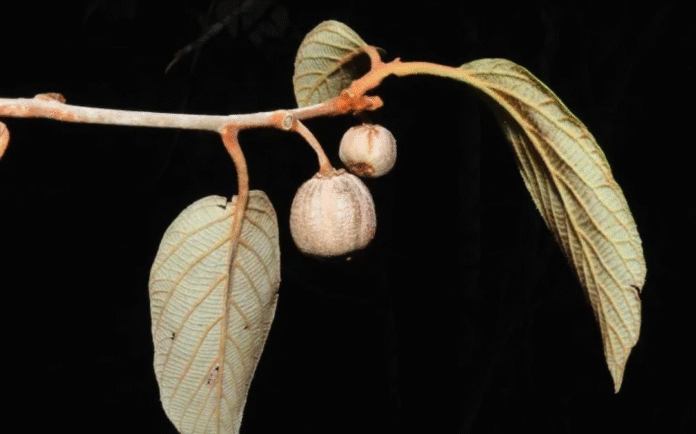
PC(EastMojo, Northeast Today)
In a thrilling boost to India’s botanical treasures, scientists have discovered a brand-new species of wild kiwi thriving in the misty forests of Arunachal Pradesh. Named Actinidia indica, this elusive climbing shrub adds fresh excitement to the Actinidia genus-the very family that gives us the beloved fuzzy kiwi fruit.
The breakthrough comes courtesy of researchers from the Botanical Survey of India (BSI): Dr. S.S. Dash, Dr. Umeshkumar L. Tiwari, and Mr. Rohan Maity from the Central National Herbarium in Howrah. Their discovery, born from meticulous field surveys and in-depth taxonomic analysis (with fieldwork dating back to 2022), spotlights the untapped biodiversity hidden in the Eastern Himalayas.
A Unique Climber in a Biodiversity Hotspot
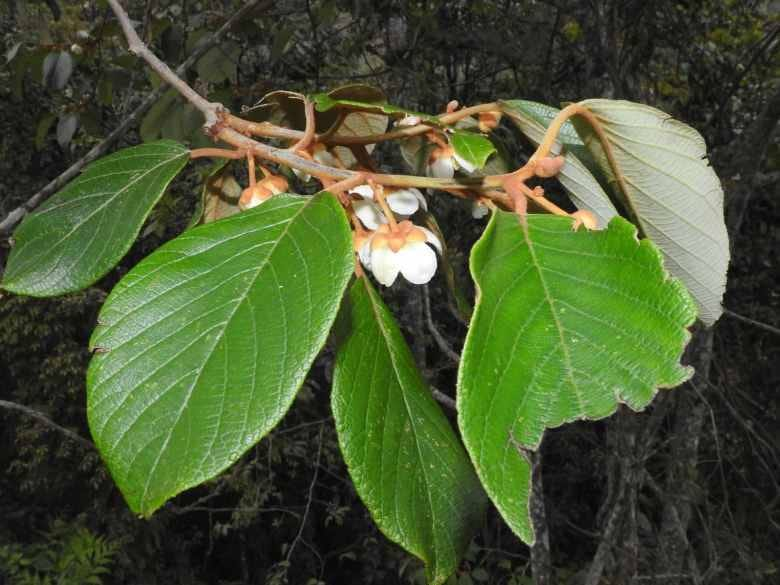
Actinidia indica is a perennial climbing shrub that stretches 2-4 meters tall, with densely hairy young branches that give it a distinctive fuzzy look. It boasts large, ovate leaves and eye-catching white to creamy flowers spanning 4-6 cm across-large and showy for a wild kiwi relative. But the real standout feature is its fruit: small, olive-green, globose orbs measuring 2.5-4 cm, covered in a unique reticulate (net-like) pattern of linear, spindle-shaped lenticels. This intricate surface design, along with the fruit’s rounded and slightly hairy texture, sets it clearly apart from close cousins like Actinidia fulvic Oma. The plant was found at around 1,725 meters elevation in the Lower Subansiri district, near the scenic Ziro Valley. It clings to forest edges in a rich transition zone blending subtropical and temperate forests, surrounded by companions like figs, magnolias, and chestnuts that provide the perfect shaded, structured canopy for this climber.
Boosting Global and Indian Kiwi Diversity
With this find, the worldwide tally of Actinidia species climbs to 56, yet India hosts only a handful. Arunachal Pradesh already shines as the country’s top kiwi producer (contributing about 50% of national output from cultivated varieties), making this wild discovery even more meaningful. It opens doors to potential genetic resources that could enhance commercial kiwi breeding for better resilience, flavor, or disease resistance.
Conservation Concerns and the Call for Action despite the celebration, caution prevails. Actinidia indica is known only from a narrow stretch near Ziro Valley so far, raising red flags about its vulnerability. Currently listed as “Data Deficient” by researchers due to limited population information, it lacks a full extinction risk assessment. The team urges wider field explorations across Arunachal Pradesh to map its true range and inform conservation strategies. In a region facing habitat pressures, such calls underscore the urgent need to protect these biodiversity hotspots before more secrets vanish.
Why It Matters
This isn’t just another plant name on a list—it’s proof that the Eastern Himalayas still harbor surprises waiting to be revealed. As Maity, Tiwari, and Dash emphasize, Arunachal’s forests continue to yield new species, reminding us of their irreplaceable ecological value and the vital role of taxonomy, fieldwork, and conservation in preserving India’s natural heritage. In a world racing toward biodiversity loss, discoveries like Actinidia indica inspire hope-and action-to safeguard these green wonders for generations to come.