Home Blog Page 172

Indian Air Force Day 2025: Honouring the Guardians of the Sky

0

Indian Air Force Day 2025: Every year on October 8, India celebrates Indian Air Force Day to honour the courage, dedication, and excellence of the Indian Air Force (IAF). This day pays tribute to the air warriors who safeguard the nation’s skies and uphold India’s aerial supremacy.

In 2025, the Indian Air Force marks its 93rd anniversary, commemorating nearly a century of remarkable service, innovation, and achievements.

Indian Air Force Day 2025: Date and Significance

  • Observed on: 8 October 2025 (Wednesday)
  • Established on: 8 October 1932
  • Occasion: To commemorate the foundation of the Indian Air Force and acknowledge its invaluable contribution to national security.

The day holds deep patriotic significance, symbolising the strength, discipline, and technological advancement of the Indian Air Force — one of the world’s most powerful air arms.

Theme of Indian Air Force Day 2025

The official theme for 2025, “Bhartiya Vayu Sena: Saksham, Sashakt, Aatmanirbhar” (meaning “Indian Air Force: Capable, Powerful, and Self-Reliant”), reflects the IAF’s ongoing commitment to self-reliance, modernisation, and operational excellence.

In previous years, themes such as “Indian Air Force – Power Beyond Boundaries” and “IAF: A Cut Above” have highlighted the Air Force’s expanding role in both defence and humanitarian missions.

History of the Indian Air Force

The Indian Air Force was established on October 8, 1932, as an auxiliary unit of the Royal Air Force (RAF).

  • The first operational squadron was formed in April 1933 with just six officers and 19 airmen (Hawai Sepoys).
  • Post-independence in 1947, the IAF evolved rapidly, playing decisive roles in the wars of 1947, 1965, 1971, and the Kargil conflict (1999).
  • Today, the IAF stands as the fourth-largest air force in the world, equipped with advanced aircraft like Rafale, Sukhoi-30MKI, and Tejas, alongside cutting-edge missile systems.

The IAF’s inspiring motto — “नभः स्पृशं दीप्तम्” (Nabhah Sparsham Deeptam), meaning “Touch the Sky with Glory” — is derived from the Bhagavad Gita.

Celebrations and Air Show

The grand celebrations are held primarily at the Hindon Air Force Station (Ghaziabad) — one of Asia’s largest air bases.

Highlights of the day include:
Grand Parade by IAF personnel
Spectacular Air Shows and Flypasts featuring fighter jets, transport aircraft, and aerobatic teams
Award Ceremonies honouring acts of bravery and distinguished service
Public displays and live telecasts across India

The air show is the day’s most anticipated event, offering breathtaking aerial stunts, formations, and demonstrations of India’s air power and precision.

IAF’s Role in National Security and Beyond

The Indian Air Force’s contributions go far beyond combat operations. Its multifaceted role includes:

Defending India’s airspace and deterring aggression
Conducting disaster relief during earthquakes, floods, and cyclones
Providing humanitarian assistance in remote regions
Leading international rescue missions such as Operation Rahat (Uttarakhand floods) and Operation Ganga (Ukraine evacuation)

These operations have earned the IAF global recognition for its courage and efficiency.

Inspiring the Next Generation

Indian Air Force Day serves as a beacon of inspiration for India’s youth. Schools and colleges across the country organise:

Drawing and essay competitions
Patriotic events and speeches
Career awareness programmes on joining the Air Force

The celebrations encourage young Indians to aspire toward careers as pilots, engineers, and officers — serving the nation with pride and honour.

Infographic: Key Facts About the Indian Air Force

Founded1932
Personnel~170,000+
Aircraft Strength2,000+
Global Rank4th Largest Air Force
MottoNabhah Sparsham Deeptam (“Touch the Sky with Glory”)

Conclusion

Indian Air Force Day 2025 is a tribute to the valor, discipline, and unwavering dedication of India’s air warriors. As the nation strides toward greater technological self-reliance and global leadership, the IAF continues to soar higher — safeguarding the skies and inspiring generations.

This October 8, let us salute the Guardians of the Sky and express our heartfelt gratitude for their relentless service to the nation.

Navi Mumbai International Airport Pics: Watch Its Beauty Making It One Amongst The Best in World

0

Navi Mumbai International Airport will be inaugurated on October 8 by Prime Minister Narendra Modi. A Rs 19,650 crore project designed to handle 25 million passengers annually starting mid-December, will ease congestion at Mumbai’s existing airport. He will also dedicate the complete 33.5 km Mumbai Metro Line 3, India’s longest underground corridor, which opens to passengers on October 9, connecting key business districts and reducing travel times. Additionally, Modi will launch the Mumbai One app to integrate ticketing and real-time tracking for multiple transport modes in the Mumbai Metropolitan Region

Navi Mumbai International Airport Pics: Watch Its Beauty Making It One Amongst The Best in World

Navi Mumbai International Airport Pics: Watch Its Beauty Making It One Amongst The Best in World

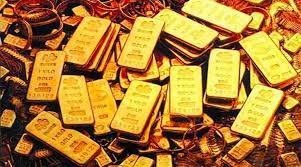
Gold Touching New Records Across Globe; Know Reasons for Continuous Price Hike

0

Gold futures rising by Rs 651 (0.54 per cent) to reach Rs 1,20,900 per 10 grams, touching sky high amid the festival time of Karwa Chauth and Dhanteras. On the other hand silver futures increased by Rs 281 (0.19 per cent), close to their record level of Rs 1,47,800 per kilogram.

In the country where ocassions like child birth announcement, new home purchase, weddings, festivals are associated with buying, gifting gold and silver, people are now setlling for ready-made hampers or traditional sweets, again.

Driven by global economic and political uncertainties in the US and anticipated Federal Reserve rate cuts, prices might go more higher than it already is. Since the last 5 years, gold prices are increasing continuously, investors are also shocked due to the uncertainty.

According to the experts following reasons can be the main cause behind the price hike:

1. Central Banks maintaining GOLD RESERVES

  • According to data from the World Gold Council, central banks across the world have almost doubled their gold reserves over the past decade. This shows their growing confidence in gold as a stable and profitable investment. Even the Reserve Bank of India (RBI) has consistently increased its gold reserves amid global uncertainty.

2. Interest Rate Cuts:

  • Another major reason behind the recent rise in gold prices is the U.S. Federal Reserve’s decision to cut interest rates by 25 basis points in September 2025. If the U.S. labor market data continues to weaken, another rate cut could follow soon. Lower interest rates in the U.S. generally weaken the dollar, which pushes gold prices higher as investors move towards safer assets like gold.

3. Geopolitical Tensions

  • Global instability has always been a key driver of rising gold prices – and the past five years have been particularly challenging. The COVID-19 pandemic in 2020 severely impacted the global economy. Later, the Russia-Ukraine war in 2022, the Israel-Hamas conflict in 2023, and the ongoing military tension between Israel and Iran this year have all intensified geopolitical uncertainty, further fueling gold’s rise.

4. Increasing demand in India and China

  • The price of any metal or commodity largely depends on its demand – and gold is especially demand-sensitive. India and China are the world’s largest consumers of gold, and demand in both countries remains strong. According to metals experts at Heraeus, despite higher gold prices, imports of the metal continue to grow in both nations.
    Interestingly, during the first half of this year, India’s gold jewelry demand surpassed China’s. As per the World Gold Council, in the six months ending June, India’s jewelry demand rose by 6% to 563 tonnes, compared to 511 tonnes in China (including Hong Kong and Taiwan).

Further, political instability in France and Japan has increased demand for safe-haven assets like gold. Investment remains strong, with gold ETFs up 17% and silver ETFs up 16% this year. Despite record highs, analysts expect festive demand, global cues, and a weaker rupee to keep supporting MCX gold prices.

No matter whether you invest now or not. One thing we wish for you this Diwali:
May Goddess Laxmi bring lots of good health, prosperity, peace and wealth to your families…

Ruma Devi to Be Honored at “Diwali at Times Square” in New York

0

Ruma Devi, the internationally acclaimed social activist, global speaker, and traditional fashion revivalist from Barmer, Rajasthan, who studied only up to the eighth grade, will be honored this year at the prestigious “Diwali at Times Square”—one of the largest cultural celebrations of the Indian diaspora in the United States. The grand event will take place on October 10 and 12, 2025, at the world-famous Times Square, New York.

According to Neeta Bhasin, the founder of the Diwali at Times Square initiative, this festival was launched in 2013 with the aim of celebrating and showcasing India’s culture and heritage on a global stage. Today, it stands as the largest Diwali celebration outside India, attended by thousands of people every year, including the Mayor of New York City, State Governor, U.S. officials, Indian diplomats, and members of various global communities. The New York City administration’s 2023 decision to declare Diwali a public holiday further underlines the growing global significance of this event.

The festival features cultural performances, live music, dance, Diwali Bazaar, rangoli art, and a special award ceremony and gala dinner, recognizing exemplary individuals and organizations contributing to society across the world.

From the Sands of Thar to Times Square

This year’s ceremony will honor Ruma Devi, a grassroots leader from the Barmer district of Rajasthan, for her extraordinary contribution to women’s empowerment and preservation of Indian handicrafts. Through her leadership, thousands of rural women in Rajasthan have become self-reliant. Her work has brought traditional Indian crafts and folk art to international platforms and given a global voice to rural India.

Guest of Honor at AIA Diwali Festival

In addition to Times Square, Ruma Devi will also grace the AIA (Association of Indians in America) Diwali Festival as a Special Guest on October 11, 2025, at Overlook Beach, Long Island, New York. This is among the largest Diwali events organized by the Indian-American community in the U.S., featuring cultural showcases, art exhibitions, cuisine stalls, and fireworks.

Global Recognition and Achievements

Ruma Devi has been previously recognized globally for her efforts in empowering women and promoting India’s traditional heritage. She has delivered talks at Harvard University and has been honored by the Government of India with a National Award for her social impact and contribution to the handicraft sector.

She has also been honored by the United States Congress, where Congressman Troy E. Nehls presented her with a Congressional Certificate of Recognition for her remarkable contributions on an international level. Additionally, she has been felicitated by the Governments of Suffolk and Nassau Counties, New York, for advancing women’s empowerment.

Ruma Devi has addressed several public events across Washington D.C., Atlanta, New Jersey, Florida, Houston, and Seattle, highlighting India’s cultural legacy. She was also featured as a Celebrity Guest at the iconic India Day Parade in Manhattan, New York.

A Symbol of Empowerment and Heritage

Ruma Devi’s recognition at Diwali at Times Square symbolizes more than an individual honor—it stands as a tribute to the resilience of rural Indian women and the universal appeal of Indian culture.

Her journey from the desert villages of Rajasthan to the global spotlight of Times Square is a powerful testament to how art, culture, and empowerment can transcend borders and inspire the world.

Nobel Prize 2025: Scientists Honoured for Discovering How the Immune System Avoids Attacking the Body

0

The 2025 Nobel Prize in Physiology or Medicine has been awarded to three scientists who uncovered how the immune system protects us from infections — without turning against our own bodies.

The prestigious award goes to Shimon Sakaguchi from Japan, and Mary Brunkow and Fred Ramsdell from the United States. Their research led to the discovery of regulatory T-cells, often described as the immune system’s “security guards,” which prevent immune cells from attacking healthy tissue.

Their work has paved the way for new therapies targeting autoimmune diseases like type 1 diabetes and multiple sclerosis, as well as some forms of cancer.

“Their discoveries have been decisive for our understanding of how the immune system functions and why we do not all develop serious autoimmune diseases,” said Olle Kämpe, chair of the Nobel Committee.

How Does the Immune System Know What to Attack?

The human immune system is built to recognize and destroy threats like viruses and bacteria. It does this using white blood cells equipped with sensors (receptors) that can identify foreign invaders — even those it’s never encountered before.

However, this randomness also means the body occasionally produces immune cells that could attack its own tissues.

Scientists already knew that some of these self-attacking cells are eliminated in the thymus, where immune cells mature. But the Nobel-winning discovery revealed an additional, critical layer of protection: regulatory T-cells that circulate through the body, suppressing any rogue immune responses that escape the thymus.

When this system fails, it can lead to autoimmune diseases.

Impact on Medicine: Autoimmunity and Cancer

The discovery has had a major impact on medical research.

  • In autoimmune diseases, like rheumatoid arthritis or multiple sclerosis, boosting regulatory T-cells may help prevent the immune system from attacking the body.
  • In cancer, regulatory T-cells can work against us — suppressing the immune response against tumours. In this case, treatments may aim to reduce or block them.
  • Research is also exploring how enhancing these cells might reduce organ transplant rejection.

The Scientists Behind the Discovery

  • Prof. Shimon Sakaguchi (Osaka University, Japan) showed that mice lacking a thymus developed autoimmune disease. But injecting them with specific immune cells from healthy mice stopped the disease — pointing to a protective mechanism.
  • Mary Brunkow and Fred Ramsdell, working in the U.S., discovered a key gene involved in the function of regulatory T-cells by studying inherited autoimmune conditions in both mice and humans.

“This work is a striking example of how fundamental research can have far-reaching implications for human health,” said Prof. Annette Dolphin, president of the UK’s Physiological Society.

The trio will share the 11 million Swedish kronor prize (around £870,000).

Can You Lose Weight on an Ozempic Diet?

0

Weight-loss drugs like Ozempic and Wegovy have become game changers, helping many people lose weight by reducing appetite and improving insulin function. But can you get similar results without a prescription — just by changing your diet?

How Ozempic Works

Ozempic mimics a natural hormone called GLP-1, which is released after eating. It tells your brain you’re full, slows digestion, and helps control blood sugar. These drugs essentially amplify what your body already does.

Can Food Mimic Ozempic?

To a degree — yes.

Certain foods can stimulate your body’s natural GLP-1 production. The key ingredients?

  • Fibre (from fruits, veggies, legumes, nuts)
  • Polyphenols (found in colorful plant foods)
  • Healthy fats (like olive oil and avocado)

These nutrients support your gut health, promote fullness, and trigger GLP-1 release. Even how and when you eat matters — eating protein and veggies before carbs, and having meals earlier in the day, may boost the effect.

What About “Oatzempic”?

Social media’s DIY “Oatzempic” — a mix of oats, water, and lime — is unlikely to match the strength of the real drug. But it does reflect a growing interest in appetite-suppressing foods.

Diet vs Drugs: Which Works Best?

A whole-food diet can help control appetite and support weight loss — but for those with severe obesity or metabolic issues, GLP-1 medications may be necessary.

That said, everyone can benefit from eating to support natural GLP-1 production.

“All roads lead back to whole foods,” says Dr. Chris Damman. “There’s no substitute for them.”

Bottom Line:

You can mimic some effects of Ozempic through diet — especially by eating fibre-rich, minimally processed foods — but the results likely won’t be as dramatic or fast. Still, it’s a powerful (and healthy) place to start.

Pakistan Hidden Treasures: $500 Million US Deal Sparks Debate Over National Interest

0

By Rishita Sogani

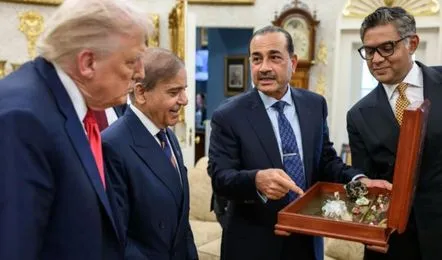
Pakistan has sent its first-ever shipment of rare earth minerals under a $500 million agreement signed last month with an American company. The deal aims to explore and develop the country’s vast — but largely untapped — mineral resources in hopes of easing its mounting debt burden.

The initial shipment includes:

  1. Antimony
  2. Copper concentrate
  3. Rare earth elements such as neodymium and praseodymium

The agreement was signed between US Strategic Metals (USSM), a Missouri-based company, and Pakistan’s military-run Frontier Works Organisation (FWO). USSM specializes in the production and recycling of critical minerals — materials the U.S. Department of Energy classifies as essential for modern technologies.

In a statement, USSM called the MoU “a significant milestone in the strategic partnership between Pakistan and the United States,” stating that it outlines cooperation in exploration, processing, and refining of minerals within Pakistan.

For years, Pakistan has courted foreign investors by showcasing its rare earth reserves, estimated to be worth nearly $6 trillion, according to Dawn. However, despite these bold claims, several international firms have previously exited the country after failing to find the mineral wealth they were promised.

The recent deal has sparked criticism within Pakistan, especially from the Pakistan Tehreek-e-Insaf (PTI) party led by former Prime Minister Imran Khan. PTI has raised concerns about national sovereignty and transparency, citing the secrecy surrounding the agreement’s terms and long-term implications.

Despite the backlash, the current government seems intent on leveraging the mineral sector to build stronger economic ties with the U.S. — particularly with the return of a deal-driven Trump administration, which is seeking new sources of critical minerals to reduce reliance on China.

Inspired by the Lotus, Navi Mumbai Airport Iconic Design Sets a New Benchmark

0

The upcoming Navi Mumbai International Airport isn’t just a transportation hub—it’s a symbol of innovation and cultural pride. Inspired by the lotus flower, the airport’s striking architecture features 12 sculptural “petal” columns and 17 hidden mega columns supporting a roof designed to resemble a blooming lotus. With a 3,700-metre runway equipped for the world’s largest aircraft, the design blends functionality with elegance, reflecting both India’s rich heritage and its technological progress.

Prime Minister Narendra Modi will inaugurate the Navi Mumbai International Airport (NMIA) on October 8. This will become the second major airport serving the Mumbai Metropolitan Region, complementing the existing Chhatrapati Shivaji Maharaj International Airport. NMIA received its aerodrome licence from the DGCA on September 30.

The new airport has been officially named Loknete D B Patil Navi Mumbai International Airport, with the IATA code ‘NMI’. It is named in honor of Dinkar Balu Patil (1926–2013)—better known as D B Patil, a respected lawyer, politician, farmers’ leader, and social activist from the Raigad region. Patil championed the rights of landowners and farmers in the Panvel area during land acquisition drives led by CIDCO, making him a deeply respected figure locally.

The twin‑airport model for Mumbai draws inspiration from global metropolises like Dubai (DXB‑DWC), London (Heathrow‑Gatwick), and New York (JFK‑Newark)—designed to balance passenger traffic and boost connectivity.

Key Features & Highlights

Location & Connectivity

  • Accessible via Aamra Marg and NH 4B
  • Enhanced connectivity via six‑lane Ulwe and Kharghar Coastal Roads (to be completed by 2026)
  • Linked to Navi Mumbai Metro Line 1, Mumbai Metro Line 8 (Gold Line), and proposed Mumbai–Hyderabad High-Speed Rail
  • Direct interchange with Taharghar Railway Station

Capacity & Expansion Plans

  • Phase 1: 20 million passengers annually
  • Phase 2: 90 million passengers
  • Cargo: 0.8 million tonnes per year in Phase 1
  • General Aviation Terminal: India’s largest, with over 67 aircraft stands and a dedicated heliport
  • By end of 2025, business jets and turboprops from CSMIA will be relocated to NMIA

Runways & Design

  • Two parallel runways planned (second to be built later)
  • Inspired by the lotus flower:
      • 12 sculptural “petal” columns
      • 17 mega columns supporting the lotus‑shaped roof
      • 3,700-metre runway suitable for large aircraft
  • Modern terminals and advanced air traffic control systems

Smart & Digital Features

  • Fully 5G-enabled for high-speed operations
  • Contact-free check-in with Digi Yatra—no manual ID or boarding pass checks
  • Real-time baggage tracking, automated handling, robust Wi-Fi, cybersecurity, and IoT-based monitoring
  • Smart traffic management systems and airport app for all stakeholders

Passenger Amenities & Comfort

  • Children’s play zones in domestic departures
  • Interactive digital tunnels and art installations celebrating Maharashtra’s heritage
  • VIP lounges, transit day hotel (80 rooms)
  • Services like baggage home delivery, repair & wrap services, meet & greet (Pranaam services)
  • Special arrival‑forecourt area for family and visitors

Sustainability & Green Design

  • Plans for 47 MW solar power in the final phase
  • Rainwater harvesting, wastewater reuse, low-flow fixtures
  • Use of electric vehicles, passive cooling via lotus pillar structure
  • Eco-sensitive runway construction using the rockfill method
  • Future Automated People Movers (APMs) in Phase 3

Overall, the Navi Mumbai International Airport is being built not just as a transport hub but as a symbol of Maharashtra’s heritage, forward-looking design, and environmental sensitivity. With its blend of culture, technology, and sustainability, NMIA is poised to offer travelers a truly world-class experience.

India Ranks Second in Global Cotton Production

0

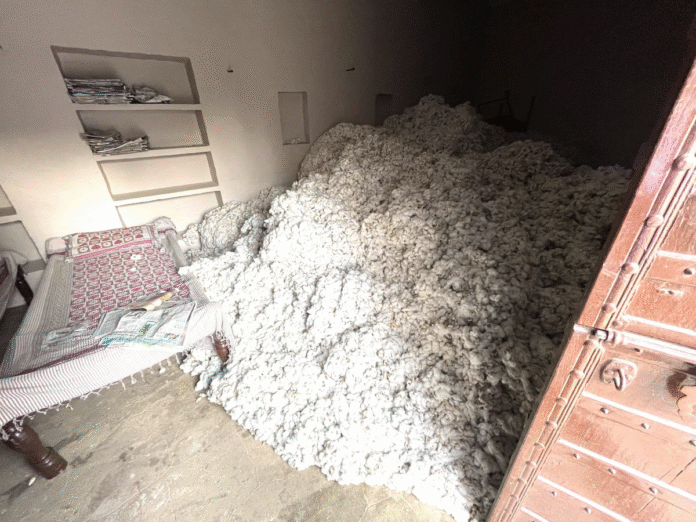
India stands tall as the second-largest producer of cotton in the world, contributing approximately 21% of global cotton output. With an estimated production of around 25 million bales in 2025, India’s cotton industry plays a vital role in the global textile supply chain. Major cotton-producing states like Gujarat, Maharashtra, Telangana, Rajasthan, and Karnataka have turned the country into a powerhouse of cotton cultivation, driving both economic growth and employment in the agricultural sector.

Cotton remains one of the most important cash crops globally, playing a vital role in textile manufacturing and the livelihoods of millions of farmers. Based on data from USDA FAS 2025, here are the top five cotton-producing countries in the world:

1. China

China continues to dominate global cotton production due to its advanced agricultural technologies such as genetically modified crops, precision farming, and automated irrigation systems. Despite a relatively stable area under cultivation, high productivity and government support have helped China maintain the top position.

  • Key Region: Xinjiang Province
  • Strengths: Technological innovation, high yields, export strength
  • Global Share: ~24%

2. India

India ranks as the second-largest cotton producer, contributing about 21% of global output. The country’s production in 2025 is estimated at 25 million bales. Cotton is a major component of India’s agricultural and textile economy.

  • Major Cotton-Producing States: Gujarat, Maharashtra, Telangana, Rajasthan, Karnataka
  • Strengths: Large cultivation area, farmer base, diverse growing zones
  • Global Share: ~21%

3. Brazil

Brazil has rapidly emerged as a cotton powerhouse, ranking third globally with an estimated 17 million bales in 2025, accounting for 14% of world production. The growth is driven by strategic farming practices, crop rotation, and strong government support.

  • Strengths: Soil conservation, subsidies, export infrastructure
  • Notable Practices: Use of high-yield varieties, sustainable farming methods
  • Global Share: ~14%

🇺🇸 4. United States

  • Key Producing States: Texas, Georgia, Mississippi, Arkansas
  • Strengths: Export capacity, technological edge, strong policy support
  • Export Share: ~33% of global raw cotton exports

5. Pakistan

Pakistan ranks among the top five cotton producers in 2025. The country’s agricultural economy is deeply reliant on cotton, supporting a vast textile sector. Despite climate-related challenges, favourable growing conditions and industry demand continue to drive production.

  • Strengths: Established textile industry, favourable climate, skilled labor
  • Challenges: Water stress, pest control, outdated farming techniques
  • Global Share: ~6%

Why World Cotton Day Is Celebrated Across the Globe

0

World Cotton Day, celebrated every year on October 7, highlights the essential role cotton plays in job creation, poverty reduction, economic development, and sustainable fashion around the world. First established in 2019, this international observance draws attention to the importance of cotton, especially for millions of smallholder farmers in developing countries.

The Origin and Purpose of World Cotton Day

The United Nations formally recognized World Cotton Day to acknowledge cotton’s contribution to livelihoods and economies globally. The initiative was first launched by the World Trade Organization (WTO) in partnership with cotton-producing countries, particularly from Africa. It aims to:

  • Promote sustainable cotton production
  • Recognize cotton’s economic and social impact
  • Support global trade equity for cotton-producing nations

Cotton’s Global Economic Impact

According to the Food and Agriculture Organization (FAO), cotton is cultivated by around 24 million farmers in over 80 countries. Astonishingly, 43% of cotton farmers worldwide are women, many of whom rely on it as their only source of income.

Each tonne of cotton supports five full-time jobs, providing income for over 100 million people globally every year. It plays a pivotal role in poverty alleviation and rural employment, especially in least-developed countries (LDCs).

Sustainability and Environmental Benefits

Cotton is not only economically vital—it is also environmentally resilient. The crop:

  • Uses only 2% of the world’s farmable land
  • Meets over 27% of global textile demand
  • Is drought-resistant, making it ideal for arid regions

Its deep-rooted system enables high yield with minimal water, reducing pressure on natural resources.

The U.S. Cotton Industry’s Global Role

The United States is the third-largest cotton producer and the largest exporter of raw cotton, accounting for nearly one-third of global exports. According to the USDA, the U.S. cotton industry generates over $21 billion annually, supporting more than 125,000 jobs from farming to textile manufacturing.

Consumer Demand: Cotton Remains the Fabric of Choice

According to the 2025 Global Lifestyle Monitor™, a survey of over 13,000 consumers across 13 countries:

  • 75% prefer cotton or cotton-rich blends over synthetic materials
  • 67% say cotton is the most comfortable
  • 59% believe it’s of the best quality
  • 59% are willing to pay more for natural fibers like cotton

Countries like India, Mexico, Germany, and the U.S. show particularly high preference for cotton clothing.

Cotton in Fashion and Design

Designers worldwide, including those at New York Men’s Day (NYMD), are embracing cotton for its versatility, durability, and sustainability. Designers like Reuben Shaw and Bryan Jimenéz highlight cotton as their go-to material for making timeless, eco-conscious garments.

“It’s just better,” Shaw said. “It wears well and lasts longer—we’re making clothes to be worn and passed on, not thrown away.”

What’s New in World Cotton Day 2025?

  1. Showcase of Young Innovators: Students and designers present creative uses of cotton from concept to finished product.
  2. Artisanal Processing & Local Development: Focus on how traditional methods can drive sustainable, community-based growth in cotton-producing regions.

Conclusion: Why Cotton Deserves Global Recognition

World Cotton Day is more than a celebration—it’s a call to action. Cotton is:

  • A lifeline for millions
  • A cornerstone of sustainable fashion
  • A symbol of inclusive global trade

As the world continues to seek sustainable, equitable solutions to economic and climate challenges, cotton remains a powerful tool for change.