Home Blog Page 138

Lung Cancer Awareness Month 2025

0

November is observed globally as Lung Cancer Awareness Month, dedicated to raising awareness about the leading cause of cancer deaths worldwide. While smoking remains the most significant risk factor, mounting evidence now highlights air pollution as an emerging and serious contributor to lung cancer.

Rising Threat of Air Pollution

Air pollution is now recognised as a leading environmental cause of lung cancer. The International Agency for Research on Cancer (IARC) has classified outdoor air pollution and fine particulate matter (PM2.5) as Group 1 carcinogens. These particles can penetrate deep into lung tissue, triggering inflammation, DNA damage, and ultimately cancerous growths. Even small increases in PM2.5 levels have been linked to higher incidences of lung adenocarcinoma, particularly among non-smokers.

Individual Steps for Protection

Though large-scale policy changes are crucial, individuals can still take meaningful steps to protect themselves. Quitting smoking remains the most effective prevention measure. Using high-efficiency particulate air (HEPA) filters indoors, switching to clean cooking fuels, and ensuring proper ventilation help reduce exposure. On days with heavy smog, wearing N95 masks, avoiding outdoor exertion, and staying indoors can significantly cut risk levels.

Government Policies and Public Health Measures

National and local governments play a central role in curbing pollution-driven cancer risks. Policies promoting cleaner transportation, stricter industrial emission standards, renewable energy adoption, and urban green spaces are essential. Countries implementing these strategies have shown measurable declines in pollution-related lung cancer rates. Public awareness campaigns, health screenings, and early detection programmes can further improve survival outcomes.

Facts

  • Air pollution and PM2.5 are classified as carcinogenic to humans by IARC.
  • Up to 18% of global lung cancer deaths are linked to air pollution exposure.
  • Low-dose CT scans are recommended annually for individuals aged 50–80 with high smoking history.
  • Switching from biomass fuels to clean energy reduces indoor air pollution-related cancer risks.

Importance of Awareness and Prevention

Lung Cancer Awareness Month 2025 emphasises that prevention is not limited to quitting tobacco but extends to addressing environmental hazards. No major city in the world fully meets WHO’s air quality standards, highlighting the urgency for joint efforts by governments, industries, and individuals. Early detection through screening, reduced exposure to pollutants, and public education remain the cornerstones of preventing this deadly disease.
Lucknow’s Royal Flavours Go Global: UNESCO Crowns the City as ‘Creative City of Gastronomy

0

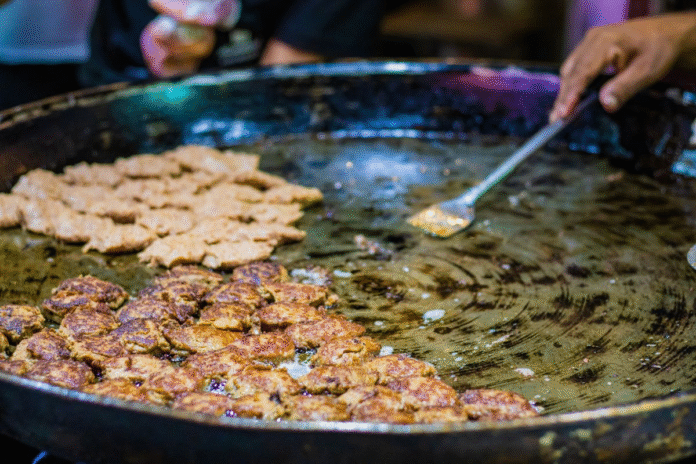
The aroma of kebabs, the richness of biryanis, and the elegance of Awadhi cuisine have long defined Lucknow’s cultural heartbeat. Now, the world has taken notice. On World Cities Day, UNESCO officially named Lucknow a Creative City of Gastronomy, recognising its centuries-old culinary legacy and creativity that continues to evolve with time.

Prime Minister Narendra Modi congratulated Lucknow on the honour, calling it a city where “vibrant culture and great culinary tradition go hand in hand.” Taking to X, he invited the world to experience Lucknow’s flavours firsthand, saying the city’s food culture is at the very core of its identity.

With this recognition, Lucknow joins the global list of 70 gastronomy cities and becomes only the second Indian city to receive this honour after Hyderabad.

The announcement was made during the 43rd session of UNESCO’s General Conference in Samarkand, Uzbekistan, marking a proud moment for India’s cultural and culinary map.

Union Culture Minister Gajendra Singh Shekhawat hailed the recognition as a milestone that enhances Lucknow’s global stature. “This honour strengthens India’s soft power and opens new avenues for culinary tourism, heritage conservation, and international collaboration,” he said.

The city’s nomination journey began earlier this year when the Directorate of Tourism submitted its proposal to the Ministry of Culture. By March, Lucknow had been chosen as India’s official entry and now, the effort has culminated in global glory.

Tourism and Culture Minister Jaiveer Singh noted that “culinary tourism has always been the soul of Uttar Pradesh,” adding that this designation will help transform Lucknow into a global food destination. The numbers speak for themselves over 8.2 million visitors in 2024, and more than 7 million in just the first half of 2025.

From royal kitchens perfecting galouti kebabs to bustling streets serving nihari and tunday delights, Lucknow’s food is a bridge between history and innovation.

With UNESCO’s Creative City tag, the city’s flavours are set to travel far beyond its bustling lanes inviting the world to take a bite of its royal past and deliciously dynamic future.

6 Major Changes Effective From November 2025: Bank Nominee Rules, Free ChatGPT Go Plan, New FASTag & LPG Updates

0

The month of November 2025 brings several important policy and price changes that will impact consumers, pensioners, and vehicle owners across India. From revised bank nomination rules and Aadhaar updates to a free ChatGPT subscription and new FASTag toll penalties, here’s a look at the six big changes taking effect this month.

1. Add Up to Four Nominees to Your Bank Account

Starting November 1, 2025, account holders can now add up to four nominees instead of one. Each nominee can be assigned a specific percentage share of the account balance. The Finance Ministry said the change will make the bank claim and inheritance process simpler and more transparent. Nominees can also be modified or canceled anytime.

This rule will help families manage assets more easily, avoiding legal delays after the account holder’s death.

2. New Aadhaar Update Charges Announced

The Unique Identification Authority of India (UIDAI) has revised the Aadhaar update charges effective this month.

  • Children’s biometric updates (fingerprint/iris) are free for one year.
  • Adults will pay ₹75 for demographic updates (name, address, date of birth, or mobile number) and ₹125 for biometric changes.

Users can now also update their Aadhaar online—including name and address—without submitting documents, making the process faster and more convenient.

3. ChatGPT Go Subscription Free for One Year in India

In a major announcement, OpenAI is offering its ‘ChatGPT Go’ plan free for Indian users for one year starting November 4, 2025. The plan, normally priced at ₹399 per month (₹4,788 annually), provides faster responses, image generation, and extended chat sessions. India is OpenAI’s second-largest and fastest-growing market, and this move aims to make AI tools more accessible for students, professionals, and creators across the country.

New FASTag Rules & Toll Penalty System

The National Highways Authority of India (NHAI) has rolled out two key changes for FASTag users this month.

  • Simplified Verification: The Know Your Vehicle (KYV) process now only requires a front photo of the number plate and FASTag. The side-view photo requirement has been dropped.
  • Toll Payment Penalties: From November 15, 2025, drivers paying via UPI instead of FASTag will be charged 1.25 times the standard toll fee. Those paying by cash will continue to pay double.

NHAI has also provided a grace period for vehicle owners to complete their KYV verification and avoid FASTag deactivation.

5. Pensioners Must Submit Life Certificate by November 30

All central and state government pensioners must submit their annual Life Certificate by November 30, 2025, to continue receiving their pension. Certificates can be submitted at bank branches or through digital platforms like Jeevan Pramaan. Additionally, pensioners planning to switch from the National Pension System (NPS) to the Unified Pension Scheme (UPS) must also complete the process by month-end. Failure to do so may result in pension suspension until re-verification.

6. Commercial LPG Cylinder Prices Revised

Oil marketing companies have revised the price of 19 kg commercial LPG cylinders. In Delhi, the price now stands at ₹1,590.50, while in some cities, prices have dropped by up to ₹6.50. The monthly price review, effective from November 1, reflects changes in global energy prices and foreign exchange rates. This adjustment will mainly impact restaurants, hotels, and small businesses that depend on commercial LPG.


Quick Summary of Key Changes

CategoryEffective DateKey Update
Bank Account RulesNov 1, 2025Add up to 4 nominees
Aadhaar UpdatesNov 1, 2025Children’s biometrics free for 1 year
ChatGPT GoNov 4, 2025Free subscription for Indian users
FASTag RulesNov 15, 2025New KYV process & toll penalties
Pensioners’ Life CertificateNov 30, 2025Must submit to continue pension
LPG Cylinder PriceNov 1, 2025₹1,590.50 in Delhi; minor rate cuts elsewhere

Bottom Line

From digital convenience to AI accessibility and financial transparency, these November 2025 updates mark a significant shift toward making India’s systems smarter, simpler, and more citizen-friendly.

Unbreakable Spirit: Jemimah Rodrigues Scripts India’s Golden Chase Against Australia

0

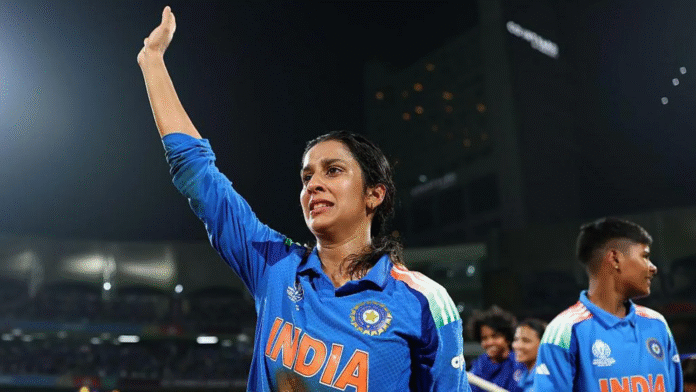
Under the glowing floodlights of DY Patil Stadium, Jemimah Rodrigues turned doubt into destiny. On a night that tested courage as much as skill, the 32,000-strong crowd witnessed not just an innings but a resurrection. Battling anxiety, self-doubt, and the weight of expectations, Jemimah produced a sublime 127 off 134 balls, leading India to an unforgettable chase of 338 against Australia and sealing a place in the Women’s World Cup final.

From Shadows to Spotlight
Her journey to this moment wasn’t easy. Once left out mid-tournament, questioned for her form and shuffled down the order, Jemimah had every reason to crumble. Yet, she chose to rise. The same girl who once stood at Mumbai airport to welcome her heroes from the 2017 World Cup now stood as one – calm, fierce, and quietly determined.

The Calm Within the Storm
Jemimah’s innings was poetry in precision. With Smriti Mandhana struggling early, she anchored the innings every flick, cut, and sweep crafted with focus. Her running between the wickets, her sharp shot placement, and her timing turned pressure into progress. Even as partners fell, she didn’t flinch; her composure was her greatest weapon.

Faith, Fire, and Freedom
When the winning boundary came from Amanjot Kaur’s bat, Jemimah dropped to her knees tears blending with triumph. This was not just relief; it was release. “It feels like a dream,” she said, dedicating her knock to faith, family, and perseverance.

India’s New Chapter
In that one innings, Jemimah Rodrigues reminded the world that greatness isn’t just about records it’s about resilience. The smile was back, the joy rediscovered, and a nation’s belief renewed. From uncertainty to unshakable glory, she stood tall not just as a batter, but as India’s beating heart.

‘Main Kyu Gaali Khaun’: Gadkari’s QR Code Plan Puts Accountability on Display

0

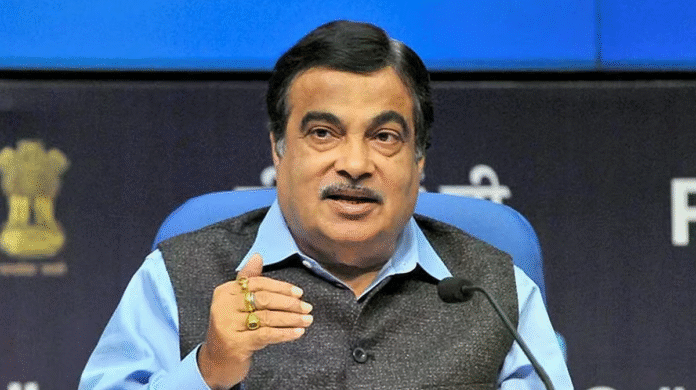
Highways Go Digital. Soon, India’s highways won’t just take you places, they’ll tell you who built them. In a first-of-its-kind move, Union Minister Nitin Gadkari has directed the National Highways Authority of India (NHAI) to install QR-coded hoardings along national highways. By scanning these codes, commuters will be able to access details about contractors, consultants, and government officials responsible for that stretch including their names, contact information, project costs, and deadlines.

Accountability in Motion
“Main kyu gaali khaun?” Gadkari quipped, underscoring that road quality complaints should reach the right people. The minister said if the public is paying tolls, they deserve international-standard roads, no excuses about weather or materials. He also called for regular performance audits to ensure transparency, accountability, and recognition for quality work.

Transparency Through Technology
To make the process even more open, Gadkari has asked developers and NHAI to launch YouTube channels showcasing videos of ongoing projects. The ministry aims to make video updates a part of every contract. “We often learn about project issues from independent YouTubers,” said road transport secretary V. Umashankar, adding that official uploads will improve feedback and public engagement.

People-Centric Infrastructure
Gadkari reiterated that infrastructure should be built for public comfort and convenience, not just connectivity. The ministry plans to set up 670 roadside amenities and upgrade 25,000 km of highways under a ₹2 lakh crore plan connecting major ports and religious destinations.

Balancing Growth and Green Goals
From transplanting 8,500 trees along the Dwarka Expressway to mandating precast technology for faster, cleaner construction, the minister emphasised sustainability alongside speed.
As India races toward a future of modern roads, the message is clear, the next time a pothole appears, the QR code will lead straight to those responsible.

Snabbit’s $30 Million Leap: Fast Cleaning to Full Home Care

0

India’s quick-service space just got a lot more interesting. Bengaluru-based Snabbit, known for sending cleaning professionals to your doorstep in under 10 minutes, is now stepping into the kitchen and beyond. After raising $30 million in its latest funding round led by Bertelsmann India Investments (BII), the company is gearing up to expand into home cooking, childcare, and elder care, categories that could redefine how Indian households manage daily life.

Founded in 2024 by Aayush Agarwal, a former chief of staff at Zepto, Snabbit’s story has been one of relentless speed both literally and strategically. This is its third fundraise this year, following rounds led by Lightspeed Venture Partners and Elevation Capital, bringing its total capital raised to $55 million.

“We have an ambitious plan to scale,” Agarwal told ET. “Home cooking is the most natural extension for us, followed by child and elderly care.”

Currently active in Mumbai, Delhi, and Bengaluru, Snabbit has recently entered Noida and Pune, clocking over 10,000 orders a day with a 5,000-strong, all-women workforce. The company’s “hyperlocal micro-market” model focusing on deep presence within small neighbourhood clusters has been key to its rapid growth and profitability.

To support expansion, Snabbit has shifted its headquarters to Bengaluru and strengthened leadership with Ishan Kansal (Head of Product) and Ankit Srivastava (Head of Technology).
The company also plans to introduce an early salary withdrawal feature for its professionals, a move that not only supports workers financially but also helps Snabbit assess creditworthiness for future lending partnerships.

Backers believe Snabbit is solving one of India’s biggest urban challenges. “High-frequency home services is still under-penetrated,” said Rahul Taneja, partner at Lightspeed. “Snabbit has been a category creator with strong execution and consumer trust.”

From washing dishes to redefining dignity for women in the workforce, Snabbit’s next act could turn it from a quick-service startup into India’s go-to platform for everyday household needs proving that speed, when paired with empathy, can truly scale.

Snabbit’s $30 Million Leap: From Fast Cleaning to Full Home Care

PhaseTimelineKey FocusMilestones / AchievementsGrowth Impact
1️⃣ Startup Spark2020–2021On-demand home cleaning appLaunched app in 3 metro cities; built 10,000+ user base$1M seed funding secured
2️⃣ Rapid Expansion2022Scale-up phaseExpanded to 15 cities; added professional sanitization services post-pandemicRevenue grew 4x YoY
3️⃣ Brand Trust Building2023Quality & workforce trainingIntroduced “Snabbit Certified” cleaning professionals; partnered with 200+ housing societiesCustomer retention rose by 65%
4️⃣ Diversification to Home Care2024From cleaning to total home managementAdded appliance repair, pest control, and home maintenanceMonthly active users crossed 1 million
5️⃣ Investment Breakthrough2025Global growth & tech innovationRaised $30 million Series B funding from Sequoia and LightspeedValuation hit $120M; launched AI-based service scheduler
6️⃣ Future Vision (2026–)UpcomingSmart home ecosystemPlans to integrate IoT-based predictive maintenance and eco-friendly servicesTargeting $100M annual revenue by 2027

Diana Pundole Steers India into Ferrari History. Know Who She Is Who has Making Marks from From Pune Streets to Global Circuits

0

When the roar of a Ferrari echoes across international tracks this season, it will carry the heartbeat of India with it. Diana Pundole, a 32-year-old racer from Pune, has become the first Indian woman ever to race a Ferrari in an international championship, marking a defining moment for Indian motorsport and women racers everywhere.

The Woman Behind the Wheel of a Legend
Diana will take charge of the Ferrari 296 Challenge, a machine designed for precision, power, and pure adrenaline. With its V6 twin-turbo engine and aerodynamic finesse, it’s a car built to test the brave and Diana is ready for it. Her weapon of choice is not just about speed, but about rewriting the story of who belongs on the track.

A Championship Beyond Boundaries
Representing India on one of motorsport’s grandest stages, Diana will compete in the Ferrari Club Challenge Middle East, a prestigious racing series that stretches from November 2025 to April 2026. The competition unfolds across five iconic Formula 1-grade circuits – Dubai, Abu Dhabi, Bahrain, Qatar, and Saudi Arabia, each race a new test of skill, endurance, and heart.

Fuelled by Passion, Powered by Purpose
Diana’s journey began in 2018 through the JK Tyre Women in Motorsport initiative, a program that paved the way for female racers in India. Since then, she’s earned multiple podium finishes and built a name defined by grit and grace. Now, she’s ready to take Indian racing to a global finish line under Ferrari’s iconic red banner.

A Voice for Every Woman Who Dares
“It’s an incredible honour,” Diana shared. “Being the first Indian woman in the Ferrari Club Challenge is a proud moment not just for me, but for women in Indian motorsport. I hope it inspires others to chase their passion.”

From Pune to the Podium
Each lap she completes carries the promise of progress for her, for India, and for every woman who ever dreamed of crossing the finish line.

67: The Word That Makes No Sense and That’s Exactly Why It Rules 2025

0

When Numbers Started Talking
It’s official, the Word of the Year for 2025 isn’t even a word. Dictionary.com has crowned “67” as the defining expression of the year, a bizarre, meme-fuelled phrase that somehow managed to capture the collective chaos of the internet. It’s part song lyric, part inside joke, and part social signal, proof that in 2025, anything can make perfect sense online.

The Meme That Started It All
The trend traces back to rapper Skrilla’s 2024 song “Doot Doot (6 7)”, where the line “6-7, I just bipped right on the highway” set off a digital wildfire. Within months, TikTok turned those two numbers into a chant, remix, and identity. NBA star LaMelo Ball, who stands 6 feet 7 inches tall, unknowingly added fuel to the trend as fans began linking “67” to his highlights and celebrations.

A Language Without Meaning Yet Full of Emotion
Dictionary.com described “67” as “part inside joke, part performance” a form of “brainrot slang” that thrives on absurdity. It doesn’t mean anything concrete; instead, it’s an interjection, a burst of energy, enthusiasm, or belonging. Teenagers use it like a digital handshake, a symbol of being in on the joke rather than explaining it.

From Classrooms to Culture
Teachers say students shout “six” waiting for classmates to reply “seven.” Some have banned it, while others cleverly use it as a classroom cue. Love it or hate it, “67” has left the internet and entered real life echoing through hallways, memes, and mainstream media.

The Power of Meaningless Meaning
Critics call it nonsense; linguists call it evolution. “67” shows how language in the digital age isn’t always about meaning, it’s about emotion, rhythm, and connection.
In 2025, communication isn’t about what we say it’s about how it makes us feel. And “67” does exactly that.

World Vegan Day 2025: Health Benefits of Going Vegan and Plant-Based Nutrition Tips

0

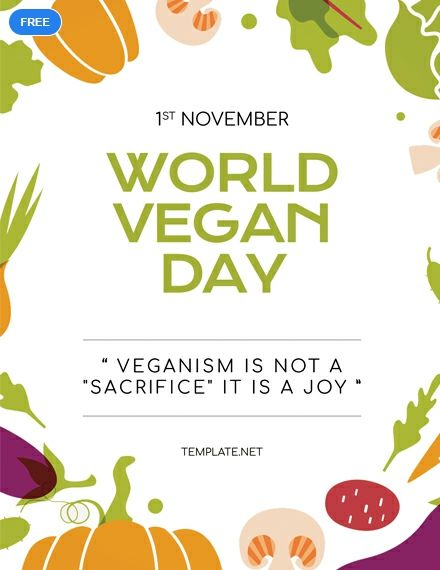
World Vegan Day is celebrated every year to honor the benefits of adopting a vegan lifestyle — one that avoids all forms of animal exploitation and cruelty, whether for food, clothing, or other purposes.

The day serves as a global reminder that plant-based living contributes to better health, animal welfare, and environmental preservation. It inspires individuals to embrace veganism not just as a diet, but as a compassionate, sustainable, and health-conscious philosophy.

When Is World Vegan Day Celebrated in 2025?

In 2025, World Vegan Day will be observed on November 1, marking the start of World Vegan Month.

Across the globe, communities will participate in awareness campaigns, cooking workshops, vegan food festivals, and sustainability events — all aimed at promoting cruelty-free and eco-friendly lifestyles.

From local cafés unveiling vegan menus to organizations leading plant-based initiatives, this day highlights how even small dietary changes can have a large, positive impact on both personal health and the planet.

Why Is World Vegan Day Celebrated?

World Vegan Day celebrates compassion, sustainability, and mindful living. It encourages people to rethink dietary patterns that contribute to climate change, deforestation, and animal suffering.

The observance also spotlights the health benefits of a vegan diet, including:

  • Improved heart health
  • Lower cholesterol levels
  • Better blood sugar control
  • Reduced risk of chronic diseases

Ultimately, World Vegan Day goes beyond dietary choice — it’s about nurturing a lifestyle that aligns with kindness toward all living beings and the environment.

Theme for World Vegan Day 2025

The theme for World Vegan Day 2025 is expected to focus on “Veganism and Its Positive Impact on the Planet, Animals, and Human Health.” This year’s theme underscores how a plant-based lifestyle helps combat climate change, reduce animal suffering, and enhance overall wellness.

By choosing vegan foods and sustainable products, individuals can lower their carbon footprint, conserve natural resources, and promote biodiversity — while improving their own health and longevity.

History of World Vegan Day

World Vegan Day was first celebrated in 1994, initiated by Louise Wallis, then Chair of the Vegan Society UK, to commemorate the 50th anniversary of the Society’s founding by Donald Watson in 1944. Watson coined the term “vegan”, derived from the first and last letters of vegetarian — symbolizing the beginning and end of vegetarianism and the complete commitment to avoiding animal exploitation.

Today, the day is celebrated in over 180 countries, honoring pioneers of the vegan movement and inspiring new generations to adopt plant-based living rooted in compassion, sustainability, and health.

MP Foundation Day: Interesting History of Madhya Pradesh When Indore and Gwalior Were Capitals

0

The story behind the formation of Madhya Pradesh, often called the Heart of India, is as fascinating as its geography. The state came into existence on November 1, 1956, when parts of Central India, Vindhya Pradesh, and Bhopal were merged during the nationwide State Reorganisation process.

While Pandit Ravishankar Shukla became the state’s first Chief Minister, the question of which city would be chosen as the capital led to one of the most interesting chapters in Madhya Pradesh’s political history.

How Madhya Pradesh Took Shape

Before 1956, the region consisted of three administrative units:

  • Central India, with Gwalior as the winter capital and Indore as the summer capital (1950–1956)
  • Vindhya Pradesh, with Rewa as its capital
  • Bhopal State, ruled by the Nawab of Bhopal

When these states were merged to form the new Madhya Pradesh in 1956, four major cities—Bhopal, Gwalior, Indore, and Jabalpur—vied for the honor of becoming the capital.

When Indore and Gwalior Took Turns as Capitals

Few know that Indore and Gwalior actually served as the alternating capitals of Madhya Pradesh before 1956. The arrangement, based on an agreement between Yashwant Rao Holkar II of Indore and Jiwaji Rao Scindia of Gwalior, allowed both cities to function as the state capital for six months each.

Historian Chinmay Mishra notes,

“Before November 1, 1956, Madhya Pradesh was already functioning as a state since 1950. Under a legacy of the British system, Gwalior and Indore alternated as the capital every six months.”

Why Bhopal Was Finally Chosen

When the final reorganisation took place, Bhopal emerged as the most suitable choice for several reasons:

  • Central location: Bhopal was geographically equidistant from major regions like Gwalior, Indore, and Chhattisgarh.
  • Better infrastructure: The city had sufficient government buildings and housing facilities to accommodate officials.
  • Rail connectivity: Bhopal had a direct rail link to Delhi, unlike Indore at that time.
  • Political support: The close association between former President Shankar Dayal Sharma and Prime Minister Jawaharlal Nehru helped Bhopal’s case.

Historian Mishra adds,

“Bhopal also benefited politically. The integration of the Bhopal princely state into India was sensitive—Nawab Hamidullah Khan initially opposed accession and had ties with the Nizam of Hyderabad. Hence, making Bhopal the capital ensured greater national control and stability in the heart of India.”

Other Key Administrative Decisions

When the state was reorganised:

  • Jabalpur was chosen as the seat of the High Court.
  • Gwalior became the headquarters of the Revenue Board.
  • Bhopal was confirmed as the permanent capital of Madhya Pradesh.

Historian Satyanarayan Sattan notes,

“Initially, Gwalior had a stronger claim due to its established railway network. But Bhopal’s central location and political significance ultimately made it the natural choice.”

A Legacy of Unity

The formation of Madhya Pradesh in 1956 symbolized the integration of princely states and regions that once stood apart. From alternating capitals in Indore and Gwalior to the establishment of Bhopal as the administrative heart, the journey reflects how geography, politics, and diplomacy came together to shape modern Madhya Pradesh.