

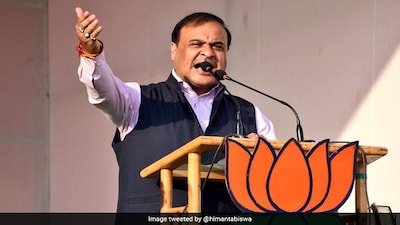
Senior BJP leader Himanta Biswa Sarma is set to take oath as the Chief Minister of Assam once again after leading the BJP-led NDA to a massive victory in the 2026 Assembly elections. The swearing-in ceremony is scheduled for May 12 and is expected to be attended by Prime Minister Narendra Modi, Union ministers and several BJP chief ministers.
Known for his sharp political instincts, aggressive campaigning style and strong organisational skills, Himanta Biswa Sarma has emerged as one of the Bharatiya Janata Party’s most influential leaders in Northeast India. Over the past decade, he has played a major role not only in Assam politics but also in expanding the BJP’s footprint across the entire northeastern region.
Born on February 1, 1969, in Jorhat, Assam, Sarma studied at Cotton College and later earned degrees in political science and law before entering public life. Before becoming a full-time politician, he practised law at the Gauhati High Court.
Sarma began his political journey with the Indian National Congress in the 1990s. He first rose to prominence as a close aide of former Assam Chief Minister Tarun Gogoi and became one of the Congress party’s most powerful leaders in the state. Over the years, he handled several important portfolios including health, finance, education and planning, gaining a reputation as an efficient administrator and political strategist.
However, differences with the Congress leadership — especially over succession and internal party dynamics in Assam — eventually led to his exit from the party in 2015. In one of the most significant political shifts in the Northeast, Sarma joined the BJP and quickly became central to the party’s regional expansion strategy. His move is widely considered a turning point in Assam politics and in the BJP’s rise in the Northeast.
As convenor of the North-East Democratic Alliance (NEDA), Sarma played a key role in helping the BJP and its allies form governments across several northeastern states. His political influence steadily grew, and in 2021 he became Assam’s Chief Minister after the BJP retained power in the state.
During his tenure, the Assam government focused heavily on infrastructure development, road connectivity, welfare schemes, healthcare expansion and investment promotion. Sarma has also positioned himself as a strong advocate of Assamese identity, border security and strict action against illegal immigration — issues that remain politically significant in the state.
At the same time, his tenure has also attracted criticism and controversy. Opposition parties and civil rights groups have often accused him of divisive rhetoric, particularly regarding Bengali-speaking Muslims and immigration-related issues. Sarma, however, has defended his stance as necessary for protecting indigenous identity and maintaining law and order in Assam.
The BJP-led NDA secured a commanding victory in the 2026 Assembly elections, winning 102 seats in the 126-member Assam Assembly. Following the victory, Sarma was unanimously elected leader of both the BJP Legislature Party and the NDA Legislature Party, paving the way for his second consecutive term as Chief Minister.
From being a Congress troubleshooter to becoming the BJP’s most prominent face in the Northeast, Himanta Biswa Sarma’s political journey reflects one of the most dramatic transformations in contemporary Indian politics. As he prepares to take oath again, he enters his new term carrying both strong political authority and high expectations for Assam’s future development and governance.