

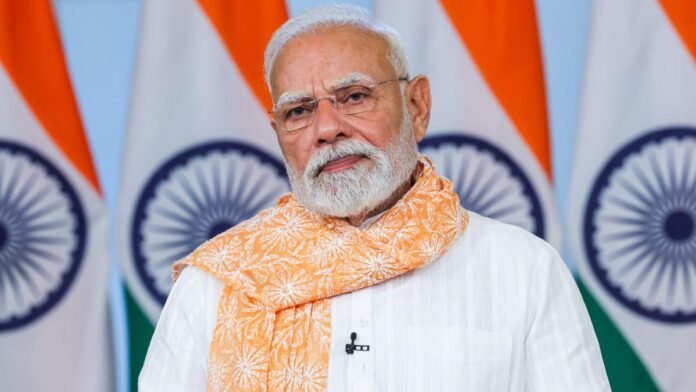
In a strongly worded and emotionally charged address to the nation, Narendra Modi spoke at length about the failure of the Women’s Reservation Bill in Parliament, calling it a missed historic opportunity and expressing deep regret to the women of India.
A Rare Apology: “I Seek Forgiveness from the Women of India”
One of the most striking moments of the speech was the Prime Minister’s emotional tone. He openly apologised, saying that despite the government’s “best efforts,” the bill could not be passed. He described the outcome as the crushing of women’s aspirations and acknowledged the disappointment felt across the country.
He framed the bill as a long-awaited step toward empowering women politically and said its failure was not just legislative, but deeply symbolic.
Sharp Attack on Opposition: “A Black Day for Democracy”
PM Modi did not hold back in criticising opposition parties. He accused them of indulging in “petty politics” and deliberately blocking a reform meant for women’s empowerment.
In a controversial remark, he compared the bill’s defeat to “female foeticide” (bhroon hatya), suggesting that the opportunity for women’s representation was destroyed before it could take shape.
He also termed the day a “black day” for those who opposed the bill, arguing that they failed to rise above political interests.
Why the Bill Failed: The Delimitation Deadlock
A major issue highlighted in the speech was the linkage of the Women’s Reservation Bill with the delimitation exercise—the redrawing of parliamentary constituencies.
The proposed constitutional amendment required a two-thirds majority but fell short in the Lok Sabha, with significant opposition resistance.
Opposition parties argued that linking women’s reservation with delimitation could alter the political balance, especially impacting southern states. This disagreement ultimately led to the bill’s defeat.
“Selfish Politics Crushed Women’s Dreams”
The Prime Minister repeatedly emphasised that the failure was not due to lack of intent, but due to what he called “selfish politics.” He said that those opposing the bill had “betrayed the hopes of India’s daughters” and placed political calculations above national interest.
He also claimed that while the government may not have secured enough votes, it had the “support of 100% women,” reinforcing his narrative of public backing.
Commitment to Return: “We Will Remove Every Obstacle”
Despite the setback, PM Modi struck a determined note. He assured the nation that the fight for women’s political representation is far from over.
He promised that his government would continue efforts to ensure the passage of the bill in the future and remove all obstacles in its path.
“We will come back,” he asserted, signalling that the issue will remain central to his political agenda.
Conclusion: Politics, Emotion, and a Missed Opportunity
PM Modi’s address combined emotion, political messaging, and a strong defence of his government’s intent. While he projected the bill’s failure as a result of opposition resistance, critics see it as a deeper structural and political disagreement over implementation.
What remains undeniable is that the speech marked a significant political moment—where gender representation, electoral reform, and political rivalry intersected sharply, leaving behind both controversy and a promise of unfinished reform.