

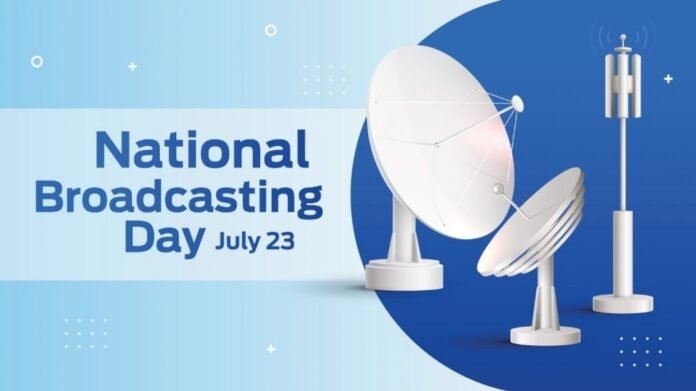
Every year on July 23, India celebrates National Broadcasting Day, commemorating the country’s first-ever radio broadcast on July 23, 1927. What began as a modest transmission from Bombay has evolved into one of the world’s largest public broadcasting networks, playing a pivotal role in informing, educating and entertaining millions of Indians across generations.
In an era dominated by digital platforms and social media, National Broadcasting Day serves as a reminder of the enduring power of broadcasting in shaping public opinion, preserving culture and reaching even the remotest corners of the country.
The Beginning of Radio Broadcasting in India
The history of organised broadcasting in India dates back to July 23, 1927, when the Indian Broadcasting Company (IBC) launched the country’s first radio service from Bombay (now Mumbai). Shortly afterwards, another station was established in Calcutta (now Kolkata).
However, due to financial difficulties, the Indian Broadcasting Company ceased operations in 1930. Recognising the importance of radio as a public communication medium, the Government of India took over the service and established the Indian State Broadcasting Service (ISBS).
On June 8, 1936, the service was renamed All India Radio (AIR), a name that became synonymous with trusted public broadcasting for decades. In 1957, AIR adopted the iconic Sanskrit name Akashvani, meaning “voice from the sky,” which remains its popular identity today.
A Powerful Medium for a Diverse Nation
Over the decades, All India Radio became much more than a broadcaster. It emerged as a lifeline for millions, delivering reliable news, educational programmes, agricultural advisories, cultural performances and entertainment in multiple Indian languages.
From villages without television to border regions with limited connectivity, radio has consistently bridged geographical and linguistic divides. During natural disasters, elections, national emergencies and public health campaigns, broadcasting has remained one of the most dependable means of reaching citizens.
AIR’s extensive network today covers nearly the entire population and geographical area of India through hundreds of broadcasting stations, making it one of the largest radio networks in the world.
The Evolution of Indian Broadcasting
The broadcasting landscape expanded significantly with the introduction of television. Doordarshan, which began as an experimental television service in 1959, later became India’s national television broadcaster, bringing educational content, news, sports and iconic programmes into millions of homes.
The liberalisation of the media sector in the 1990s paved the way for private FM radio stations and numerous television news and entertainment channels. In recent years, digital streaming, internet radio and podcasts have transformed broadcasting once again, allowing audiences to access content anytime and anywhere.
Despite these technological changes, traditional broadcasting continues to play a crucial role, particularly during emergencies and in rural India, where radio remains an accessible and affordable source of information.
Broadcasting in Nation Building
Throughout India’s history, broadcasting has been instrumental in fostering national integration and public awareness. From broadcasting Independence Day speeches and parliamentary proceedings to promoting literacy, health awareness and government initiatives, it has strengthened democratic participation and civic engagement.
Programmes featuring Indian classical music, folk traditions, literature and regional cultures have also helped preserve the country’s rich heritage while giving a platform to artists from every corner of India.
Why National Broadcasting Day Matters
National Broadcasting Day is not merely a commemoration of the first radio transmission—it is a celebration of communication that has united a diverse nation for nearly a century.
As India embraces digital transformation and emerging media technologies, the spirit of broadcasting remains unchanged: delivering credible information, amplifying diverse voices and connecting people across boundaries.
From the crackling radio sets of 1927 to today’s digital broadcasts and podcasts, India’s broadcasting journey reflects the country’s remarkable technological progress while reaffirming the timeless importance of trustworthy communication in a vibrant democracy.