

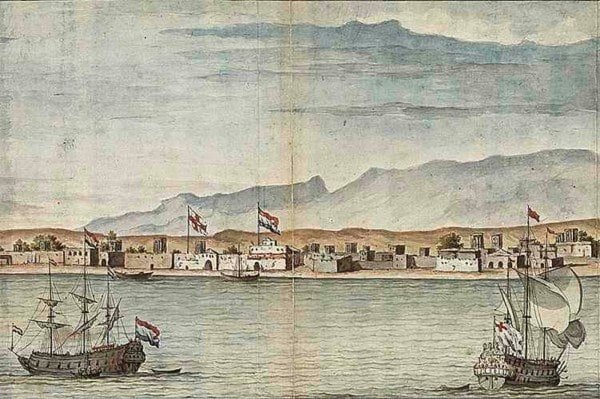
Long before oil transformed West Asia into a global economic centre, the island kingdom of Hormuz stood as one of the most important hubs of international trade. Located at the entrance of the Persian Gulf, Hormuz served as a key link between Asia, the Middle East, and beyond. Its rise to prominence was not accidental—Indian merchants played a crucial role in shaping its success.
From the western coast of Gujarat, traders sailed across the Arabian Sea, connecting India with regions like Persia, Arabia, and East Africa. These maritime networks were highly organised and active for centuries. One notable figure often associated with this period is Jagadu Shah, a wealthy merchant known for his involvement in long-distance trade and philanthropy.
Archaeological evidence further supports India’s early presence in these trade routes. Discoveries such as inscriptions found on Socotra indicate that Indian traders had been active in the region since the early centuries of the Common Era. Over time, these routes evolved into a vast network that facilitated not just trade, but also cultural exchange.
By the 13th century, Hormuz had begun to grow into a major maritime centre. By the 14th and early 15th centuries, it became an essential stopover for traders moving goods across continents. Indian merchants formed a significant part of this ecosystem, contributing heavily to trade in textiles, spices, and other valuable commodities. Historical records suggest that a large share of Hormuz’s customs revenue was linked to Indian trade activities.
This history challenges the modern perception that West Asia’s global importance is mainly tied to oil. In reality, centuries before the oil boom, trade networks driven by merchants—especially from India—were the backbone of the region’s economy.
The story of Hormuz is, therefore, more than just the rise of a trading port. It reflects a time when oceans connected civilizations, and when Indian merchants helped build bridges of commerce, culture, and cooperation across vast distances.