

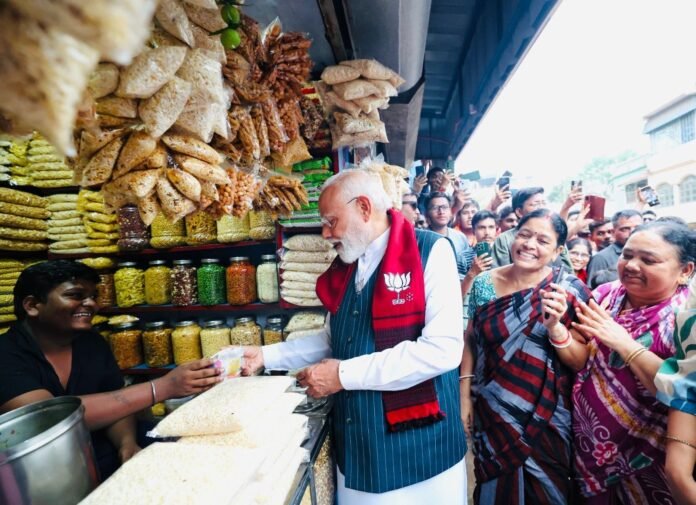
In a moment that quickly went viral and captured public attention, Narendra Modi paused during his hectic campaign schedule in West Bengal to enjoy a humble serving of jhalmuri, one of the state’s most loved street foods. The unexpected stop not only highlighted his connection with local culture but also led to a heartwarming interaction with a street vendor.
The incident took place in Jhargram, where the Prime Minister’s convoy made an unscheduled halt at a small roadside stall. Modi approached the vendor in a casual manner, asking him to prepare the popular snack. Jhalmuri, a spicy mixture of puffed rice, vegetables, mustard oil, and spices, is widely considered a staple of Bengali street food culture.
As the vendor prepared the snack, Modi engaged in a light conversation, even asking about the price. When offered the jhalmuri, he attempted to pay for it, but the vendor initially refused to accept any money—an act seen as a gesture of respect and admiration. However, Modi insisted on paying, emphasizing the dignity of labour and fair exchange. Eventually, the vendor accepted the payment after repeated insistence.
The interaction also included a light-hearted moment when the vendor asked whether to add onions to the snack, to which Modi responded humorously, adding a personal touch to the exchange. The entire episode, captured on video and shared widely on social media, resonated with many for its simplicity and relatability.
Beyond the viral appeal, the incident reflects a broader pattern in Modi’s public engagements—connecting with local traditions, cuisines, and small vendors during his travels. Such moments often serve as symbolic gestures aimed at promoting regional culture and acknowledging grassroots livelihoods.
Politically, the stop came amid an intense election campaign in West Bengal, where every public interaction carries significance. Yet, this brief “jhalmuri break” stood out for transcending political messaging and showcasing a more human, approachable side of leadership.
In a fast-paced political environment, the image of the Prime Minister sharing a simple street snack and insisting on paying for it struck a chord with citizens—reminding many of the everyday connections that bind leaders and the people they serve.