

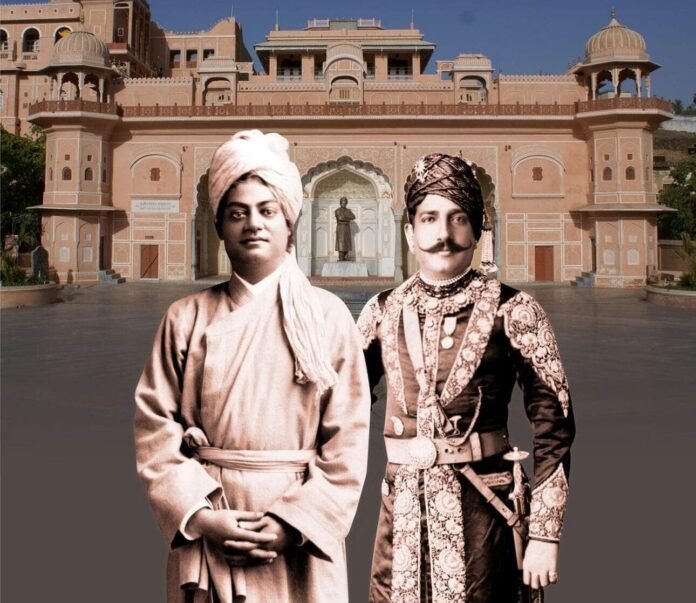
When the world remembers Swami Vivekananda, it often recalls his iconic address at the Parliament of the World’s Religions in Chicago in 1893, the speech that introduced India’s spiritual heritage to a global audience. Yet, few know that one of the most significant chapters of that journey was written not in Kolkata or Chicago, but in the princely town of Khetri in present-day Rajasthan.
Long before he became a global icon, Vivekananda found in Khetri a trusted friend, an unwavering patron, and the encouragement that would help shape one of history’s most influential spiritual missions.
A Friendship Beyond Royalty
The story began in 1891, when the wandering monk, then known as Narendranath Datta, met Maharaja Ajit Singh of Khetri. What started as an introduction soon evolved into a remarkable friendship rooted in mutual respect, intellectual curiosity, and shared spiritual ideals.
Ajit Singh was far more than a royal benefactor. He deeply admired Vivekananda’s wisdom and frequently sought his guidance on matters of philosophy and governance. In turn, Vivekananda appreciated the Maharaja’s humility, generosity, and commitment to social reform. Their correspondence reflects a relationship built on trust and shared purpose rather than royal protocol.
The Name That Made History
Perhaps Khetri’s most enduring contribution to Indian history was the name by which the monk came to be known across the world.
Before leaving for the West, the monk had used different monastic names. It was Maharaja Ajit Singh who suggested the name “Vivekananda“, meaning “the bliss of discernment” or “one who delights in wisdom.” The monk accepted the name, and under this identity he would soon deliver one of the most celebrated speeches in modern history.
Today, the name Swami Vivekananda is recognised across the world, and its origins can be traced back to Khetri.
The Journey to Chicago
Khetri’s role extended beyond symbolism. When Vivekananda decided to represent India’s spiritual traditions at the Parliament of Religions in Chicago, the journey was fraught with financial and logistical challenges.
At this crucial moment, Maharaja Ajit Singh extended generous financial assistance and moral support, helping make the historic voyage possible. During his stay in Rajasthan, Vivekananda also adopted the distinctive Rajasthani style of turban, an element that later became inseparable from his iconic image.
The saffron-robed monk wearing a Rajasthani turban would go on to become one of the most recognisable figures in modern Indian history.
Preserving a Shared Legacy
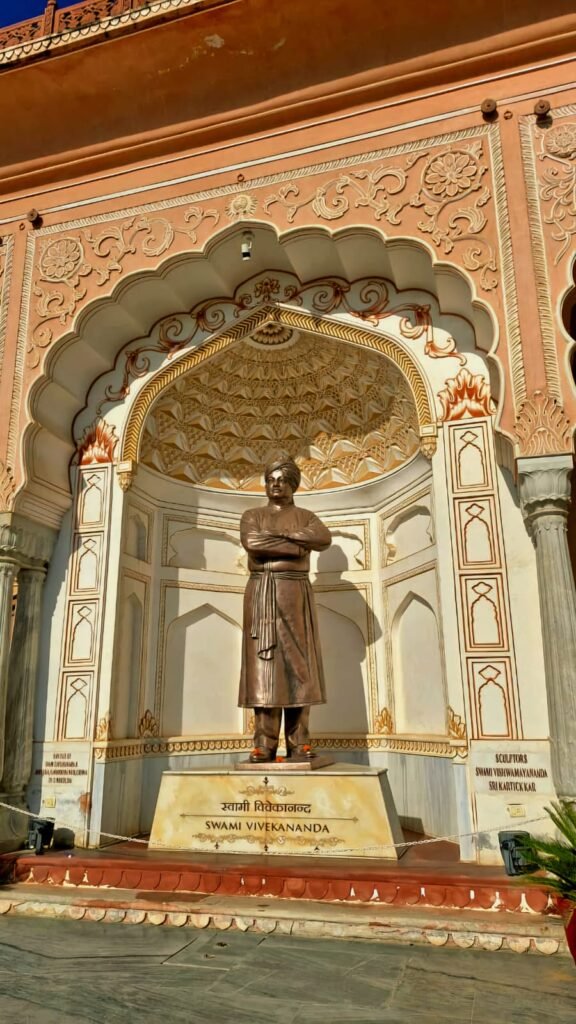
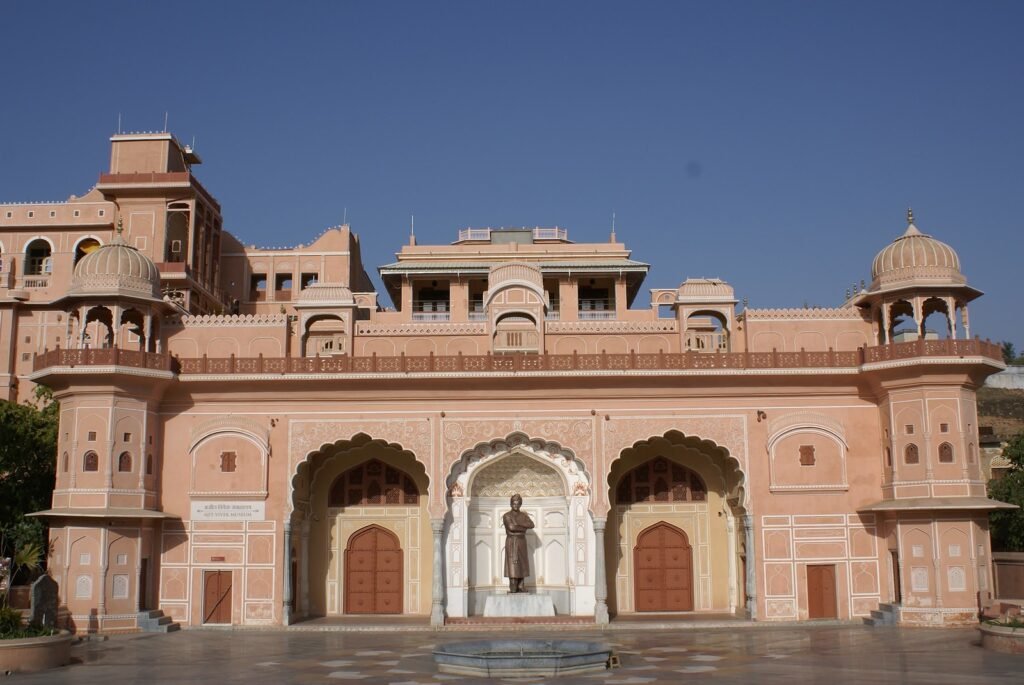
The extraordinary bond between Vivekananda and Khetri is preserved at the Ajit Vivek Museum, located in the former palace associated with the royal family.
The museum chronicles Vivekananda’s life through rare photographs, personal writings, historical exhibits, and audio-visual presentations. Visitors can explore his spiritual journey, travels across India, the landmark Chicago address, and his enduring message of service, strength, and universal brotherhood.
Among its most significant exhibits are those documenting his friendship with Maharaja Ajit Singh, offering a glimpse into the relationship that quietly influenced one of India’s greatest spiritual ambassadors.
A meditation hall, believed to be associated with Vivekananda’s stay in Khetri, overlooks the Aravalli hills, providing a serene reminder of the place where reflection, friendship, and purpose came together.
Rajasthan’s Enduring Contribution
Rajasthan’s contribution to Swami Vivekananda’s legacy extends far beyond hospitality. It gave him a lifelong friend, the name by which the world remembers him, crucial support for his journey to Chicago, and a place where his ideas found encouragement before they reached a global stage.
More than 130 years later, the story of Vivekananda and Khetri remains a powerful reminder that history is often shaped not only by extraordinary individuals but also by the relationships that inspire and support them.
Before the applause in Chicago, there was the quiet encouragement of Khetri. And in many ways, it was this small princely town that helped prepare a young monk to become one of India’s greatest voices on the world stage.