

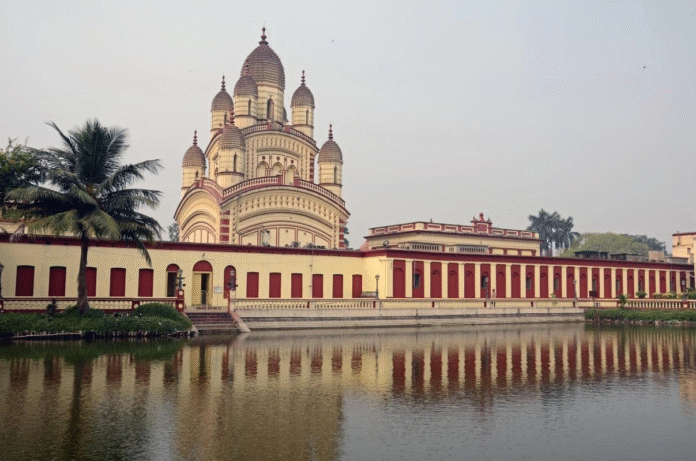
Nestled in a serene green stretch on the outskirts of Kolkata, the iconic Dakshineswar Kali Temple stands as a magnificent blend of spirituality, history, and architectural grandeur. Overlooking the sacred Hooghly River, this ochre-yellow marvel continues to attract devotees, tourists, historians, and spiritual seekers from around the world. Across the river, the peaceful presence of Belur Math adds to the divine atmosphere surrounding the temple complex.
Dakshineswar Temple: A Symbol of Faith Beyond Boundaries
The Dakshineswar Temple was commissioned by the legendary Bengal queen and philanthropist Rani Rashmoni. Known for her progressive outlook and deep devotion, Rani Rashmoni envisioned the temple as a spiritual sanctuary open to people of all religions, castes, and communities.
Her belief in universal spirituality transformed the temple into a symbol of communal harmony and inclusivity. Even today, the temple remains a place where people from diverse backgrounds gather in search of peace, devotion, and divine blessings.
Architectural Beauty of Dakshineswar Kali Temple
The temple complex reflects the elegance of traditional Bengali architecture and is built in the famous Nava-Ratna style. The three-storeyed main shrine is crowned with nine towering spires, creating an awe-inspiring skyline visible from afar.
Intricate carvings, ornate domes, colorful motifs, and mythological sculptures adorn the temple walls, making Dakshineswar Temple one of the finest examples of spiritual architecture in India.
At the heart of the complex lies the sanctum dedicated to Goddess Kali, worshipped here as Bhavatarini — “the redeemer of the universe.” The idol depicts Goddess Kali standing on the chest of Lord Shiva, both placed upon a thousand-petaled lotus crafted from pure silver.
Surrounding the central shrine are 12 smaller Shiva temples built in the traditional Aat Chala architectural style. These shrines house black stone Shivlings and attract thousands of devotees every day. The complex also includes the famous Radha-Krishna temple, popularly known as the Radha Kanta Temple.
The Divine Dream Behind Dakshineswar Temple
The history of Dakshineswar Temple began with a dream. Before embarking on a pilgrimage to Varanasi, Rani Rashmoni dreamt that Goddess Kali instructed her to build a grand temple on the banks of the Ganges and install an idol where devotees could worship and seek solace.
Inspired by this divine vision, she began searching for the perfect location. Eventually, she selected a 20-acre plot along the eastern bank of the river. Interestingly, portions of the land included a Muslim burial ground and property owned by a European named John Hasty. The construction of the temple on this land eventually transformed the site into a powerful symbol of unity among faiths.
It took nearly eight years for artisans and craftsmen to complete the temple. On May 31, 1855, during the sacred Snana Yatra festival, the idols were ceremonially installed amid grand celebrations attended by nearly one lakh Brahmins. The temple was formally named Sri Sri Jagadishwari Mahakali Temple.
Places to Visit Inside Dakshineswar Temple Complex
A visit to Dakshineswar Temple is incomplete without exploring its spiritually significant landmarks associated with Sri Ramakrishna Paramahamsa.
Sri Ramakrishna’s Room
This sacred room preserves memories and artifacts associated with Sri Ramakrishna, who spent nearly 14 years here before moving to the Kuthi Bari.
Kuthi Bari
The Kuthi Bari served as the residence of Rani Rashmoni, her daughter, and son-in-law. Today, it remains open to visitors interested in the temple’s rich heritage.
Nahabat Khanas
One of the Nahabat towers still resonates with the rhythmic sounds of dhak, dhol, and kashi during daily aarti ceremonies, enhancing the spiritual ambience.
Bakul Tala Ghat
Named after the Bakula tree, this ghat was the bathing place of Sarada Devi and the site where Sri Ramakrishna was initiated into Tantra Sadhana.
Panchavati
This sacred grove marks the place where Sri Ramakrishna undertook twelve years of intense meditation and spiritual practice.
Dakshineswar Temple Timings
- Opening Time: 6:30 AM
- Closing Time: 7:30 PM
Best Places to Visit Near Dakshineswar Temple
After visiting Dakshineswar Temple, travelers can explore some of Kolkata’s most iconic cultural landmarks.
Jorasanko Thakur Bari
The ancestral home of Rabindranath Tagore offers a glimpse into Bengal’s literary and artistic heritage.
Eden Gardens
Known as one of the most historic cricket stadiums in the world, Eden Gardens is a paradise for sports lovers.
College Street
Famous for its endless rows of bookstores and intellectual charm, College Street remains a cultural landmark for students, scholars, and book enthusiasts.
Why Dakshineswar Temple Is a Must-Visit Spiritual Destination
A journey to Dakshineswar Temple is far more than a pilgrimage. It is an experience that combines spirituality, architecture, history, culture, and peace. Whether you seek divine blessings, architectural beauty, or a deeper connection with India’s spiritual heritage, Dakshineswar Temple offers an unforgettable experience that lingers long after the visit ends.