

In a landmark move to safeguard one of India’s richest cultural landscapes, the Union Territory of Ladakh has declared 23 historically significant sites as Protected Monuments. The notification, approved by Lieutenant Governor Vinai Kumar Saxena under the Jammu and Kashmir Ancient Monuments Preservation Act, provides these heritage sites with legal protection, ensuring their conservation for future generations.
Nestled amidst the Himalayas, Ladakh is renowned not only for its breathtaking mountains but also for its centuries-old monasteries, ancient forts, rock carvings, caves, and archaeological treasures. For decades, many of these sites remained vulnerable to natural weathering, unregulated tourism, urban expansion, and lack of formal protection. With the latest notification, these invaluable monuments will now receive statutory safeguards, systematic conservation, and scientific restoration.
The protected sites represent the remarkable diversity of Ladakh’s heritage. They include ancient petroglyph fields, prehistoric rock carvings, centuries-old gompas (Buddhist monasteries), caves, forts, palaces, and other culturally significant structures spread across Leh, Kargil, Zanskar, Nubra, and surrounding regions. These monuments bear testimony to Ladakh’s role as a crossroads of civilisations, where Indian, Tibetan, Central Asian, and Himalayan cultures interacted for centuries.
Among the prominent sites receiving protection are historic forts such as Tingmosgang Fort, ancient cave complexes including the Saspol Caves, and several important petroglyph sites that preserve rock art dating back thousands of years. These carvings depict animals, hunting scenes, symbols, and inscriptions that provide rare insights into the lives, beliefs, and trade networks of the region’s earliest inhabitants.
The declaration is significant because protected monument status empowers the administration to regulate construction, prevent encroachments, prohibit vandalism, and undertake conservation work under a structured legal framework. It also enables authorities to document, restore, and promote these heritage assets while ensuring that development activities do not compromise their historical integrity.
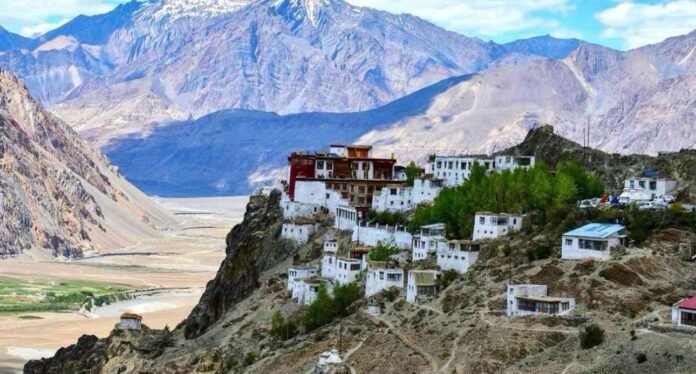
Ladakh’s cultural landscape is unlike any other in India. The region preserves living Buddhist traditions, medieval architecture, ancient trade routes, and prehistoric archaeological remains that together narrate a story spanning several millennia. Monasteries perched on rugged cliffs, royal palaces overlooking valleys, and rock engravings scattered along the Indus basin collectively reflect the region’s unique civilisational journey.
Beyond conservation, the initiative is expected to encourage responsible cultural tourism. By protecting these monuments and improving their management, Ladakh can offer visitors a deeper understanding of its history while creating sustainable opportunities for local communities through heritage-based tourism. Preservation efforts are also likely to strengthen academic research, archaeological exploration, and documentation of the region’s lesser-known historical treasures.
Heritage conservation is not merely about preserving old structures, it is about safeguarding identity, memory, and collective history. Every monastery, fort, inscription, and rock carving tells a story of the people who shaped Ladakh through centuries of faith, trade, art, and resilience.
The declaration of these 23 sites as Protected Monuments marks one of the most significant heritage conservation initiatives undertaken in Ladakh in recent years. As modern development reaches even the remotest Himalayan regions, this decision reflects a growing recognition that progress and preservation must go hand in hand. By protecting these monuments today, Ladakh is ensuring that its extraordinary civilisational legacy continues to inspire future generations and remains an enduring part of India’s cultural heritage.