

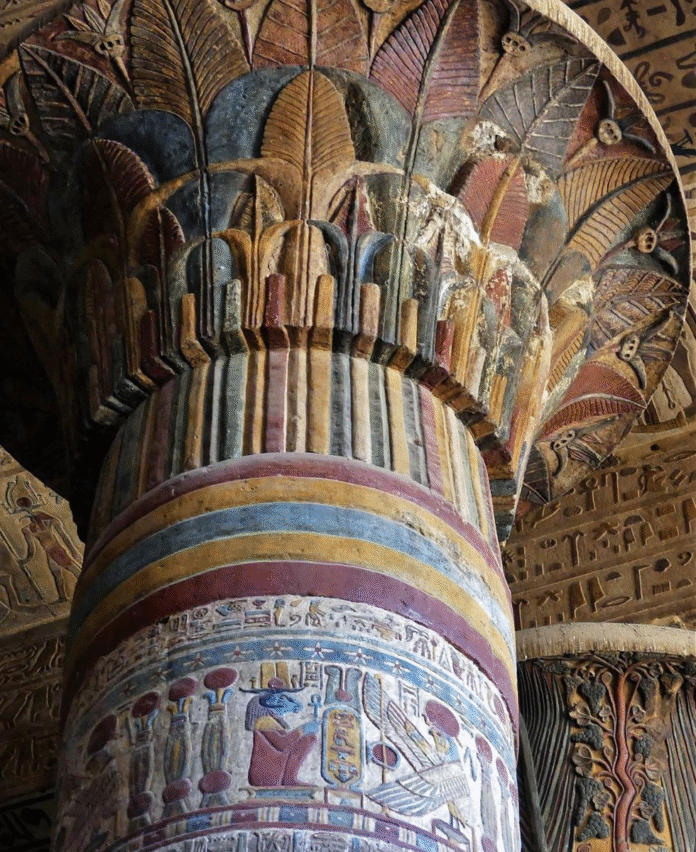
Hidden beneath layers of sand and silence for nearly 1,500 years, the Temple of Khnum at Esna rises today like a forgotten relic from another age. Sunlight now spills across its towering engraved columns, illuminating stories of gods, emperors, and civilizations that once met on the fertile banks of the Nile. Partially unearthed from a 9-metre-deep pit in southern Egypt, this remarkable Greco-Roman sanctuary is more than just an ancient temple, it is a striking symbol of cultural fusion, spiritual devotion, and artistic brilliance.
Dedicated to Khnum, the ram-headed god believed to have moulded humanity on a potter’s wheel, the temple was originally commissioned during the reign of Ptolemy VI Philometor. Later, Roman rulers expanded the structure, adding the magnificent hypostyle hall that remains the only excavated section open to visitors today.
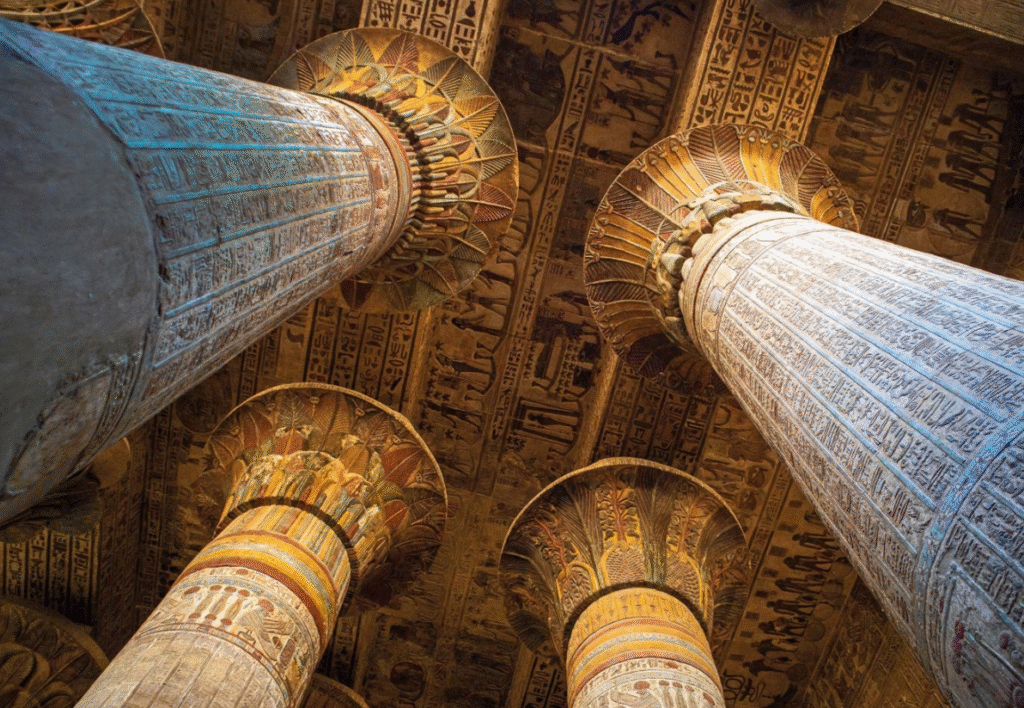
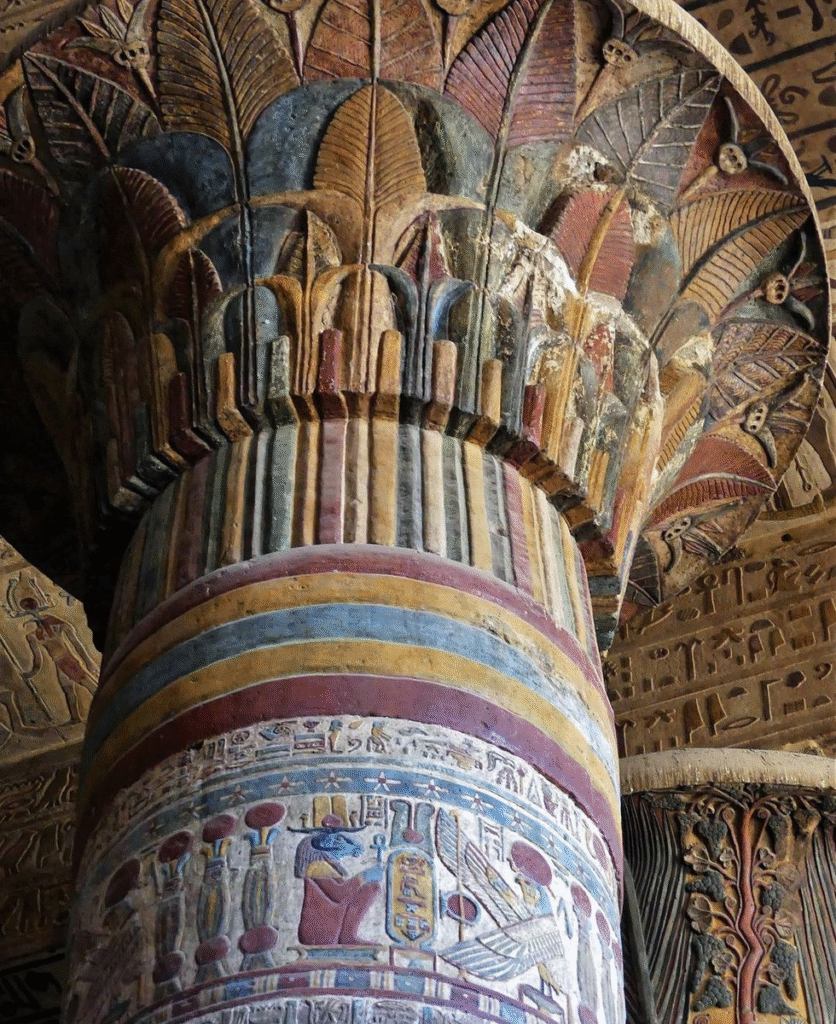
Approaching the temple feels almost theatrical. Descending into the excavated pit, travellers find the sandstone structure standing majestically in the middle like a layered wedding cake carved out of time itself. A central doorway opens into a grand vestibule supported by 18 elaborately decorated columns, each one uniquely crowned with capitals shaped like lotus buds, papyrus fans, palm leaves, and even bunches of grapes, a distinctly Roman artistic touch rarely seen in traditional Egyptian temples.
The ceiling above is equally captivating. Astronomical scenes stretch across the roof, while hieroglyphic inscriptions narrate sacred rituals and hymns dedicated to Khnum. Along the walls, Roman emperors appear dressed as Egyptian pharaohs, presenting offerings to local gods in an extraordinary display of political adaptation and religious diplomacy.
One particularly fascinating engraving depicts Commodus hunting fish in a papyrus marsh before presenting his catch to Khnum. It is an image that perfectly captures the temple’s unusual blend of Roman imperial imagery and Egyptian spirituality.
Yet the Temple of Khnum’s most compelling story lies not in its architecture, but in its message of inclusion. The Ptolemaic Greeks and later the Romans sought acceptance among Egyptians by embracing local beliefs, and nowhere is that effort more beautifully preserved than here. Two sacred hymns carved near the entrance celebrate Khnum not only as the creator of Egyptians, but of all humanity — including foreigners.
One inscription reads:
“All are formed on his potter’s wheel, their speech different in every region but the lord of the wheel is their father too.”
For a temple built more than two millennia ago, the sentiment feels surprisingly modern.
The ancient city of Esna itself later became known for its Nile barrage bridges constructed by the British in 1906 and the modern “Electricity Bridge” built in the 1990s. Today, the town serves as a peaceful stop along many Nile cruise routes, with travellers often taking half-day excursions to explore the temple’s extraordinary remains.
Unlike many major archaeological sites in Egypt, the Temple of Khnum offers a quieter, more intimate experience. Photography is allowed without additional fees, making it a paradise for history lovers and photographers alike. Visitors can purchase tickets near the Nile docking point before walking through Esna’s bustling shopping street toward the temple entrance , a journey that feels like travelling between centuries in just a few minutes.
Whether approached from a luxury Nile cruise or a road trip from Luxor, the Temple of Khnum rewards visitors with something increasingly rare in modern travel: the feeling of discovering a hidden world still echoing with the voices of the ancient past.