

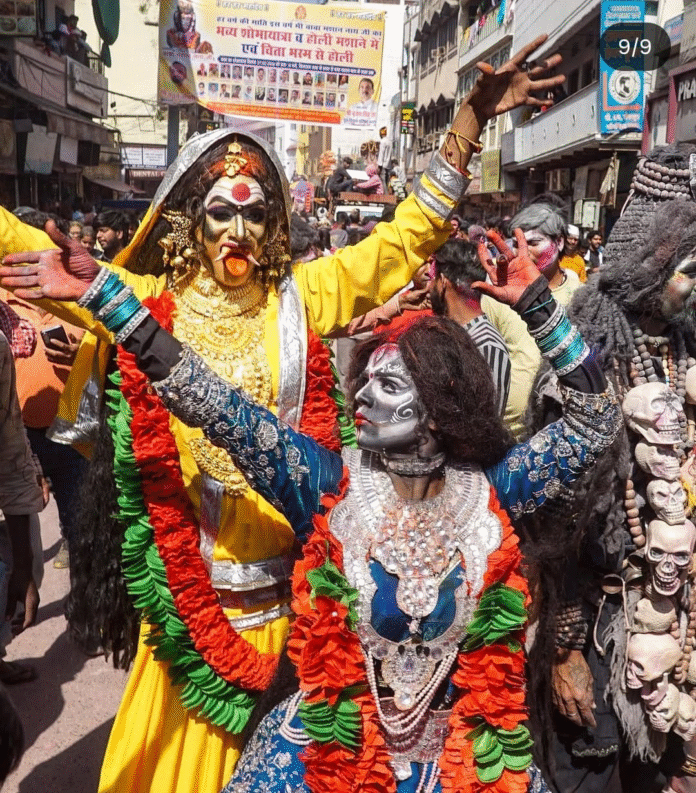
PC: (Ndtv india)
While most of India celebrates Holi with vibrant colors, water, and joy, the ancient city of Varanasi (Kashi) observes a completely different and profound version known as Masan ki Holi (also called Masaan Holi or Bhasma Holi). This extraordinary ritual takes place the day after Rangbhari Ekadashi (typically in late February or early March), primarily at Manikarnika Ghat – one of the world’s oldest and most sacred cremation grounds – and sometimes at Harishchandra Ghat.
Here, instead of gulal (colored powder), devotees use bhasma (sacred ashes from funeral pyres) to play Holi. The air fills with chants of “Har Har Mahadev,” the beats of damaru and nagaas, ecstatic dancing, and an otherworldly energy that transforms the somber cremation site into a space of spiritual ecstasy.
The Mythological Story: Lord Shiva’s Compassion for His Ganas
According to local beliefs and traditions rooted in Shaivism, on Rangbhari Ekadashi, Lord Shiva (Baba Vishwanath) brings Goddess Parvati to Kashi after their divine marriage, and the city celebrates a colorful Holi with gods, devotees, and celestial beings.
However, Shiva’s beloved attendants – his ganas (including ghosts, spirits, bhoot-preta, yakshas, and other ethereal beings) – could not join this joyous event. Moved by compassion and equality toward all his devotees, Lord Shiva visits the cremation ground (masan) the next day to celebrate Holi specially with them. Instead of colors, he uses the ashes from the burning pyres, symbolizing detachment, impermanence, and liberation.
This act is said to have started the tradition, making Masan ki Holi a direct expression of Shiva’s role as Mahakaal (the lord of time and death) and Shmashanavasi (the one who resides in cremation grounds). Ashes (bhasma) are extremely dear to Shiva, representing the ultimate truth that everything returns to dust.
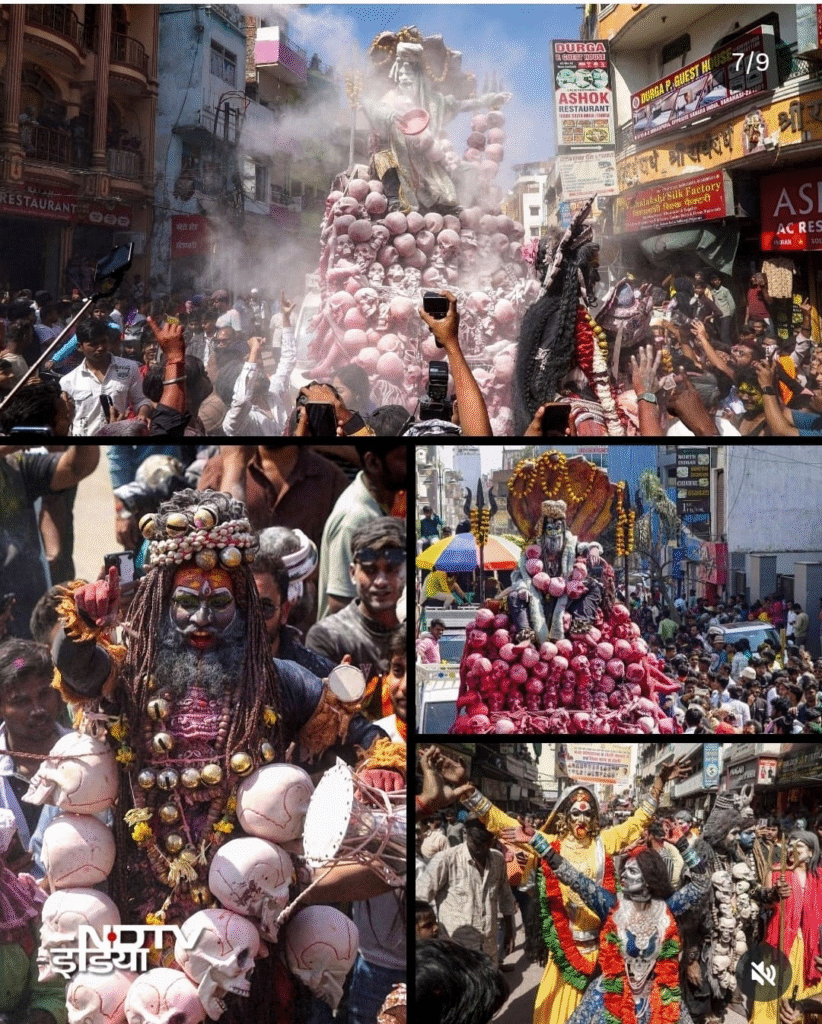
Deep Spiritual Significance: Embracing Mortality for Liberation
In Kashi, death is not feared but revered as a gateway to moksha (liberation). Playing Holi with funeral ashes reminds participants of life’s fleeting nature, detachment from material illusions (moh-maya), and the unity of life and death in the cosmic cycle.
It symbolizes vairagya (renunciation) and acceptance of mortality.
Devotees, including Naga Sadhus, Aghoris, and Shiva bhakts, smear ashes on their bodies, dance wildly, and celebrate fearlessly amid burning pyres.The atmosphere blends intense devotion, high energy, and philosophical depth – turning a place associated with sorrow into one of profound joy and spiritual awakening.
How the Tradition Unfolds Today
The celebration often begins with a grand aarti at nearby temples like Mashan Nath, followed by devotees gathering at the ghats. Ashes are applied, thrown in the air, and shared amid drumming, chanting, and tandava-like dances. While deeply spiritual for participants, the event has gained global attention through social media – sometimes leading to controversies over crowd behavior, sanctity of the ghat, or scriptural authenticity. Some traditionalists advocate limiting it to temple premises, but it remains a living expression of Kashi’s unique Shaivite philosophy.
Masan ki Holi is not just a festival – it’s a powerful reminder that even in the presence of death, life can be celebrated with devotion and fearlessness.