

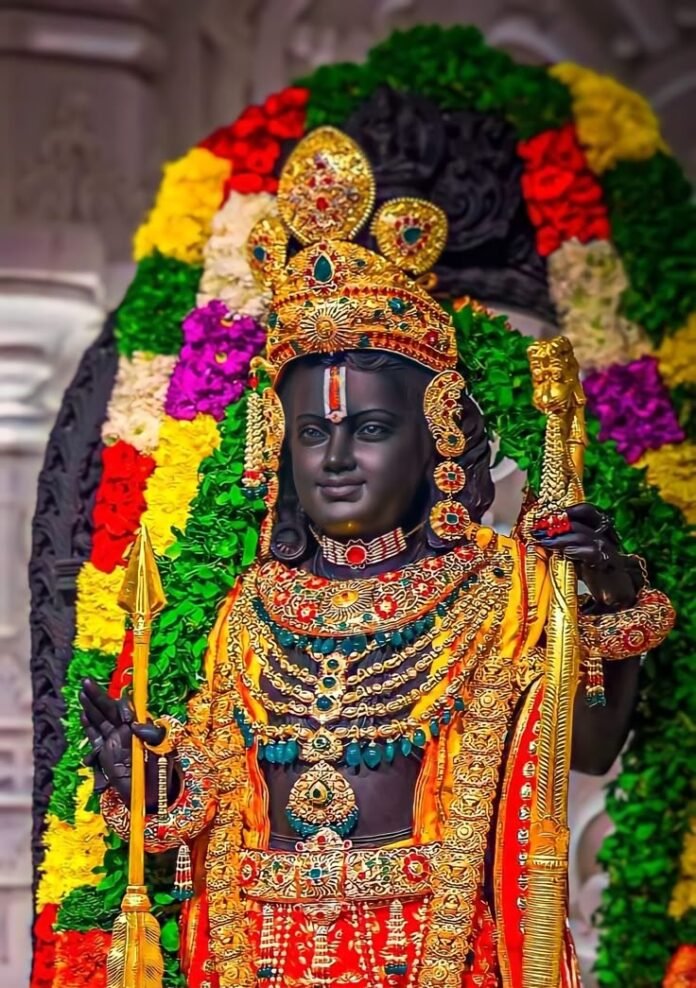
Ram Navami stands as one of the most revered festivals in the Hindu calendar, celebrating the divine birth of Lord Ram—the seventh incarnation of Lord Vishnu. More than a ritual observance, the festival embodies timeless values of righteousness, duty, and moral integrity, making it deeply relevant across generations.
The Auspicious Day and Divine Muhurat
Ram Navami is observed on the ninth day (Navami) of the bright fortnight (Shukla Paksha) in the lunar month of Chaitra, typically falling in March or April. It also marks the culmination of the spiritually significant period of Chaitra Navratri.
According to sacred traditions, Lord Rama was born during the Madhyahna period, particularly within the Abhijit Muhurat—a highly auspicious time around midday. It is at this precise moment that temples and households resonate with prayers, bells, and devotional chants, symbolizing the divine arrival.
The Sacred Birth in Ayodhya
The story of Lord Rama’s birth finds its most celebrated narration in the Ramayan, composed by the sage Valmiki.
In the ancient city of Ayodhya, King Dasharath longed for an heir to continue his lineage. Under the guidance of sage Rishyasringa , he performed the sacred Putrakameshti Yajna. The ritual bore fruit, blessing him with four sons—Rama, Bharata, Lakshmana, and Shatrughna.
Born to Queen Kaushalya, Rama’s arrival was not merely a royal celebration but a divine event, believed to restore balance and righteousness on earth. In the course of his life, he would go on to uphold dharma and ultimately defeat the demon king Ravan , symbolizing the triumph of good over evil.
The Deeper Significance of Ram Navami
While Ram Navami commemorates a birth, its essence lies in what Lord Rama represents. Revered as Maryada Purushottama—the ideal human being—he exemplifies the highest standards of ethical conduct and virtue.
His life reflects an unwavering commitment to dharma. Whether as a devoted son who accepted exile to honor his father’s word, a righteous king who placed his people above personal happiness, or a compassionate leader who ruled with justice and empathy, Lord Rama’s journey offers a profound moral framework.
In a rapidly changing world, these ideals continue to serve as a compass—reminding us that true greatness lies in character, discipline, and integrity.
Celebrations Across India: Devotion in Many Forms
Ram Navami is observed with devotion and cultural richness across India, with traditions that beautifully blend spirituality and community participation.
Fasting and prayer mark the day for many devotees, who immerse themselves in the recitation of sacred texts and the chanting of “Ram Naam.” Temples are adorned with flowers and lights, and idols of Lord Rama are worshipped with elaborate rituals.
A particularly significant moment is the Ram Janmotsav at midday, when the exact time of Lord Rama’s birth is celebrated. Devotees recreate the divine scene by placing an idol of infant Rama in a cradle, gently rocking it while singing hymns and bhajans.
In Ayodhya , the festival takes on a grand scale, drawing pilgrims from across the country. Ritual bathing in the Sarayu River, vibrant processions, and continuous devotional singing create an atmosphere of profound spiritual energy.
In parts of South India, the day is also marked by Sita-Rama Kalyanam, a ceremonial reenactment of the divine wedding of Rama and Sita, symbolizing harmony and sacred union. Meanwhile, in Maharashtra and other regions, community gatherings, kirtans, and readings of the Ramayana bring people together in shared devotion.
Lessons from the Life of Lord Ram
The enduring appeal of Lord Rama lies in the relatability of his life. Despite his divine nature, he lived as a human, faced trials, and made choices rooted in duty and righteousness.
His life teaches the value of placing duty above personal desire, maintaining composure in adversity, and honoring relationships with sincerity and respect. His leadership reflects empathy and accountability, showing that true power is guided by compassion and wisdom.
These lessons transcend religious boundaries, offering universal insights into living a meaningful and principled life.
A Timeless Source of Inspiration
Centuries have passed, yet the name of Lord Ram continues to resonate deeply in the hearts of millions. His story is not confined to scriptures—it lives on in traditions, prayers, literature, and everyday values.
Ram Navami thus becomes more than a festival; it is a moment of reflection and renewal. It invites individuals to look inward, to realign with the principles of truth and righteousness, and to strive toward a life of purpose and virtue.
Conclusion
As Ram Navami is celebrated with devotion and joy, it carries a message that is both simple and profound: that righteousness, when upheld with courage and humility, ultimately prevails.
In remembering Lord Ram, we are reminded of the path he walked—a path of dharma, sacrifice, and unwavering integrity. And in following that path, even in small ways, we bring his ideals to life in our own world.