

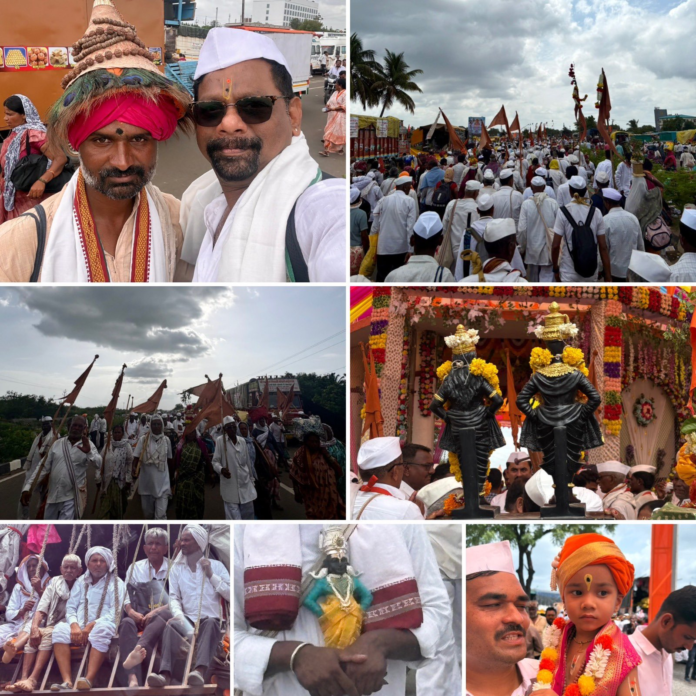
Every year, lakhs of devotees from across Maharashtra embark on one of India’s oldest and most revered spiritual journeys—the Pandharpur Wari. Spanning nearly 21 days, this centuries-old foot pilgrimage culminates at the Vitthal-Rukmini Temple in Pandharpur on Ashadhi Ekadashi, before concluding on Guru Purnima. More than a religious procession, the Wari is a vibrant celebration of faith, equality, devotion, and community that has endured for over 800 years.
A Centuries-Old Tradition of the Warkari Faith
The Wari is the most significant ritual of the Warkari Sampradaya, a devotional movement within Vaishnavism in Maharashtra dedicated to Lord Vitthal, a form of Lord Vishnu. Although four Wari pilgrimages are observed annually during the Hindu months of Chaitra, Magh, Ashadh, and Kartik, the Ashadhi Wari is by far the largest and most important.
Pilgrims, known as Warkaris, begin their journey from the samadhis (memorial shrines) of revered Marathi saints and walk hundreds of kilometres to Pandharpur. Carrying saffron flags, singing devotional hymns, and chanting the name of Lord Vitthal, they transform highways and village roads into moving festivals of devotion.
The pilgrimage concludes on Ashadhi Ekadashi, the eleventh day of the bright fortnight of Ashadh, when devotees offer prayers at the Vitthal temple.
The Legendary Palkhis of Sant Dnyaneshwar and Sant Tukaram
At the heart of the Pandharpur Wari are the Palkhi processions of Sant Dnyaneshwar and Sant Tukaram, two of Maharashtra’s greatest poet-saints.
Sant Dnyaneshwar, a 13th-century philosopher, authored the Dnyaneshwari, the celebrated Marathi commentary on the Bhagavad Gita. Sant Tukaram, a 17th-century saint-poet, composed thousands of abhangas—devotional verses dedicated to Lord Vitthal—and introduced the tradition of carrying the padukas (sacred sandals) of saints during the pilgrimage.
In the early 19th century, Haibatrao Baba Arphalkar reorganised the Wari by introducing decorated palanquins mounted on chariots and establishing a disciplined schedule, making the pilgrimage more structured while preserving its spiritual essence.
The Sacred Ritual of Ringan
One of the most anticipated traditions during the Wari is the Ringan ceremony, where a riderless horse runs through a designated path surrounded by devotees. Warkaris believe the horse is spiritually guided by the saint whose palkhi is part of the procession. The ritual symbolises the saint’s continued presence among devotees and draws thousands of participants each year.
Lord Vitthal and the Story of Pundalik
The pilgrimage culminates at the Vitthal-Rukmini Temple in Pandharpur, home to the iconic black stone idol of Lord Vitthal, depicted standing with his hands on his waist atop a brick.
According to legend, Lord Vitthal visited the devoted Pundalik, who was deeply engaged in serving his parents. Unable to leave his service, Pundalik respectfully asked the deity to wait by offering him a brick. Lord Vitthal stood patiently upon it, creating the distinctive posture in which he is worshipped today—a powerful symbol of humility, devotion, and the importance of filial duty.
More Than a Pilgrimage
The Pandharpur Wari is often described as a ‘Sohla’, meaning a grand festival. Villages along the route welcome pilgrims with fairs, floral decorations, cultural performances, and community feasts. The procession becomes a moving celebration of Maharashtra’s spiritual and cultural heritage.
Most Warkaris come from farming communities and travel in groups, relying on community kitchens and shared accommodation. Many spend nights under the open sky when shelters are full. Despite long walking distances, monsoon rains, and limited resources, their enthusiasm never fades. Continuous bhajans, kirtans, abhangas, and folk dances keep the spirit of the pilgrimage alive until they finally reach the sacred town of Pandharpur.
For millions, the Pandharpur Wari is not merely a journey to a temple, it is a timeless expression of faith, equality, perseverance, and collective devotion that continues to inspire generations.