

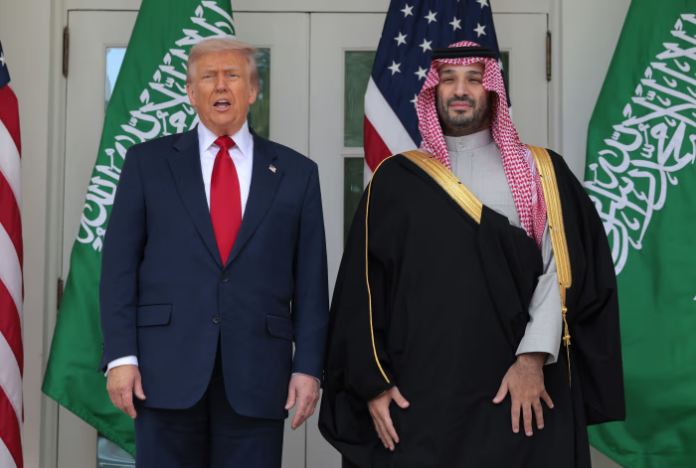
The United States has approved a 30-year civilian nuclear cooperation agreement with Saudi Arabia, marking a significant development in bilateral ties and the Middle East’s energy landscape. The agreement, approved on July 22, 2026, is based on Section 123 of the US Atomic Energy Act of 1954, which governs peaceful nuclear cooperation between the United States and foreign nations.
The US-Saudi nuclear deal is expected to pave the way for American companies to play a major role in developing Saudi Arabia’s civilian nuclear energy programme.
What is the US-Saudi Nuclear Deal?
The agreement is a 123 Agreement, the legal framework required for the United States to engage in civilian nuclear cooperation with another country.
Under the deal, the US can cooperate with Saudi Arabia in areas such as:
- Civilian nuclear reactors
- Nuclear fuel supply
- Transfer of nuclear technology
- Technical expertise and infrastructure development
- Nuclear safety and safeguards
The agreement could also allow the establishment of a uranium enrichment facility in Saudi Arabia, subject to the outcome of a joint feasibility study.
What is a 123 Agreement?
A 123 Agreement derives its name from Section 123 of the US Atomic Energy Act of 1954. It sets the legal conditions under which the United States can share civilian nuclear technology, equipment and materials with partner countries for peaceful purposes.
Countries entering into a 123 Agreement must comply with specified non-proliferation commitments and nuclear safeguards.
Key safeguards and concerns
Unlike several previous US nuclear agreements, the Saudi deal does not include the “Gold Standard” safeguards, which prohibit partner countries from enriching uranium or reprocessing spent nuclear fuel.
The agreement also does not require Saudi Arabia to adopt the International Atomic Energy Agency’s (IAEA) Additional Protocol, which provides inspectors with broader powers to verify that nuclear programmes remain exclusively peaceful.
These omissions have raised concerns among non-proliferation experts and some lawmakers.
Saudi Arabia’s nuclear programme
Saudi Arabia has been working to develop a civilian nuclear energy programme as part of its long-term energy diversification strategy.
In 2024, the kingdom withdrew from the IAEA’s Small Quantities Protocol, enabling full implementation of its Comprehensive Safeguards Agreement. However, it has yet to sign the IAEA Additional Protocol. The latest agreement builds on a preliminary nuclear cooperation framework signed by the United States and Saudi Arabia in Riyadh in 2025.
Congressional review
The agreement will now be submitted to the US Congress for review. Under the provisions of the Atomic Energy Act, Congress is not required to formally approve the agreement for it to take effect unless lawmakers pass legislation blocking it within the review period.
The deal has sparked debate in Washington, with some Republican and Democratic lawmakers, as well as Israeli officials, expressing concerns that Saudi Arabia’s nuclear programme could eventually create proliferation risks if uranium enrichment capabilities are developed.
Why the deal matters
The agreement is expected to:
- Strengthen US-Saudi strategic relations
- Expand American participation in Saudi Arabia’s nuclear energy sector
- Support Saudi Arabia’s energy diversification plans
- Boost US nuclear technology exports
- Influence the geopolitical balance in the Middle East
At the same time, the absence of stricter non-proliferation safeguards is likely to remain a key point of debate among policymakers and international security experts.
US-Saudi Nuclear Deal: Key Highlights
- Agreement: 30-year US-Saudi Civil Nuclear Cooperation Agreement
- Approved on: July 22, 2026
- Legal Basis: Section 123 of the US Atomic Energy Act of 1954
- Purpose: Peaceful civilian nuclear cooperation
- Includes: Nuclear technology, reactors, fuel supply and infrastructure development
- Possible Addition: Uranium enrichment facility in Saudi Arabia (subject to feasibility study)
- Does Not Include: Gold Standard safeguards or IAEA Additional Protocol
- Next Step: Congressional review in the United States
The US-Saudi nuclear deal is expected to reshape civilian nuclear cooperation in the Middle East while intensifying discussions over nuclear safeguards, regional security and non-proliferation.