

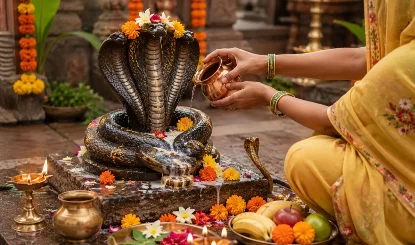
Celebrated during Shravan, Nag Panchami honours serpent deities and reflects an ancient Indian tradition of respecting nature and living beings.
Nag Panchami is a traditional Hindu festival dedicated to the worship of Nagas, or serpent deities. It is celebrated on the fifth day of the bright fortnight, or Shukla Paksha, of the lunar month of Shravan, which generally falls in July or August. For devotees, the festival is associated with prayers for protection, prosperity and well-being. At the same time, it carries a deeper message about humanity’s relationship with nature.
Several stories from Hindu tradition are associated with Nag Panchami. One of the most significant comes from the Mahabharata, which tells of King Janamejaya’s Sarpa Satra, a massive snake sacrifice undertaken to destroy the serpent race. Sage Astika is believed to have intervened and persuaded the king to stop the sacrifice, thereby saving the serpents. The day is traditionally associated with this act of protection.
Another popular legend connects Nag Panchami with Lord Krishna and the serpent Kaliya. According to the story, Kaliya had poisoned the waters of the Yamuna and posed a threat to those living nearby. Krishna confronted and subdued the serpent, eventually sparing him and asking him to leave the Yamuna. The story is often interpreted as a triumph over danger while also allowing space for coexistence.
Snakes also hold a significant place in Hindu iconography through their association with Lord Shiva. Shiva is traditionally depicted with the serpent Vasuki around his neck, giving the serpent a sacred place within Shaivite traditions. Serpents are also associated with several other deities and are regarded as powerful beings in Hindu mythology.
On Nag Panchami, devotees traditionally worship images or representations of Nagas and offer prayers, flowers, milk and other offerings according to regional customs. People seek protection from snakebites, misfortune and calamities, while praying for the well-being of their families. The manner of celebration varies across different parts of India, with local traditions adding their own rituals and beliefs.
The festival also has a strong connection with agriculture. Nag Panchami falls during the monsoon, a period when snakes are more likely to emerge from their shelters. In rural and farming communities, snakes have long been recognised for their role in controlling rodents and protecting crops. Their presence in agricultural ecosystems therefore has practical as well as ecological importance.
This connection gives Nag Panchami a wider environmental significance. By giving a feared creature a sacred identity, the tradition encourages respect for life and recognises that every species has a place in the natural world. In contemporary times, this message can also be understood as a reminder that wild snakes should not be captured, handled or harmed in the name of celebration, but allowed to remain safely in their natural habitats.
Nag Panchami, therefore, brings together mythology, devotion, agriculture and ecology. Its stories speak of divine power and protection, while its seasonal context highlights the interdependence between people, animals and the environment. More than a festival centred on serpent worship, it represents an enduring cultural idea, that human life flourishes when it respects and coexists with the natural world.