

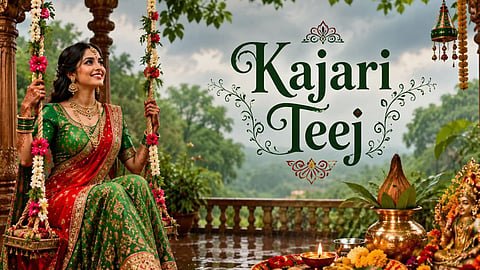
Kajari Teej, also known as Badi Teej, Kajali Teej or Satudi Teej, is a traditional Hindu festival celebrated primarily by women during the monsoon season. It falls on the third day of the dark fortnight, or Krishna Paksha, in the Hindu month of Bhadrapada. The festival combines religious devotion, traditional rituals, folk music and the colourful customs associated with the rainy season.
The name Kajari or Kajali is believed to be associated with the traditional folk singing style known as Kajri, which developed particularly in parts of Uttar Pradesh and neighbouring regions. Kajri songs are closely connected with the monsoon and often express themes of love, longing, separation and the emotions of women awaiting the return of their loved ones. Over time, these songs became an important cultural element of Kajari Teej celebrations.
For married women, Kajari Teej holds particular religious significance. Women traditionally observe a fast seeking the well-being, prosperity and long life of their husbands, while unmarried women may also observe the vrat with prayers for a suitable life partner. Depending on family and regional traditions, the fast may be Nirjala, in which neither food nor water is consumed, or Phalahari, in which fruits and certain permitted foods are taken.
One of the distinctive rituals associated with Kajari Teej is the worship of Neemdi, represented by a branch or symbolic form of the neem tree. The Neemdi is planted and decorated before being worshipped as a representation of Goddess Parvati. Women perform the prescribed puja, offer flowers and other items, and listen to the traditional Kajari Teej vrat katha. The rituals are centred on devotion to Goddess Parvati and the sacred bond of marriage.
The festival also brings together a rich collection of traditional customs. Women dress in colourful traditional clothes, with green and red being particularly associated with monsoon and marital festivities. Mehendi is applied on hands, bangles are worn and women gather with family and friends to sing traditional songs. In many communities, these gatherings create a lively atmosphere while preserving folk traditions that have been passed down through generations.
Moonrise has an important place in the observance of Kajari Teej. Women who keep the fast traditionally complete it after sighting the moon and offering prayers. Sattu, generally prepared from roasted gram flour, is an important food associated with the festival and is traditionally consumed after the fast is completed. Regional customs may vary, with families following their own methods of worship and fasting.
Beyond its religious rituals, Kajari Teej reflects the cultural relationship between the Indian monsoon and everyday life. The arrival of rain has historically been celebrated through music, seasonal foods, colourful clothing and community gatherings. Kajri folk songs, in particular, preserve the emotional world of rural and semi-rural communities, giving voice to the joy, longing and anticipation associated with the rainy season.
Kajari Teej therefore represents more than a day of fasting. It is a celebration of faith, marital devotion, womanhood and India’s rich folk traditions. Through its rituals, stories, music and customs, the festival continues to connect contemporary celebrations with generations of cultural memory, keeping the spirit of the monsoon alive in homes and communities.