

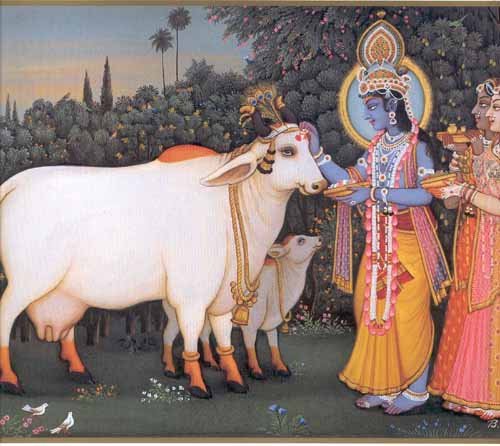
Gopashtami is an important Hindu festival dedicated to the worship of cows, calves and Lord Krishna. It is celebrated on the eighth day (Ashtami) of the Shukla Paksha (waxing phase of the Moon) in the month of Kartik, according to the Hindu lunar calendar. The festival holds special significance in the Braj region, particularly in Vrindavan, Mathura and surrounding areas, where Lord Krishna spent his childhood.
The festival celebrates the deep connection between Lord Krishna and cows, which are considered sacred and revered as Go-Mata in Hindu tradition. It also highlights the values of compassion, gratitude, service and respect for all living beings.
According to Hindu beliefs and the stories associated with Lord Krishna’s childhood, Gopashtami marks the day when Nanda Maharaj, Krishna’s father, entrusted Krishna and his elder brother Balarama with the responsibility of taking care of full-grown cows. Until then, the young brothers had been engaged in tending calves. As they grew older, they were allowed to accompany the cows to the forests and pastures of Vrindavan.
This occasion is considered an important milestone in Krishna’s childhood. Through his association with cowherding, Krishna came to be lovingly known as Gopala, meaning the protector of cows, and Govinda, a name associated with his role as the guardian and caretaker of cows. His childhood pastimes with cows, calves and cowherd friends remain an important part of Hindu devotional traditions.
Cows hold a special place in Hindu culture and are regarded as symbols of motherhood, nourishment, prosperity and selfless service. They provide milk and other products that have traditionally been an important part of Indian households and religious practices. According to Hindu beliefs, serving and protecting cows is considered a sacred act and a form of devotion to Lord Krishna. Gopashtami therefore reminds devotees of the importance of caring for animals and respecting their contribution to human life.
On this day, devotees wake up early, take a holy bath and begin the celebrations by worshipping cows and calves. They visit gaushalas (cow shelters), temples and other places where cows are cared for. The animals are bathed, groomed and decorated with colourful clothes, flower garlands, turmeric, kumkum and sandalwood paste. In some traditions, their horns are also painted as part of the celebration.
One of the most important rituals of Gopashtami is Gau Seva, or serving cows. Devotees offer fresh green grass, fodder, jaggery, grains and other food items to cows as a mark of respect and devotion. Many people also donate food, medicines and other essential supplies to gaushalas to support the care and protection of abandoned and stray cattle.
Another traditional practice is performing pradakshina, or circumambulation, around cows as a gesture of reverence. Devotees seek blessings for the well-being, happiness and prosperity of their families. Special prayers, bhajans and kirtans dedicated to Lord Krishna are organised in temples and communities. In the evening, devotees perform aarti and offer prayers, followed by prasad and community gatherings.
Gopashtami is celebrated with particular devotion in Mathura and Vrindavan. Temples organise special worship, devotional programmes and celebrations depicting the childhood pastimes of Krishna. At many places, cows are decorated and worshipped, while devotees participate in religious processions and community activities. The celebrations at Krishna temples attract devotees from different parts of the country.
Beyond its religious significance, Gopashtami carries an important message about kindness towards animals, environmental responsibility and the value of sustainable living. It encourages people to recognise the importance of cattle in India’s agricultural and cultural traditions and promotes compassion towards all living creatures.
Gopashtami is therefore not just a festival of worship but also an occasion to remember Lord Krishna’s deep bond with nature and animals. Through its rituals and traditions, the festival celebrates the values of protection, gratitude and service, reminding devotees that caring for animals is an essential expression of compassion and devotion.