
Home Blog Page 82

Legoland Deutschland to Open World’s First LEGO Harry Potter Land and Themed Hotel. Watch Pics…

0

A ground-breaking new attraction is coming to Germany that will excite fans of the wizarding world like never before. Merlin Entertainments and Warner Bros. Discovery Global Experiences have announced plans to build the world’s first LEGO Harry Potter land and the first ever Harry Potter themed guest accommodation at LEGOLAND Deutschland Resort in Günzburg, Bavaria. This innovative project will bring the magical world of Hogwarts and its surroundings to life in dazzling LEGO brick form, offering a distinct experience that blends fantasy, creativity and family entertainment like no other. 

LEGOLAND Deutschland Harry Potter land

The new land is being developed as part of a strategic partnership between Merlin Entertainments, the company behind LEGOLAND parks, and Warner Bros. Discovery Global Experiences, the rights holder for the Harry Potter franchise. For the first time in the world, visitors will be able to explore a fully themed Harry Potter environment built with LEGO bricks, merging two iconic brands in a single immersive landscape. The themed land is expected to feature familiar magical settings and characters interpreted through the vibrant and playful lens of LEGO. 

Legoland Deutschland to Open World’s First LEGO Harry Potter Land and Themed Hotel. Watch Pics...

LEGOLAND Deutschland themed Harry Potter hotel

Alongside the themed land, the resort will include the world’s first Harry Potter themed hotel accommodation. Designed to extend the magic beyond the day’s attractions, this unique lodging will allow guests to stay in rooms inspired by the wizarding universe, creating a fully immersive experience from morning through night. While full design details are yet to be revealed, the combination of land and themed hotel marks a significant expansion of LEGOLAND Deutschland’s offerings and sets a new benchmark for themed hospitality. 

Legoland Deutschland to Open World’s First LEGO Harry Potter Land and Themed Hotel. Watch Pics...

What makes this development unique

What distinguishes this project from other Harry Potter attractions around the world is its integration with LEGO. Although theme parks like Universal’s Wizarding World of Harry Potter in Florida, Japan and other locations have long offered rides and environments inspired by the books and films, none has combined that storytelling with LEGO’s creative world in a dedicated, large-scale land and guest accommodation. LEGOLAND’s approach aims to appeal to both LEGO enthusiasts and lovers of Rowling’s wizarding world, creating a fresh look at familiar magic. 

Legoland Deutschland to Open World’s First LEGO Harry Potter Land and Themed Hotel. Watch Pics...

Impact on tourism and family travel

The announcement of the LEGO Harry Potter land and hotel is expected to have a wider impact on tourism in Bavaria and Europe’s family travel market. LEGOLAND Deutschland already attracts visitors from across Europe, and the addition of a globally unique attraction will likely draw even more international guests, contributing to the local economy and reinforcing Germany’s position as a major destination for themed entertainment. The project is also expected to appeal to multi-generational travellers, offering experiences that combine storytelling, play, innovation and cultural imagination. 

Plans and expected timeline

Details about the specific attractions, rides, shows and hotel features remain limited as the project is still in early development. The themed land and hotel are expected to be completed over the next few years, with announcements from LEGOLAND Deutschland and partners anticipated as planning progresses. When finished, this new Harry Potter destination will sit alongside other global wizarding attractions and offer visitors a distinctly creative way to experience the magic. 

Why the world is watching this opening

The announcement has sparked excitement among fans, families and travel enthusiasts worldwide. By fusing the globally beloved Harry Potter universe with LEGO’s playful and imaginative aesthetic, the project promises something truly distinctive. It reflects broader trends in themed entertainment where iconic media franchises are transformed into interactive, real-world experiences that engage visitors on multiple sensory levels. 
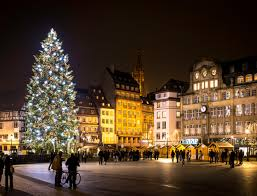
Christmas Trees: From Strasbourg to Dortmund, Know Most Iconic Names Across the World

0

Every December, Christmas trees become the visual heart of celebrations across the world. Set in historic squares, modern city centres and festive markets, these trees are not just decorations but cultural landmarks that draw millions of visitors. From Europe’s oldest holiday traditions to modern spectacles, these iconic Christmas trees represent the spirit of the festive season in their cities.

Strasbourg Christmas tree

Strasbourg’s Christmas tree is considered one of the oldest and most traditional in Europe. Located at the city’s main square, it forms the centre of the famous Christmas market that has existed for centuries. The tree reflects the region’s deep connection to Christmas customs, drawing visitors who come to experience Alsatian traditions, festive food and historic surroundings during the winter season.

Dortmund Christmas tree

Dortmund is home to one of the tallest Christmas trees in the world. Constructed using hundreds of individual fir trees, the structure dominates the city’s main square every December. The tree is surrounded by one of Germany’s largest Christmas markets, making it a major attraction for both locals and tourists looking to experience the festive atmosphere.

Tallinn Christmas tree

Tallinn’s Christmas tree stands in the heart of the city’s medieval old town. With cobbled streets and historic buildings as its backdrop, the tree adds to the city’s winter charm. It plays an important role in local celebrations and has become a symbol of Tallinn’s long standing Christmas traditions that date back several centuries.

Vienna Christmas tree

Vienna’s Christmas tree is set against the city’s grand architectural landmarks. The tree complements the festive markets that appear across the city during December. Known for its elegant decorations, it reflects Vienna’s blend of classical culture and seasonal celebration, attracting visitors who enjoy music, food and winter festivities.

Prague Christmas tree

Prague’s Christmas tree is placed in one of the city’s busiest squares and becomes a focal point during the holiday season. Surrounded by traditional stalls and performances, it adds warmth to the cold winter evenings. The tree enhances Prague’s festive atmosphere and remains an important part of the city’s December celebrations.

New York Christmas tree

The Christmas tree at Rockefeller Centre in New York is among the most recognised in the world. Its annual lighting ceremony marks the beginning of the holiday season in the city. The tree attracts large crowds and global attention, turning it into a symbol of Christmas celebrations in the United States.

Why iconic Christmas trees matter

These Christmas trees go beyond decoration. They bring people together, support local traditions and create shared moments of celebration. Each tree reflects the character of its city while reminding people across the world of the joy, warmth and unity associated with the festive season.

Guwahati Airport becomes India’s first nature themed airport, redefining how travellers experience the North East

0

Guwahati has added another first to its growing list of milestones. Lokpriya Gopinath Bordoloi International Airport has officially emerged as India’s first nature themed airport, designed to reflect the rich biodiversity, landscapes and cultural soul of the northeast. The transformation is not just cosmetic but deeply rooted in showcasing Assam’s natural identity to every traveller who passes through its gates.

This new approach positions the airport as more than a transit point. It becomes a visual and sensory introduction to the region itself.

An airport inspired by forests rivers and wildlife

The nature theme draws heavily from Assam’s lush greenery, river systems and iconic wildlife. From interiors that reflect forest textures to artwork inspired by local flora and fauna, the airport mirrors the ecological richness of the Brahmaputra valley. Elements inspired by rainforests, wetlands and grasslands create a calm, immersive atmosphere that immediately sets it apart from conventional airport designs.

The idea is to ensure that visitors feel connected to the region even before they step outside the terminal.

Guwahati Airport becomes India’s first nature themed airport, redefining how travellers experience the North East

Celebrating Assam’s identity through design

The revamped airport integrates local culture with natural aesthetics. Murals, installations and design elements highlight Assam’s traditional art forms while staying aligned with the broader nature theme. The use of earthy colours, organic shapes and sustainable materials reflects a conscious effort to blend modern infrastructure with regional identity.

This design philosophy ensures that the airport tells a story of the land, its people and its environment in a subtle yet impactful way.

Guwahati Airport becomes India’s first nature themed airport, redefining how travellers experience the North East

A gateway that promotes sustainability awareness

Beyond visual appeal, the nature themed concept also signals a shift towards sustainability awareness. By foregrounding nature, the airport encourages conversations around conservation and environmental responsibility. It aligns with global trends where airports are increasingly being designed as green, community focused spaces rather than purely commercial hubs.

This move also strengthens Assam’s image as a state deeply connected to nature and ecological balance.

Guwahati Airport becomes India’s first nature themed airport, redefining how travellers experience the North East

Why this matters for tourism and the northeast

As the primary gateway to the northeast, Guwahati airport plays a crucial role in shaping first impressions. A nature themed airport enhances the tourism narrative by positioning the region as unique, serene and culturally rich. For international and domestic travellers alike, it sets the tone for exploring destinations such as Kaziranga, Majuli, Meghalaya and Arunachal Pradesh.

The initiative also reinforces the northeast’s growing prominence in India’s tourism and infrastructure landscape.

Setting a new benchmark for Indian airports

With this transformation, Guwahati airport sets a precedent for how infrastructure can reflect local identity rather than adopting uniform global designs. It shows that airports can be functional while still being expressive, rooted and meaningful.

India’s first nature themed airport is not just about aesthetics. It is about storytelling, sustainability and pride in regional heritage, all coming together at one of the country’s most important gateways to the east.

BlueBird Satellite Launch Set for December 24

0

India’s heavy-lift launch vehicle LVM-3 is set to place a major US commercial satellite into orbit on December 24, marking another milestone in the country’s expanding role in global space commerce. The mission will be executed by Newspace India Limited under a commercial agreement, highlighting India’s growing credibility as a launch service provider for high-mass foreign satellites.

Launch Schedule and Mission Profile

India Space Research Orgnisation has confirmed that the LVM3-M6 mission will lift off at 8.54 am from the second launch pad at Satish Dhawan Space Centre. The mission was initially planned for mid-December but was rescheduled to December 24 following internal readiness assessments. The launch will place the BlueBird Block-2 satellite, also referred to as BlueBird-6, into low Earth orbit.

Role of NSIL and LVM-3 Vehicle

NewSpace India Limited is responsible for executing the launch under a commercial contract. While the PSLV has historically been India’s workhorse for foreign satellite launches, the LVM-3 has emerged as a platform for heavier payloads. Its commercial debut in 2022 demonstrated India’s capability to launch satellites weighing well over five tonnes, expanding its addressable market in the global launch sector.

BlueBird Satellite Capabilities

Developed by AST SpaceMobile, the BlueBird Block-2 satellite weighs around 6,500 kg and forms part of a planned constellation designed to deliver direct-to-smartphone cellular broadband globally. The satellite features nearly 2,400 square feet of phased-array antennas, making it the largest commercial array deployed in low Earth orbit. Each satellite supports high processing bandwidth and is designed to deliver high-speed connectivity without specialised ground hardware.

What to Note ?

  • LVM-3 is India’s heavy-lift launch vehicle capable of carrying over 8 tonnes to low Earth orbit.
  • NSIL is the commercial arm of ISRO handling foreign launch contracts.
  • Low Earth orbit typically ranges from 160 km to 2,000 km above Earth.
  • Phased-array antennas allow electronic beam steering without moving parts.

Strategic Significance for India’s Space Programme

The mission underscores India’s transition from a launch-dependent nation to a trusted provider for advanced international satellites. Launching a high-value US commercial satellite using LVM-3 reinforces India’s position in the competitive global space economy and signals growing confidence in its heavy-lift launch capabilities.

International Meditation Day 2025: Why December 22 is a Reminder to Pause, Breathe and Reset the Mind…

0

December 22 is observed globally as International Meditation Day, a moment in the calendar that invites people to slow down in a fast moving world. Recognised by the United Nations, the day highlights meditation as a powerful tool for mental clarity, emotional balance and inner wellbeing. At a time when stress, anxiety and digital overload define everyday life, meditation is no longer seen as a spiritual luxury but as a practical life skill.

Rooted in ancient traditions and now backed by modern science, meditation continues to shape how people heal, grow and reconnect with themselves.

Meditation as a timeless practice across civilizations

Meditation is not a modern trend. Its roots stretch back thousands of years to ancient Indian, Buddhist, Taoist and yogic traditions. In Indian philosophy, meditation was seen as a path to self realisation and inner awakening. Texts like the Vedas, Upanishads and Bhagavad Gita speak of dhyana as a way to quiet the mind and understand one’s true nature.

Across cultures, meditation was practised by monks, sages and seekers not to escape life, but to understand it better. Over time, this ancient wisdom crossed borders and evolved into multiple forms that are now practised worldwide.

Why meditation is considered a form of therapy

In today’s context, meditation is widely recognised as a mind body therapy. It is used alongside clinical treatments for stress, depression, anxiety and trauma. Unlike medication, meditation trains the mind to observe thoughts rather than react to them, creating emotional resilience over time.

Therapies such as mindfulness based stress reduction and meditation guided cognitive therapy are now integrated into healthcare systems globally. Meditation works by calming the nervous system, lowering cortisol levels and improving emotional regulation.

The science backed benefits of meditation

Regular meditation has been linked to improved focus, better sleep and reduced stress. Studies show that consistent practice can lower blood pressure, strengthen immunity and enhance brain function. It also improves self awareness, helping individuals respond thoughtfully instead of reacting impulsively.

On an emotional level, meditation cultivates patience, empathy and inner stability. People who meditate often report feeling more grounded, optimistic and emotionally balanced even during difficult situations.

Simple meditation tips for beginners

For those starting out, meditation does not require long hours or complex techniques. Even five to ten minutes a day can make a difference. Beginners should start by sitting comfortably, closing their eyes and focusing on their breath. Thoughts will come and go, and that is normal. The practice lies in gently bringing attention back to the breath without judgement.

Consistency matters more than duration. Meditating at the same time each day helps build a habit. Beginners can also explore guided meditations to stay focused and relaxed.

Different forms of meditation and what they offer

Meditation comes in many forms, each offering unique benefits. Mindfulness meditation focuses on present moment awareness. Mantra meditation uses sound or repetition to anchor attention. Loving kindness meditation nurtures compassion towards oneself and others. Movement based practices like yoga meditation combine physical flow with mental stillness.

Choosing the right form depends on personal comfort and intention. There is no one size fits all approach.

The mythological and spiritual significance of meditation

In mythology, meditation is often depicted as a gateway to higher wisdom. Hindu deities, Buddhist monks and ancient sages are portrayed in deep meditation, symbolising mastery over the mind. Meditation was believed to align the individual with cosmic energy and universal truth.

These spiritual narratives reinforced meditation as a sacred practice that connects the human mind with something larger than itself, giving it both philosophical and emotional depth.

Why International Meditation Day matters today

International Meditation Day serves as a reminder that inner peace is not a destination but a daily practice. In a world driven by speed and productivity, meditation offers stillness without withdrawal and awareness without judgment.

By acknowledging this day, the world recognises that mental wellbeing is as essential as physical health. Meditation stands as a simple yet profound reminder that sometimes, the most powerful progress begins by slowing down.

Srinivasa Ramanujan Birth Anniversary: Why December 22 is Celebrated as National Mathematics Day in India

0

Every year on December 22, India remembers one of its greatest intellectual minds Srinivasa Ramanujan. Born in 1887, Ramanujan transformed the world of mathematics despite having no formal training, limited resources and a life cut tragically short. His birthday is celebrated as National Mathematics Day to honour not just his genius, but the spirit of curiosity, perseverance and pure intellect that continues to inspire students, scientists and mathematicians across the globe.

From a modest background in Tamil Nadu to global recognition, Ramanujan’s life remains one of the most extraordinary stories in scientific history.

A childhood shaped by numbers not privilege

Srinivasa Ramanujan was born on December 22, 1887, in Erode, Tamil Nadu, and raised in the town of Kumbakonam. Coming from a financially struggling Brahmin family, his childhood was marked by poverty rather than privilege. From a very young age, Ramanujan showed an unusual fascination with numbers. By the age of 12, he had mastered advanced trigonometry on his own and began developing original mathematical ideas without access to formal textbooks or guidance.

Despite his brilliance, Ramanujan struggled in traditional academics. He failed college exams not because he lacked intelligence, but because he focused obsessively on mathematics while ignoring other subjects. This cost him scholarships and degrees, pushing him deeper into financial hardship.

A self taught genius who rewrote mathematical thinking

What set Ramanujan apart was not just intelligence but originality. He did not learn mathematics through structured methods. Instead, he discovered formulas intuitively and recorded thousands of results in notebooks, many without proofs. His work covered number theory, infinite series, continued fractions and mathematical analysis.

Some of his most famous contributions include the Ramanujan prime, Ramanujan theta function, mock theta functions and ground-breaking work on partition theory. Even today, mathematicians continue to discover new meanings and applications hidden within his formulas, decades after his death.

His Intuition was so advanced that many of his results were verified by Western mathematicians years later, proving that his insights were not guesses but deep mathematical truths.

The letter that changed the course of his life

In 1913, living in extreme poverty, Ramanujan wrote a letter to British mathematician G H Hardy at Cambridge University. The letter contained over 100 theorems, identities and equations. Hardy immediately recognised that the work could not belong to an ordinary mind.

This letter led to Ramanujan being invited to Cambridge in 1914, where he collaborated with Hardy and other mathematicians. Despite cultural shock, health issues and racial prejudice, Ramanujan produced some of his most influential work during this period and was elected a Fellow of the Royal Society in 1918, one of the highest scientific honours.

A short life marked by extraordinary impact

Ramanujan’s health deteriorated rapidly due to poor living conditions, stress and illness. He returned to India in 1919 and passed away in 1920 at the age of just 32. In his short lifetime, he left behind nearly 4000 mathematical results, many of which were far ahead of their time.

What makes his story even more remarkable is that much of his work continues to influence modern mathematics, physics, cryptography, computer science and even string theory.

Why December 22 is National Mathematics Day

In 2012, the Government of India declared December 22 as National Mathematics Day to honour Ramanujan’s legacy and promote mathematical thinking among young minds. The day aims to encourage innovation, logical reasoning and appreciation for mathematics as a creative and powerful discipline rather than a subject to fear.

Schools, colleges and institutions across India mark the day through lectures, competitions and discussions inspired by Ramanujan’s life and work.

How Ramanujan is remembered across the world today

Today, Ramanujan is regarded as one of the greatest mathematicians in history. His notebooks are still studied by researchers worldwide, with new discoveries emerging from his unpublished work even in the 21st century. Prestigious awards, research centres and academic chairs are named after him in India and abroad.

His life has also inspired books, documentaries and films, including The Man Who Knew Infinity, which brought his story to a global audience and highlighted the human struggle behind extraordinary genius.

Why Ramanujan matters in today’s world

In an era driven by technology and data, Ramanujan’s work forms the foundation for several modern advancements. Concepts derived from his theories are used in computer algorithms, encryption systems, artificial intelligence research and theoretical physics.

More importantly, Ramanujan represents the idea that talent can emerge from anywhere. His journey proves that curiosity, imagination and persistence can overcome limited resources and rigid systems.

What the world remembers Ramanujan for

Srinivasa Ramanujan is remembered not just for his formulas, but for redefining what human intellect can achieve against all odds. He showed that mathematics is not just calculation, but creativity and intuition combined. His legacy continues to remind the world that brilliance does not always come from classrooms, but sometimes from quiet minds daring to think differently.

As India celebrates National Mathematics Day on December 22, Ramanujan’s life stands as a timeless reminder that true genius leaves behind ideas that outlive time itself.

Trump Orders Major Marijuana Policy Shift by Reclassifying Cannabis and Easing Federal Restrictions

0

President Donald Trump signed an executive order on December 18, 2025 that initiates one of the most significant shifts in U.S. federal marijuana policy in decades. The move directs federal agencies to begin the process of reclassifying marijuana from a Schedule I controlled substance to a Schedule III substance under the Controlled Substances Act. While the change does not legalize marijuana nationwide or decriminalize possession, it formally acknowledges its potential medical use, eases some regulatory burdens and could unlock opportunities for research, investment and expanded medical access.

How schedule I classification shaped marijuana policy for half a century

For more than 50 years, marijuana has been classified as a Schedule I drug, the most restrictive federal category alongside substances like heroin, LSD and ecstasy. Under this label, cannabis was officially considered to have high potential for abuse, no accepted medical use and a lack of accepted safety even under medical supervision. This designation created substantial barriers to scientific study, limited access to federally recognised medical treatment, and supported strict federal enforcement against cannabis activities.

Why moving to schedule III matters for research and medical use

Schedule III drugs include substances with accepted medical uses and lower potential for dependence or abuse, such as ketamine, anabolic steroids and prescription painkillers that include codeine. By directing the Attorney General and federal agencies to complete the rulemaking process to place marijuana in this category, the executive order aims to reduce bureaucratic hurdles that have long stifled clinical research into cannabis and cannabinoids. Researchers and medical professionals expect this change to allow more comprehensive studies into how marijuana and CBD could help treat conditions like chronic pain, nausea, neurological disorders and other health issues. 

How eased restrictions could reshape the cannabis industry

Although not a full legalisation, the rescheduling has practical implications for the cannabis industry. Under Schedule I, cannabis businesses face punitive federal tax rules, known as IRS Code 280E, that prevent them from deducting normal business expenses like rent, payroll and utilities. Schedule III status promises tax relief by allowing these deductions, potentially saving companies hundreds of millions of dollars annually and attracting new investment. It could also improve access to banking services and lower operating costs, helping a regulated sector that spans roughly 40 state markets. 

Why the executive order stops short of full legalisation

Despite these shifts, marijuana remains illegal at the federal level for recreational use and outside approved medical contexts. The executive order does not change federal criminal penalties or automatically make cannabis lawful under federal law. Instead, it signals intent and triggers an administrative process involving the Drug Enforcement Administration (DEA) and Justice Department rulemaking before Schedule III status is formally implemented. State laws will continue to govern cannabis use, meaning places that have legalised recreational or medical marijuana locally will operate as they already do, while other states may maintain stricter rules. 

Expanded access to CBD and pilot programmes for seniors

Trump’s order also directs federal health agencies to explore broader access to hemp-derived cannabidiol (CBD) products. A pilot programme is planned that could allow Medicare beneficiaries to receive certain CBD treatments upon physician recommendation, starting as early as spring 2026. This reflects a wider effort to recognise therapeutic applications of cannabinoid products, although the federal government continues to emphasise that CBD use must be medically supervised and regulated for safety. 

What supporters and critics say about the policy shift

Proponents, including some medical professionals and cannabis industry leaders, applaud the move as overdue recognition of cannabis’ medical potential and a long-needed update to outdated federal drug policy. They say it will spur research, improve patient treatment options and relieve economic pressure on legal cannabis businesses. Critics, however, caution that rescheduling alone does not address broader issues such as criminal justice reform, social equity, immigration consequences related to cannabis convictions, or conflicting enforcement between federal and state law. Some conservative lawmakers argue the decision weakens public safety messaging and fails to reflect concerns about abuse potential. 

How this change reflects a broader shift in U.S. drug policy

The reclassification effort builds on federal discussions that began under the previous administration but stalled before completion. The current executive order underscores a growing national acknowledgement that cannabis has recognised medical value and that decades-old policies may no longer align with scientific evidence or public opinion, which shows substantial support for medical and even recreational reform. While full legalisation at the federal level remains a separate and more complex legislative challenge, this development marks a significant policy turning point with wide-ranging implications for research, business and health care. 

Five Best Cities in World for Nightlife Where Evenings Turn into Stories Worth Telling

0

Nightlife today is no longer limited to crowded dance floors or loud music. For many travellers, it reflects a city’s culture, freedom, creativity and social rhythm. From neighbourhood bars that feel like living rooms to massive clubs hosting global DJs, the world’s best nightlife cities offer more than just entertainment. They create shared moments, unexpected connections and nights that often become the most memorable part of a journey.

Barcelona sets the global standard for all night energy

Barcelona’s nightlife thrives on balance. The city blends casual evenings that start late with high energy nights that stretch until sunrise. Its dense concentration of bars and clubs means you can move seamlessly from a relaxed tapas bar to a beachfront club without planning too much in advance. What truly sets Barcelona apart is how nightlife feels woven into daily life rather than reserved for weekends, making even a weekday night feel alive.

Paris proves that elegance does not end after sunset

Paris approaches nightlife with the same confidence it brings to fashion and food. Evenings often begin slowly with conversations over wine before transitioning into jazz clubs, cabarets or underground party spaces. The city’s strength lies in Its range, allowing visitors to experience both quiet sophistication and vibrant chaos in a single night. Paris nightlife is less about excess and more about atmosphere and attitude.

Tokyo offers endless nightlife without a closing time

Tokyo’s nightlife operates on scale and precision. With thousands of venues spread across multiple districts, the city ensures that no two nights feel the same. Whether it is a tiny bar hidden in an alley or a massive club pulsing with sound and lights, Tokyo caters to every mood. The lack of a fixed closing culture allows nights to unfold naturally, giving the city a reputation for truly never sleeping.

Prague blends historic charm with affordable after dark fun

Prague’s appeal lies in its accessibility. The city offers a lively nightlife scene without the high costs associated with many European capitals. Ancient buildings house modern clubs, while riverside bars provide scenic backdrops for long conversations. Prague’s nightlife feels welcoming rather than intimidating, making it especially popular among young travellers and first time visitors to Europe.

Tbilisi surprises travellers with its underground party culture

Tbilisi has emerged as a global talking point in nightlife circles, largely due to its raw and unconventional club scene. Former industrial spaces now host some of Europe’s most talked about electronic music venues. Beyond clubs, the city’s wine bars and late night cafes reflect Georgia’s deep social culture, where nights are as much about conversation as music.

Other cities where the night becomes the main attraction

Across continents, several cities continue to redefine nightlife in their own way. Seoul’s clubs reflect the city’s high energy pace, Bangkok mixes street food with rooftop views, Budapest transforms abandoned buildings into social hubs, Bali merges beach life with party culture and Yerevan builds a scene rooted in creativity and affordability. Each city adds its own personality to the global nightlife map.

Why nightlife now shapes travel decisions worldwide

As travel becomes more experience driven, nightlife plays a growing role in how destinations are chosen. Cities that invest in safe, diverse and inclusive evening economies often attract younger travellers and repeat visitors. Nightlife has become a cultural indicator, revealing how open, creative and alive a city truly is once daylight fades.

What is the SHANTI Bill 2025 and how India’s new nuclear energy law could reshape the power sector

0

India’s Parliament has passed a major piece of legislation called the Sustainable Harnessing and Advancement of Nuclear Energy for Transforming India Bill 2025, better known as the SHANTI Bill. This bill marks a radical shift in how the country governs its nuclear energy sector by replacing outdated laws and opening the door for private companies to play a bigger role in nuclear power generation, regulation and investment. Lawmakers and government officials describe it as a strategic reform that could boost energy security, attract investment, accelerate clean energy growth and help India reach ambitious climate goals. 

What the SHANTI Bill actually does

The SHANTI Bill overhauls India’s nuclear legal framework by consolidating and replacing older statutes like the Atomic Energy Act of 1962 and the Civil Liability for Nuclear Damage Act of 2010 with a modern unified statute. Under the new law, both Indian private companies and joint ventures with government participation can apply for licences to build, own, operate and decommission nuclear power plants and related facilities. The government will retain exclusive control over highly sensitive activities such as uranium enrichment, fuel reprocessing and heavy water production. 

How private participation changes the nuclear sector

Until now, the Indian civil nuclear sector was largely restricted to state owned entities. The SHANTI Bill removes this monopoly and allows a controlled entry for private players subject to strict licensing and safety requirements. This shift is aimed at attracting domestic and foreign capital, bridging technology gaps, and enabling faster deployment of nuclear power capacity, including advanced technologies like small modular reactors. 

What are the benefits touted by supporters

Government proponents and supporters of the bill argue that it will help India achieve its long-term target of scaling nuclear capacity to around 100 gigawatts by 2047, a goal seen as critical to providing reliable, around-the-clock clean energy for industry and households. They say the legislation also strengthens regulatory clarity by giving statutory status to the Atomic Energy Regulatory Board and establishing new mechanisms for dispute resolution and liability management. Supporters claim these reforms can improve investor confidence and ensure technological innovation in nuclear energy. 

What critics and opposition leaders are warning about

Not all reactions have been positive. Opposition politicians and safety advocates have raised serious concerns about the bill’s implications for nuclear safety, liability and accountability. Some critics described the legislation as potentially creating an imbalance by reducing supplier liability in the event of an accident and capping operator liability at amounts that may not fully cover large-scale damages. They argue this could shift long-term costs to taxpayers and weaken legal protections for communities affected by nuclear incidents. Others have said the bill was rushed through without detailed parliamentary committee scrutiny. 

How safety and regulation are addressed under the new framework

While private participation is now permitted, the SHANTI Bill retains key regulatory safeguards. The Atomic Energy Regulatory Board will have enhanced statutory authority to set safety standards, enforce compliance, issue licences and conduct inspections. The bill also proposes a multi-layered liability framework and compensation mechanisms that include operator liability, insurance mandates and potential government support through a Nuclear Liability Fund. 

Why this reform matters for India’s energy future

The SHANTI Bill arrives at a time when India is increasing its focus on clean and reliable power sources to meet rising demand driven by economic growth, digital infrastructure and industrialisation. Nuclear energy, which produces low carbon emissions and offers steady baseload power, is seen as a key component of India’s energy transition strategy. If implemented effectively, the new law could catalyse growth in nuclear capacity, stimulate technological advances and attract private investment into a sector that has long been hampered by regulatory restrictions. 

68 New Photos Released in Epstein Sex Scandal; Bill Gates, Sergey Brin Among Those Seen

0

Sixty-eight new photographs linked to the Jeffrey Epstein sex scandal were released late Thursday night by Democratic members of the US House Oversight Committee. The images have drawn attention as they feature several prominent global figures, including Microsoft co-founder Bill Gates and Google founder Sergey Brin.

68 New Photos Released in Epstein Sex Scandal; Bill Gates, Sergey Brin Among Those Seen

In two of the newly released photographs, Bill Gates is seen in the company of women. However, it remains unclear whether the women pictured are the same individuals or different, and no context regarding the circumstances of the photographs has been officially provided.

Other notable figures visible in the images include filmmaker Woody Allen, philosopher Noam Chomsky, and former Trump adviser Steve Bannon.

It is important to clarify that the presence of individuals in these photographs does not imply wrongdoing. Any conclusions regarding involvement or misconduct can only be drawn after a detailed examination of the full set of Epstein-related files.

Justice Department to Release Files

The US Justice Department is scheduled to release all remaining files related to the Epstein case on Friday. Earlier, on December 12, 19 photographs were made public, some of which also included Bill Gates.

68 New Photos Released in Epstein Sex Scandal; Bill Gates, Sergey Brin Among Those Seen

References to ‘Lolita’ Raise Questions

Several of the newly released images show handwritten messages on women’s bodies. According to a BBC report, the text appears to be taken from “Lolita”, the controversial novel by Vladimir Nabokov, which depicts the exploitation of a minor. A copy of the book is also visible in the background of at least one photograph.

One image shows the phrase “She was Lo in the morning” written on a woman’s leg—the novel’s well-known opening line. Due to the sensitive nature of the book’s subject, the appearance of such references has sparked renewed public concern and debate.

It remains unclear whether the messages were written on the same individual or on different women, and no official explanation has been given regarding the purpose or context of these photographs.

68 New Photos Released in Epstein Sex Scandal; Bill Gates, Sergey Brin Among Those Seen

What the Epstein Files May Reveal

Following the release of the files, the government is expected to clarify:

  • Which portions of the documents have been redacted and why
  • What material has been made public and what remains undisclosed
  • A complete list of government officials and politically influential individuals whose names appear in the files

This information is expected to be disclosed within 15 days of the files’ release.

What Is Already Public

Over the past two decades, thousands of Epstein-related documents have entered the public domain through civil lawsuits, Freedom of Information Act (FOIA) requests, and Ghislaine Maxwell’s 2021 criminal trial.

Earlier this year, the Justice Department and the FBI released additional Epstein-related files, though critics noted that much of the information was already publicly known. The department also released hundreds of pages from interviews with Maxwell, in which she defended herself and criticized some of Epstein’s victims.

On December 12 and December 18, Democratic members of the House Oversight Committee released further documents and images linked to Epstein’s estate.

68 New Photos Released in Epstein Sex Scandal; Bill Gates, Sergey Brin Among Those Seen

Massive Cache of Evidence

According to congressional sources, investigators have recovered over 95,000 photographs, along with thousands of documents and emails, from Epstein’s properties.

Republican lawmakers have accused Democrats of selectively releasing photographs without providing full context, raising questions about transparency and intent.

As the full files are awaited, scrutiny surrounding the Epstein case—and those linked to him—continues to intensify.