A small town in Rajasthan called as Nimbahera has gone famous on national map due to the magnanimous celebration of Dussehra here. Manish from Nimbahera reports..
A 10-day mela is being held here which is called Dussehra Mela. The mela has been organised for over last 45 years and has become a part of the lives of the locals here who await for all year long for the celebrations to come back.
The annual takes place at two stages made for the special purpose where one stage presents Ram Lila while the other stage called a Meera Manch is used for cultural programmes being organised for 10 days.
Kavi Sammelan, dance, songs, folk music, etc are being organised here.
Renowned celebrities are invited by the administration which entertains audience here.
Sanwaliya Seth temple situated in Rajasthan’s Chittorgarh district is different in many ways. Shubham Kumawat from Nimbahera town of the district reports…
Firstly, the Krishna room here is known as ‘Partner God’ and hence devotees offer their 2 to 20 per cent of their income considering that it shall multiply manifold.
Secondly, the donations coming here range from gold to silver to foreign currency notes. In fact, during Janmashtami, the temple received 125 notes in US dollar denomination besides receiving a cash of around 4.25 crore.
Thirdly, the God here is partner of every business ranging from farming to business to job earning.
Fourthly, the laddoo prasadam offered here is yet another attraction as it is believed that it brings in blessings and prosperity here.
Fifth, people walk on their feet to offer their prayers on the eve of New Year to seek blessings of God.
Sixth, the mangal aarti at 4 pm is yet another attraction of this temple.
Location
The Sanwaliya Seth Temple is located just 40 from Chittorgarh and is second to Shri Nathadwara to the followers of the Vaishnav Sect.
Lal Salaam, an action-packed thriller, was launched by politician and former actor Smriti Zubin Irani at an evening hosted by the iconic Jaipur Literature Festival. The book was unveiled in the capital by Vir Sanghvi and S. Prasannarajan, Editor, Open Magazine, amidst a large number of book-lovers.
Inspired by the tragic killings of 76 CRPF personnel in Dantewada in April 2010, the book is a tribute to the exceptional men and women who have given a lifetime of service to the country, especially in confronting the challenges in the red corridor. Publishedby Westland Publications (an Amazon company), the book is now available on stores and online e-tailing platforms.
Expressing her views about the book, Smriti Zubin Irani said, “I write not to bore. For me, it was essential not to have a moment in the book where the readers felt the need to put down the book. I need to ensure that I capture the attention and imagination of my readers. I want them to enjoy and feel every emotion in the book. Before even writing the book, I had the entire plot in my mind and that didn’t change even once when I started to finally write. I finished the novel in eight months.”
The upcoming 15th edition of Jaipur Literature Festival, a haven for literature-lovers and festival-goers, will run on-ground from 28th January to 1st February 2022 and virtual sessions will go live from 28th January to 6th February with an extended online experience. The evening, celebrating the book Lal Salaam, was a pre-cursor to the upcoming Festival that will combine the optimism and the sheer joy that only books can bring – and deliver a unique experience both online & on-ground.
Lal Salaam is the story of a young officer, Vikram Pratap Singh, and the challenges an idealistic law-enforcer faces when the system is steeped in backroom politics and corruption. It is the gripping tale of a struggle against overwhelming odds, and of men and women who fight these odds with courage, ingenuity and resilience.
About the Author
Smriti Zubin Irani is a seasoned politician, former TV actress and producer. She represents the constituency of Amethi in the Lok Sabha, to which she was elected in 2019. Earlier, she was a member of the Rajya Sabha, representing the state of Gujarat, between 2011 and 2019. She is currently the Union Minister for Women and Child Development. She has also served as the Union Minister for Human Resource Development, Minister for Information and Broadcasting and Minister for Textiles.
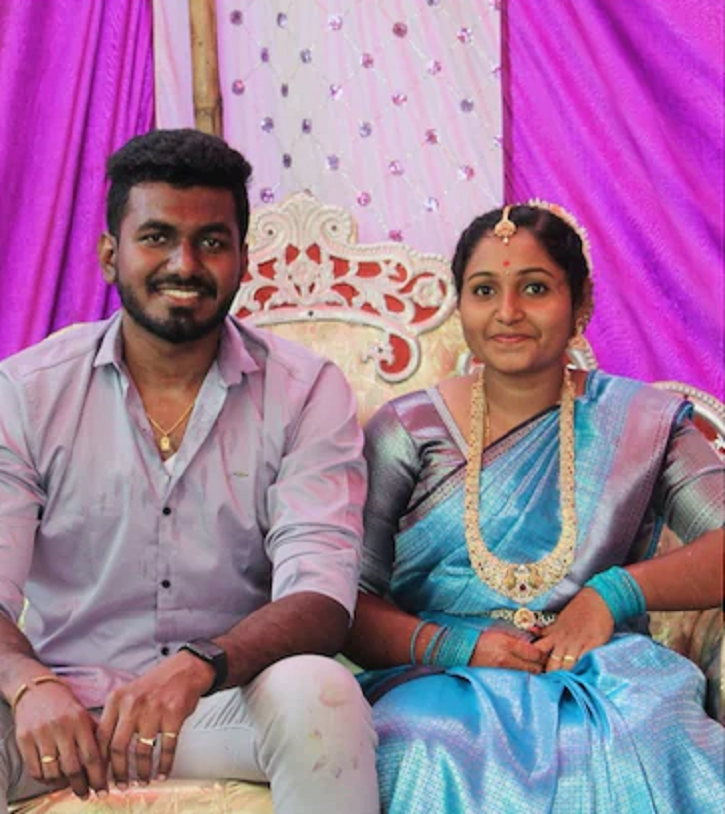
A virtual wedding reception does not sounds so shocking after living in covid lockdowns. But the wedding reception organised by this Tamil Nadu couple will dumbfound your minds. A virtual reception in the Metaverse!
As astonishing as it sounds, this will be the first ever wedding reception held on Metaverse in India.
And the excitement in not limited till this virtual concept but there is more flavour to their reception. The couple has decided to hold their virtual reception at Hogwarts( the School of Witchcraft and Wizardry) in the Harry Potter series. For all potterheads this will be a feast to watch.
The unique couple Dinesh SP and Janaganandhini Ramaswamy will get married in their village, Sivalingapuram, but has decided to host a digital reception at a virtual venue where they will be joined by their friends and family logging in from all over the world. The reception will take place in the dining room of Hogwarts castle.
People will log in through a website and select their avatar. Avatars of the couple, their family members and friends have been already designed. There will be a video streaming too of the couple and the guests can talk to one another.
The Harry Potter theme was mutually decided by the couple as Janaganandhini is a Potterhead.
Talking in an interview Dinesh said that he came up with the idea of virtual reception to present it as a gift to Janaganandhini. He further explained the reason, Janaganandhini’s father passed away in last year April and he planned to bring him in virtually and make him a part of the event to surprise her.
Talking about Metaverse , it is a massively scaled and interoperable network of real-time rendered 3D virtual worlds which can be experienced synchronously and persistently by an effectively unlimited number of users with an individual sense of presence, and with continuity of data, such as identity, history, entitlements, objects, communications, and payments.
The first ever virtual wedding in this world was held in September last year for a Florida couple Traci and Dave Gagnon. They created their avatars based on personal photos and the clothes they wore to their in-person ceremony.
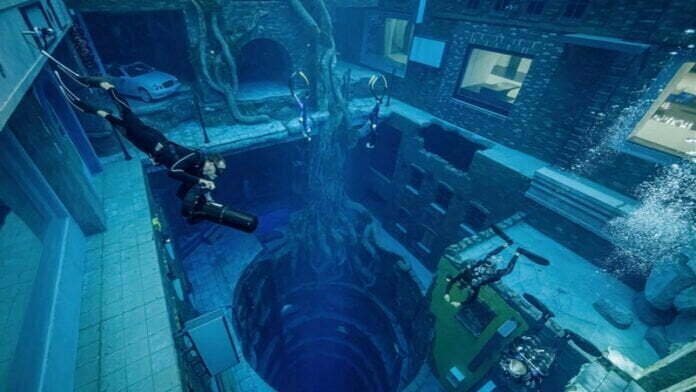
Dubai has always set records in every terms by bringing up the biggest building and biggest mall in the world. Now, it opened yet another architectural marvel up to the public- the deepest dive pool in the world.
Located in Dubai’s Nad Al Sheba, the pool at Deep Dive Dubai extends to a breathtaking depth of 60.02 metres and contains 14 million litres of water.
With a staggering depth of 196 feet, the pool, part of the new Deep Dive Dubai attraction has stolen the record from Poland’s Deepspot, which has a depth of over 45 meters.
An entire world awaits you at Deep Dive Dubai the world’s deepest pool, with a depth of 60 meters (196 feet) #Dubaipic.twitter.com/GCQwxlW18N
— Hamdan bin Mohammed (@HamdanMohammed) July 7, 2021
The Deep Dive Dubai pool is filled with 14 million liters of fresh water — the volume of six Olympic-sized swimming pools — and is at least four times bigger than any other diving pool in the world. Guinness awarded it the “Deepest swimming pool for diving” title on June 27.
The facility is open by invitation only for now but will open to the public later this year.
Videos of the pool were shared online by Dubai crown prince Sheikh Hamdan bin Mohammed bin Rashid Al Maktoum. A keen diver, he was reportedly one of the first visitors and took to Twitter sharing a clip. “An entire world awaits you at Deep Dive Dubai the world’s deepest pool, with a depth of 60 meters,” he said in in posts.
Water temperature is maintained at 30 degrees Celsius (86 degrees Fahrenheit), a comfortable temperature for wearing a thin wetsuit or a swimsuit.
Deep Dive Dubai is now open and offering a variety of experiences including discovery dives for first timers, scuba dives, freedives as well as diving courses and workshops on all levels of diving from beginner to technical instructors,” the pool’s website says.
India has unbelievably gorgeous and iconic places, some of them we have visited and some we wish to visit. But do you know there are some places which are forbidden to visit? There are mysterious, secret, and unbelievable places in India that you, unfortunately, cannot explore.
Here are 5 forbidden places of India as explored by Aakanksha Umath…
Stok Kangri, Ladakh
Located in one of the most popular attractions of Ladakh, Hemis National Park, Stok Kangri Peak is one of the highest trekking peaks in India that is closed due to over-tourism. In December 2019, the All Ladakh Tour Operators Association affirmed that Stok Kangri is closed for trekking and climbing from 2020 to 2023.
2. Upper Part of Pangong Tso, Ladakh
Although Pangong Tso is one of the most famous tourist destinations in India, a major part of the area that surrounds the lake remains inaccessible for tourists. The reason behind it is that around 50 per cent of the lake falls in the disputed territory. The Line of Actual Control (LAC) in fact separates the Indian controlled territory from Chinese controlled territory, which passes through the lake. Thus, one can visit only that part of the lake that lies on the Indian side.
3. BARC Mumbai
BARC or the Bhabha Atomic Research Centre, located in a suburb in Mumbai is one of the restricted places for tourists in India. Since its India’s premier nuclear research centre, tourists and visitors cannot enter the facility due to security reasons. However, only researchers and students are allowed to visit; that too, after taking a series of permissions from government institutions.
4. Silent Valley National Park
Due to a recent Maoist attack at Silent Valley National Park in Kerala there has been a considerable decline in the tourist influx. The tropical evergreen forests of the national park is bestowed with unspoilt natural beauty. You will be amazed by the beauty of this place. This is one of the most stunning prohibited places in India.
5. Chambal River Basin
The unmatched beauty of Chambal has been long reigned by some of India’s most infamous outlaws, who also seemed to have fancied the creativity of Bollywood movie makers since a long time. However, the danger of falling prey to the regional dacoits is still quite possible and hence it’s usually avoided by travellers. You will be blown away by how magnificent this destination is. It’s the most famous forbidden places in India.
Do note: This article is not meant to discourage tourism in India in any way, but to make you aware of spots that are forbidden for travellers in India.
The ancient masonry structures, Pyramids, are unquestionably the iconic symbol of Egypt. But it is not the only country that is home to pyramids. Do you know that there are also some other spectacular Pyramids too which are not in Egypt. The ancient structures have been built across the world and there are some striking examples that can be found in America, Asia, and even Europe.
Here are 4 Spectacular Pyramids of the world. Aakanksha Umath reports…
1. Chinese Pyramids
Many ancient Chinese emperors have been buried in pyramids that can now be found all over China, especially around the Xi’an and Luoyang regions. While these pyramids are quite distinct from each other, they are actually earthworks that are designed to look like burial mounds. Further, the outer parts are covered by trees and grass so that they resemble hills and not any man made structures.
2. Pyramids of Tikal, Guatemala
Spread across the thick rainforest of northern Guatemala, you will find remains of five pyramid temples that were built by the Mayans to honour their gods between 300 to 900 AD. Forgotten and remaining abandoned for around 800 years, these structures were gradually swallowed by the jungle. However, one can still spot the tallest, Pyramid IV, which seems like peeping through the canopy.
3. Borobudur, Indonesia
Although the nine stacked platforms of this world’s largest Buddhist temple may not likely be considered a traditional pyramid, it is quite majestic. Built by the Sailendra Dynasty during the 9th century, its Javanese Buddhist architecture displays influences of Indian Gupta art. After 100 years of its construction, it was left abandoned, which was later rediscovered in 1814 by British Lieutenant Governor Sir Thomas Stamford Raffles. Now, devotees visit this site to circumambulate clockwise along the walkways to reach the uppermost level.
4. Nubian Pyramids, Sudan
They might be smaller than the pyramids in Giza, yet the pyramids here make for an impressive sight. There are around or more than 200 structures in total here, and they are impressively steeper too. Also, note that the area mostly remains deserted. The region was ruled by Nubian kings and queens from around 300 BC to 300 AD, and these pyramids served as their tombs. You will witness that most of the pyramids have their tops knocked off, which was the handiwork of an Italian explorer, who spent much of the 1880s here searching for treasure.
Sir Ratanji Jamsetji Tata was born on January 20,1871, in the then Bombay who garnered fame as a financier and philanthropist making a mark on the global list of prominent personalities. Aakanksha Umath explores more details on the eminent figure who has been an inspiration for many…
The man with a vision and mission passed away on September 5, 1918 and after his death, Sir Ratan Tata Trust was founded in 1919 with a corpus of Rs. 8 million.
Sir Ratanji Jamsetji Tata was the son of the noted Parsi merchant Jamsetji Tata who studied at St Xavier’s College in Bombay and joined his father’s firm.
After the death of the Jamsetji Tata in 1904, Ratan Tata and his brother inherited a very large fortune, much of which was devoted to philanthropic works.
In 1905, an Indian institute of scientific and medical research (IISc) was founded at Bengaluru while in 1915, a project to store water power of western ghats was taken up by Tata enterprises which provided Bombay an enormous amount of electrical power.
Sir Ratan Tata was knighted in 1916 and he continued taking up the benefactions out of India too. He founded the Ratan Tata department of social science and administration at the London School of Economics in 1912, and floated a Ratan Tata Fund at the University of London for studying the conditions of the poorer classes.
He was a great connoisseur of arts who was married to Navajbai Sett in 1893. He left for England in 1915. The couple then adopted, Naval Tata from the family of a distant relative. On his death on 5 September 1918 at in Cornwall, England, he was buried at Brookwood Cemetery, near London, by the side of his father (Jamsetji Tata).
Ratanjii Tata-A justice seeker
He realised the importance of Mahatma Gandhi’s struggle against racism in South Africa and supported it both morally and materially, contributing Rs125,000 in all to the cause.
““That India has been roused is evident from the generous gift of Mr Ratanji Jamsetji Tata… He will probably be followed by other Indians. Parsis are known the world over for their generous gifts. Mr Tata has been true to that spirit of generosity.” Gandhiji wrote for him.
Though born and brought up in luxury, Sir Ratan was concerned about the widespread poverty and destitution in India and sought ways to ameliorate them.
He had donated a part of his property for needy people as Charity.
Today he is remembered between us as the respected philanthropist and a great seeker of Justice.
Kumbhalgarh Fort situated in Udaipur is a tourists’ paradise who love watching Arawali stretch spread far and wide merging with the walls of the fort to give a pristine look. Let’s have a look at the top five things to be seen at the fort…
1. Badal Mahal, a two-storied structure built by Rana Fateh Singh. It is the highest place on the fort where clouds can be seen.
2. Badshahi Bavdi, a water tank.
3.Chattris, Baoris, and water reservoirs.
4.Kumbha Palace, the residence of the king.
5. Ram Pol, the main gateway to the fort.
Other than this there is a sound show in Kumbhalgarh fort is a key attraction for visitors who want a glimpse into the fort’s past. The duration of the show is 45 minutes approx and the Timings are 6.45pm to 7.30 pm. The tickets are quite affordable as they are of 100 rupees for Indians and 200 for foreigners.
It is the thing that gives relaxation and also soothing to eyes and ears.
Kumbhalgrah Fort, encompassing 38km area of Udaipur has made its mark in history due to its second largest wall after the Great Wall of China. Akanksha features the historical background of this majestic fort…
The Majestic and Elegant Kumbhalgarh fort is said to be the birthplace of Maharana Pratap.
The fort further consists of inscriptions on the foot of idols in Hanuman Pol that provides details of construction of the fort.
The Badshahi Bavdi is a stepped tank that was built by the general of Akbar to provide drinking water to the army troops in 1578.
The fort initially faced many problems during construction but was resolved by performing a human sacrifice and the main gate of the fortress which is the Hanuman Pol, contains the shrine and a temple to thank and remember the great sacrifice of a warrior.
Historically, the fort played a major role in shaping the region’s past. Thanks to its strategic location, Kumbhalgarh was used as a safe refuge by the rulers of Mewar at times of threat or danger.
The fort provided shelter to the infant Prince Udai of Mewar after Chittor fell under siege.
Though the fort came under attack from various rulers and invaders, it remained invincible except for once when, in 1576, it was conquered by Mansingh I, the general of Emperor Akbar. Later, the fort was taken over by the colonial rulers before it finally came under the aegis of the government of Rajasthan.