Rajasthan: This engagement ceremony in desert state was blend of RRR which can be elaborated as the Rustic, Rural and Royal celebration where guests soaked the traditional aura spread around as women sang old songs, tribals showed their age-old folk dances and heritage liquor was served from earthern pots from machans.
RRR, a Bollywood film released recently has smashed all records on big screen with its unique storyline where tribals and their traditions have been featured and brought alive.
However, in Rajasthan, a real life celebration brought tribals into mainstream as they were invited to perform their folk dance and music in a royal engagement ceremony and yes, there was no place for DJ as the audience rocked swirled and swayed on traditional music flowing around.
There was heritage liquor, desi songs and desi decor bringing centuries old tribal traditions live in Udaipur.
The foreign made liquor was replaced by heritage liquor which was stored in earthen pots and served from ‘Machan’ built on top of bars where local women sang folk songs.
There were no lavish sofa sets but handmade ‘khats’ and ‘Mudde’ were spread all across for the guests to sit on them.
Centuries old tribal traditions were seen live as the tables kept in front of chats were covered with jute made textiles. Further there were lanterns illuminating the venue replacing the candles.
Tribals performing in a royal wedding ceremony.
The ceremony was attended by the who’s who of the society and veterans had come from across the world to attend it.
Sidi Goma tribals who are believed to be natives from Africa and are staying in Gujarat were invited to perform Dhamal folk dance. Next group was also brought from Gujarat jungles who performed Rathwa dance.
The other group was called from Udaipur which performed Gawri dance. “These people stop taking non veg and drink before performing this dance to worship Shiva and Gauri.”
Guests enjoying the tribal performance
Nathulal Solanki, a renowned Nagada player, who came from London to attend the ceremony was in awe of the beauty of the program which was solely organised on traditional rituals of erstwhile royal.
Those serving food and drinks were asked to wear tribal costumes. We revisited centuries old traditions which came live in this wedding.
The blessed couple who became a witness to host the most unusual wedding
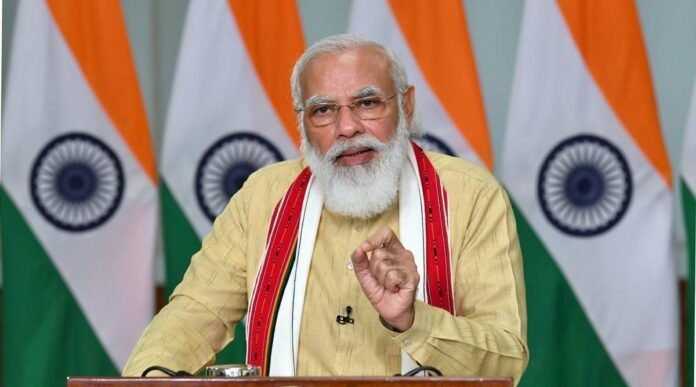
The ceremony was solemnised taking clue from the message of PM Narendra Modi who asked one and all to participate in saving cultural heritage (virasat ka sanrakshan under Azaadi Ka Mahotsav) said Rajendra Pachar, an ex-royal from Pushkar whose son was getting engaged to a Jodhpur based girl.
“We invited tribals to perform as we needed to bring them into the mainstream. These tribals have a big contribution to Indian history. They helped Shivaji and Maharana Pratap to win wars against Mughals. In fact, today, our civilization has been protected due to them. They helped Pratap to capture Mewar and Mughal did not dare to attack again. They are still residing the same life following age-old principles, they preserve their jungles, traditions and heritage and hence we owe a lot to them. Imagine if start inviting them in our programmes, we will get a cultural boost and they shall get into the mainstream. Till date, they are ignored,” he added.
Kallaji Rathore fought against Mughal ruler Akbar bravely when the Mughal king attacked Chittor. Leaving his newly wed wife at home, he left for the battlefield and took prince Jaimal on his shoulder when he was injured. Eventually, Akbar was surprised to see God like four hands rotating four swords in air. Manish Kumawat from Nimbahera highlights the celebrations made on his birth anniversary to remember the great warrior…
Thousands of youths dance, sing and remember their hero Kallaji Rathore on his birth anniversary in Rajasthan and pay respect to him as he sacrificed his life fighting for his country against the Mughal emperor Akbar.
A huge procession is taken out on the occasion of his birth anniversary in Nimbahera where this great man is remembered.
Youths dance in Nimbhahera in Rajasthan on birth anniversary of Kallaji Rathore
Thousands of youths ride on motobikes wearing saffron safas to instill patriotism in youths remembering Kallaji Rathore on his birth anniversary
In Rajasthan, many heroes sacrificed their lives to protect the motherland, however, this here Kallaji Rathore is being recognised as a Lokdevta (God like figure).
Kallaji Rathore birthanniversary
Kalla ji Rathod was a great man who was born in the Merta royal family on Ashwin Shukla 8, Vikram Samvat 1601.
His father was Asa Singh, the younger brother of Rao Jaimal of Merta. Renowned Krishna follower Mirabai was his aunt.
Yoga, medicine, ammunition appealed this warrior
Kalla ji was interested in general education, yoga practice, medicine and arms and ammunition since his childhood. He got Yoga education from the famous Yogi Bhairavnath.
Once, the Mughal invader Akbar attacked Merta. Under the leadership of Rao Jaimal, Asa Singh and Kalla ji fought against Akbar boldly;
However, seeing no success, Rao Jaimal along with his family came out of the siege and reached Chittor. Rana Udai Singh welcomed him and granted him the jagir of Badnore. Kalla ji was appointed as the senior warrior of the area bordering Gujarat and was given the Jagir of Randhalpur.
After some time Kalla ji was married to Krishna, the daughter of Rao Krishnadas of Shivgarh. During Dwarachar, when her mother-in-law was performing his Aarti he being the groom, he received the message from Rana Udai Singh that Akbar has attacked Chittor, and he was asked to immediately reach there with the army. Kalla ji completed the formalities and went to Chittor asking his wife to return soon.
Maharana appointed Jaimal as the commander. Akbar’s army surrounded Chittor from all sides. The Mewari heroes would attack after leaving the fort and harming the enemies and then come back to the fort. After several days of struggle, when the number of Kshatriya heroes remained very less, the commander Jaimal decided that the time had come for the last struggle. He instructed all soldiers to wear saffron bana.
The meaning of this message was clear. On the night of 23 February 1568, all the Kshatriyas present in the fort of Chittor committed Jauhar and the next day on 24 February, Mewari Veer opened the gates of the fort and attacked the Mughal army. A fierce battle ensued.
Rathod Jaimal got shot in the leg. He wanted to fight but was unable to stand up. Seeing this, Kalla ji gave Jaimal a sword in both hands and made him sit on his shoulder. After this Kalla ji also took swords in both his hands.
The four swords began to move at lightning speed. The earth was covered with Mughal corpses. When Akbar saw this, he felt that some god with two heads and four hands was fighting. Both of them were badly injured in the battle. Kalla ji tried to cure Jaimal by getting him down; But at the same time, an enemy soldier attacked from behind and beheaded him. Even after beheading, his torso continued to fight for a long time.
Today, he is remembered in Rajasthan and a huge procession is taken out where youths tie saffron safa and dance and sing remembering the young hero who inspired millions to fight for the honour of the motherland.
Kallaji Rathore: A man who fought for his motherland is now a ‘God’ like figure in Raj
Kallaji Rathore fought against Akbar bravely when the Mughal king attacked Chittor. Leaving his newly wed life at home, he left for the battlefield and took prince Jaimal on his shoulder when he was injured.
Eventually, Akbar was surprised to see God like four hands rotating four swords in air.
Thousands of youths dance, sing and remember their hero Kallaji Rathore who sacrificed his life fighting for his country against the Mughal emperor Akbar.
A huge procession is taken out on the occasion of his birth anniversary in Nimbahera where this great man is remembered.
In Rajasthan, many heroes sacrificed their lives to protect the motherland, however, this here Kallaji Rathore is being recognised as a Lokdevta (God like figure).
Kallaji Rathore birth
Kalla ji Rathod was a great man who was born in the Merta royal family on Ashwin Shukla 8, Vikram Samvat 1601.
His father was Asa Singh, the younger brother of Rao Jaimal of Merta. Renowned Krishna follower Mirabai was his aunt.
Yoga, medicine, ammunition appealed this warrior
Kalla ji was interested in general education, yoga practice, medicine and arms and ammunition since his childhood. He got Yoga education from the famous Yogi Bhairavnath.
Once, the Mughal invader Akbar attacked Merta. Under the leadership of Rao Jaimal, Asa Singh and Kalla ji fought against Akbar boldly;
However, seeing no success, Rao Jaimal along with his family came out of the siege and reached Chittor. Rana Udai Singh welcomed him and granted him the jagir of Badnore. Kalla ji was appointed as the senior warrior of the area bordering Gujarat and was given the Jagir of Randhalpur.
Kallaji Rathore marriage
After some time Kalla ji was married to Krishna, the daughter of Rao Krishnadas of Shivgarh. During Dwarachar, when her mother-in-law was performing his Aarti he being the groom, he received the message from Rana Udai Singh that Akbar has attacked Chittor, and he was asked to immediately reach there with the army. Kalla ji completed the formalities and went to Chittor asking his wife to return soon.
Maharana appointed Jaimal as the commander. Akbar’s army surrounded Chittor from all sides. The Mewari heroes would attack after leaving the fort and harming the enemies and then come back to the fort. After several days of struggle, when the number of Kshatriya heroes remained very less, the commander Jaimal decided that the time had come for the last struggle. He instructed all soldiers to wear saffron bana.
Jauhar in Chittor
The meaning of this message was clear. On the night of 23 February 1568, all the Kshatriyas present in the fort of Chittor committed Jauhar and the next day on 24 February, Mewari Veer opened the gates of the fort and attacked the Mughal army. A fierce battle ensued.
Rathod Jaimal got shot in the leg. He wanted to fight but was unable to stand up. Seeing this, Kalla ji gave Jaimal a sword in both hands and made him sit on his shoulder. After this Kalla ji also took swords in both his hands.
Four swords, four hands and Kallaji Rathore was a God like hero
The four swords began to move at lightning speed. The earth was covered with Mughal corpses. When Akbar saw this, he felt that some god with two heads and four hands was fighting. Both of them were badly injured in the battle. Kalla ji tried to cure Jaimal by getting him down; But at the same time, an enemy soldier attacked from behind and beheaded him. Even after beheading, his torso continued to fight for a long time.
Today, he is remembered in Rajasthan and a huge procession is taken out where youths tie saffron safa and dance and sing remembering the young hero who inspired millions to fight for the honour of the motherland.
The National Highway Authority of India (NHAI) created a Guinness World Record for building the longest bituminous lane of 75 kilometres, on national highway between Amravati and Akola districts of Maharashtra, in a total time of 105 hours and 33 minutes.
Project highlights
A total of 720 workers including a team of independent consultants implemented the project.
Total length of this single lane concrete road is equal to 37.5 kilometres of two-lane paved shoulder road.
Work on this road started on June 3, 2022 and completed on June 7.
Previous Record
Previous World Record for longest continuously laid bituminous was made in Doha, Qatar for building a 25.275 kilometres road in February 2019. This task was completed in 10 days.
About Amravati to Akola Road
Amravati to Akola section, the part of NH 53, is an important east-east corridor, connecting major cities like Kolkata, Raipur, Surat and Nagpur. Once the stretch gets completed, it will play a crucial role in easing movement of traffic and freight on the route.
National Highway 53
This national highway being the combination of old NH6 Surat-Kolkata, NH200 Bilaspur-Chandikhole and NH5A Chandikhole-Paradeep connects Hajira in Gujarat to Paradeep port in Odisha. Passing through the states of Gujarat, Chhattisgarh, Maharashtra, and Odisha in India, it is the part of Asian Highway 46 (AH46) network and is officially listed as running over 1949 km from Kolkata to Surat. It is also called as Surat – Kolkata Highway.
What is National Highways Authority of India
NHAI is an autonomous agency of Government of India. It was set up in 1995. It is a nodal agency under Ministry of Road Transport and Highways. Alka Upadhyaya is the current Chairperson of NHAI.
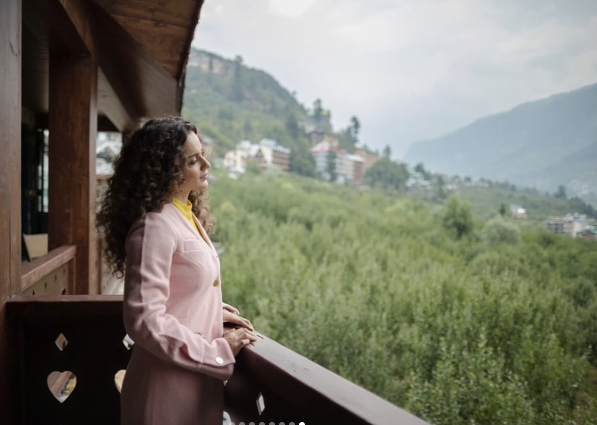
Kangana Ranaut has built her dream home in Manali, Himachal Pradesh which is made of river stones and wood.
These pictures of her beautiful house are being shared on their social media.
This house of Kangana is built in the typical Pahari style.
Its walls are also made from river stones and local slate and wood. Sharing the photo of her house, Kangana wrote in the caption, “Here is something for all design enthusiasts, who love decor and are curious about mountains architecture which is local but ancient and deeply traditional …. I built a new home it’s an extension of my existing house in Manali but this time kept it authentic, typically mountain style made of river stone, local slates and wood. I have also incorporated Himachali paintings, weaves, rugs, embroideries and wooden karigiri…. Have a look, also these pictures are clicked by an incredibly talented Himachali photographer @photovila1“
India’s first sologamy marriage ceremony was performed in Gujarat when Kshama Bindu performed marriage with self.
Kshama Bindu, 24, from Vadodara, Gujarat, tied the knotty knot with self which made her the first women to perform sologamy.
Kshami had earlier scheduled her wedding rituals on June 11, however got married three days before to avoid controversy.
The rituals of Haldi, mehendi took place on this occasion and she took ‘Phere’ alone and also performed sindoor ceremony on her own by standing in front of the mirror.
She put mangalsutra with her own hands as the chanting of shlock’s by pandit continued on the mobile.
A few of her special friends attended the marriage of Kshama, who resided in Gotri area of Vadodara. After marriage, Khamma has chosen Goa for honeymoon, where she will stay for two weeks.
Kshama has to say about this self-marriage, ‘I never wanted to get married, but wanted to be a bride. So I decided to marry myself. I am probably the first girl in my country to set an example of self-love.
Bindu works in a Pune based company in Vadodara. She has also done BA from MS University-Vadodara with Sociology as a subject.
After the wedding, she thanked everyone in a video message and said she was grateful for the support and encouragement. “I would like to thank everyone who has messaged me and congratulated me and gave me the power to fight for what I believed in,” she said on Facebook.
Google has announced new updates to Chromebooks, Google Classroom and Google Meet. These features focused on increasing interconnectivity, control and efficiency in the classroom to Google Meet, specially for those using the Google Workspace for Education Plus or Teaching and Learning Upgrade, Google said it is adding
“Now, Meet calls can be auto-transcribed directly into a Google Doc for easy lesson reviews and the ability to search for keywords and concepts.
Now users, with Picture in Picture in Meet, can navigate other tabs in Chrome while viewing 4 tiles of students in a Meet call.
Teachers can now add polls and Q&A to live-streams, and live-stream directly to YouTube to keep class engaged and regularly check for understanding.
Google is also adding new features like Screencast app, built into Chrome OS in M103, where users can record, trim, share and view transcribed screencasts. They can also create a custom library of videos automatically saved in Google Drive.
Google is also rolling out new integrations and tools to improve teachers’ day-to-day tasks and help students grow their skills.
Practice sets are now globally available in beta, and in English only, for Google Workspace for Education customers with Education Plus or Teaching and Learning Upgrade.
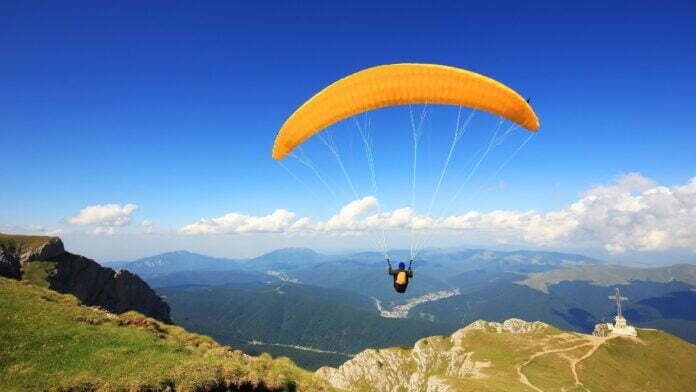
National Air Sports Policy 2022 has been launched by Civil Aviation Minister Jyotiraditya Scindia to tap the country’s potential in the field of air sports.
Let’s know what the policy says about air sports and how it will help generate revenue:
1. This policy can be an economic multiplier and generate revenue of Rs 8,000-Rs 10,000 crore.
2. The Air Sports Federation of India (ASFI) shall be the nodal body for air sports.
3. Besides, 13 other air sports associations will be formed for other air sports disciplines like aerobatics, powered aircraft, rotorcraft, ballooning, drones, parachuting, aeromodelling and model rocketry, gliding and powered gliding, hand-gliding, paragliding and paramotoring.
4. Besides regulating air sports, ASFI will also give certification, organise competitions, and provide awards.
5. Also, the government will request the Goods and Service Tax Council to consider rationalising rates on sports equipment to 5 per cent or less in order to make air sports affordable, as per a report.
World’s largest monolithic silver lamp has been installed in the world famous Karni Mata temple in Rajasthan.
This lamp was presented to Karni Mata temple by Moni Baba, a devotee of Karni Mata.
A huge quantity of 450-500 kg ghee can be poured into this lamp at a time which ensures that the lamp keeps burning for one and a half years.
The flame (batti) of this lamp is also made of a special type with raw cotton. It took about 14 months and 15 artisans to make this lamp. To heat the ghee, there is a titanium rod which helps in keeping the ghee melted.
It is World Bicycle Day today and who better than Mahatma Gandhi to take inspiration from to lead a sustainable and healthy lifestyle,” PM Modi wrote in a tweet.
On the occasion of World Bicycle Day, PM Narendra Modi shared an old picture of Mahatma Gandhi riding a cycle and termed it as lifestyle for environment (Life).
Sharing the pictures, PM Modi said, “It is World Bicycle Day today and who better than Mahatma Gandhi to take inspiration from to lead a sustainable and healthy lifestyle, he said.
Lifestyle for Environment (LIFE).
It is World Bicycle Day today and who better than Mahatma Gandhi to take inspiration from to lead a sustainable and healthy lifestyle. pic.twitter.com/r6hclQGjkd
Turkey will now be called as Turkiye which is the new name of the country.
President Recep Tayyip Erdogan’s government started efforts for the name change process in December. United Nation Organization (UN) Secretary-General Antonio Guterres said on Wednesday – Turkish Foreign Minister Mevlut Kavusoglu wrote a letter saying, now his country should be known as Turkiye, not Turkey. We have accepted this request.
Purpose behind name change
The government wants to make Turkey a brand name in the world. This is because the word Turkey or Turkish is considered negative according to the language there. For this reason, the citizens here have been calling it ‘Turkiye’ since the declaration of Turkey’s independence in 1923.
Erdoan had long been trying to get “Turkiye” (pronounced: tur-kee-yay) recognized at the international level. After the recognition of the UN, this effort has now turned into success.
Holland’s new name is Netherland, Burma is Myanmar, Silon is Sri Lanka now. These are a few countries which changed its name as well.