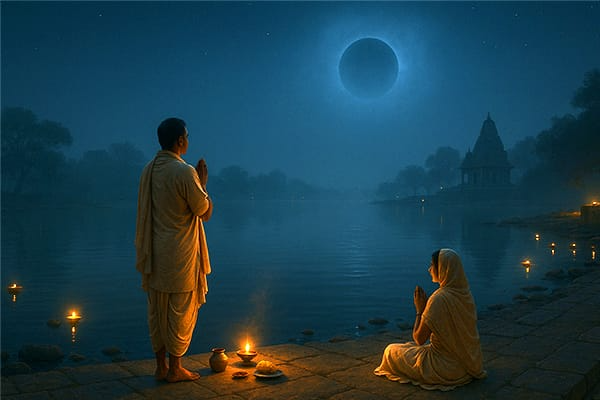
Phalguna Amavasya, also known as the new moon day or no moon day in the Hindu lunar month of Phalguna, holds profound spiritual importance. This sacred occasion, typically falling in February or March, marks the transition from winter to spring and serves as a powerful time for purification, ancestral homage, and seeking divine blessings.
Spiritual Importance in Hindu Scriptures
In Hindu scriptures, Phalguna Amavasya is revered for its association with Lord Shiva worship, believed to grant desired results, prosperity, and protection from negative energies. As the final Amavasya before the new Hindu year, it symbolizes renewal-cleansing past sins, karmic burdens, and paving the way for festivals like Holi. It is especially dedicated to ancestors (Pitrus), where devotees perform rituals to appease departed souls, remove Pitru Dosh (ancestral curses), and invite peace, blessings, and abundance into their lives.
Mythological and Historical Connections
Myths link this period to the Samudra Manthan (churning of the ocean), where holy dips in sacred rivers like the Ganga, Yamuna, or Shipra are said to bestow immense spiritual merit. Its proximity to Mahashivratri further enhances its significance for Shiva devotees.
Phalguna Amavasya 2026: Date and Timings
According to reliable sources like Drik Panchang, Phalguna Amavasya 2026 falls on Tuesday, February 17, 2026. This day also coincides with a solar eclipse in some regions (though visibility varies), adding to its rarity and potency.
Key tithi timings (for reference, primarily New Delhi/India standard):
Amavasya tithi begins: 5:34 PM on February 16, 2026. Amavasya tithi ends: 5:30 PM on February 17, 2026. Auspicious periods for rituals, such as holy bathing (Snan), often fall in the early morning hours of February 17 (e.g., around 5:16 AM to 6:07 AM, subject to local panchang variations). As it falls on a Tuesday, this year it is observed as Bhomvati Amavasya, which carries additional auspicious weight in certain traditions
Key Rituals and Practices
Devotees observe this day with devotion and discipline to honour ancestors and seek spiritual growth:
Holy Bath (Snan): Take a sacred dip in holy rivers or water bodies at dawn to wash away sins and impurities.
Tarpan: Offer water mixed with sesame seeds, barley, and kusha grass to ancestors while standing near a river or pond and chanting mantras. Derived from the Sanskrit word “Trup” (to satisfy), Tarpan quenches the “thirst” of departed souls and ensures their blessings for descendants.
Pind Daan: Prepare rice balls (pindas) from cooked rice, barley flour, sesame seeds, and ghee. These symbolize the physical body of the departed and are offered to help liberate their souls, granting them moksha (liberation) and bringing prosperity and harmony to the living
Worship of Lord Shiva: Perform puja, chant mantras, and offer bilva leaves or other items to invoke Shiva’s grace.
Charity and Donations: Donate food, clothes, mustard oil, sesame seeds, black gram, or other essentials to the needy. Such acts are believed to mitigate malefic planetary effects and attract wealth.
Lighting Lamps: Light a mustard oil lamp under a peepal tree for auspicious energy.
Fasting and Meditation: Many undertake a fast, engage in mantra chanting, and meditate for inner peace.
Embracing the Eternal Bond
By performing these rituals with sincerity on Phalguna Amavasya, devotees not only pay respect to their ancestors but also invite renewal, protection, and prosperity into their lives. This sacred day reminds us of the eternal bond between generations and the power of gratitude in Hindu tradition.
Inauguration of Dr. Beena’s exhibition at Jawahar Kala Kendra; documentary highlights mythological significance
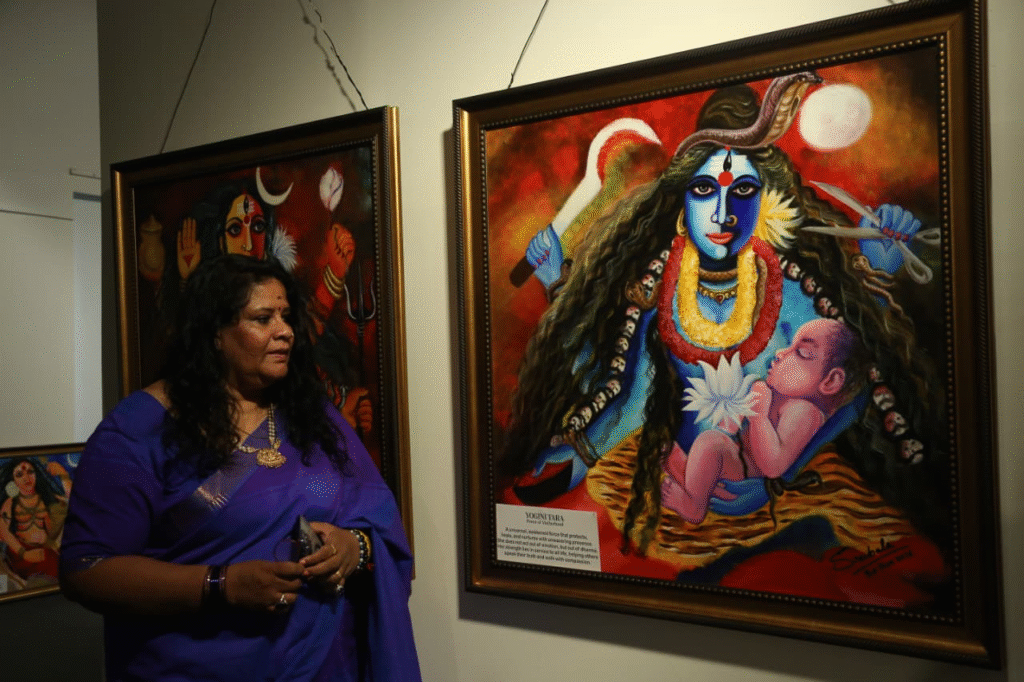
Jaipur: “Naari Tu Narayani”—woman as the embodiment of divinity—is a foundational idea in Indian philosophy. Echoing this life-giving, divine feminine energy, the exhibition ‘Eka: The One’ invites viewers to experience a sacred encounter with spiritual power. The traveling exhibition by senior artist from Kerala, Dr. Beena S. Unnikrishnan, was inaugurated on Monday at the Alankar Gallery of Jawahar Kala Kendra.
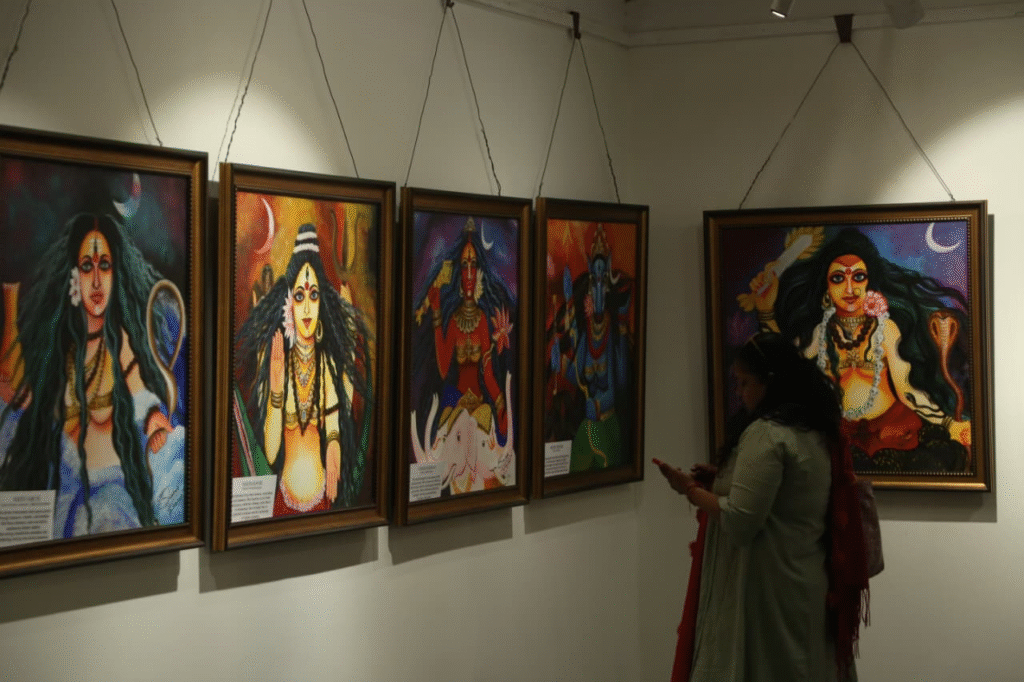
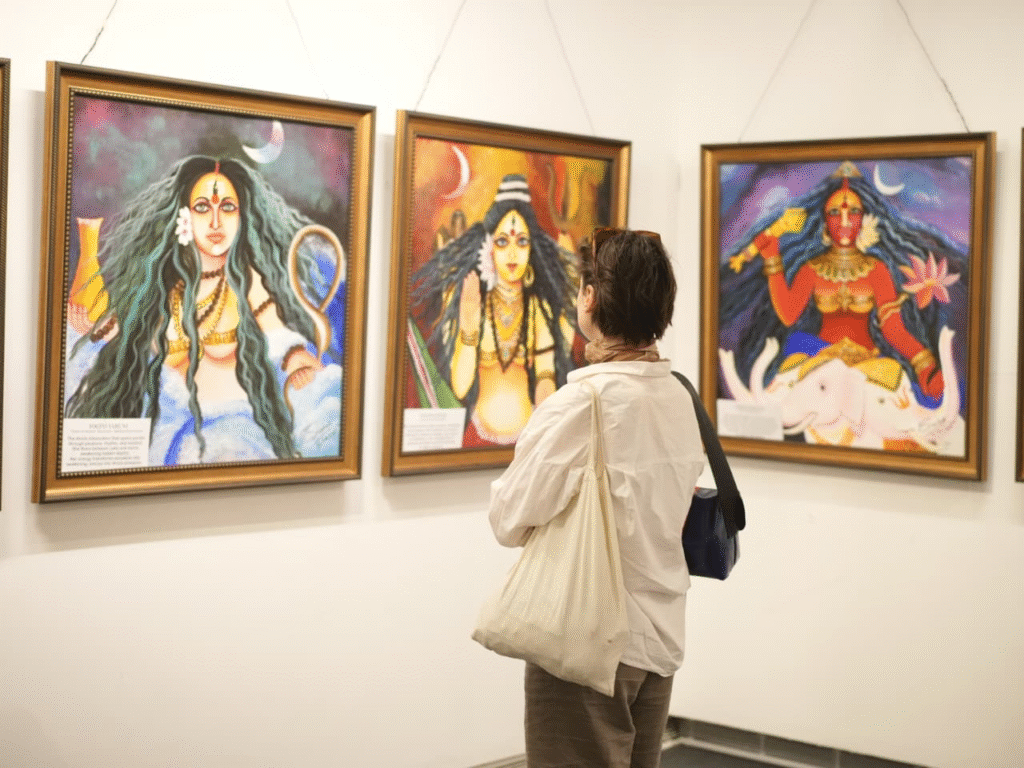
The exhibition showcases paintings of the 64 Yoginis, who hold a significant place in goddess worship. Each Yogini represents a distinct form of energy and is believed to bestow specific spiritual attainments. Through these works, the exhibition enables viewers to sense and engage with these diverse energies.
Dr. Beena created 68 paintings over a period of five years. This artistic journey began with the concept of portraying Maha Tripurasundari, which gradually evolved into an expansive spiritual practice. After traveling to Kochi, Coimbatore, Bengaluru, Mumbai, Bhopal, and Ahmedabad, the exhibition has now reached Jaipur. This spiritual-artistic traveling exhibition spans 81 days, covering 16 states and nearly 10,000 kilometers. It will remain open to art lovers daily from 11:00 am to 7:00 pm until 18 February.
Pilgrimage to Yogini temples after completing the 68 artworks
Dr. Beena shares that it was the feminine energy within her that inspired this artistic path. She believes the divine feminine itself chose her as a medium to manifest its presence through art. After completing the paintings of the 64 Yoginis, she undertook a journey to their temples—an experience she describes as profoundly transformative.
History of the Yoginis depicted in a 60-minute documentary
Each painting presents a distinct depiction of a Yogini—varying in form, adornment, radiant eyes, and flowing hair—reflecting unique energies. On the occasion of the exhibition, a 60-minute documentary was also screened, elaborating on the history, energies, and mythological significance of the Yoginis. The documentary has been produced by the artist herself and directed by Dr. Jain Joseph.
The 64 Yoginis dispel fear, doubt, and overthinking
Speaking about her journey, Dr. Beena noted that her first exhibition was held in 1998. Since then, every painting she has created has contributed to her personal growth. With each artwork, she has evolved into a more refined individual. Her engagement with the 64 Yoginis was not merely an artistic exercise, but a deep inner pilgrimage. These divine energies gradually helped her overcome fear, doubt, and excessive overthinking, granting her confidence, balance, and inner peace. Even today, she strongly feels the constant presence of this divine force—her greatest inspiration, guiding her continuously toward creation, spiritual practice, and self-development.
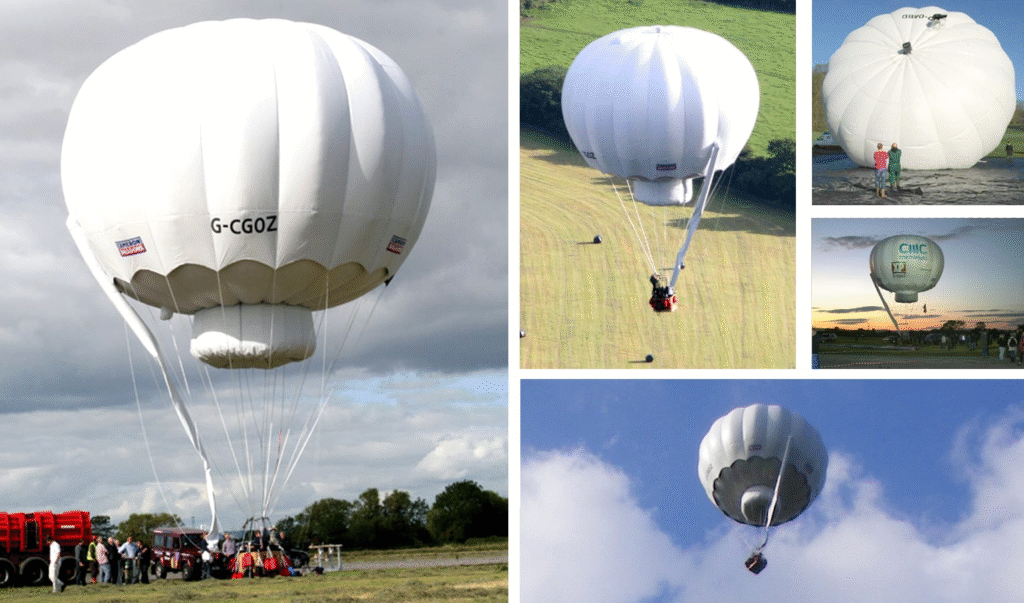
Hydrogen balloons marked one of the earliest triumphs in human flight, offering superior lift compared to hot air alternatives. Yet their extreme flammability led to their eventual replacement by safer gases like helium in most applications.
Why Hydrogen Balloons Explode
Hydrogen gas is highly flammable and reacts vigorously with oxygen to form water (H2O). When a hydrogen-filled balloon bursts, the escaping gas mixes rapidly with surrounding air, creating a highly explosive mixture. Even a tiny spark-such as from static electricity, friction between balloons, or a nearby flame-can ignite it, resulting in a sudden fireball or explosion.
Hydrogen’s dangers stem from several key properties:
High reactivity — With only one electron in its outer shell, hydrogen atoms eagerly bond with oxygen. Low activation energy — The reaction requires roughly one-tenth the energy needed for natural gas, making it easy to trigger.
Wide flammability range – Hydrogen ignites in
air at concentrations between 4% and 75%, allowing explosive conditions even in partially confined spaces like rooms or elevators. These factors make hydrogen far more hazardous than inert gases. The Invention of Hydrogen Balloons in 1783 Hydrogen balloons emerged as a direct improvement over the Montgolfier brothers’ hot-air balloons, which relied on continuous fires and were bulky, limited in range, and altitude.Hydrogen, discovered as “inflammable air” and recognized as the lightest element, provided dramatically better lifting power. This enabled smaller, lighter, and more durable balloons capable of longer flights and higher altitudes.The breakthrough required new material technology: airtight, lightweight envelopes. The Robert brothers developed a solution using silk coated with rubber dissolved in turpentine.
First unmanned launch (August 27, 1783):
Jacques Charles and the Robert brothers released a 35-cubic-meter hydrogen balloon from Paris’s Champ de Mars. Filled using hydrogen generated by reacting sulfuric acid with iron filings, it traveled 21 km before landing and being destroyed by frightened locals.
being destroyed by frightened locals.
First manned flight (December 1, 1783): Just 10 days after the Montgolfiers’ hot-air manned ascent, Jacques Charles and Nicolas-Louis Robert piloted a hydrogen balloon for over two hours, reaching about 550 meters (some accounts note up to 3,500 meters) and covering roughly 36 km. These flights sparked “balloonomania,” driving scientific exploration of the atmosphere with instruments like barometers and thermometers.
Key Historical Milestones and Technological Advances
Early hydrogen balloons used silk envelopes, later improved with goldbeater’s skin (thin animal membrane) for superior gas retention.
Innovations enhanced safety and control:
Drag rope (1830s) For gradual descent and stability. Rip panel (1839) – Allowed quick gas release for emergency landings. Throughout the 19th and 20th centuries, hydrogen balloons supported exploration, research, and military uses, including surveillance in World War II.
Hydrogen vs. Helium: Why the Switch Happened
The switch from hydrogen to helium occurred primarily because of safety. Hydrogen is highly flammable and explosive, as tragically shown by the 1937 Hindenburg disaster where the hydrogen-filled airship caught fire and burned rapidly, killing dozens and ending the era of hydrogen airships. Helium, being an inert noble gas, is completely non-flammable and chemically stable, eliminating the risk of fire or explosion. Although hydrogen provides slightly better lift (about 7-10% more buoyancy) and is cheaper to produce, the overwhelming priority became public safety, leading modern applications-blimps, weather balloons, and party balloons-to use helium despite its higher cost and minor reduction in lifting power.
Cheaper coal gas sometimes substituted for hydrogen in non-critical applications.
Hydrogen’s flammability led to infamous disasters, such as the 1937 Hindenburg airship fire, where hydrogen accelerated a rapid blaze (though debates persist on the exact ignition source, often linked to static electricity or the airship’s flammable outer coating).
Helium became the standard for party balloons, public events, and most commercial uses due to its non-explosive nature-no fireball if popped near a flame. Hydrogen remains in specialized applications like some weather balloons for cost and lift advantages, but helium dominates everyday and safety-critical scenarios.
Hydrogen balloons revolutionized aviation in the late 18th century by overcoming hot-air limitations, but their explosive potential ultimately paved the way for helium’s safer reign in modern ballooning.
An Analytical Policy Brief on India’s Maritime Strategy in the Indo-Pacific
The Indo-Pacific has emerged as the epicenter of global economic and strategic competition, with Sea Lines of Communication (SLOCs) carrying over 95% of India’s trade and a significant share of global energy flows. As geopolitical tensions intensify—particularly amid China’s expanding maritime footprint and the evolving security architecture shaped by initiatives such as AUKUS—the region has become central to India’s strategic calculus.
This brief examines the shifting maritime security landscape, key geopolitical challenges, India’s evolving naval posture, and the strategic imperatives required to sustain regional stability while safeguarding national interests. This paper analyses the evolving maritime security dynamics in the Indo-Pacific, the key challenges, the role of the stakeholders and the strategic imperatives for regional stability.
BACKGROUND
The Indo-Pacific is a vast, integrated geographic and strategic construct encompassing the Indian and Pacific Oceans, it extends roughly from the eastern coast of Africa to the western coast of the Americas, encompassing South Asia, Southeast Asia, East Asia, Australia, and Pacific island nations. Geographically, it bridges two oceans, strategically, it is a contested, high-stakes region defined by over 60% of the world’s population, major maritime trade routes and chokepoints, and intense geopolitical competition. A maritime security strategy is a comprehensive framework of measures, policies, and operations designed to protect a nation’s territorial waters, sea lanes, and maritime interests from various threats, including piracy, terrorism, trafficking, and environmental hazards.
GEOPOLITICAL FAULT LINES IN THE INDO-PACIFIC
The major challenge for India in the Indo-Pacific region lies in intense strategic competition with both China and the United States, which has led to overlapping claims, territorial disputes—particularly in the South China Sea and the Indian Ocean—and rapid military build-ups. China’s territorial assertiveness through its Belt and Road Initiative (BRI) poses a significant strategic challenge for India, as it seeks to establish a “String of Pearls” encirclement strategy through infrastructure projects in Pakistan, especially the China–Pakistan Economic Corridor (CPEC), which passes through Pakistan-occupied Kashmir (PoK).
Projects such as the Hambantota Port in Sri Lanka, Gwadar Port in Pakistan, and the Djibouti military base have expanded China’s military and naval footprint in the Indian Ocean, thereby constraining India’s traditional sphere of influence and creating potential strategic and military bottlenecks.
While the BRI provides much-needed infrastructure financing for developing nations, it has often led to unsustainable debt burdens for smaller countries such as Sri Lanka, Nepal, and Bangladesh. This has raised concerns over “debt-trap diplomacy,” potentially compromising their economic sovereignty and political stability, while simultaneously strengthening China’s ties with India’s neighbors and diminishing India’s influence in South Asia.
AUKUS is a trilateral security partnership formed in September 2021 between Australia, the United Kingdom, and the United States. It focuses on enhancing defense capabilities through two pillars: providing Australia with nuclear-powered submarines (SSNs) and fostering advanced technology collaboration in AI, cyber, and quantum technologies. AUKUS is perceived by Beijing as a direct containment mechanism of BRI, likely leading to further militarization of the South China Sea, tighter China-Russia, and broader, more assertive Chinese naval operations in Indo-Pacific.
“The control of the seas means security. The control of the seas means peace. The control of the seas can mean victory.”— John F. Kennedy
Further the acquisition of nuclear-powered submarines by a non-nuclear weapons state (Australia) sets a precedent, prompting regional actors to enhance their own naval and advanced weaponry increasing the potential for conflict. In diplomatic terms the pact forces Southeast Asian and Pacific nations to choose between aligning with the U.S. or China.
OPERATIONALISING MARITIME STRATEGY
India is strengthening its maritime security in the Indo-Pacific by acting as a “net security provider,” which includes The MAHASAGAR doctrine in 2025 a strategic evolution from the regional SAGAR vision. The doctrine positions India as a “first responder” for Humanitarian Assistance and Disaster Relief (HADR), Strengthening ties with nations like Mauritius, Sri Lanka, Seychelles, and Tanzania through joint exercises, surveillance, and capacity building. Particularly by enhancing Maritime Domain Awareness (MDA) for smaller nations it provides a collaborative, rule-based alternative to other regional powers transactional approaches.
In 2024–2025, the Indian Navy deployed over 10 warships for Operation Sankalp in the Gulf of Aden and Arabian Sea to secure commercial shipping from Houthi attacks. Indian Navy has saved 110 lives in the operations which includes 45 Indians and 65 international citizens during Operation Sankalp and other missions responding to 13 attack incidents in 2024.
Following bilateral talks on 7th of February 2026, India and Malaysia agreed to expand defence ties, including enhanced counter-terrorism, intelligence sharing, and maritime security cooperation including a decision to establish a Consulate General in Malaysia to enhance strategic engagement.
Both prime ministers have appreciated the visit of INS Sahyadri to Kemaman, Malaysia in October 2025 and of hydrographic vessel INS Sandhayak to Port Klang, Malaysia in July 2025. The leaders also welcomed the regular navy-to-navy interactions between the countries, including under bilateral and multilateral naval exercises such as ‘Samudra Laksamana’, MILAN and ASEAN-India Maritime Exercise (AIME).
Along with bilateral talks 9th Indian Ocean Conference is scheduled for April 10–12, 2026 in Mauritius, focusing on “Collective Stewardship for Indian Ocean Governance”.
India is working upon to make an integrated effort to strengthen maritime security in Indo-Pacific through bilateral, multilateral defence pacts and agreements along with vessels and defence equipments expansion in Indian navy by integrating AI advancement into it taking forward its Viksit Bharat 2047 aim.
However, Trump’s imposition of fifty percent tariffs on India and seeming outreach to Pakistan had shattered India-US relations, the administration had already alienated some Asian partners through its repeated tariff negotiations as a result major Asian powers are moving toward Russia and china in view of western trade restraints which includes active involvements of BRICS and ASEAN. Recent news of Indo-US bilateral trade deal reducing tariffs from 50% to 18% seems a more controversial diplomatic topic in news right now than a masterstroke.
The game remains the same for India as always how India can align with both West and Asia primarily safeguarding its maritime boundaries along with maintaining a strong defence position in shifting global dynamics.
(The writer of this article is Himadri Agarwal, student of Kanoria College, Jaipur. She is an undergraduate student of Economics, Geography, and Political Science with research interests in Indo-Pacific geopolitics, maritime security, and India’s foreign policy.)
Leh Dosmochey and Likir Stromochey Festivals Begin Today in Ladakh – Symbolizing the Triumphant End of Harsh Winter.
In the breathtaking Himalayan region of Ladakh, two cherished monastic festivals-Leh Dosmochey and Likir Monastery Stromochey-have commenced today, February 16, 2026, ushering in a wave of spiritual energy, cultural vibrancy, and collective optimism. These timeless Buddhist celebrations symbolically mark the conclusion of the region’s unforgiving winter and herald the promise of warmer days, positivity, and protection for the year ahead.Celebrated during the final days of the harsh, cold season, these festivals draw locals, monks, and visitors together in a profound display of faith and tradition. They follow weeks of special prayers for world peace, abundant harvests, and favorable weather, reflecting Ladakh’s deep connection to nature and spirituality.
The Dosmochey Festival: The “Festival of the Scapegoat”
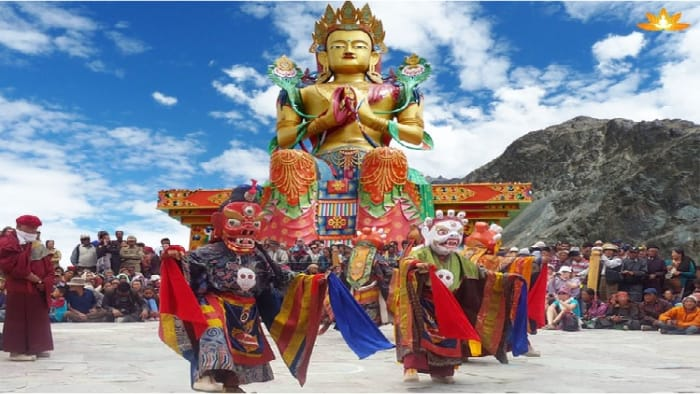
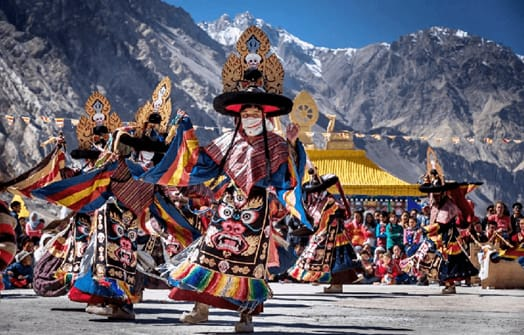
Known as Dosmochey or the “Festival of the Scapegoat,” this is one of Ladakh’s most significant monastic events. Primarily held at Leh Palace and supported by monasteries like Likir and Diskit, it features elaborate sacred rituals led by Buddhist monks.The centerpiece involves the creation of intricate ritual offerings, including dough effigies and thread crosses designed to capture negative energies, evil spirits, and misfortunes accumulated over the long winter. On the final day, these symbolic items are ceremonially burned or destroyed, representing the triumphant removal of negativity and the welcoming of good fortune.Monks perform mesmerizing Cham (masked) dances, blending drama, spirituality, and artistry to depict the eternal victory of good over evil. The atmosphere buzzes with prayer chants, traditional music, and devotees in colorful attire seeking blessings.
The Stromochey Festival at Likir Monastery
Parallel to Dosmochey, the Stromochey Festival unfolds at the ancient Likir Monastery, renowned for its stunning location and rich heritage. This event shines through vibrant Cham masked dances performed by monks in elaborate, intricate costumes.
These ritual performances vividly illustrate the triumph of good over evil while warding off malevolent forces to ensure peace, prosperity, and harmony for the community. The dances, accompanied by rhythmic music and sacred chants, create a captivating spiritual spectacle that captivates all who witness it.
A Celebration of Culture, Community, and Renewal
Both festivals attract a lively mix of residents and tourists eager to experience Ladakh’s profound Buddhist legacy. Prayer ceremonies fill the air with devotion, while traditional music, vibrant attire, and communal gatherings foster a sense of unity and joy.Beyond their religious depth, Dosmochey and Stromochey embody Ladakh’s enduring cultural traditions. Passed down through generations, these rituals strengthen community bonds, preserve ancient practices, and renew hope as the snow begins to recede and preparations for the agricultural season take root. As Ladakh bids farewell to winter’s chill, these monastic festivals serve as powerful reminders of resilience, renewal, and the enduring spirit of the region. If you’re in Ladakh or planning a visit, immerse yourself in this extraordinary cultural moment-where faith, tradition, and nature converge in perfect harmony.
The Great Night of Shiva – A Pan-Indian Spiritual Spectacle
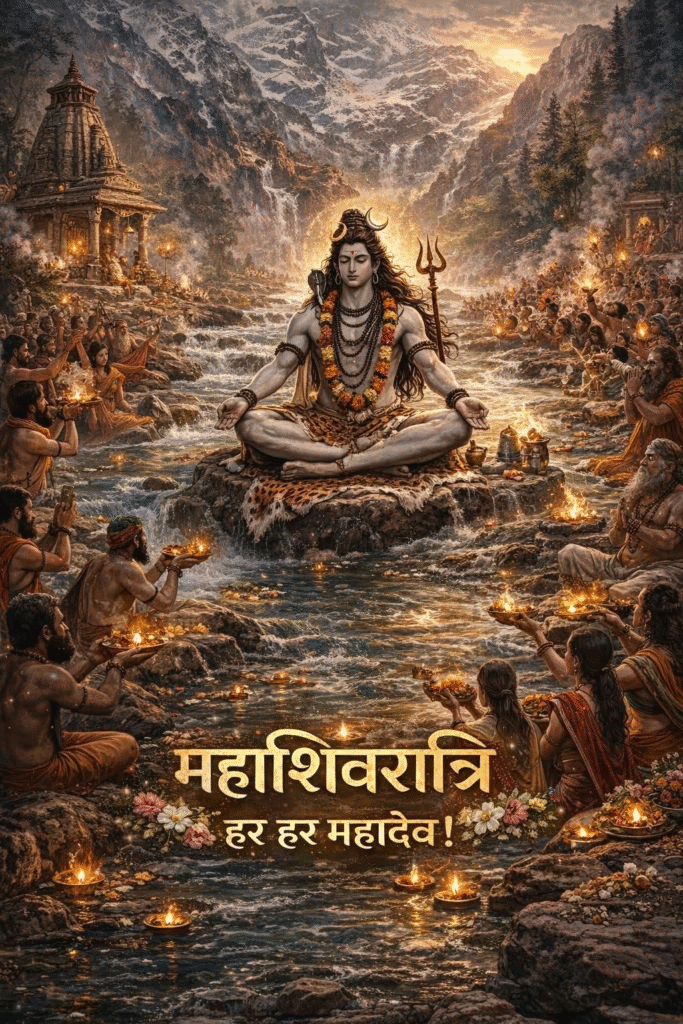
Maha Shivratri, translating to “The Great Night of Shiva,” stands as one of Hinduism’s most profound festivals, dedicated entirely to Lord Shiva. Observed annually during the Phalguna month (typically February-March), it commemorates the divine marriage of Shiva and Parvati while symbolizing spiritual awakening, the triumph of light over darkness, and inner transformation. In 2026, the festival fell on February 15, drawing millions into night-long vigils, fervent prayers, and deep devotion across the length and breadth of India.
Core Rituals: Fasting, Vigil, and Chanting Through the Sacred Night
Devotees across the country observe rigorous practices on this auspicious day. Many undertake a strict fast, limiting intake to fruits, milk, or even a nirjala (waterless) fast for the spiritually intense. The night holds special sanctity, with worshippers staying awake through its four prahars (quarters), chanting the powerful mantra “Om Namah Shivaya,” performing abhishekam (ritual bathing of the Shiva lingam), and offering bilva leaves, flowers, and prayers. These acts represent self-discipline, overcoming ignorance, and seeking higher consciousness.
Celebrations from North to South: Iconic Temples Come Alive
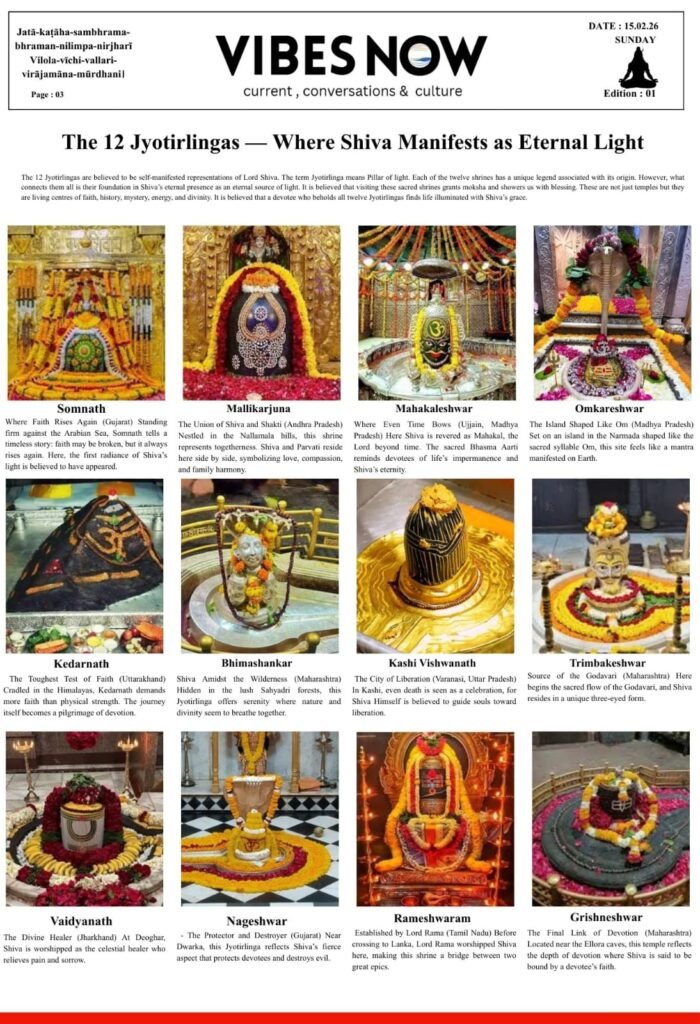
Maha Shivratri transforms major Shiva shrines into vibrant hubs of devotion. In Varanasi’s ancient Kashi Vishwanath Temple, thousands converge for grand rituals, processions along the Ganges ghats, and chants of “Har Har Mahadev.” Ujjain’s Mahakaleshwar Temple hosts the unique Bhasma Aarti at dawn, where the deity is anointed with sacred ash amid massive crowds. Gujarat’s Somnath Temple and Tamil Nadu’s Rameswaram (Ramanathaswamy Temple) witness elaborate ceremonies, long queues for darshan, and special abhishekams, drawing pilgrims seeking blessings from these revered Jyotirlingas.
Regional Flavors: Unique Traditions in Kashmir, Tamil Nadu, and Beyond
The festival takes on distinct local hues across regions. In Kashmir, Kashmiri Pandits celebrate it as “Herath,” marked by traditional feasts, walnut-soaking rituals, and family gatherings. Tamil Nadu and Karnataka temples glow with beautiful decorations, cultural programs, and processions. In bustling cities like Mumbai and Delhi, throngs visit prominent sites such as Siddhivinayak (though primarily Ganesha, linked Shiva events occur) and Neelkanth Mahadev, blending urban fervor with ancient piety.
The Deeper Spiritual Dimension: Meditation, Yoga, and Inner Energy
Beyond temple rituals, Maha Shivratri carries a profound spiritual essence. Followers emphasize meditation and yoga, viewing the night’s planetary alignment as a powerful enhancer of spiritual energy. At the renowned Isha Yoga Center in Coimbatore, thousands participate in large-scale meditation programs, guided sessions, cultural performances, and night-long events led by Sadhguru, attracting global seekers for explosive meditations and transformative experiences.
The Ultimate Message: Devotion, Resilience, and Quest for Enlightenment
For millions, Maha Shivratri transcends mere celebration-it’s a call to self-discipline, inner purification, and awakening. Staying awake through the night symbolizes conquering darkness and ignorance, while devotion to Shiva fosters resilience and the pursuit of higher consciousness. From the eternal ghats of Kashi in the north to the southern shores of Rameswaram, this sacred night reaffirms India’s unbroken spiritual heritage, uniting diverse traditions in shared reverence for Lord Shiva. Har Har Mahadev!
Regional Flavors: Unique Traditions in Kashmir, Tamil Nadu, and Beyond
The festival takes on distinct local hues across regions. In Kashmir, Kashmiri Pandits celebrate it as “Herath,” marked by traditional feasts, walnut-soaking rituals, and family gatherings. Tamil Nadu and Karnataka temples glow with beautiful decorations, cultural programs, and processions. In bustling cities like Mumbai and Delhi, throngs visit prominent sites such as Siddhivinayak (though primarily Ganesha, linked Shiva events occur) and Neelkanth Mahadev, blending urban fervor with ancient piety.
The Ultimate Message: Devotion, Resilience, and Quest for Enlightenment
For millions, Maha Shivratri transcends mere celebration-it’s a call to self-discipline, inner purification, and awakening. Staying awake through the night symbolizes conquering darkness and ignorance, while devotion to Shiva fosters resilience and the pursuit of higher consciousness. From the eternal ghats of Kashi in the north to the southern shores of Rameswaram, this sacred night reaffirms India’s unbroken spiritual heritage, uniting diverse traditions in shared reverence for Lord Shiva. Har Har Mahadev!
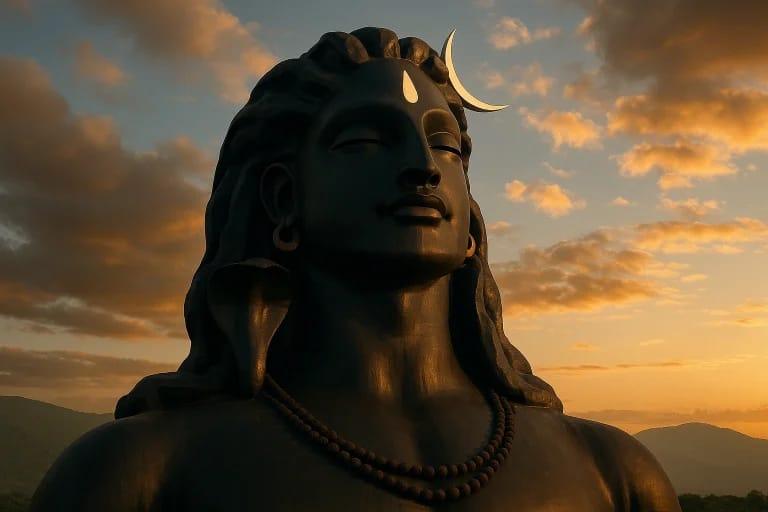
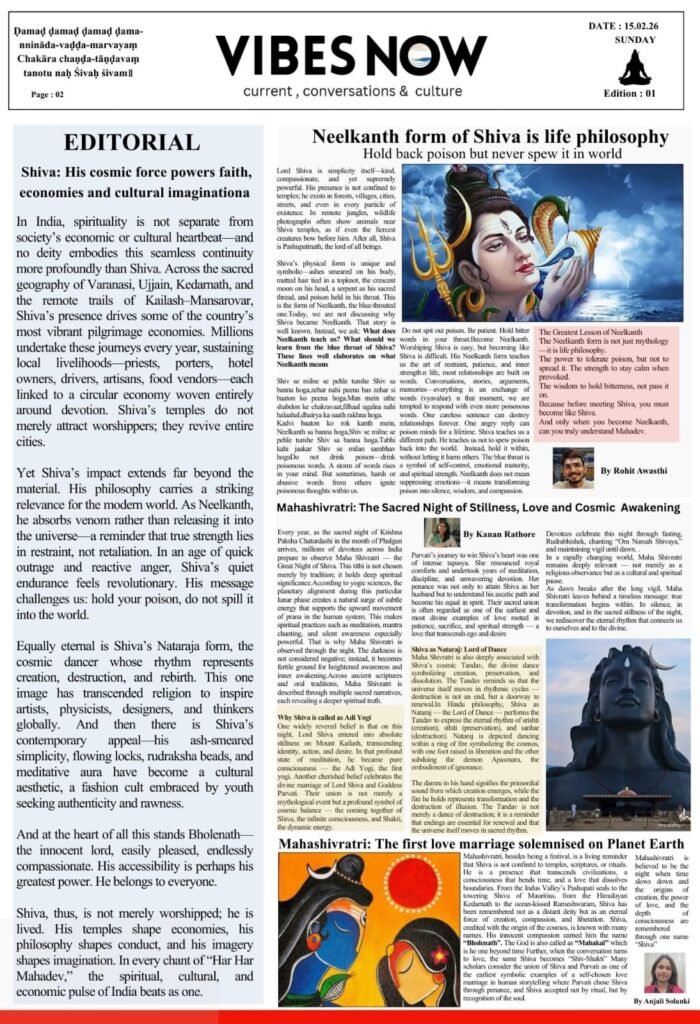
To some, Shiva is a meditating yogi; to others, a divine lover; and to many, the cosmic dancer of the universe. But on Mahashivratri, these identities merge — Adi Yogi, Shiv–Shakti, and Nataraj become symbols of stillness, unity, and motion. This sacred night is not just about rituals; it is a reminder that life itself is a dance between silence and energy, between consciousness and creation.
Every year, as the sacred night of Krishna Paksha Chaturdashi in the month of Phalgun arrives, millions of devotees across India prepare to observe Mahashivratri — the Great Night of Shiva. This tithi is not chosen merely by tradition; it carries profound spiritual significance.
According to yogic sciences, the planetary alignment on this lunar phase creates a natural surge of subtle energy that supports the upward movement of prana in the human system. This makes spiritual practices such as meditation, mantra chanting, and silent awareness especially powerful on this night. That is why Mahashivratri is observed through the night. Darkness here is not considered negative; rather, it becomes fertile ground for heightened awareness and inner awakening.
Across ancient scriptures and oral traditions, Mahashivratri is described through multiple sacred narratives, each revealing a deeper spiritual truth.
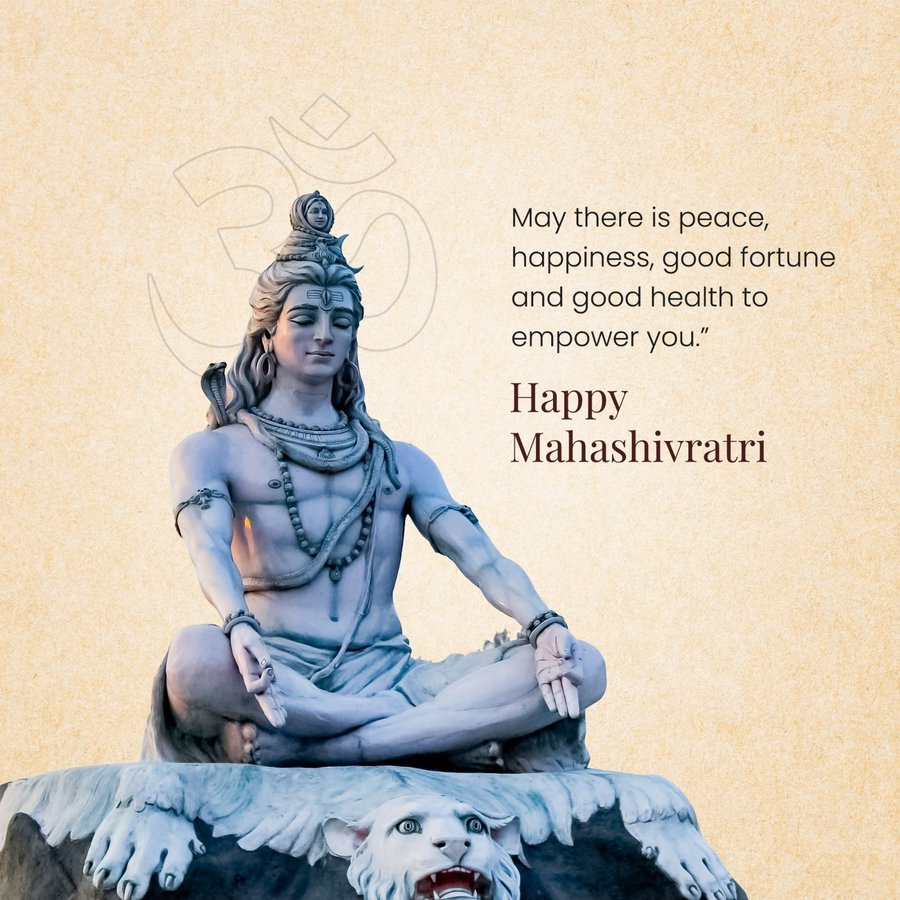
One widely revered belief is that on this night, Lord Shiva entered into absolute stillness on Mount Kailash, transcending identity, action, and desire. In that profound state of meditation, he became pure consciousness — the Adi Yogi, the first yogi.
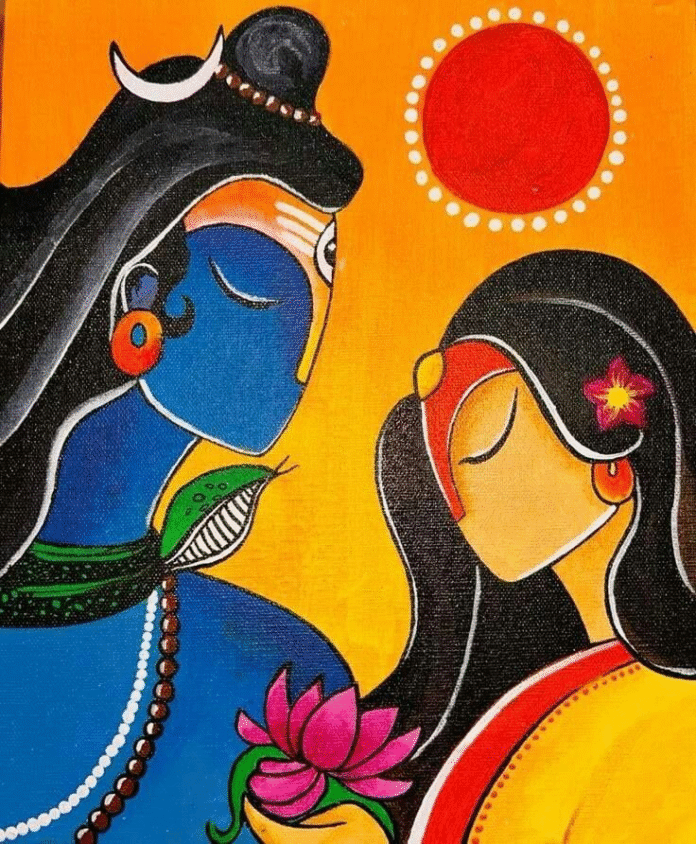
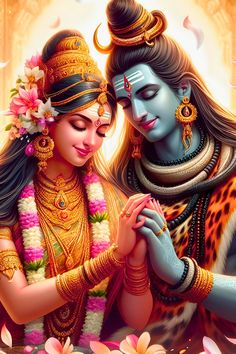
Another cherished belief celebrates the divine marriage of Lord Shiva and Goddess Parvati. Their union is not merely a mythological event, but a powerful symbol of cosmic balance — the coming together of Shiva, the infinite consciousness, and Shakti, the dynamic energy. Parvati’s journey to win Shiva’s heart was marked by intense tapasya. She renounced royal comforts and undertook years of discipline, meditation, and unwavering devotion. Her penance was not only to attain Shiva as her husband, but to understand his ascetic path and become his equal in spirit. Their sacred union is often regarded as one of the earliest and most divine examples of love rooted in patience, sacrifice, and spiritual strength — a love that transcends ego and desire.
Mahashivratri is also associated with Shiva’s cosmic Tandav, the powerful dance symbolizing creation, preservation, and dissolution. The Tandav reminds us that the universe itself moves in rhythmic cycles, and that destruction is not an end, but a doorway to renewal.
Devotees celebrate this night through fasting, Rudrabhishek, chanting “Om Namah Shivaya”, and maintaining vigil until dawn. Temples resonate with prayers, bells, and bhajans, but at its core, the festival calls for inner silence.
In rapidly changing times, Mahashivratri continues to remain deeply relevant — not merely as a religious observance, but as a cultural and spiritual pause. In an age dominated by constant motion and distraction, this sacred night reminds us of balance, restraint, and inward reflection. For the youth, the festival’s message resonates not as an old ritual, but as timeless guidance — to balance action with stillness, passion with peace, and self-discipline with devotion.
As dawn breaks after the long vigil, Mahashivratri leaves behind a timeless message: true transformation begins within. In silence, in devotion, and in the sacred stillness of the night, we rediscover the eternal rhythm that connects us to ourselves and to the divine.
(The writer of this article is Kanan Rathore, a student of Haridev Joshi University, Jaipur)
Is Shiva a mystery or a science yet to be understood? He may be called a mystery because his lifestyle suggests a recluse, and his meditation posture suggests a profound ascetic yogi. Legend describes him as God, and in his divine acts, he can be seen as an ordinary human being—sometimes a half-naked wanderer living with ghosts, or sometimes a supreme vibration or sound of consciousness.
Shiva has always existed beyond easy definition. He is simultaneously myth and metaphysics, folklore and philosophy, symbol and science. Perhaps that is why he remains the most enigmatic figure in the Indian civilizational imagination—accessible to the devotee, yet elusive to the scientist.
The Paradox of the Shiva Family
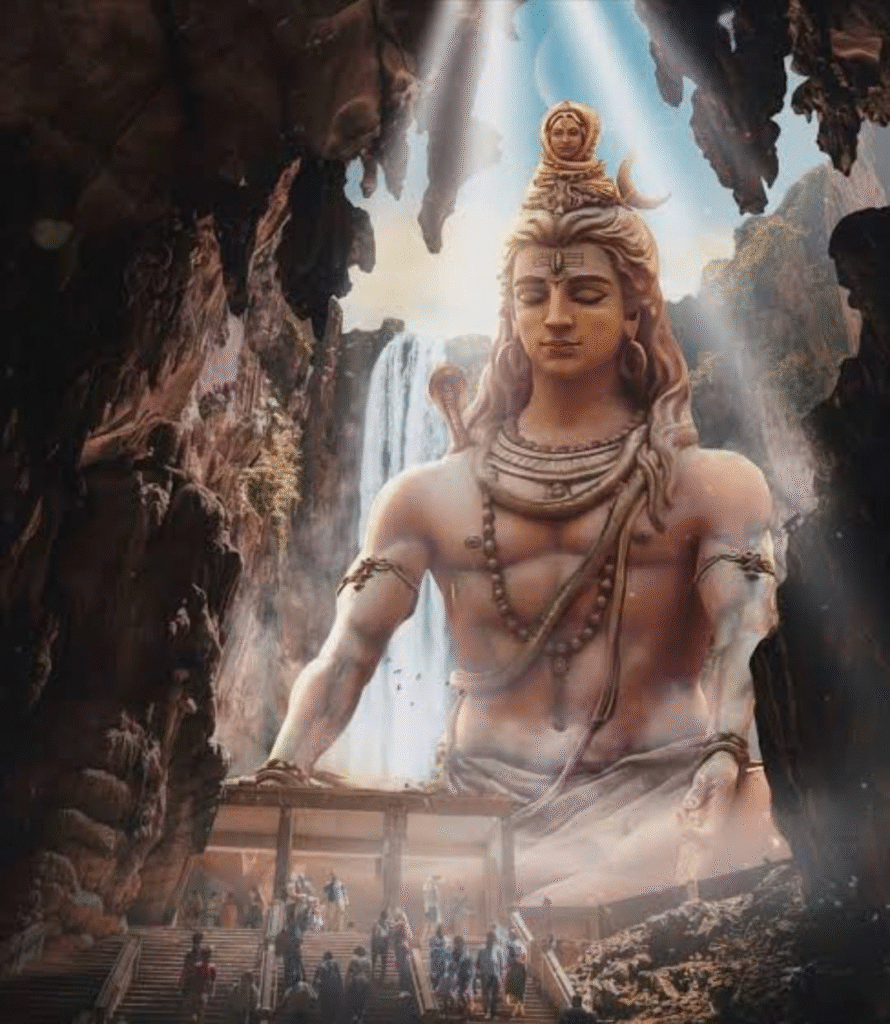
When we look at the Shiva family, a fascinating paradox emerges. Lord Shiva carries a cobra on his shoulder, yet Ganesha’s mount is a rat—natural prey for the serpent. Kartikeya rides a peacock, which feeds on snakes. Mother Parvati rides a lion, while Shiva’s mount Nandi the bull would be prey for the lion. In nature, these beings would be enemies, yet in the Shiva household, they coexist in harmony.
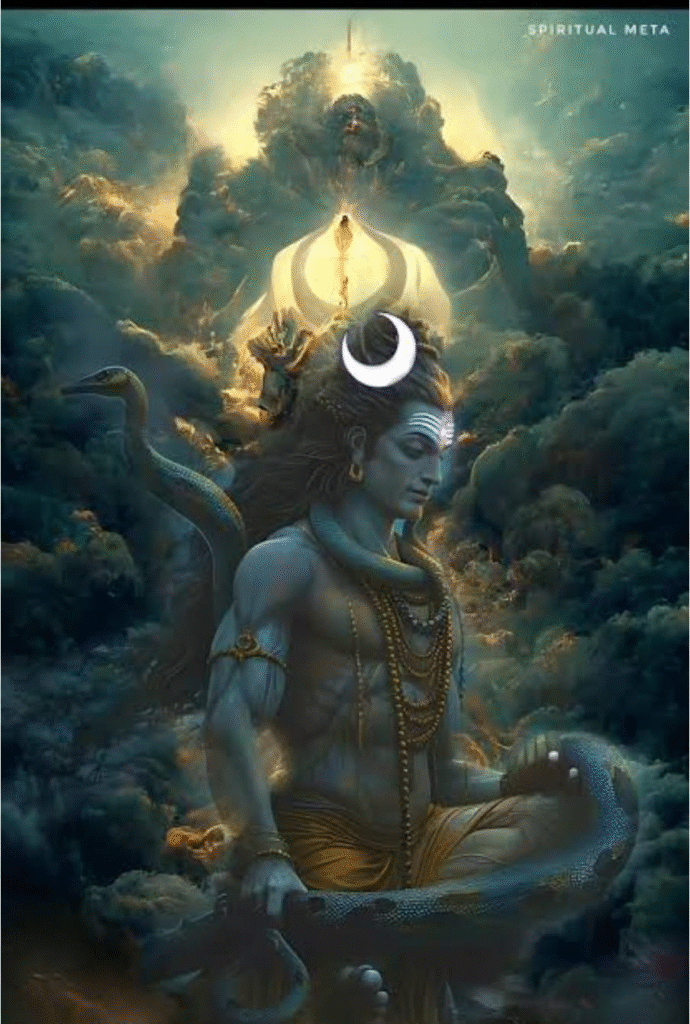
This symbolic family represents the triumph of consciousness over instinct, harmony over conflict, and unity over diversity. Shiva’s third eye symbolizes destruction, while his matted locks release the river Ganga—the symbol of life and nourishment. In one hand he holds a conch, the sound of creation; in the other, a trident, the symbol of cosmic balance. Creation and destruction coexist within him, just as opposites coexist within his family.
The Shiva Family in India’s Geography
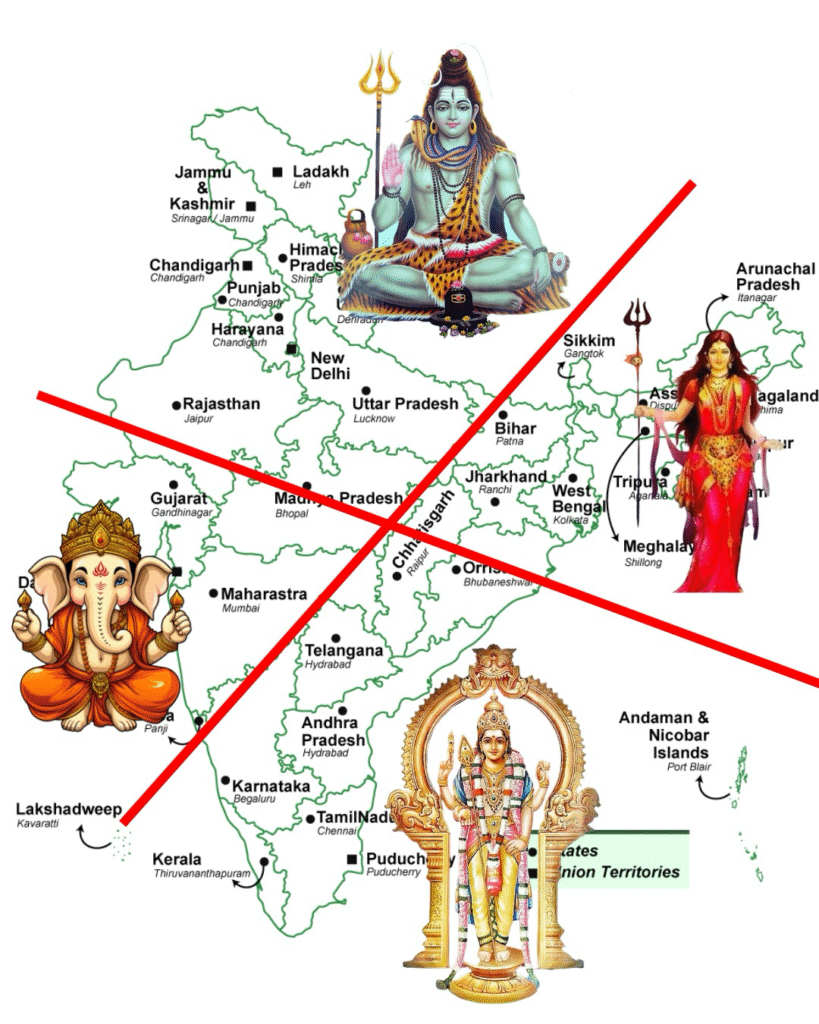
The Shiva family is not just a spiritual concept—it is also geographically reflected across India. Kartikeya (Murugan) is primarily worshipped in South India, Ganapati in Central and Western India, Parvati in Eastern and Northern India, and Shiva prominently in Northwestern India.
This distribution is not accidental. It reflects cultural currents, migration patterns, and the layered evolution of Indian civilization, where different regions resonated with different aspects of the Shiva consciousness.
Jyotirlingas and the Golden Ratio
The twelve Jyotirlingas—sacred manifestations of Shiva across India—are believed by some scholars and mystics to follow the Golden Ratio (1.618), a universal proportion found in nature, galaxies, and human anatomy. Their spatial arrangement from Somnath to Rameswaram forms a circular and petal-like geometry, echoing cosmic patterns.
The conch shells associated with Shiva also follow the same ratio, suggesting that ancient Indian sages understood universal aesthetics and cosmic geometry long before modern science rediscovered them.
The Mystery of Mount Kailash
Mount Kailash, the mythical abode of Shiva, remains one of the greatest mysteries on Earth. Unlike Mount Everest, it has never been summited. It appears as a perfect pyramid, aligned precisely with the cardinal directions, composed largely of granite.
Scientists and explorers have reported unusual magnetic fields in the region, radar anomalies suggesting hollow structures, and biological changes such as accelerated hair and nail growth. While scientific explanations remain debated, the mystique of Kailash continues to reinforce Shiva’s image as a cosmic presence beyond human reach.
The Science of Shiva Temple Construction
Shiva temples are not merely places of worship—they are architectural and energetic marvels. Ancient texts like Mayamatam and Samarangana Sutradhara describe precise rules involving geometry, astronomy, acoustics, and Vaastu Shastra. Many temples are aligned with geomagnetic lines and cosmic directions, creating centers of subtle energy.
Yet Shiva also needs no grand temple. A simple stone under a peepal tree, offered water and milk, becomes a living shrine. From Pipaleshwar Mahadev beneath a tree to Kheleshvar Mahadev in a stadium, Shiva is equally present. The sacred is not confined to architecture—it is activated by awareness.
Shiva’s Spirituality and Philosophy
Shiva is both the ascetic yogi and the householder husband, both emptiness and infinity. He represents Satyam (truth), Shivam (auspiciousness), Sundaram (beauty), Shunya (void), and Anant (infinite).
He destroys to create, withdraws to manifest, dissolves to regenerate. In Shiva, detachment becomes beauty, and paradox becomes harmony. He is the Brahman—simple for the devotee, yet an unsolved riddle for science.
A Poetic Invocation
“Shunya hai saadhaa hua nakshatra saare maun hain Bhasm hai rami hui, sir par sajjit Som hai Vishdhar dhara kanth jiske, sir par sajjit Som hai Saadhana mein aadi yogi jap raha Om Om hai”
(“The void is perfect, all the stars are silent. Ashes are smeared, and Soma is adorned on his head. The poisonous snake has its throat adorned with Soma. In meditation, the original yogi is chanting Om Om.”)
(The writer of this article is Pankaj R Panchal, a student of Haridev Joshi university, Jaipur)
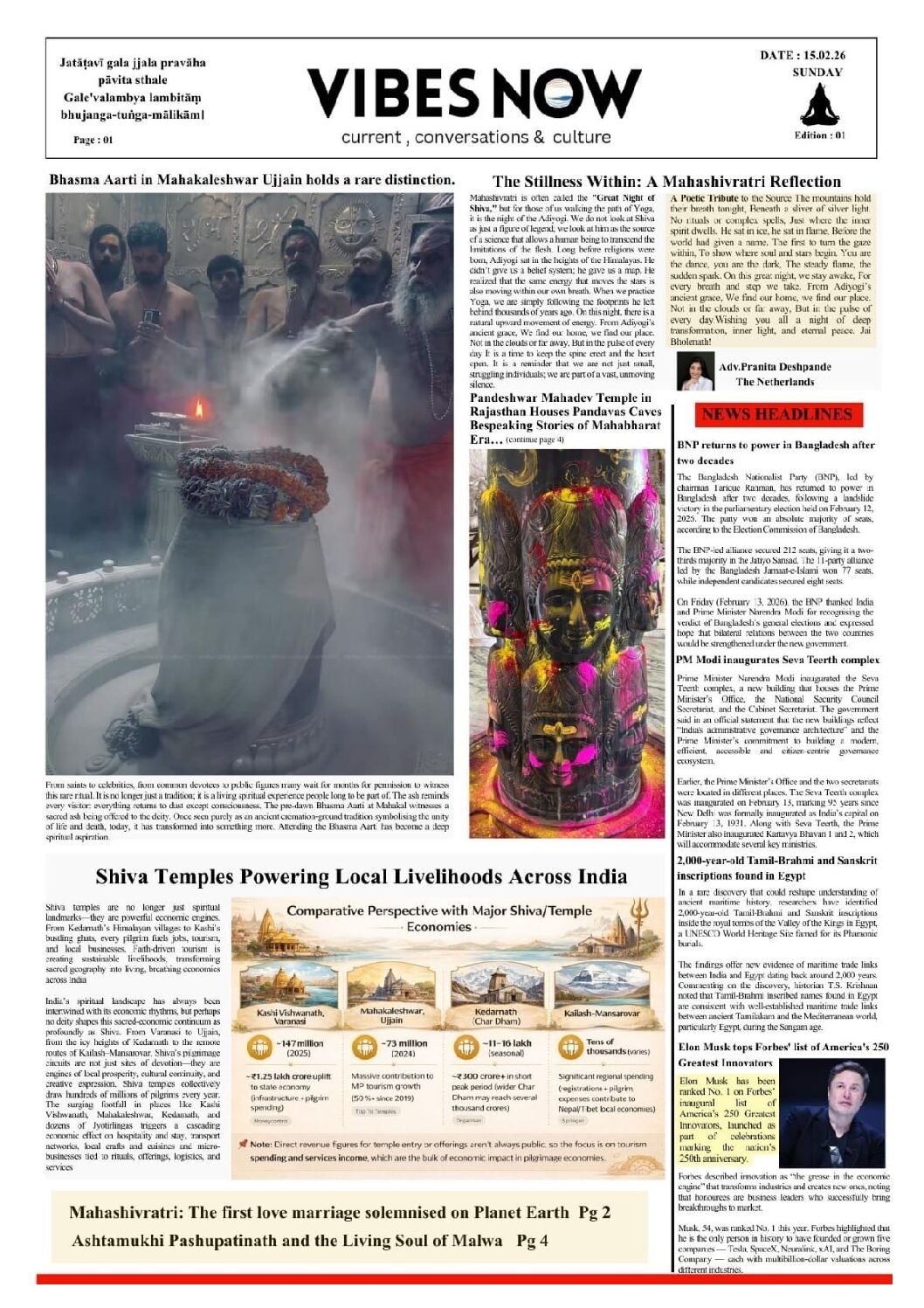
After the successful launch of our website, social media platforms, and newsletter, we are proud to announce another exciting milestone in our journey. Here comes VIBES NOW – our new weekly edition.
On the auspicious occasion of Mahashivratri, we proudly launch VIBES NOW, marking a powerful new chapter in our growth.
This weekly edition is not just another publication — it is a reflection of voices, stories, culture, truth, and the spirit of modern India. It brings together thoughtful journalism, meaningful narratives, and impactful reporting, delivered to you every week with renewed energy and purpose.
With VIBES NOW, we strengthen our commitment to authentic journalism, responsible storytelling, and consistent engagement with our readers.
You can read the complete weekly edition on our Instagram page, on our official website, and across all our digital platforms.
As we celebrate this new beginning on Mahashivratri, we seek your blessings and continued support.
From Digital Presence to Weekly Impact — The Story Continues.
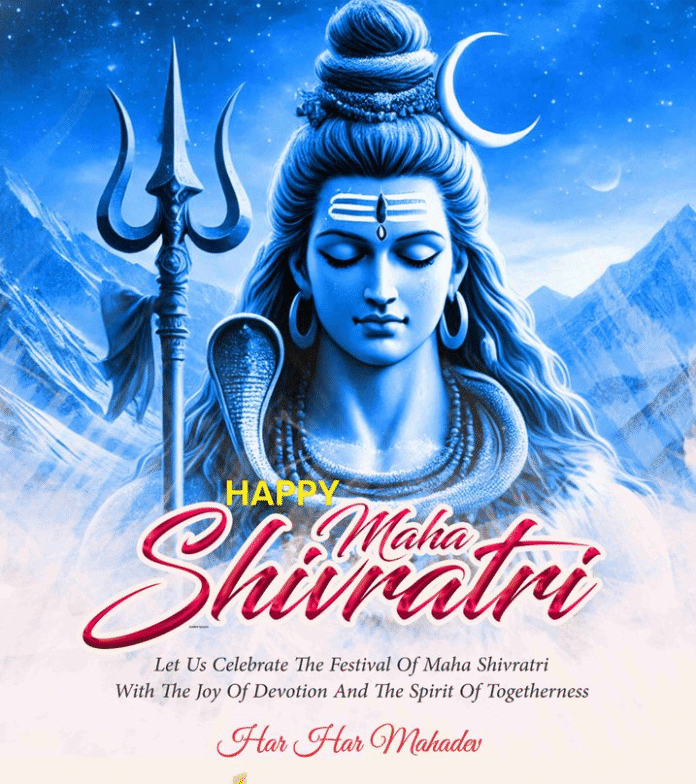
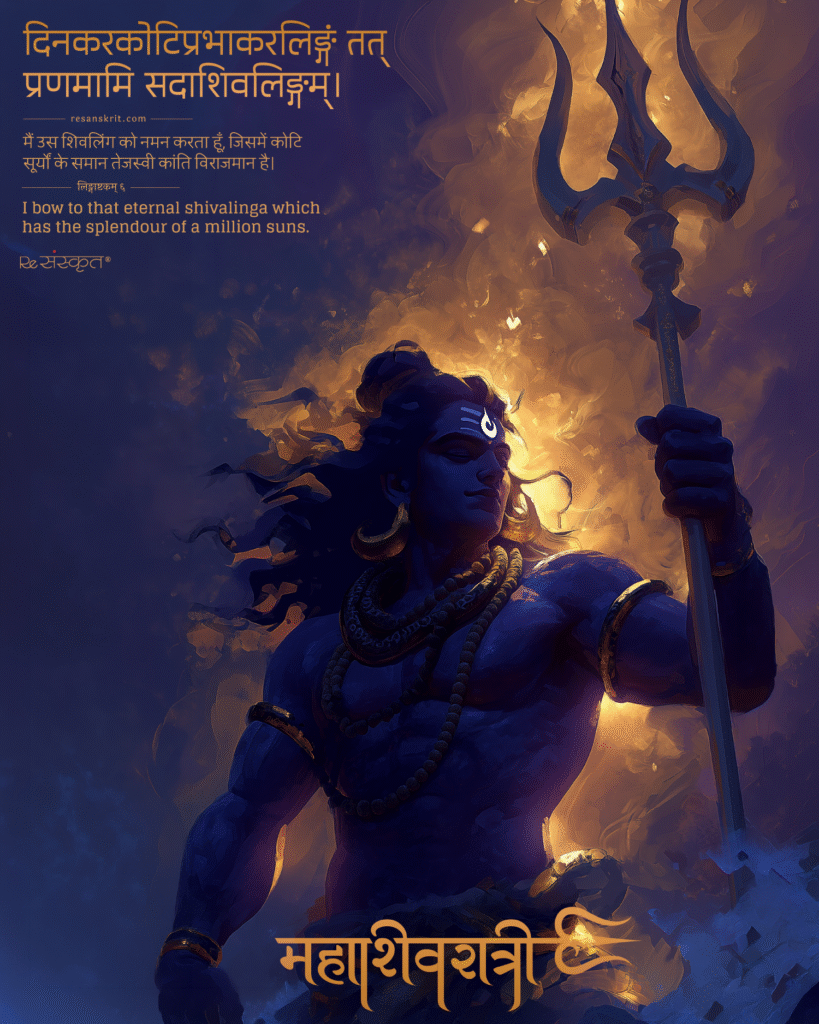
Happy Mahashivratri 2026 Wishes, Images, Messages, Quotes, Greetings, WhatsApp Status: The festival will be celebrated on Sunday, 15 February 2026, with various rituals such as fasting, night-long vigils, chanting of mantras, and more. Share the wishes with your friends and family to mark the auspicious occasion.
Happy Mahashivratri 2026 Wishes, Images, Messages, Quotes, Greetings, WhatsApp Status: Maha Shivratri, which translates into “the Great Night of Shiva”, is one of the most significant Hindu festivals dedicated to Lord Shiva, or Mahadeva, and celebrates the divine marriage of Lord Shiva and Goddess Parvati, according to mythological legends.
It is marked with various rituals like fasting, night-long vigils, chanting mantras, and more. With the festival around the corner, falling on Sunday, February 15, 2026, here are wishes and greetings to share with friends and family on the festival.
Maha Shivratri 2026: Warm Greetings
Wishing you and your family joy, health, and harmony this Maha Shivratri.
May the blessings of Lord Shiva always protect your loved ones.
May this festival bring peace to your home and happiness to your heart.
Wishing you a spiritually uplifting and blessed Maha Shivratri 2026.
Sending you warm wishes for a night filled with devotion and serenity.
May your prayers be answered and your life be filled with divine grace.
Happy Maha Shivratri 2026! May Lord Shiva shower you with abundant blessings.
Maha Shivratri 2026: Inspirational Wishes
May the power of Lord Shiva inspire you to overcome every challenge with confidence.
Just as Shiva destroys evil, may you conquer your fears and doubts.
May this Maha Shivratri awaken your inner strength and wisdom.
Let the divine energy of Shiva bring clarity, courage, and calmness to your life.
Let this divine night remind you that transformation leads to growth.
May you be blessed with determination, resilience, and success in all your endeavours.
May the blessings of Mahadev light your path toward achievement and fulfilment.
Maha Shivratri 2026: Devotional Quotes
On this sacred night, may Lord Shiva dissolve your sorrows and awaken your soul.
Where there is faith in Mahadev, there is no fear.
May Bholenath guide you on the path of truth and righteousness.
Shiva is not just a deity—He is the silence within.
Let your heart chant ‘Om Namah Shivaya’ and your worries fade away.
In the stillness of Maha Shivratri, find your true self.