Home Blog Page 679

Now travel under water through Metro!

0

According to a senior official report, the Kolkata Metro made history on Wednesday when a train traveled for the first time through a tunnel under a river. The journey was initiated from Kolkata to Howrah on the opposite side of the river, and the Metro train traveled beneath the Hooghly with only officials and engineers.

Many officials claimed this was a “revolutionary step” in bringing a cutting-edge transportation system to Kolkata and its surrounding areas.

P. Uday Kumar Reddy, the general manager of Metro Railway, and several senior personnel rode the train from Kolkata’s Mahakaran station to Howrah Maidan station.

Rohida Tree: A tree connected with the culture of Rajasthan

0

On the vast culture of Rajasthan, Dimple Arora describes the significance of the Rhoda Tree…

Rohida tree, also known as Tecomella undulate, is a native tree of Rajasthan, India. It is a drought-resistant tree that can grow up to 10 meters in height and has a spread of about 10 meters. The Rohida tree is found in Oman and from southwest Iran to northwest India. Thus, because Rajasthan is mostly found in the desert areas of Shekhawati and Marwar, the trade name for the tree species is desert teak or Marwar teak.

The Rohida tree has been often used for timber, furniture, and fuelwood. The bark, leaves, and flowers of the tree are also used in traditional herbal medicine for their healing properties.
Many traditional Rajasthani houses are made of the wood of the Rohida tree, resulting in a distinctively warm, reddish-brown hue in the interior. Thus, the wood is highly durable and can withstand extreme weather conditions, making it ideal for use in construction in the hot and arid regions of Rajasthan.

Many Rajasthani communities consider the Rohida tree holy. It is frequently planted as a sign of prosperity and good luck in houses and temples. Aside from its cultural and commercial value, the Rohida tree is also ecologically significant; it is an important part of Rajasthan’s dry ecology, giving shade and shelter to a variety of animal and bird species. As a result, the tree’s deep roots aid in soil stabilization and desertification prevention.

However, due to deforestation and overexploitation, the Rohida tree is now facing threats to its survival. Conservation efforts are underway to protect and propagate this important species. Initiatives such as afforestation drives, sustainable harvesting practices, and raising awareness among local communities about the ecological significance and cultural value of the Rohida tree are being taken up by various organizations and government agencies.

Furthermore, the Rohida tree is a crucial component of the arid ecosystem in Rajasthan, with cultural, commercial, and ecological significance. Ensuring its conservation and sustainable use is crucial for the long-term prosperity and well-being of the communities and wildlife that depend on it.

Jawai: The Land of Leopards

0

Dimple Arora reports on the wildlife of Jawai…

When it comes to safari, our mind creates the mood of open jeep rides watching the animals and nature. With 16 settlements, 9 leopard safari locations, and a 5-kilometer-long water reservoir with a depth of 62 feet, Jawai is dispersed across a radius of 60 kilometers. You will observe the magnificent lava rock creation of mountains in all directions. The ideal path to follow to reach Jawai is indicated by lava rocks at the area’s entrance.

Rajasthan is privileged with many wildlife destinations, among which Bera and Jawai are known as the leopard capitals. Thus, the wildlife location is known by the names Bera and Jawai. Bera is a small village where people live, and Jawai is the name of a complete area where wild animals, birds, and humans all live, so Bera comes under the Jawai region.

In addition to this, Jawai is endowed with a variety of wild animals, including foxes, jackals, sloth bears, blue bulls, blackbucks, wild boars, and leopards. There are 115 bird species found in this area, 65 of which are migratory and can be found from November to mid-April. Flamingos and cranes are prime attractions for visitors.

The main draw of Bera and Jawai is leopards; visitors may see these elusive big cats by signing up for a leopard safari excursion at Jawai Safari. The leopard safari is conducted by the operators twice daily in a specially designed 4X4 vehicle, and it takes around two to three hours to complete.

Jawai is surrounded by huge hills shaped by lava millions of years ago; now the natural caves in those lava hills (the Jawai Hills) have become home for leopards. A leopard safari in Bera or Jawai is a must-do activity since the odds of seeing leopards there are significantly better than in other places where animals may be found. From September through June is the ideal period to engage in this activity.


The Battle Of Badr: History and Significance 

0

Mohammed commanded Muslims to victory on March 13, 624, at the Battle of Badr, Saudi Arabia. The introduction of Islam to the Arabian Peninsula was greatly aided by this occasion.

Mohammed, the Prophet of Islam, underwent a migration known as the hijra in which he left his native Mecca. Thus, he made Medina his permanent home for a while. 

However, as the new religion acquired adherents, tensions between Muslims in Medina and Mohammed’s relatives, the influential Quraysh tribe of merchants, grew. 

Quraysh caravans that traveled to and from Medina on commercial routes frequently clashed with Muslims in those times. 

The Battle of Badr took place in the Madinah Province’s little village of Badr. The Madinah Province’s little town of Badr is where the Battle of Badr took place. Madinah and Yanbu are both located nearby; the distances between them are 130 km and 82 km, respectively. The distance to Makkah, a holy city, is also 355 kilometers.

At Badr, a caravan of Quraysh stopped, and Mohammed’s men ambushed it. A Quraysh army encountered the Muslims in the Badr Valley. Thus, the Muslims and Quraysh initially came into direct conflict at the Battle of Badr. The battle, in which over a thousand soldiers took part, lasted for hours and was decisively won by the Muslims. Six years later, at Mecca, the Quraysh peacefully yielded to Mohammed’s army.

Jaipur-Delhi Vande Bharat Express is all set to start

0

Dimple Arora reports on the recent launch of the Vande Bharat Express, which connects Delhi and Jaipur and cuts the journey time by one hour and 45 minutes…

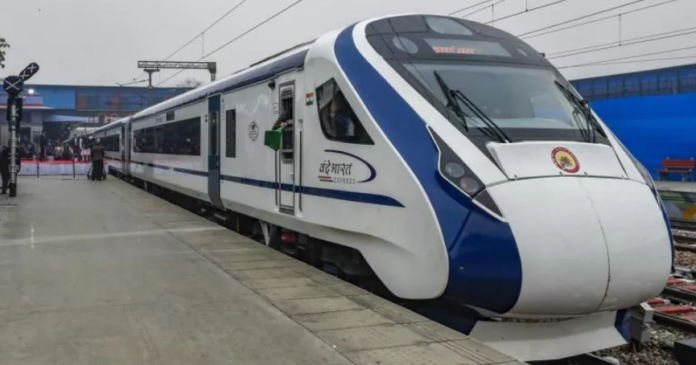
After the start of the Vande Bharat Express train on April 12th, the journey time between Delhi and Jaipur will be shortened by one hour and 45 minutes. It is going to be the first modern train in Rajasthan. The Jaipur-Delhi Vande Bharat Express, also known as Train 18, was launched on February 15th, 2019, by Prime Minister Narendra Modi from New Delhi Railway Station.

Under the flagship Make-in-India program, the Integral Coach Factory (ICF) at Perambur in Chennai developed and manufactured the Vande Bharat Express.

The new train service operates on the Delhi-Jaipur route, covering a distance of 308 km between the two cities in just 4 hours and 30 minutes. It is a significant step towards modernizing the rail infrastructure in India and bringing faster, more comfortable travel to the citizens.

The train has state-of-the-art facilities, including fully air-conditioned coaches, GPS-based audio-visual passenger information systems, modular toilets with bio-vacuum systems, and automatic doors with retractable footsteps. It also boasts comfortable seating, onboard Wi-Fi, and an onboard hot food vending machine, making travel more enjoyable and convenient for passengers.

 One of the significant advantages of the Vande Bharat Express is its high speed, which is an essential feature for any modern travel service. It can reach speeds of up to 160 km/hr, which significantly reduces travel time and increases efficiency. 

 Another critical aspect of the Vande Bharat Express is its safety features. The train has a self-propelled design, which means that it has an engine attached to each coach, ensuring that each one can move independently. It also has a fire detection and suppression system, CCTV cameras, and an emergency…brake system, making it one of the safest modes of transportation in India. Additionally, the train’s design helps reduce jerkiness and swaying, making it a stable and comfortable ride.

The modern equipped amenities add more to the services of Vande Bharat Express including onboard Wi-Fi, infotainment screens, and GPS-based passenger information systems. Passengers can even order food through an app and have it delivered directly to their seats 

Birla Estates enters the residential real estate sector in Pune by purchasing a 5.76-acre property plot in the financial district. 

0

The Aditya Birla Group’s real estate endeavor is Birla Estates Private Limited, with a 100 percent owned subsidiary of Century Textiles and Industries Limited. Thus, Birla Estates has quickly been recognized as a leading brand in the real estate sector.  

However, in important markets, Birla Estates creates luxury residential buildings. In addition to developing its land parcels, the business is also developing land parcels through outright purchases and asset-light joint ventures. 

Therefore, by purchasing 5.76 acres of property in Sangamwadi, Pune’s central business area, Birla Estates Private Limited, the real estate division of the Aditya Birla Group located under Century Textiles and Industries Limited, has finally joined the Pune residential real estate market. 

They Purchased from Sudarshan Chemical Industries Ltd. was the land (SCIL). Thus, this land has a potential revenue of around Rs. 2,500 Cr. and is situated in one of Pune’s most exclusive neighborhoods.

Following, keeping with its goal to build thoughtful LifeDesigned rooms with carefully chosen features that establish new standards for contemporary living, the business intends to develop a high-end residential complex. 

Regarding the recent deal, Mr. K T Jithendran, MD and CEO, of Birla Estates stated, “With this foray into Pune, Birla Estates is embarking on an exciting new phase after establishing itself in the MMR (Mumbai Metropolitan Region), Bengaluru and NCR (National Capital Region) markets. Pune is one of the country’s largest residential markets and this land with high revenue potential is located at the heart of the city. We aim to create an urban ecosystem in line with our LifeDesigned philosophy catering to customer needs and enhancing the quality of life. The Pune foray is key to our growth strategy and our ambition to be among the top developers in the country.”

Thus, Century Textiles and Industries Ltd (CTIL)’s major development engine, Birla Estates, is actively working on several projects in several important domestic markets. It comprises Mumbai’s most exclusive neighborhood, Worli, and its flagship project, Birla Niyaara. One of the best-selling residential developments in MMR, Birla Niyaara has had brisk sales of more than Rs 2300 crore in more than a year after its debut.

IIM Udaipur inaugurates two One-year Full-time MBA Programs 

0

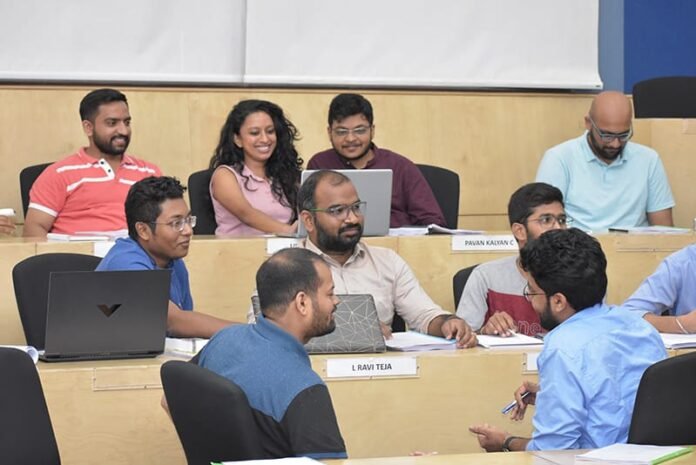
For the academic year 2023–2024, the Indian Institute of Management Udaipur conducted the opening ceremonies for the Fourth batch of its One Year MBA – Digital Enterprise Management (DEM) program and the Eleventh batch of its One Year MBA – Global Supply Chain Management (GSCM) program. For both courses in the next academic year, the institute has raised the total number of seats by 20% in comparison to prior batches. 

Prof. Rajesh Agrawal, Chairperson of the One-Year MBA Program Committee, and Prof. Ashok Banerjee, Director of IIM Udaipur, presided over the event. Mr. Pratik Pal, Chief Executive Officer of Tata Digital, was recognized as the program’s chief guest.

116 students signed up for the one-year MBA programs in total. 18% of these students are female. There are 55 students enrolled in the one-year MBA program in global supply chain management (GSCM), and 61 in the one-year MBA program in digital enterprise management (DEM).

The class of 2023–24 for the One-Year MBA program is diversified, having expertise from a range of industry backgrounds. Students in the program have worked in a variety of fields in the past, including agriculture, automobiles, banking and finance, consulting and IT services, consumer durables, e-commerce, education technology, and many more. Students can benefit from one another’s ideas and expertise as a result of the wide variety of industry backgrounds represented in the curriculum.

The class of 2023–24 for the One-Year MBA program is diversified, having expertise from a range of industry backgrounds. Students in the program have worked in a variety of fields in the past, including agriculture, automobiles, banking and finance, consulting and IT services, consumer durables, e-commerce, education technology, and many more. Students can benefit from one another’s ideas and expertise as a result of the wide variety of industry backgrounds represented in the curriculum.

“The helmet man of India is saving lives!

0

One video is going viral around the internet. Thus, in the video, Raghvendra Singh is seen driving while wearing a helmet and signaling to the motorcyclist to halt by holding up his helmet. The man is informed by Singh that Singh has been following him for a while since he was riding without a helmet.

Bikers without helmets are receiving them from Singh, whom India has named the “Helmet Man of India.” He also advises them to always wear them.

Raghvendra Singh has provided more than 56,000 helmets around the nation and has saved 30 lives in the past ten years. However, because of a shortage of funding, he is currently having trouble maintaining the safety campaign.
Thus, Raghvendra Singh allegedly chose to sell his Greater Noida flat to get money for the project and even applied for a loan using his wife’s jewelry as collateral.
Therefore, he became an advocate for road safety when his friend passed away in 2014. As Raghvendra states, his friend was riding a two-wheeler without a helmet when he was killed in an accident in Greater Noida.

The dividend history of the Indian Railway Financing Corporation (IRFC)

0

The Indian Railway Finance Corporation (IRFC) is a public sector company that was incorporated in 1986 to raise financial resources for the Indian Railways. The business is in charge of funding numerous railway initiatives and satisfying the Indian Railways’ operating cash needs. Over the years, IRFC has continuously generated profits and paid dividends to its stockholders.

When IRFC first declared a 10% dividend in 1991, the corporation began a long history of dividend payments. Since that time, the business has annually distributed dividends to its stockholders. The corporation routinely pays out between 20% and 30% of its net earnings as dividends, maintaining a strong dividend payment.

The dividend distribution has risen further in recent years, and in the fiscal year 2020–21, the corporation will distribute 42% of its net earnings as a dividend. Compared to the 30% dividend distribution from the prior year, this represents a huge rise. With IRFC reporting a net profit of Rs. 3,192 crores in the fiscal year 2020–21, the company’s good financial performance is reflected in the dividend distribution rise.

In general, IRFC’s dividend history is evidence of the company’s financial stability and dedication to shareholder value. It is anticipated that IRFC will continue to pay dividends to its shareholders in the years to come due to the company’s continuing expansion and profitability.

GHMC would provide disabled people with assistance and artificial limb aid worth more than Rs 3 crore.

0

In coming days, 3,619 seniors and people with special needs will get the free distribution from the Greater Hyderabad Municipal Corporation (GHMC) of chosen aids, appliances, and prosthetic limbs valued at Rs 3.86 crore.

To find qualified recipients, the company held 30 identification and assessment camps between June 20 and July 7, 2022, in various regions of the city.

The equipment, which includes wheelchairs, tricycles, arm kits, cervical collars, crutch elbow devices, Daisy players, kits for leprosy-affected people, hearing aids, prostheses, brace-deluxe, and calipers, was purchased with GHMC finances, however the camps were run in association with the Artificial Limbs Manufacturing Corporation of India (ALIMCO).

The distribution scheme will shortly be launched in GHMC circles comprising LB Nagar, Charminar, Khairathabad, Serilingampally, Kukatpally, and Secunderabad by Mayor G Vijaya Laxmi.