Home Blog Page 664

FCCI organises international conference to discuss ‘UN Reforms for Changing World Order with Focus on UNSC’ 

0

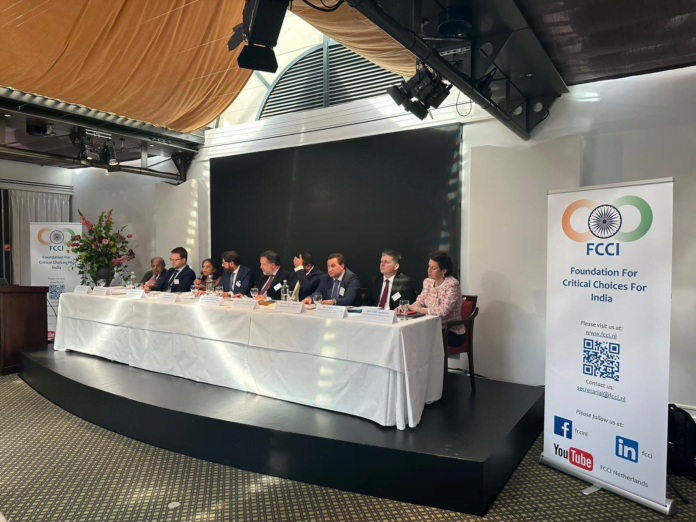
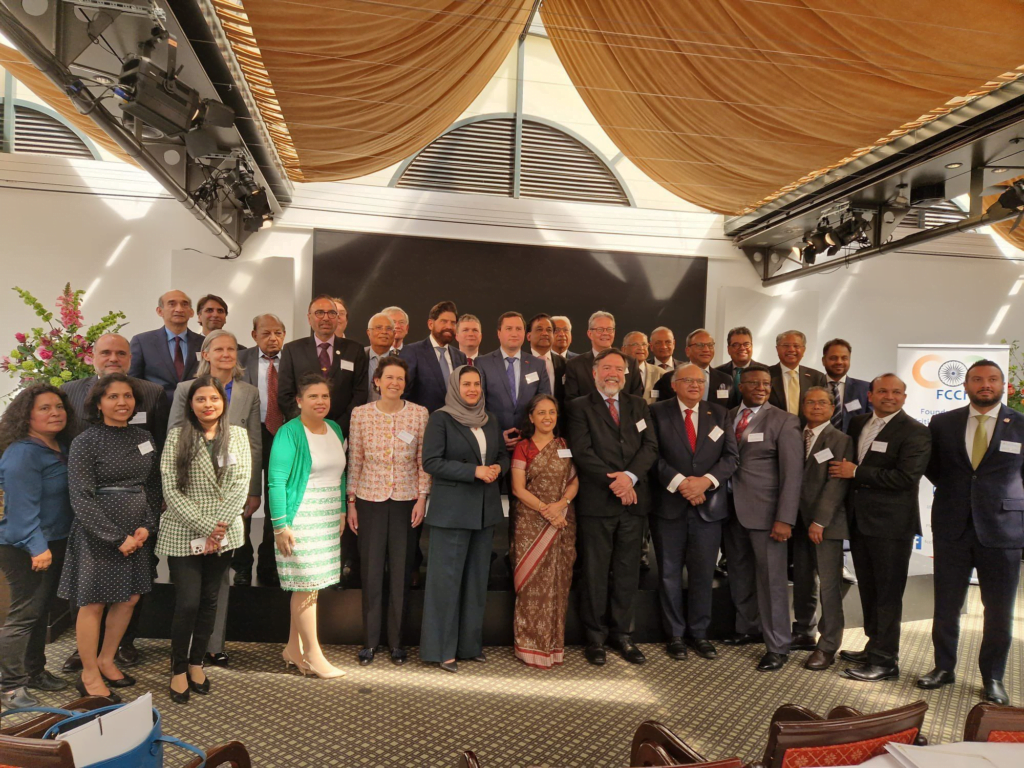
The Foundation for Critical Choices for India (FCCI) hosted a one-day International Conference in Wassenaar, The Hague Netherlands on May 3, 2023, where 19 experts on UN affairs, including several ambassadors, diplomats, international law experts, participants from the financial world came together to discuss necessary changes required for United Nations (UN) and United Nations Security Council (UNSC) reforms in the changing world order. 

Jasbir Singh, President of FCCI, delivered the opening welcome address during the conference and explained the rationale why FCCI has picked up this timely topic of vital importance. This was then followed by a welcoming speech from Ritske Bloemendaal, the Deputy Mayor of Wassenaar, the Netherlands. 
FCCI organises international conference to discuss 'UN Reforms for Changing World Order with Focus on UNSC' 

The conference proceeded with presentations on the themes “United Nations reforms for the changing world order” by Ram Lakhina, President Emeritus of FCCI and former Chairman of the Global Organisation of People of Indian Origin (GOPIO International), and FCCI’s vision on “UN reforms – with special focus on United Nations Security Council” by Dr. Pramod Agrawal, Vice President Programs of FCCI. 

The inaugural address was delivered by Reenat Sandhu, Ambassador of India to the Kingdom of the Netherlands as a representative of G20 chair. The event was the result of a systematic study conducted by FCCI through several brainstorming sessions and a legitimate literature survey, which came up with several innovative ideas and suggestions for empowering the UN through its ‘One World’ approach of collective governance, with a special focus on reforms to the UNSC. 

On this occasion, FCCI has released a comprehensive white paper that outlines its proposed framework for the necessary reforms of the UN.This is very special since there is no text or formula-based approach yet surfaced towards realisation of UN/UNSC reforms.  

 The aim of this international conference was to present FCCI’s findings, exchange views, and openly discuss much-needed UN reforms with representatives from veto-holding nations, G-4, G-20, C-10 nations, the EU, and other stakeholders. The discussions focused primarily on the UNSC and its role in maintaining global peace and security through peacekeeping and peace-building.

FCCI presented a set of innovative inclusive guidelines to make the UNSC more equitable in its representation and impart democratic principles in decision-making with an innovative concept of qualified Veto (Q-veto). Additionally, a mechanism has been proposed for making the UN financially independent for its effective global governance. Numerous distinguished guests shared their view during the event. 

Panelists shared their views on the composition of permanent and non-permanent members, the implications of the P5’s veto power, the need to expand the number of members, collective governance, efficiency, financial resources, non-equitable representation, the balance of power, and discrepancies in composition. Several experts from the international law and finance spheres graced the event with their presence.

Around 100 individuals hailing from various countries registered and participated in this global conference. The event was an important step towards pushing further UN reforms without any biased approach and building consensus amongst the UN member states. The discussions were fascinating and thought-provoking, sparking an important conversation on the future of the UN and the role of the UNSC in a rapidly changing world.

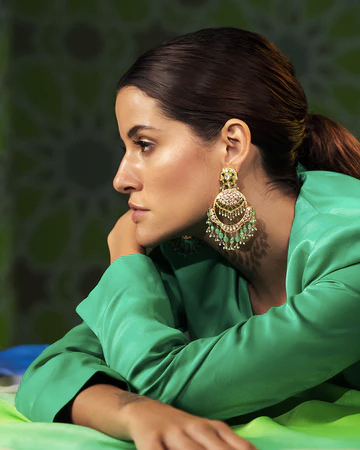
Motisons Jewellers: This colourful building reflecting lotus lures all with its design…

0

Have you ever stopped looking at the colourful building designed in lotus shape in Jaipur? This building in fact is also attracting eyeballs of thousands of spectators who come to watch IPL matches in SMS stadium.

This is the Flagship Store Motisons Tower is located at the High Street of Tonk Road, Jaipur

The outer structure of this building reflects the beauty of the Lotus flower which is a symbol of prosperity, making it look more enchanting in the 9 shades of gem stones, called Navratnas. 

Interiors of the showroom gives a mesmerizing feel, the ambience is majestically breathtaking and adds a vibrant aura. The floor is exceptionally adorned by the intricate inlay work of genuine gemstones, like lapis lazuli, mother-of-pearl & rose quartz, in fine marble. The ceiling on the ground floor is an art in itself, made of 24 carat real gold foil. Adding to the charm is a 3 storey chandelier that covers one part of the 3 floors and the other half has a resplendent display of jewels and artifacts.

The Managing Directors, Mr. Sandeep Chhabra & Sanjay Chhabra, had a strong vision to take the jewellery division to an all new level in the Retail Sector, therefore the duo continued to take it over to great heights, and as a result today the brand successfully operates from two of the most prominent locations in Jaipur. The first outlet, famously known as the Traditional store is situated amidst the famous lanes of the busiest Johri Bazaar, in the heart of the city, however The Flagship Store_Motisons Tower is located at the High Street of Tonk Road, Jaipur. The most recent outlet is situated in the affluent neighbourhood in the southwestern part of Jaipur at Vaishali Nagar.

Kalajee Jewellery in Jaipur stands synonymous to aesthetic designs…

0

Kalajee Jewellers, the retail jewellery outlet, was started in the year 2003. In fact, its launch story goes back to 1976 when its founder Vivek Kala started his journey in the gem and jewellery industry in Jaipur.

In 1983, Sanjay Kala, younger brother of Mr. Vivek Kala joined the business. He is also a Chartered accountant. In 2003, Aastha Jain daughter of Vivek Kala joined the family business after completing her jewellery designing courses from Studio Art Fuji, Metallo Nobile and Alchimia in Italy.

Meanwhile, Vivek Kala became the director of International Colored stone association (ICA)

Thereafter, in 2003 started the retail Jewellery business under the brand name KALAJEE JEWELLERY

The offices were shifted from Johri Bazaar to K-TOWER a 40000 square feet facility. Every process from cutting – polishing of gemstones, jewellery designing, manufacturing and retail is done under one roof. There are 2 interconnected showrooms, one for daily wear items and the other for Bridal Jewellery.

In 2006 – 2010, Vivek Kala became the President of the Jewellers Association Jaipur.

In 2008, Naman Kala (Director) Son of Sanjay Kala joined after completing his Masters from University of Strathclyde, Scotland and Graduate Diamond – Graduate Jeweller course from GIA, California and is currently taking care of manufacturing and sales of the company.

In 2013, Urvashi Kala, wife of Naman Kala joined the company and is currently taking care of the Marketing and PR of the Brand. She is also a Chartered Accountant (CA).

Thereafter in 2018 – 2021, Sanjay Kala became the President of the Jewellers association Jaipur.

The Rajasthan Razai: A Testament to Traditional Indian Craftsmanship

0
India, Rajasthan, Jaisalmer, handmade Rajasthani embroidered textile fabric.

The Rajasthan Razai, also known as the Jaipuri quilt, is a one-of-a-kind textile work from India’s culturally rich state of Rajasthan. It is a traditional handcrafted quilt that shows the extraordinary craftsmanship and artistic abilities of the local artisans.

The superb craftsmanship and use of natural materials distinguish the Rajasthan Razai. Each stitch on the quilts is delicately hand-stitched, generating beautiful and elaborate patterns. The craftspeople create the razai by layering fine cotton fabric and filling it with pure cotton or wool, making it lightweight yet warm and comforting.

A Rajasthan Razai is a labor-intensive technique that demands a great deal of expertise and patience. The craftspeople adhere to traditional traditions passed down through generations, giving close attention to every detail. Beautiful block designs, embroidery, or patchwork cover the quilts, showing the bright and colorful Rajasthani culture.

The Rajasthan Razai is a sign of cultural legacy and tradition, not just a quilt. It symbolizes the tenacity and innovation of the craftspeople who have kept this craft alive for ages. Each quilt conveys a story of beauty and workmanship, reflecting Rajasthan’s rich cultural tapestry.

The Rajasthan Razai has received international acclaim in recent years for its beauty and craftsmanship. It has grown in popularity among individuals looking for an authentic and ecological bedding solution. The quilt’s natural materials and traditional production processes appeal to people who value handmade craftsmanship and the cultural relevance of each piece.

The Rajasthan Razai is more than a commodity; it is a work of art that symbolizes Rajasthan’s character. It serves as a reminder of the value of maintaining traditional crafts and supporting the craftspeople who keep them alive. By adopting the Rajasthan Razai, we honor the tradition and contribute to the long-term viability of this extraordinary art for future generations to enjoy.

Stone carving and its significance in early civilisation.

0

Stone carving is essentially the practice of sculpting items out of a piece of rock or stone. For many ages, it has been a popular yet difficult type of art. Sculptors began to pay attention to details over time, embellishing their stone sculptures and producing absolutely realistic masterpieces out of them.

Because of the abundance of stones, civilizations dating back to the Mesolithic period used these rocks to create some wonderful works for a variety of purposes. The Stonehenge, Moai, and certain sculptures unearthed from digging caves and past civilizations such as the Indus Valley Civilization are among the first stone works, each with their own distinct style, purpose, and qualities.

Limestone, granite, sandstone, marble, soapstone, black stone, and other regularly used rocks/stones for sculpting have their own distinct characteristics and qualities. Carving stone sculptures begins with the artist selecting a stone for his or her work. They usually then replicate their design or sculpture in another medium, such as Plaster of Paris. This makes it easier for them to replicate precise information. Some artisans, however, prefer to carve the stone directly.

The basic structure of the stone is created by chiseling out the extra or undesirable areas of the stone using a pointed chisel. Once the structure is complete, the sculptor begins to refine his work, cutting out details and bringing forth a more defined structure.

Rajasthan speaks the timeless tale of art and craft story…

0

India’s art and craft legacy is famous globally for its richness and complexity. A few traditional crafts stand out for their stunning beauty and cultural value among the plethora of traditional crafts. Zari, Gotta Kinari, and Zardozi are three examples of centuries-old crafts. Intricate embroidery work with gold and silver threads is used to decorate fabrics and clothes with beautiful designs in these crafts. These techniques’ glittering sheen gives a sense of richness to traditional clothes.

Silver jewelry has a special position in Indian culture, and the craft of making silver decorations is highly valued. Skilled artisans use silver filigree and granulation techniques to produce intricate motifs, resulting in magnificent pieces that embody the essence of Indian aesthetics.

Kundan and Minakari are two more Rajasthan-based traditional crafts. Kundan is the process of putting precious gemstones in gold to create exquisite jewelry items that are treasured for their timeless beauty. Minakari, on the other hand, is the art of enameling, which involves fusing brilliant colors onto metal surfaces to create elaborate patterns and motifs.

Blue Pottery, a Jaipur-born art form, is recognized for its striking blue and white patterns. This skill entails a unique method of glazing and firing pottery, resulting in delicate and visually appealing useful and decorative pieces.

Jaipur Miniature Paintings are a treasure trove of Indian art history. These paintings, known for their intricate detailing and vivid colors, depict various themes like mythology, nature, and royal court scenes. Each stroke is meticulously executed, showcasing the skilled craftsmanship of the artists.

Lastly, Ivory Carvings have been practiced in India for centuries. Skilled craftsmen create intricate carvings on ivory, showcasing their expertise and attention to detail. However, it is important to note that the sale and production of ivory carvings are restricted in many countries due to concerns about animal conservation.

These traditional crafts are not just artistic expressions but also embodiments of cultural heritage. They serve as a testament to the skill and creativity of Indian artisans, who have passed down these crafts through generations. Preserving and promoting these crafts is essential for sustaining the rich cultural legacy of India and ensuring that future generations can appreciate their beauty and significance.

The Rich Artistic Heritage of Rajasthan

0

Rajasthan is a state in India known for its rich cultural heritage and one-of-a-kind handicrafts. Puppetry, Rajasthani mozari, and metalcraft stand out as particularly unique and fascinating among the many handicrafts that Rajasthan is known for. In this piece, we will look more closely at each of these handicrafts and investigate their history, relevance, and methodology.

Puppetry:

Puppetry is an ancient art form that has been practiced in Rajasthan for centuries, also known as “ Kathputliwalas”.  Puppet shows are a popular form of entertainment in the state, and they are often performed during festivals and other special occasions. Rajasthani puppets are made of wood and cloth and are typically around two feet tall. The puppets are controlled by strings attached to the hands, feet, and head of the puppeteer.  It is a traditional occupation of Nagaur in the Marwar region.

Puppet shows in Rajasthan often tell stories from Hindu mythology, such as the Ramayana and the Mahabharata. The puppeteers use a combination of storytelling, music, and dance to bring these stories to life. Puppetry in Rajasthan is not just a form of entertainment; it is also a way of preserving the state’s rich cultural heritage.

Rajasthani Mozari:

Rajasthani Mozari is a type of footwear that is unique to Rajasthan. The shoes are made from soft leather and are adorned with intricate embroidery and embellishments. Mozari shoes are typically worn by women and are a popular choice for traditional Rajasthani outfits.  This footwear mainly originated from the Mughak Empire under the rule of king Saleem Shah. Earlier mojari was only worn  by the royals of palaces with an embroidery of golden thread and precious stones on it.

Mozari shoes are handmade using traditional techniques that have been passed down from generation to generation. The embroidery on the shoes is done by hand, and each pair of shoes is unique. Mozari shoes are not just a fashion statement; they are also a testament to the skill and craftsmanship of the artisans who make them.

Metalcraft:

Metalcraft is another handicraft that is popular in Rajasthan. The state is known for its intricate metalwork, which is used to create everything from jewelry to home decor. Rajasthan has a long history of metalworking, and the artisans who practice this craft are considered to be among the best in the country.

The metal used in Rajasthani metalwork is typically brass or copper. The artisans use a variety of techniques to create intricate designs, including engraving, etching, and hammering. The finished products are often adorned with precious and semi-precious stones, adding to their beauty and value.

Puppetry, Rajasthani Mozari, and metalcraft are just a few examples of the unique and fascinating handicrafts that Rajasthan is known for. These crafts are not just a source of entertainment or fashion; they are also an important part of the state’s cultural heritage. The artisans who practice these crafts are considered to be among the best in India, and their work is a testament to the creativity, skill, and ingenuity of the people of Rajasthan.

Kagzi pottery of Alwar

0

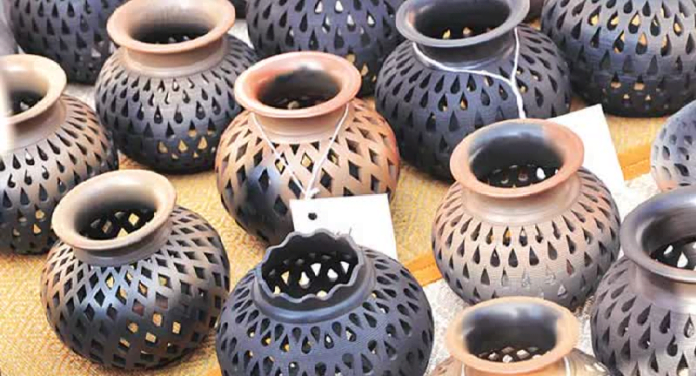
Kagzi pottery is a type of traditional pottery that developed in the Indian state of Rajasthan, namely in Alwar. It is an ancient craft that has been passed down from generation to generation for ages. Kagzi pottery is recognized for its delicate and detailed designs, and it is created through a unique method involving a specific type of paper.

The History of Kagzi Pottery:

Kagzi pottery originates in the Rajasthan village of Alwar. The Mughals, who controlled India from the 16th through the 18th centuries, are thought to have brought the technique to the region. The Mughals were known for their appreciation of art and culture, and they promoted the development of numerous art forms in the areas they conquered.

The Process of Making Kagzi Pottery:

The process of making Kagzi pottery involves a unique method of using paper as a mold. The paper is made by hand from cotton rags, which are soaked in water and then beaten into a pulp. The pulp is then spread out on a flat surface and allowed to dry. Once the paper is dry, it is cut into the desired shape and size.

The next step is to mix the clay with water and then pour it into the paper mold. The clay is then shaped by hand to create the desired design. Once the clay has dried, the paper mold is removed, leaving behind the delicate and intricate design.

The final step is to fire the pottery in a kiln. The firing process strengthens the clay and gives it a unique color and texture. The colors used in Kagzi pottery are derived from natural pigments, and the designs are often inspired by nature.

The Significance of Kagzi Pottery:

Kagzi pottery is not just a craft; it is also a way of life. The craft is deeply rooted in the culture and traditions of Rajasthan. It is an important source of income for many families in the region, and it is also a way of preserving the rich cultural heritage of the state.

Kagzi pottery is also significant because of its environmental sustainability. The use of paper molds instead of traditional molds made of plaster or clay means that there is less waste generated during the pottery-making process. The paper molds can also be reused several times, further reducing the environmental impact of the craft.

It is an important source of income for many families in the region, and it is also a way of preserving the rich cultural heritage of the state. The use of paper molds in the pottery-making process makes it environmentally sustainable and reduces the amount of waste generated. Overall, Kagzi pottery is an important part of Rajasthan’s cultural identity and a testament to the creativity and ingenuity of its people.

Sanjhi Art: Preserving the Cultural Heritage of Mathura

0

In addition to its relationship with Lord Krishna, Mathura, a historic city in the Indian state of Uttar Pradesh, is renowned for its rich cultural legacy. It is situated along the banks of the sacred Yamuna river. Sanjhi is one such distinctive art style that has endured in Mathura for millennia.

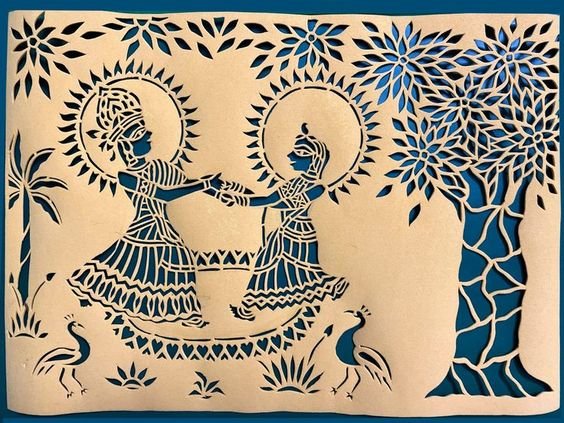
In the traditional art of sanjhi, meticulous paper cutting is used to produce exquisitely detailed stencils. The life and tales of Lord Krishna are frequently portrayed using these stencils to create elaborate and vibrant images. The art form has been practiced for many generations by expert craftspeople and has its origins in the Braj area, which includes Mathura.

Sanjhi art is made through a meticulous process that demands great skill and patience. Artists first sketch the design on paper, then cut out the desired pattern with sharp knives or scissors. These delicate stencils are then placed on a surface, usually a floor or a wall, and colored powders or natural dyes are gently sprinkled over them. When the stencil is lifted, a stunning and intricate design is revealed.

Sanjhi art is not only beautiful to look at but it has deep religious and cultural meanings. It is frequently made as a type of devotional offering during the Diwali holiday and Krishna Janmashtami, the day commemorating Lord Krishna’s birth. With artists carefully conserving the original techniques and designs, the art form has been passed down through centuries.

An attempt has been made in recent years to promote and protect Sanjhi art. To impart knowledge to the next generation, workshops, and training programs are being arranged. To secure the continuation of this antiquated art form, artisans are also looking into new opportunities, such as producing items with Sanjhi-inspired designs and holding exhibits.

The Sanjhi art is evidence of Mathura’s rich cultural legacy. It serves as a link to the city’s spiritual and mythical heritage in addition to showcasing the craftsmanship of its artisans. The heritage of Sanjhi will continue to amaze art enthusiasts and inspire future generations as long as efforts are made to preserve this distinctive art form.

Culture and Art: For a broad vision of creativity and understanding

0

India is a country rich in cultural variety and customs, and this can be seen in the diverse types of art and dance that have developed throughout the nation. Indian art styles are incredibly varied and distinctive, ranging from the vivid and colorful dances of Rajasthan to the complex wall paintings of Rajasthan.

Rajasthani folk dances are elegant, vibrant, and enjoyable to witness, and they are a perfect representation of the state’s rich culture.

Ghoomar:

Born among the Bhils and nurtured by the Rajput womenfolk, Ghoomar is a traditional dance form that originated in the Rajasthan region of India. It is performed by women during auspicious occasions such as weddings and festivals. The dance is characterized by its graceful movements and colorful traditional costumes. The dancers move in a circular motion, with each dancer holding a lit lamp or diya in her hand. In the nuptial festivities, the new bride is asked to dance to Rajput households joined by other ladies of the household and family.

Bhavai Dance:

Bhavai dance is another traditional dance form from Rajasthan that is known for its high energy and acrobatic movements. It is performed by both men and women and involves balancing multiple pots on the head while dancing. The dance is usually accompanied by live music and is a popular form of entertainment during festivals and cultural events. Jats, Bhils, Raigars, Meenas, Charmars, and Kumhars are the tribes that promote the growth of this folk art. Women of these tribes used such balancing precision in the dances to showcase the scenario of deserts where such pots are easily carried across a long distance to transport water from far-off areas.

Terah Taal:

Terah Taal is a traditional music form of Rajasthan that reflects the spectrum of cultural growth and art. It is performed by women, who sit in a circle and play thirteen different types of percussion instruments. The dance is characterized by its rhythmic beats and synchronized movements and is often performed during weddings and other auspicious occasions. Manjeeras and cymbals are used in folk music recitals and devotional songs. The Manjeera consists of a pair of metallic discs made of metal and a copper wire or a thread is tied to the discs.

Dandiya:

Dandiya is a popular folk dance form from the state of Gujarat, which is performed during the festival of Navratri. The dance involves using wooden sticks, known as dandiya, which are struck together in a rhythmic pattern. The dancers move in a circular motion and wear colorful traditional costumes, making it a vibrant and lively dance form.

Today, it is getting more popular in north India, especially at the time of Navratri. In Rajasthan, a lot of events and parties are being organized as Dandiya nights where people dance and enjoy the culture of it by wearing colorful dresses specified for the dance.

Kachi Ghodi:

Kachi Ghodi is a traditional dance form from the state of Rajasthan, which involves dancers riding on dummy horses. The dancers wear colorful costumes and carry swords and shields, adding to the theatrical nature of the dance. Kachi Ghodi is often performed during weddings and other cultural events.

Paintings are an important part of the cultural heritage of many countries. These paintings reflect the values, beliefs, and traditions of the people who created them and have been passed down from generation to generation.

Wall Painting:

Wall painting is a popular art form in India, particularly in the rural regions. It involves painting intricate designs and patterns on the walls of houses and other structures, using natural pigments and dyes. The designs are often inspired by nature and reflect the local culture and traditions.

This artwork is done by people in the modern era to beautify the walls of the city and promote the artistic value of work to the large mass. This art is something loved and admired by a lot of people.

Batik Painting:

Batik painting is another popular form of art in India, which involves using wax to create intricate designs on fabric. The fabric is then dyed, with the wax creating a resist effect that prevents the dye from penetrating certain areas. The process is repeated multiple times, creating layers of color and design on the fabric.

Therefore, from the colorful and energetic dances of Rajasthan to the intricate wall paintings of Rajasthan, Indian art forms are truly unique and fascinating. The more we enjoy them, the more we learn through the art and culture, and creates a broad vision for us to look at more such works.