Home Blog Page 652

100+ Savage Captions for Instagram

0

Instagram is a great platform to showcase your personality, style and attitude. Sometimes, you need to spice up your posts with some savage captions that show your confidence, sass and wit. Whether you want to throw some shade, clap back at your haters, or just express yourself, here are some savage captions for Instagram that you can use or get inspired by:

Savage Captions for Selfies

  • I’m not here to fit into your world. I’m here to make my own.
  • I’m not bossy. I’m the boss.
  • I’m not rude. I just have the guts to say what everyone else is thinking.
  • I’m not mean. I’m just too honest for your fragile ego.
  • I’m not sorry for being myself. Do you want me to apologize for being awesome too?
  • I’m not here to impress anyone but myself.
  • I’m not looking for trouble. Trouble usually finds me.
  • I’m not always sarcastic. Sometimes I’m sleeping.
  • I’m not a snack. I’m a full course meal.
  • I’m not a princess. I don’t need saving. I’m a queen. I got this handled.

Savage Captions for Haters

  • Haters are my biggest fans.
  • Haters are just confused admirers.
  • Haters don’t really hate you. They hate themselves because you’re a reflection of what they wish to be.
  • Haters gonna hate. And potatoes gonna potate.
  • Haters are like clouds. They disappear when the sun comes out.
  • Haters make me famous.
  • Haters are the best motivators.
  • Haters are proof that you’re doing something right.
  • Haters only hate the things they can’t have and the people they can’t be.
  • Haters are like crickets. They make a lot of noise but you never see them.

Savage Captions for Exes

  • Dear ex, thank you for breaking my heart. It made me stronger, smarter and happier than ever.
  • Dear ex, thank you for showing me what I don’t want in a relationship.
  • Dear ex, thank you for making me realize that you’re not worth my time, energy and love.
  • Dear ex, thank you for being the best example of what not to look for in a partner.
  • Dear ex, thank you for leaving me. You made room for someone better.
  • Dear ex, thank you for teaching me how to be savage.
  • Dear ex, don’t worry about me. I’m doing great without you.
  • Dear ex, don’t check on me. You’ve lost that privilege.
  • Dear ex, don’t text me when you’re bored. I’m not your backup plan.
  • Dear ex, don’t hate me because I moved on. Hate yourself because you let me go.

Savage Captions for Friends

  • Friends don’t let friends do stupid things… alone.
  • Friends are like bras. They support you and keep you up.
  • Friends are like diamonds. They’re precious and rare.
  • Friends are like stars. They shine bright even when you can’t see them.
  • Friends are like wine. They get better with age.
  • Friends are like pizza. You can never have too much of them.
  • Friends are like chocolate. They make everything better.
  • Friends are like books. They have stories to tell and lessons to teach.
  • Friends are like flowers. They brighten up your day and make you smile.
  • Friends are like music. They make your life more beautiful and fun.

100 Best Captions for Instagram Posts in 2023

0

Instagram is one of the most popular social media platforms in the world, with over 1 billion monthly active users. It is a great way to share your photos and videos with your friends, family and followers. However, to make your posts stand out and attract more engagement, you need to add some catchy and creative captions that suit your mood, personality and style.

Here are 100 best captions for Instagram posts in 2023 that you can use or get inspired by:

Captions for Selfies

  • I woke up like this. Literally.
  • Just a girl who loves her coffee and her cat.
  • Don’t let anyone dull your sparkle.
  • Feeling cute, might delete later.
  • Life is too short to be serious all the time.
  • Smile, it’s the best makeup you can wear.
  • Be yourself, everyone else is already taken.
  • Confidence level: selfie with no filter.
  • I’m not perfect, but I’m always me.
  • Live, laugh, love and take selfies.

Captions for Travel

  • Wanderlust: a strong desire to travel and explore the world.
  • I haven’t been everywhere, but it’s on my list.
  • Travel is the only thing you buy that makes you richer.
  • Adventure is out there, go find it.
  • The world is a book and those who do not travel read only one page.
  • Wherever you go, go with all your heart.
  • I’m in love with cities I’ve never been to and people I’ve never met.
  • Work hard, travel harder.
  • Catch flights, not feelings.
  • Travel is my therapy.

Captions for Food

  • You can’t live a full life on an empty stomach.
  • Good food, good mood.
  • Eat well, travel often.
  • There’s no we in fries.
  • I’m on a seafood diet. I see food and I eat it.
  • Happiness is homemade.
  • Life is a combination of magic and pasta.
  • You are what you eat, so eat something sweet.
  • Don’t be upsetti, eat some spaghetti.
  • Pizza is always a good idea.

Captions for Friends

  • Friends are the family we choose for ourselves.
  • A good friend knows all your stories. A best friend helped you write them.
  • Friends don’t let friends do silly things alone.
  • Friendship is not about who you’ve known the longest. It’s about who walked into your life and said “I’m here for you”.
  • Friends are like stars, they come and go, but the ones that stay are the ones that glow.
  • True friends are never apart, maybe in distance but never in heart.
  • Friends are the chocolate chips in the cookie of life.
  • A friend is someone who understands your past, believes in your future and accepts you just the way you are.
  • Friends make good times better and hard times easier.
  • A day spent with friends is always a day well spent.

Captions for Love

  • You are my favorite notification.
  • You are my favorite place to go when my mind searches for peace.
  • You are my favorite hello and my hardest goodbye.
  • You are my today and all of my tomorrows.
  • You are my favorite reason to lose sleep.
  • You are my favorite distraction.
  • You are my favorite adventure.
  • You are my favorite song lyrics

Indore Becomes First Urban Body in India to Receive Extended Producer Responsibility Credit for Recycling Single-Use Plastic Items

0

Indore Municipal Corporation (IMC) in Madhya Pradesh, India, has created history by becoming the first urban body in the country to receive Extended Producer Responsibility (EPR) credit for effectively recycling banned single-use plastic items. The city of Indore has implemented a comprehensive ban on single-use plastics, leading to the recent seizure of approximately eight tonnes of such plastic, preventing its circulation and contributing to a cleaner environment. Furthermore, Indore has earned the prestigious distinction of being recognized as India’s cleanest city for the sixth consecutive year in the central government’s annual cleanliness survey.

The concept of Extended Producer Responsibility (EPR) entails extending a producer’s responsibility for a product to the post-consumer stage of its life cycle. Indore’s commendable efforts in responsible waste management and sustainable practices have earned the city an EPR credit of Rs 8,100. To address the challenge of recycling the seized plastic, the IMC established a recycling plant operating under a public-private partnership (PPP) model. This state-of-the-art facility has played a pivotal role in converting the seized plastic waste into reusable materials, effectively reducing the burden on landfills and promoting a circular economy.

Indore faces the daily challenge of managing a substantial amount of solid waste, with an average of 1,162 tonnes generated each day, including around 164 tonnes of plastic waste. However, the IMC has implemented an efficient waste collection system wherein waste is systematically categorized and collected from every doorstep in the city using civic vehicles. The collected waste is then promptly transported to the recycling plant for proper disposal, ensuring that Indore remains a clean and environmentally sustainable city.

Madhya Pradesh Chief Minister Shivraj Singh Chouhan expressed his heartfelt congratulations to the residents and local administration of Indore for this significant achievement. He emphasized the importance of promoting a circular economy, aligning with the vision of Prime Minister Narendra Modi, and commended the IMC for its tireless efforts in realizing this goal.

Know more about the biggest temple of Krishna in India

0
Credit: Vrindavan Chandrodaya Mandir

One of the sincere love found in this world is the love one has for their idol. Lord Krishna has won hearts with his tales. There is an electrifying energy that surges through the people when they talk about Lord Krishna.

Vrindavan Chandrodaya Mandir aspires to be the latest place for the devotees of Krishna, in the holy land of Vrindavan. It is built through the directions of Srila Prabhupada. The temple will have one grand hall for the devotees, Srila Prabhupada’s museum and expo, a gaushala, and more.

Therefore, the Chairman of the temple, Sri Madhu Pandit Dasa has claimed, “Five thousand years ago, when Lord Krishna appeared on this planet, He brought His divine abode Vrindavan to enact transcendental pastimes. This holy dham is non-different from Krishna and is as worshipable as the Lord Himself. Vrindavan, the heart of Braj Bhoomi, is the most important place of pilgrimage for devotees of Lord Krishna. Scriptures state that visiting Vrindavan is equal to having the darshan of Lord Hari. Hence, this spiritual town of temples experiences an influx of people from across the globe every year.”

Therefore, this temple is still in progress, and there is still construction going on.

Where is Mangrove Forest Mainly Found in India?

0

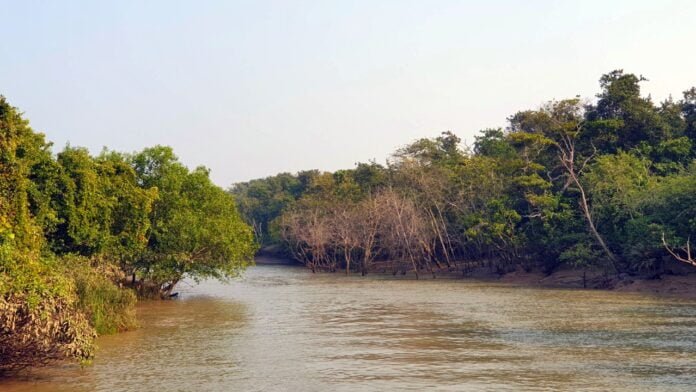
Mangrove forests are a special type of vegetation that grows in the intertidal regions where freshwater and saltwater intermix, such as in the bays, estuaries, creeks and lagoons. They are salt-tolerant plants that can survive in harsh conditions and provide various ecological and economic benefits. They are also home to a rich diversity of flora and fauna, including some endangered species.

Mangrove Forest Cover in India

India has a mangrove forest cover of 4975 sq. km, occupying 3.6% of the global mangroves and 0.15% of the total geographical area of India. The mangroves are distributed along the coastal states and union territories of India, with the highest concentration in the east coast. The following table shows the state-wise mangrove cover in India as per the State of Forest Report 2019:

State/UTMangrove Cover (sq. km)Percentage of Total Mangrove Cover
West Bengal211442.5
Gujarat118023.7
Andaman & Nicobar Islands61712.4
Maharashtra2224.5
Orissa2314.6
Tamil Nadu470.9
Andhra Pradesh3677.4
Goa310.6
Karnataka70.1
Kerala60.1
Pondicherry80.2
Total4975100

Major Mangrove Forests in India

Some of the major mangrove forests in India are:

  • The Sundarbans: This is the largest contiguous mangrove forest in the world, covering an area of about 10,000 sq. km in the delta of the Ganges, Brahmaputra and Meghna rivers on the Bay of Bengal. It is shared by India and Bangladesh, with about 60% of the forest lying in Bangladesh and the rest in India. It is a UNESCO World Heritage Site and a Ramsar Site, and is known for its exceptional biodiversity, especially the Royal Bengal Tiger, Ganges and Irawadi dolphins, estuarine crocodiles and the critically endangered endemic river terrapin (Batagur baska).
  • Bhitarkanika: This is the second largest mangrove forest in India, covering an area of about 650 sq. km in the delta of the Brahmani and Baitarani rivers in Odisha. It is a Ramsar Site and a National Park, and is considered a “mangrove genetic paradise” for its high diversity of mangrove species. It is also home to many wildlife species, such as saltwater crocodiles, olive ridley turtles, king cobras, fishing cats and migratory birds.
  • Krishna-Godavari: This is the third largest mangrove forest in India, covering an area of about 367 sq. km along the coast of Andhra Pradesh at the mouth of the Krishna and Godavari rivers. It is also known as Coringa Wildlife Sanctuary, and is a Ramsar Site and an Important Bird Area. It supports a variety of mangrove species, such as Avicennia marina, Rhizophora mucronata, Sonneratia caseolaris and Excoecaria agallocha. It also harbours many wildlife species, such as smooth-coated otters, fishing cats, sea turtles, dolphins and water birds.
  • Pichavaram: This is one of the most scenic mangrove forests in India, covering an area of about 110 sq. km along the coast of Tamil Nadu near Chidambaram town. It is also known as Pichavaram Mangrove Forest Reserve, and is a Ramsar Site and an Important Bird Area. It consists of more than 50 islands separated by narrow water channels that can be explored by boats. It has a high diversity of mangrove species, such as Avicennia officinalis, Rhizophora apiculata, Bruguiera cylindrica and Ceriops tagal. It also hosts many wildlife species, such as water snakes, crabs, prawns, clams and birds.

Importance and Conservation of Mangrove Forests

Mangrove forests are important for various reasons:

  • They protect the coast from erosion, storm surges, tsunamis and cyclones by acting as natural barriers and buffers.
  • They support the livelihoods of millions of people who depend on them for fishing, crabbing, honey collection, tourism and other activities.
  • They sequester and store large amounts of carbon, thus mitigating climate change and its impacts.
  • They provide habitat, food, shelter and breeding grounds for a wide range of terrestrial, aquatic and marine species, many of which are endangered or endemic.
  • They maintain the water quality and nutrient balance of the coastal ecosystems by filtering pollutants and sediments.

However, mangrove forests are also facing many threats, such as:

  • Deforestation and degradation due to urbanization, industrialization, aquaculture, agriculture and other developmental activities.
  • Pollution from domestic, agricultural and industrial sources that affect the health and productivity of the mangroves and their associated fauna.
  • Climate change that causes sea level rise, temperature increase, salinity change, acidification and extreme weather events that affect the survival and distribution of the mangroves.
  • Invasive species that compete with or prey on the native mangrove species and alter the ecosystem functioning.
  • Lack of awareness, appreciation and participation among the local communities and stakeholders regarding the value and conservation of the mangroves.

Therefore, there is a need to conserve and restore the mangrove forests in India by adopting various measures, such as:

  • Implementing legal and policy frameworks that recognize the rights and responsibilities of the local communities and stakeholders in managing the mangroves.
  • Enhancing scientific research and monitoring to assess the status, trends and threats of the mangroves and their biodiversity.
  • Promoting sustainable use and management practices that balance the ecological, economic and social benefits of the mangroves.
  • Restoring degraded or lost mangrove areas by planting suitable native species and removing invasive species.
  • Raising awareness and education among the public, especially the youth, about the importance and conservation of the mangroves.

Quotes and Captions on Mahendra Singh Dhoni: The Legend of Indian Cricket

0

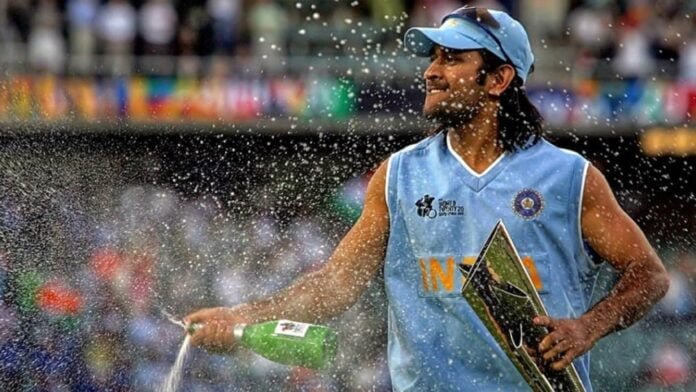
Mahendra Singh Dhoni, popularly known as MS Dhoni or Mahi, is one of the most successful and influential captains in the history of Indian cricket. He is also a brilliant batsman, wicket-keeper, and finisher, who has won many matches for India with his calm and composed approach. He is widely admired and respected by fans, players, and experts for his leadership, skills, and achievements.

Dhoni has led India to many glorious victories, including the 2007 ICC World Twenty20, the 2011 ICC Cricket World Cup, the 2013 ICC Champions Trophy, and the 2008, 2010, and 2014 Asia Cups. He is also the only captain to win all three major ICC trophies. He has also been a successful captain for Chennai Super Kings in the Indian Premier League, winning three titles and reaching eight finals.

Dhoni has also been a source of inspiration and motivation for many people, especially the youth. His journey from a humble background to becoming one of the greatest cricketers of all time is a testament to his hard work, dedication, passion, and perseverance. He has also been a role model for his humility, honesty, integrity, and sportsmanship.

Dhoni has also given many memorable quotes and captions that reflect his personality, philosophy, and wisdom. Here are some of the best quotes and captions on Mahendra Singh Dhoni that you can use to express your admiration, respect, and love for him.

Quotes by Mahendra Singh Dhoni

  • “If you don’t really have a dream, you can’t really push yourself; you don’t really know what the target is.” – MS Dhoni
  • “I like to make statements on the field.” – MS Dhoni
  • “You learn a lot more when you’re going through a rough period compared to the good times when everything goes your way.” – MS Dhoni
  • “I don’t mind repeating everything.” – MS Dhoni
  • “I like to stay away from the game when I am not playing it.” – MS Dhoni
  • “I live for the present, not the future.” – MS Dhoni
  • “It’s important to learn and not repeat the same mistakes. What’s done is done.” – MS Dhoni
  • “Take action in silence, no lion attacks in noise.” – MS Dhoni
  • “For me, it’s important to build good partnerships rather than score centuries. Once you have those partnerships, you will also get centuries.” – MS Dhoni
  • “I don’t study cricket too much. Whatever I have learned or experienced is through cricket I’ve played on the field, and whatever little I have watched.” – MS Dhoni
  • “Movies are a big part of our Indian culture.” – MS Dhoni
  • “I am in the hands of Deori Maa. Every time I come to Ranchi, I visit her temple. I still remember my first visit.” – MS Dhoni
  • “I don’t like discussing cricket off the field.” – MS Dhoni
  • “I have joked before that there is a good chance that I might retire before Tendulkar.” – MS Dhoni
  • “Self-confidence has always been one of my good qualities. I am always very confident. It is in my nature to be confident, to be aggressive. And it applies in my batting as well as wicket keeping.” – MS Dhoni
  • “The era of playing aggressive cricket and to have the mid-on up is gone. You now try to read the mindset of a batsman.” – MS Dhoni
  • “Finishing is one of the most difficult things to do in cricket. A player can’t be a finisher in just 6 months or one year. You have to be used to that responsibility, keeping on doing what is required from you over a period of time.” – MS Dhoni
  • “I’m a person who lives very in the moment.” – MS Dhoni
  • “For me, opposition is just another opposition.” – MS Dhoni
  • “The cameras used to pass by me, now they’re stopping for me.” – MS Dhoni
  • “I love being in the present. When I was playing for my school, the only thing I wanted to do was get selected for the under-16 or the under-19 district teams. When I was selected for the district team, I would think about the next level which was getting selected for state side. I’m a person who lives very in the moment.” – MS Dhoni
  • “You need to perform consistently and if you’re raising the standard, you have to stand by it. You have to keep on doing well.” – MS Dhoni
  • “Unless you know the individual, it’s very difficult to advise that individual as to what he needs to do.” – MS Dhoni
  • “I never allow myself to be pressured.” – MS Dhoni
  • “You can’t take any team lightly.” – MS Dhoni

Captions on Mahendra Singh Dhoni

  • The man who taught us how to chase dreams and win trophies. #MSDhoni #CaptainCool
  • The legend who made us believe in miracles. #MSDhoni #WorldCup2011
  • The leader who inspired a generation of cricketers. #MSDhoni #CaptainFantastic
  • The finisher who always delivered when it mattered the most. #MSDhoni #HelicopterShot
  • The wicket-keeper who changed the game with his lightning-fast reflexes. #MSDhoni #StumpingKing
  • The batsman who could hit any ball out of the park. #MSDhoni #SixMachine
  • The humble and honest person who always respected the game and the opponents. #MSDhoni #Gentleman
  • The icon who made us proud to be Indians. #MSDhoni #BleedBlue
  • The hero who never gave up and never let us down. #MSDhoni #Thala
  • The legend who will always be in our hearts. #MSDhoni #ThankYouDhoni.

Quotes on Mahendra Singh Dhoni by Fans: How the Captain Cool Won Our Hearts

0

Mahendra Singh Dhoni, or MS Dhoni, or Mahi, or Thala, or Captain Cool, is not just a name, but an emotion for millions of cricket fans across the world. He is one of the most loved and admired cricketers of all time, who has given us countless moments of joy, pride, and inspiration. He is also one of the most successful and influential captains in the history of Indian cricket, who has led India to many glorious victories, including the 2007 ICC World Twenty20, the 2011 ICC Cricket World Cup, the 2013 ICC Champions Trophy, and the 2008, 2010, and 2014 Asia Cups. He is also the only captain to win all three major ICC trophies.

Dhoni has also been a brilliant batsman, wicket-keeper, and finisher, who has won many matches for India with his calm and composed approach. He has scored over 10,000 runs in ODI Cricket with an average of over 50, most of it coming down the order while finishing games for India or accelerating the run rate. He has also been a successful captain for Chennai Super Kings in the Indian Premier League, winning three titles and reaching eight finals.

Dhoni has also been a source of inspiration and motivation for many people, especially the youth. His journey from a humble background to becoming one of the greatest cricketers of all time is a testament to his hard work, dedication, passion, and perseverance. He has also been a role model for his humility, honesty, integrity, and sportsmanship.

Dhoni has also given many memorable quotes and captions that reflect his personality, philosophy, and wisdom. But what do his fans have to say about him? How do they express their admiration, respect, and love for him? Here are some of the best quotes on Dhoni by fans that you can use to show your support and appreciation for him.

Quotes on Dhoni by Fans

  • “MS Dhoni is not just a cricketer, he is a phenomenon.” – A fan
  • “There is no one like you and there will never be anyone like you. You are our pride and our hero. We love you MS Dhoni.” – A fan
  • “MS Dhoni is not only the best captain but also the best human being. He always respects his opponents and his fans. He always smiles and makes us smile.” – A fan
  • “MS Dhoni is the reason why I started watching cricket. He is the reason why I believe in miracles. He is the reason why I never give up.” – A fan
  • “MS Dhoni is more than a captain. He is a leader, a mentor, a friend, a brother, a father figure to his teammates. He is the glue that binds the team together.” – A fan
  • “MS Dhoni is not just a name but an emotion for millions of cricket fans across the world. He is not just a cricketer but a legend who has given us countless moments of joy pride and inspiration.” – A fan
  • “MS Dhoni is the epitome of calmness and composure. He never loses his cool even in the most pressure situations. He always trusts his instincts and backs his abilities.” – A fan
  • “MS Dhoni is the master of finishing games. He always knows how to pace his innings and when to unleash his helicopter shot. He always keeps us on the edge of our seats till the end.” – A fan
  • “MS Dhoni is the best wicket-keeper in the world. His lightning-fast reflexes and acrobatic skills are unmatched. He always surprises us with his stumpings and catches.” – A fan
  • “MS Dhoni is not only a great cricketer but also a great human being. He always helps others in need and supports various social causes. He always inspires us to be better people.” – A fan

Who is failed CM in India? A question that has no easy answer

0
Image: Freepik

India is a vast and diverse country with 28 states and 8 union territories, each with its own chief minister (CM) who is the head of the state government. The CMs are elected by the people or by the members of the state legislative assembly, and they hold office for a maximum of five years or until they lose the confidence of the assembly. The CMs are responsible for the administration, development, and welfare of their respective states, and they also represent their states at the national level.

However, not all CMs are able to perform their duties effectively and efficiently. Some CMs face various challenges and difficulties such as political instability, corruption, violence, natural disasters, public health crises, etc. that hamper their governance and service delivery. Some CMs also face criticism and opposition from their own party members, allies, rivals, media, civil society, etc. that affect their popularity and credibility. Some CMs also make mistakes and blunders that cause public outrage and dissatisfaction.

But who is failed CM in India? This is a question that has no easy or objective answer. Different people may have different opinions and criteria to judge the performance and failure of a CM. Some may look at the economic indicators such as growth rate, per capita income, poverty level, unemployment rate, etc. Some may look at the social indicators such as literacy rate, health status, gender equality, human development index, etc. Some may look at the political indicators such as stability, democracy, law and order, security, etc. Some may look at the environmental indicators such as pollution level, forest cover, biodiversity, climate change, etc. Some may look at the ethical indicators such as honesty, integrity, transparency, accountability, etc.

Moreover, the performance and failure of a CM may vary over time and across different domains. A CM may do well in some areas but poorly in others. A CM may do well in some periods but poorly in others. A CM may do well in some regions but poorly in others. A CM may do well for some sections but poorly for others.

Therefore, it is not possible to give a definitive or conclusive answer to who is failed CM in India. It depends on how one defines and measures failure and success. It also depends on how one weighs and balances the various factors and aspects that influence the performance and failure of a CM. It also depends on how one views and evaluates the role and responsibility of a CM in relation to other actors and institutions that shape the governance and development of a state.

However, one can still try to identify some common indicators or parameters that can help to assess the performance and failure of a CM in India. These may include:

  • The extent to which a CM fulfills the promises and commitments made to the people during elections or otherwise.
  • The extent to which a CM implements the policies and programs that are beneficial for the people and the state.
  • The extent to which a CM responds to the needs and demands of the people and addresses their grievances and problems.
  • The extent to which a CM maintains peace and harmony among different communities and groups in the state.
  • The extent to which a CM handles crises and emergencies such as natural disasters, epidemics, riots, etc.
  • The extent to which a CM cooperates with the central government and other states on matters of national interest and inter-state relations.
  • The extent to which a CM upholds the constitutional values and principles such as democracy, secularism, federalism, etc.
  • The extent to which a CM respects the rule of law and human rights of all citizens.
  • The extent to which a CM avoids corruption, nepotism, favoritism, etc.
  • The extent to which a CM inspires confidence and trust among the people.

Based on these indicators or parameters, one can try to compare and contrast the performance and failure of different CMs in India. However, one should also keep in mind that these indicators or parameters are not exhaustive or definitive. They are also subject to interpretation and variation depending on the context and perspective of different stakeholders.

Therefore, who is failed CM in India is a question that has no easy answer. It is a question that requires careful analysis and evaluation based on facts and evidence. It is also a question that invites debate and discussion among different opinions and viewpoints. It is also a question that challenges us to reflect on our own expectations and aspirations from our leaders and representatives.

PM Modi’s Landing Plan Altered for Amritsar-Jamnagar Expressway Inauguration

0

In an unexpected turn of events, Prime Minister Narendra Modi’s landing plan for the inauguration of the Amritsar-Jamnagar Expressway in Rajasthan’s Bikaner district has been changed. The initial plan of using an army aircraft to touch down on the expressway had to be scrapped due to certain limitations.

It was discovered that the Amritsar-Jamnagar Expressway lacks a suitable airstrip for the landing of aircraft. Furthermore, the presence of high tension lines in the area posed a safety risk. As a result, army aircraft cannot be landed on the expressway.

To ensure the Prime Minister’s arrival, an alternative arrangement has been made. PM Modi will now travel by helicopter from Nal Airport in Bikaner and land on the Greenfield Expressway. In addition, vehicles from the Chief Minister’s convoy will also be stationed at Nal Airport. If any weather-related issues arise, the Prime Minister will be transported to the expressway by road.

This change in plans came after thorough investigations conducted by officials on Wednesday. Preparations had been underway for PM Modi’s visit to Bikaner for several days, with efforts made to facilitate the landing of Air Force aircraft on the Amritsar-Jamnagar Expressway. Union Law Minister Arjun Ram Meghwal had hinted at this possibility. However, the absence of an airstrip on the expressway and the presence of high tension lines deemed it unsafe for aircraft landing.

Despite this alteration, Prime Minister Modi’s visit to Bikaner remains significant. On July 8, he will interact with over 1.5 lakh people and inaugurate several projects worth Rs 25,000 crore. The Amritsar-Jamnagar Express Highway will also be officially opened on the same day.

This highway, built at a cost exceeding Rs 20,000 crore, will reduce travel time between Amritsar and Jamnagar from 23 hours to 12 hours. Additionally, it will connect five districts in Rajasthan and include amenities such as hotels, toll plazas, petrol pumps, and charging centers along the route.

In conclusion, while the landing plan for PM Modi had to be altered due to the unsuitability of the Amritsar-Jamnagar Expressway, the inauguration of the Green Express Highway remains a significant event that will bring improved connectivity and economic development to the region.

Silent Valley of Kerala: A Treasure Trove of Forest Diversity

0
Image: Silent Valley National Park (Kerala Tourism)

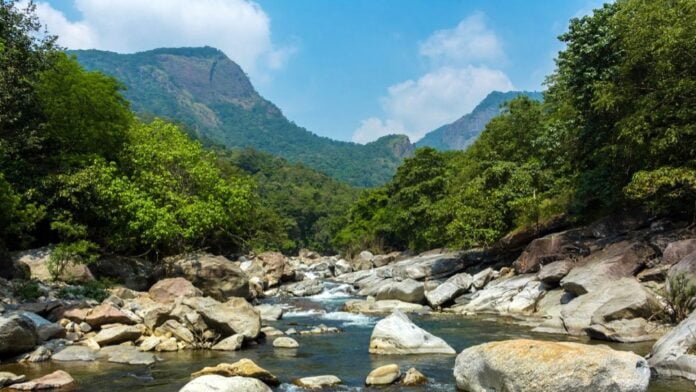
Silent Valley of Kerala is a national park that is located in the Nilgiri Hills in Palakkad district. It is one of the last remaining stretches of evergreen forests in Kerala and one of the largest in India. It is also a part of the Nilgiri Biosphere Reserve, which is a UNESCO World Heritage Site. Silent Valley is home to a rich variety of flora and fauna, including many endemic and endangered species. It is also a place of historical and cultural significance, as it is associated with Lord Buddha, Mahavira, and King Bimbisara.

Forest Types in Silent Valley

Silent Valley has four types of vegetation, which reflect the different altitudes, rainfall, and soil conditions in the area. These are:

  • West Coast Tropical Evergreen Forest: This is the dominant forest type in Silent Valley, covering about 60% of the area. It is found at an altitude range of 600 to 1100 m and receives an annual rainfall of 1500 to 5000 mm. The trees in this forest are tall (up to 45 m) and dense, with many species growing together. The canopy is so thick that it blocks most of the sunlight from reaching the ground. The forest floor is covered with ferns, mosses, orchids, and other epiphytes. The undergrowth consists of cane, bamboo, and palms. Some of the common tree species in this forest are Mesua ferrea, Palaquium ellipticum, Cullenia exarillata, Calophyllum elatum, Artocarpus heterophyllus, etc.
  • Southern Subtropical Broad Leaved Hill Forest: This is a transitional forest type between evergreen and moist deciduous forests. It is found at an altitude range of 1300 to 1800 m and receives an annual rainfall of 2500 to 3500 mm. The trees in this forest are shorter (up to 30 m) and less dense than the evergreen forest. The canopy is more open and allows more sunlight to reach the ground. The forest floor is covered with grasses, herbs, and shrubs. The undergrowth consists of bamboo, cane, and climbers. Some of the common tree species in this forest are Bischofia javanica, Hopea ponga, Mangifera indica, Myristica dactyloides, etc.
  • Southern Montane Wet Temperate Forest: This is a stunted forest type that occurs at high altitudes (above 1900 m) where the climate is cold and wet. It receives an annual rainfall of more than 5000 mm. The trees in this forest are dwarfed (up to 10 m) and twisted by strong winds. The canopy is sparse and irregular. The forest floor is covered with mosses, lichens, ferns, and orchids. The undergrowth consists of rhododendrons, vacciniums, myrtles, etc. Some of the common tree species in this forest are Elaeocarpus serratus, Eugenia spp., Holigarna beddomei, etc.
  • Grassland: This is a non-forest type that occurs on hilltops and slopes where the soil is poor and rocky. It receives an annual rainfall of less than 1500 mm. The vegetation consists of grasses, sedges, herbs, and shrubs that can withstand drought and fire. Some of the common plant species in this type are Chrysopogon zeylanicus, Eragrostis spp., Strobilanthes spp., etc.

Forest Conservation in Silent Valley

Silent Valley has been a site of conservation efforts since the 1970s when a proposed hydroelectric project threatened to submerge a large part of the forest. A public campaign called Save Silent Valley was launched by environmentalists, scientists, writers, artists, and activists to oppose the project and protect the forest. The campaign succeeded in convincing the government to cancel the project and declare Silent Valley as a national park in 1980.

Since then, Silent Valley has been protected by various laws and policies such as the Wildlife Protection Act (1972), the Forest Conservation Act (1980), the Environment Protection Act (1986), etc. The park management has also taken various measures to conserve the forest such as patrolling, fire prevention, habitat restoration, research and monitoring, education and awareness, ecotourism development, etc.

Silent Valley is a precious natural heritage that needs to be preserved for future generations. It is a place where one can experience the beauty and diversity of nature and learn about its importance for our survival and well-being.