In the small town of Larkana, Pakistan, a remarkable family has captured the attention of the world with their extraordinary coincidence. The Mangi family, consisting of Ameer Ali Mangi, his wife Khudeja, and their seven children, has made headlines for setting a Guinness World Record for the most family members born on the same day.
August 1 holds a special significance for the Mangi family. It all started with the arrival of their eldest child, Sindhoo, on August 1, 1992. The surprises continued when twin girls, Sasui and Sapna, joined the family on the same date. As fate would have it, the Mangi family welcomed Aamir and Ambar into the world on August 1 as well. And in later years, the family was blessed with twin brothers, Ammar and Ahmar, completing the incredible coincidence.
What makes their record even more astounding is that all the births happened naturally, without any cesarean sections or premature deliveries. Khudeja didn’t experience early labor, and the synchronicity of their births seemed like a miraculous gift from above.
The Mangi family not only celebrates the birthdays of their seven children on August 1 but also marks it as their wedding anniversary. Ameer and Khudeja tied the knot on August 1, 1991, exactly one year before the birth of their eldest daughter, Sindhoo. This day has become an even more significant occasion for the family, embodying the unity and joy they share.
With their unique story capturing the world’s attention, the Mangi family celebrates August 1 with even more enthusiasm and happiness. They have adopted a tradition of cutting a shared cake, symbolizing their bond and unity. Their extraordinary coincidence has garnered multiple Guinness World Records, adding another layer of recognition to their already remarkable story.
The previous record for siblings with coinciding birthdays was held by the Cummins family from the United States. Five children in their family shared the same birthdate, February 20, between the years 1952 and 1966. The Mangi family’s achievement surpasses this record, making their synchronicity even more exceptional.
Being part of a family with the same surname is not uncommon, but to have multiple family members sharing the exact birthdate is truly remarkable. The Mangi family from Larkana, Pakistan, has not only captured the world’s attention but also inspired awe and wonder with their incredible coincidence.
During his two-day official visit to France, Prime Minister Narendra Modi presented a range of exquisite gifts to the country’s leaders, showcasing the rich cultural heritage of India. These gifts included a sandalwood sitar, silk fabric, a marble table, a silk carpet, and a sandalwood elephant figurine.
One of the highlights among the gifts was a sandalwood sitar presented to French President Emmanuel Macron. This unique replica of the musical instrument, crafted from pure sandalwood, displayed intricate carvings of Goddess Saraswati and Lord Ganesha, representing knowledge, music, wisdom, and the removal of obstacles. The sitar also featured peacock motifs, symbolizing India’s national bird, and elaborate carvings inspired by Indian culture.
Brigitte Macron, the President’s spouse, received a Pochampally Ikat silk fabric presented in a sandalwood box. Pochampally Ikat, known for its vibrant colors and intricate designs, originates from the town of Pochampally in Telangana, India. The fabric exemplifies India’s rich textile heritage and was elegantly showcased in a decorative sandalwood box, highlighting the craftsmanship and aromatic qualities of sandalwood.
Prime Minister Élisabeth Borne of France was presented with a captivating marble table adorned with intricate marble inlay work. This craftsmanship involves cutting and engraving semi-precious stones into high-quality marble sourced from Makrana, Rajasthan. The result is a beautiful and colorful masterpiece showcasing the skilled artistry of marble inlay work.
President of the French National Assembly, Yaël Braun-Pivet, received a hand-knitted silk Kashmiri carpet from Prime Minister Modi. These carpets, known worldwide for their softness, intricate details, and captivating colors, are a testament to the craftsmanship of Kashmiri artisans. The unique feature of these carpets is their ability to display different shades when viewed from various angles, creating an illusion of two carpets instead of one.
Finally, President of the French Senate, Gerard Larcher, was presented with a sandalwood hand-carved elephant figurine, symbolizing wisdom, strength, and good fortune. Meticulously crafted from pure sandalwood, these elephant figurines hold special significance in Indian culture, embodying the harmonious connection between nature, culture, and art.
The gifts presented by Prime Minister Narendra Modi to the leaders of France represent not only the beauty and artistry of Indian craftsmanship but also serve as a gesture of friendship and cultural exchange between the two nations. These gifts reflect India’s diverse cultural heritage and further strengthen the bonds of diplomacy and goodwill between India and France.
Tennis is a sport that has many tournaments and events throughout the year, but there are four that stand out as the most prestigious and important ones. These are the Grand Slam tournaments, also known as the majors, which are the Australian Open, the French Open, Wimbledon, and the US Open. Winning one of these tournaments is a huge achievement for any tennis player, but winning all four in the same year is the ultimate goal and challenge. This is what is known as a Grand Slam in tennis.
The Origin and Meaning of Grand Slam
The term Grand Slam was first used in 1933 by a New York Times writer, John Kieran, who compared the feat of winning all four major tennis tournaments to a bidding convention in the card game bridge. He wrote that if Jack Crawford, an Australian player who had won the first three majors of the year, could also win the US Open, it would be like scoring a Grand Slam in bridge.
Crawford failed to do so, losing in the final to Fred Perry, but the term stuck and became widely used to describe the achievement of winning all four majors in a calendar year. The first player to accomplish this was Don Budge of America in 1938, followed by Maureen Connolly of America in 1953, Rod Laver of Australia in 1962 and 1969, Margaret Court of Australia in 1970, and Steffi Graf of Germany in 1988. Rod Laver is the only player to have done it twice, and also the only one to have done it before and after the start of the Open Era in 1968, when professional players were allowed to compete in the majors.
A Grand Slam can be achieved in singles, doubles, or mixed doubles, and by men or women. However, singles is considered the most prestigious and difficult category. A player can also achieve a Grand Slam by playing with different partners in doubles or mixed doubles.
The Variations of Grand Slam
Besides the calendar year Grand Slam, there are other variations of the term that are used to describe different achievements in tennis. These include:
Non-calendar year Grand Slam: This is when a player wins all four majors consecutively but not within the same calendar year. For example, Serena Williams won the US Open in 2014, followed by the Australian Open, French Open, and Wimbledon in 2015. She completed a non-calendar year Grand Slam but failed to win the US Open in 2015 to complete a calendar year Grand Slam.
Career Grand Slam: This is when a player wins all four majors at any point during their career. For example, Roger Federer won his first major at Wimbledon in 2003, followed by the US Open in 2004, the Australian Open in 2004 and 2006, and finally the French Open in 2009. He completed a career Grand Slam but not a calendar year Grand Slam or a non-calendar year Grand Slam.
Golden Slam: This is when a player wins all four majors and the Olympic gold medal in singles in the same calendar year. This is considered the most difficult and rarest achievement in tennis. Only one player has ever done it: Steffi Graf in 1988. She won all four majors and then defeated Gabriela Sabatini of Argentina in the final of the Seoul Olympics to complete a Golden Slam.
Career Golden Slam: This is when a player wins all four majors and the Olympic gold medal in singles at any point during their career. Only four players have ever done it: Steffi Graf (1988), Andre Agassi (1999), Rafael Nadal (2010), and Serena Williams (2012).
The Grand Slam Tournaments
The four Grand Slam tournaments are:
Australian Open: This is held every year in January at Melbourne Park in Melbourne, Australia. It is played on hard courts and is known for its high temperatures and unpredictable weather. It was first held in 1905 and became part of the Grand Slam circuit in 1924.
French Open: This is held every year from late May to early June at Stade Roland Garros in Paris, France. It is played on clay courts and is known for its long rallies and physical demands. It was first held in 1891 and became part of the Grand Slam circuit in 1925.
Wimbledon: This is held every year from late June to early July at All England Lawn Tennis and Croquet Club in London, England. It is played on grass courts and is known for its tradition and prestige. It was first held in 1877 and is the oldest tennis tournament in the world.
US Open: This is held every year from late August to early September at USTA Billie Jean King National Tennis Center in New York City, USA. It is played on hard courts and is known for its loud crowds and night sessions. It was first held in 1881 and became part of the Grand Slam circuit in 1924.
Each Grand Slam tournament lasts for two weeks and consists of five main events: men’s singles, women’s singles, men’s doubles, women’s doubles, and mixed doubles. There are also junior, wheelchair, and legends events. The tournaments are overseen by the International Tennis Federation (ITF) and award the most ranking points, prize money, and prestige to the players.
The Grand Slam Winners
Here is a list of all the players who have won a Grand Slam in singles, doubles, or mixed doubles in the Open Era (since 1968):
Raksha Bandhan is a Hindu festival that celebrates the bond of love and protection between brothers and sisters. It is also known as Rakhi, which means a sacred thread that sisters tie around their brothers’ wrists on this day. Raksha Bandhan falls on the full moon day of the Hindu month of Shravan, which usually coincides with August in the Gregorian calendar.
Raksha Bandhan 2023 Date and Time
In 2023, Raksha Bandhan will be celebrated on Wednesday, August 30. The auspicious time to tie the rakhi is during the Aparahna period, which is the late afternoon according to the Hindu division of the day. The Aparahna time for Raksha Bandhan 2023 will start from 1:42 pm and end at 4:18 pm. The total duration of the Aparahna time will be 2 hours and 36 minutes.
If the Aparahna time is not available, then the next best time to tie the rakhi is during the Pradosh period, which is the evening twilight. The Pradosh time for Raksha Bandhan 2023 will start from 6:54 pm and end at 8:40 pm. The total duration of the Pradosh time will be 1 hour and 46 minutes.
It is advisable to avoid tying the rakhi during the Bhadra period, which is considered inauspicious for any auspicious work. The Bhadra time for Raksha Bandhan 2023 will start from 10:58 am on August 30 and end at 12:06 pm on the same day. The total duration of the Bhadra time will be 1 hour and 8 minutes.
Raksha Bandhan History and Significance
Raksha Bandhan has a long history and significance in Hindu mythology and culture. There are many legends and stories associated with this festival, which highlight its importance and relevance. Some of the most popular ones are:
Indra and Indrani: According to one legend, when Indra, the king of gods, was fighting a fierce battle against the demon king Bali, he was losing his strength and courage. His wife Indrani, who was also a goddess, tied a sacred thread around his wrist to protect him from harm and grant him victory. This thread was called a raksha sutra, which later came to be known as rakhi.
Krishna and Draupadi: According to another legend, when Krishna injured his finger while flying a kite, Draupadi, the wife of the Pandavas, tore a piece of her saree and wrapped it around his wound to stop the bleeding. Krishna was touched by her gesture and promised to protect her from any danger. He fulfilled his promise by saving her from being disrobed by Duryodhana in the Kaurava court.
Yama and Yamuna: According to yet another legend, Yama, the god of death, had not visited his sister Yamuna, the river goddess, for a long time. Yamuna missed her brother dearly and asked Ganga, another river goddess, to convey her message to him. Yama was pleased to hear from his sister and decided to visit her. Yamuna was overjoyed to see her brother and welcomed him with a grand feast. She also tied a rakhi around his wrist and prayed for his well-being. Yama was moved by her love and affection and granted her immortality. He also declared that whoever celebrates Raksha Bandhan with their sisters will be blessed with a long and happy life.
King Bali and Goddess Lakshmi: According to one more legend, King Bali, a benevolent demon king, had conquered all the three worlds and became the ruler of the universe. Vishnu, the preserver god, wanted to restore the balance of power and decided to test Bali’s generosity. He disguised himself as a dwarf Brahmin named Vamana and asked Bali for three steps of land as a boon. Bali agreed without hesitation, but Vamana revealed his true form and covered the earth and the sky with his two steps. He then asked Bali where he should place his third step. Bali realized his folly and offered his head as the third step. Vishnu was impressed by Bali’s devotion and granted him a boon to rule the netherworld. He also decided to stay with Bali as his guard. However, this meant that Vishnu had to leave his wife Lakshmi behind in Vaikuntha, his abode. Lakshmi missed her husband dearly and decided to go to Bali’s palace as a poor Brahmin woman. She tied a rakhi around Bali’s wrist and asked him to free her husband from his service. Bali was touched by her gesture and realized that she was none other than Lakshmi. He agreed to let Vishnu go back to Vaikuntha with his wife and also requested them to visit him once in a while.
Raksha Bandhan is a festival that celebrates the bond of love and protection between brothers and sisters. It is also a symbol of harmony and unity among different communities and religions. It is a day to express gratitude, affection, and respect for one’s siblings and to pray for their happiness and well-being. It is also a day to exchange gifts, sweets, and blessings with one’s family and friends. Raksha Bandhan is a festival that strengthens the bond of siblinghood and fosters a sense of responsibility and care among brothers and sisters..
India is a vast and diverse country with a population of over 1.3 billion people. It is also a democratic republic with a federal system of government. The Constitution of India, which came into force on 26 January 1950, is the supreme law of the land. It establishes the structure, functions, powers, and duties of the three organs of the state: the executive, the legislature, and the judiciary.
The judiciary is the branch of government that interprets and applies the law in India. It also acts as the guardian of the Constitution and the protector of the rights and liberties of the people. The judiciary consists of a hierarchy of courts that deal with various types of cases, such as civil, criminal, constitutional, administrative, etc.
But how many supreme courts are there in India? The answer is: only one.
The Supreme Court of India
The Supreme Court of India is the highest judicial authority and the final court of appeal in India. It is also known as the apex court or the court of last resort. It has the power to hear and decide cases involving any matter arising under the Constitution or any law made by Parliament or any state legislature. It also has the power to review its own judgments or orders, as well as those of any lower court or tribunal.
The Supreme Court of India is located in New Delhi, the capital city of India. It was established on 26 January 1950, replacing the Federal Court of India, which was set up in 1937 under the Government of India Act 1935. The Supreme Court consists of the Chief Justice of India and a maximum of 33 other judges. The President of India appoints the judges on the recommendation of a collegium, which is a group of senior judges headed by the Chief Justice.
The Supreme Court has original, appellate, and advisory jurisdictions. Under its original jurisdiction, it can hear cases involving disputes between the central government and one or more states, or between two or more states, or cases involving the violation of fundamental rights. Under its appellate jurisdiction, it can hear appeals from any judgment or order of any high court or tribunal in civil, criminal, or constitutional matters. Under its advisory jurisdiction, it can give its opinion on any question of law or fact referred to it by the President of India.
The Supreme Court also has some special powers, such as:
The power to issue writs for the enforcement of fundamental rights or for any other purpose.
The power to transfer cases from one high court to another or from a high court to itself for speedy justice or fair trial.
The power to grant special leave to appeal from any judgment or order of any court or tribunal in any matter.
The power to declare any law made by Parliament or any state legislature as unconstitutional if it violates the basic structure doctrine.
The power to make rules for regulating its own practice and procedure.
The Supreme Court functions with two types of benches: a division bench and a full bench. A division bench consists of two or more judges and hears routine cases. A full bench consists of at least five judges and hears important cases involving constitutional issues or matters of general public importance. Sometimes, a larger bench consisting of seven, nine, eleven, or more judges may be constituted to hear cases involving substantial questions of law.
The Supreme Court is headed by the Chief Justice of India, who is the senior-most judge of the court. He/she is responsible for allocating cases to different benches, appointing acting chief justices for high courts, presiding over full bench hearings, administering oath to new judges and other constitutional functionaries, etc. The Chief Justice also acts as the ex-officio chairman of various bodies, such as:
The National Judicial Academy
The National Legal Services Authority
The General Council of the Bar Council of India
The Supreme Court Legal Services Committee
The Indian Law Institute
The current Chief Justice of India is Justice Dhananjaya Y. Chandrachud, who took office on 9 November 2022. He is the 50th Chief Justice of India.
The High Courts and Subordinate Courts
Below the Supreme Court are the high courts and subordinate courts. There are 25 high courts in India at present (as on December 18, 2020). These are:
S.No
Name
Year Established
Jurisdiction
1
Allahabad High Court
1866
Uttar Pradesh
2
Andhra Pradesh High Court
2019
Andhra Pradesh
3
Bombay High Court
1862
Maharashtra, Goa, Dadra and Nagar Haveli, Daman and Diu
4
Calcutta High Court
1862
West Bengal, Andaman and Nicobar Islands
5
Chhattisgarh High Court
2000
Chhattisgarh
6
Delhi High Court
1966
Delhi
7
Gauhati High Court
1948
Assam, Nagaland, Mizoram, Arunachal Pradesh
8
Gujarat High Court
1960
Gujarat
9
Himachal Pradesh High Court
1971
Himachal Pradesh
10
Jammu and Kashmir High Court
1928
Jammu and Kashmir, Ladakh
11
Jharkhand High Court
2000
Jharkhand
12
Karnataka High Court
1884
Karnataka
13
Kerala High Court
1956
Kerala, Lakshadweep
14
Madhya Pradesh High Court
| 1956 |
Madhya Pradesh |
| 15 |
Madras High Court |
1862 |
Tamil Nadu, Puducherry |
| 16 |
Manipur High Court |
2013 |
Manipur |
| 17 |
Meghalaya High Court |
2013 |
Meghalaya |
| 18 |
Orissa High Court |
1948 |
Odisha |
| 19 |
Patna High Court |
1916 |
Bihar |
| 20 |
Punjab and Haryana High Court |
1947 |
Punjab, Haryana, Chandigarh |
| 21 |
Rajasthan High Court |
1949 |
Rajasthan |
| 22 |
Sikkim High Court |
1975 |
Sikkim |
| 23 |
Telangana High Court |
2019 |
Telangana |
| 24 |
Tripura High Court |
2013 |
Tripura |
| 25 |
Uttarakhand High Court
|
2000
|
Uttarakhand
|
The high courts are the top judicial bodies in the states and union territories. They have original, appellate, and supervisory jurisdictions. Under their original jurisdiction, they can hear cases involving the violation of fundamental rights or any matter of substantial public importance. Under their appellate jurisdiction, they can hear appeals from any judgment or order of any subordinate court or tribunal in civil, criminal, or constitutional matters. Under their supervisory jurisdiction, they can issue directions or orders to any subordinate court or tribunal for the administration of justice.
The high courts are headed by the chief justices, who are appointed by the President of India on the recommendation of a collegium. The chief justices are assisted by other judges, who are also appointed by the President on the recommendation of a collegium. The number of judges in each high court varies depending on the workload and population of the state or union territory.
The high courts also have administrative control over the subordinate courts in their respective jurisdictions. The subordinate courts are also known as district courts or lower courts. They are the courts of first instance for most civil and criminal cases in India. They are divided into two categories: civil courts and criminal courts.
The civil courts deal with cases involving disputes over property, contracts, family matters, etc. They are headed by the district judges, who are appointed by the governor of the state on the recommendation of the high court. The district judges are assisted by other civil judges, who are appointed by the governor after passing a judicial service examination conducted by the high court or the state public service commission.
The criminal courts deal with cases involving offences against the state or society, such as murder, theft, rape, etc. They are headed by the sessions judges, who are appointed by the governor of the state on the recommendation of the high court. The sessions judges are assisted by other judicial magistrates, who are appointed by the governor after passing a judicial service examination conducted by the high court or the state public service commission.
The subordinate courts also include some special courts and tribunals that deal with specific matters, such as family courts, consumer courts, labour courts, tax tribunals, etc. These courts and tribunals are established by various laws made by Parliament or state legislatures.
Conclusion
We hope this blog post has helped you understand how many supreme courts are there in India and what are their roles and functions. The Supreme Court of India is the only supreme court in India that has the final authority to decide any legal dispute in India. The high courts and subordinate courts are the other important components of the Indian judicial system that handle various types of cases at different levels. The Indian judiciary is an independent and impartial institution that upholds the rule of law and protects the rights and interests of the people.
If you want to learn more about the Indian judiciary or prepare for competitive exams like UPSC, SSC, etc., you can check out our other blog posts on Indian polity notes, current
CUET stands for Common University Entrance Test, which is a national-level exam conducted by the National Testing Agency (NTA) for admission to various undergraduate programs offered by the participating central universities, institutions, and organizations across India. CUET is conducted in multiple shifts and sessions for different subjects and programs. Therefore, to ensure fairness and transparency in the evaluation process, NTA uses a normalization method to calculate the CUET scores and percentiles of the candidates.
In this blog post, we will explain how to calculate the total percentile in CUET using a simple formula and an example. We will also discuss the normalization process and its significance in CUET.
What is CUET Percentile?
A percentile is a measure of relative position of a candidate in a group of candidates. It indicates the percentage of candidates who have scored equal to or less than a given candidate in an exam. For example, if a candidate has a percentile of 90 in CUET, it means that he/she has scored more than or equal to 90% of the candidates who appeared for the exam.
A percentile is different from a percentage, which is a measure of absolute performance of a candidate in an exam. It indicates the ratio of marks obtained by a candidate to the maximum marks possible in an exam. For example, if a candidate has scored 80 marks out of 100 in an exam, his/her percentage is 80%.
How to Calculate CUET Percentile?
To calculate CUET percentile score, you need to:
Obtain your raw score from the CUET scorecard.
Determine the total number of candidates who appeared in the exam.
Rank the candidates based on their raw scores from the highest to the lowest.
Find your rank in the list of candidates based on your raw score.
Calculate your percentile score by dividing the number of students who scored equal to or below your score by the total number of candidates taking the exam and then multiply it by 100.
The formula for CUET percentile score is:
Percentile Score = (No. of Candidates appeared from the session with raw score EQUAL TO OR LESS than T Score / Total Number of Candidates Appeared in Session) x 100
Let us understand this with an example.
Suppose there are 10 candidates who appeared for CUET in a session for a particular subject. The raw scores and ranks of these candidates are as follows:
Candidate
Raw Score
Rank
A
90
1
B
85
2
C
80
3
D
75
4
E
70
5
F
65
6
G
60
7
H
55
8
I
50
9
J
45
10
To calculate the percentile score of candidate A, we need to find out how many candidates have scored equal to or less than him/her. In this case, only A has scored equal to him/her, so the number is 1. The total number of candidates who appeared in the session is 10. Therefore, using the formula, we get:
Percentile Score of A = (1 / 10) x 100 = 10
Similarly, we can calculate the percentile scores of other candidates as follows:
Candidate
Raw Score
Rank
Percentile Score
A
90
1
10
B
85
2
20
C
80
3
30
D
75
4
40
E
70
5
50
F
65
6
60
G
60
7
70
H
55
8
80
I
50
9
90
J
45
10 |
100 |
What is CUET Normalization?
CUET normalization is a process used by NTA to adjust the raw scores of candidates who appeared for CUET across multiple shifts or sessions for a specific subject. The normalization process is used to ensure that the scores obtained by the candidates are fair and comparable, regardless of the difficulty level of the question papers in different sessions.
The normalization process involves several steps, such as:
Determining the overall difficulty level of the exam based on the performance of all the candidates in all the sessions.
Evaluating the difficulty level of each session based on the performance of the candidates in that session.
Calculating the raw scores, scaled scores, and normalized scores of each candidate in each session based on their responses and the difficulty level of the session.
Ranking the candidates based on their normalized scores across all the sessions for a specific subject.
The normalized score is the final score that is used to determine the merit list and cut-off marks for CUET. The normalized score is calculated using a statistical formula that takes into account the raw score, scaled score, and percentile score of each candidate in each session.
The formula for normalized score is:
Normalized Score = (Percentile Score / 100) x (Maximum Marks – Minimum Marks) + Minimum Marks
Why is CUET Normalization Important?
CUET normalization is important because it ensures that:
The candidates are not at a disadvantage or advantage due to the variation in the difficulty level of the question papers in different sessions.
The candidates are evaluated on a common scale and standard, irrespective of the session they appeared for.
The candidates have equal opportunities to get admission to their preferred programs and universities based on their merit and preference.
CUET normalization is a scientific and reliable method that is widely used by various testing agencies and educational institutions to conduct fair and transparent entrance exams.
Conclusion
We hope this blog post has helped you understand how to calculate the total percentile in CUET and why it is important. CUET is a competitive and prestigious exam that can open up many opportunities for you to pursue your higher education in some of the best central universities in India. Therefore, it is essential to prepare well for the exam and aim for a high percentile score. You can also check out our other blog posts on CUET preparation tips, syllabus, pattern, mock tests, etc. to boost your chances of success. We wish you all the best for your CUET exam!
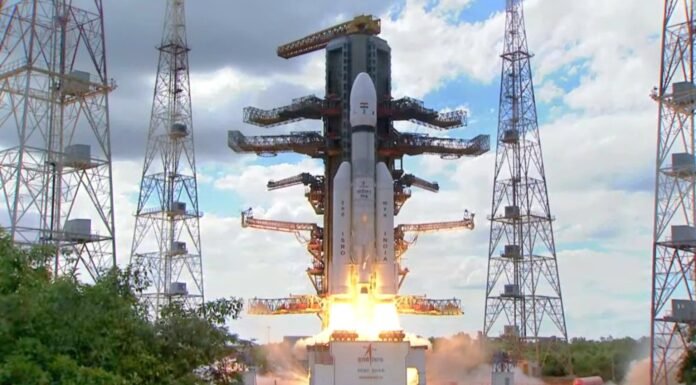
India’s space agency, ISRO, successfully launched Chandrayaan-3, its third lunar exploration mission, on Friday, July 14, 2023, at 2:35 pm IST (9:05 UTC) from the Satish Dhawan Space Centre in Sriharikota, Andhra Pradesh. The mission aims to demonstrate a soft landing on the lunar surface and deploy a rover to conduct scientific experiments.
Mission Details
Chandrayaan-3 consists of a lander and a rover similar to Chandrayaan-2, but does not have an orbiter. Instead, it has a propulsion module that will act as a communication relay satellite between the lander and the Earth. The propulsion module will carry the lander and rover configuration until the spacecraft is in a 100 km lunar orbit.
The lander, named Vikram after the father of India’s space programme Vikram Sarabhai, is designed to perform a soft landing on a flat plain near the lunar south pole. The landing site is located at 69.367621 S, 32.348126 E, and has been selected based on high-resolution images from Chandrayaan-2 orbiter. The landing is expected to take place on August 23, 2023.
The rover, named Pragyan meaning ‘wisdom’ in Sanskrit, is housed inside the lander and will be deployed after the landing. The rover is powered by solar energy and has a planned mission life of one lunar day (14 Earth days). The rover will move on six wheels and carry two scientific instruments: an Alpha Particle X-Ray Spectrometer (APXS) to measure the elemental composition of the lunar soil, and a Laser Induced Breakdown Spectroscope (LIBS) to identify minerals and detect water ice.
The lander will also carry four scientific payloads: a Radio Anatomy of Moon Bound Hypersensitive ionosphere and Atmosphere (RAMBHA) to study the lunar ionosphere, a Chandra’s Surface Thermo physical Experiment (ChaSTE) to measure the thermal conductivity of the lunar soil, an Instrument for Lunar Seismic Activity (ILSA) to detect moonquakes, and a Laser Retroreflector Array (LRA) to enable accurate measurements of the lunar orbit and distance.
The propulsion module will also carry one payload: a Spectro-polarimetry of HAbitable Planet Earth (SHAPE) to observe the Earth’s atmosphere and polarization.
The total mass of Chandrayaan-3 is 3900 kg, with 2148 kg for the propulsion module and 1752 kg for the lander module including the rover of 26 kg.
Mission Background
Chandrayaan-3 is ISRO’s follow-up attempt after the Chandrayaan-2 mission faced challenges during its soft landing on the lunar surface in September 2019 and was eventually deemed to have failed its core mission objectives. However, Chandrayaan-2 orbiter continues to orbit around the moon and provide valuable data.
Chandrayaan-3 is also a precursor to the Lunar Polar Exploration Mission (LUPEX), a joint mission between India and Japan planned for 2025. LUPEX will aim to land near the lunar south pole and explore its potential for human habitation and resource utilization.
Chandrayaan-3 was launched on board a Launch Vehicle Mark-3 (LVM3 M4), ISRO’s most powerful rocket capable of carrying heavy payloads to geostationary orbit or beyond. The launch was witnessed by thousands of people at the launch site and millions more through live telecast and webcast.
ISRO Chairman Dr. K Sivan congratulated the launch team and said that Chandrayaan-3 was a “very important mission” for India’s space programme. He also thanked the European Space Agency (ESA) for providing tracking support through its European Space Tracking (ESTRACK) network.
Prime Minister Narendra Modi also hailed the launch as a “proud moment” for India and said that Chandrayaan-3 would “enhance our understanding of the moon”. He also praised ISRO for its “remarkable achievements” in space exploration.
Chandrayaan-3 is expected to reach the moon in about six days and perform several orbital maneuvers before attempting the landing. ISRO will provide regular updates on the mission status through its website and social media platforms.
If you are a history buff and a lover of scenic views, then you must visit Moti Magri in Udaipur, Rajasthan. Moti Magri, which means Pearl Hill, is a hilltop that overlooks the Fateh Sagar Lake and offers a panoramic view of the city and the Aravalli hills. But more than its natural beauty, Moti Magri is famous for its majestic bronze statue of Maharana Pratap, the legendary king of Mewar, who fought valiantly against the Mughal emperor Akbar in the Battle of Haldighati in 1575.
The History of Moti Magri
Moti Magri was chosen as the site for the memorial of Maharana Pratap by Maharana Bhagwat Singh Mewar, who initiated the project with the help of a public trust. The statue was built in 1948 and depicts Maharana Pratap riding his loyal horse Chetak, who saved his life during the battle despite being fatally wounded. The statue is 11 feet high and weighs 7 tonnes. It is made of bronze and shines brightly on the hill.
The memorial also has a museum that showcases the history and culture of Mewar through paintings, models, weapons and other artefacts. There is a model of the Chittor Fort, which was the capital of Mewar and the seat of Maharana Pratap’s ancestors. There is also a model of the Battle of Haldighati, which depicts the fierce fight between the Rajput army led by Maharana Pratap and the Mughal army led by Akbar’s general Man Singh. The museum also has portraits of Rani Padmini, the queen of Chittor who committed self-immolation to protect her honour from Alauddin Khilji, and Meera Bai, the saint-poetess who was devoted to Lord Krishna.
Moti Magri also has a Japanese rock garden, which was gifted by the Indo-Japanese Friendship Society. The garden has various types of rocks, plants and water features that create a serene atmosphere. There is also a light and sound show that narrates the 900-year rule of the Mewar dynasty over Rajasthan and their glorious achievements.
The Timings and Entry Fee of Moti Magri
Moti Magri is open for visitors from 9 am to 6 pm every day. The entry fee for Indian adults is Rs 20, for Indian children is Rs 10, and for foreign adults is Rs 50. The light and sound show takes place every evening at 8:15 pm in summer and 7:30 pm in winter. The entry fee for the show is Rs 20 for Indian adults and Rs 10 for Indian children.
How to Reach Moti Magri
Moti Magri is located on Ambamata Road, near Fateh Sagar Lake in Udaipur. It is about 2.4 km from Udaipur Railway Station and 23.3 km from Maharana Pratap Airport. You can take a taxi, auto-rickshaw or bus to reach Moti Magri from any part of the city.
Why Visit Moti Magri
Moti Magri is a must-visit place for anyone who wants to learn more about the rich history and heritage of Mewar and its brave rulers. It is also a great place to enjoy the scenic beauty of Udaipur and its surroundings. You can spend some quality time with your family or friends at Moti Magri and admire the statue of Maharana Pratap, who is an inspiration for many Indians. You can also visit other nearby attractions like Fateh Sagar Lake, Saheliyon Ki Bari, Bagore Ki Haveli and Lake Pichola.
Test cricket is the oldest and the longest format of the game, which spans over five days with two innings per side. It is also the format that tests the skills, stamina and strategy of the players and the teams. In a test match, there are two intervals taken in a day’s play, apart from the drinks breaks. The first interval is the lunch break, which lasts for 40 minutes, and the second interval is the tea break, which lasts for 20 minutes. Here, we have a look at the test match break time and its significance in the test cricket.
The Origin
The origin of the tea break in test cricket is not very clear, but it is believed that it dates back to the late 19th century or the early 20th century. According to some sources, the tea break was introduced by Lord Harris, who was the captain of England and later became the governor of Bombay. He was fond of tea and used to have it during the breaks in play. He also invited the opposing team’s captain to join him for tea, which became a tradition and a gesture of sportsmanship.
Another possible origin of the tea break is that it was influenced by the social customs of the British aristocracy, who used to have afternoon tea as a part of their daily routine. Since cricket was initially played by the upper class, they incorporated their tea habit into the game as well.
The Significance
The tea break in test cricket is not just a time for refreshment and relaxation, but also a time for reflection and planning. The tea break provides an opportunity for the players to regroup, strategise, rest, rehydrate and recharge their batteries before the final session of the day. The tea break can also have an impact on the momentum and outcome of the game, as it can disrupt or enhance the performance of the players.
For example, if a batsman is well set and scoring runs freely before the tea break, he might lose his concentration and rhythm after the break and get out soon. On the other hand, if a bowler is struggling to take wickets before the tea break, he might get some useful tips from his captain or coach during the break and come back with renewed vigour and confidence.
The tea break can also be used as a tactical tool by the captains to influence the game. For instance, if a team is close to taking a new ball or declaring their innings, they might delay or hasten their decision depending on whether they want to take advantage of or avoid the tea break. Similarly, if a team is chasing a target or trying to save a match, they might try to score more runs or play more defensively before or after the tea break.
The Rules
According to law 11.4 of the Marylebone Cricket Club (MCC), which governs the laws of cricket, the pre-decided tea interval can be changed if both captains agree to do so in consultation with the umpires. This usually happens when playing time is lost due to bad weather, poor light or other exceptional circumstances.
Moreover, law 11.6.1 states that “If an innings ends when 30 minutes or less remains before the agreed time for tea, the interval shall be taken immediately. It shall be of the agreed duration and shall be considered to include the 10-minute interval between innings.”
Taliban has explained the ban on Beauty salons in Afghanistan, they stated, “Salon, beauty parlor offer such services that do not go along with the words of Islam, moreover it causes financial harm in the groom’s families in wedding ceremonies.
Thus, the group gave their statement days after they asked all the beauty salons around Afghanistan to close and wind up in one month. Thus, this has raised concern around the world for women entrepreneurs.
Sadiq Akif Mahjer, The vice president and spokesperson for the Taliban-run Virtue, acclaimed, “Those included eyebrow shaping, the use of other people’s hair to augment a woman’s natural hair and the application of makeup, which would interfere with the ablutions required before offering prayers”
He also added, “In addition, the salons cause economic stress on grooms’ families, who are required by custom to pay for the pre-wedding salon visit by the bride and her close female relatives.”